

Inkipedia
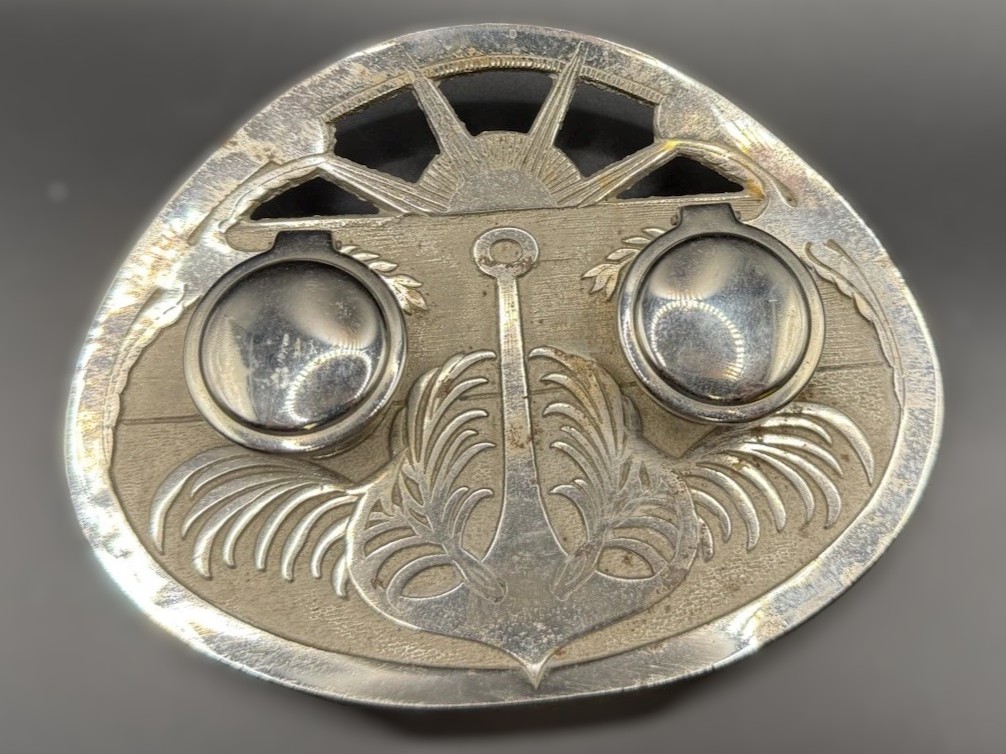
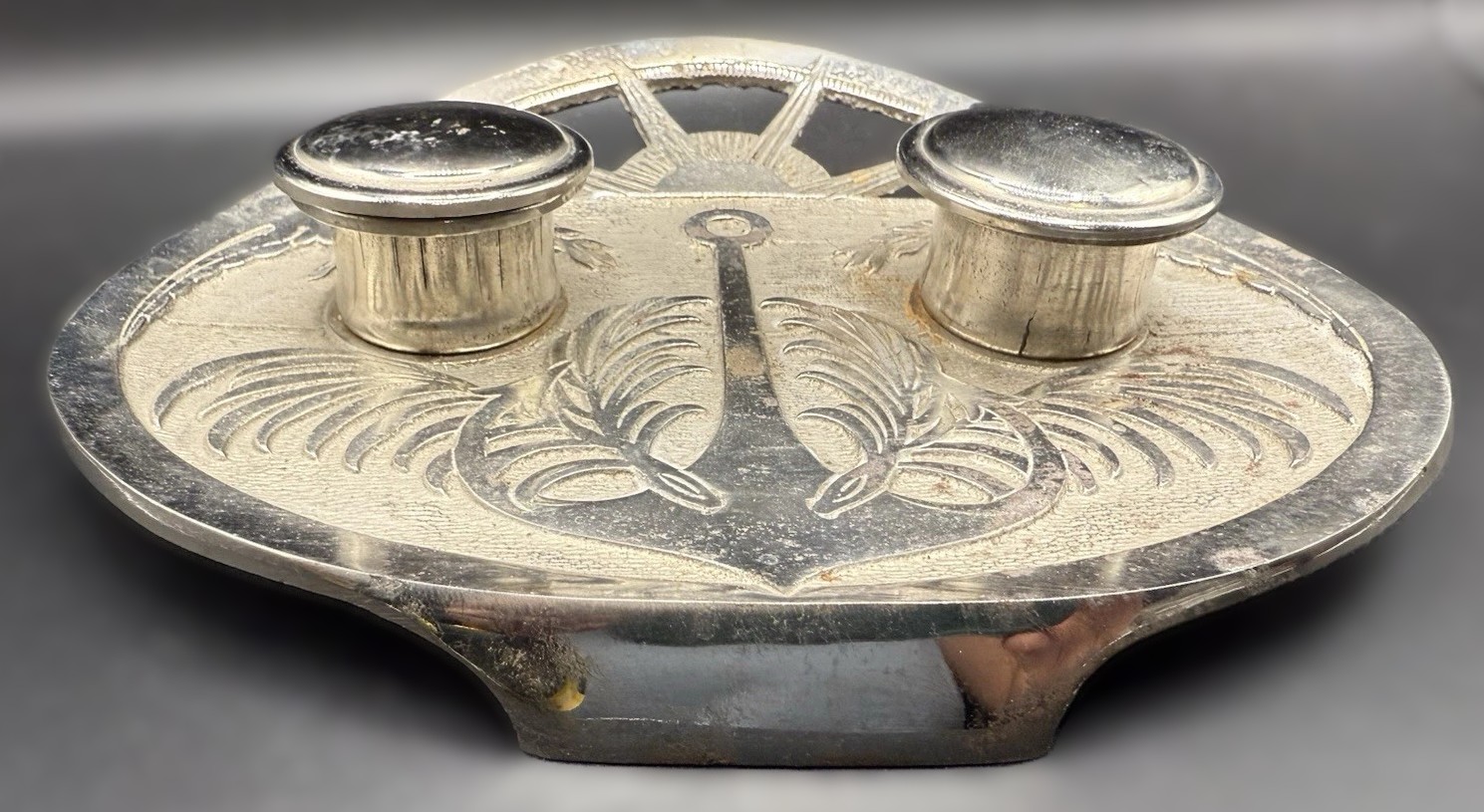
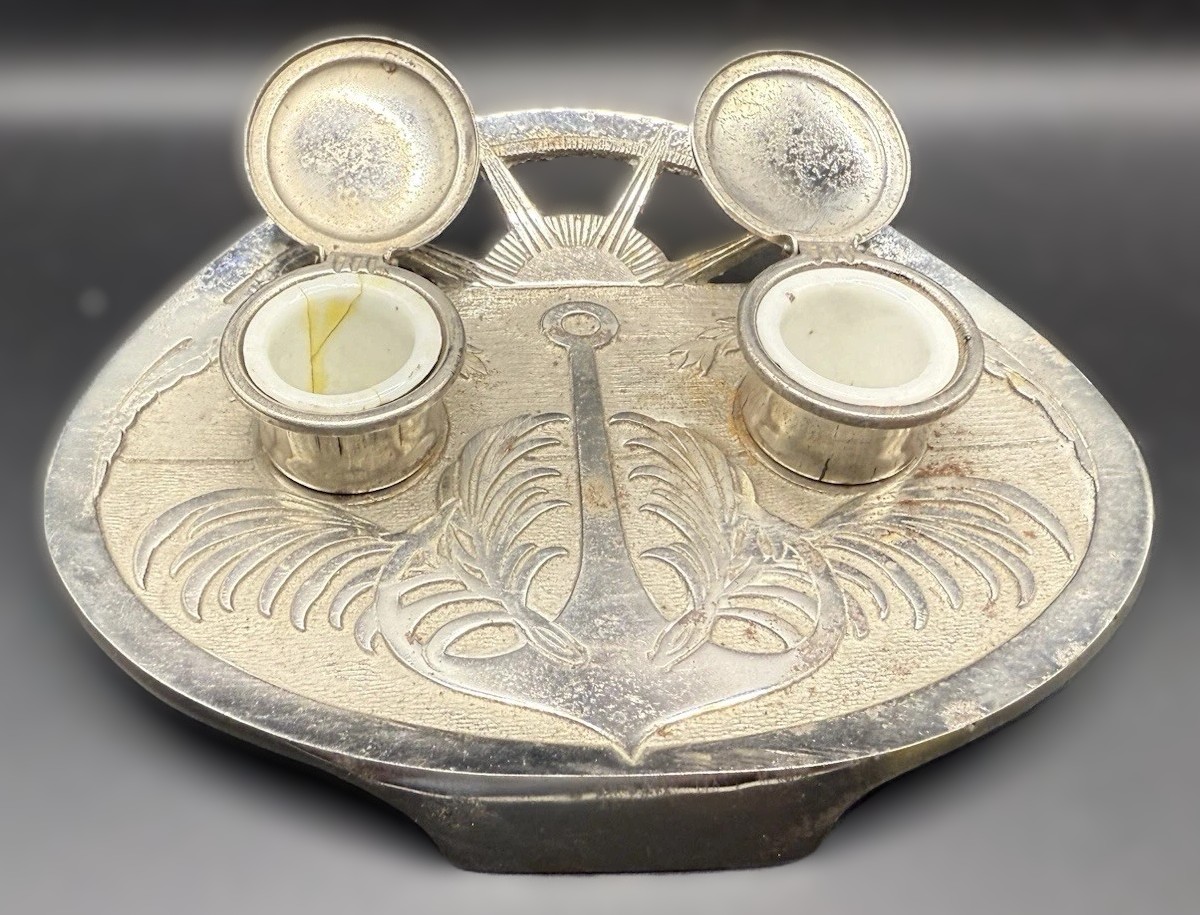
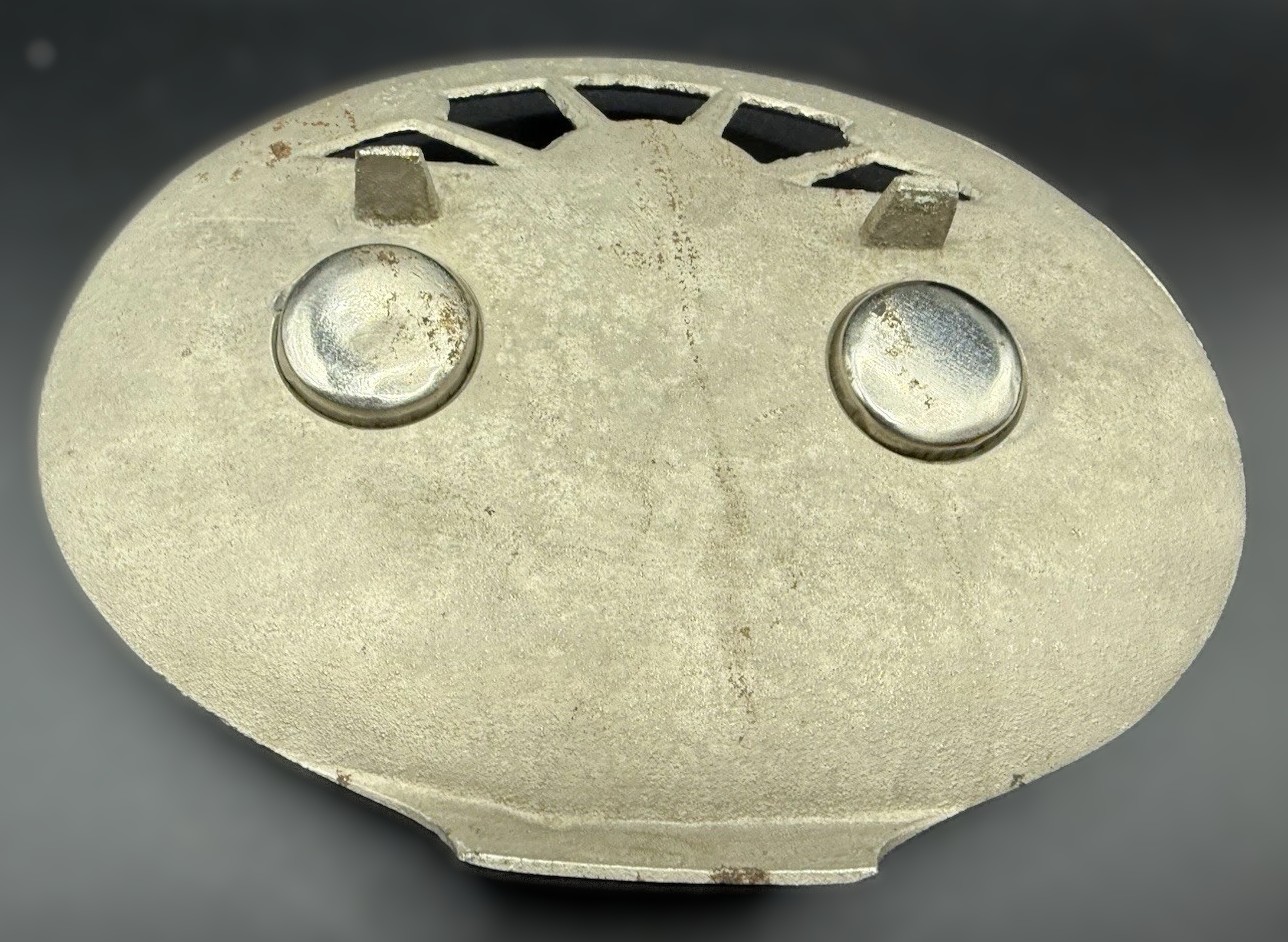
German Art Deco Double Inkstand
| Categories | Art Deco |
| Material | Silverplate |
| Markings | GESCHÜTZT |
| Manufacturer | Undetermined |
| Origin | Germany |
| Date or Era | circa 1925 |
| Measuring | 6 ¾” x 5 ½” |
This is a nice example of German Art Deco metalwork, likely dating to the 1920s or early 1930s. The piece is a classic “Schreibtisch-Garnitur” (desk set) that perfectly captures the “Machine Age” optimism of the period.
Design & Style
- Style: This is firmly Art Deco. Unlike the flowing, organic lines of the earlier Art Nouveau (Jugendstil) period, this piece uses geometric symmetry, bold outlines, and “speed lines” to create a sense of modernity and progress.
- Motifs: The Sunburst: The fan-like rays at the top represent the “rising sun,” one of the most iconic Art Deco symbols, signifying a new dawn and forward momentum.
- The Anchor: The central anchor is highly stylized, almost resembling a futuristic emblem. While anchors often signify maritime stability, in this Deco context, the focus is on the graphic, symmetrical shape rather than just a nautical theme.
- Composition: The oval base and the dual circular inkwell lids create a balanced, architectural look that was popular for professional office accessories of the era.
Material & Construction
- Markings: The mark GESCHÜTZT on the underside is German for “Protected” (short for Gesetzlich Geschützt), which essentially means the design was copyrighted or patented. This mark was standard for high-quality German and Austrian metalware from the late 19th century through the 1930s.
- Material: Based on the textured, grainy finish visible on the underside, the base is likely silver-plated cast iron. The silver plating has worn over time, giving it that soft, matte pewter-like patina.
- Inserts: Both of the original white porcelain (or ceramic) liners are present.
Age and Origin
- Origin: Made in Germany. The combination of the “Geschützt” mark and the specific “industrial-meets-ornamental” aesthetic is very typical of German metalwork hubs like Geislingen (home of WMF) or Schwäbisch Gmünd.
- Age: Circa 1925–1930. This was the height of the Art Deco movement in Europe, just before the style became more streamlined and minimalist in the mid-1930s.
Sold for $145 in March 2026
Content disclaimer. The information posted is the owner’s best knowledge and may not have been vetted by the SOIC. We welcome comments, corrections, and additions, working to make our website information comprehensive and accurate.
Join the Society of Inkwell Collectors (SOIC) – it’s free!
Founded in 1981 as a non-profit organization,
we are documenting inkwells (and accessories).
We’re here to help and inform!