




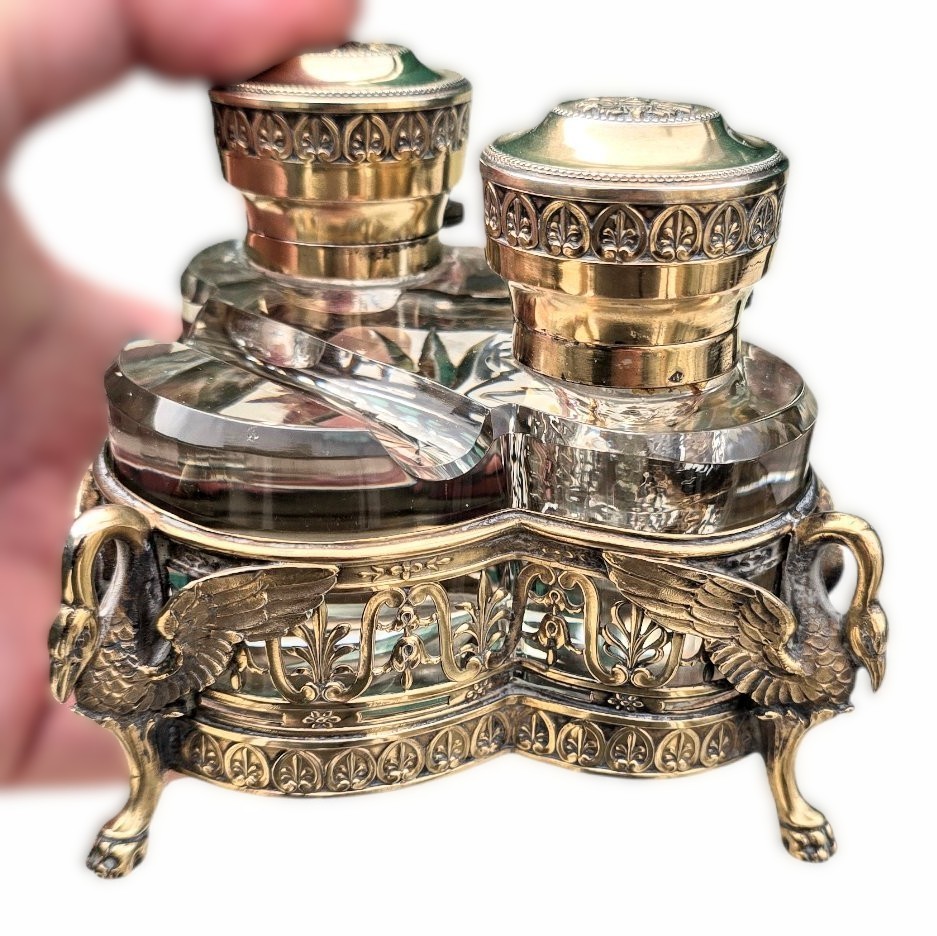
French Empire Revival Vermeil Silver & Trefoil Crystal Inkstand
| Categories | Figural - Animals & Living Creatures |
| Type | Swan |
| Material | Vermeil Silver |
| Markings | Unmarked |
| Manufacturer | Undetermined |
| Origin | France |
| Date or Era | circa 1870 |
| Measuring | 5 ½” x 4 ⅜” x 3 ¾” high |
Description
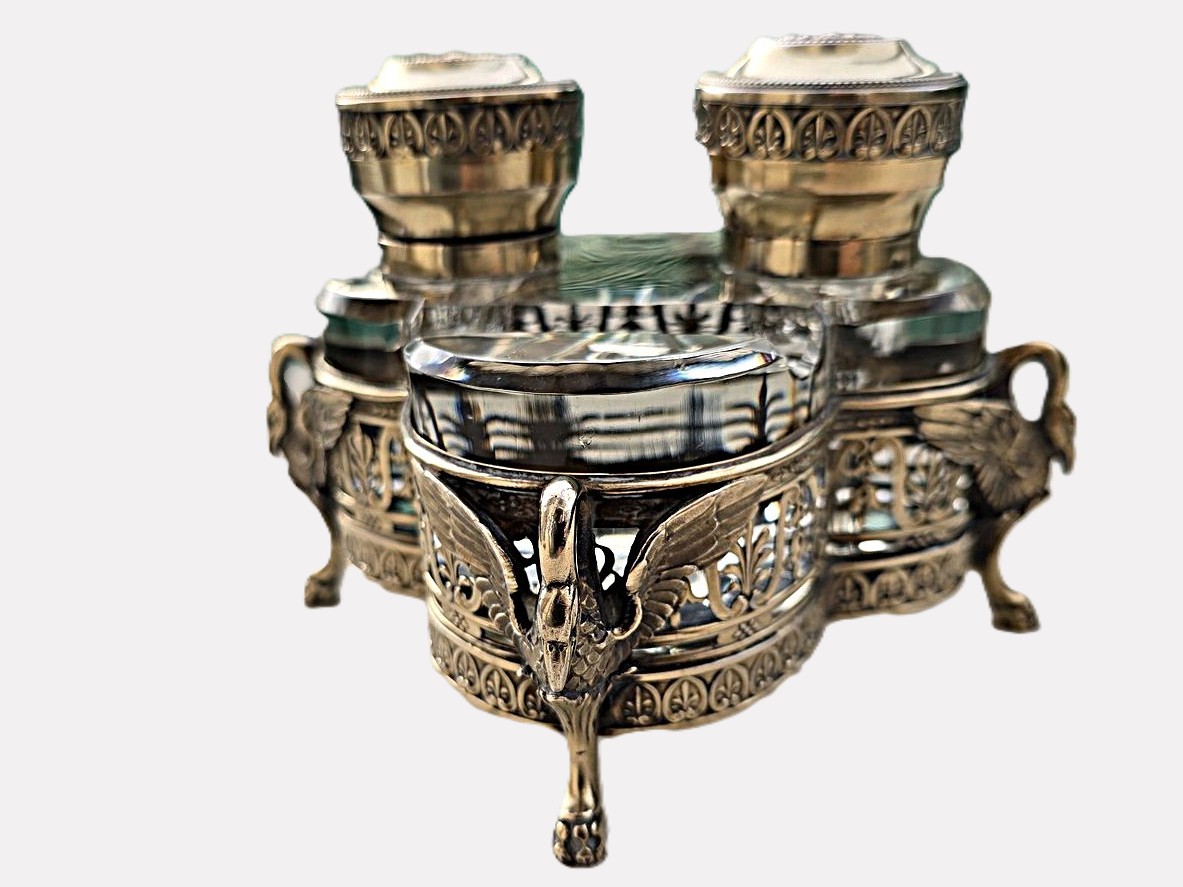
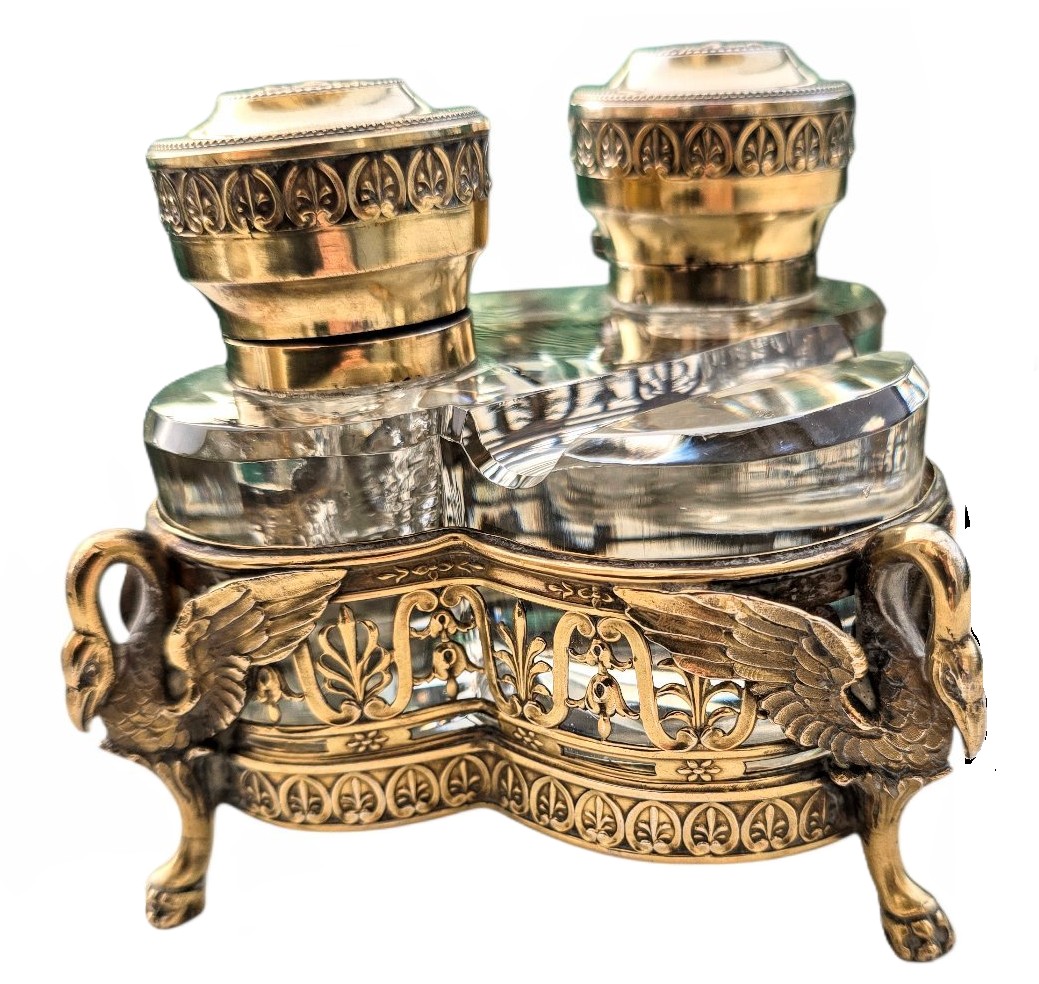
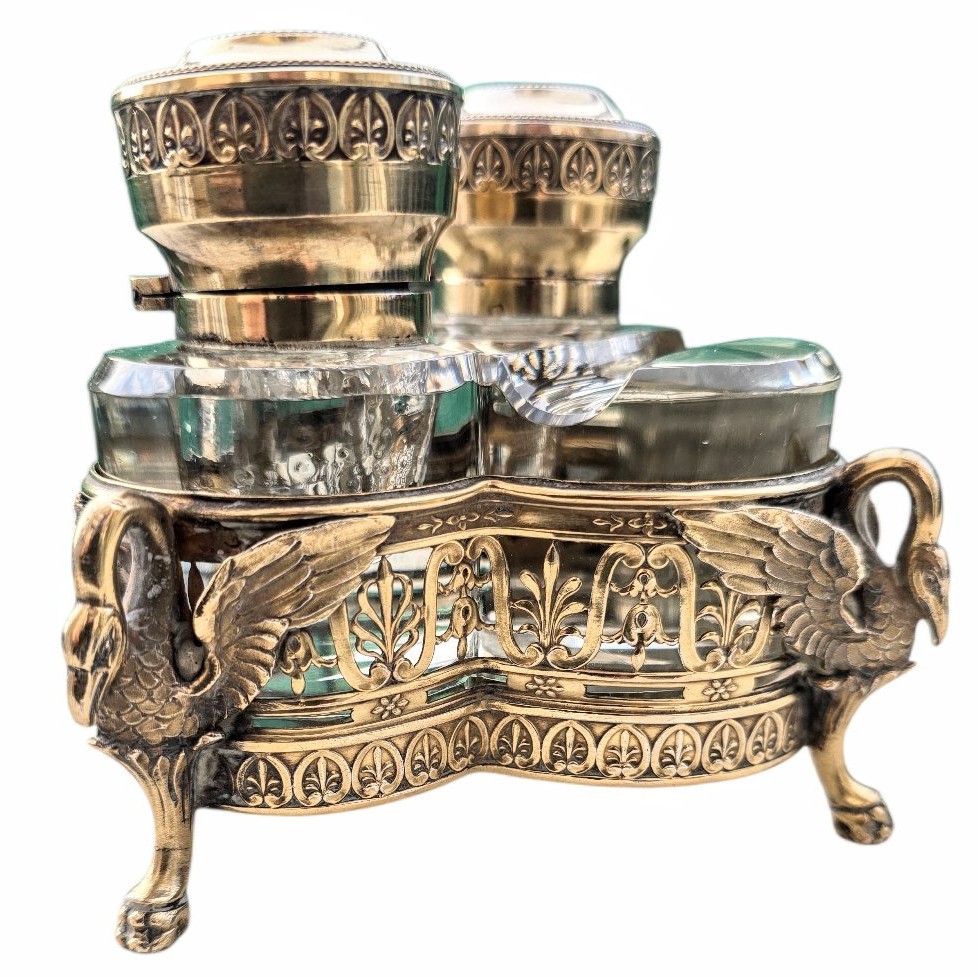
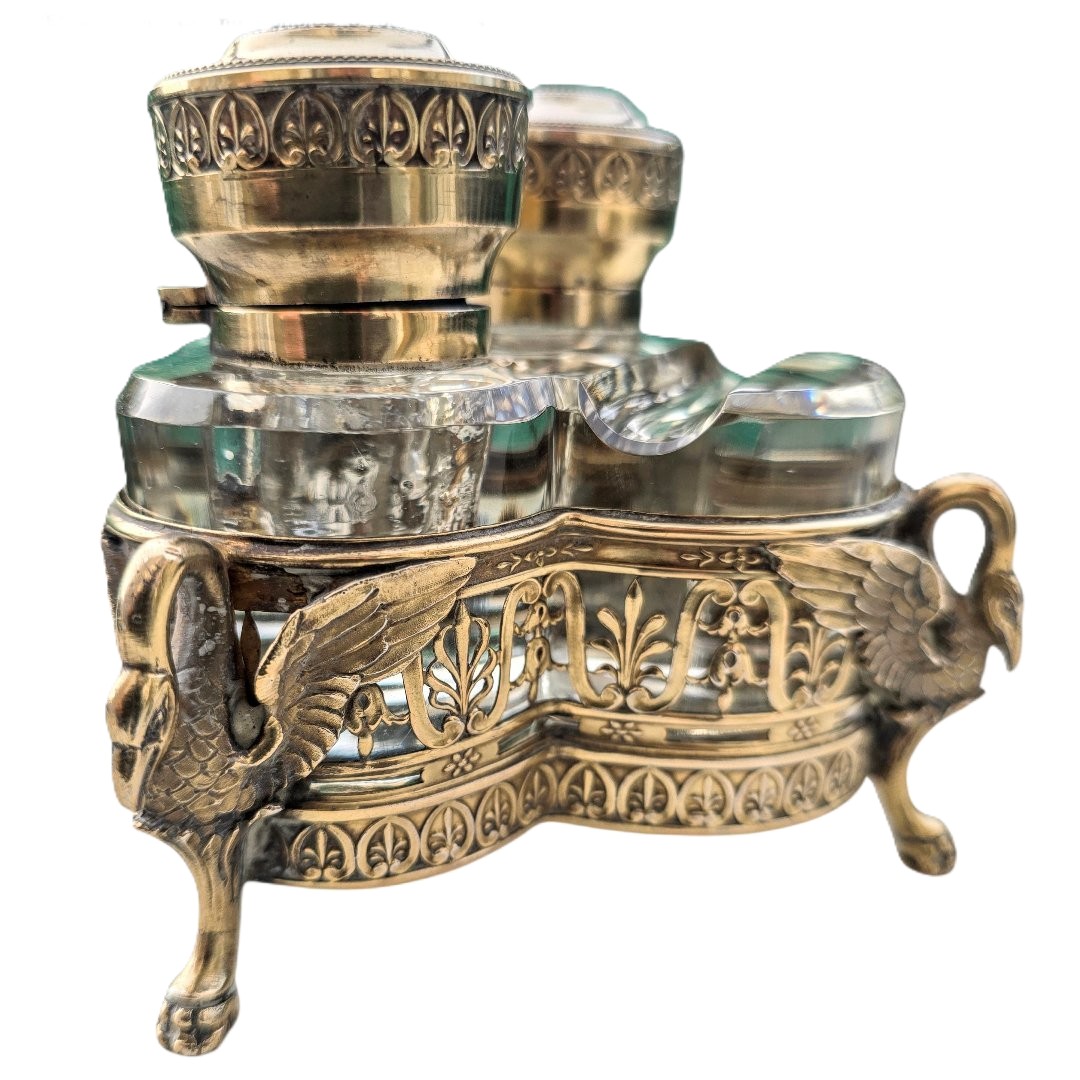
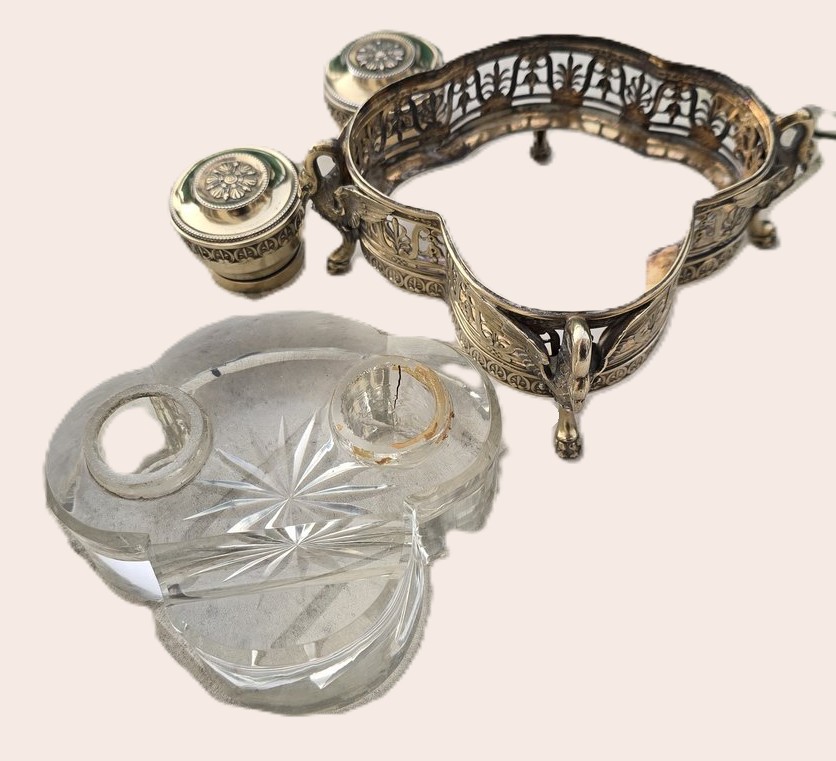
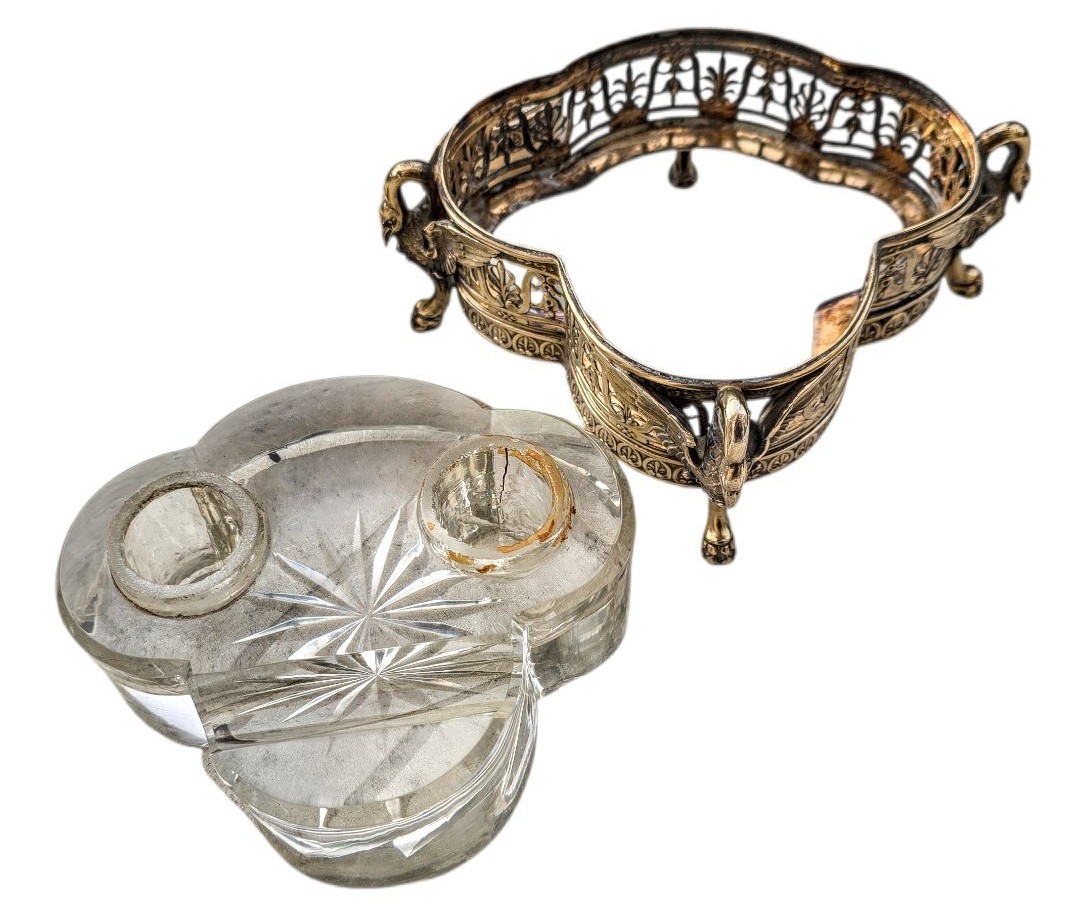
This French inkstand, Empire-style design, is characterized by its heavy use of classical motifs. The most striking features are the three figural supports, which appear to be swans (common in Napoleonic-era French design). Their arched necks form the handles, and their powerful, outspread wings wrap around the filigree frame, transitioning into “monopodia” legs that end in detailed paw feet.
The stand itself is an openwork silver-gilt (vermeil) gallery. The metalwork features intricate bands of palmettes (stylized fan-shaped leaves) and delicate scrolling vines with small flower heads.
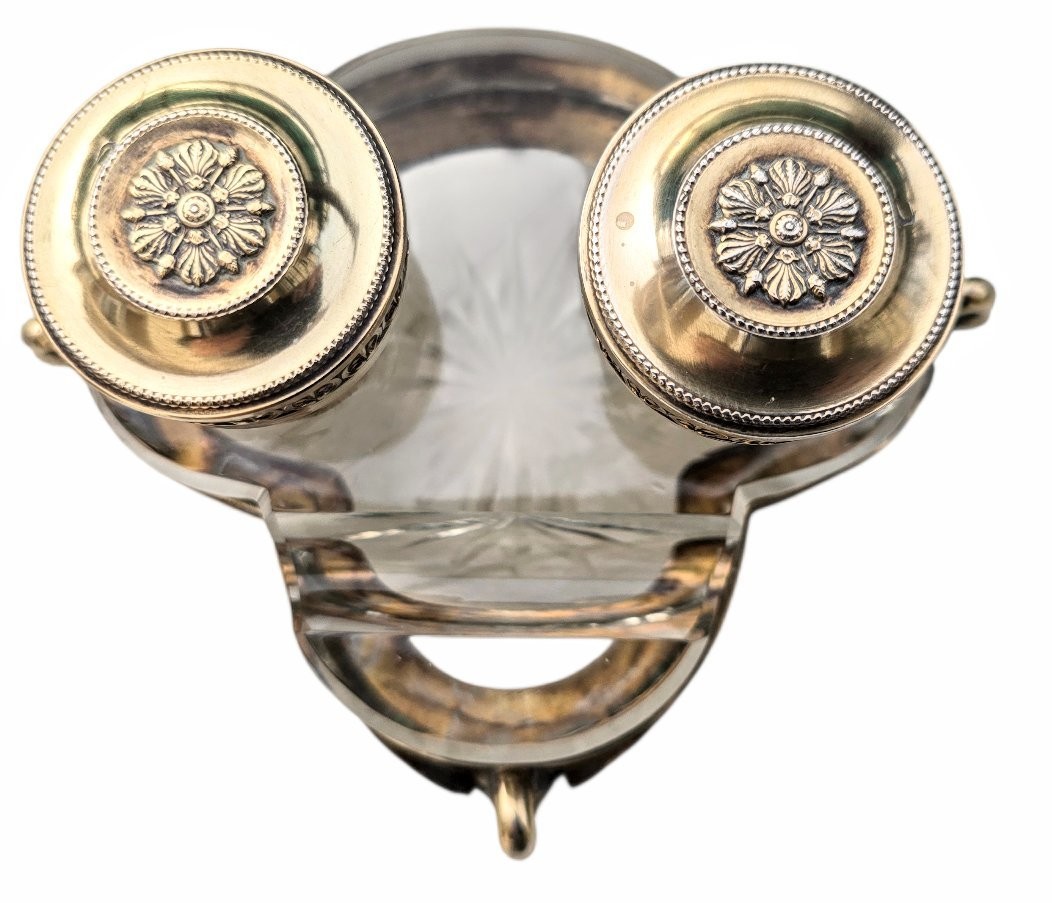
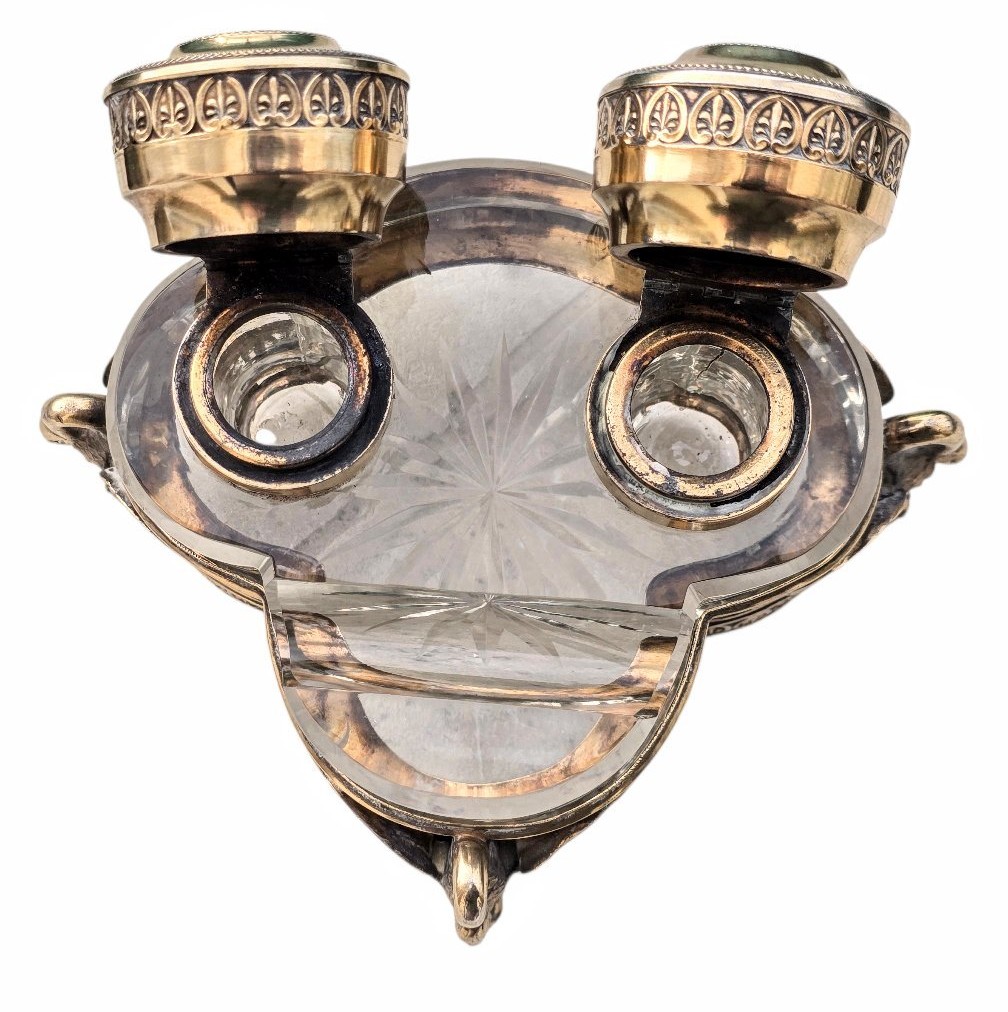
Inside the stand rests a heavy, clover-shaped (trefoil) crystal base. The crystal is thick and brilliantly clear, featuring a starburst-cut pattern on the underside. It is designed with two wells for ink and a deep, curved pen channel in the front for resting a quill or dip pen.
Inkwells: The two cylindrical silver-gilt wells are hinged (image ver 1n.jpg) and feature ornate domed lids with a central rosette.
What is “Vermeil Silver”?
Vermeil (pronounced ver-may) is a specific type of high-quality plating. To be considered true vermeil:
- The base metal must be sterling silver (not brass or copper).
- It is coated with a thick layer of gold (usually at least 10-karat).
This process was exceptionally popular in France (where it is known as argent doré). It gives the piece the warm, regal glow of solid gold while maintaining the weight and value of silver. Given the intricate “open framework” design, this set was likely intended for a high-status desk.
Age and Origin
Based on the Empire Revival (Second Empire) style, this inkstand likely dates to the mid-to-late 19th Century (circa 1860–1880).
While the “Swan” motif was popularized during Napoleon I’s reign (early 1800s), the specific combination of heavy, star-cut crystal and the delicate openwork gallery suggests the later Victorian-era revival of that style.
Sold for $450 in January 2026
Content disclaimer. The information posted is the owner’s best knowledge and may not have been vetted by the SOIC. We welcome comments, corrections, and additions, working to make our website information comprehensive and accurate.
Join the Society of Inkwell Collectors (SOIC) – it’s free!
Founded in 1981 as a non-profit organization,
we are documenting inkwells (and accessories).
We’re here to help and inform!