

Inkipedia
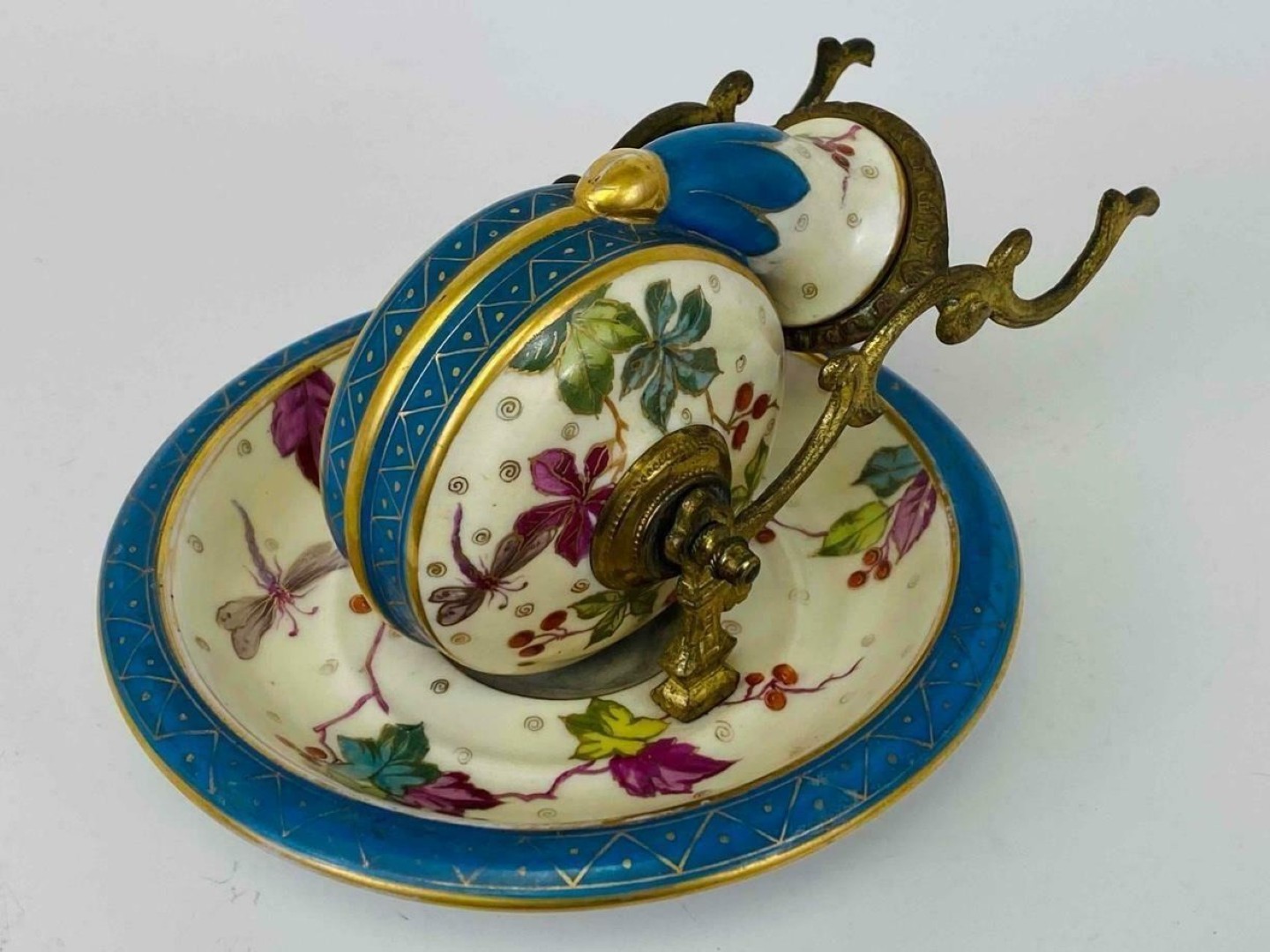
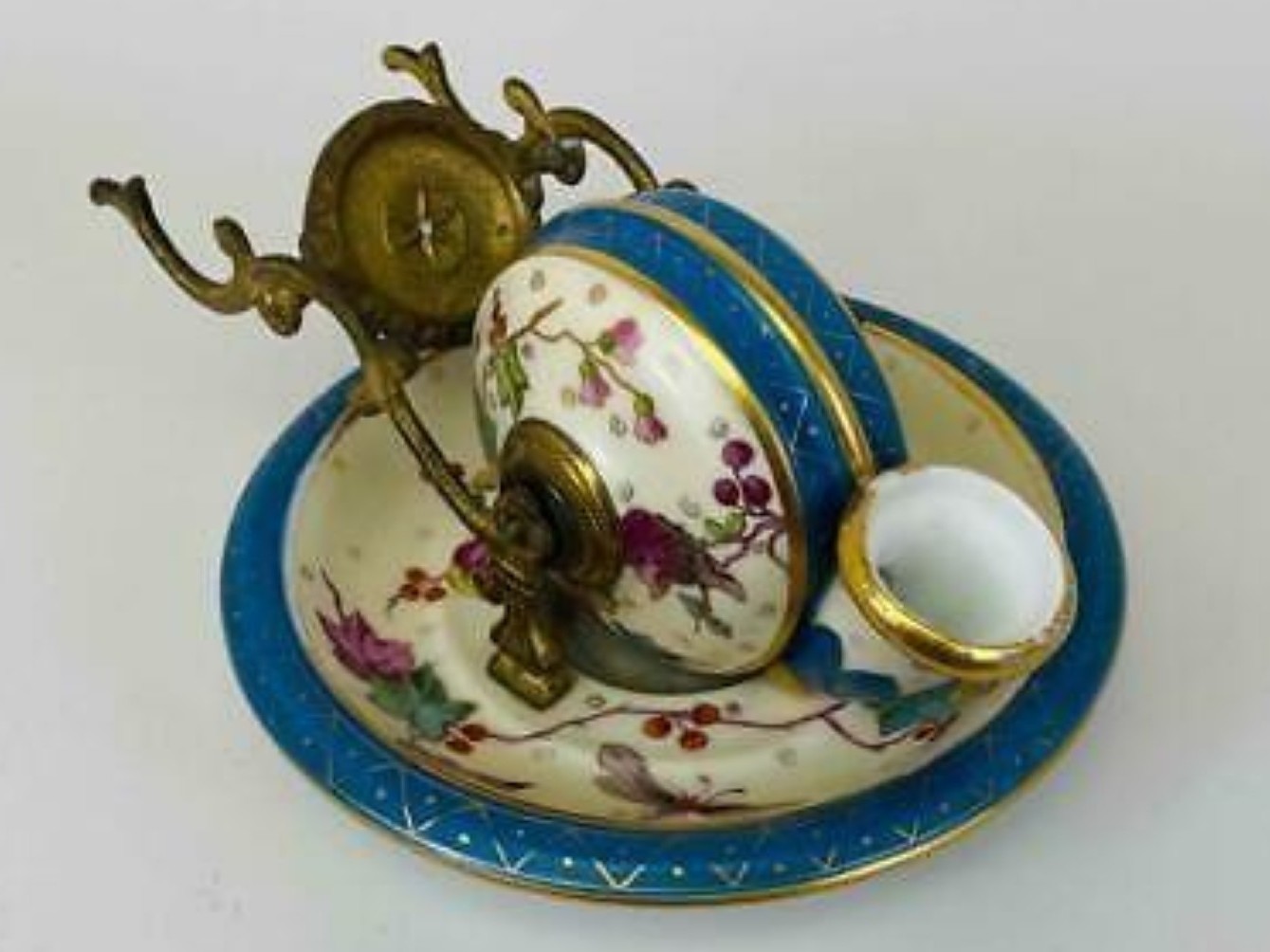
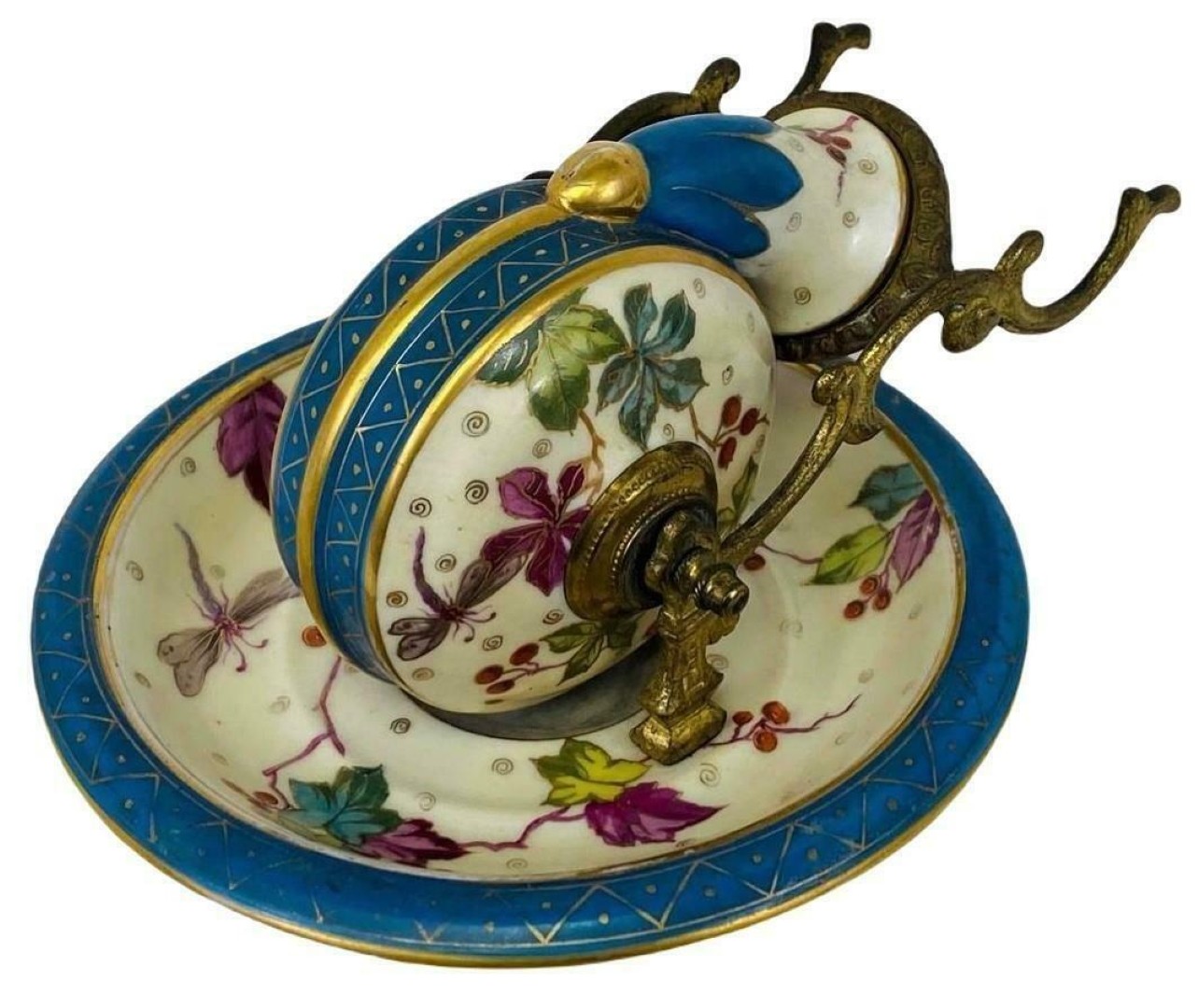
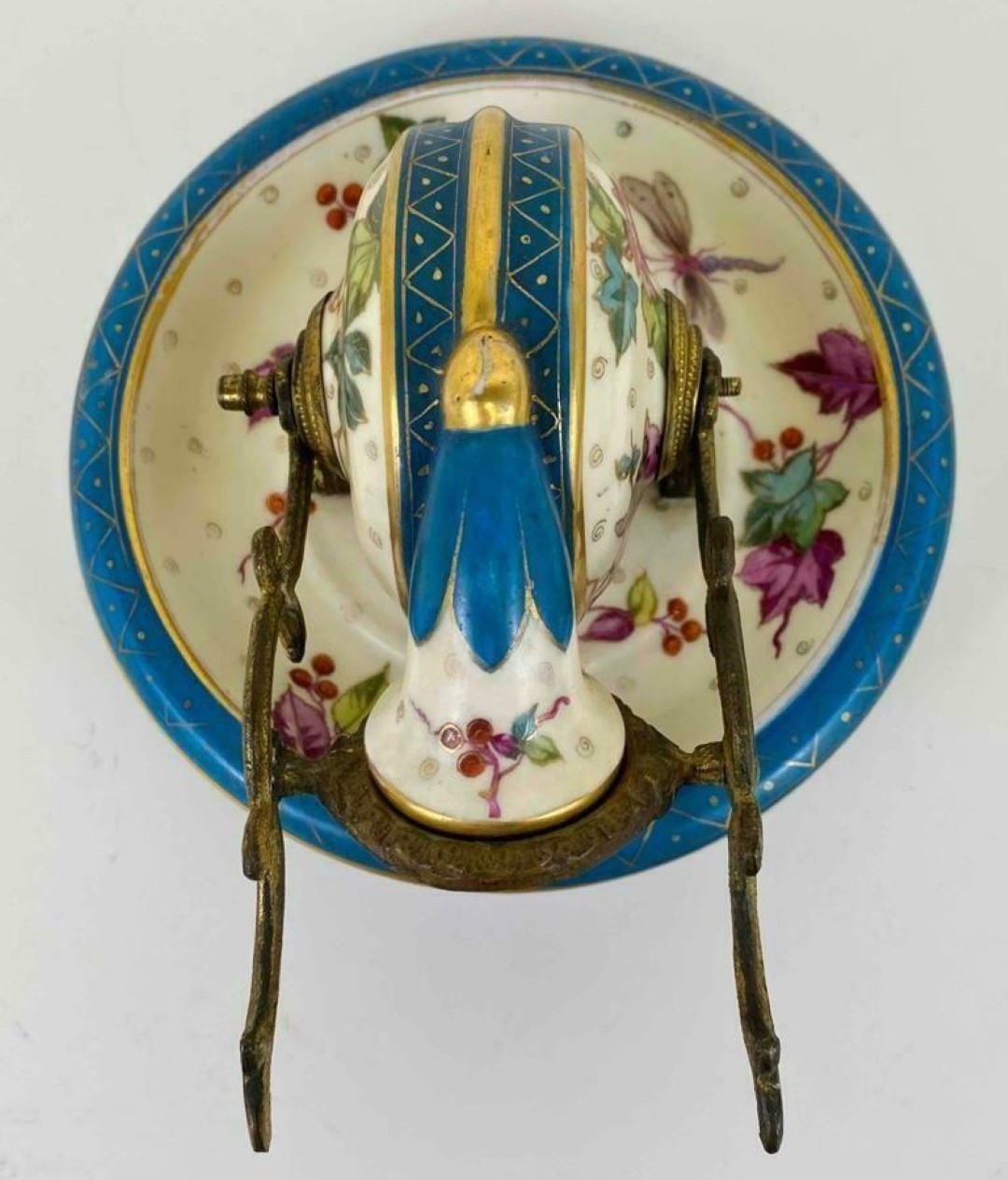
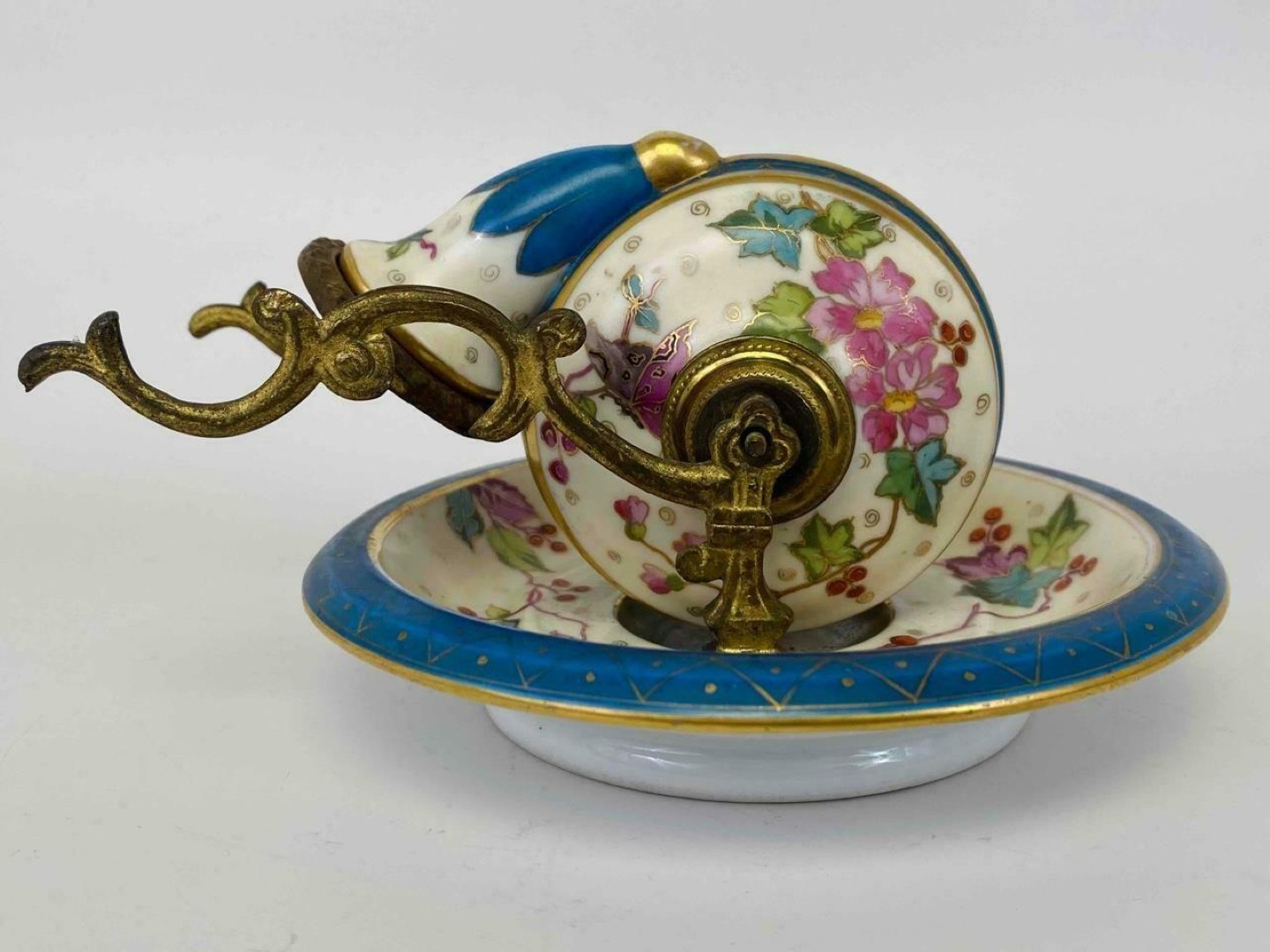
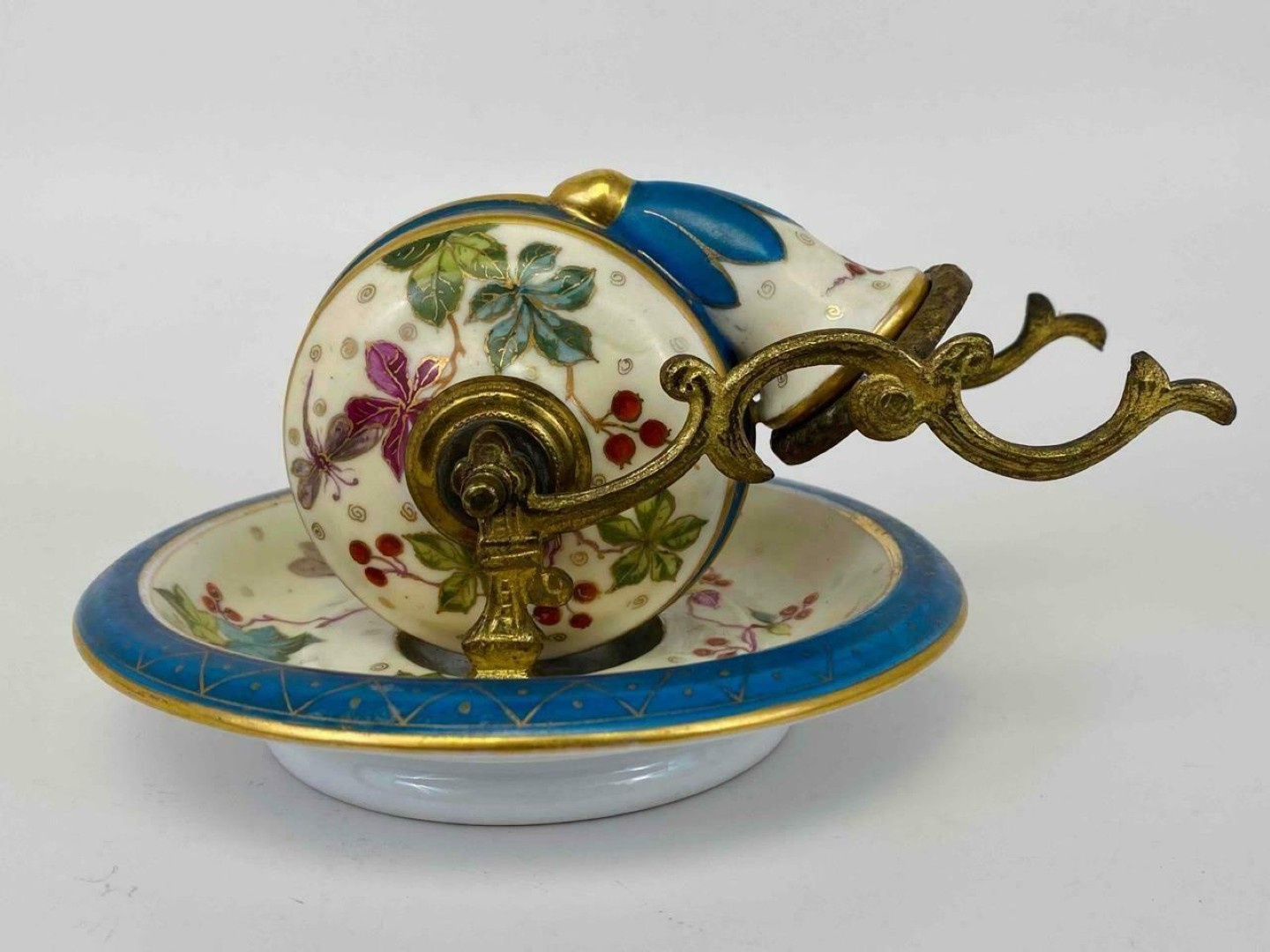
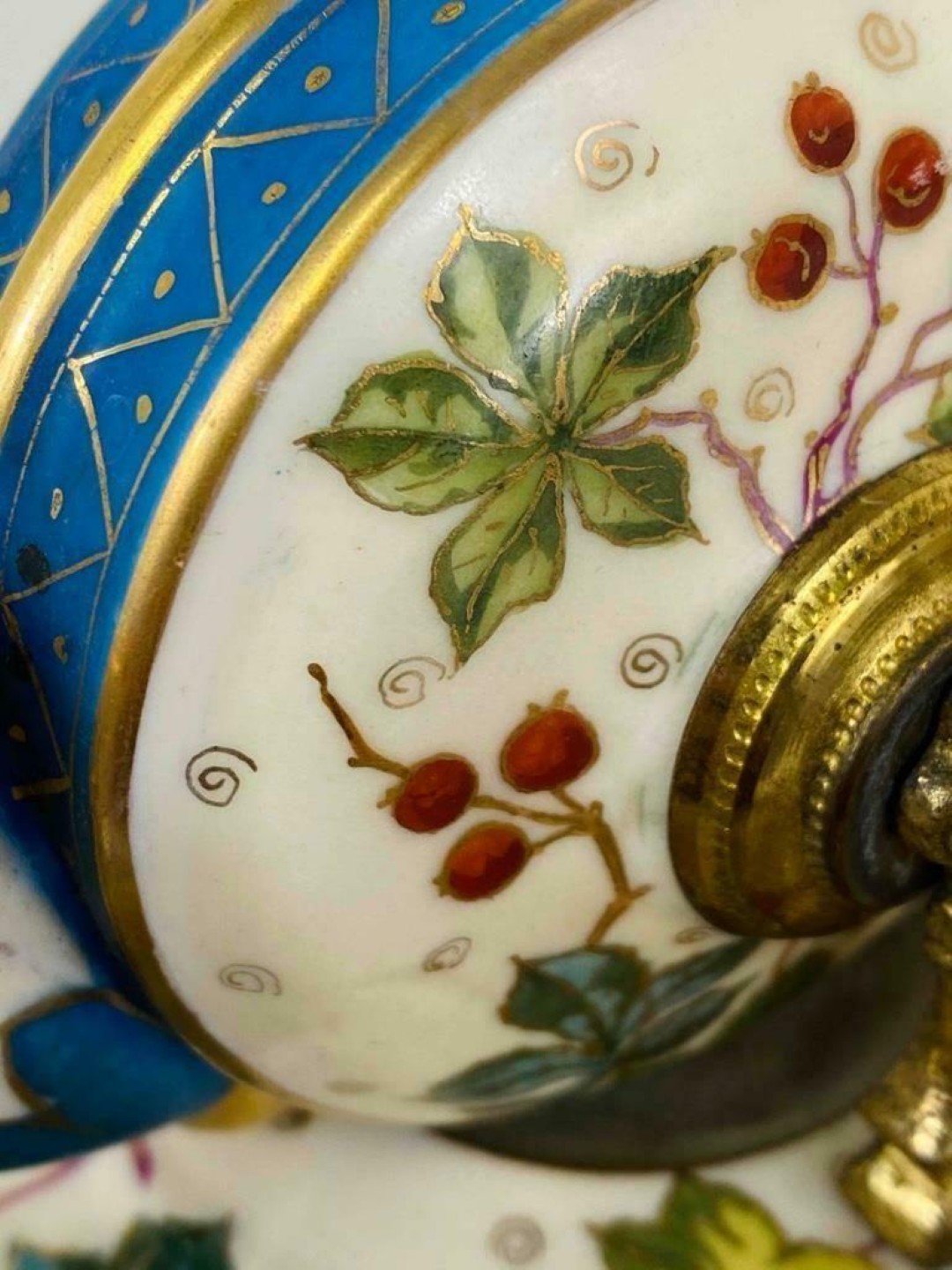
Fischer & Mieg Polychrome Revolving Snail Inkstand
| Categories | Mechanical - Snail / Pivoting |
| Material | Gilt Bronze, Porcelain |
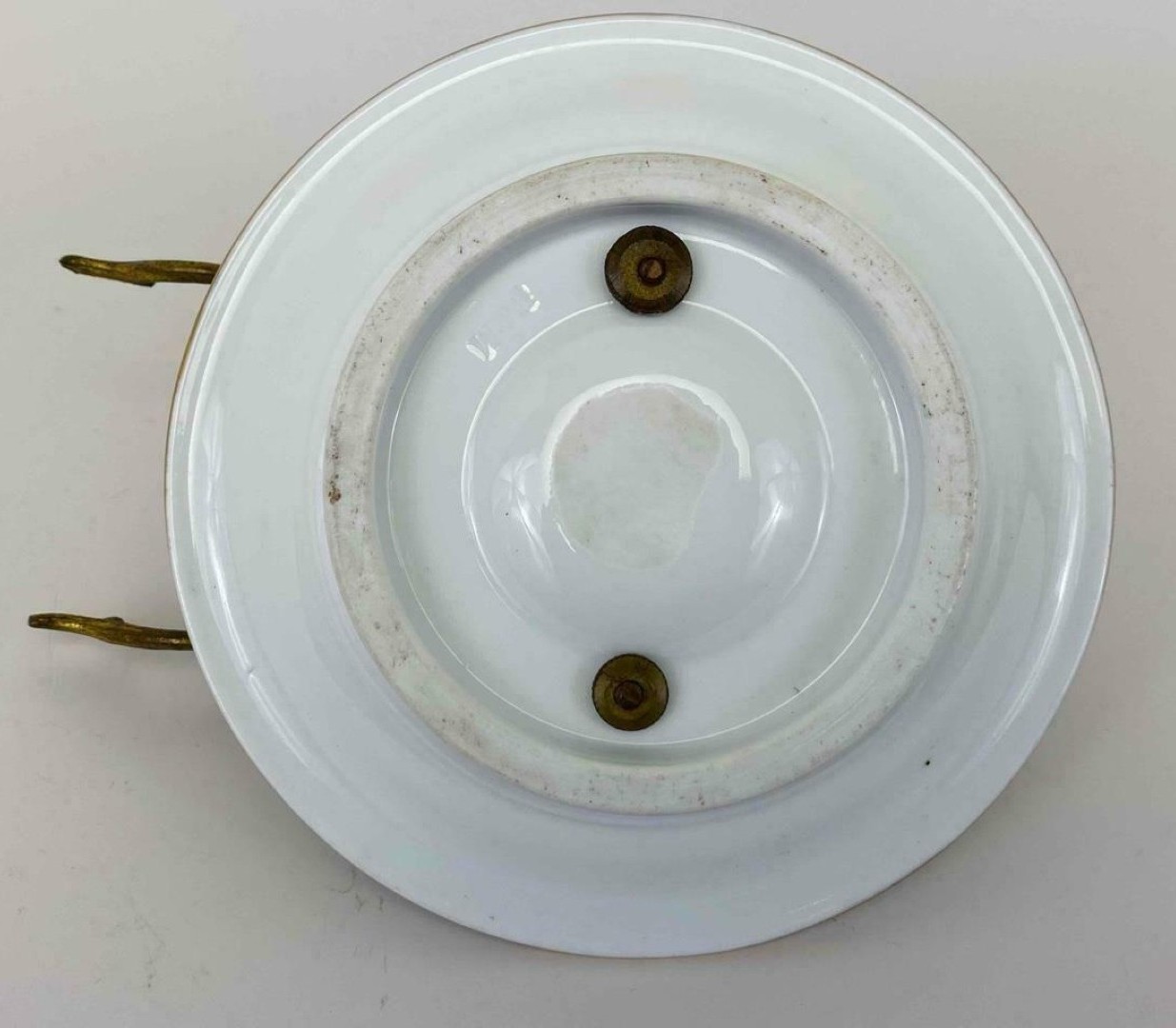
| Markings | "F&M" |
| Manufacturer | Fischer & Mieg |
| Origin | Bohemia |
| Date or Era | circa 1865 |
| Measuring | 5 ¾” diameter; 3” high |
Description
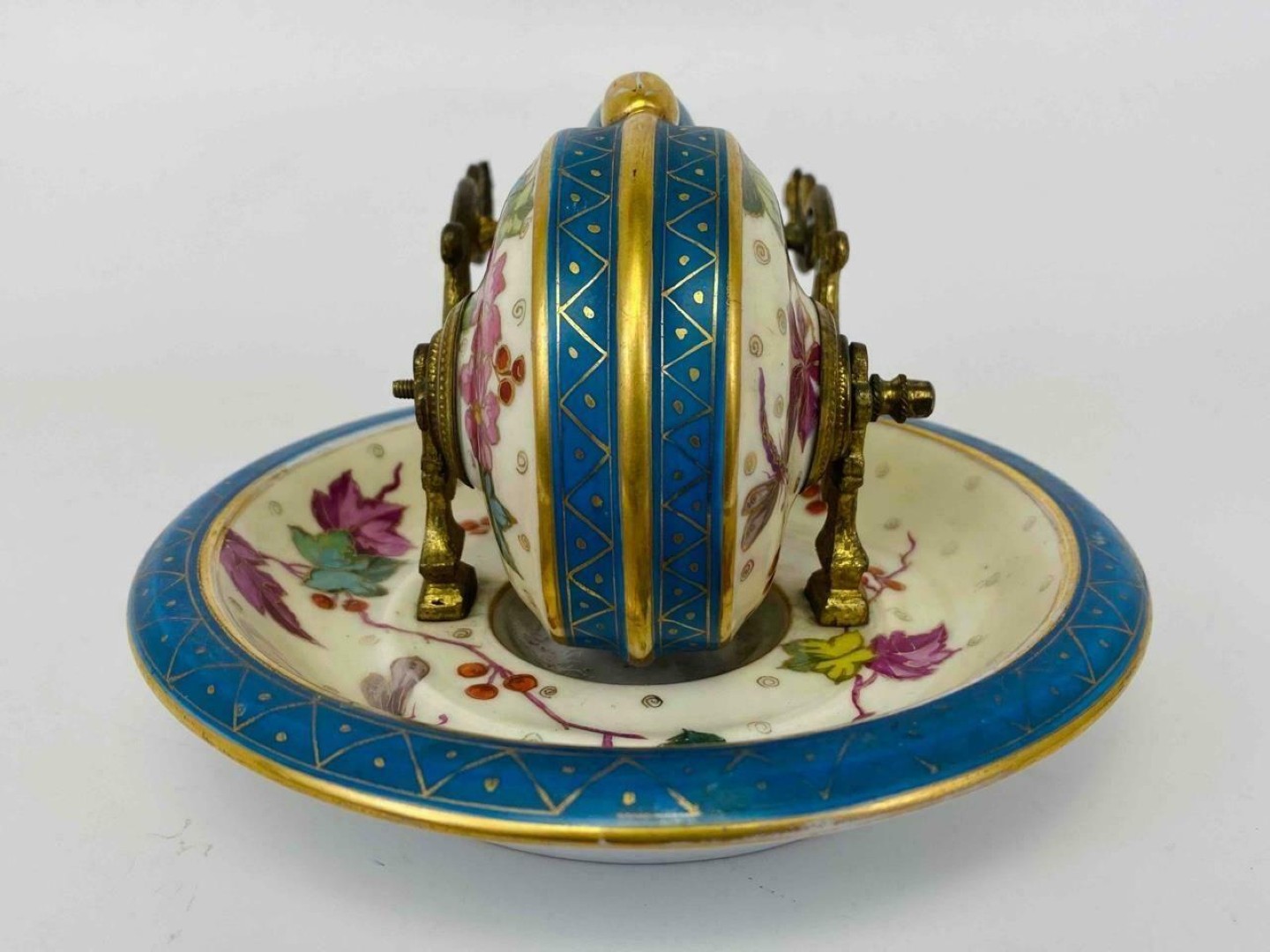
- The Saucer Base: The entire assembly rests on a circular, footed porcelain saucer dish featuring a wide, rich cobalt blue border embellished with geometric cross-hatching, fine gold-painted tracery (brocade/gilt trim), and delicate dot-work.
- The Body / Snail Shell: The central ink reservoir is sculpted into the shape of a nautilus or snail shell, resting horizontally on its side. The body of the shell is rendered in a smooth cream-colored porcelain ground, hand-painted with trailing botanical branches, vibrant pink flowers, and whimsical dragonflies. A vivid blue-and-gilt stripe runs along the outer perimeter curl of the shell.
- The Stopple and Trumpet Opening: The mouth of the shell flares outward into a trumpet-shaped neck (the snail’s head/opening) which functions as the ink-dipping font.
- Ormolu Mounts & Pen Rack: The whole porcelain component is held in place by finely cast gilt-bronze (ormolu) fittings, featuring upright ornamental pillars screwed securely through the base. Attached to the bronze armature is an integrated, elegantly scrolled open-work pen rack designed to hold dipping pens.
How the Revolving / Pivoting Mechanism Works
This style of inkwell is known as a Bascule (or rocking/pivoting) inkstand:
- The Axis: The snail body is suspended between two bronze vertical standards by threaded set-screws on either side, creating a horizontal pivot axis.
- Opening: When you gently pull the trumpet-shaped font upward and forward toward you, the entire snail shell pivots on its side axes.
- Sealing: This motion lifts the opening away from a fixed, stationary bronze stopple plate mounted to the frame, exposing the internal ink reservoir for use. When pushed back, the trumpet-shaped mouth securely seals back against the stopple plate, preventing the ink from spilling or drying out.
How Was It Made?
- Hand-Painted: Close inspection of the floral motifs, botanical leaves, and delicate dragonflies reveals the fine, raised brushwork, individual strokes, and hand-applied gilding characteristic of high-end 19th-century studio porcelain painters. The scrolling gold accents and enamel dots are applied by hand overglaze.
- Manufacturing Process:
- Ceramic Body: The porcelain components (saucer, base mounts, and shell) were slip-cast or hand-molded using a fine-paste hard-paste porcelain formula, then high-fired in a kiln.
- Decorating & Firing: Artists hand-painted the polychrome floral scenes, cobalt bands, and enamel dots, applying liquid gold accents before undergoing subsequent lower-temperature kiln firings to set the colors and gilding.
- Metal Casting & Assembly: The bronze components were created via traditional lost-wax or sand-casting methods, chased to clean up the details, and fire-gilded (ormolu). Finally, the mechanical pivot screws were engineered to marry the delicate porcelain shell seamlessly to the heavy metal frame without putting undue stress on the ceramic.
Maker, Mark (“F&M”), and Dating
- What “F&M” Stands For: The F&M stamp on the bottom stands for Fischer & Mieg, one of Bohemia’s premier and most prestigious porcelain manufacturing firms.
- Who Made This: The factory was located in Březová (Pirkenhammer), near Karlsbad (Karlovy Vary). Originally established in the late 18th century, the firm operated under Christian Fischer starting in 1814 and later became Fischer & Mieg in the mid-19th century. Pirkenhammer porcelain rivaled the finest French (Sevres) and German (Meissen) houses in terms of body quality, gilding, and painting.
- When Was It Made: This piece dates to circa 1860–1870, a time when mechanical, novelty inkwells incorporating clever pivoting physics were fashionable.
Estimated value: $200
Content disclaimer. The information posted is the owner’s best knowledge and may not have been vetted by the SOIC. We welcome comments, corrections, and additions, working to make our website information comprehensive and accurate.
Join the Society of Inkwell Collectors (SOIC) – it’s free!
Founded in 1981 as a non-profit organization,
we are documenting inkwells (and accessories).
We’re here to help and inform!