

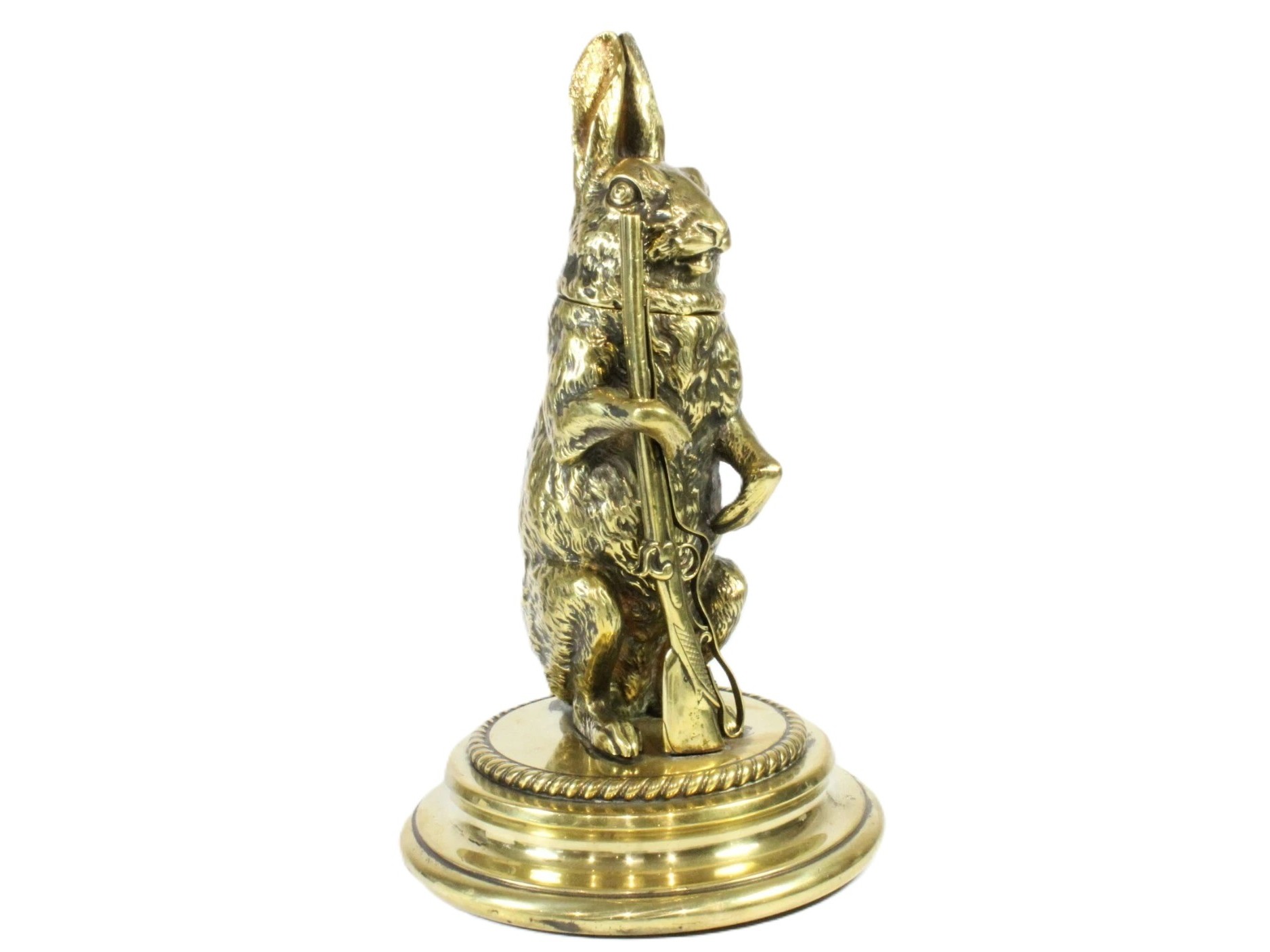


Figural Brass Hunting Hare Inkwell
| Categories | Figural - Animals & Living Creatures |
| Type | Rabbit |
| Material | Brass |
| Markings | Unmarked |
| Manufacturer | Undetermined |
| Origin | England |
| Date or Era | circa 1890 |
| Measuring | 5 ¾” diameter; 9 ⅝” high |
This is a whimsical example of an anthropomorphic figural inkwell! It combines precise metal casting with an imaginative subject.
- Overall Form: This is a single, freestanding inkwell cast in the shape of a hare (rabbit) standing upright on its hind legs. The piece is anthropomorphic, dressing the hare in human attire and giving it a human activity.
- Material and Finish: The inkwell is made of heavy cast brass. It has a textured surface to simulate fur.
- The Figure: The hare is depicted as a hunter:
- It stands upright, with expressive ears and face.
- It is dressed in period hunting attire, including a detailed coat, waistcoat, and boots (or gaiters).
- It holds a long rifle (a flintlock or early percussion rifle) upright in its forepaws.
- Functionality:
- Inkwell: The ink reservoir is concealed within the figure. The head is hinged just below the neck.
- Access: The entire head lifts to provide access to the inkwell compartment below.
- Liner: The compartment contains the original clear glass insert (liner).
- Base: The hare stands on a simple, integral round brass base.
Stylistic Analysis, Origin, and Age
This style of highly detailed, novelty figural deskware is strongly associated with late 19th-century European manufacturing, particularly drawing on a rich tradition of fairy tales and anthropomorphic animal stories.
- Style: Victorian Novelty / Fairy Tale Naturalism. This falls into the general category of “whimsical animalia,” which was extremely popular in the late 19th and early 20th centuries, especially in the context of folk tales where animals adopt human roles.
- Origin: The sophistication of the casting suggests a major manufacturing center. Given the tradition of such novelty brass figures:
- Continental Europe (Germany or Austria): These regions had strong brass casting industries and a cultural affinity for woodland creatures in folklore (like the Meister Lampe hare tales).
- England (Birmingham): Known for producing countless brass novelty items for the global market.
- Rifle Detail: The detail of the flintlock/percussion rifle suggests a nostalgic look back at earlier hunting eras, a common device in Victorian decoration.
- Age Estimate: circa 1880 – 1910 (Late Victorian to Edwardian Era)
Sold for $604 in October 2025
Content disclaimer. The information posted is the owner’s best knowledge and may not have been vetted by the SOIC. We welcome comments, corrections, and additions, working to make our website information comprehensive and accurate.
Join the Society of Inkwell Collectors (SOIC) – it’s free!
Founded in 1981 as a non-profit organization,
we are documenting inkwells (and accessories).
We’re here to help and inform!