


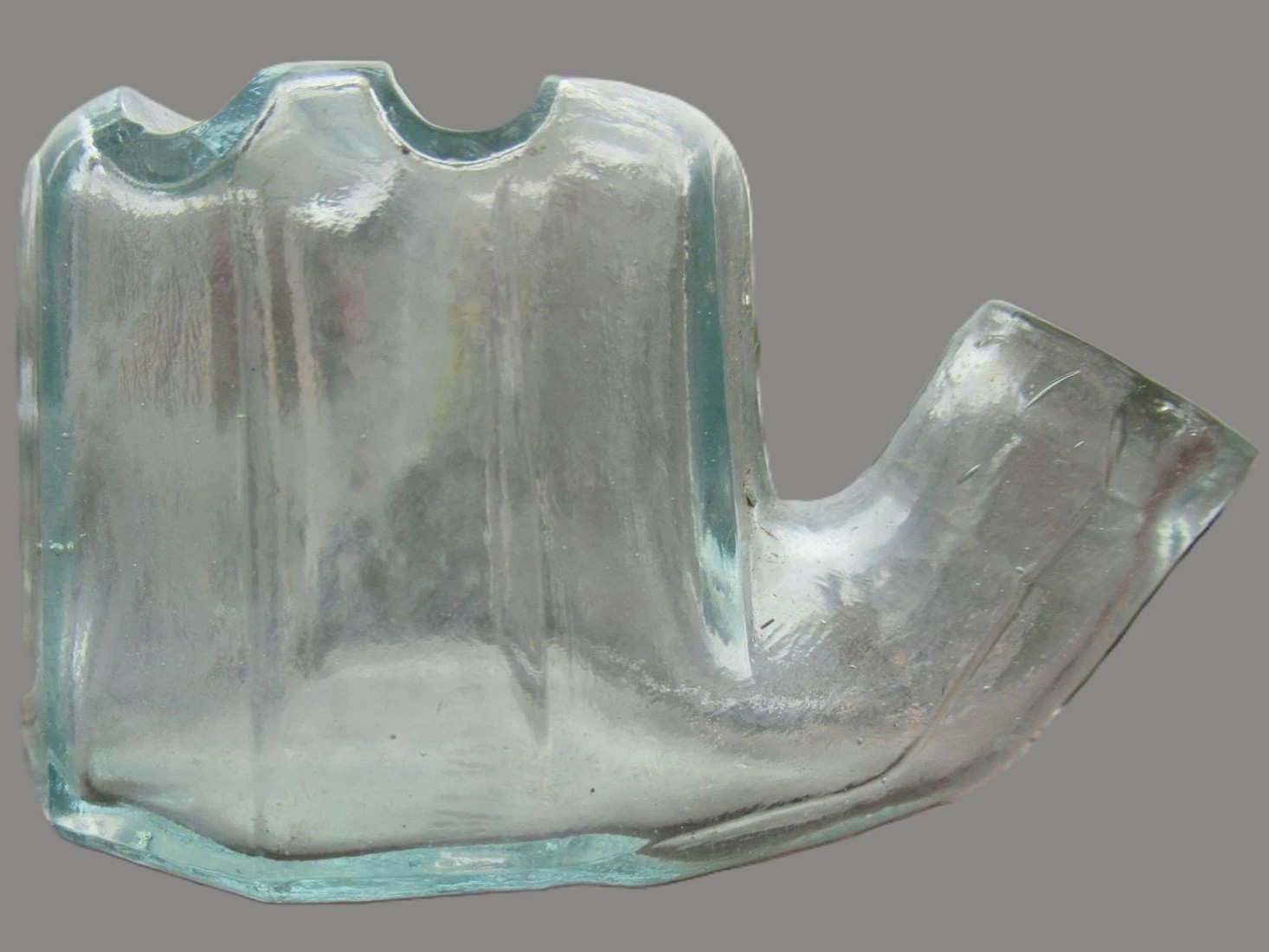
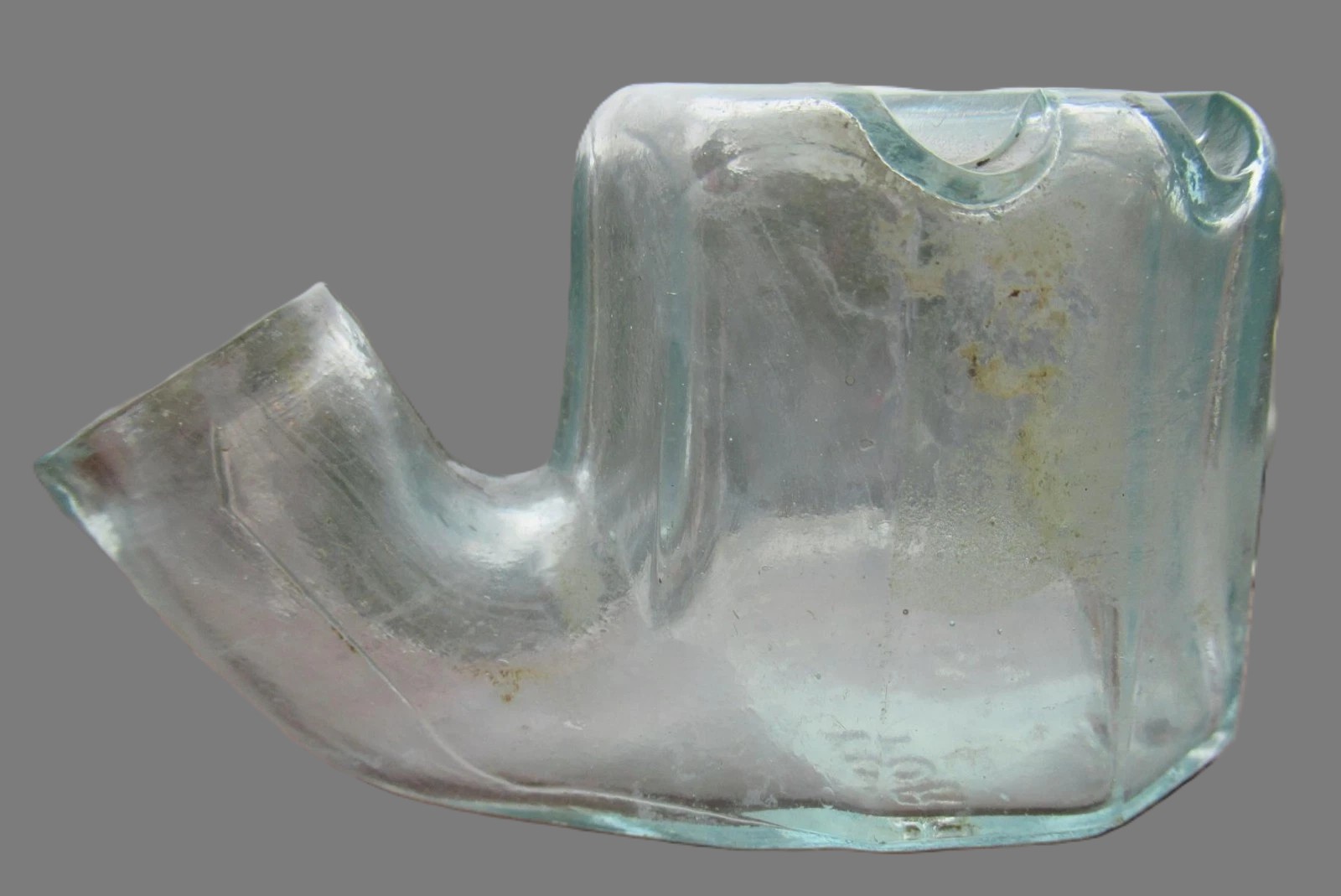
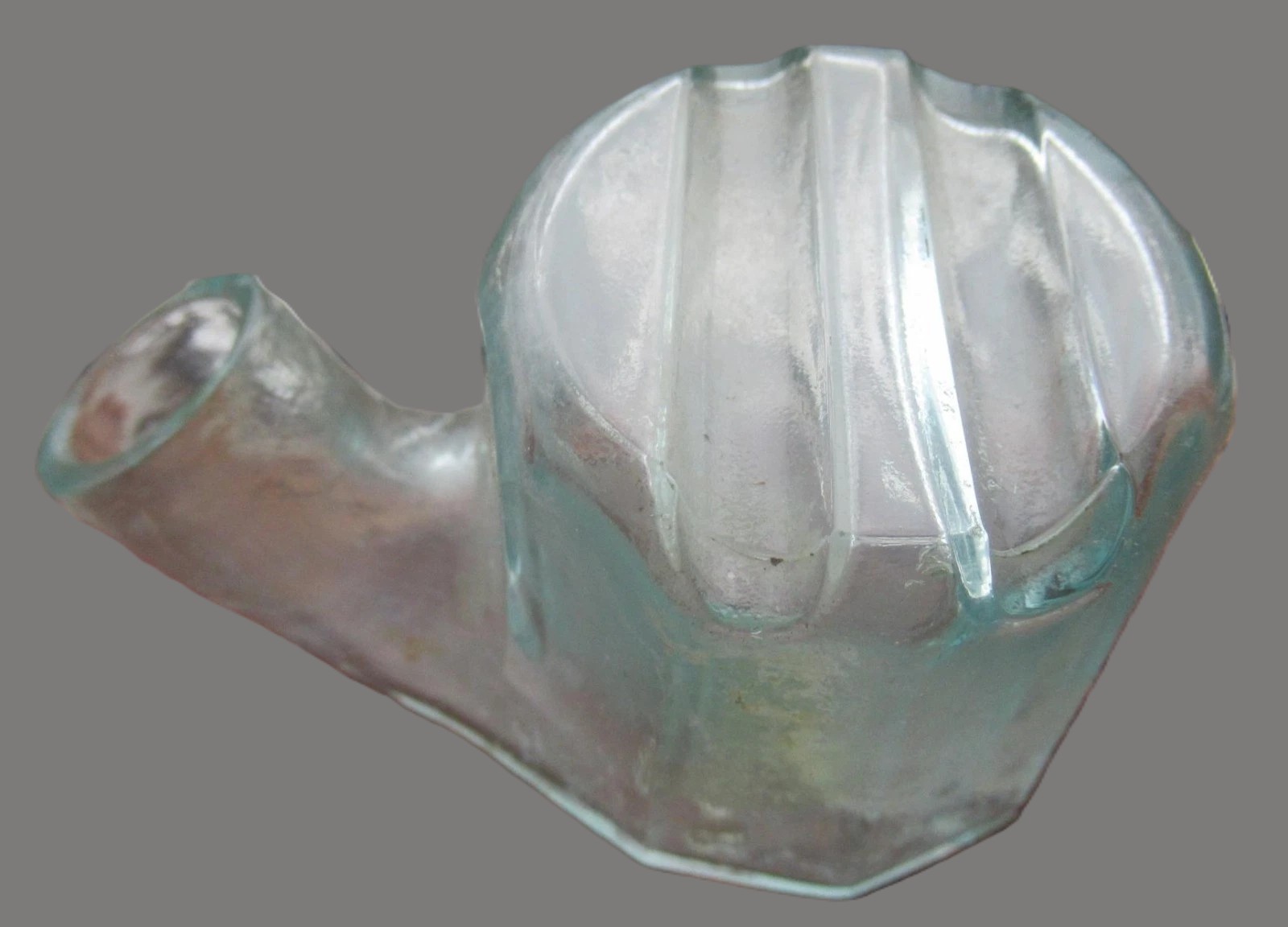
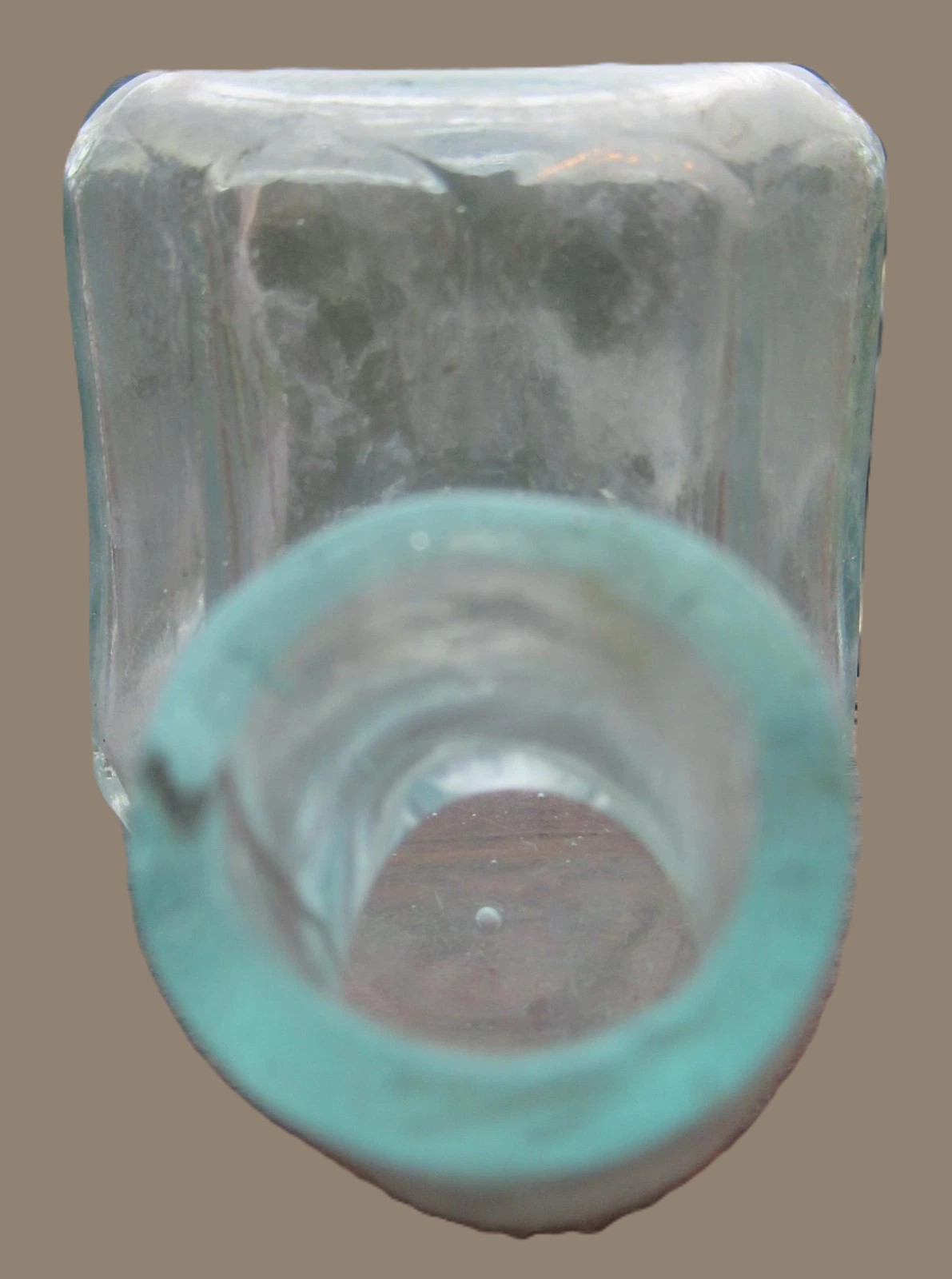
Embossed 1880 Teakettle Ink Bottle
| Categories | Ink Bottle, Mechanical - Pump / Siphon |
| Type | Tea Kettle |
| Material | Glass |
| Markings | See Narrative |
| Manufacturer | Hagerty & Co |
| Origin | United States |
| Date or Era | 1880 |
| Measuring | 3 ½” long, 2” high |
| Patent | PAT. JULY 13th 1880 -Design Patent No. 11,868 |
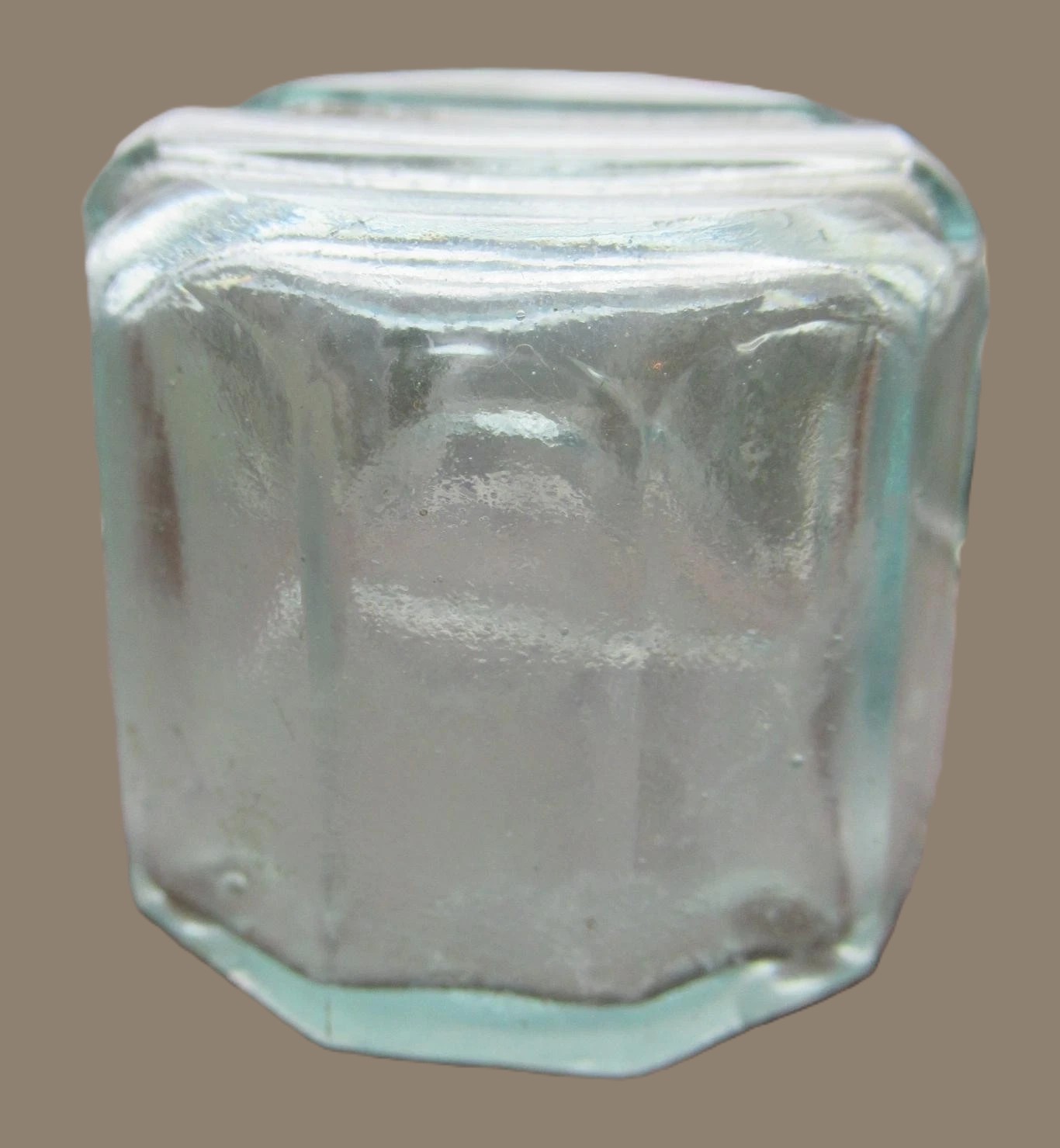
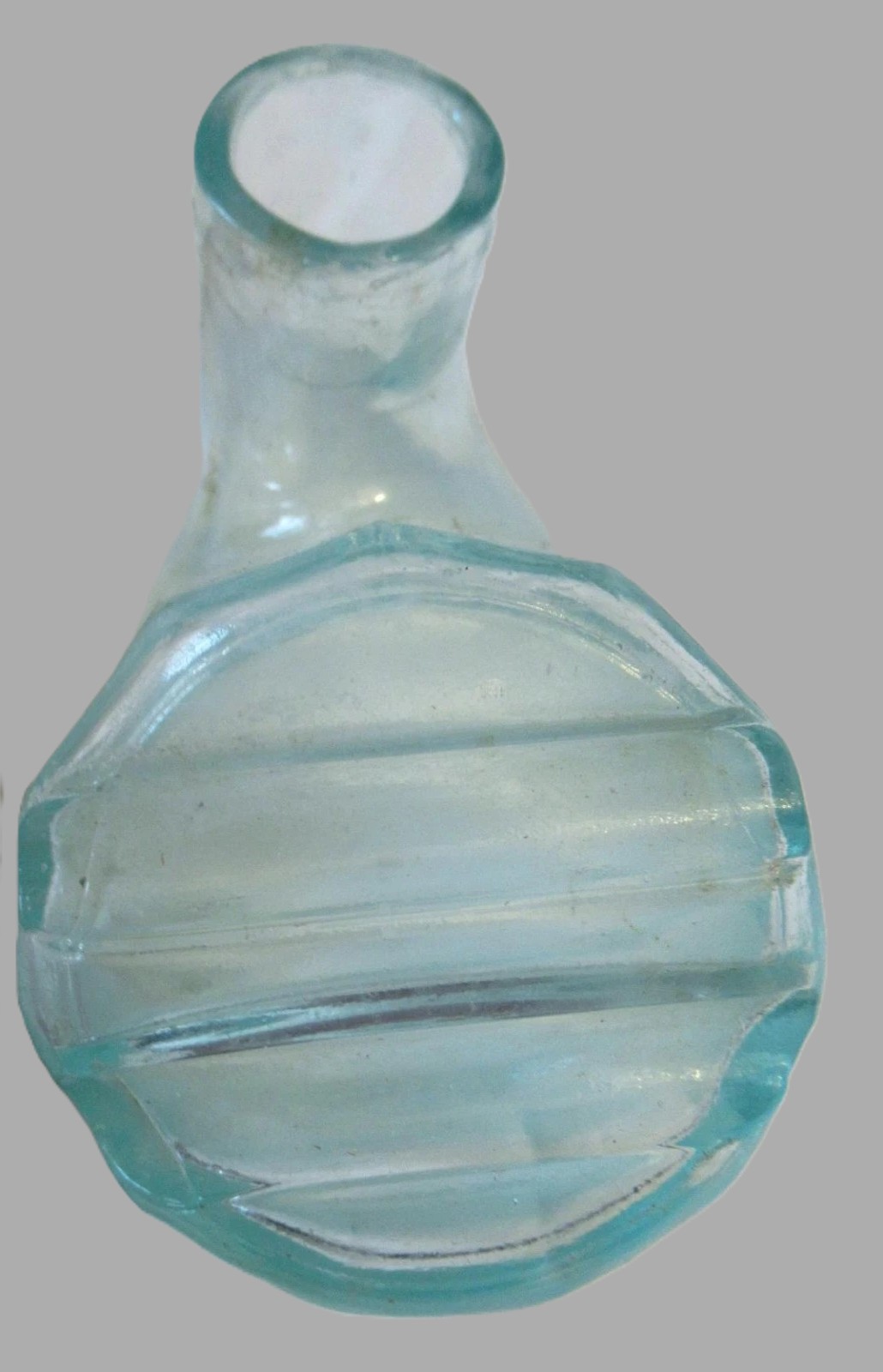
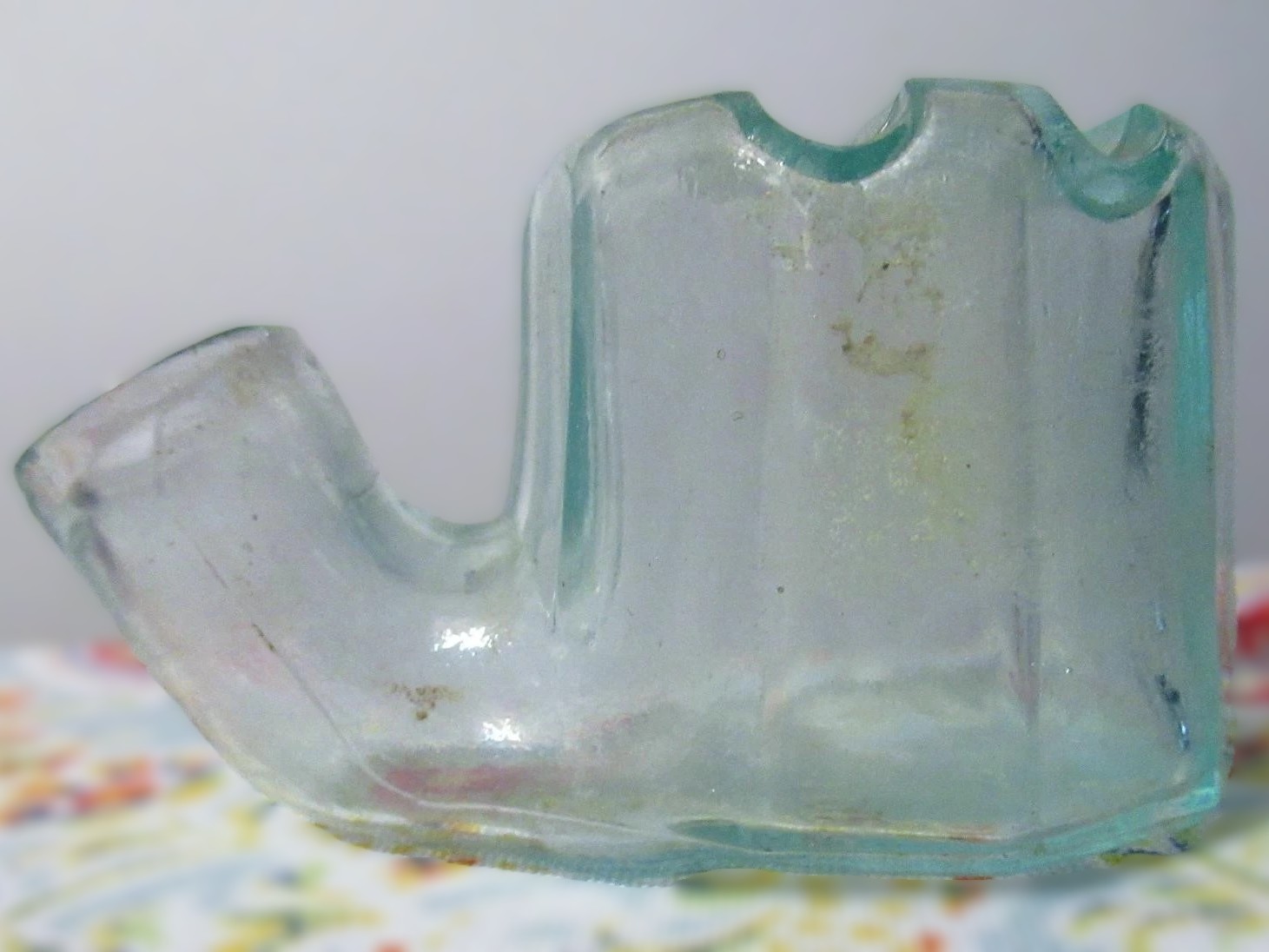
Pictured are two versions of a teakettle ink manufactured by Hagerty Bros. & Co.
Description
- Color & Material: Formed in a blue-aqua glass with bright exterior surfaces and characteristic spotty content haze remaining inside.
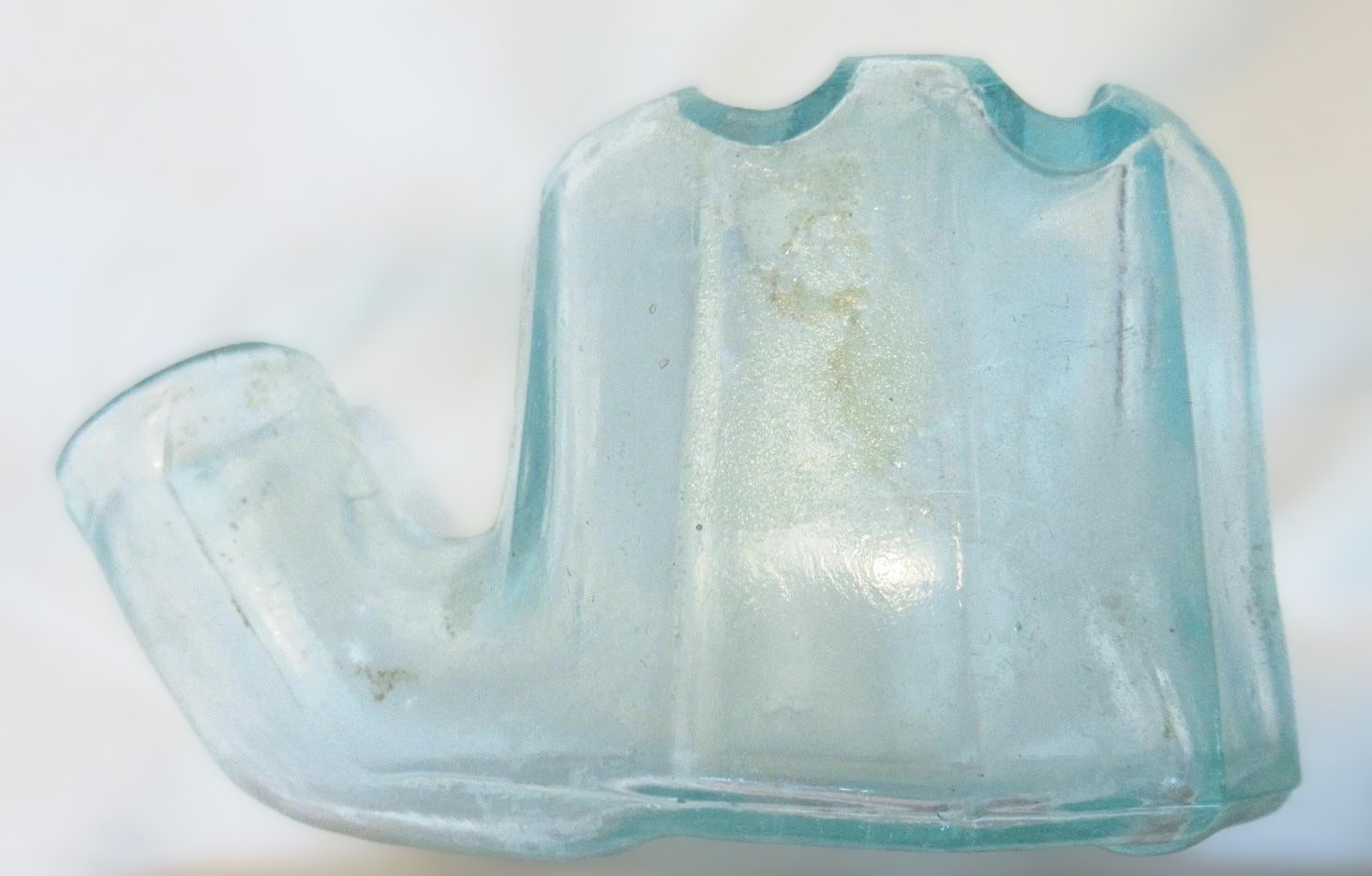
- Form & Features: Molded in the shape of a miniature household teakettle resting on its side, featuring a fluted or paneled cylindrical body, a prominent upward-angled spout (which served as the opening/neck), and a double pen rest molded into the top ridge.
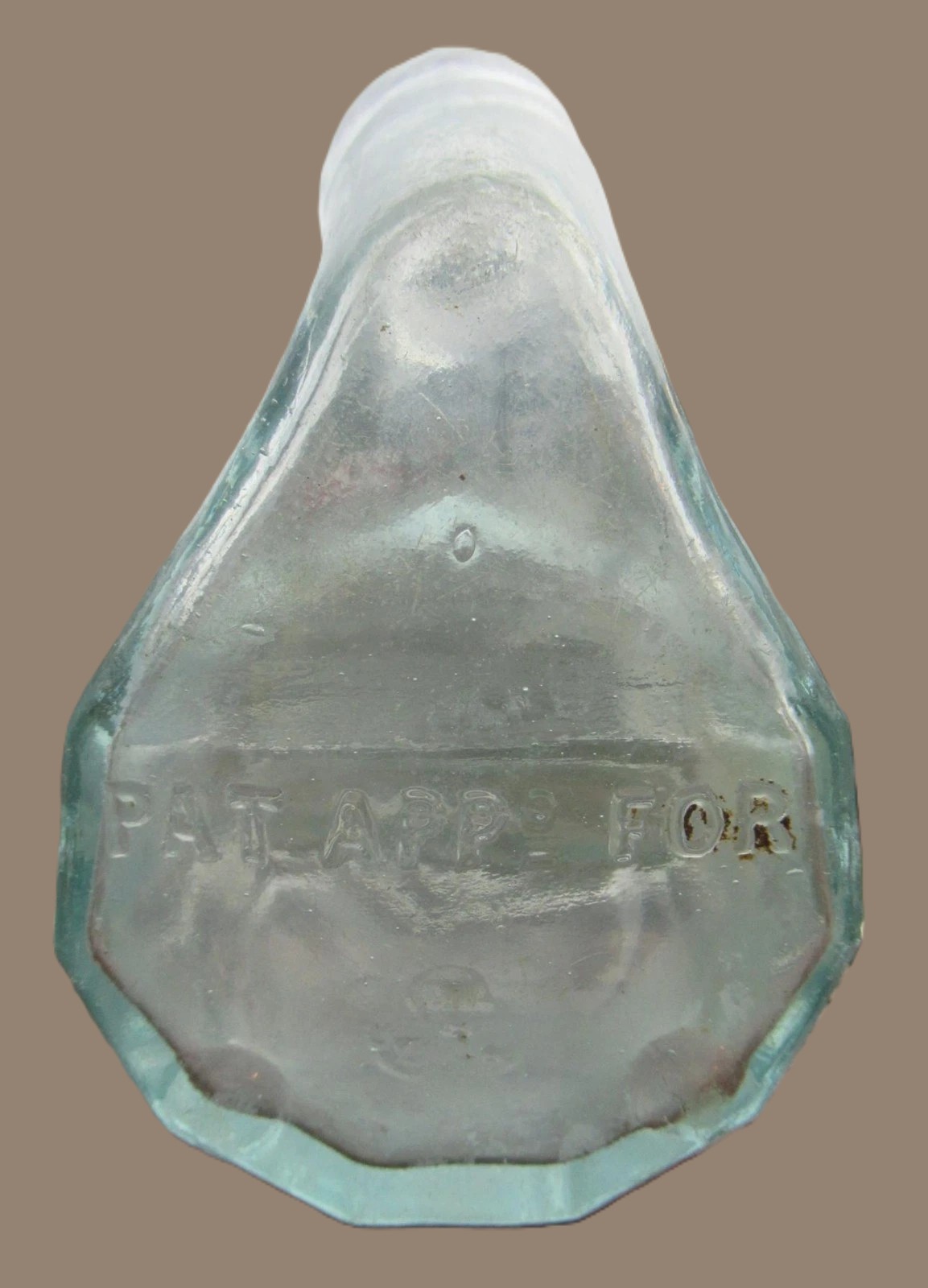
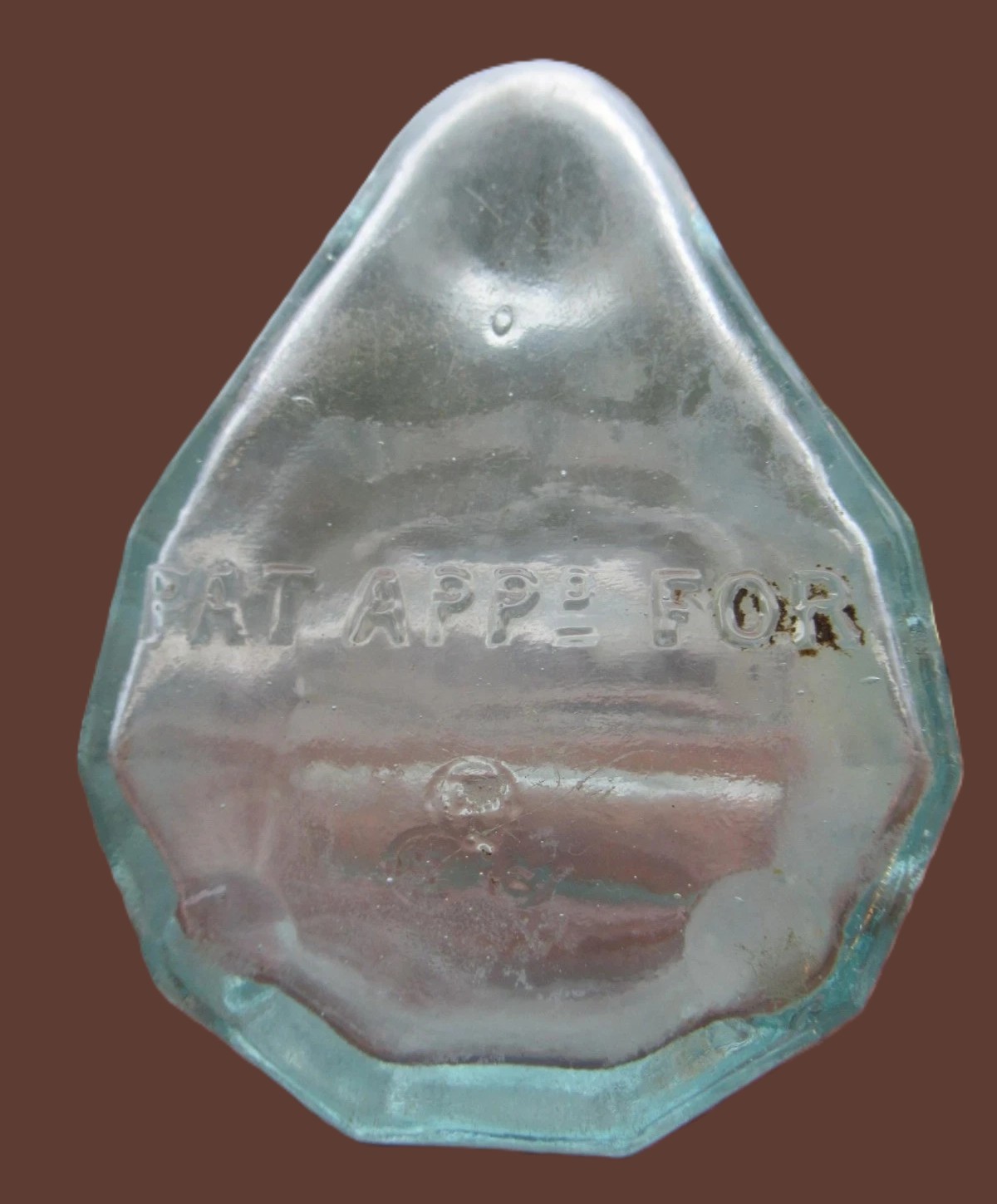
- Finish & Base: It features a simple sheared lip and a smooth base that is embossed with “PAT. APPD. FOR”on one example and “PAT. JULY 13th 1880” on the other.
Historical Context & The Patent
This design was manufactured by Hagerty Bros. & Co. (often marked with their overlapping “H. F. & Co.” or interlocking circle monogram) out of New York, a major supplier of druggists’ glassware and novelty ink bottles during the 19th century.
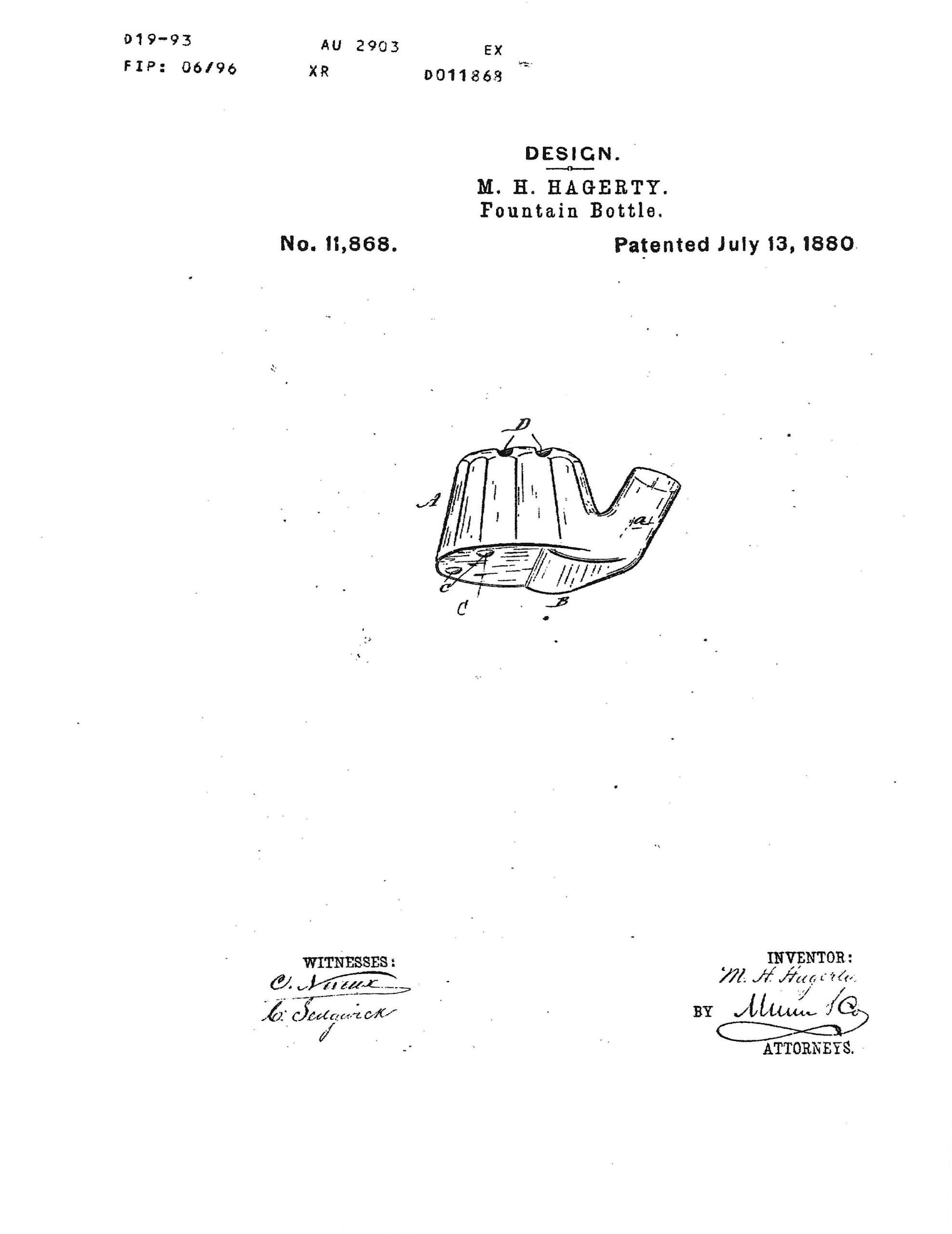
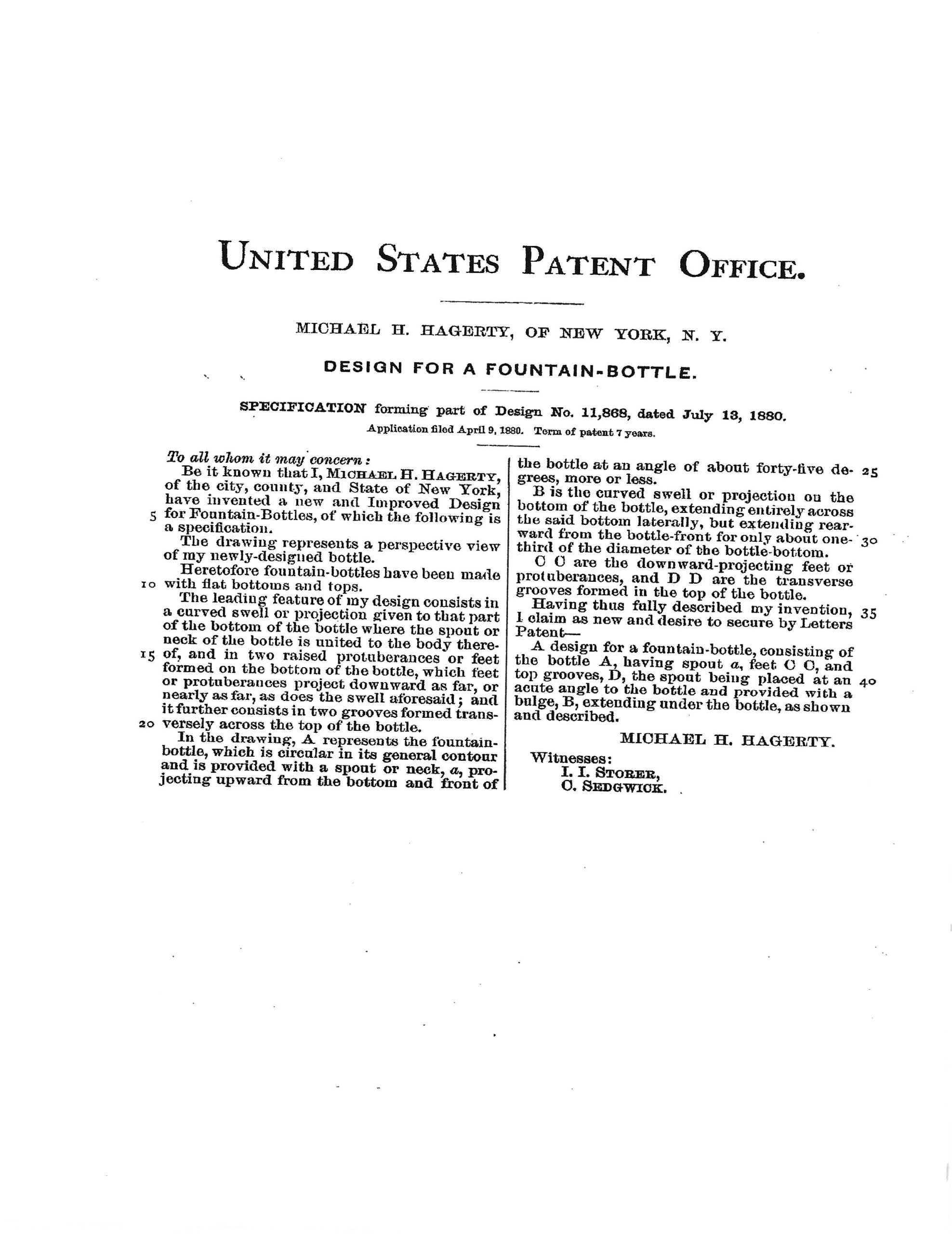
- The Patent: The patent protecting this distinctive “Fountain-Bottle” or teakettle design was officially granted on July 13, 1880 as U.S. Design Patent No. 11,868.
- Dating: The example embossed “PAT. APPD. FOR” rather than bearing the actual July 13, 1880 patent date on the base, dates it to the brief window immediately preceding the patent’s approval in mid-1880 (or very early in the production run before the mold was updated to include the patent date). The patent application was filed April 9, 1880.
Because this is a design patent from the late 19th century rather than a mechanical utility patent, it focuses entirely on the ornamental appearance, configuration, and aesthetic features of the item rather than how a mechanical mechanism works.
U.S. Design Patent No. 11,868 (granted to the Hagerty manufacturers) protected the specific ornamental design of a “Fountain-Bottle” styled after a household teakettle. The contents and specifications of the design patent layout include:
- The Title & Classification: The patent formally designates the object as a “Fountain-Bottle” (a term frequently used by glassware manufacturers at the time for novel inkwells and reservoirs).
- The Overall Shape & Proportions: It covers the distinct configuration of a miniature horizontal vessel shaped like a resting teakettle, featuring a flat or slightly conforming base, vertical fluting or paneled sides, and a rounded, domed top profile.
- The Spout Configuration: A key ornamental element protected by the patent is the prominent, upward-angled side spout that functions as the filling and dipping neck of the ink bottle.
- The Integrated Pen Rests: The design incorporates molded channels or depressions running across the top ridge of the body, creating a built-in double pen rest that keeps writing implements from rolling away.
In essence, the patent protected the unique, whimsical silhouette that allowed a utilitarian desk accessory to mimic a miniature household kitchen item.
Hagerty Bros. & Co. (frequently appearing on glassware and ephemera with variations like Hagerty Brothers & Co. or the H. F. & Co. / B. B. H. & Co. monograms) was a prominent 19th-century New York manufacturer, importer, and wholesale dealer specializing in glassware for druggists, chemists, apothecaries, and stationers.
Origins & Evolution
-
The Roots (1850s): The enterprise had its early foundations tied to the New York and Brooklyn glass-manufacturing scene. Factories associated with the Hagerty family and their partners (such as the works in Brooklyn) began heavy production of green glassware, hollowware, vials, and carboys as early as the 1850s.
-
Name Changes & Partnerships: Throughout the latter half of the 19th century, the business operated under various iterations depending on the family partners and managing agents in charge. Variations include B. B. Hagerty & Co. (operating the associated glassworks with Hagerty Bros. & Co. acting as primary agents) and Hagerty Bros. & Co. (active primarily from roughly 1878 through 1890), later transitioning into A. J. Hagerty & Co. in the 1890s.
Market Niche & Products
-
Druggist & Chemist Glassware: They were major outfitters for pharmacies and medical practices, supplying prescription bottles, nursing bottles, glass stoppers, ointment jars, and apothecary glassware.
-
Novelty & Stationers’ Glassware: Beyond medical supply, they capitalized heavily on the Victorian desk accessory market. They cataloged and distributed a vast array of popular ink bottles, including umbrella inks, cone inks, fluid fountains, and whimsical novelty inkwells (like your teakettle/turtle design).
Because of their extensive distribution networks out of New York, their marked bottles and inkwells are frequently recovered by collectors today, prized for the wide variety of utilitarian and creative shapes they produced during the height of 19th-century American glassware manufacturing.
“PAT. JULY 13th 1880” Sold for $62 in May 2023
“PAT. APPD. FOR” Sold for $73 in September 2026
Content disclaimer. The information posted is the owner’s best knowledge and may not have been vetted by the SOIC. We welcome comments, corrections, and additions, working to make our website information comprehensive and accurate.
Join the Society of Inkwell Collectors (SOIC) – it’s free!
Founded in 1981 as a non-profit organization,
we are documenting inkwells (and accessories).
We’re here to help and inform!