









Early Electroplating – Inkstand with Cut Red Glass Inkwells
| Categories | Glass - Non-figural, Silver |
| Material | Glass, Silverplate |
| Markings | See Narrative |
| Manufacturer | G.R. Elkington |
| Origin | England |
| Date or Era | circa 1841 |
| Measuring | 6 ¼” long x 5 ½” wide (Base) |
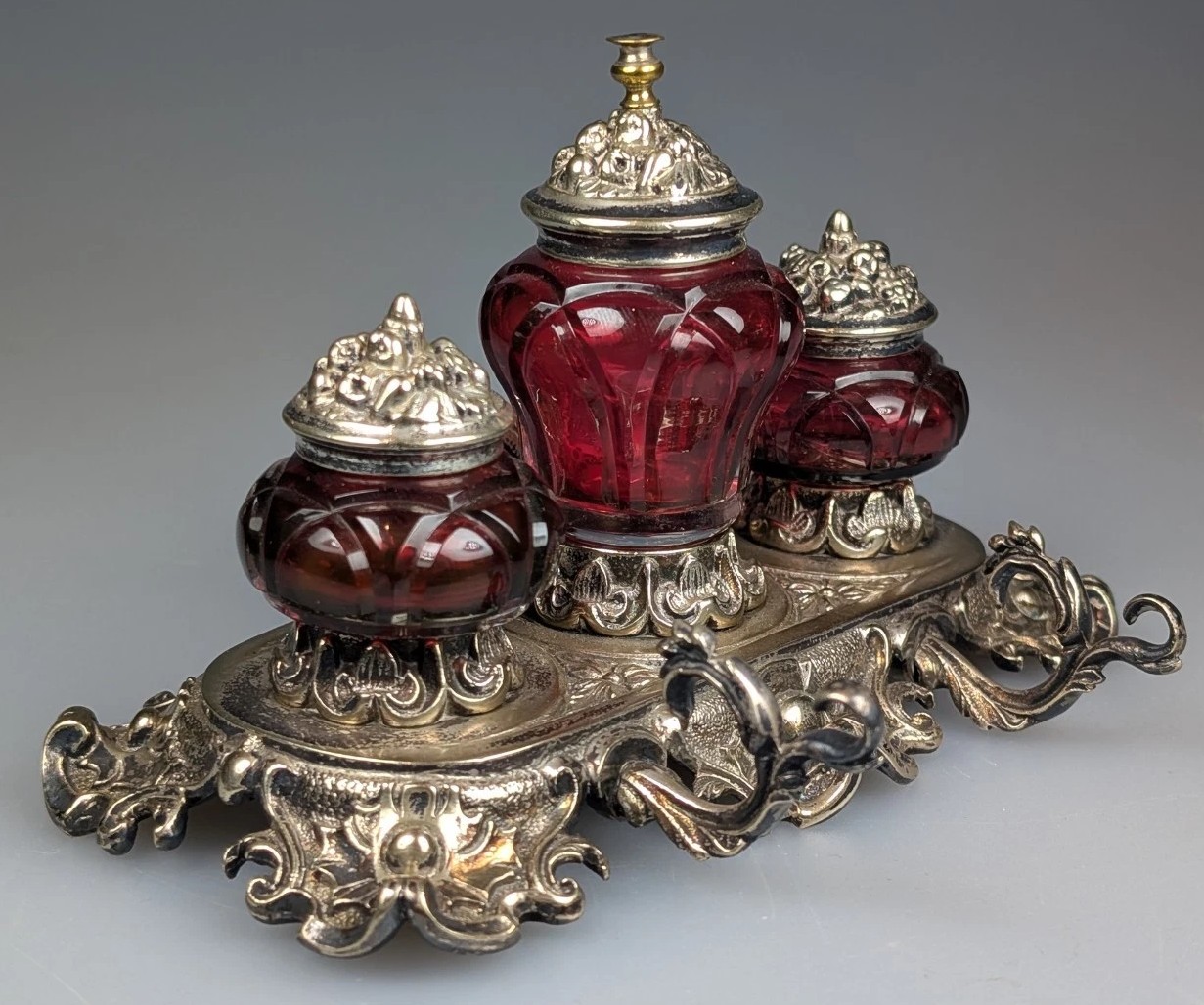
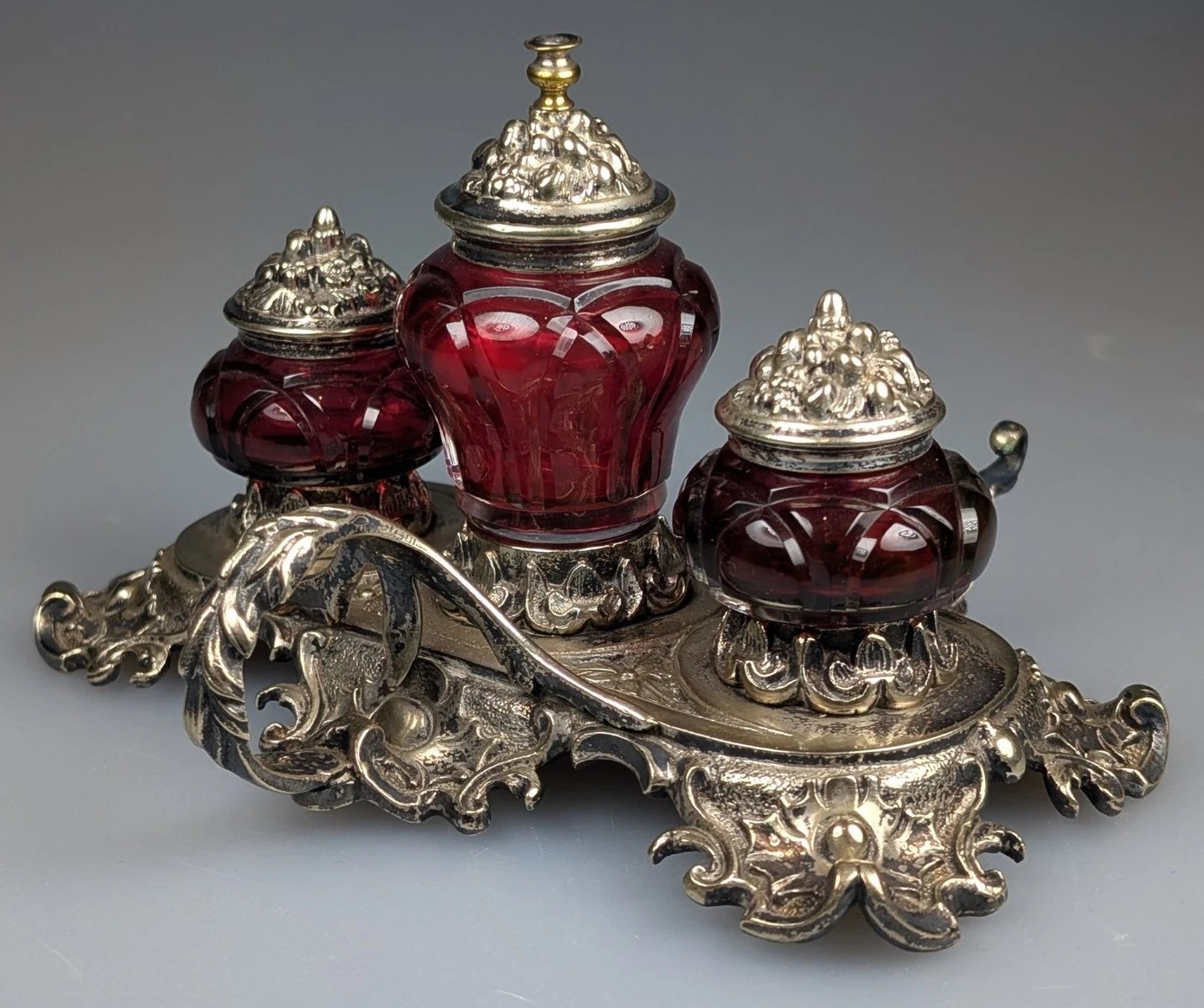
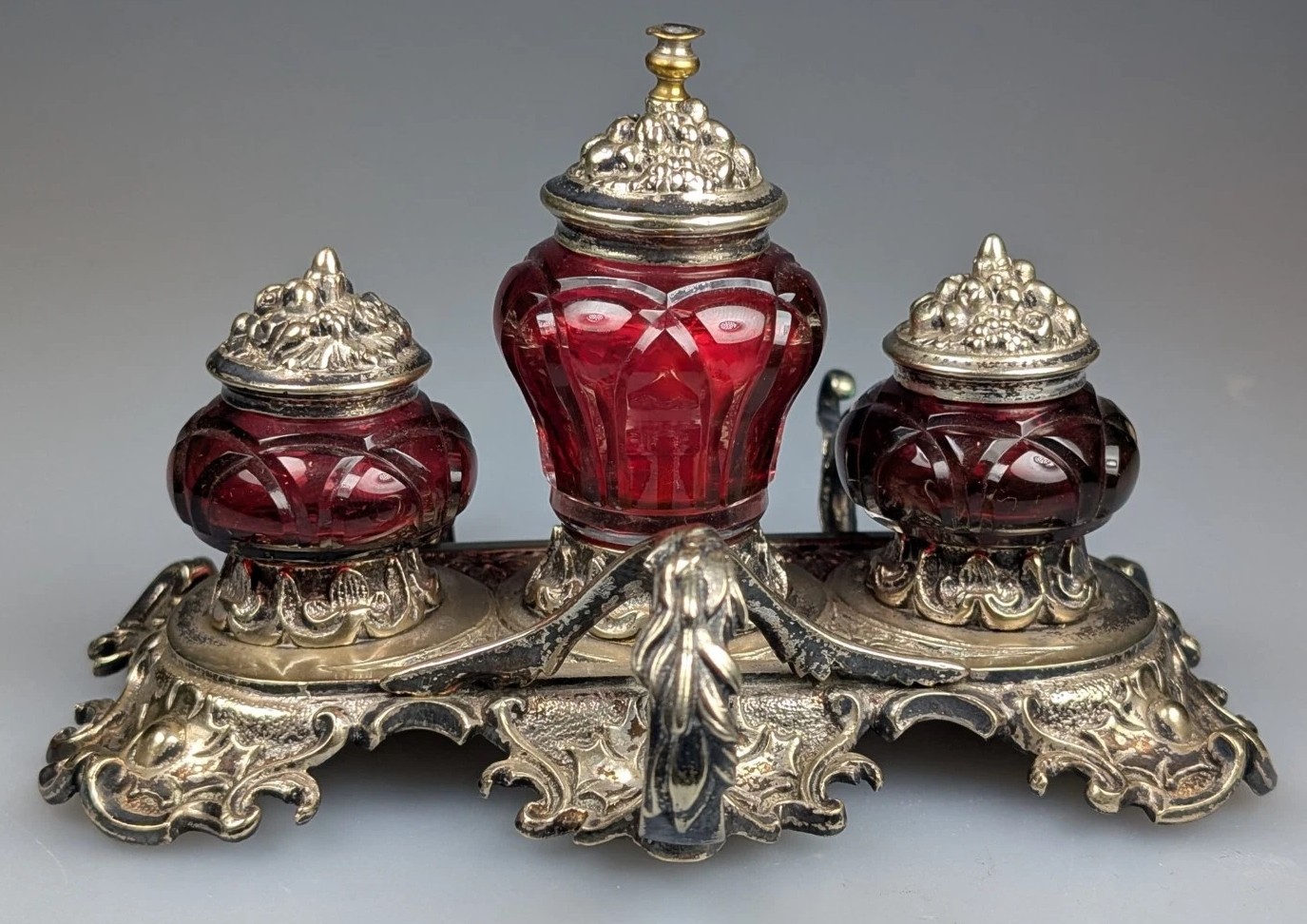
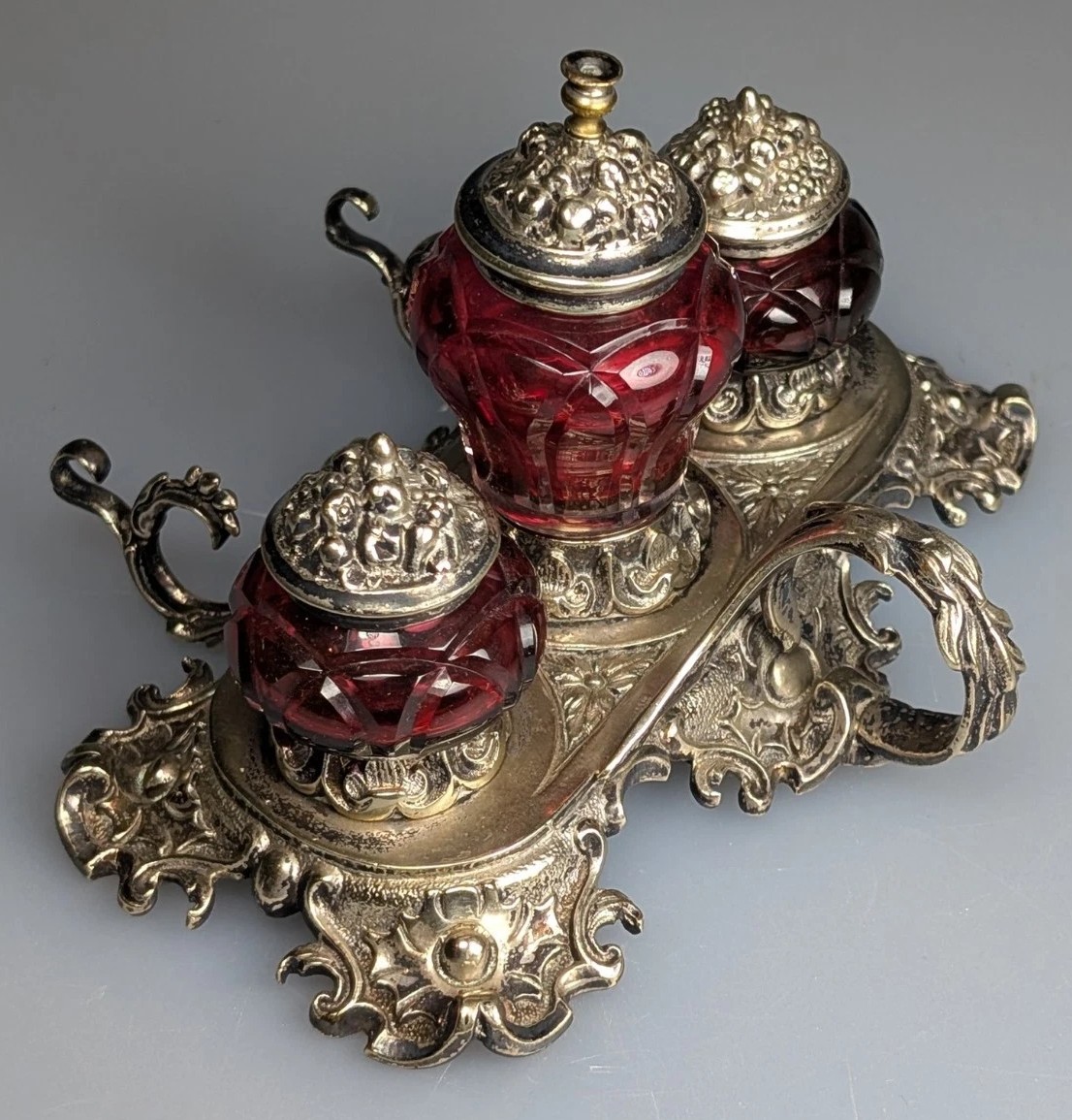
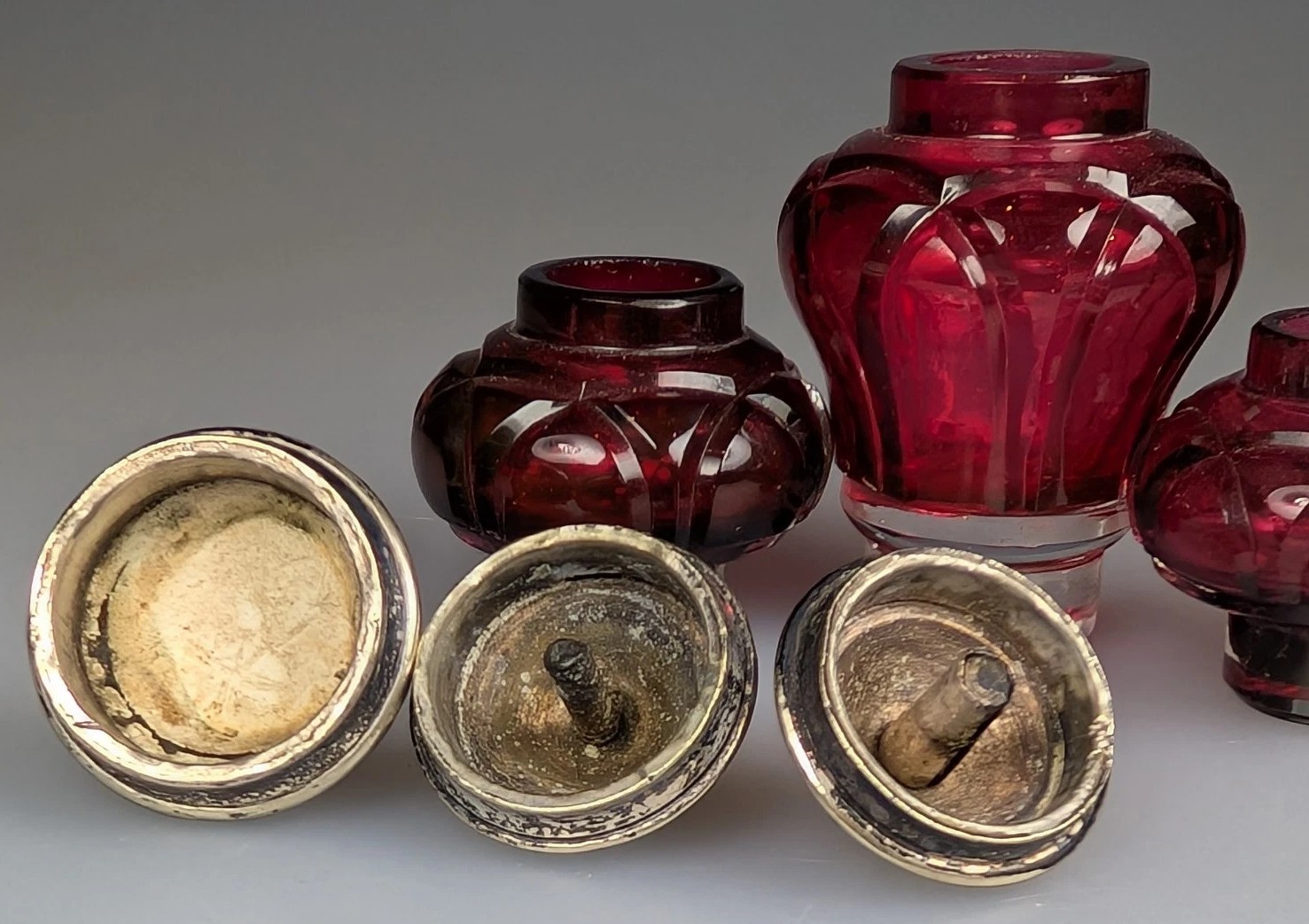
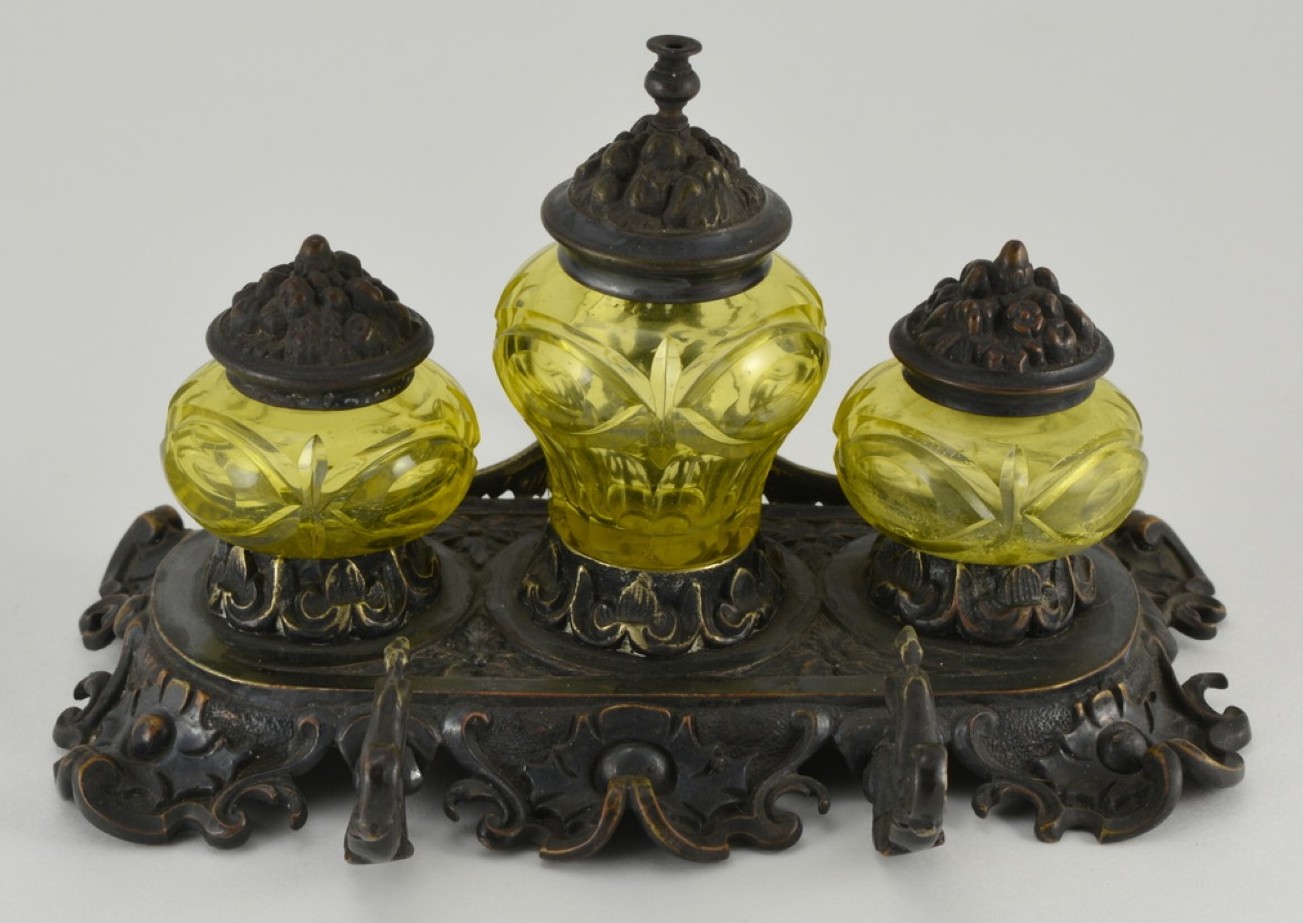
This early Victorian inkstand is a significant piece of industrial design history, featuring a rare “Bohemian style” cut red glass well mounted on an elaborate silver-plated base.
The Manufacturer: G.R. Elkington
The mark on the base refers to George Richards Elkington (1801–1865), the visionary founder of the world-famous Elkington & Co. of Birmingham, England.
- Electroplating Pioneers: George Elkington and his cousin Henry were the inventors and patentees of the electroplating process. Before their 1840 patent, silver plating was done through the more cumbersome “Old Sheffield” fusion method.
- Historical Status: Elkington & Co. went on to become one of the most important silversmiths in British history, holding numerous Royal Warrants and producing the trophies for Wimbledon.
- Connection: At the time this piece was marked (1841), the firm was in its infancy as a commercial electroplating powerhouse. Pieces marked specifically with “G.R. Elkington” represent the very first years of this revolutionary technology.
The Registration Mark
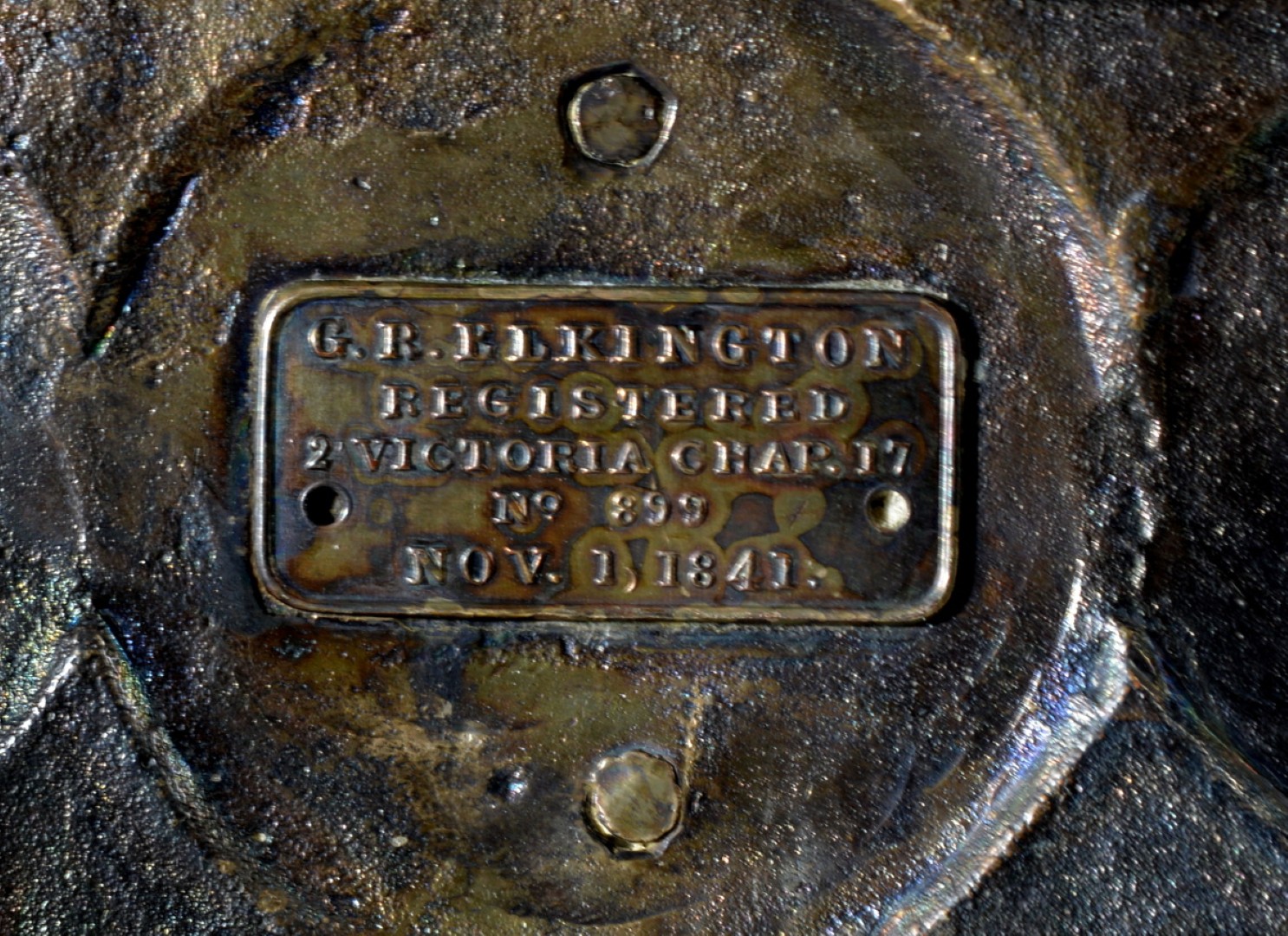
The inscription “G.R. Elkington Registered 2 Victoria Chap. 17 No. 899 Nov 1 1841” is a Design Registration mark, not a manufacture date.
- Protection of Design: Under the Ornamental Designs Act (referred to in the mark as “2 Victoria Chap. 17”), makers could register a specific shape or pattern to prevent competitors from copying it for a period of three years.
- Nov 1, 1841: This is the exact day the design was officially entered into the Registry of Designs in London.
- Manufacture Date: While the mark reflects the 1841 registration, the piece itself was likely manufactured between 1841 and 1845.
Description
- The Glass: The inkwell is made of ruby-red flashed glass, which has been deeply cut to reveal the clear glass beneath. This “cut-to-clear” style was popularized by Bohemian glassmakers and was a height of fashion in the early 1840s.
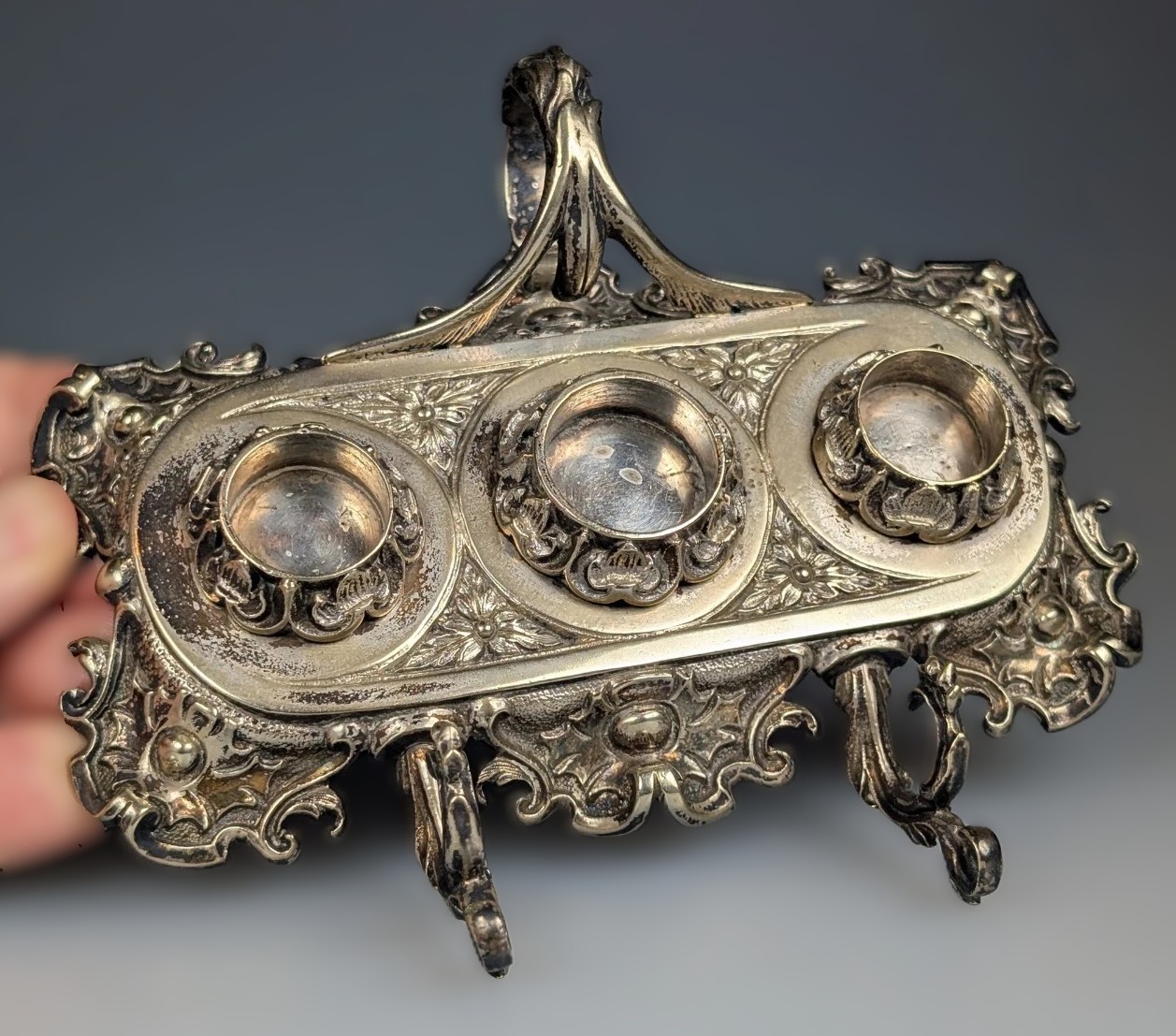
- The Base: A silver-plated tray featuring scrolling foliate and floral repoussé work.
- The Pen Holder: Located at the front is a dedicated pen holder, designed to cradle a dip pen.
- The Handle: The “handle” at the rear is a central finger ring or loop handle, designed to allow the writer to move the inkstand easily across a large library table or desk.
- The Lid: The glass inkwells are topped with a matching silver-plated hinged lids, decorated with a small finial.
Summary Table
| Detail | Identification |
| Maker | George Richards Elkington (Birmingham) |
| Registration Date | November 1, 1841 |
| Material | Electro-plated silver and Ruby cut-to-clear glass |
| Significance | Very early example of the electroplating process |
The original 1841 design registration drawing for this Elkington inkstand is preserved in The National Archives (UK) in Kew, under the specific archival reference BT 42/4/899.
The Registration Drawing (#899)
The drawing submitted by George Richards Elkington on November 1, 1841, illustrates the exact configuration of the inkstand’s base and the unique attachment of the glass reservoirs.
- The Technical Focus: The drawing specifically highlights the bayonet-style locking mechanism. This allowed the heavy cut-glass bottles to be secured into the silver-plated receptacles with a half-turn, preventing them from tipping or spilling – a significant innovation for a high-end desk set.
- Design Title: In the registration registers, the piece is titled simply as an “Improved Inkstand” or “Inkstand Base”.
- Visual Elements: The archival representation shows a top-down and profile view of the silver-plated tray, the central ring handle, and the “cups” designed to receive the glass wells.
Historical and Legal Significance
The marking “2 Victoria Chap. 17” refers to the Copyright of Designs Act 1839. This was a landmark piece of legislation that for the first time allowed manufacturers like Elkington to protect the “ornamental” shape of their metal and glass products for a period of three years.
- Early Electroplating: Because this was registered in late 1841, it represents the very first commercial application of Elkington’s revolutionary electroplating process.
- The Glass: While the drawing focuses on the metalwork and locking mechanism, the set was designed to accommodate various high-end “Bohemian-style” glass inserts, including the ruby-red flashed glass and even uranium (Vaseline) glass seen in some rare surviving sets.
See this Inkipedia entry for another example (blue glass): Elkington Double Inkstand – Cobalt Blue Glass – The Society of Inkwell Collectors (SOIC)
Inkstand with red cut glass sold for $335 in January 2026.
Content disclaimer. The information posted is the owner’s best knowledge and may not have been vetted by the SOIC. We welcome comments, corrections, and additions, working to make our website information comprehensive and accurate.
Join the Society of Inkwell Collectors (SOIC) – it’s free!
Founded in 1981 as a non-profit organization,
we are documenting inkwells (and accessories).
We’re here to help and inform!