


Early Cylindrical Ink Bottle
| Categories | Ink Bottle |
| Material | Glass |
| Markings | Unmarked |
| Manufacturer | Undetermined |
| Origin | Undetermined |
| Date or Era | circa 1800 |
| Measuring | 1 ½” diameter |
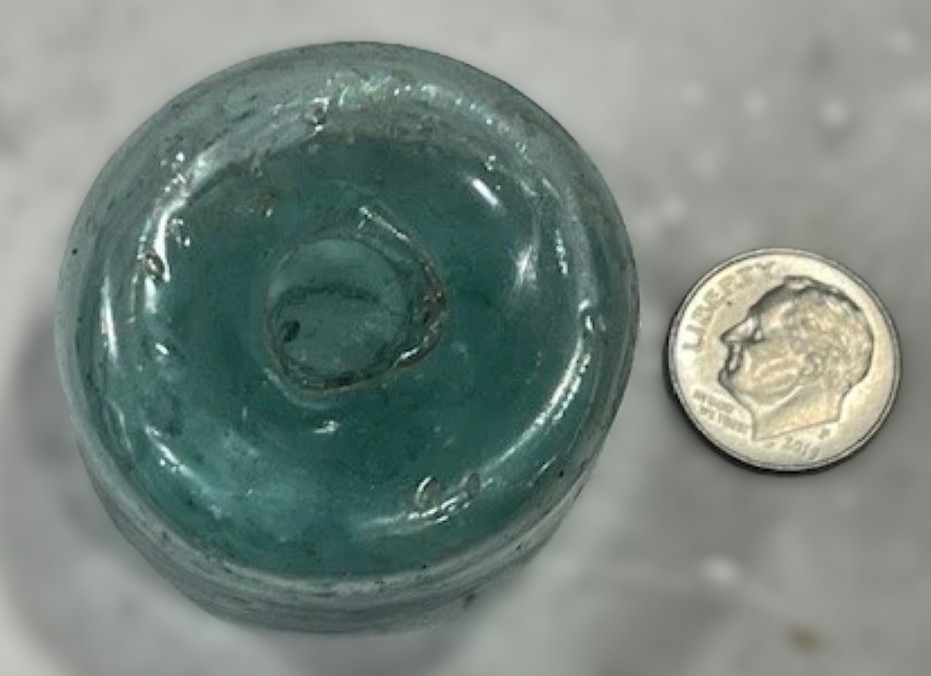
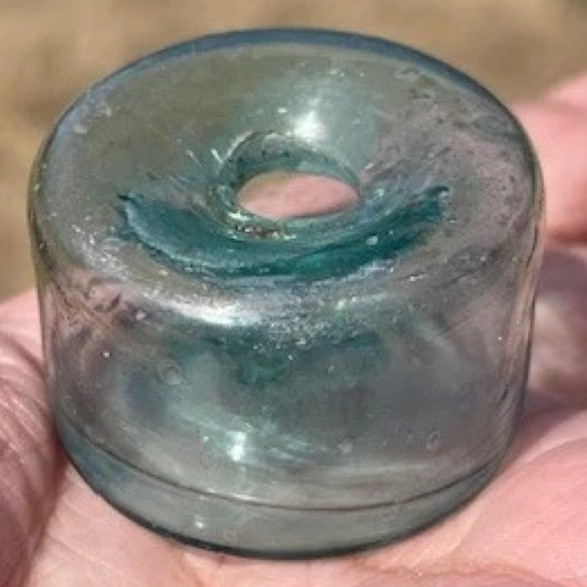
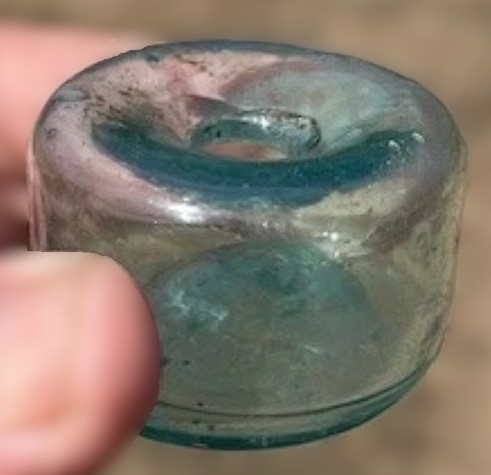
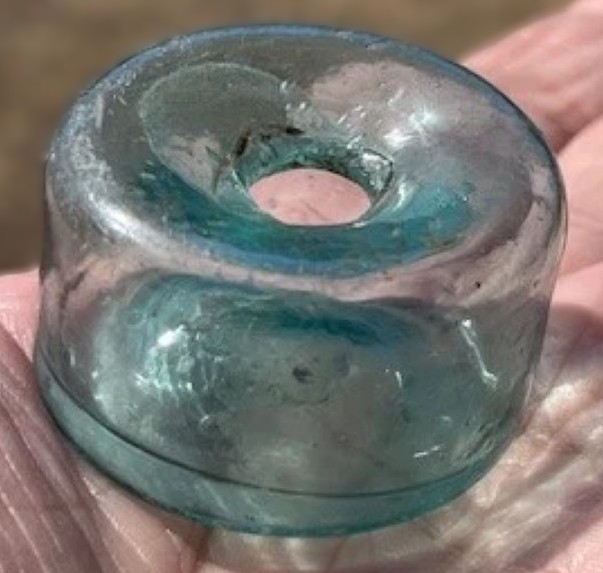
This bottle was dug in Charleston SC at a housing dating from 1760. This is an early and delicate cylindrical “puff” or “squat” ink bottle, likely dating from the late 18th to early 19th century (c. 1780–1820). Given the location (Charleston) and the house’s history (1760), this bottle fits perfectly into the era of handcrafted, utilitarian glass that was often imported from England or produced in very early American glasshouses.
Physical Description & Technical Details
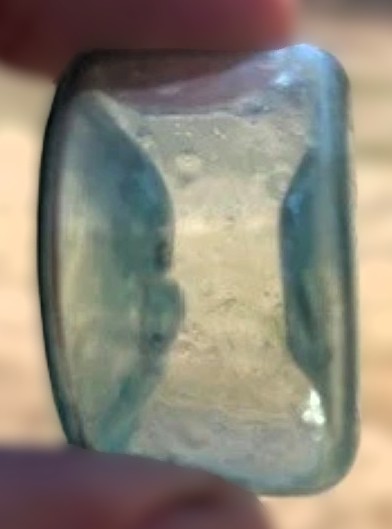
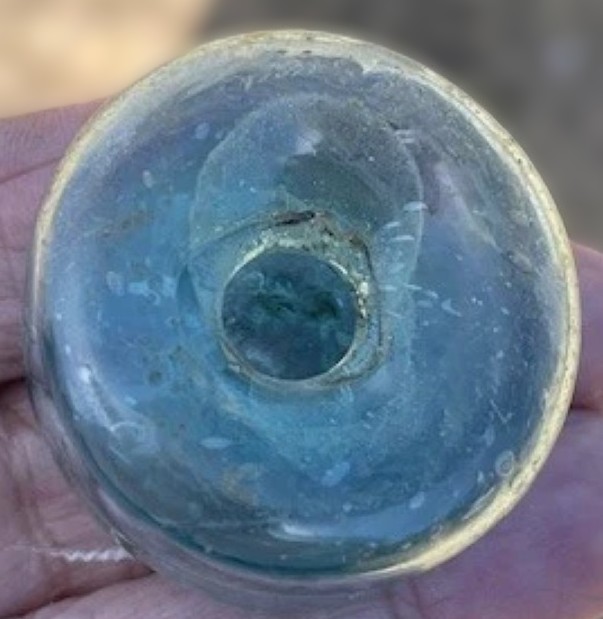
- Color & Clarity: The glass is a classic pale aqua with a subtle light mint green undertone. This “natural” glass color results from iron impurities in the sand used during the melt. The “discoloration” at the top is a fascinating characteristic—often called “glass gall” or simply a high concentration of “seeds” (tiny air bubbles). These occur when the glass isn’t “fined” (heated long enough for bubbles to escape), a common trait in early, less-refined glass batches.
- Form & Manufacture: It is a free-blown (or possibly dip-molded) cylindrical form. The lack of a “fish eye” or tooled lip suggests the top was finished by simply cracking the glass from the blowpipe and lightly fire-polishing it, or by manipulating it while hot to create the inverted funnel-style orifice.
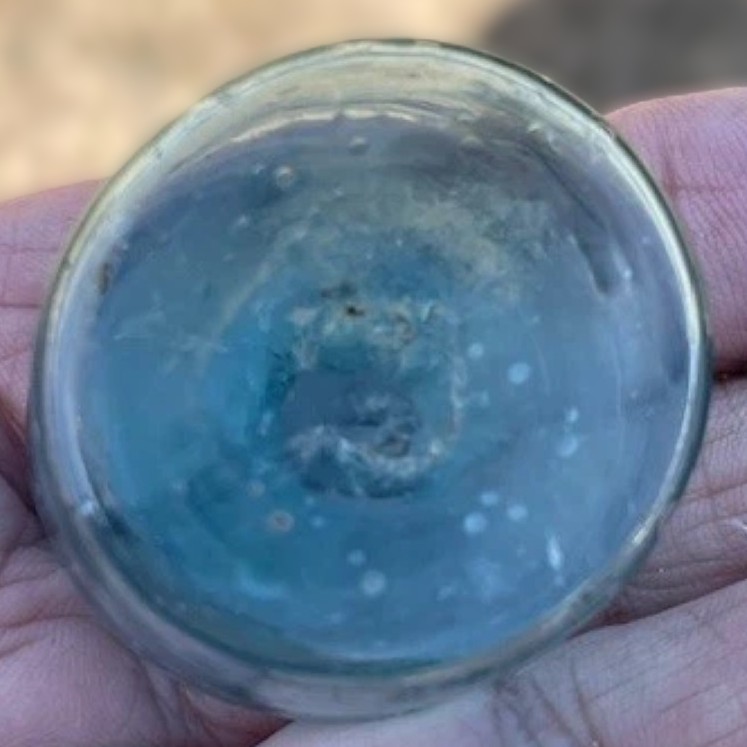
- The Pontil: The base features a sharp, open pontil scar. This indicates the bottle was held by a solid iron rod (pontil) while the neck was being finished. The presence of this jagged scar, combined with the thin walls, is a hallmark of very early production.
- Dimensions & Texture: At only 1 ½ inches in diameter, it is a “miniature” or personal-sized ink. The “beautiful seeds all over” provide a wonderful tactile and visual texture that modern glass cannot replicate.
Historical Significance
The “thin and delicate” nature of this glass—reminiscent of flint glass (lead glass)—is significant. While most “utility” inks of the 19th century were thick and “heavy” to prevent tipping and breakage, earlier 18th-century examples were often blown much thinner.
The fact that it was dug at a 1760s site in Charleston suggests it may have been a high-quality import. Charleston was a major port for English goods; this could very well be an English-made “Stippled” or “Seed” glass ink, which were prized for their clarity despite the primitive manufacturing.
Summary
Type: Early Free-Blown Open Pontil Ink Bottle Date: c. 1780–1820 Origin: Likely English or early American (e.g., Wistarburgh or early Stiegel-type) Characteristics: Pale aqua/mint green; thin, delicate “flint-like” walls; high seed count (“discoloration”) at the rim; sharp open pontil. Context: Dug in Charleston, S.C. (1760s site).
This is a “museum grade” example of early American/Colonial-era utility glass. Because it is so thin, it is a miracle it survived the centuries underground without being crushed!
Sold for $150 in February 2026
Content disclaimer. The information posted is the owner’s best knowledge and may not have been vetted by the SOIC. We welcome comments, corrections, and additions, working to make our website information comprehensive and accurate.
Join the Society of Inkwell Collectors (SOIC) – it’s free!
Founded in 1981 as a non-profit organization,
we are documenting inkwells (and accessories).
We’re here to help and inform!