

Inkipedia
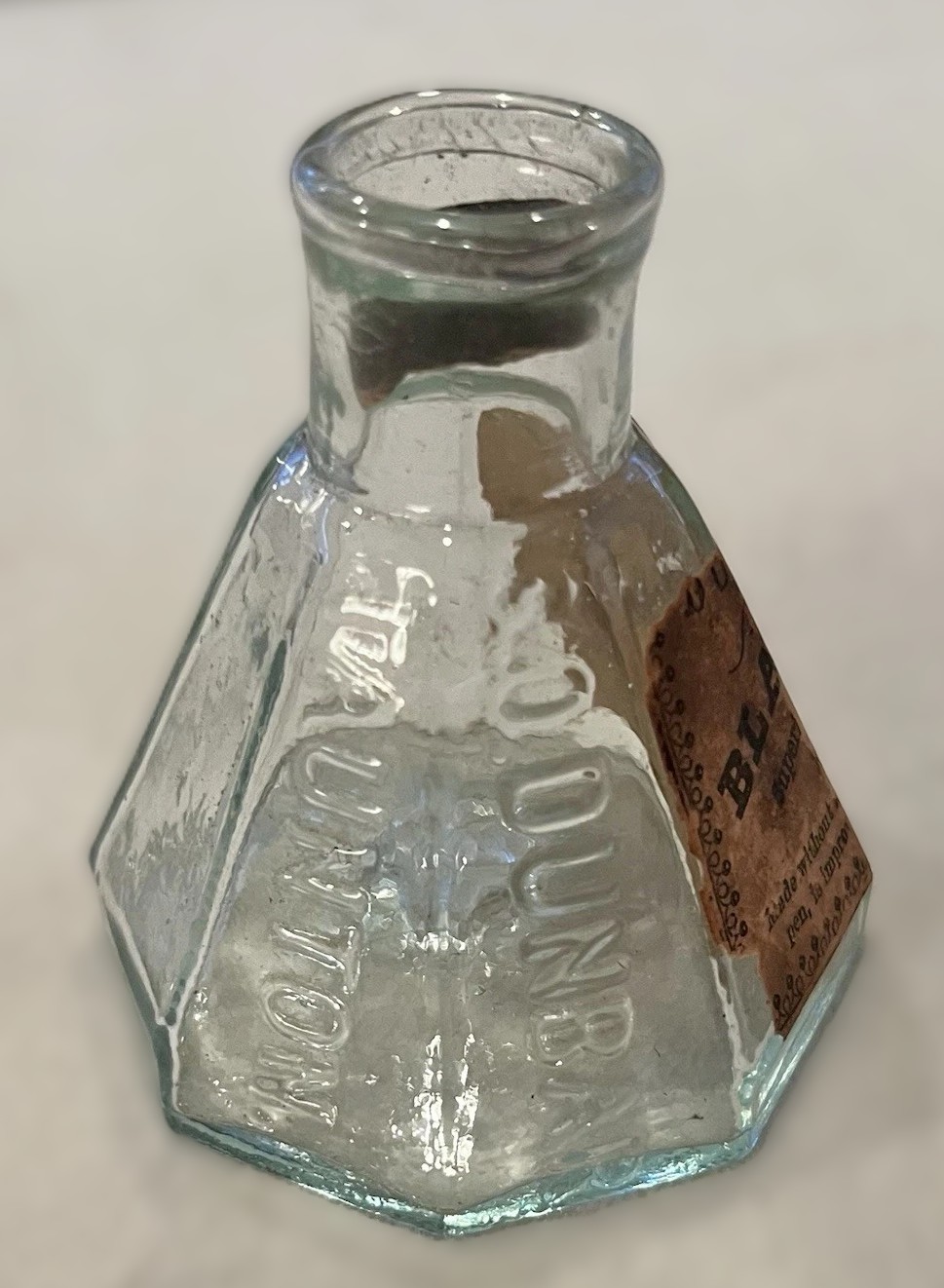
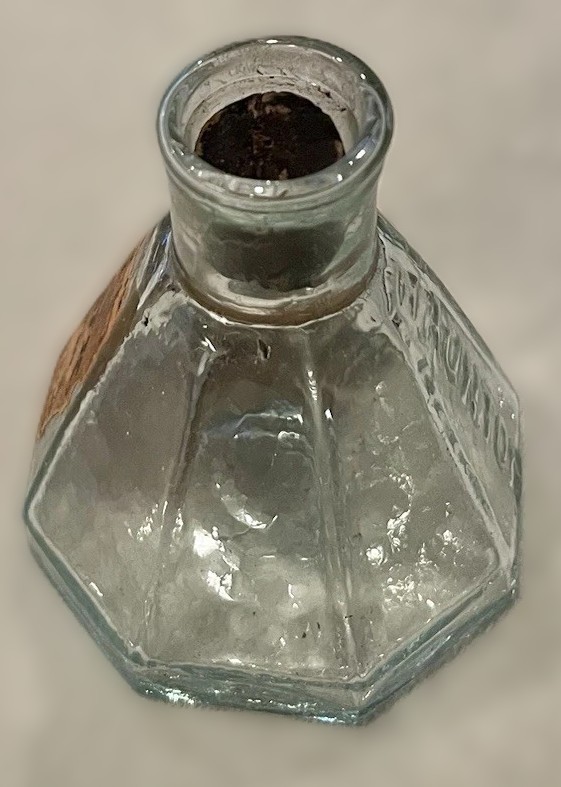
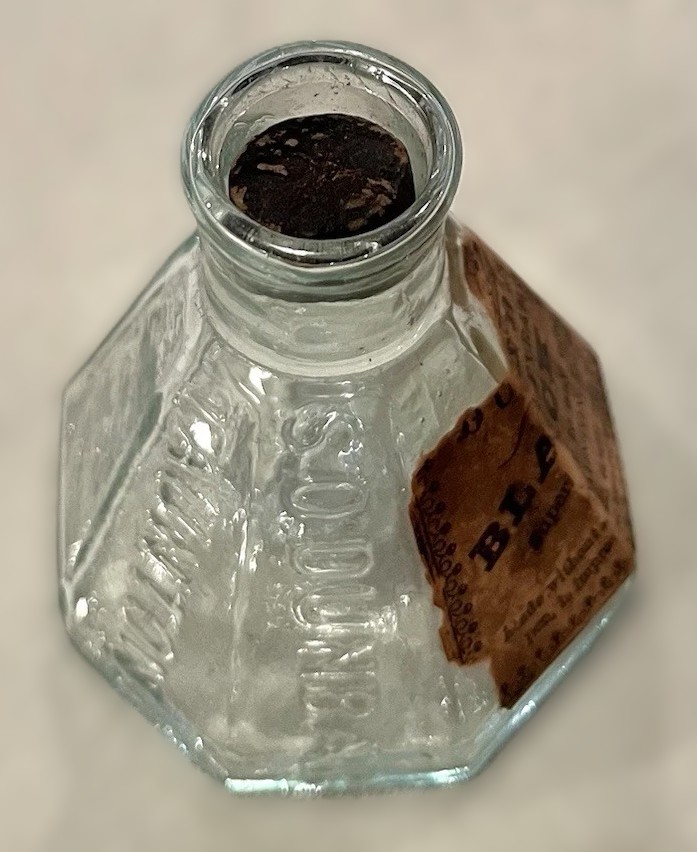
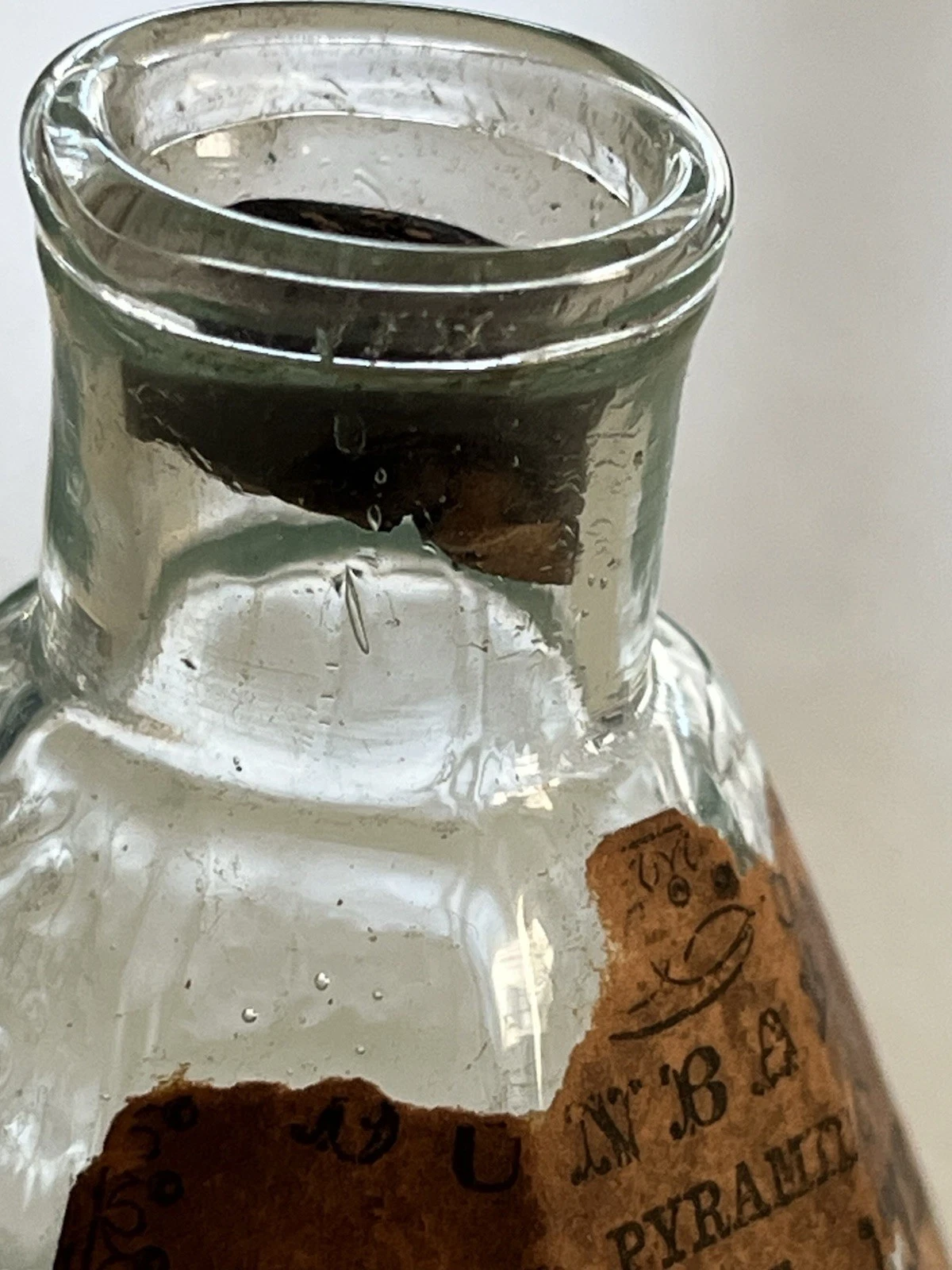
Dunbar Pyramid Ink Bottle
| Categories | Ink Bottle |
| Type | Umbrella |
| Material | Glass |
| Markings | See Narrative |
| Manufacturer | Undetermined |
| Origin | United States |
| Date or Era | circa 1850 |
Bottle Description
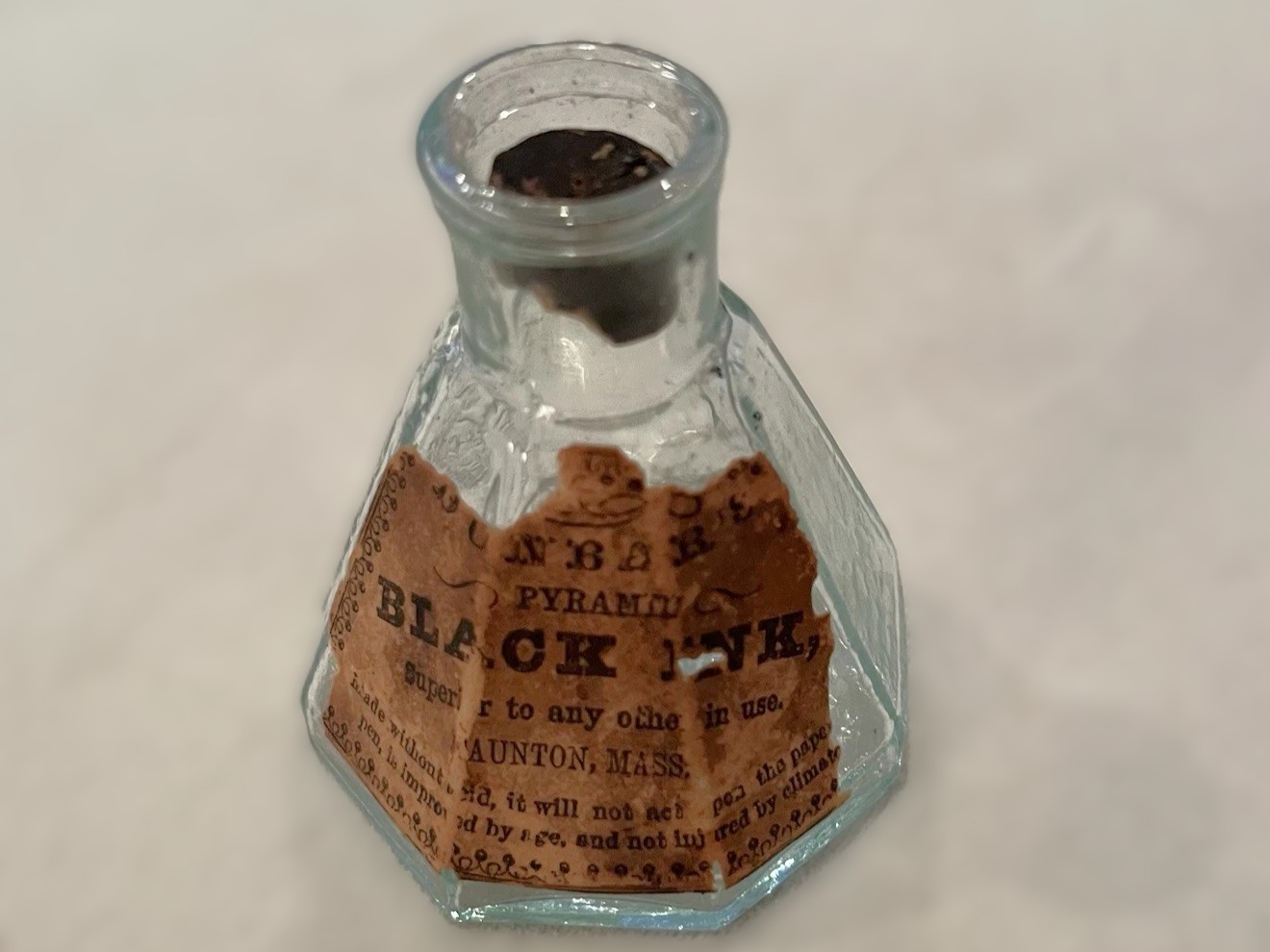
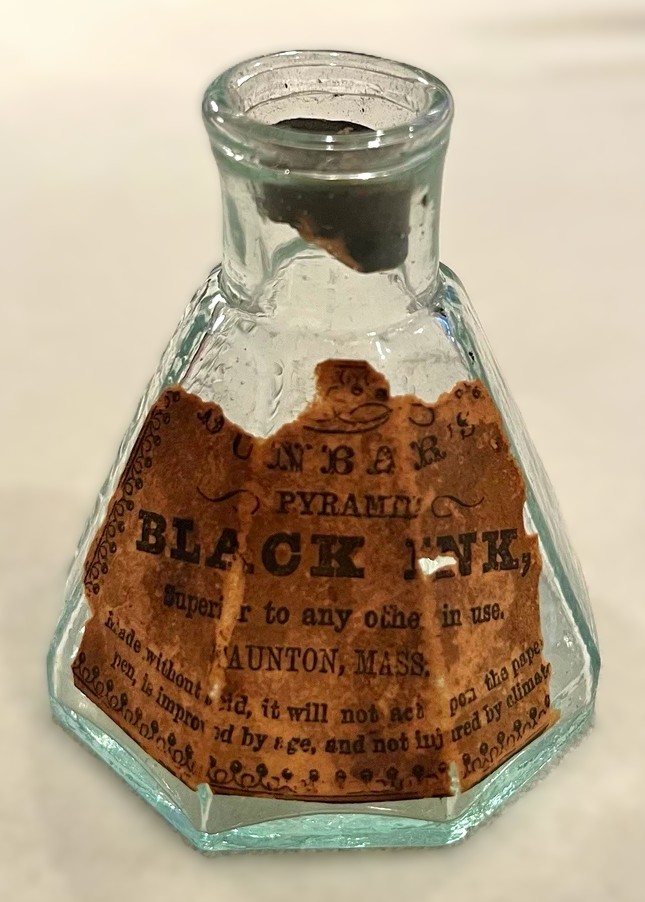
- Form & Structure: An eight-sided umbrella (or pyramid) form featuring multi-faceted panels tapering upwards to a cylindrical neck.
- Color & Glass Character: Light aqua glass showing period-typical character, including seed bubbles, slight glass striations, and an authentic unpolished, hand-blown texture.
- Lip & Finish: A hand-formed, rolled-in lip, retaining its original cork stopper seated inside the bore.
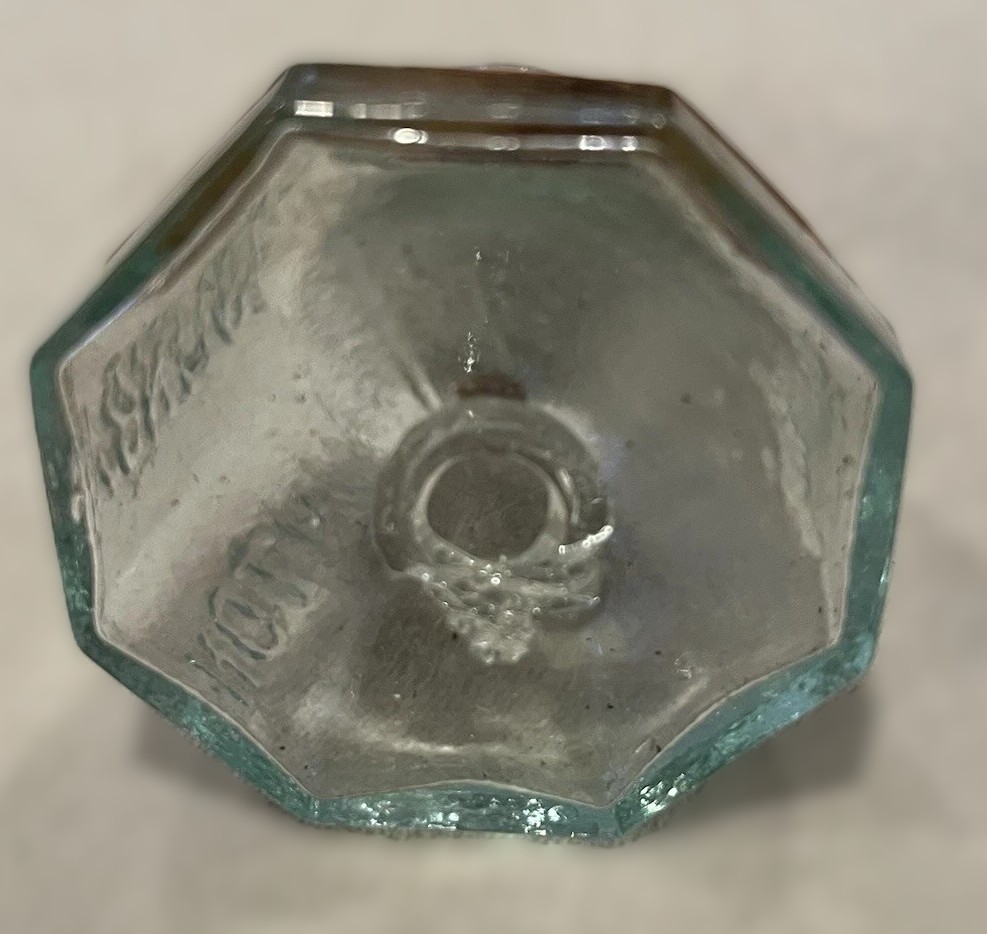
- Base: Blowpipe / open pontil scar, visible as a distinct circular ring of jagged, fractured glass at the center of the push-up base.
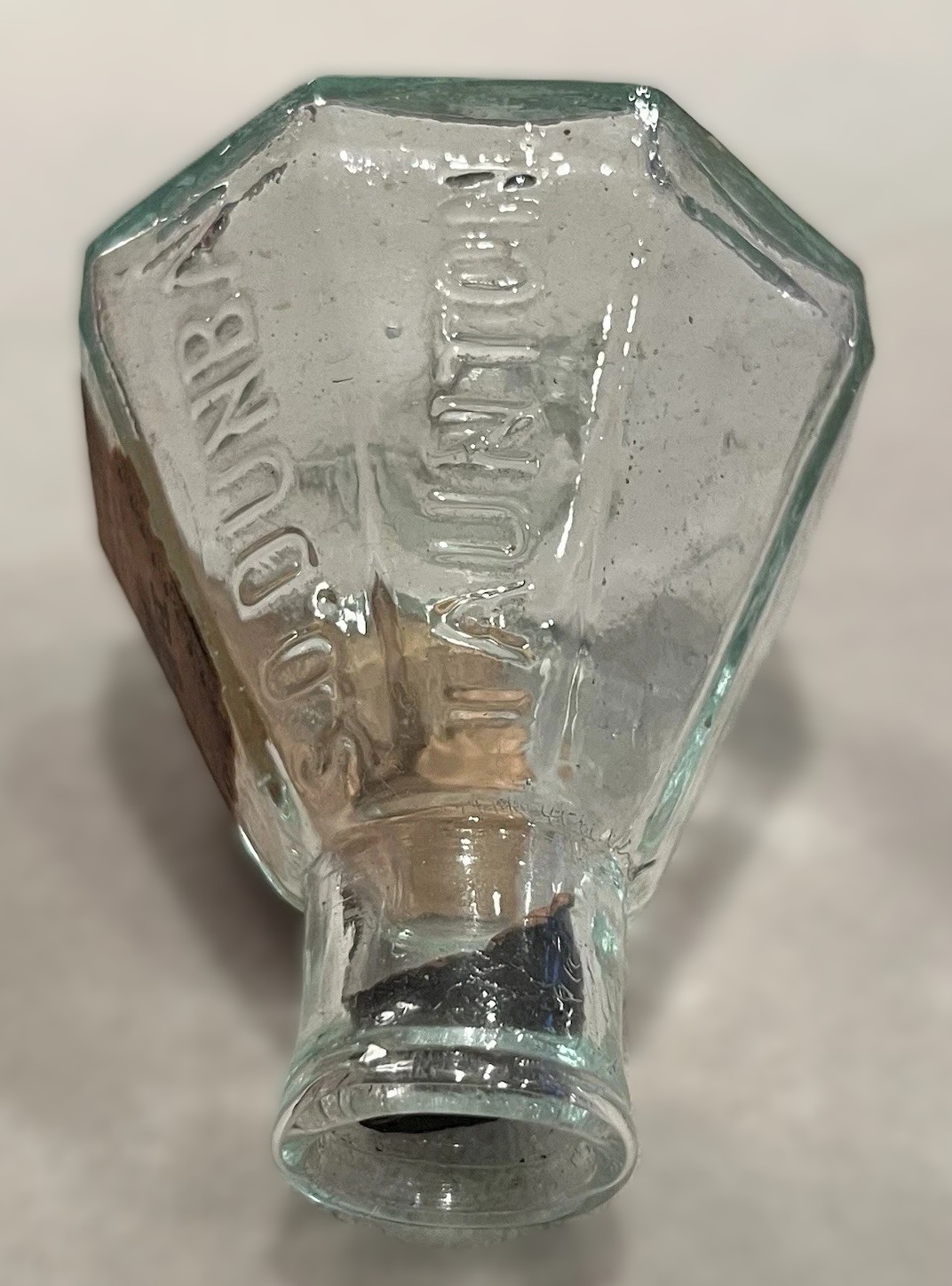
- Embossing: Two of the side panels are boldly embossed in vertical capital lettering: S. O. DUNBAR on one panel and TAUNTON on an adjacent panel.
- Paper Label: An intact, surviving printed paper label bordered with decorative scrollwork:
“…UNBAR’S / PYRAMID / BLACK INK, / Superior to any other in use. / TAUNTON, MASS. / Made without acid, it will not act upon the paper / pen, is improved by age, and not injured by climate.”
Estimated Age
- Circa 1845–1855.
- The presence of a true open pontil scar places manufacturing before the mid-1850s, when the snap case tool largely replaced the blowpipe/pontil rod in American glassworks. The rolled lip, two-piece hinge mold seams stopping below the neck, and typography further confirm this date range.
Manufacturer History
- The Proprietor: Produced for Samuel Oliver Dunbar (1805–1884), an apothecary, druggist, and bookseller based in Taunton, Bristol County, Massachusetts.
- The Business: Operating in the mid-19th century from Bank Row (near City Square) in Taunton, Dunbar ran an apothecary and stationery trade. In addition to compounding medicines and patent tonics (such as his well-known Life Renovating Bitters), he formulated, bottled, and marketed writing, stencil, and record inks.
- Glassmaker: Like most 19th-century stationers and druggists, Dunbar did not blow his own glass. He commissioned bottles from regional New England glasshouses (such as the South Boston Flint Glass Works or nearby Stoddard/Keene operations blowing utilitarian aqua wares) from private molds bearing his proprietary lettering.
Sold for $363 in August 2026
Content disclaimer. The information posted is the owner’s best knowledge and may not have been vetted by the SOIC. We welcome comments, corrections, and additions, working to make our website information comprehensive and accurate.
Join the Society of Inkwell Collectors (SOIC) – it’s free!
Founded in 1981 as a non-profit organization,
we are documenting inkwells (and accessories).
We’re here to help and inform!