

Inkipedia
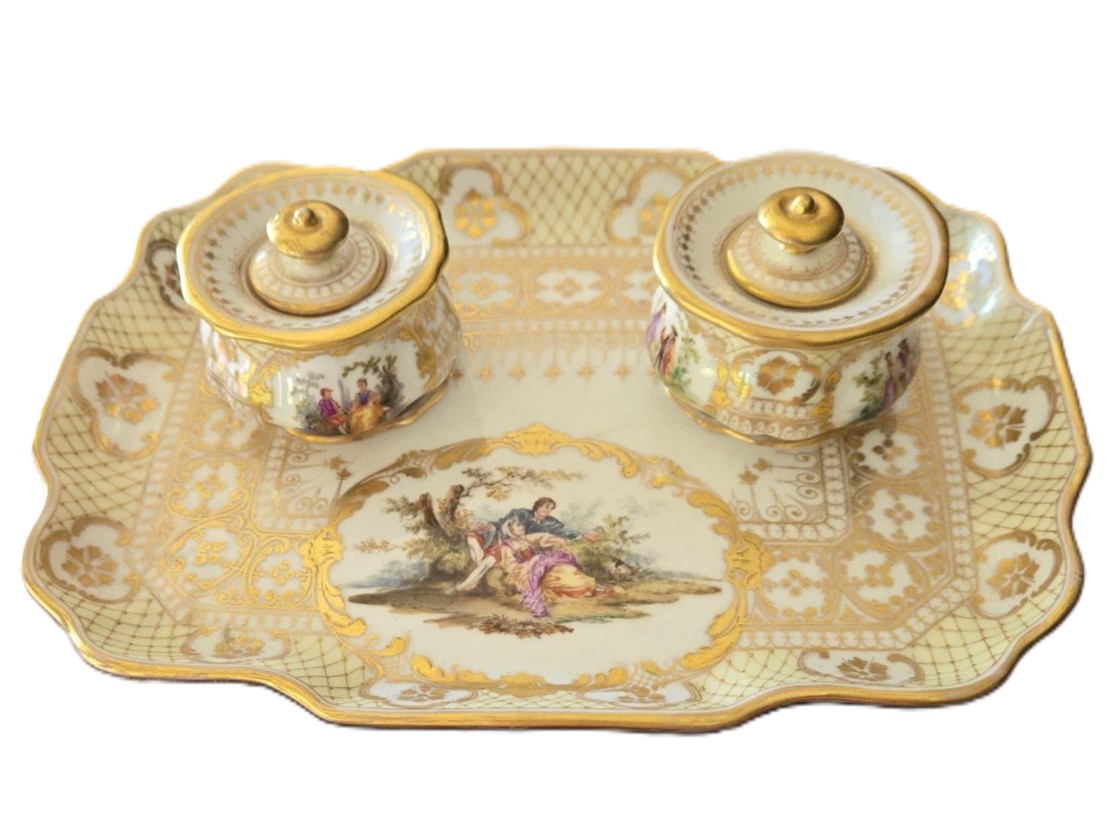
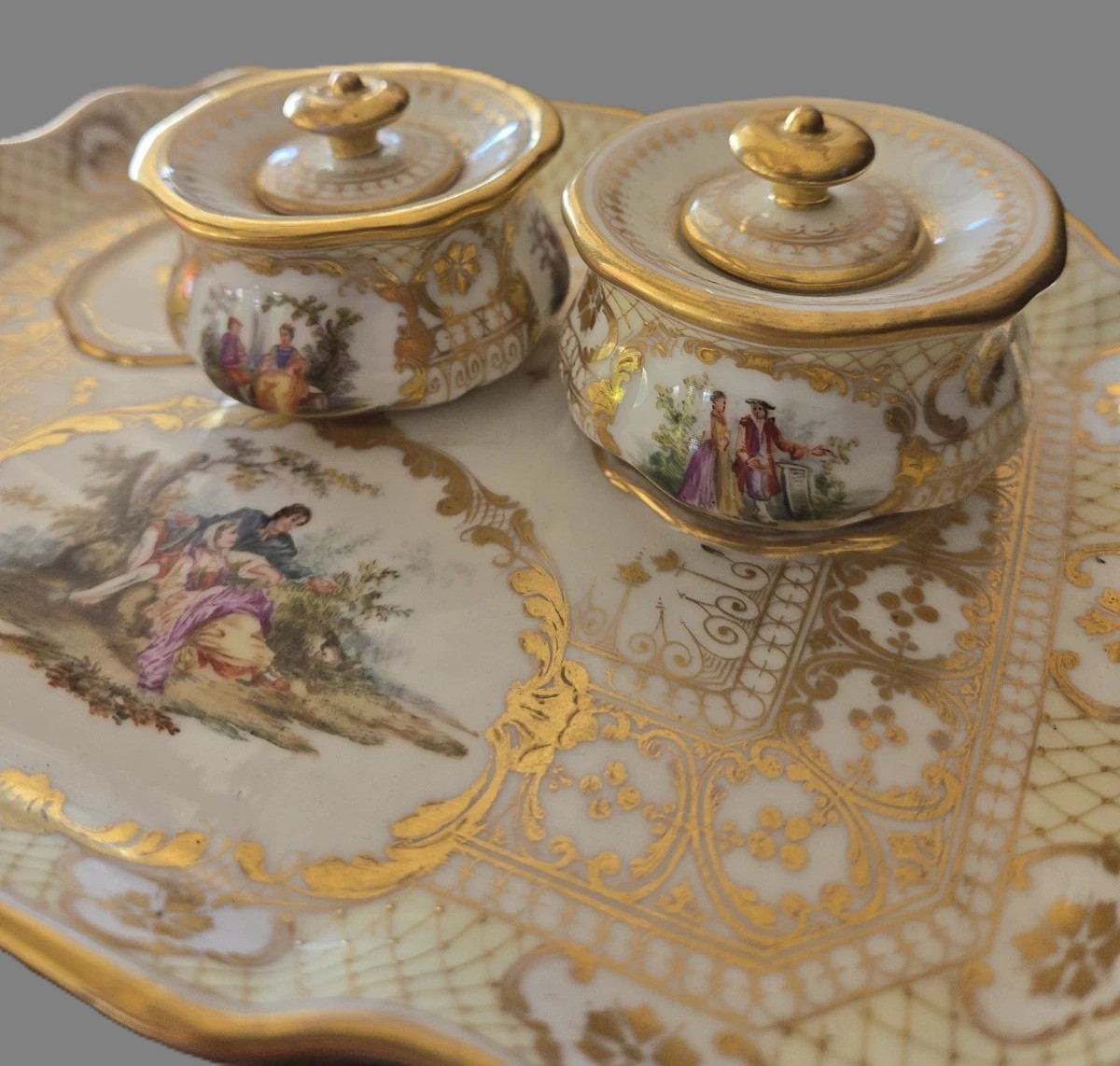
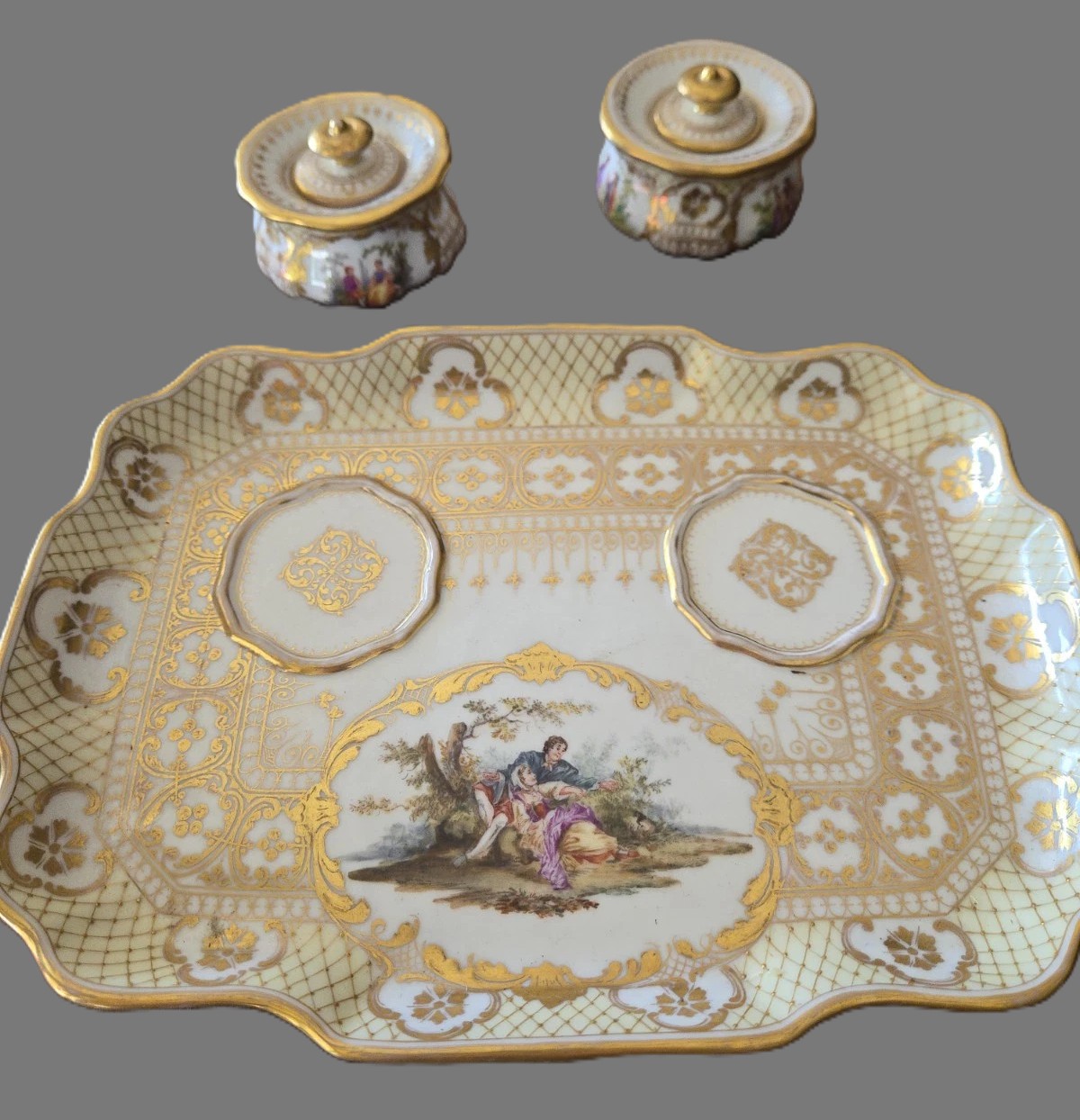
Dresden Porcelain Double Inkstand
| Categories | Ceramics/Porcelain "Named" Makers |
| Material | Porcelain |
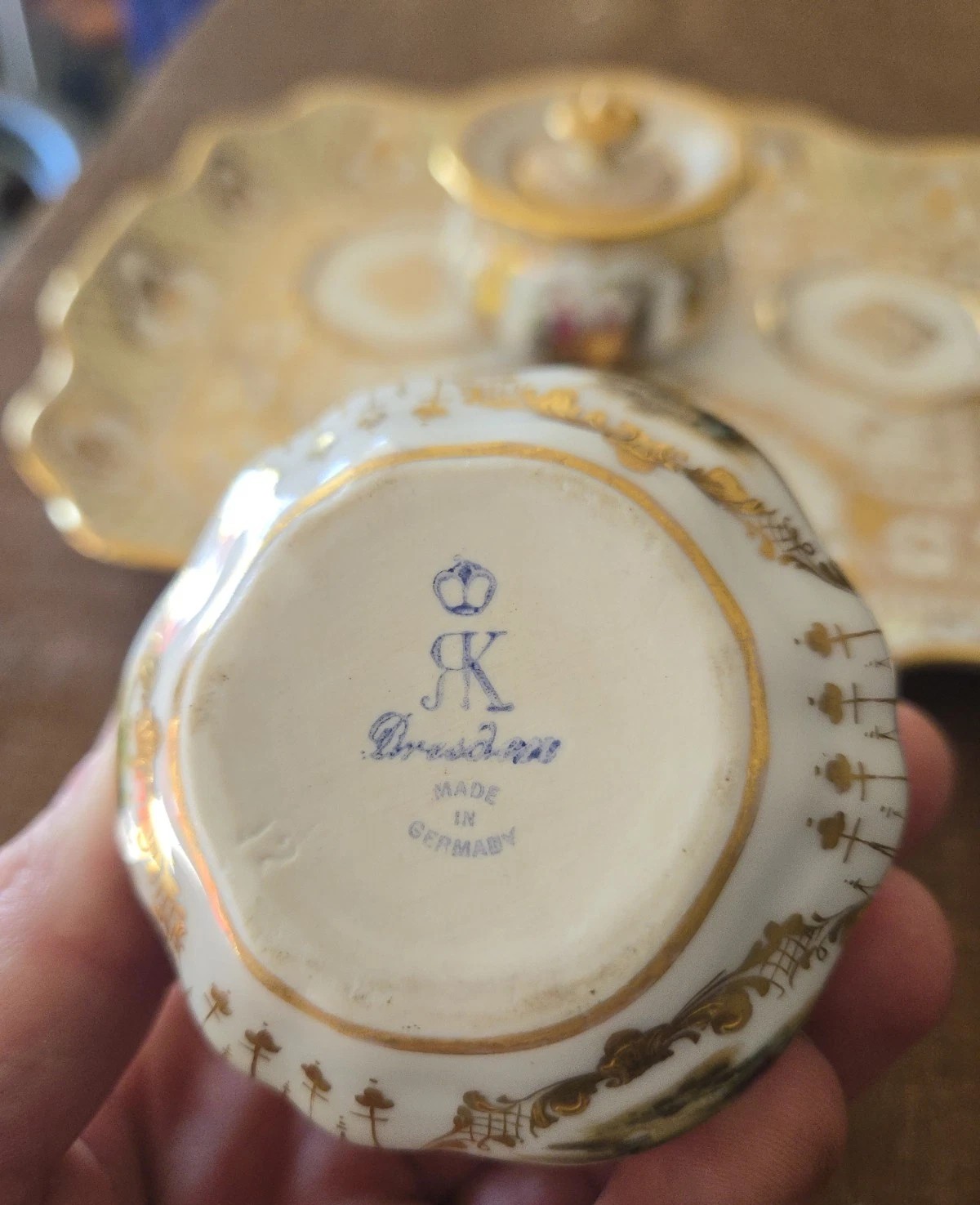
| Markings | See Narrative |
| Manufacturer | Richard Klemm |
| Origin | Germany |
| Date or Era | circa 1900 |
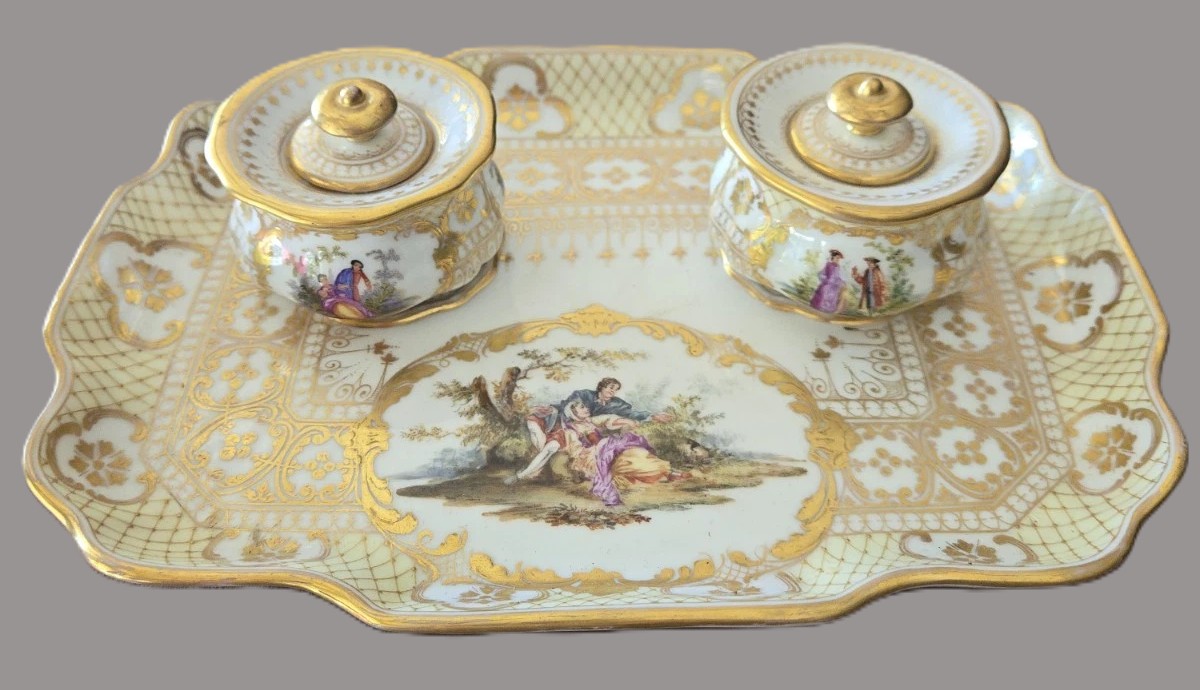
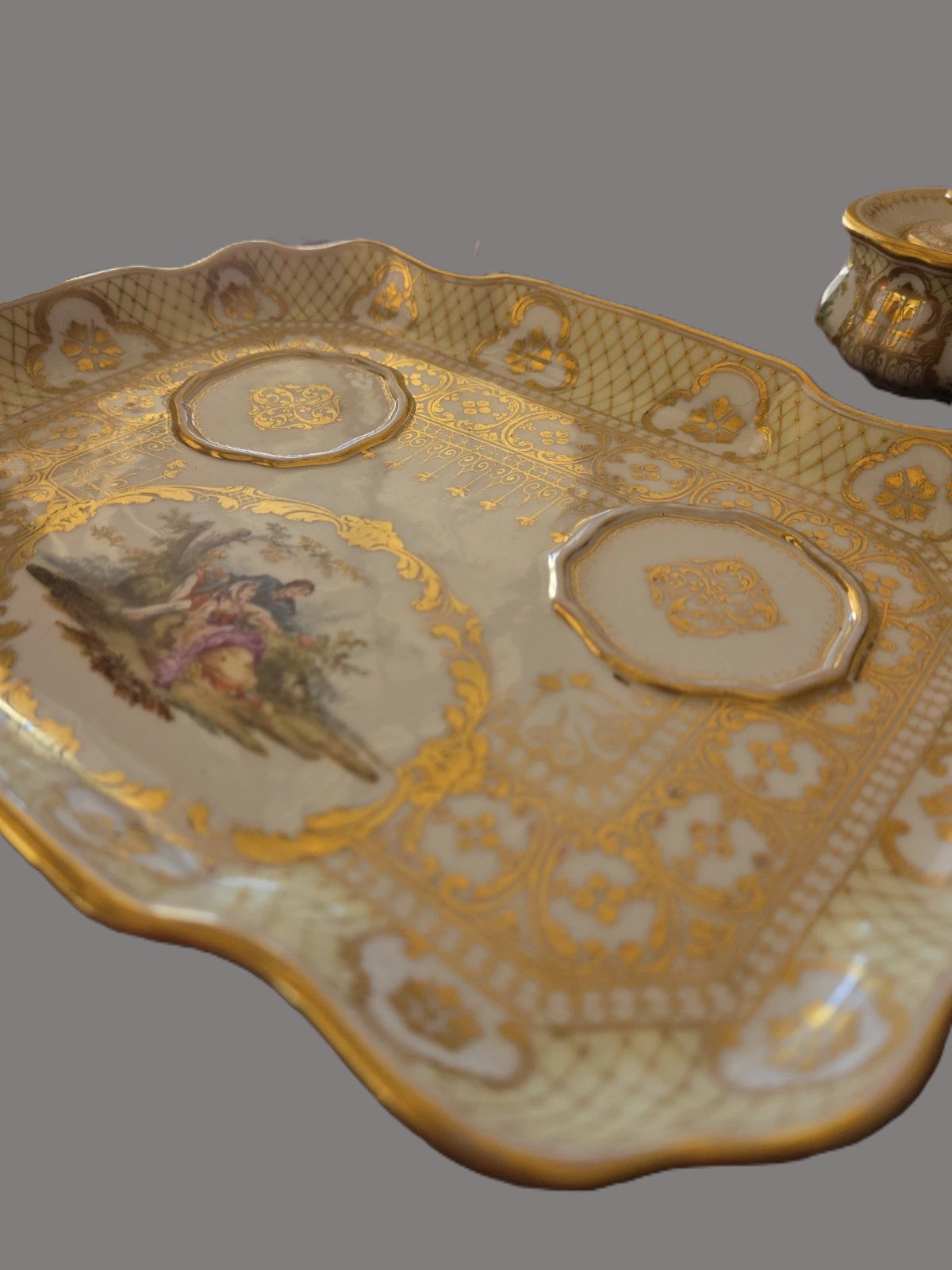
Description This is a late 19th- to early 20th-century German hard-paste porcelain double inkstand (standish) decorated in the Rococo Revival / Dresden tradition.
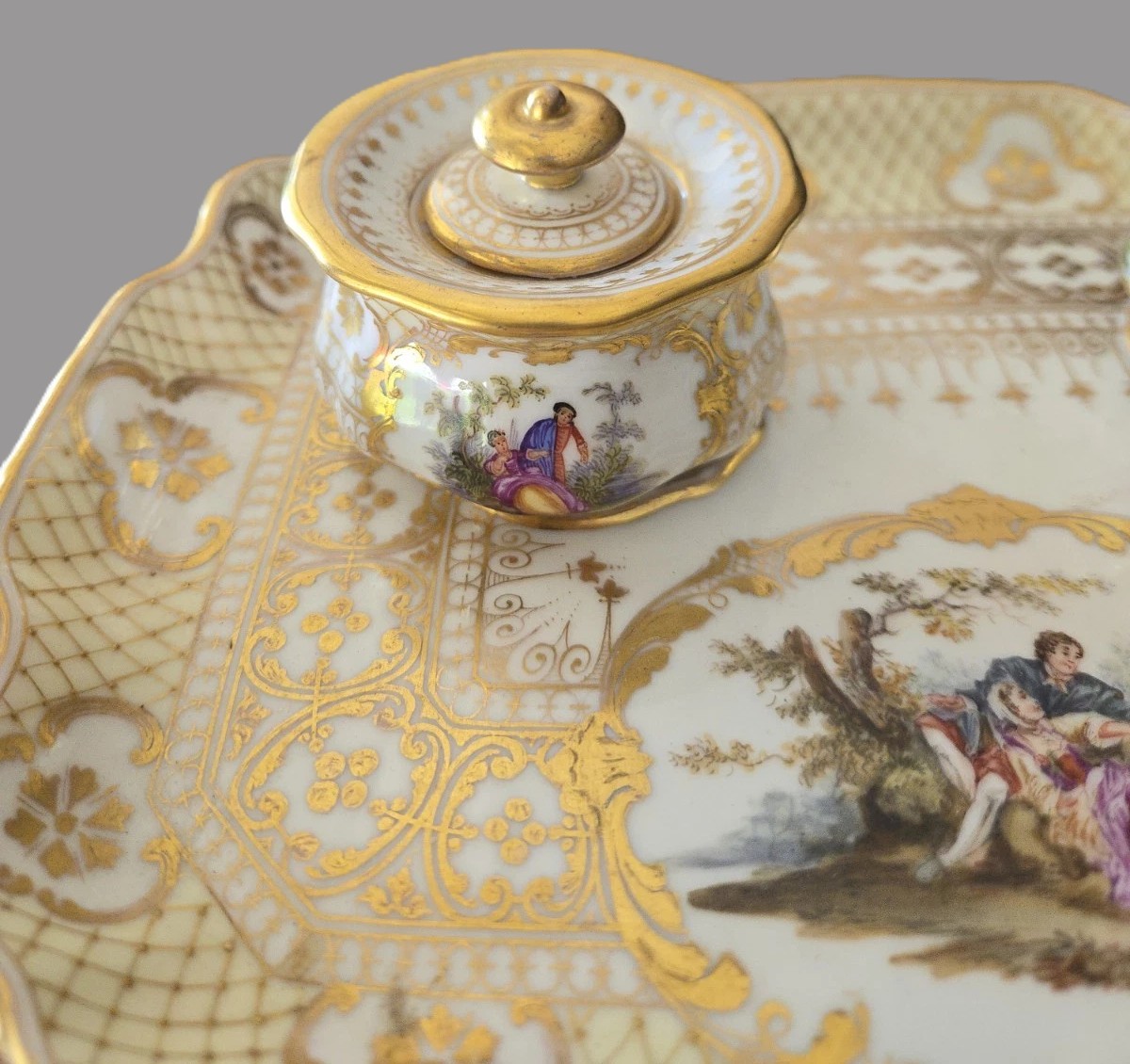
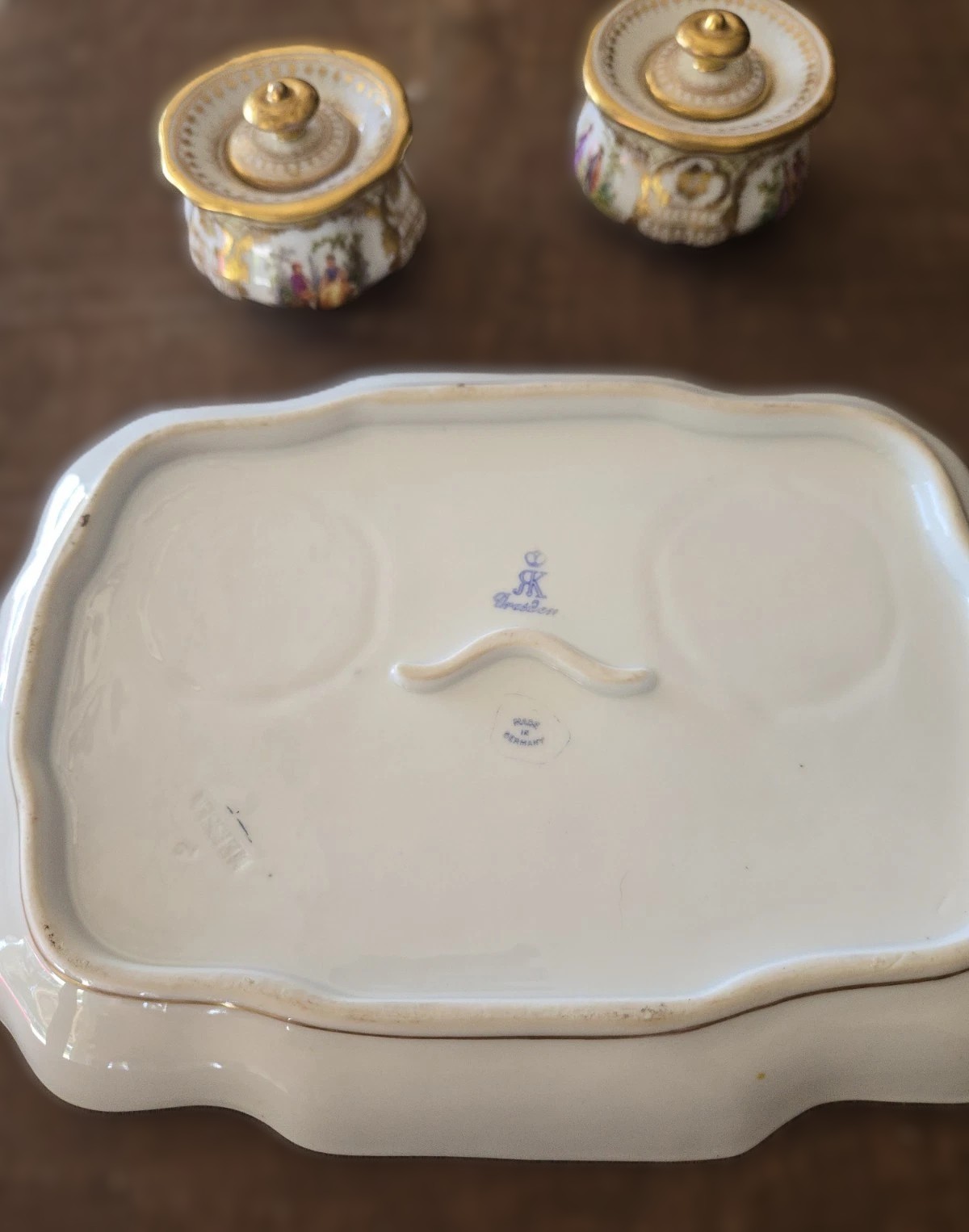
- The Tray: Scalloped, serpentine-rimmed rectangular tray lavishly decorated with raised and flat gilding. The borders feature a pale yellow/ivory ground with fine gilt lattice patterns and foliate rocaille cartouches. The central reserve displays a hand-painted idyllic pastoral courting scene in the manner of Antoine Watteau or François Boucher.
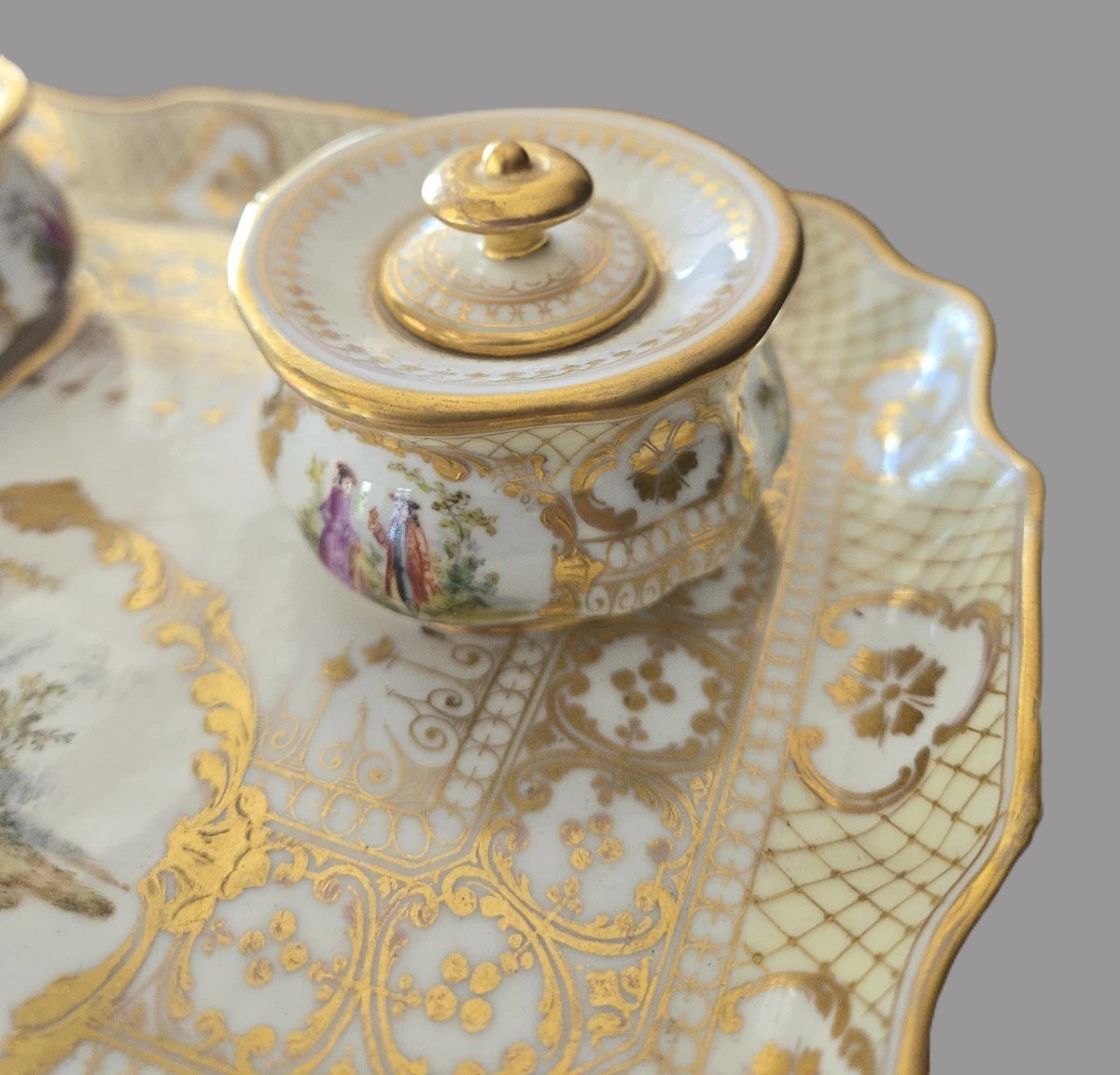
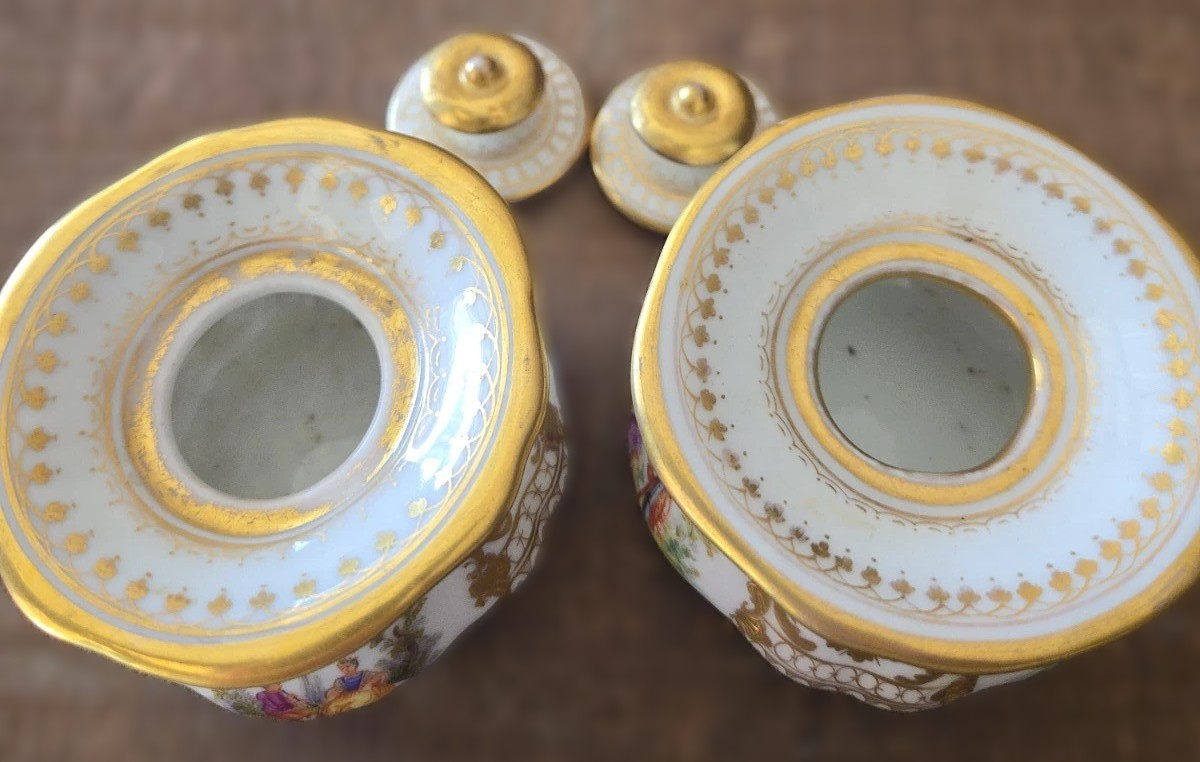
- The Inkwells: Two matching octagonal/scalloped pots with fitted recessed lids topped by gilded knop finials. The sides of both pots feature romantic vignettes flanked by heavy gilt scrollwork and trellis patterns.
- The Underside: Both the tray and the wells bear the blue underglaze/overglaze factory stamp featuring a five-point crown above the intertwined monogram RK, the script word Dresden, and an arched MADE IN GERMANY export stamp, along with an impressed shape/mold number. The underside of the tray also features an integral curved porcelain strut—a common structural feature designed to prevent large, flat porcelain trays from warping or sagging during high-temperature kiln firings.
Age
- Dating: Circa 1891–1916.
- Dating Evidence: The Richard Klemm crown-over-RK mark was used starting in the late 1880s, but the inclusion of the English-language stamp “MADE IN GERMANY” places its production after the implementation of the U.S. McKinley Tariff Act of 1890 (which required country-of-origin marking on imported goods). Klemm died in 1916, after which the studio merged with Donath & Co. before eventually being acquired by Hutschenreuther.
Richard Klemm History
- Founding: Karl Richard Klemm established his porcelain decorating studio (Porzellanmalerei) in Striesen, near Dresden, Saxony, in 1869.
- The “Dresden Porcelain” Movement: Unlike Meissen, which was an actual porcelain manufacturing factory, “Dresden porcelain” refers primarily to the 19th-century artistic movement centered in Dresden. Decorating studios did not always fire their own raw porcelain blanks; instead, they purchased high-quality white porcelain “blanks” from major manufactories (such as Meissen, KPM Berlin, and various Bavarian and Silesian factories) and hand-painted them with elaborate gilding, floral sprays (Dresdner Blumen), and Watteau-style courting scenes.
- The Dresden Crown Mark: In 1883, Klemm joined three other leading Dresden decorating studios—Donath & Co., Oswald Lorenz, and Adolf Hamann—to register the famous Dresden Crown trademark to protect authentic Saxon decorated porcelain against foreign and regional imitators.
- Merger & Later Era: Following Klemm’s death in 1916, his studio merged with Donath & Co. in 1918, and the assets were subsequently absorbed by the major Bavarian porcelain manufacturer C.M. Hutschenreuther in 1920.
Sold for $89 in August 2026
Content disclaimer. The information posted is the owner’s best knowledge and may not have been vetted by the SOIC. We welcome comments, corrections, and additions, working to make our website information comprehensive and accurate.
Join the Society of Inkwell Collectors (SOIC) – it’s free!
Founded in 1981 as a non-profit organization,
we are documenting inkwells (and accessories).
We’re here to help and inform!