

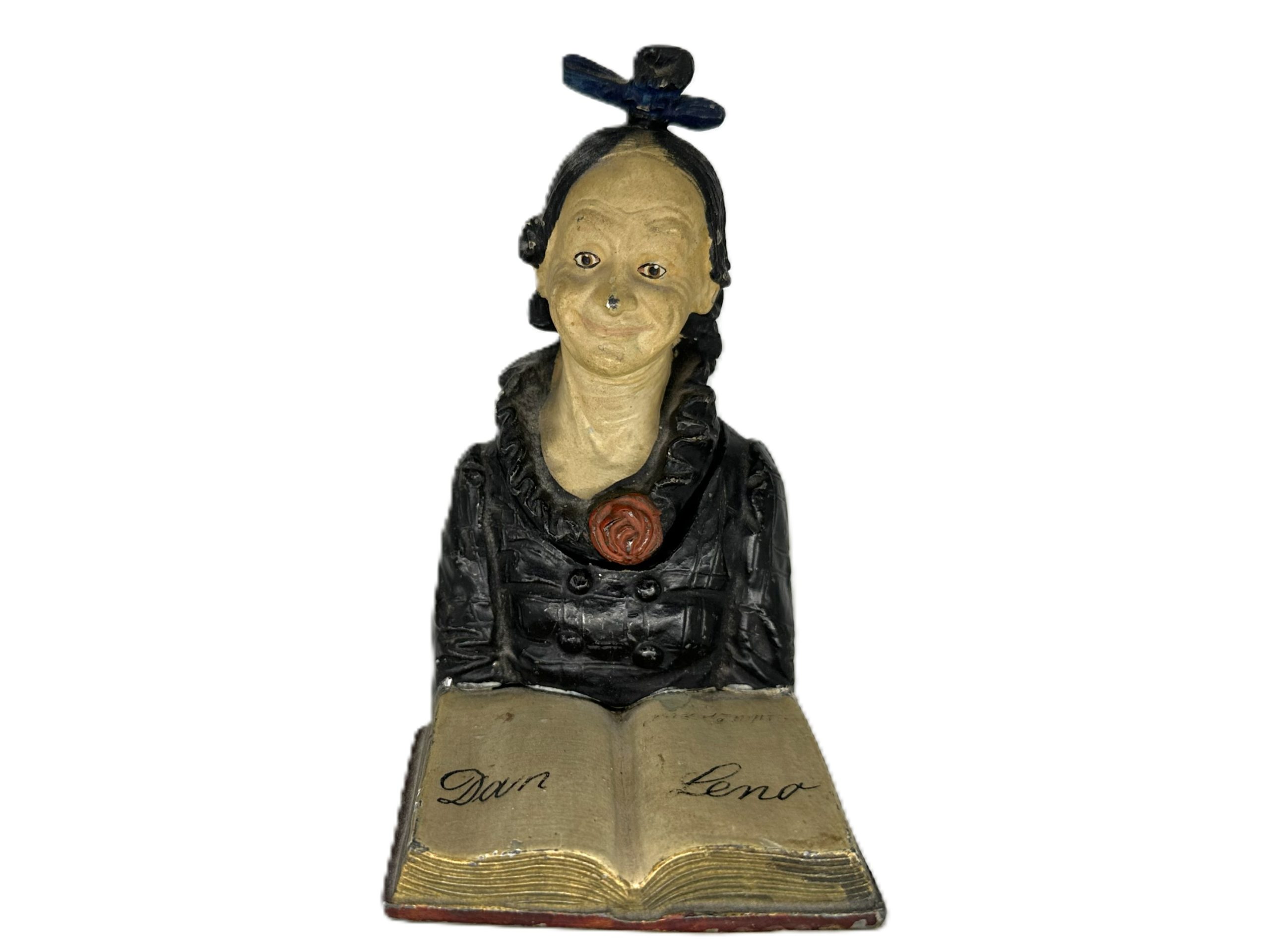
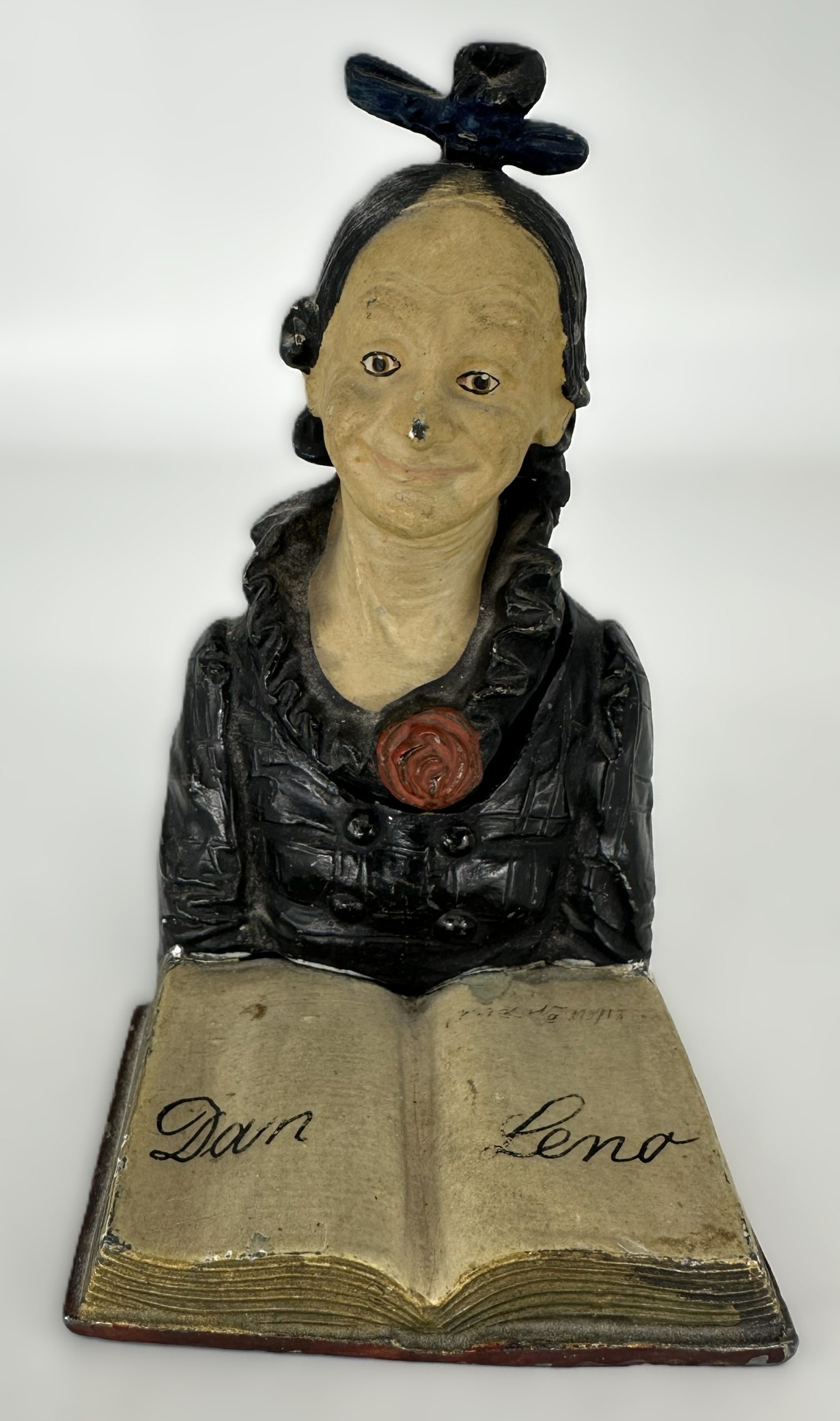


Dan Leno “Sister Anne” Souvenir Inkwell
| Categories | Figural - Mythology; Literature; Religion; Fictional |
| Type | Theater |
| Material | Spelter |
| Markings | See Narrative |
| Manufacturer | Undetermined |
| Origin | England |
| Date or Era | circa 1901 |
Title: Dan Leno “Sister Anne” Pantomime Souvenir Inkwell Date: c. 1901–1904 Material: Cold-painted cast metal (spelter or lead alloy) with a removable glass liner.
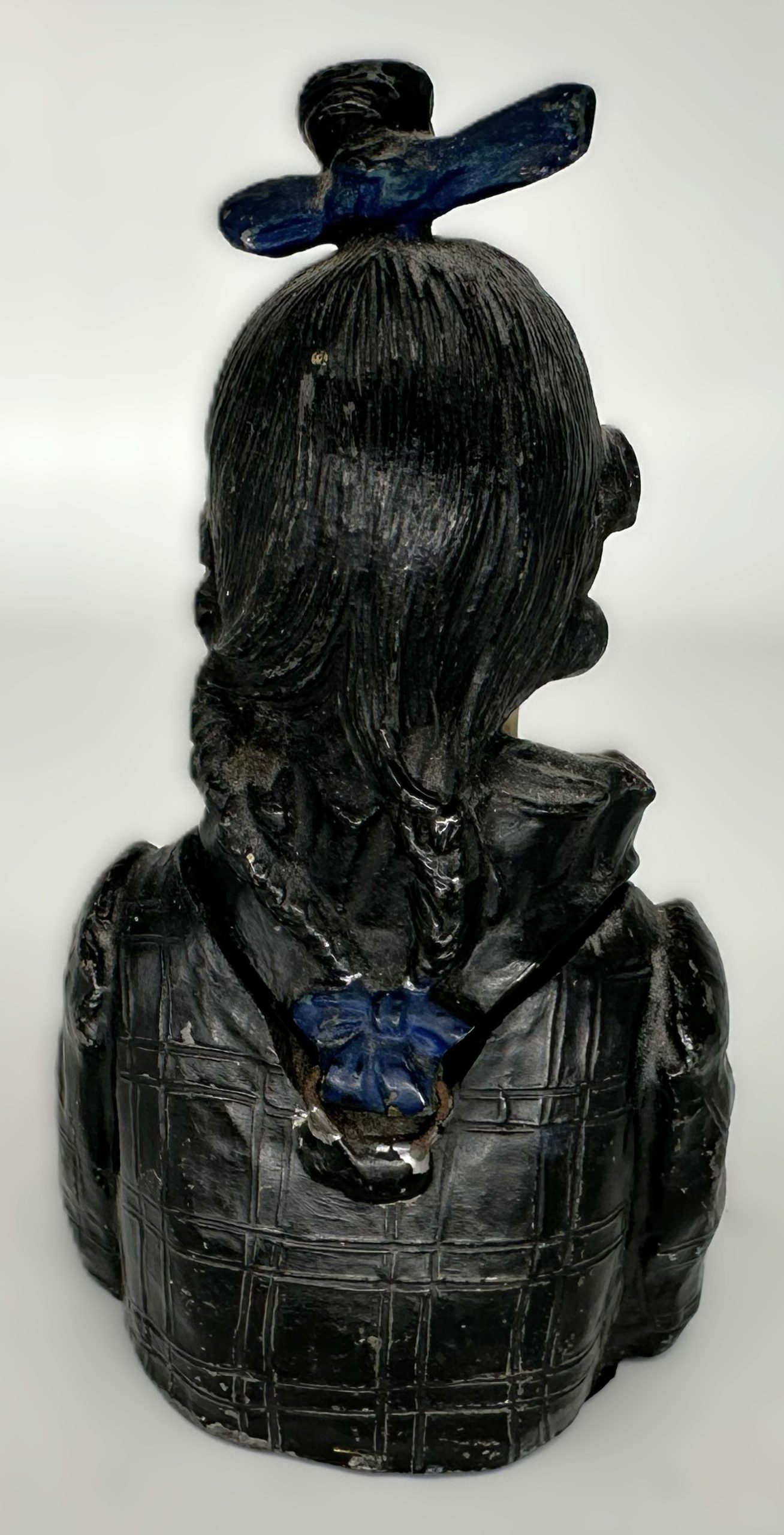
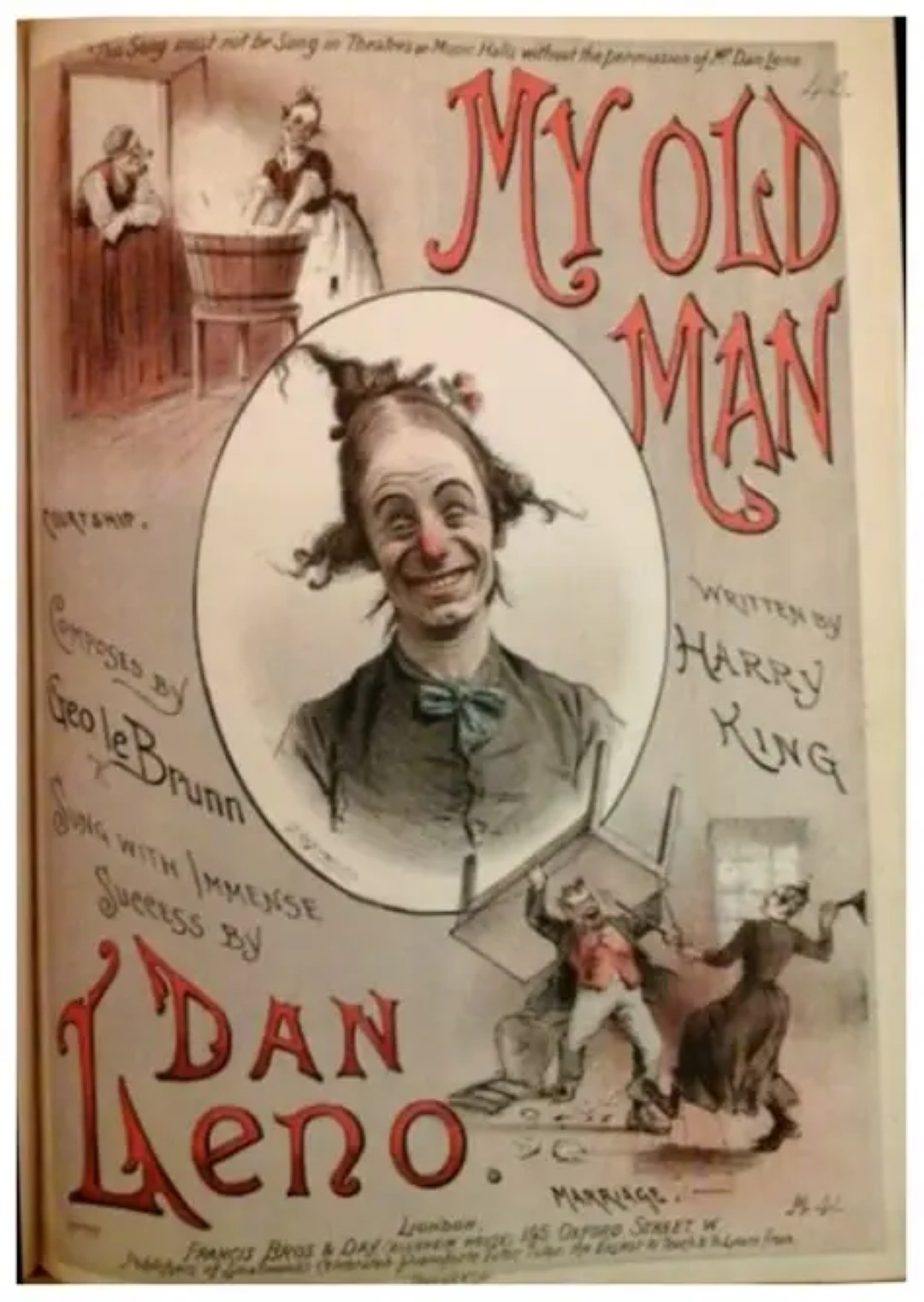
This souvenir inkwell is a character study of the legendary music hall and pantomime performer Dan Leno (1860–1904). Produced at the height of his fame, the piece depicts Leno in his celebrated “Dame” role as Sister Anne from the 1901 Drury Lane pantomime Blue Beard. The existence of multiple color versions—one in a somber black and another in a vibrant checkered pattern—suggests these were produced in significant quantities to satisfy public demand.
Physical Description
The Figure and Head
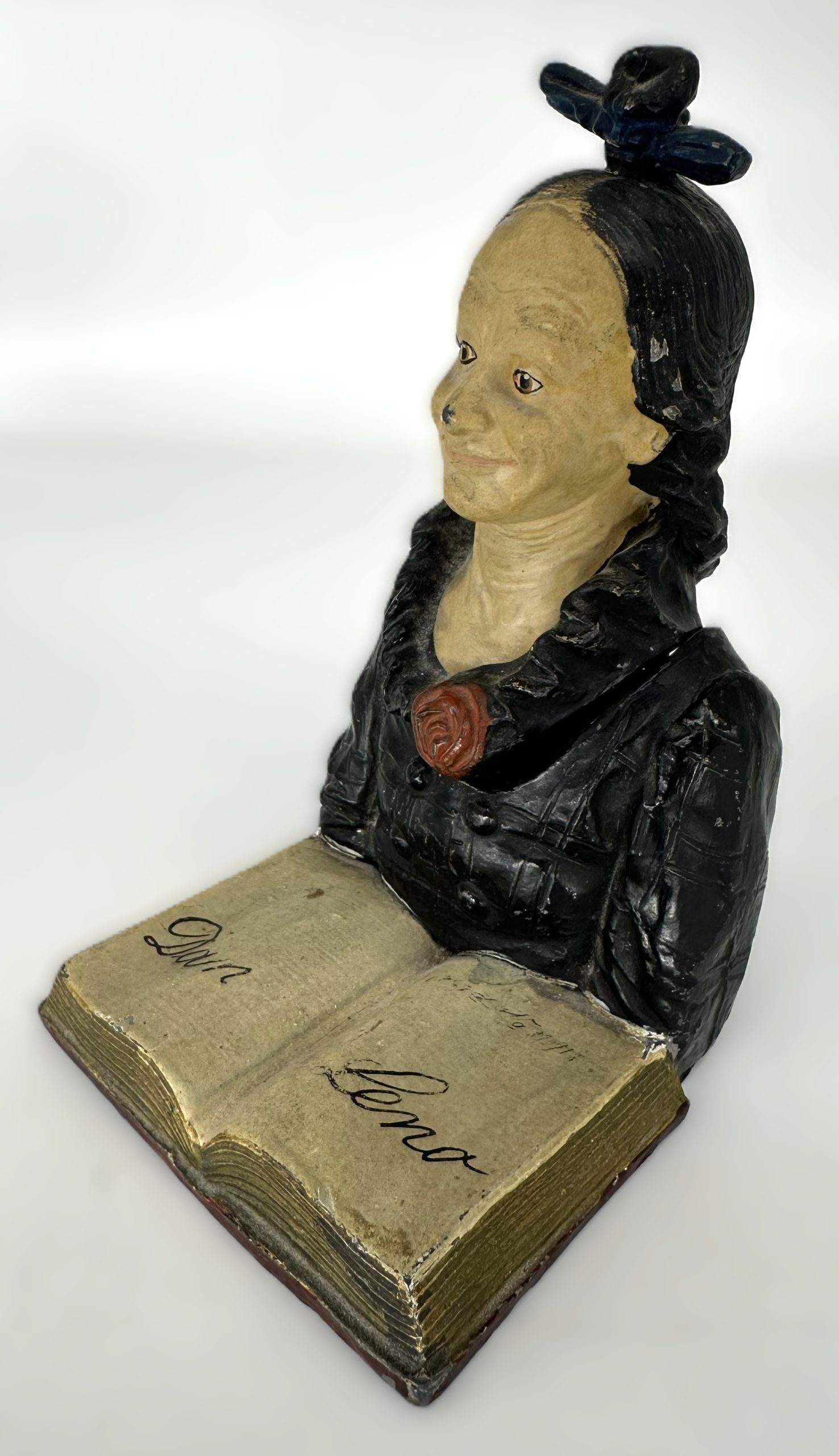
The inkwell is designed as a bust of Leno, characterized by a high-forehead, a whimsical expression, and the “ivory-tone” face paint common to stage makeup of the era.
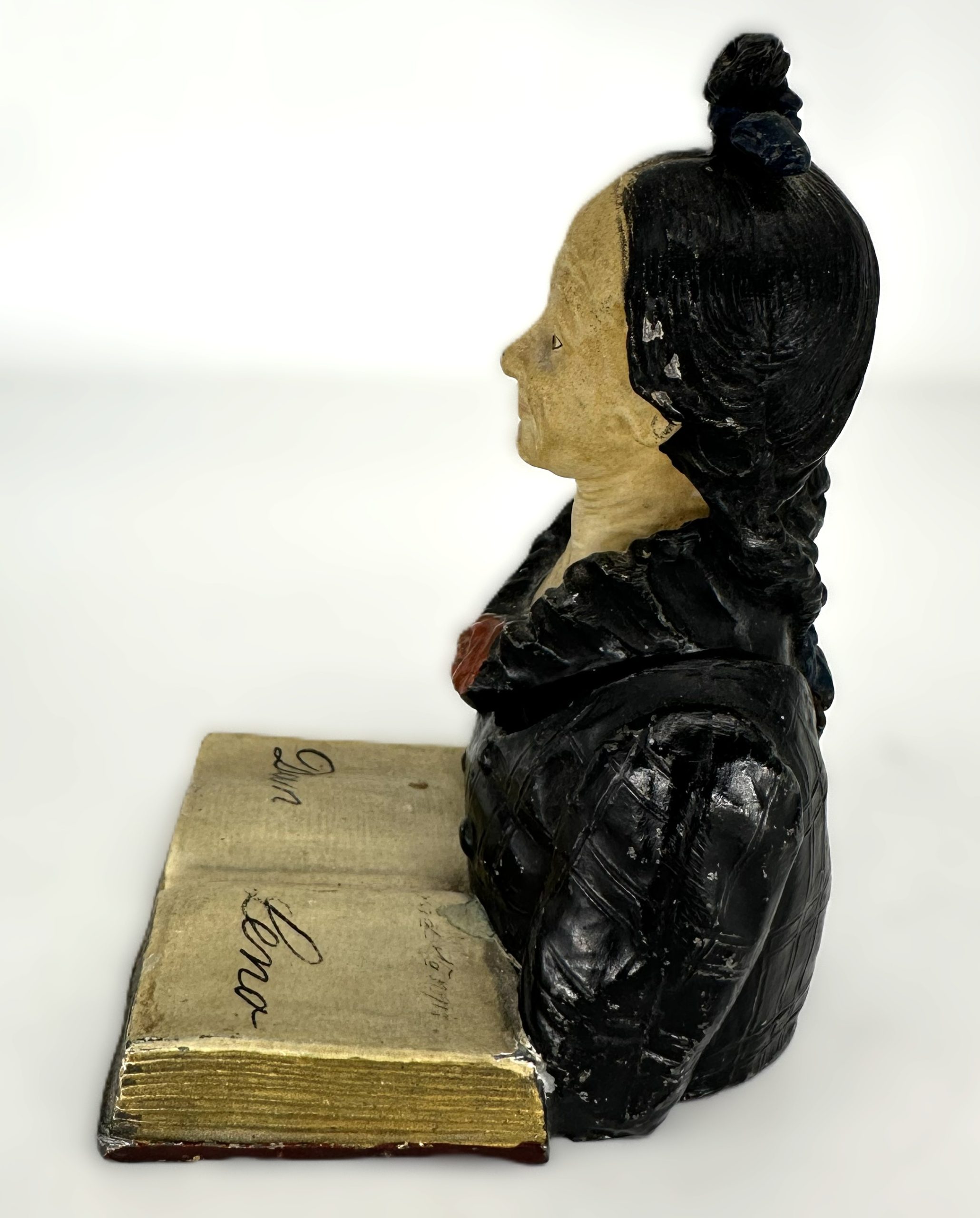
- The Hinge Mechanism: The head is hinged at the back of the neck. When tilted back, it reveals a hollow interior designed to hold a cylindrical glass ink reservoir.
- Hair and Adornment: His black hair is intricately modeled, featuring a distinctive top-knot bun secured with a large, upright ribbon (blue or green depending on the version). At the back, two thick plaits are joined by a secondary bow at the center of the shoulders.
The Costume
Leno is dressed in a feminine Victorian-style bodice featuring a high, ruffled “pie-crust” collar.
- Version A (Dark): Features a monochrome black dress with a deep red rose pinned to the center of the ruff.
- Version B (Checkered): Features a more “eccentric” pantomime palette with a reddish-brown and yellow grid (plaid) pattern and a contrasting green ruffled collar.
- Details: Both versions include modeled buttons on the bodice and a central rose, highlighting the character’s attempt at “refined” lady-like fashion, which was central to the comedy of the Dame.
The Base
The bust is integrated into the back of an open book, which serves as the inkwell’s stable base.
- Lettering: The open pages are inscribed with “Dan Leno” in elegant, flowing copperplate script.
- Gilding: The edges of the book’s pages are finished with gold-tone paint to simulate the appearance of a high-quality bound volume or script.
Historical Significance
The Performance: Blue Beard (1901)
Leno played Sister Anne in Blue Beard at the Drury Lane Theatre, written by J. Hickory Wood and Arthur Collins. This specific role was one of his most famous, and his portrayal of the desperate, “man-hungry” sister looking out from the tower was a comedic highlight of the Edwardian stage.
The Performer: “The King’s Jester”
Born George Galvin, Leno was the undisputed “King of Clog Dancers” before becoming the most famous music hall comedian in Great Britain. His specialty was the “Dame” role—a male actor playing a woman with a blend of pathos and absurdity.
- The Sandringham Command Performance: In 1901, the same year this character debuted, Leno performed for King Edward VII at Sandringham. He was the first music hall performer to be so honored, leading the press to dub him “The King’s Jester.”
The Souvenir Industry
This inkwell is a prime example of early 20th-century celebrity merchandising. Its heavy, metallic construction and “cold-painted” finish (paint applied to the metal without firing) are typical of the era’s mass-produced commemorative wares. The visible wear and “chipping” on the paint of surviving specimens speak to the age and the fragile nature of the cold-painting technique on metal.
For more information about Dan Leno: Dan Leno – Wikipedia
Estimated value: $250
Content disclaimer. The information posted is the owner’s best knowledge and may not have been vetted by the SOIC. We welcome comments, corrections, and additions, working to make our website information comprehensive and accurate.
Join the Society of Inkwell Collectors (SOIC) – it’s free!
Founded in 1981 as a non-profit organization,
we are documenting inkwells (and accessories).
We’re here to help and inform!