

Inkipedia
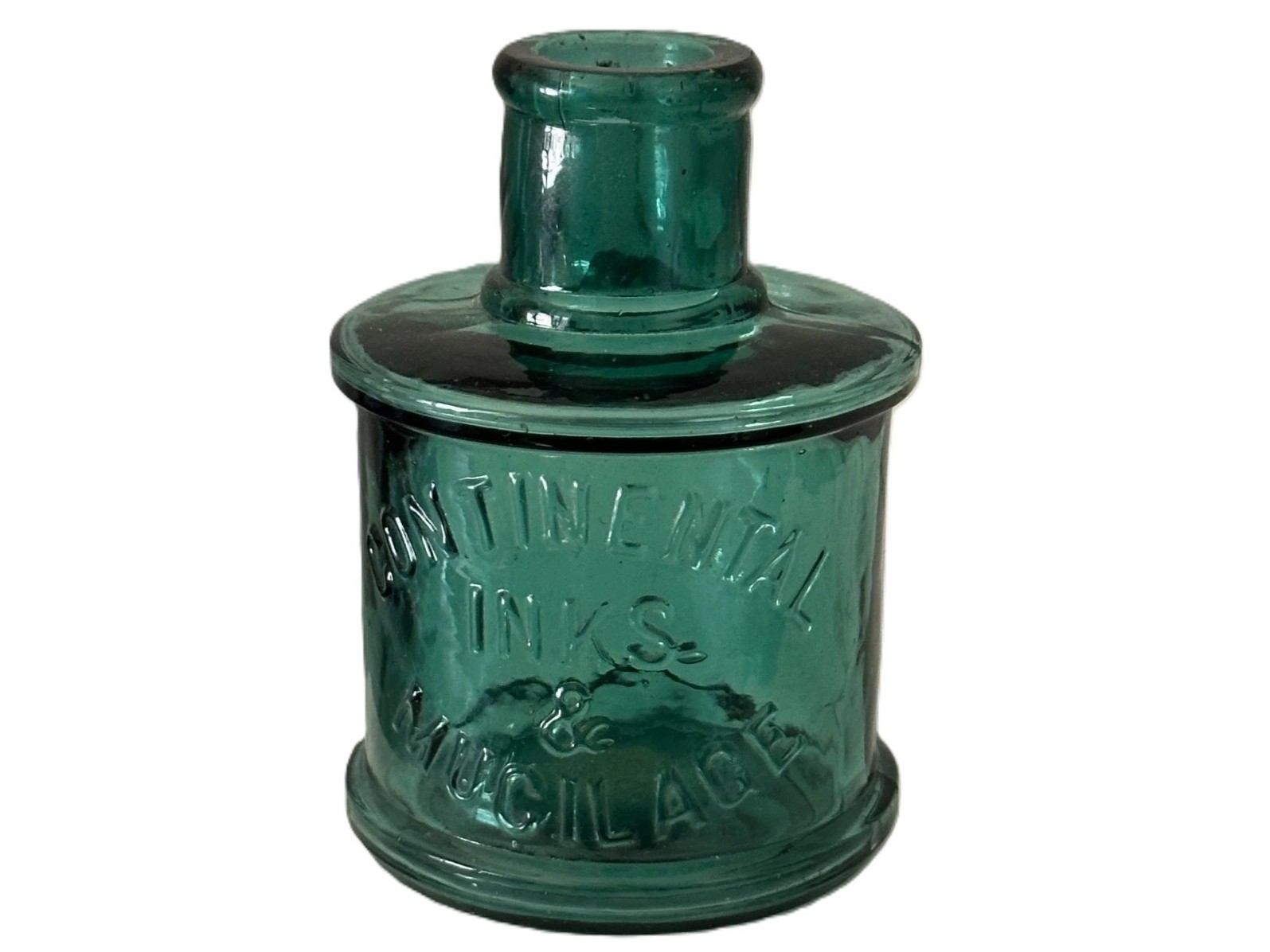


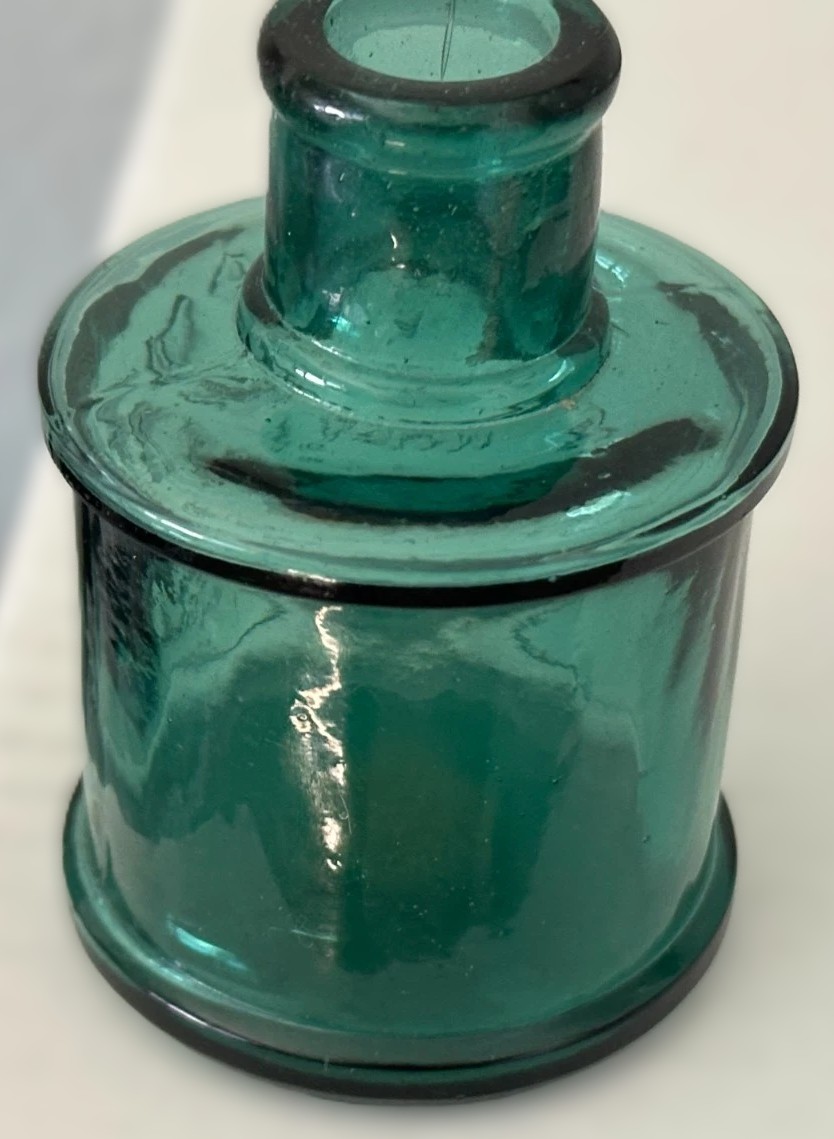
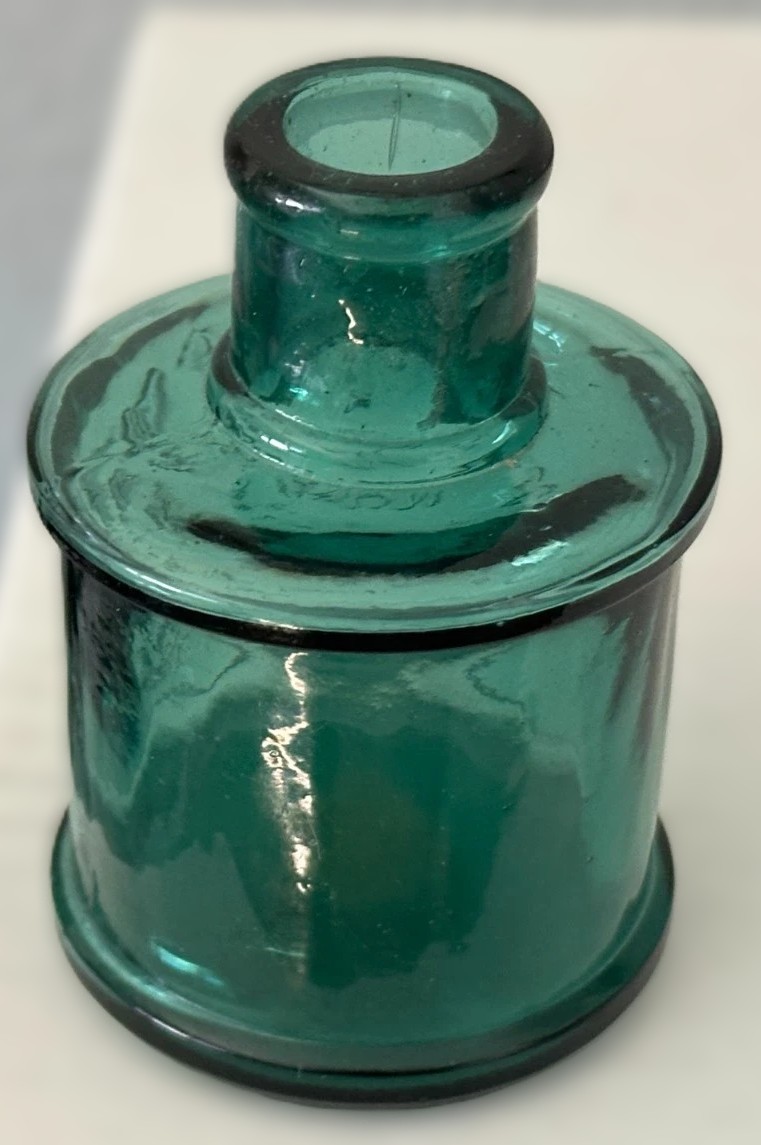
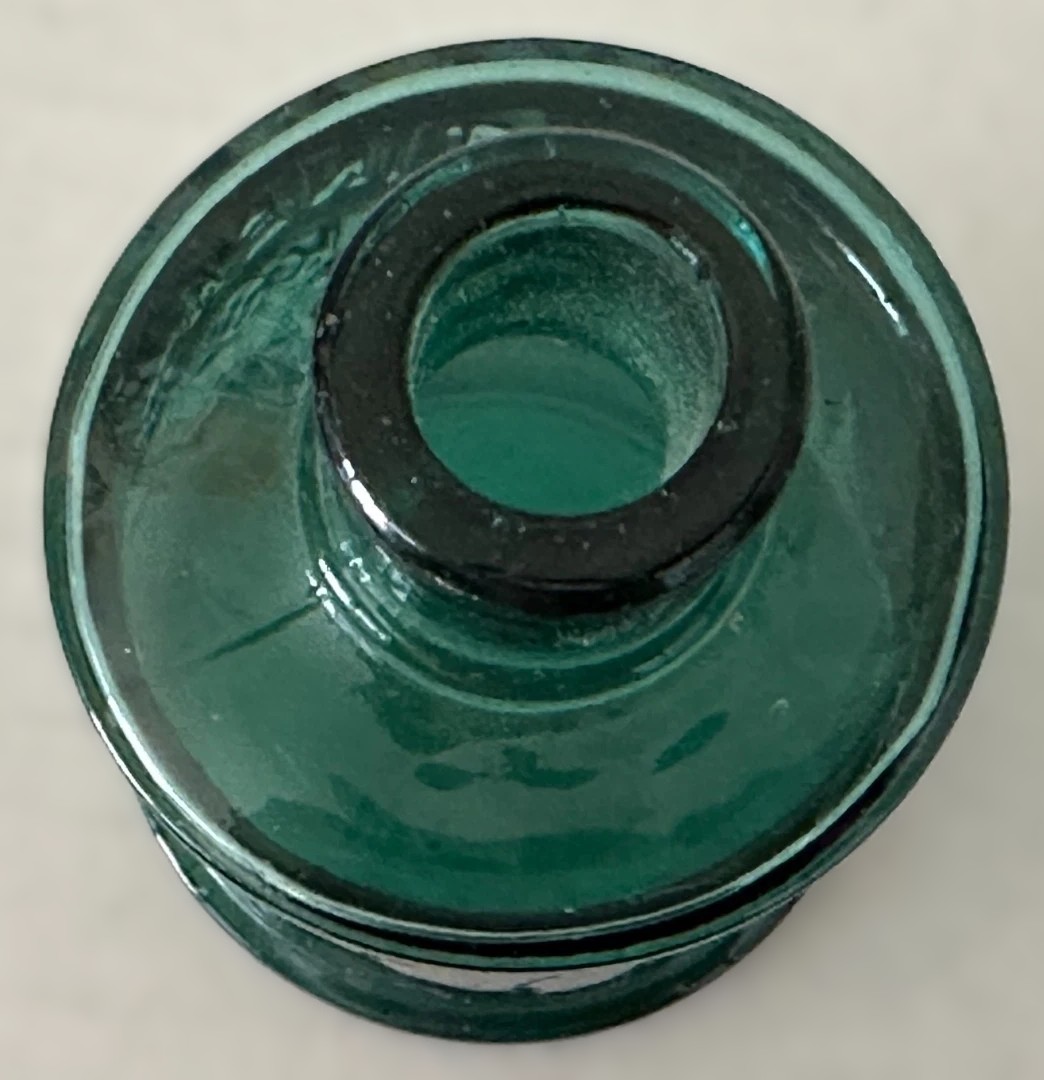
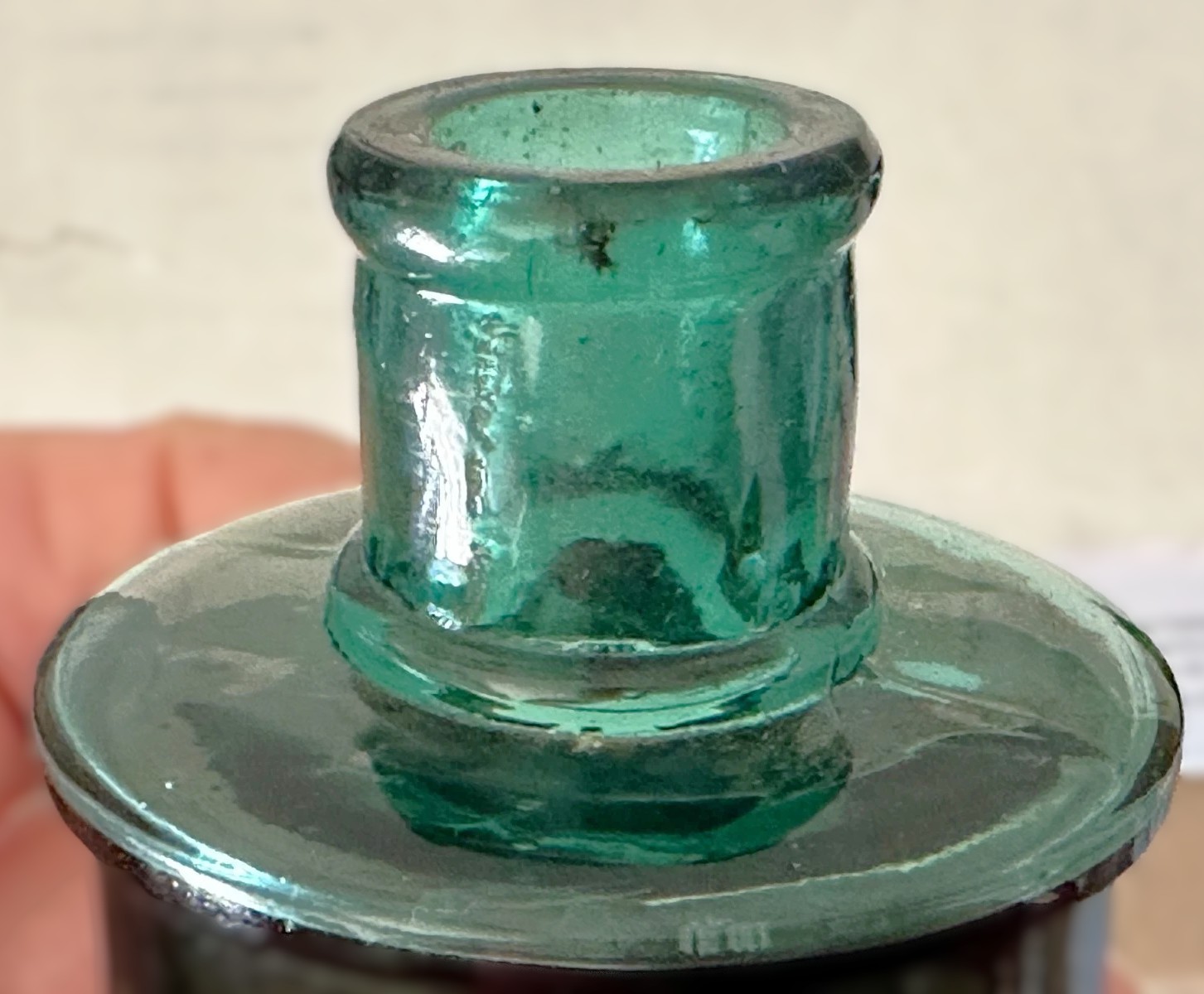
Continental Inks & Mucilage
| Categories | Ink Bottle |
| Material | Glass |
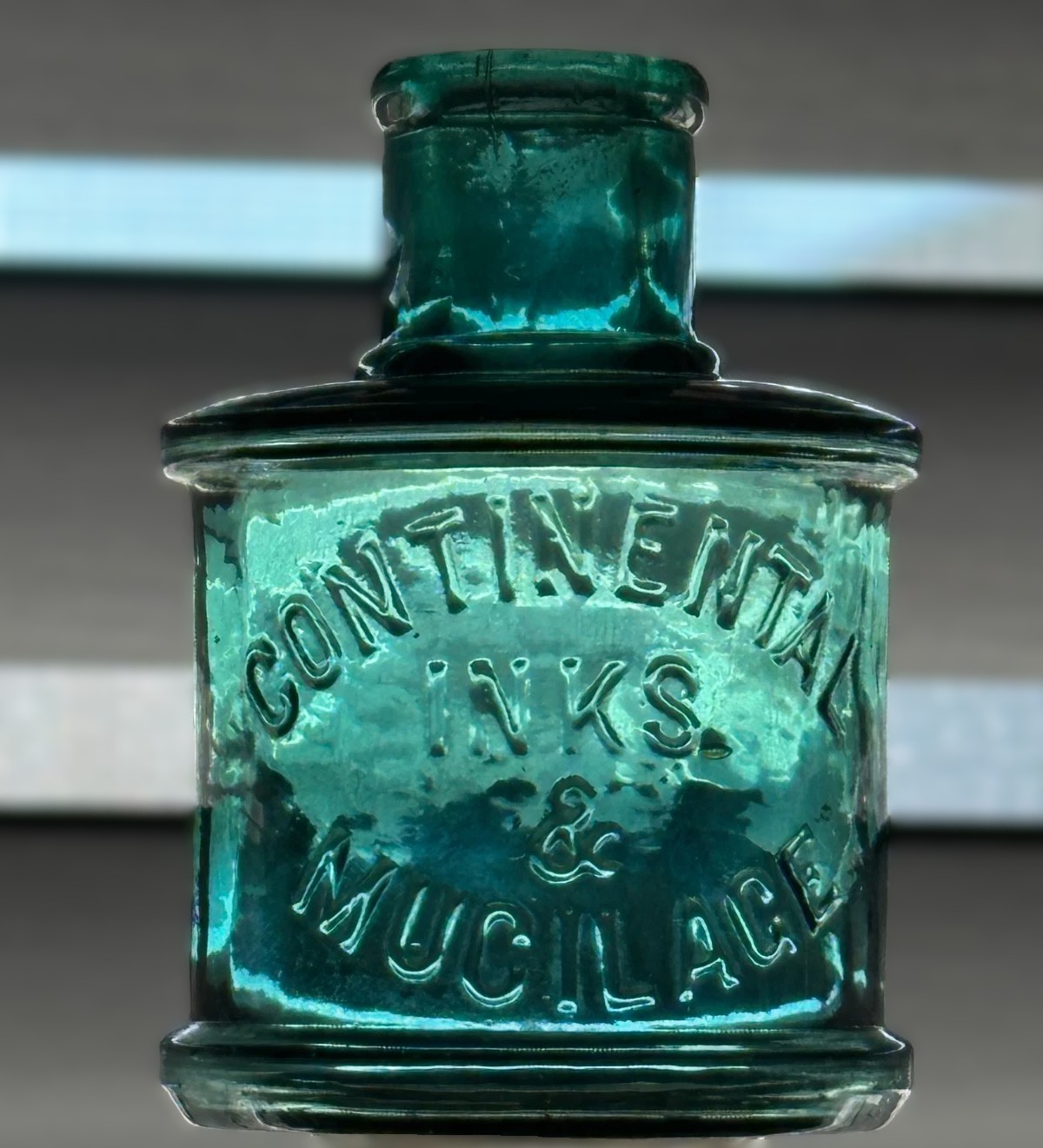
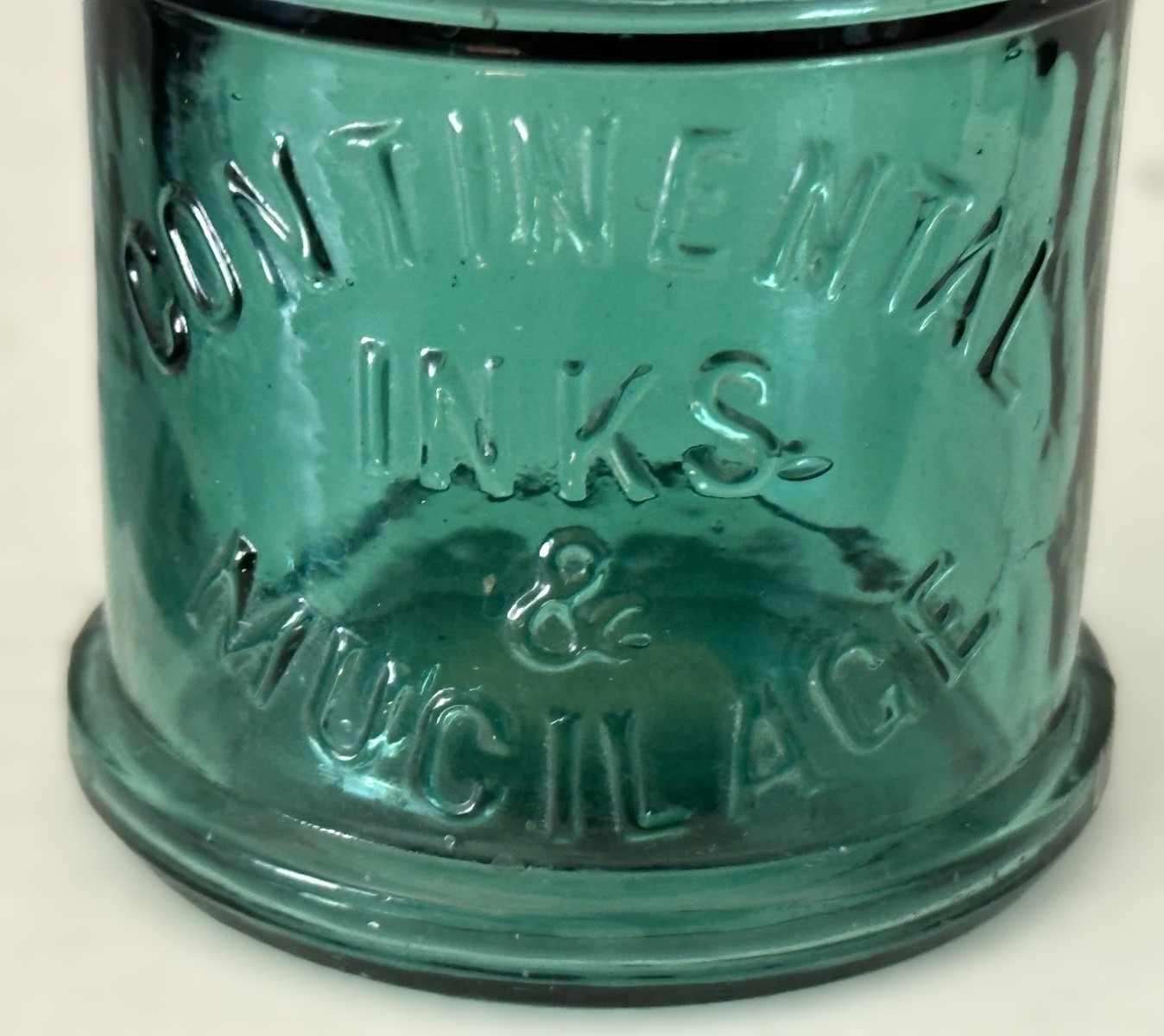
| Markings | Continental Inks & Mucilage |
| Manufacturer | Continental Ink Company |
| Origin | United States |
| Date or Era | circa 1880 |
| Measuring | 3” high |
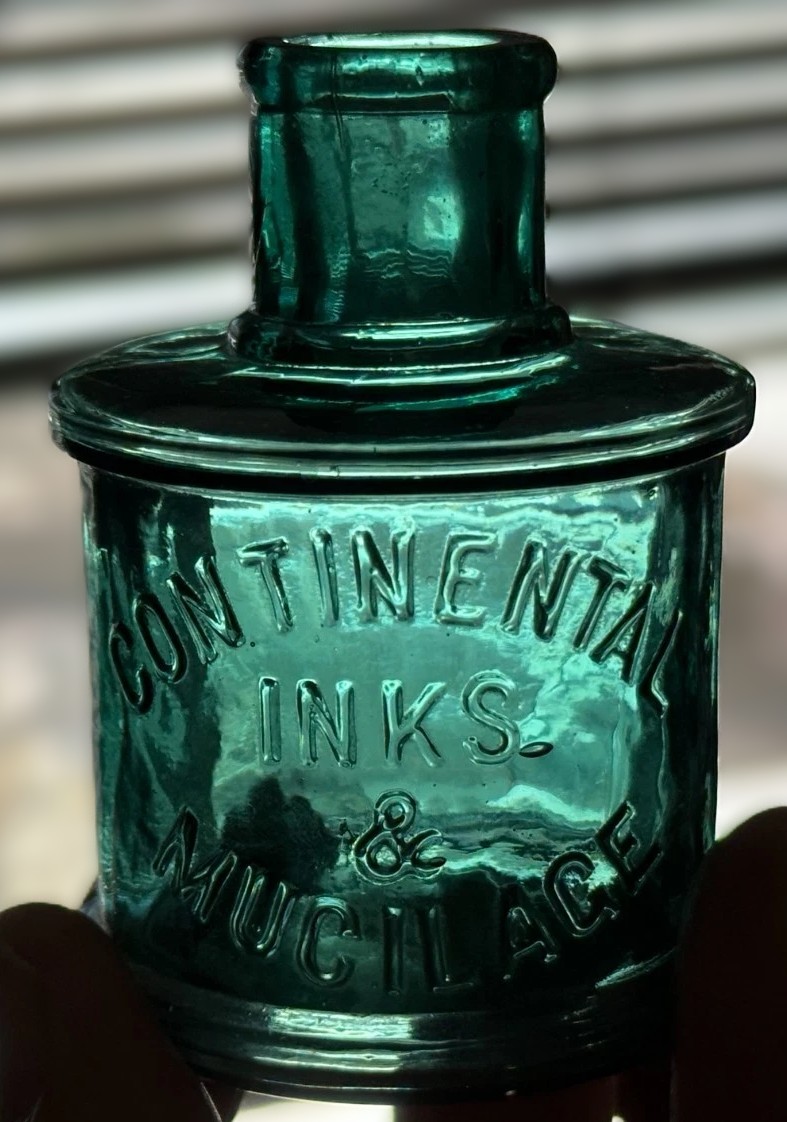
This is a nice example of a late 19th-century American utility ink bottle.
- Color: Teal / Peacock Blue
- You are correct to question the exact shade. In the world of antique bottle collecting, this specific color is most accurately described as Teal Blue or Peacock Blue.
- It is not a true “cobalt blue” (which is dark and purple-toned) nor a standard “aqua” (which is very pale blue-green). This rich, vibrant blue-green color is desirable among collectors and is rarer than the standard aqua versions.
- Embossing and Identification
- Text: The bottle is boldly embossed on the front: “CONTINENTAL / INKS / & / MUCILAGE”.
- Manufacturer: This bottle contained products from the Continental Ink Company.
- Context: “Mucilage” was a type of plant-based glue (often made from gum arabic) that was a staple in Victorian offices alongside ink. It was often sold in similarly shaped bottles, sometimes with a brush cap.
- Glass Characteristics
- Whittling: The texture as “Whittled.”
- Explanation: This wavy, hammered texture on the glass surface was not cut or carved. It was caused by the hot glass being blown into a metal mold that was slightly cool. The temperature difference caused the glass to ripple against the mold surface. This is a sign of authentic 1880s glass blowing.
- Construction:
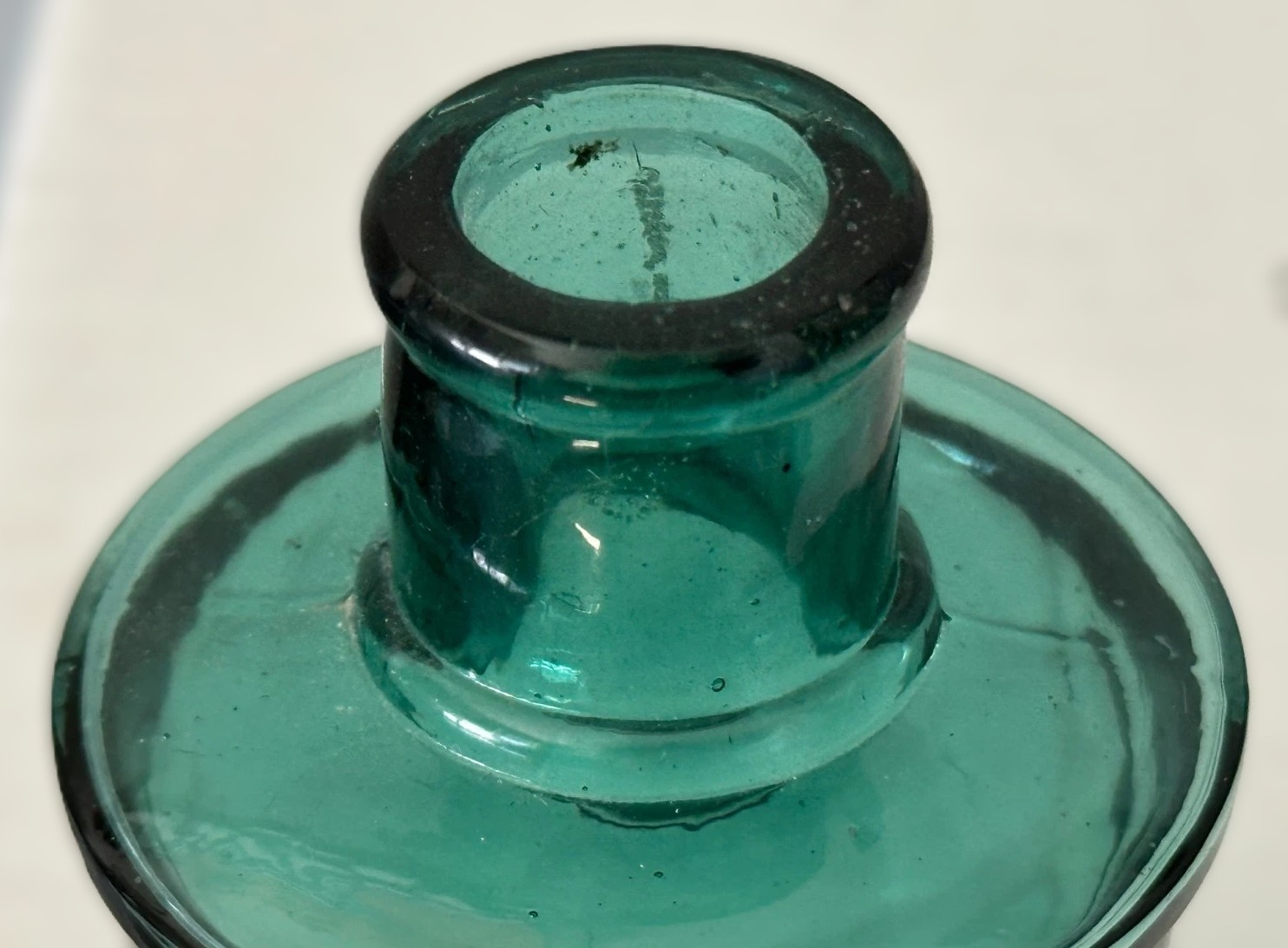
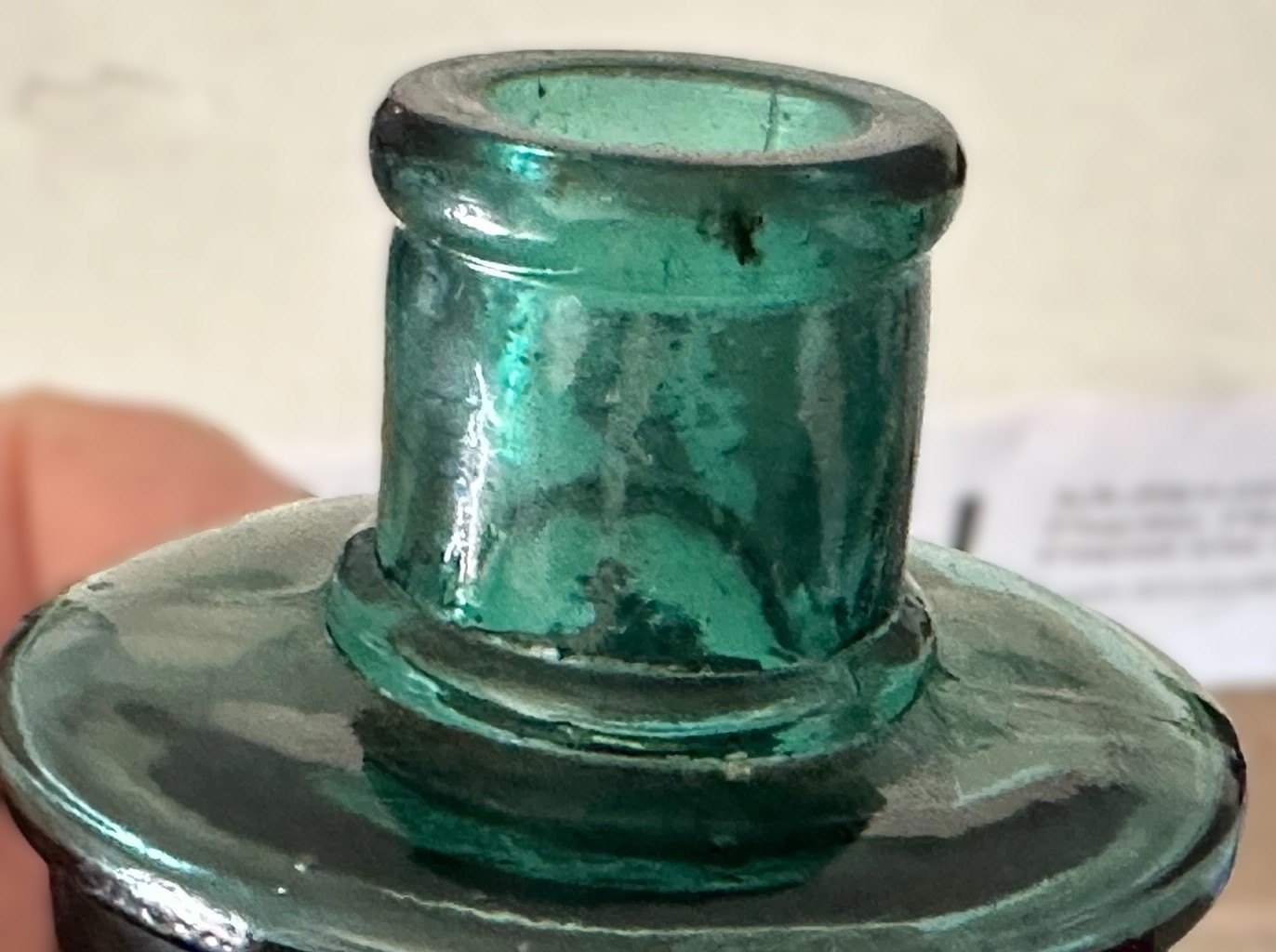
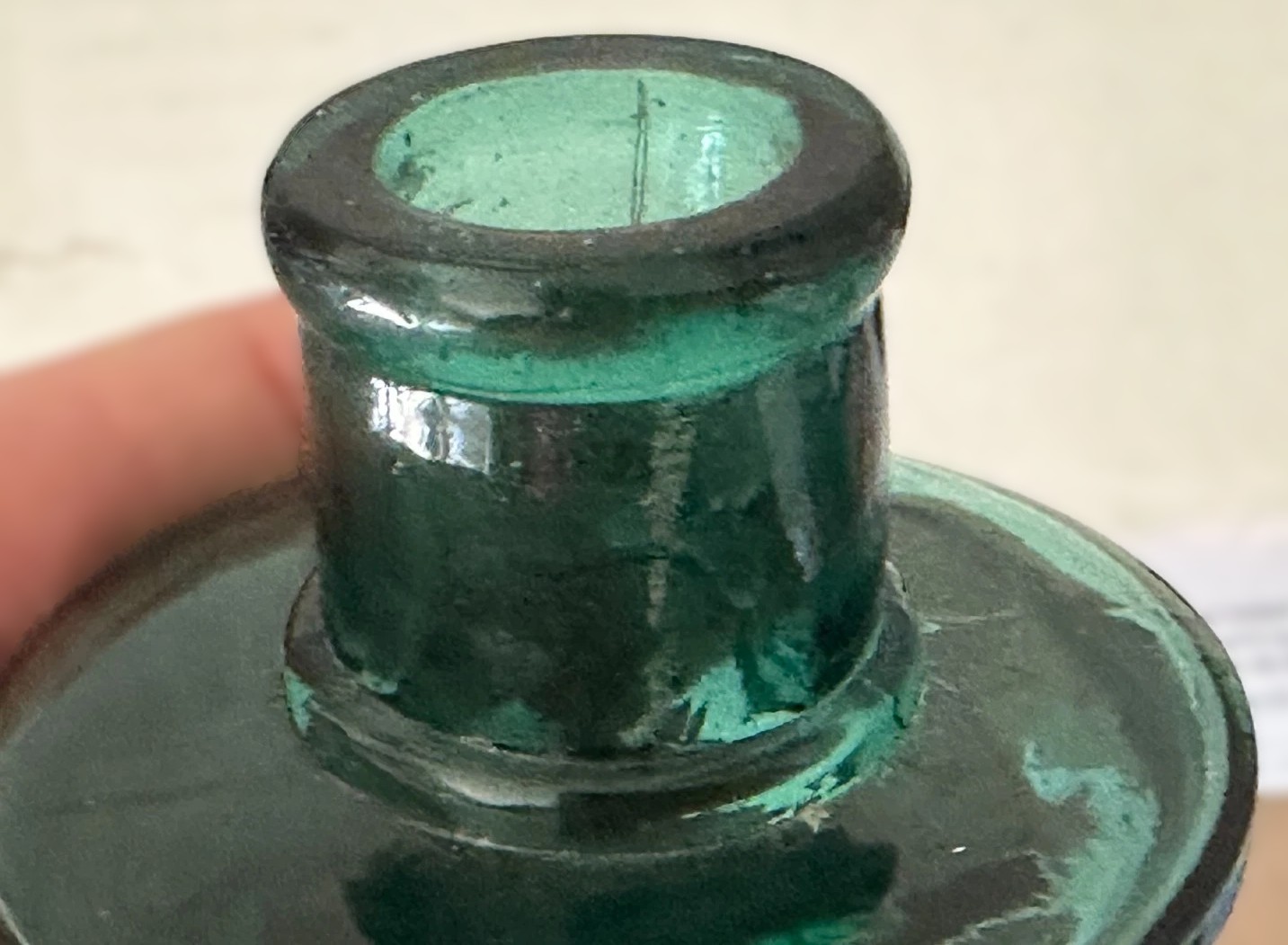
- Blown in Mold (BIM): The side seams (mold lines) stop partway up the neck, indicating the body was blown into a mold.
- Applied/Tooled Lip: The top collar (lip) was finished by hand with a tool after the bottle was removed from the blowpipe. You can see the concentric tooling marks on the neck.
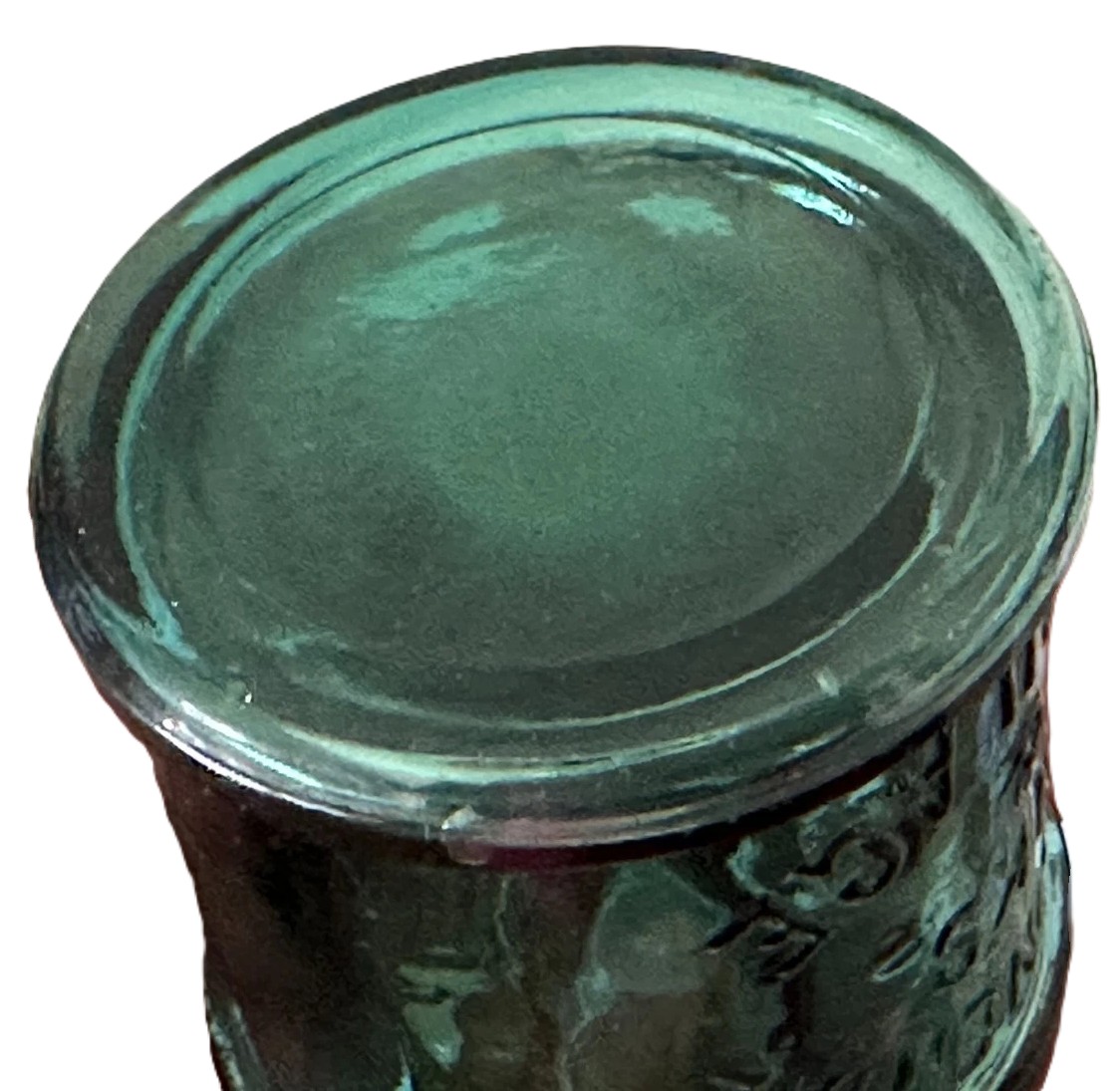
- Base: The base is smooth with a shallow depression (kick-up), typical of utility bottles from this era.
- Age
- Date: Circa 1880–1890.
- The specific teal color, the whittled texture, the bold embossing style, and the tooled lip are all hallmarks of the 1880s. By 1900, most bottles were becoming clearer and machine-made, losing this distinct character.
Sold for $139 in November 2025
Content disclaimer. The information posted is the owner’s best knowledge and may not have been vetted by the SOIC. We welcome comments, corrections, and additions, working to make our website information comprehensive and accurate.
Join the Society of Inkwell Collectors (SOIC) – it’s free!
Founded in 1981 as a non-profit organization,
we are documenting inkwells (and accessories).
We’re here to help and inform!