









Cobalt Blue Teakettle Inkwell
| Categories | Ink Bottle, Mechanical - Pump / Siphon |
| Type | Tea Kettle |
| Material | Glass |
| Markings | Unmarked |
| Manufacturer | Boston & Sandwich Glass Co. |
| Origin | United States |
| Date or Era | circa 1860 |
| Measuring | 3 ¼” long; 2” high |
Form
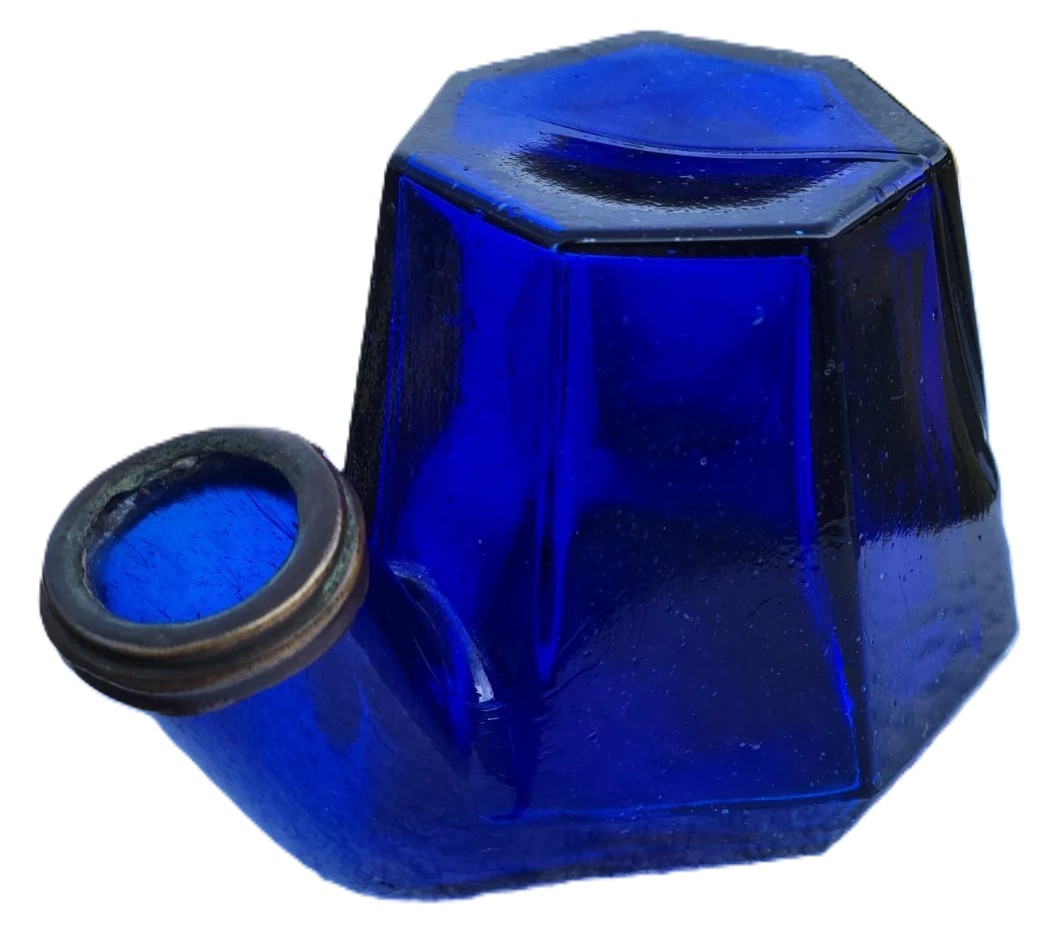
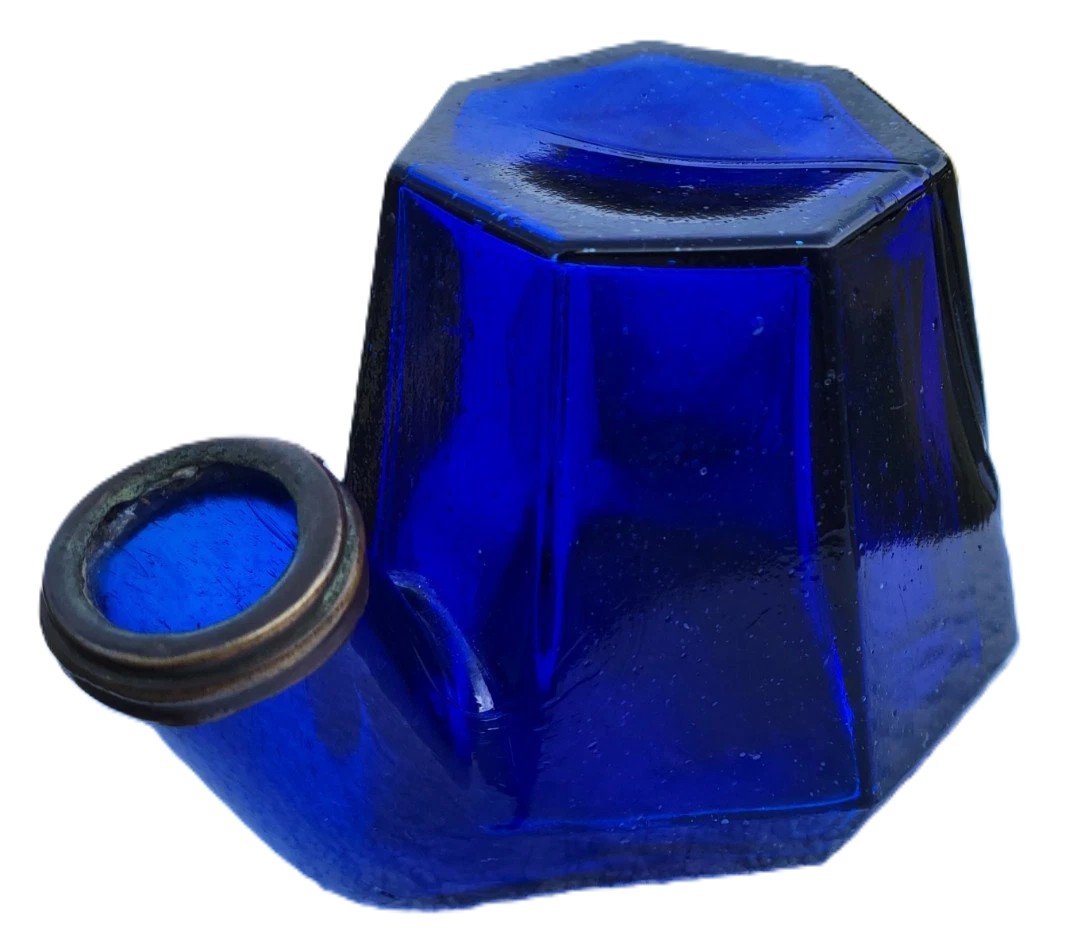
This “teakettle” style inkwell is a seven-sided, tapered example, characterized by its distinctive side-filling spout and a primary reservoir body. The glass is a rich, vibrant cobalt blue, showing deep color striations and variations in density that create darker “shades” depending on the light.
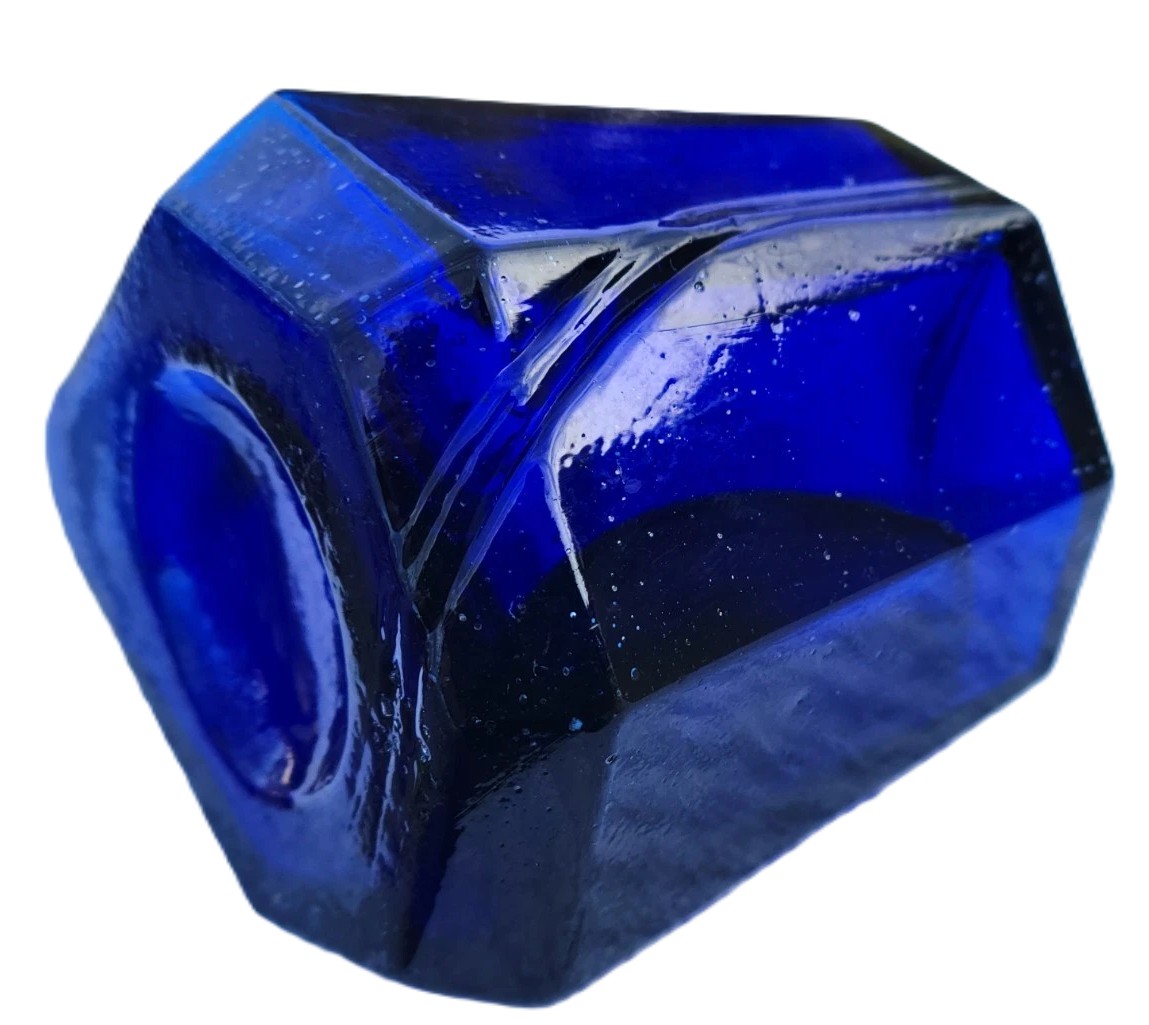
The original brass collar remains attached to the mouth of the spout, though the hinged or screw-on brass cap is no longer present. The base is notably smooth and crude, a hallmark of mid-to-late 19th-century American glass.
Manufacturing and Glass Characteristics
The bottle was likely produced using a blow-over-mold technique, common in the mid-1800s. The heavy texture and imperfections provide a “roadmap” of its creation:
- Seed Bubbles and Whittle: The glass is teeming with thousands of tiny “seed bubbles” (gas trapped during the melting process) and significant whittle. Whittle—the wavy, hammered texture on the surface—suggests the glass was blown into a mold that was relatively cool, causing the molten glass to “shiver” and set with a textured skin.
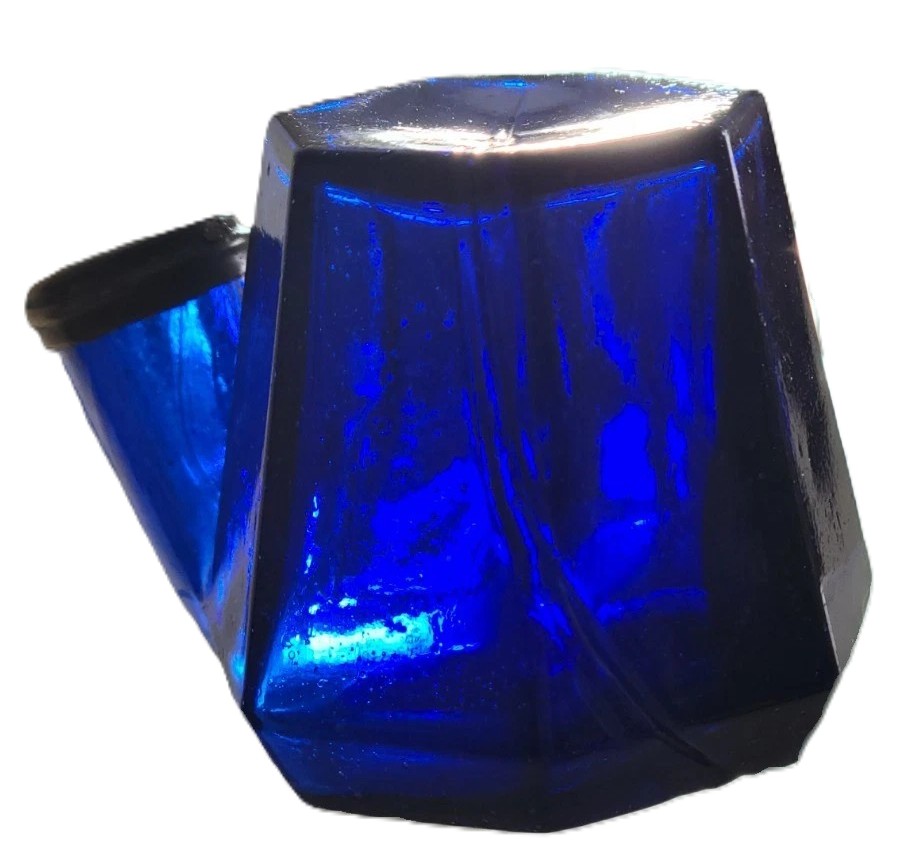
- Folds and Swirls: Numerous glass folds and swirls are visible throughout the body. These occur during the manual manipulation of the molten gather as it is placed into the mold, indicating a high degree of hand-craftsmanship rather than a refined industrial process.
Base Style: The specific “smooth base” configuration, often seen in wares from the Boston and Sandwich Glass Company, points toward a New England origin. The lack of a pontil scar suggests the use of a “snap-case” tool to hold the bottle by the base while the spout and collar were finished. The attribution to Boston and Sandwich Glassworks is highly plausible given the specific shade of cobalt and the characteristic base treatment found on their contemporary lamps and ink bottles.
Visual Appeal and Condition
In strong lighting, the “crudeness” of the glass—the striations, bubbles, and surface waves—pops brilliantly, transforming the bottle from a utilitarian object into a piece of translucent art. Despite being approximately 150 years old (dating to the late 1860s or early 1870s), it remains in near-mint condition, free of the typical chips, scuffs, or “sick glass” staining often found in dug bottles.
Sold for $350 in February 2026
Content disclaimer. The information posted is the owner’s best knowledge and may not have been vetted by the SOIC. We welcome comments, corrections, and additions, working to make our website information comprehensive and accurate.
Join the Society of Inkwell Collectors (SOIC) – it’s free!
Founded in 1981 as a non-profit organization,
we are documenting inkwells (and accessories).
We’re here to help and inform!