


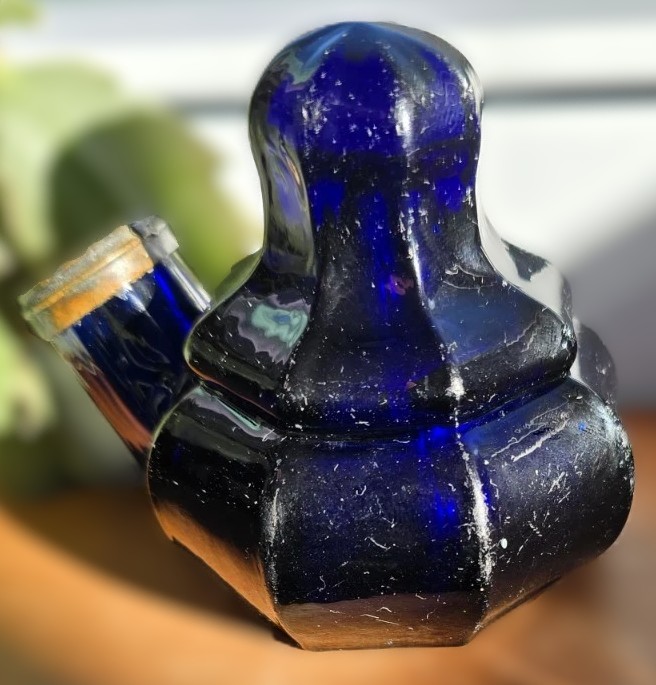



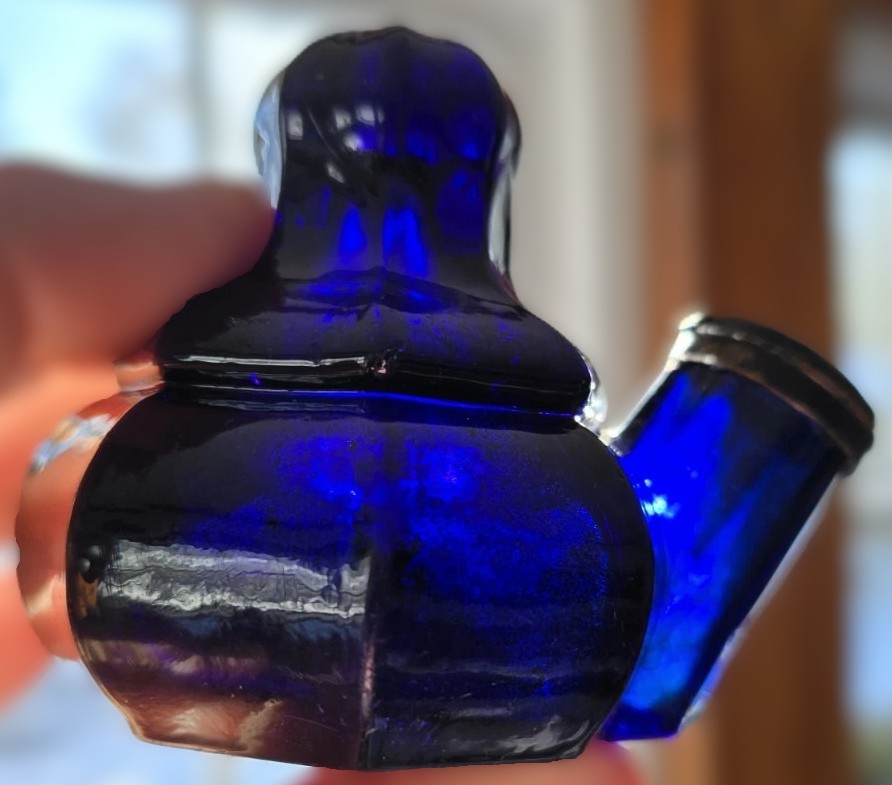

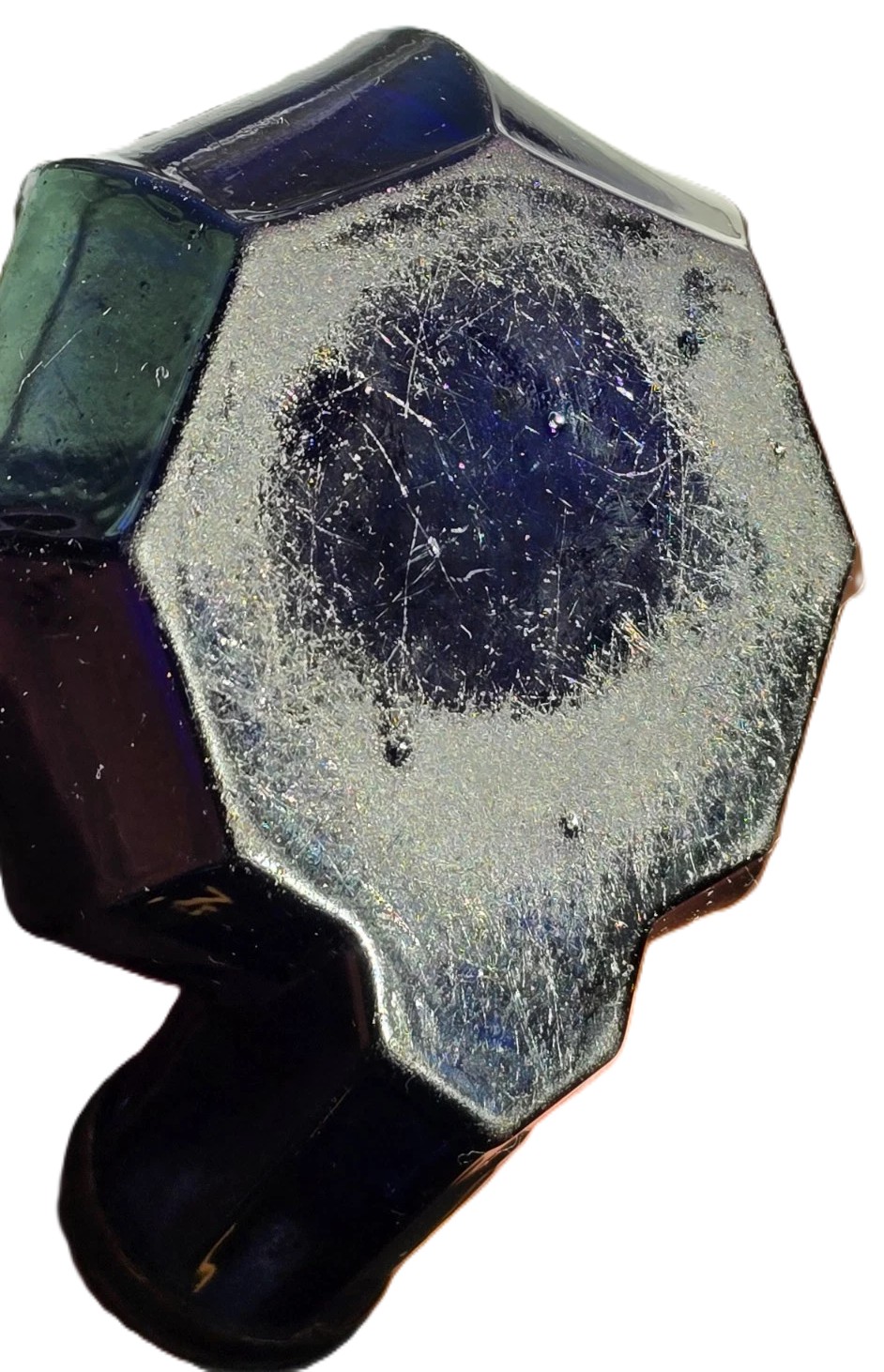
Cobalt Blue “Beehive” Teakettle Ink Bottle
| Categories | Ink Bottle, Mechanical - Pump / Siphon |
| Type | Tea Kettle |
| Material | Glass |
| Markings | Unmarked |
| Manufacturer | Undetermined |
| Origin | United States |
| Date or Era | circa 1870 |
This “beehive” teakettle ink bottle is a fine example of 19th-century American utility glass. Known to stationers and glassmakers as a “French Ink,” this form was a staple of the desktop, designed to be both functional and visually striking.
The Maker: A New England Pedigree
While these bottles were rarely embossed with a manufacturer’s name, collectors and historians have narrowed their origin to the prestigious glasshouses of Massachusetts.
- Boston & Sandwich Glass Company: This is the most likely source. Operating in Sandwich, MA, from 1825 to 1888, the factory was renowned for its vibrant colored glass. Their trade catalogs listed various “French Inks,” and the vertically ribbed “beehive” pattern in deep cobalt is a hallmark of their utility production.
- New England Glass Company: Based in Cambridge, this factory produced nearly identical wares. Distinguishing between the two often comes down to minute variations in the ribbing, but both represent the peak of American glassmaking in the mid-to-late 1800s.
- Catalog Reference: In the definitive reference Ink Bottles and Inkwells by William E. Covill Jr., a similar form is categorized as Figure 1267. It remains one of the most sought-after designs among “teakettle” collectors.
Age and Manufacture: The Snap-Case Era
Evidence from the bottle’s construction helps pin down its age to approximately 1865–1885.
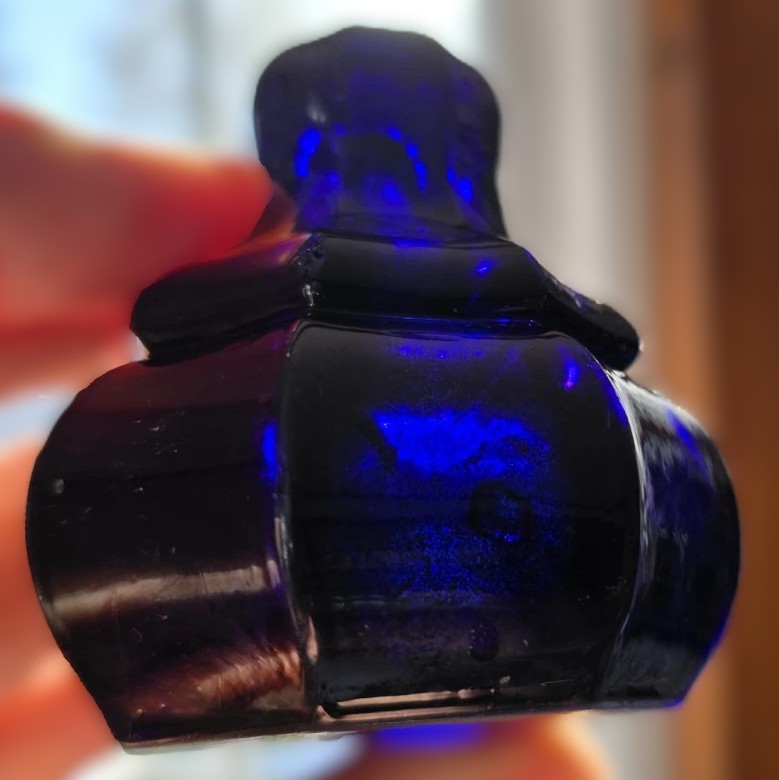
- Mold-Blown Technique: The bottle was created by blowing molten glass into a multi-part metal mold, which formed the distinctive ribs and the “beehive” body.
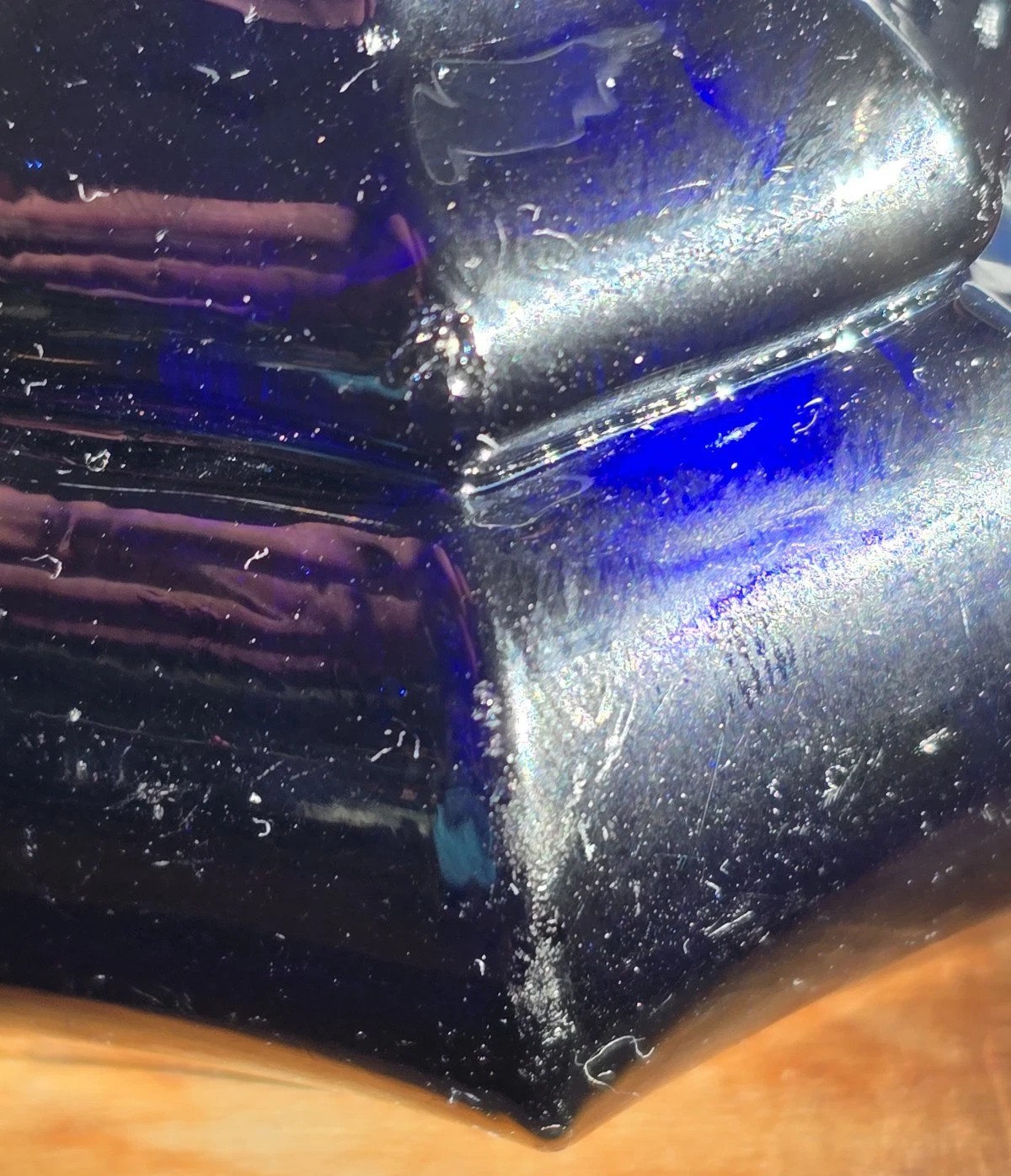
- The Base: The base has a smooth, slightly worn surface without a “pontil scar” (the rough mark left by a glassblower’s rod). This indicates the use of a snap case – a tool that held the bottle by its body during the finishing process. This technique became the industry standard in the U.S. after the mid-1860s, replacing the earlier, more primitive pontil method.
- The Spout: After removal from the mold, the spout was hand-tooled or “pulled” to its angled position. The neck was then sheared and fitted with the brass or nickel-plated collar. Originally, this collar held a small, hinged metal cap or a screw-top to prevent the ink from evaporating.
Rarity and The Cobalt “Premium”
In the 19th century, cobalt blue was not a “common” color for everyday utility bottles. Creating this vivid shade required the addition of cobalt oxide, a relatively expensive mineral.
- Standard vs. Choice: While most teakettles were produced in inexpensive aqua or clear glass, cobalt was considered an “upmarket” choice.
- Survival: Because of their heavy, weighted bases, these bottles were stable and less prone to breaking than thinner vials, but the metal caps are frequently lost to time.
This bottle represents a time when even the most basic office tools were crafted with an eye for aesthetics and durability.
Sold for $766 in February 2026
Content disclaimer. The information posted is the owner’s best knowledge and may not have been vetted by the SOIC. We welcome comments, corrections, and additions, working to make our website information comprehensive and accurate.
Join the Society of Inkwell Collectors (SOIC) – it’s free!
Founded in 1981 as a non-profit organization,
we are documenting inkwells (and accessories).
We’re here to help and inform!