




Cloisonné Inkwell for Travel
| Categories | Far East / Oriental, Travel |
| Type | Cloisonné |
| Material | Enameled Brass/Bronze/Metal |
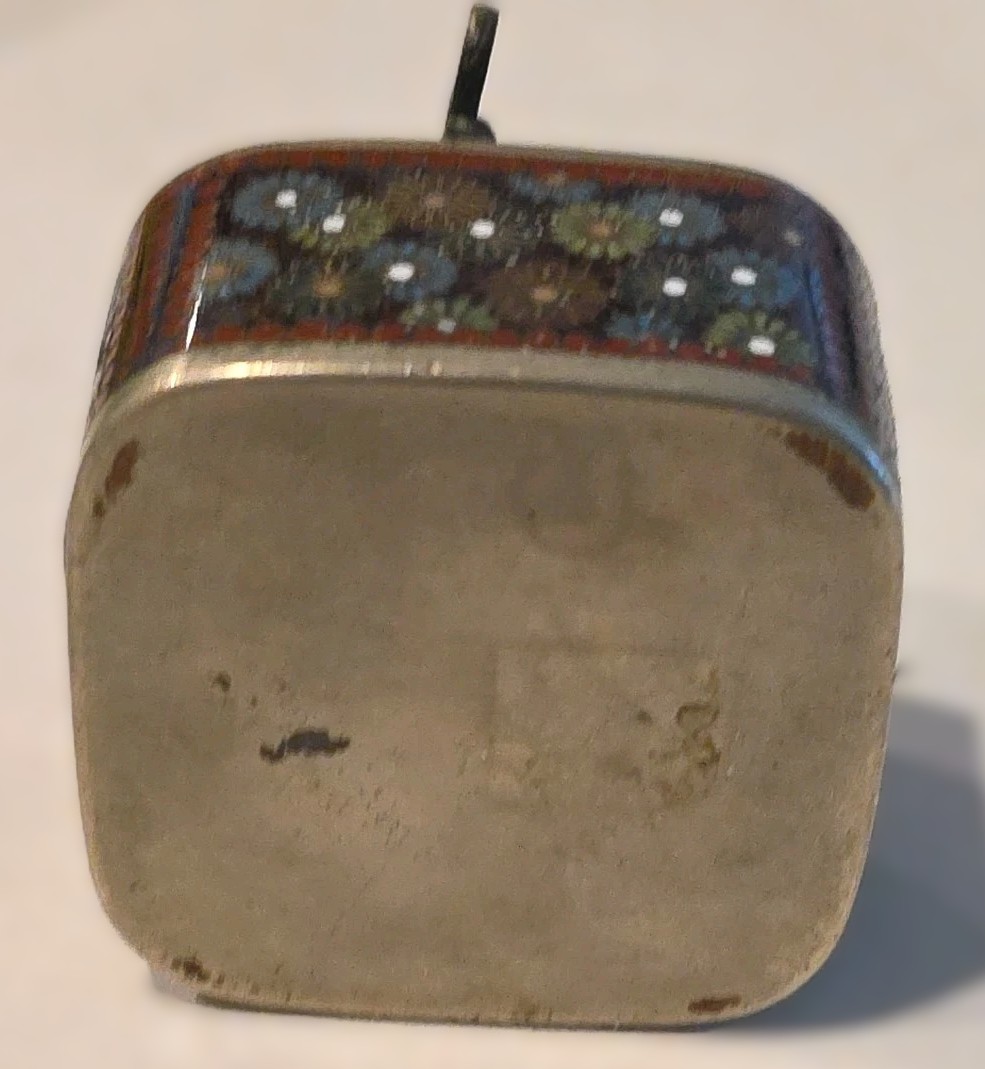
| Markings | Unmarked |
| Manufacturer | Undetermined |
| Origin | China |
| Date or Era | circa 1900 |
| Measuring | 2” x 2” |
Description
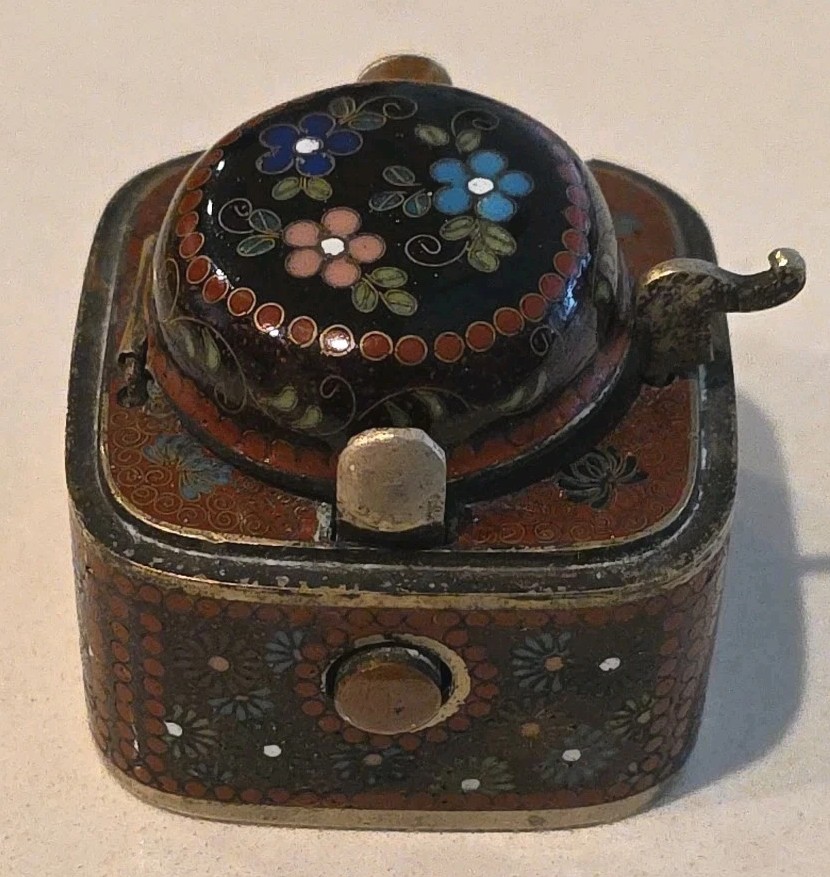
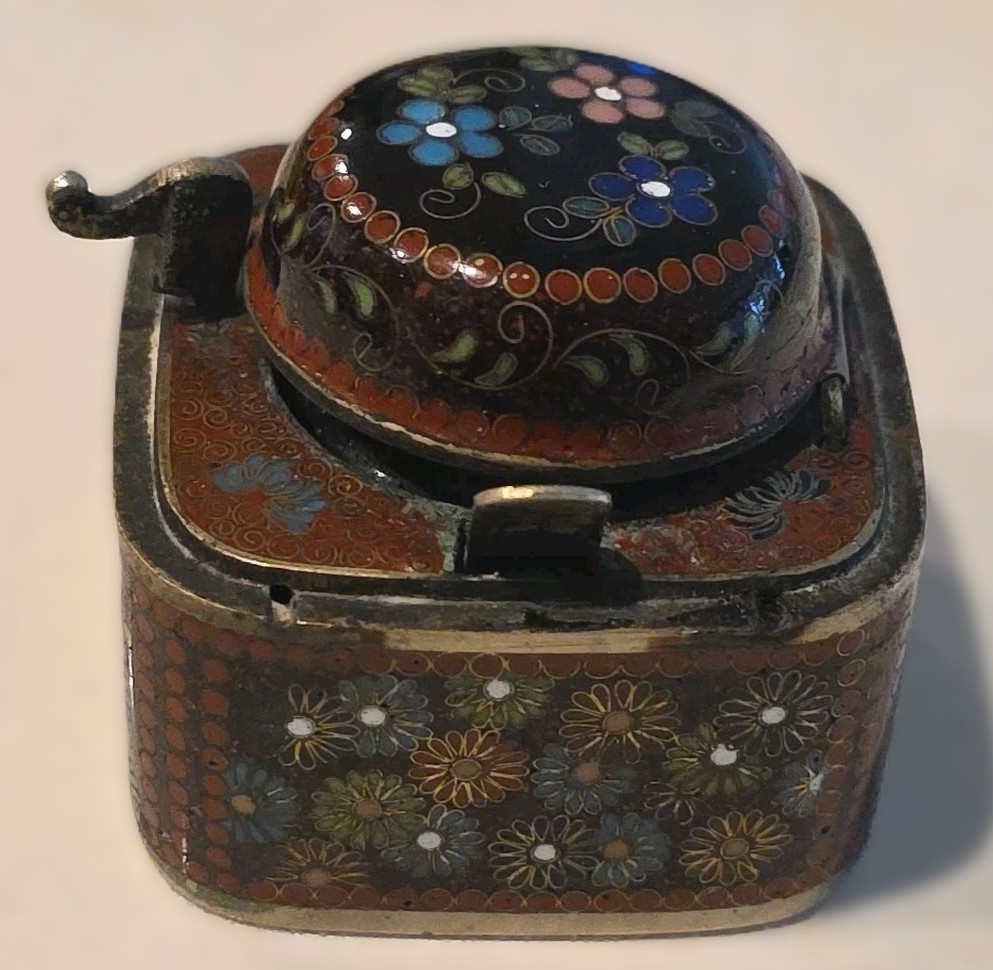
This is a small, portable, square-shaped pocket inkwell featuring intricate cloisonné enamel work.
- The Domed Lid: The circular, hinged lid has a black enamel background decorated with delicate pink, blue, and light blue blossoms surrounded by green leaves and scrolling wirework (cloisons). A distinct border of small red and orange enamel circles rings the dome.
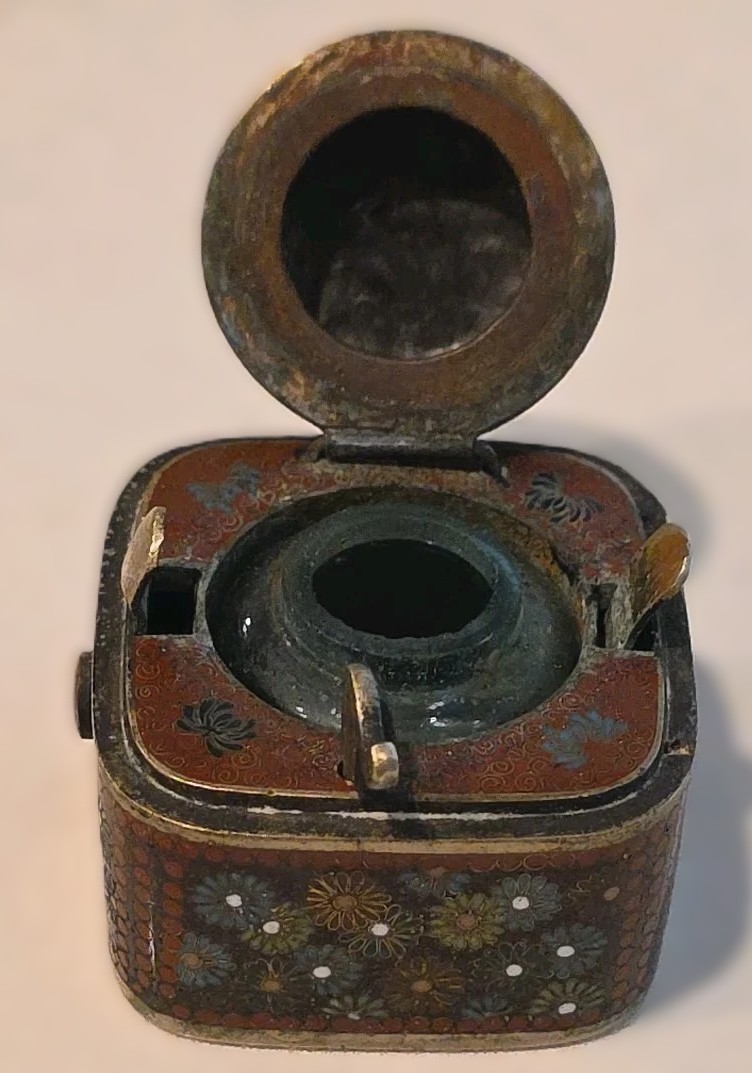
- The Body: The surrounding top surface and the four side panels feature dense, tightly packed patterns. The sides are adorned with a “thousand flowers” (qianhua) style design composed of small, multi-colored daisies/chrysanthemums on a dark background. The top shoulders feature a deep red/brown background with fine scrollwork and stylized bats or floral motifs at the corners.
Origin & Era
- Where it was made: This inkwell was made in China. The stylistic elements—particularly the scrollwork, the chrysanthemums, the specific color palette of the enamel, and the brass/bronze alloy construction—are classic hallmarks of Chinese cloisonné.
- When it was made: It dates to the late 19th century to very early 20th century (Late Qing Dynasty, circa 1880–1910).
How It Works: The Push Button & Latch Mechanism
The inkwell features a specialized, spring-loaded safety mechanism designed specifically to prevent ink from spilling out while being carried in a pocket or travel bag.
- The Latch (The Hook / Lever): On the right side of the lid, there is a stylized, curved metal hook or lever. When you want to secure the inkwell, you swing this manual safety latch over the lip of the lid. This acts as a physical lock that prevents the lid from accidentally popping open under pressure or if dropped.
- The Push Button: On the front face of the body, there is a prominent, circular push button. When the manual safety latch is disengaged (swung out of the way), pushing this button retracts an internal catch, allowing the spring-loaded lid to instantly pop open via its rear hinge, exposing the internal glass bottle.
Why Are There Both?
Having both a push button and a manual latch serves a vital dual purpose for travel and utility:
- In Transit (The Latch): Pocket inkwells were carried in vests, coats, or bags. A simple push-button mechanism is highly susceptible to being bumped or compressed accidentally while walking or reaching into a pocket, which would ruin a suit with ink. The manual swivel latch ensures absolute security during travel.
- At the Desk (The Push Button): Once the user arrived at their writing desk, they would unlock the manual latch. From that point on, while actively writing, they could easily open and snap close the inkwell with one hand using the quick-release push button, keeping the ink fresh and preventing it from evaporating between sentences without having to constantly fiddle with a tight latch.
Sold for $145 in May 2026
Content disclaimer. The information posted is the owner’s best knowledge and may not have been vetted by the SOIC. We welcome comments, corrections, and additions, working to make our website information comprehensive and accurate.
Join the Society of Inkwell Collectors (SOIC) – it’s free!
Founded in 1981 as a non-profit organization,
we are documenting inkwells (and accessories).
We’re here to help and inform!