

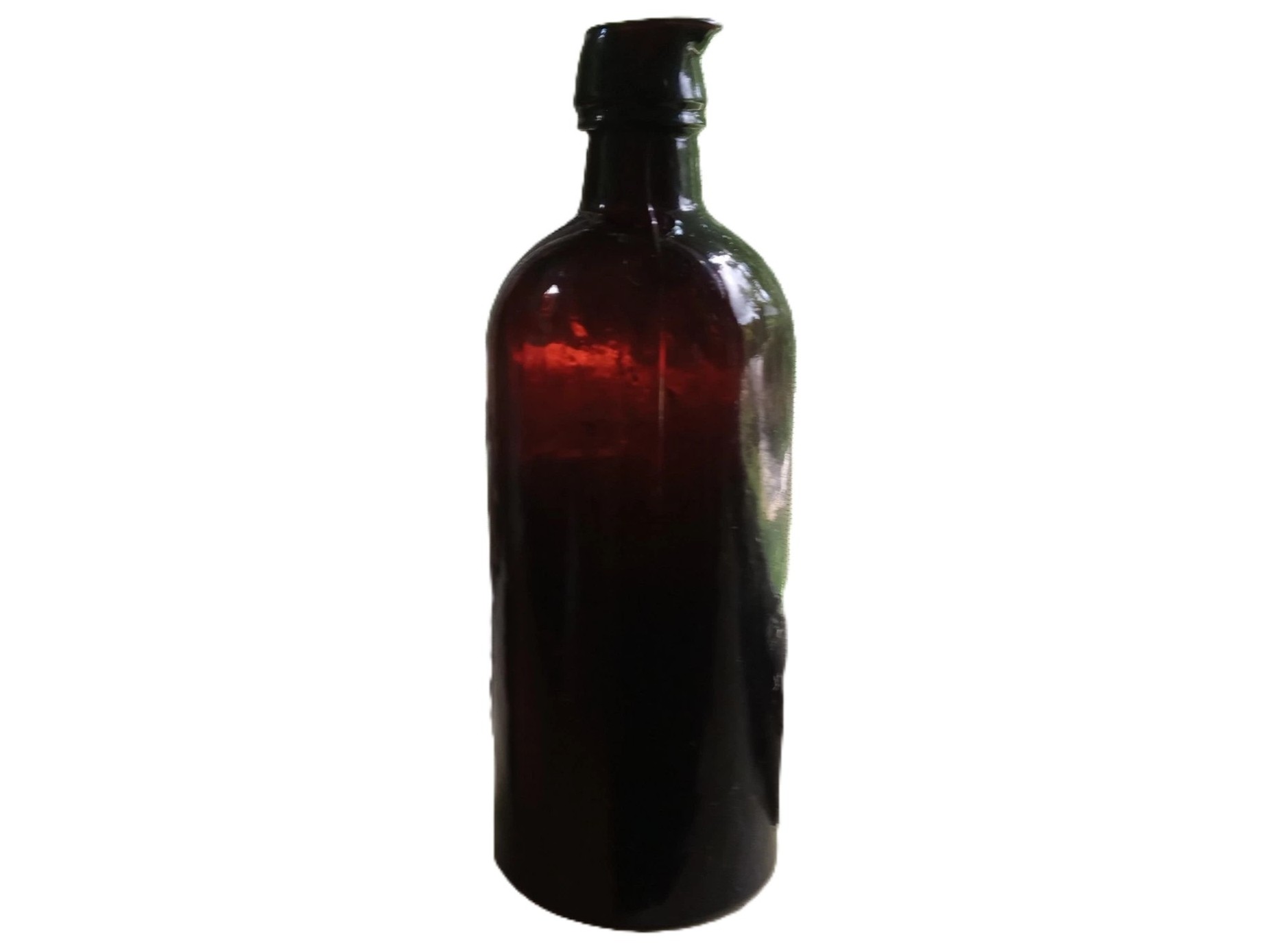
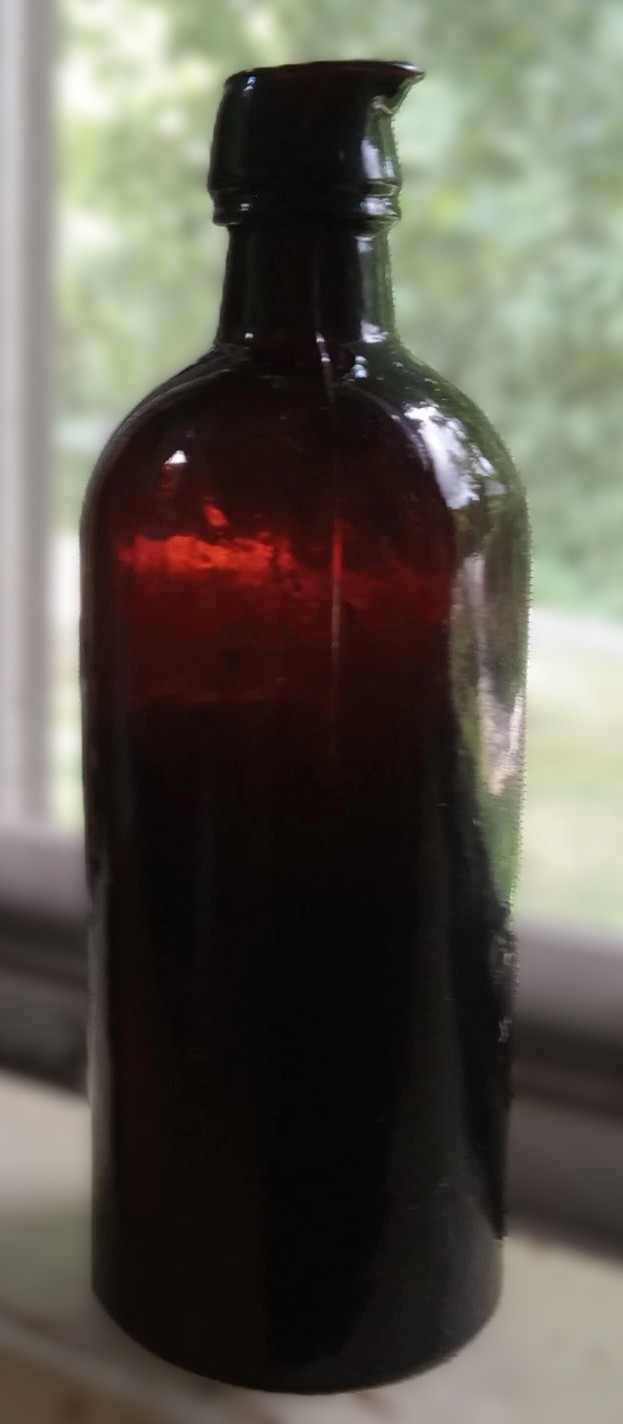
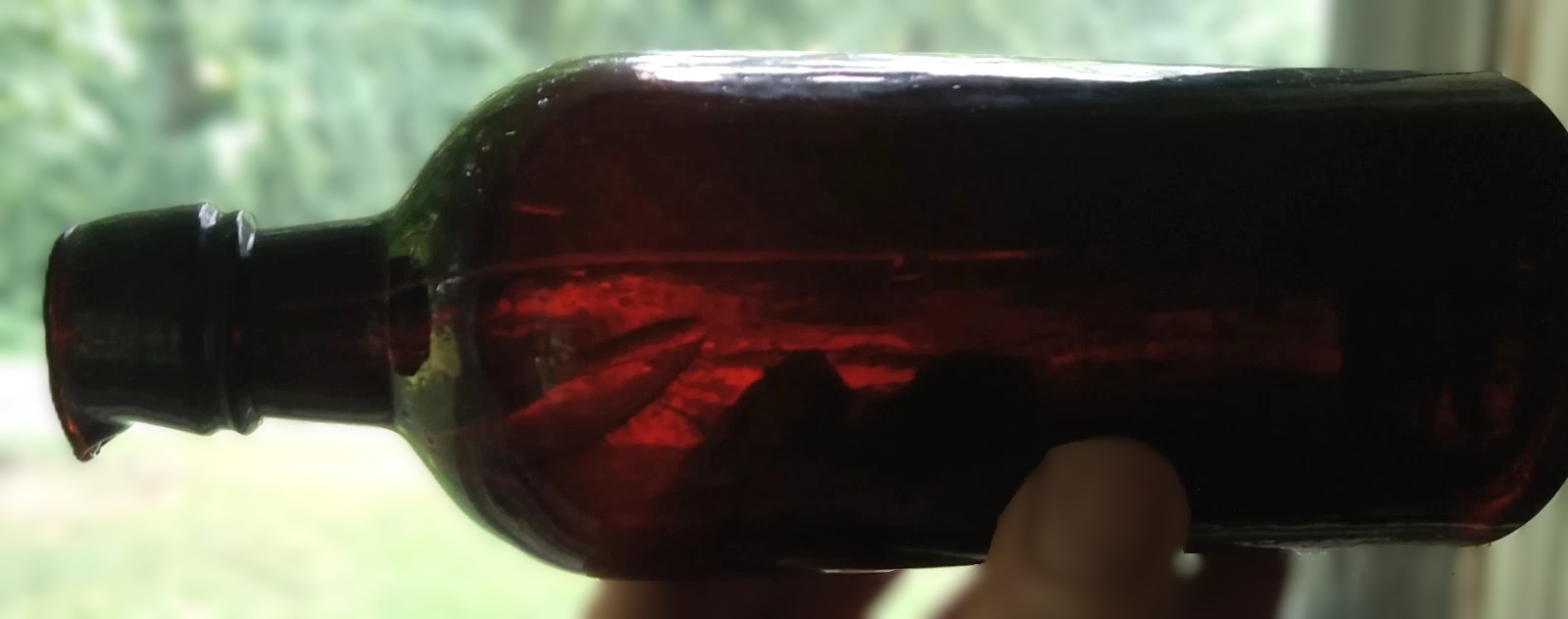
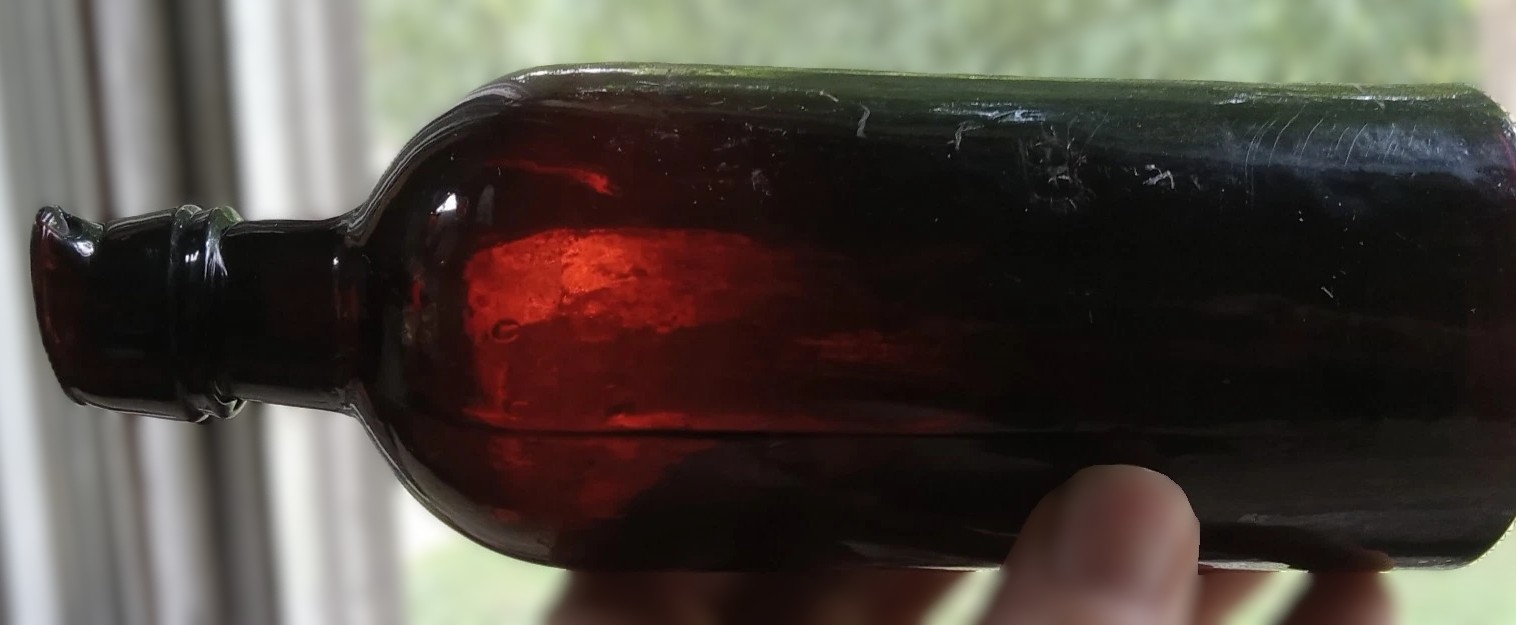
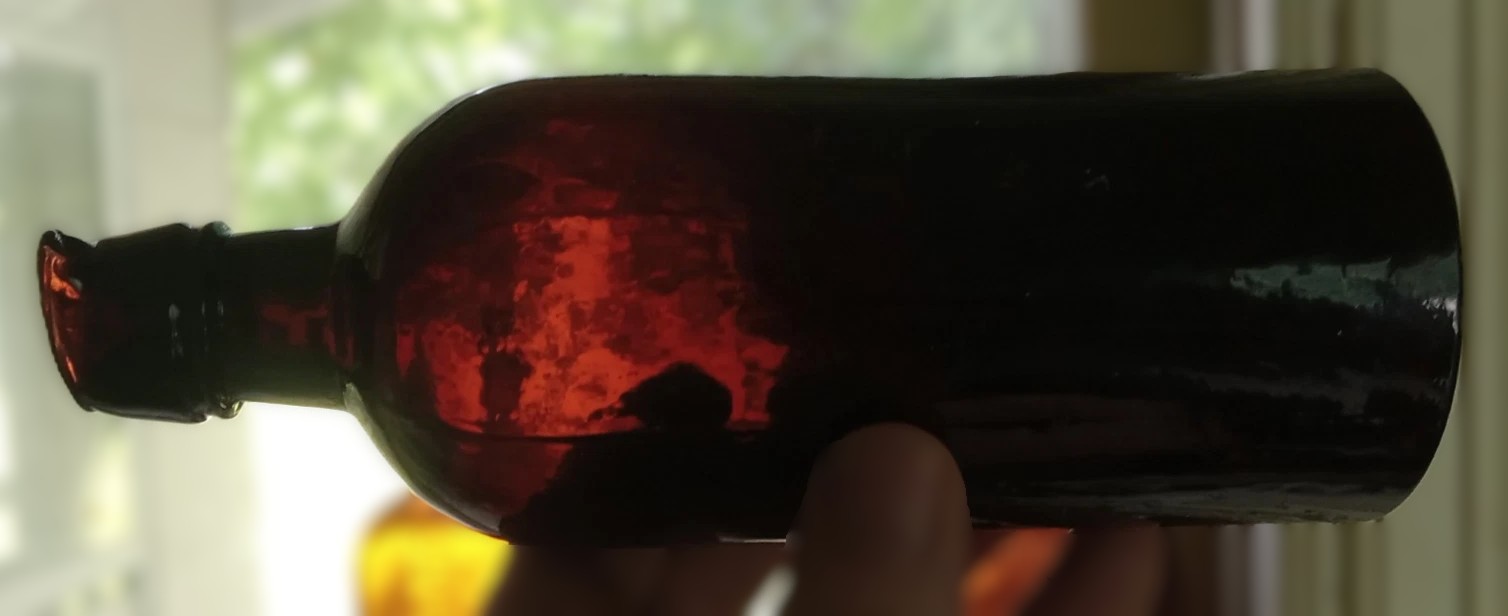
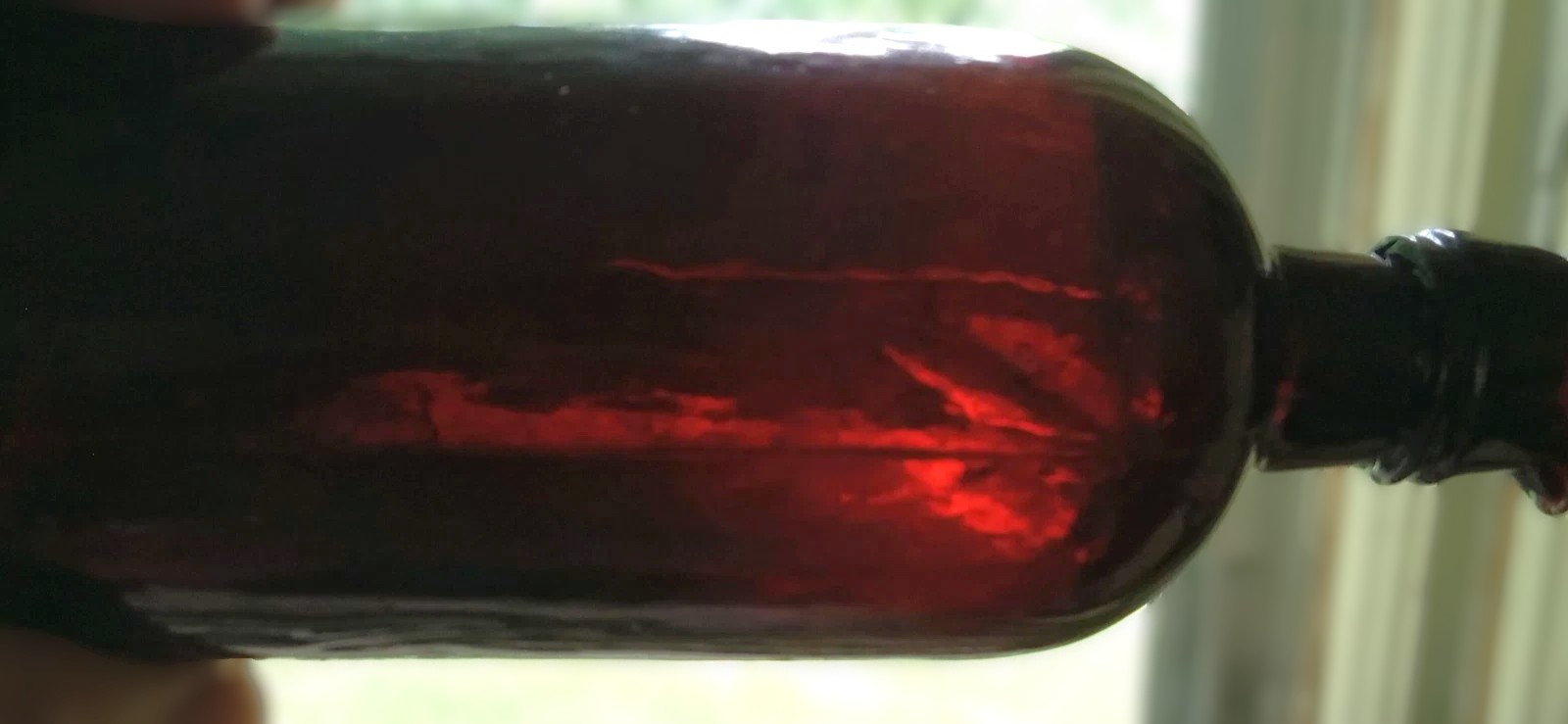
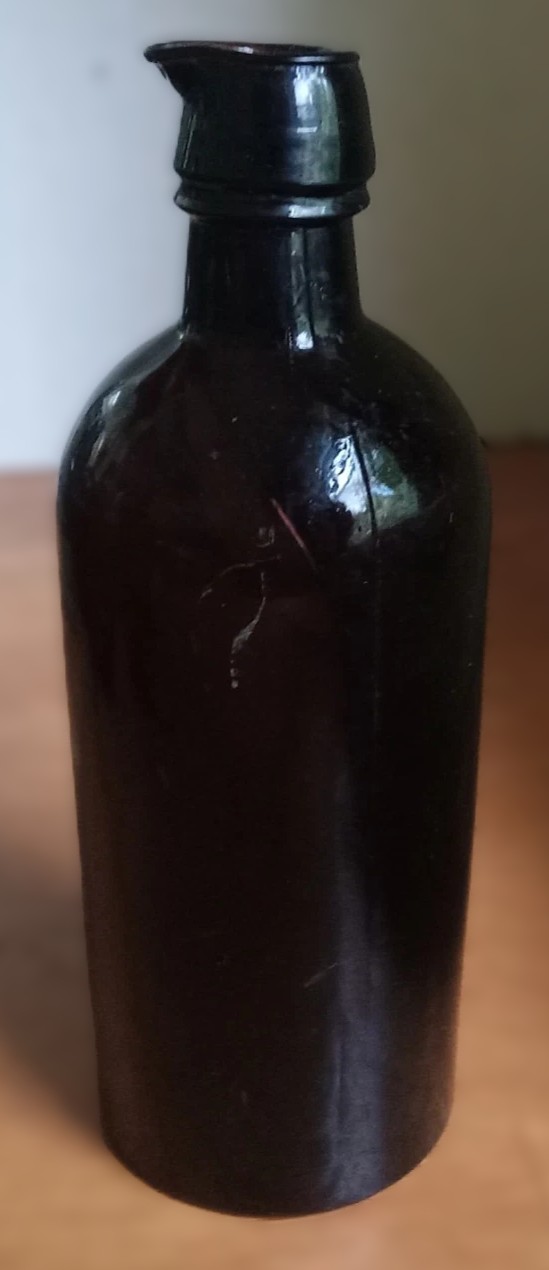
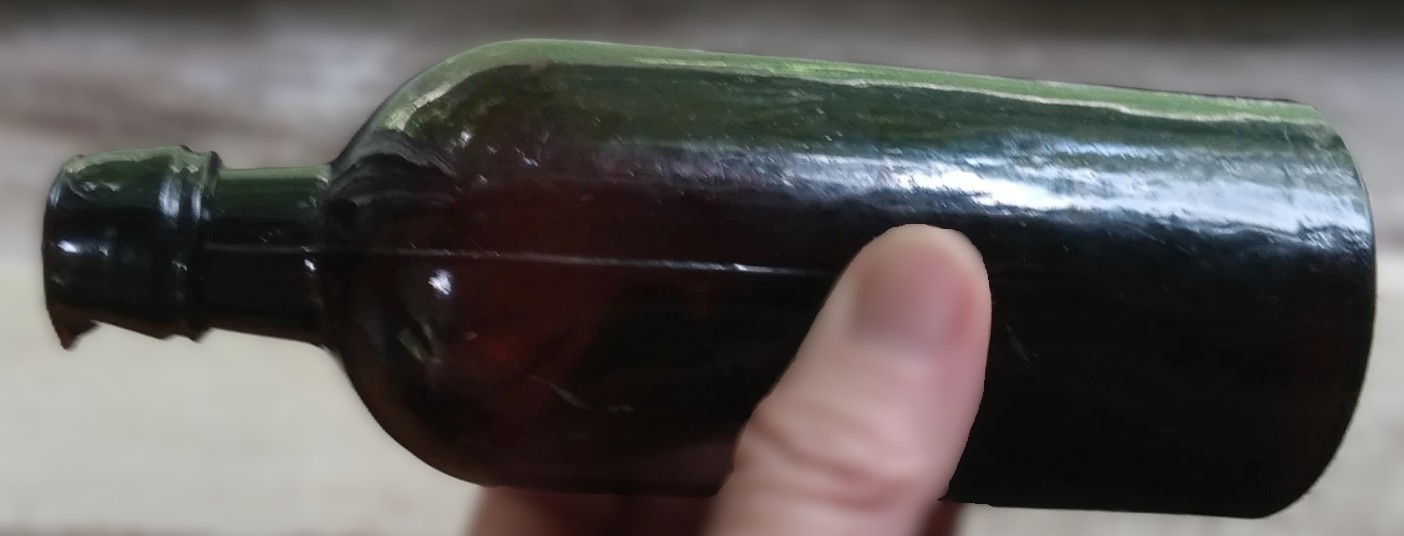
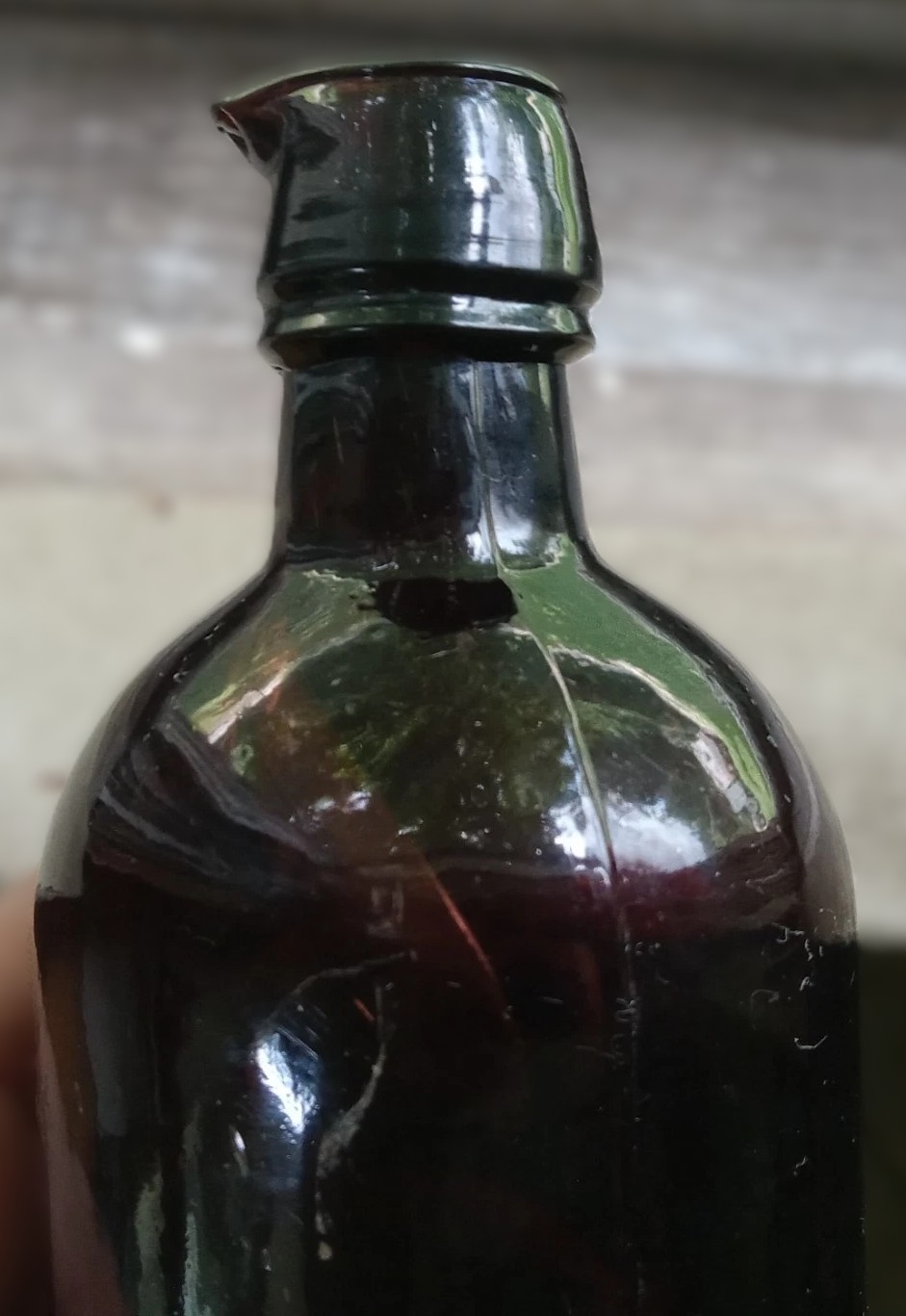
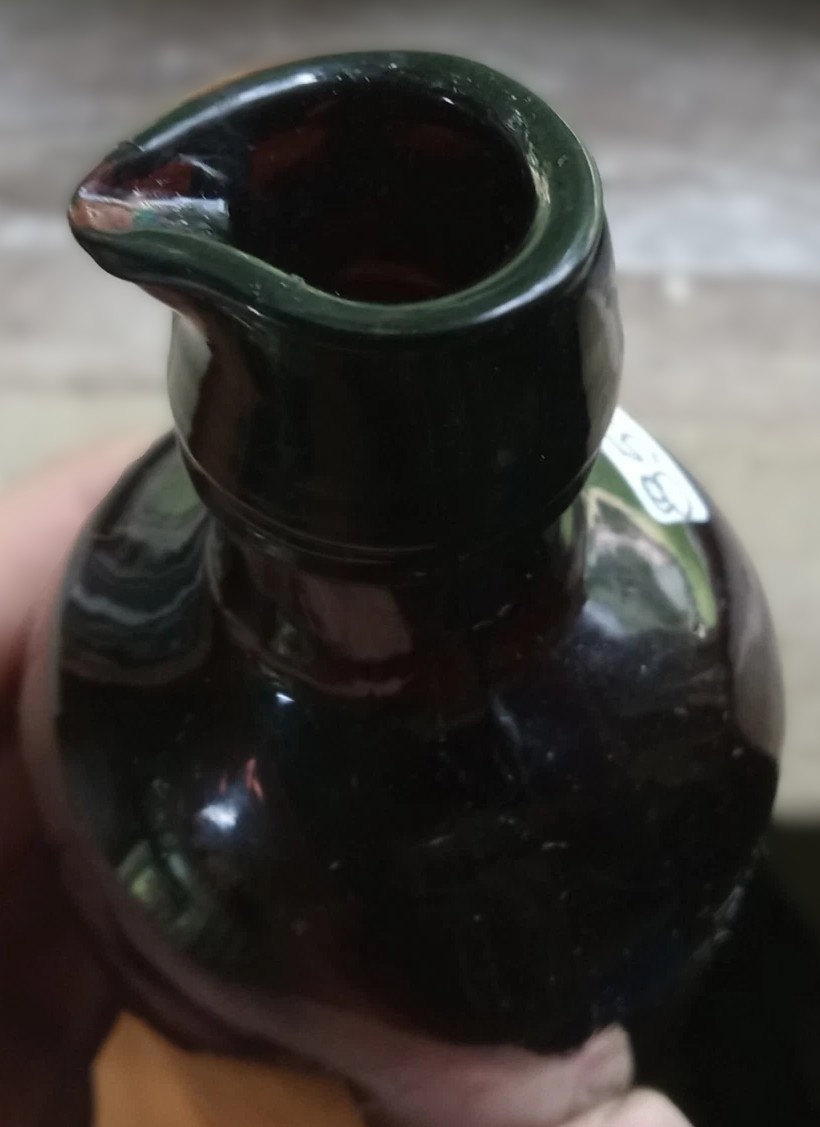
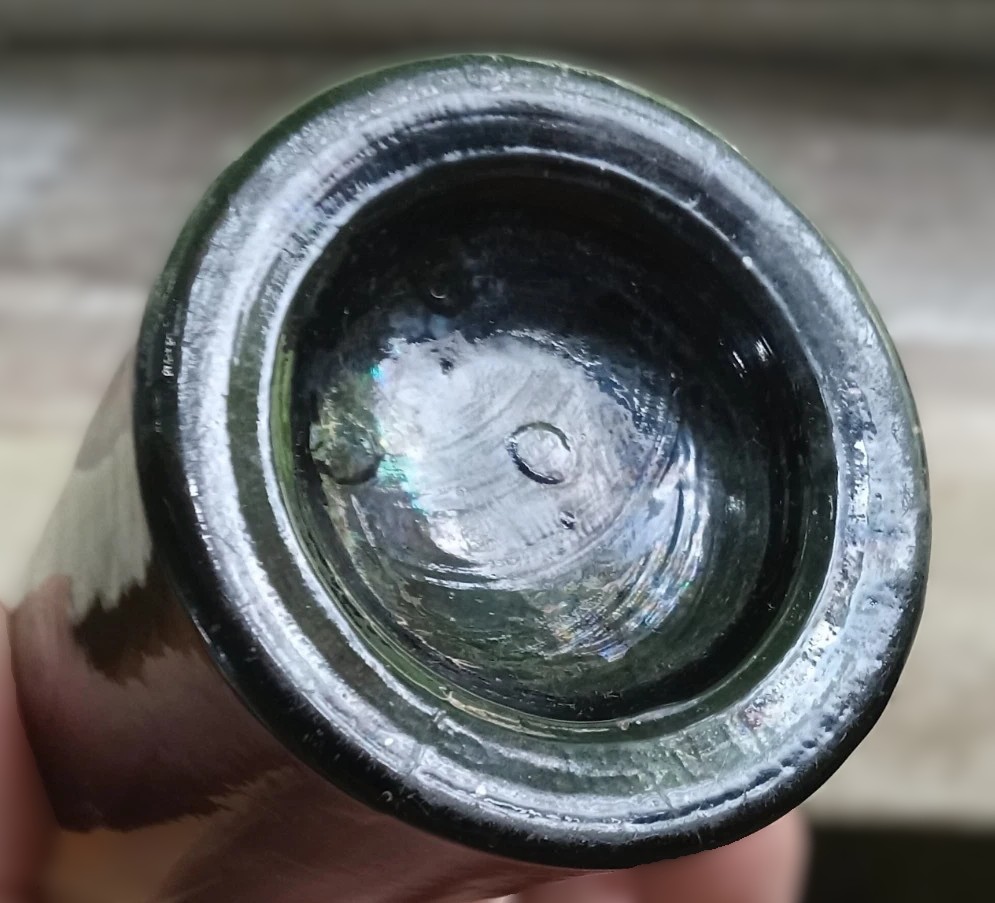
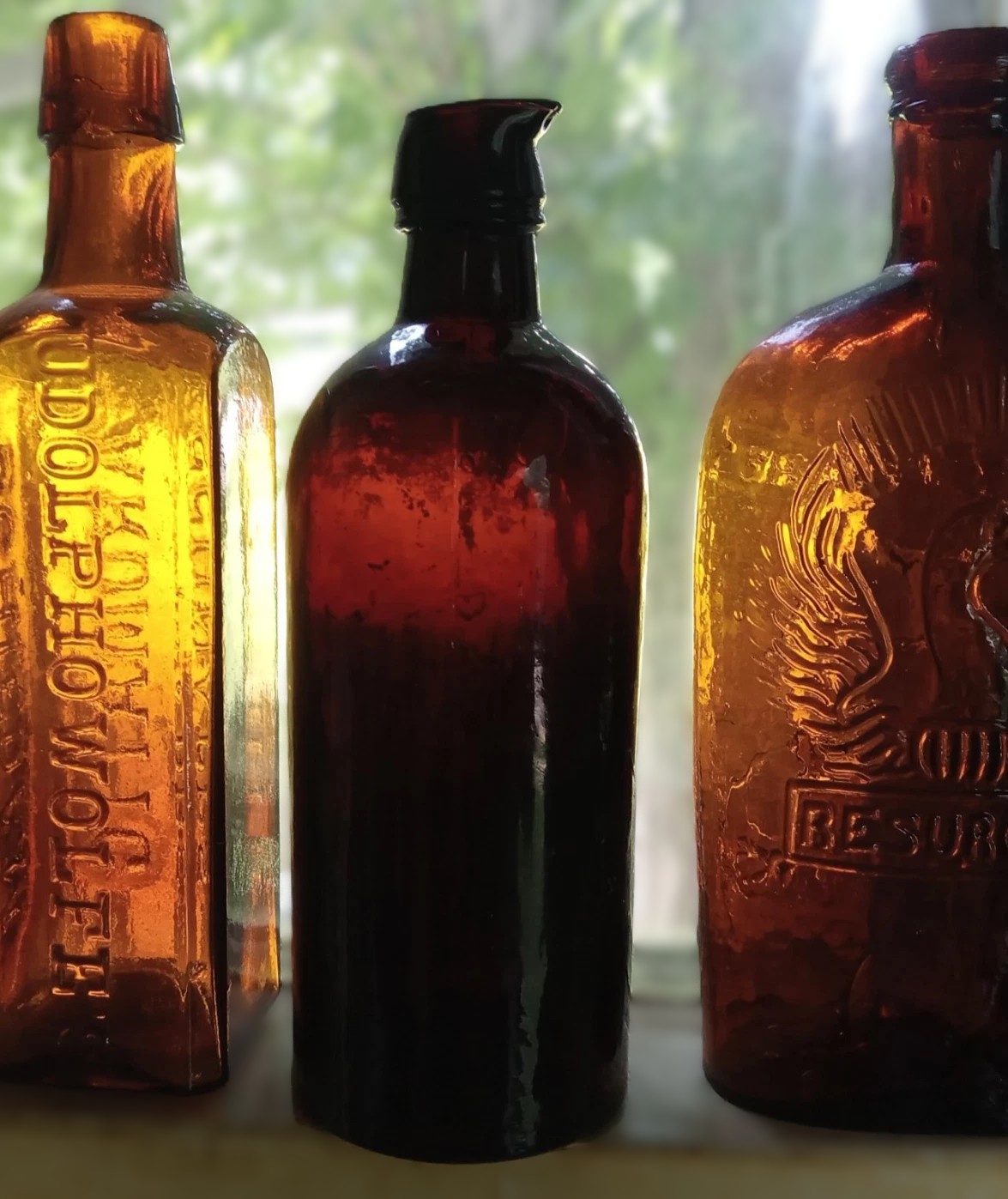
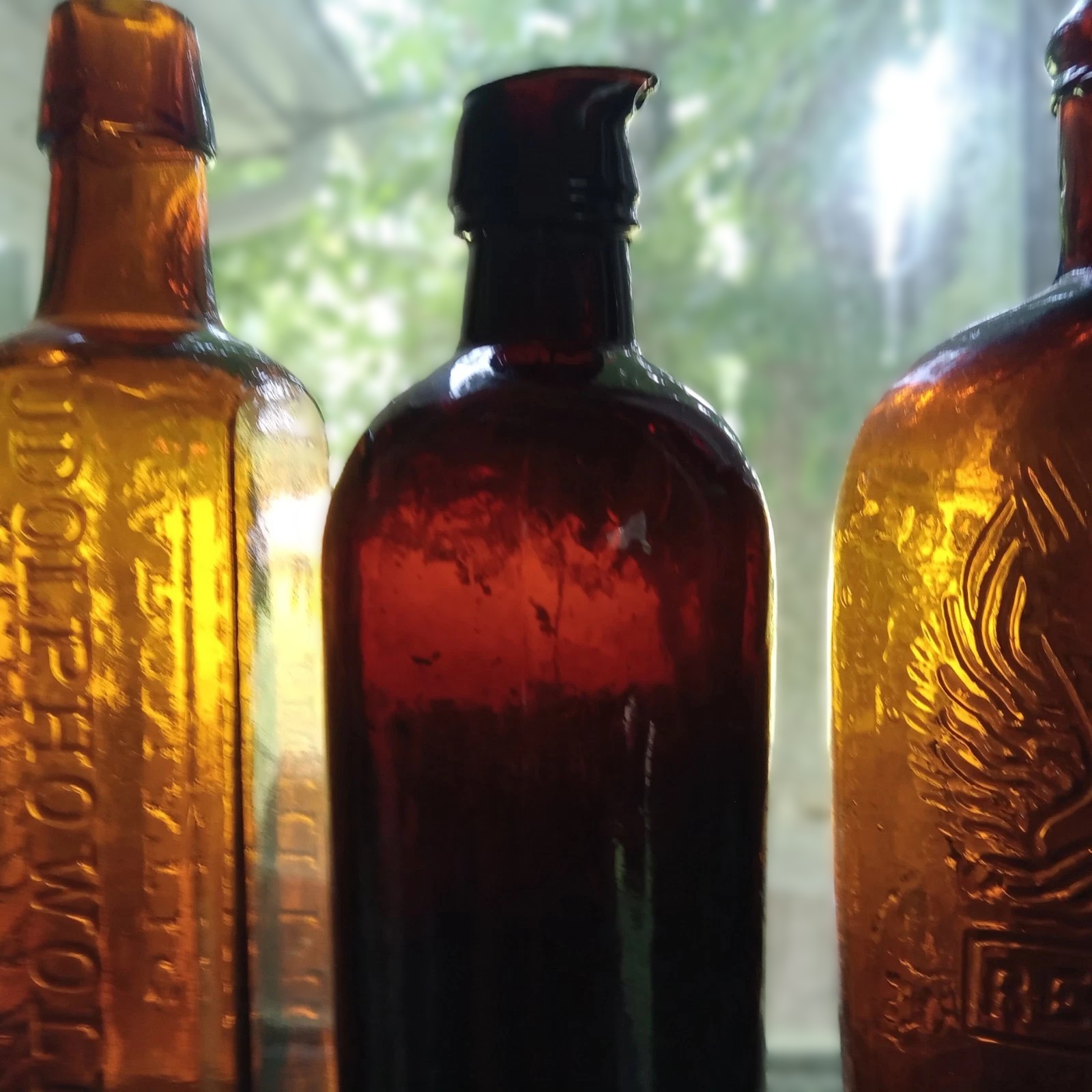
Civil War Era Puce Master Ink Bottle
| Categories | Ink Bottle |
| Material | Glass |
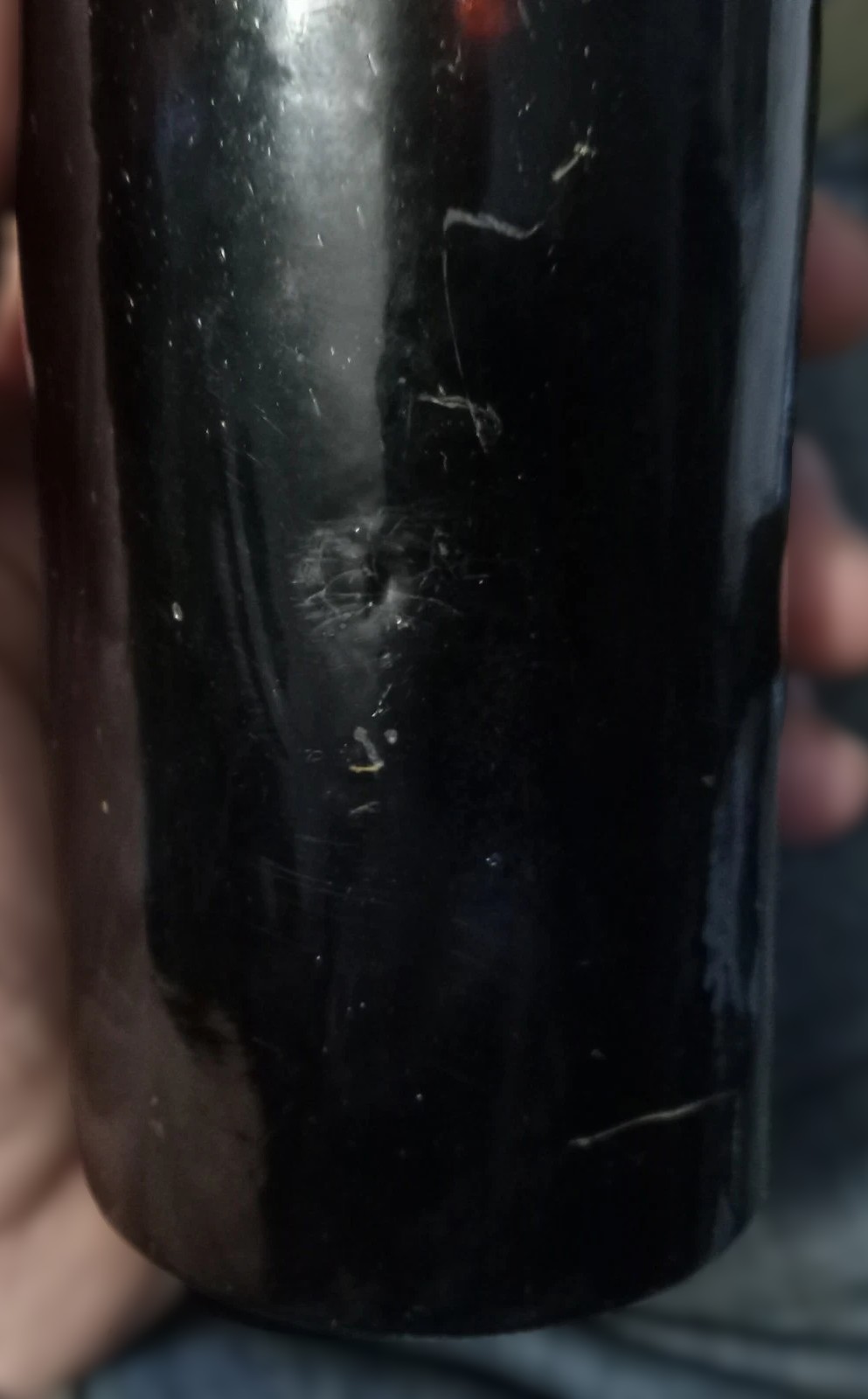
| Markings | Unmarked |
| Manufacturer | Undetermined |
| Origin | United States |
| Date or Era | circa 1860 |
| Measuring | 7 ⅜” high |
Origin Analysis & Glasshouse Attribution
- Regional Origin: New England or the Mid-Atlantic region (most likely New Jersey or Eastern Pennsylvania).
- Color & Batch Chemistry: Puce—a deep, rich purplish red/burgundy hue—was rarely an intentional batch target for utility bottles like master inks. It was typically the result of specific iron, manganese, or nickel impurities combined with charcoal/sulfur in the sand/slag mix used for “black glass” (extremely dark olive-amber/amber).
- Prominent Glassworks Known for Puce/Reddish Tones (c. 1850s–1870s):
- New Jersey Glassworks (e.g., Whitney Glass Works in Glassboro, or Millville): Famous for producing heavy utility containers, master inks, and bottles with rich, off-color character ranging from dark reddish-amber to true deep puce.
- New England Glassworks (e.g., Stoddard, NH or Keene, NH): Known primarily for olive-amber and amber, but furnace variations occasionally produced striking reddish-burgundy/puce batches in cylinder masters during the Civil War era.
- Philadelphia / Mid-Atlantic Furnaces: Philadelphia was a major ink production hub (houses like Harrison’s, Hoover, and Wright) and sourced containers heavily from regional South Jersey and Pennsylvania glassworks.
Technical & Historical Features
- Manufacturing Era: c. 1850–1870 (Civil War to early Post-War Era).
- Method: Hand-blown in a two-part or three-part dip mold (Blown-in-Mold / BIM).
- Base: Early smooth, pushed-up (sunken) base without a pontil scar, indicating manufacture right at the transition period when the snap case mechanism replaced pontil rods for bottle finishing.
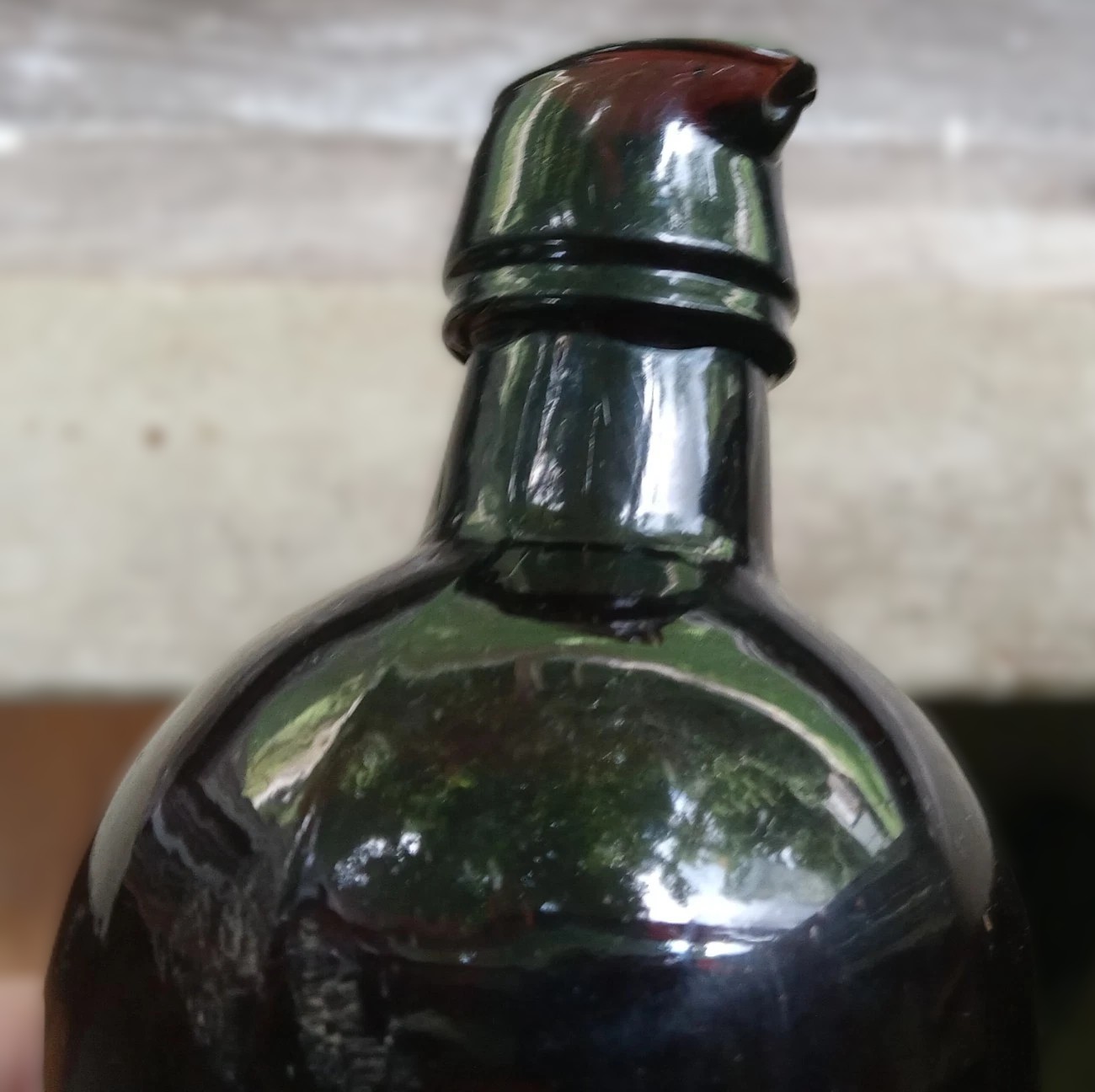
- Lip & Spout: A crude, heavily applied collared lip with a distinctive, hand-crimped/pinched pour spout, designed specifically for clean refilling of smaller desk inkwells.
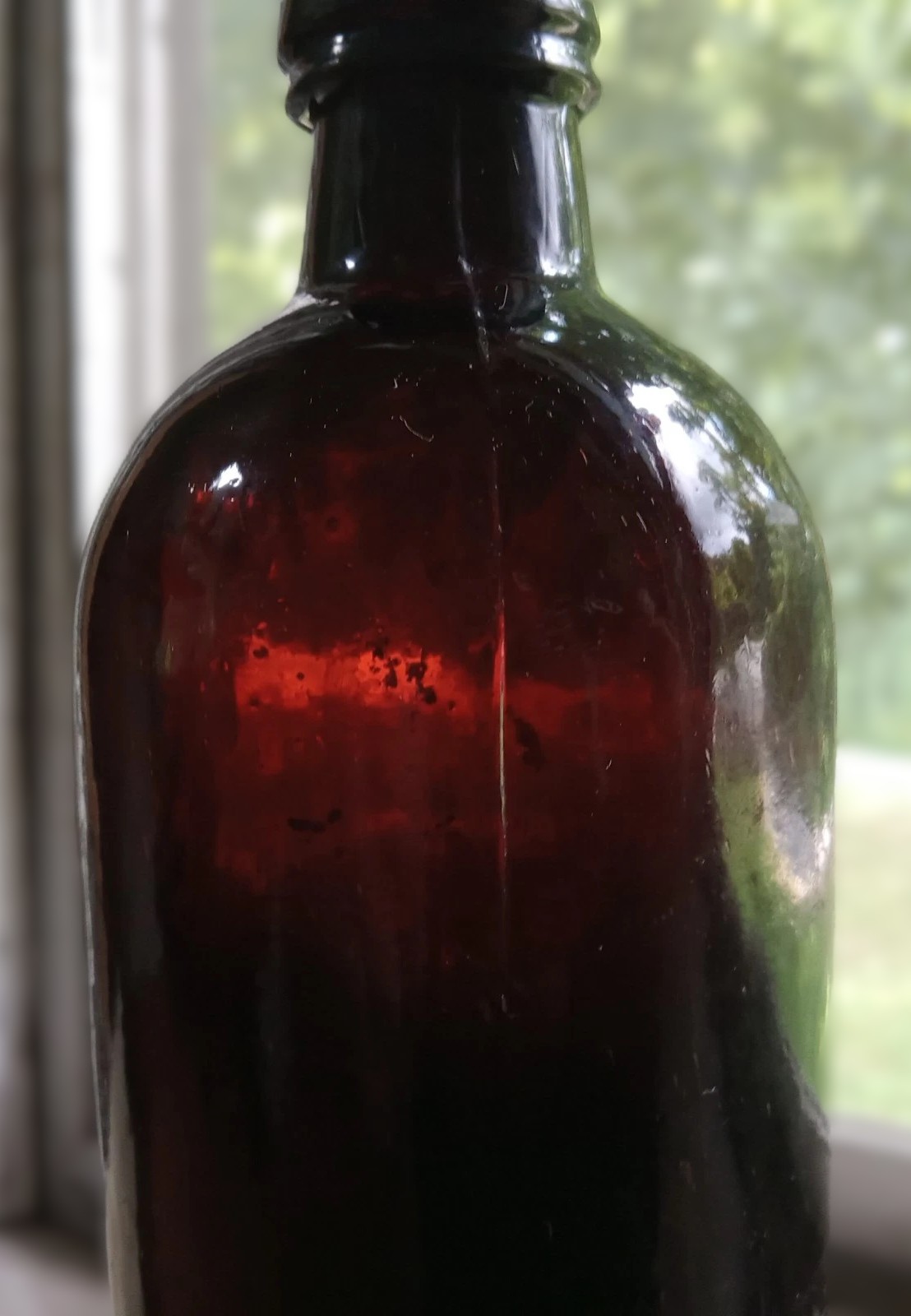
- Glass Character: Heavy overall whittling (texture from cold iron mold interaction) and a smooth, natural surface potstone (an un-melted grain of sand/clay from the furnace pot wall, confirming authentic hand-blown batch production).
Summary
Rare Civil War Era Puce Master Ink Bottle (c. 1850–1870)
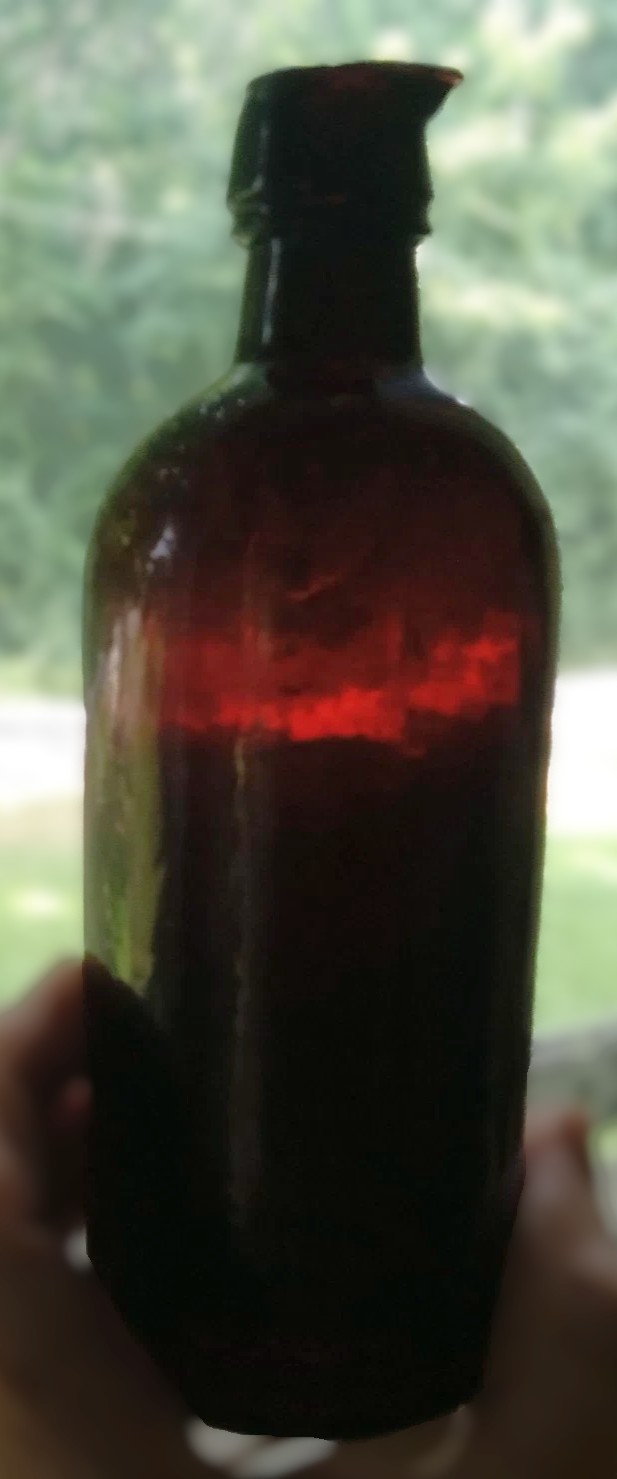
Color & Form: Exceptional deep reddish-puce glass (rich burgundy hue when backlit). Unembossed, cylindrical body (7 3/8″ H).
Manufacturing Details: Hand-blown in mold (BIM) with heavy whittled texture and an early smooth, pushed-up base. Features a crudely applied collared neck with a wide, hand-crimped pour spout.
Condition: Excellent overall condition; free of chips or cracks. Features a natural in-making surface potstone and minor, age-appropriate light interior haze.
Attribution: Likely Mid-Atlantic (South Jersey) or New England origin, representative of mid-19th-century regional glassmaking.
Sold for $300 in July 2026
Content disclaimer. The information posted is the owner’s best knowledge and may not have been vetted by the SOIC. We welcome comments, corrections, and additions, working to make our website information comprehensive and accurate.
Join the Society of Inkwell Collectors (SOIC) – it’s free!
Founded in 1981 as a non-profit organization,
we are documenting inkwells (and accessories).
We’re here to help and inform!