



Citron Colored Glass Umbrella Ink Bottle
| Categories | Ink Bottle |
| Type | Umbrella |
| Material | Glass |
| Markings | Unmarked |
| Manufacturer | Undetermined |
| Origin | United States |
| Date or Era | circa 1870 |
This is a nice example of a 19th-century octagonal “umbrella” ink bottle. These utilitarian bottles were a staple of the mid-to-late 1800s, designed with a broad base to prevent tipping on slanted writing desks.
Description
Form and Color
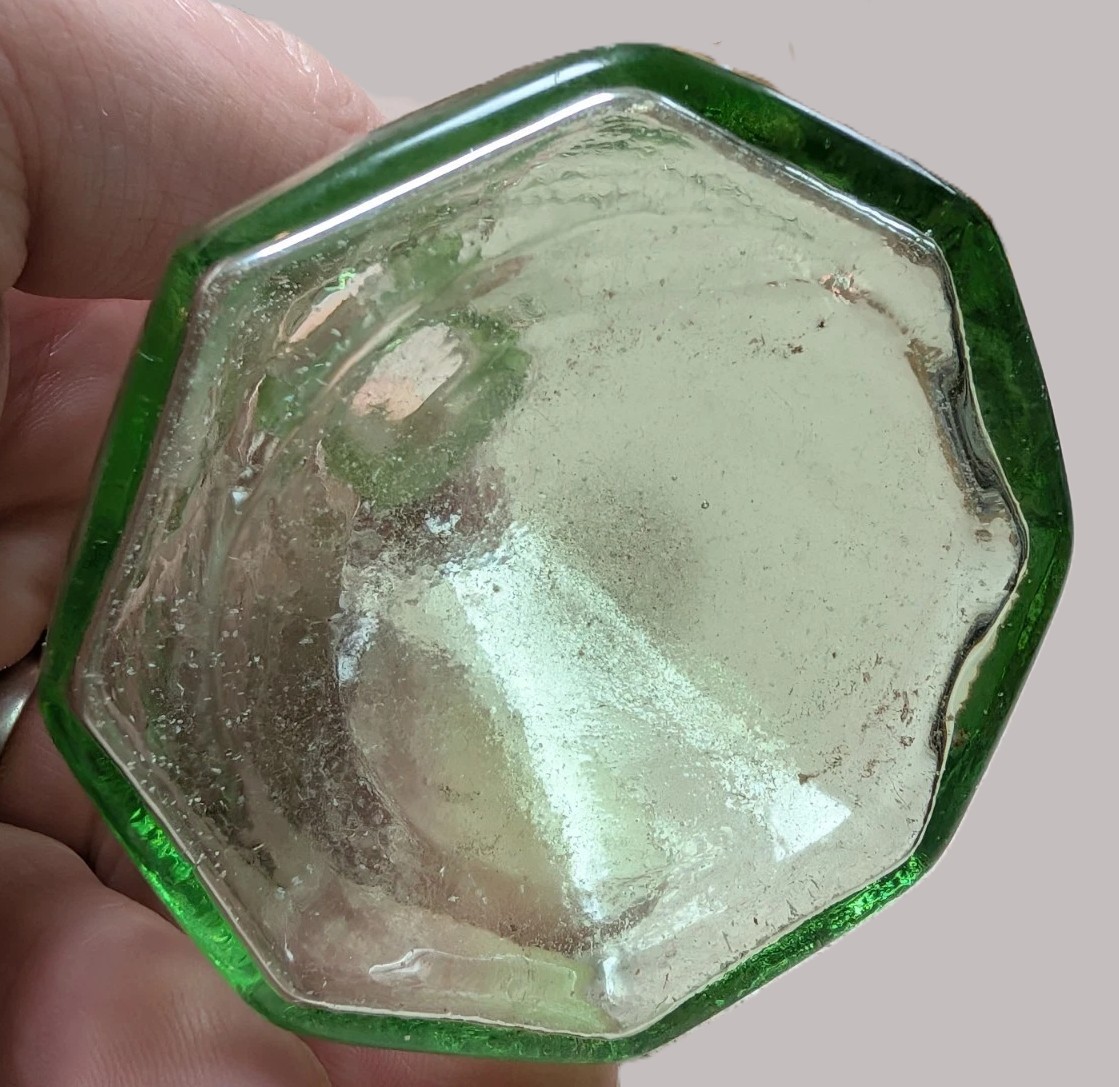
- Shape: It features a classic eight-sided (octagonal) conical body that tapers into a cylindrical neck. This “umbrella” form was one of the most popular designs for liquid ink storage during the 1800s.
- Color: The glass is a vibrant citron (a yellowish-green), which is a much rarer and more desirable color for collectors compared to the common aqua or light green versions.
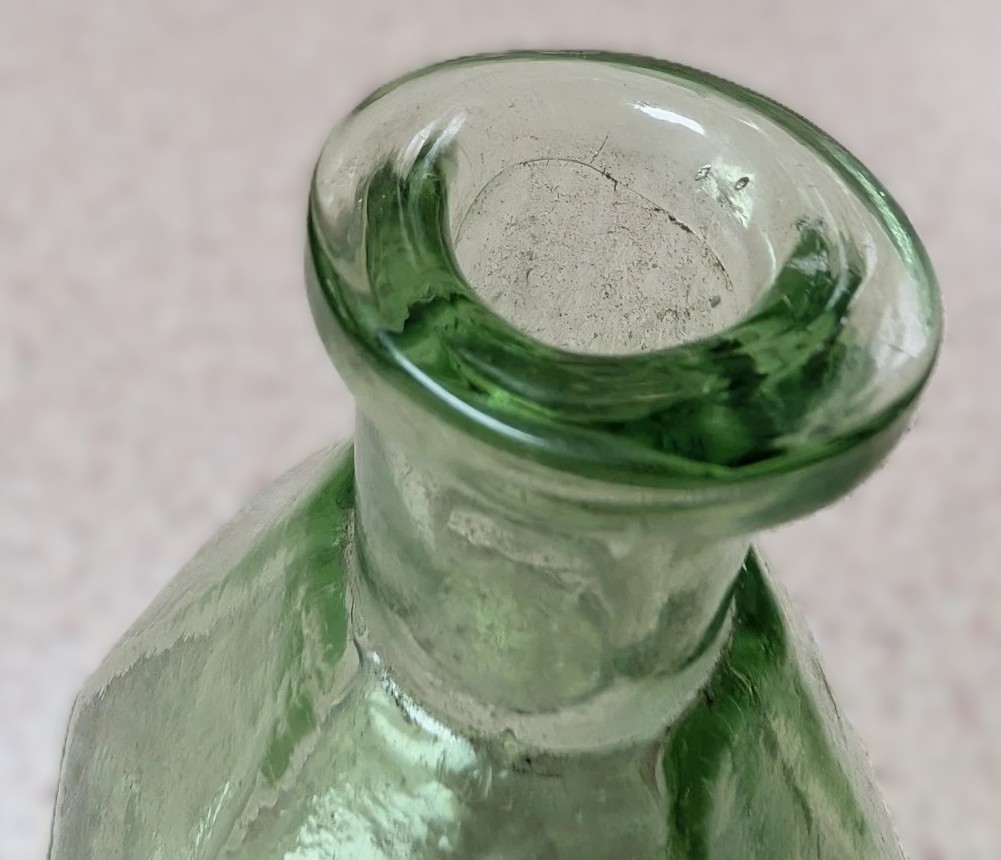
- Glass Quality: The glass is filled with “seed bubbles” (tiny air pockets) and shows some striations or a slightly “whittled” texture—imperfections that are hallmarks of early mold-blown glass. There is some internal residue or light haze (common in “dug” bottles), but the clarity of the citron remains strong.
Manufacturing Marks
- Mouth/Lip: The bottle has an inwardly rolled lip (or “rolled mouth”). This finish was achieved by folding the hot glass back into the neck to create a smooth, reinforced edge for a cork stopper.
- Base: This bottle has a smooth base bottle rather than one with a jagged pontil scar. This suggests it was likely held by a “snap case” or a similar tool rather than a pontil rod during the finishing process.
Age and Origin
Estimated Age: 1860s – 1880s
While the umbrella form dates back to the 1840s, the smooth base and the specific style of the rolled lip typically place this bottle in the post-Civil War era. Earlier versions (1840–1860) usually feature a rough “open pontil” or “tubular pontil” mark on the bottom. The crude, bubbly glass and the hand-finished mouth indicate it was produced before the advent of fully automated bottle-making machines in the early 1900s.
Estimated Origin: United States
This is almost certainly American in origin. These were produced in massive quantities by various glasshouses in the Northeast and Mid-Atlantic regions, including famous centers in New England (such as Stoddard or Coventry) and Philadelphia/New Jersey. Citron glass like this was often a “happy accident” of the mineral content in the sand at specific glasshouses, making it a prized variation for modern collectors.
Sold for $242 in May 2026
Content disclaimer. The information posted is the owner’s best knowledge and may not have been vetted by the SOIC. We welcome comments, corrections, and additions, working to make our website information comprehensive and accurate.
Join the Society of Inkwell Collectors (SOIC) – it’s free!
Founded in 1981 as a non-profit organization,
we are documenting inkwells (and accessories).
We’re here to help and inform!