

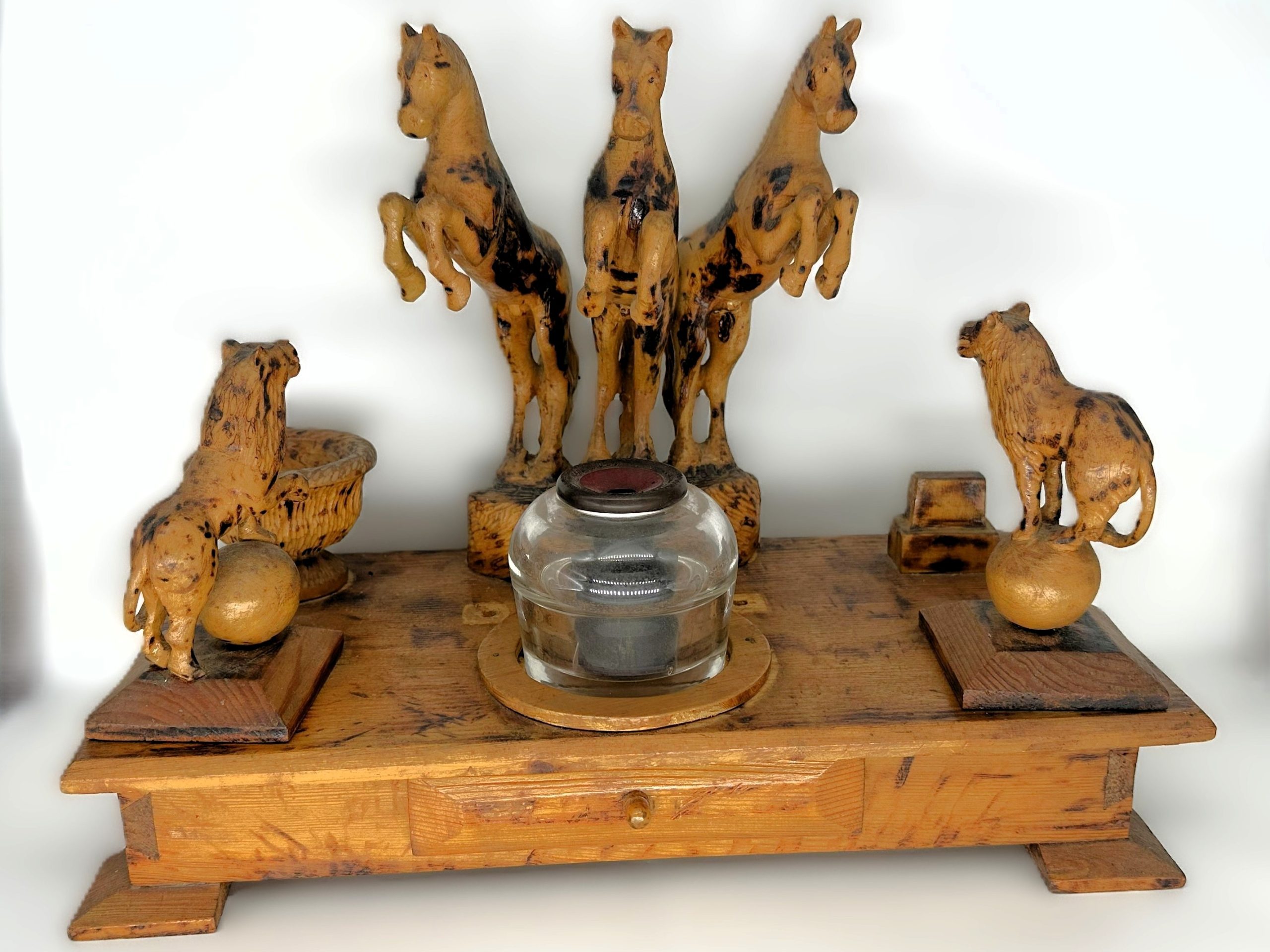
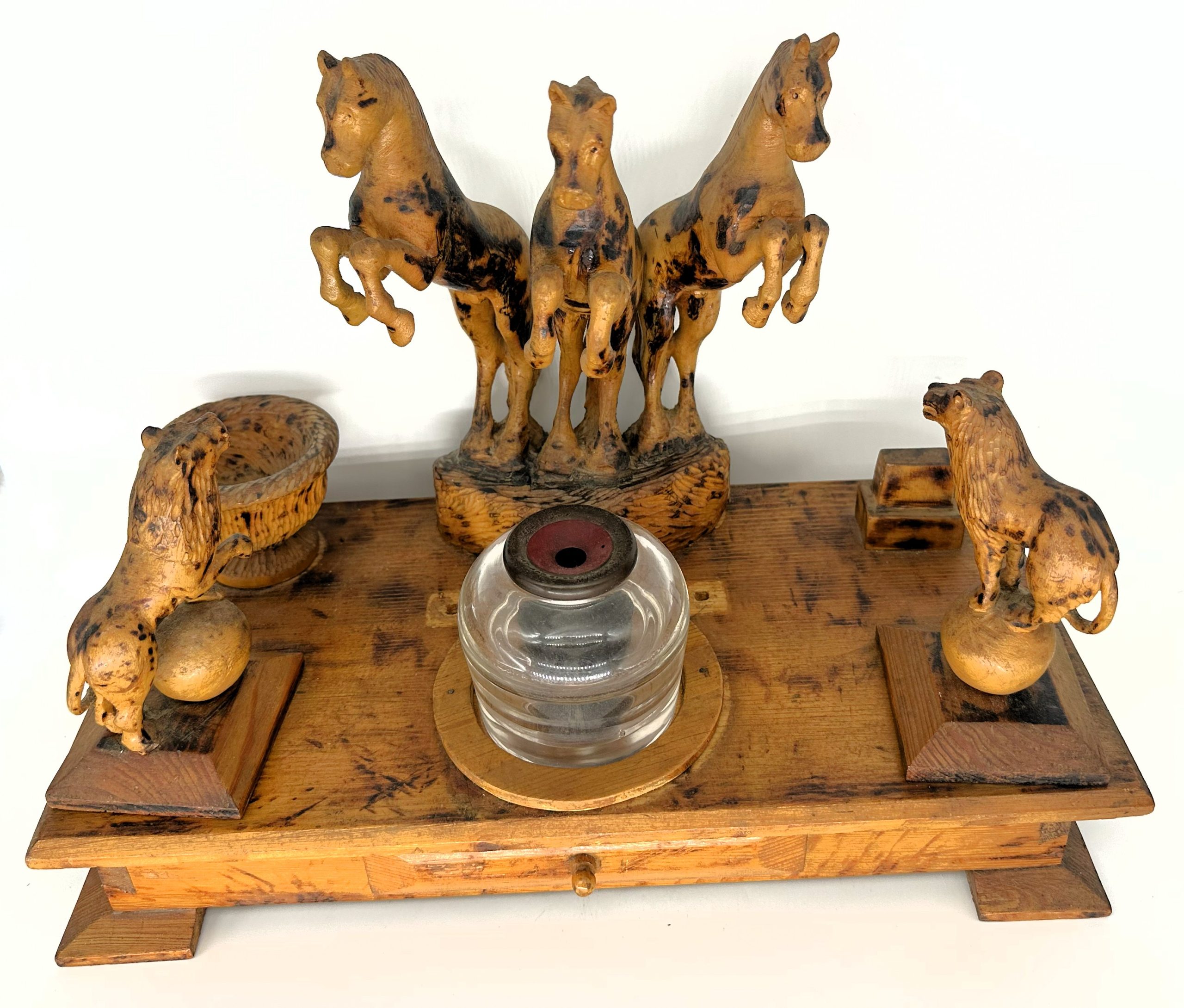
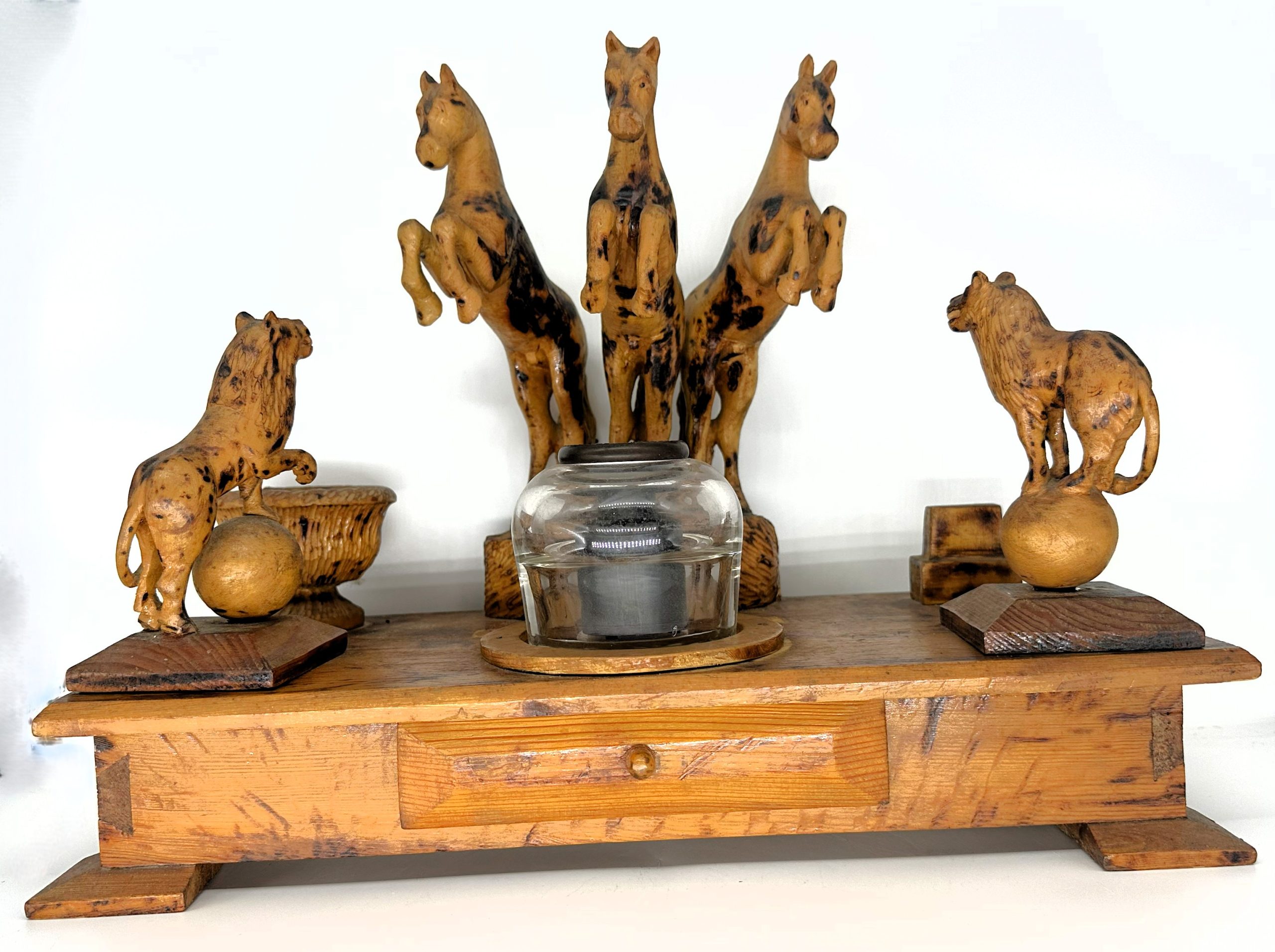
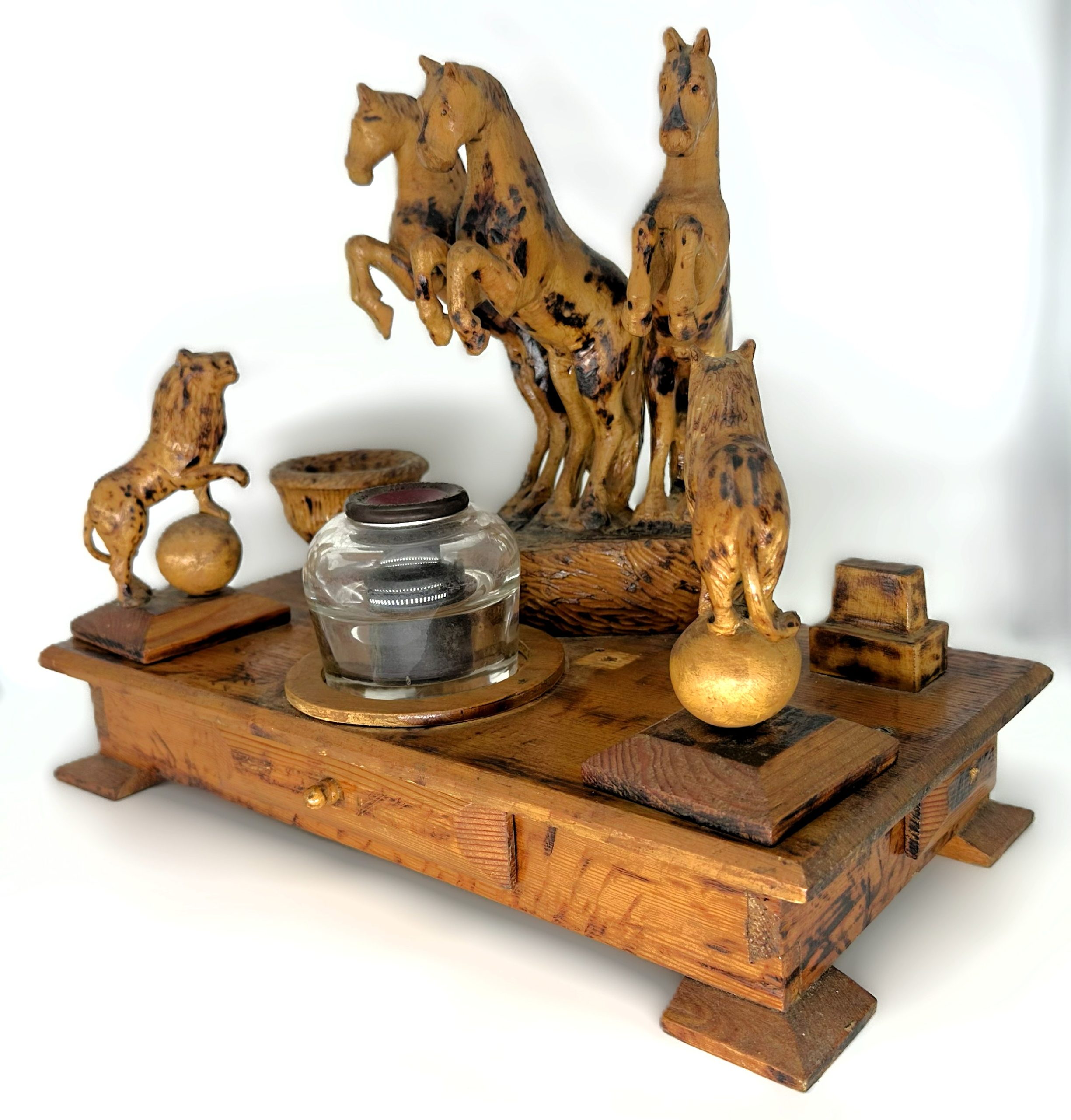
Circus Menagerie Folk Art Inkstand with Sengbusch Patent Inkwell
| Categories | Figural - Animals & Living Creatures |
| Type | Horse, Lion |
| Material | Wood |
| Markings | See Narrative |
| Origin | United States |
| Date or Era | circa 1910 |
| Measuring | 15 ½” x 7 ½” X 12” High |
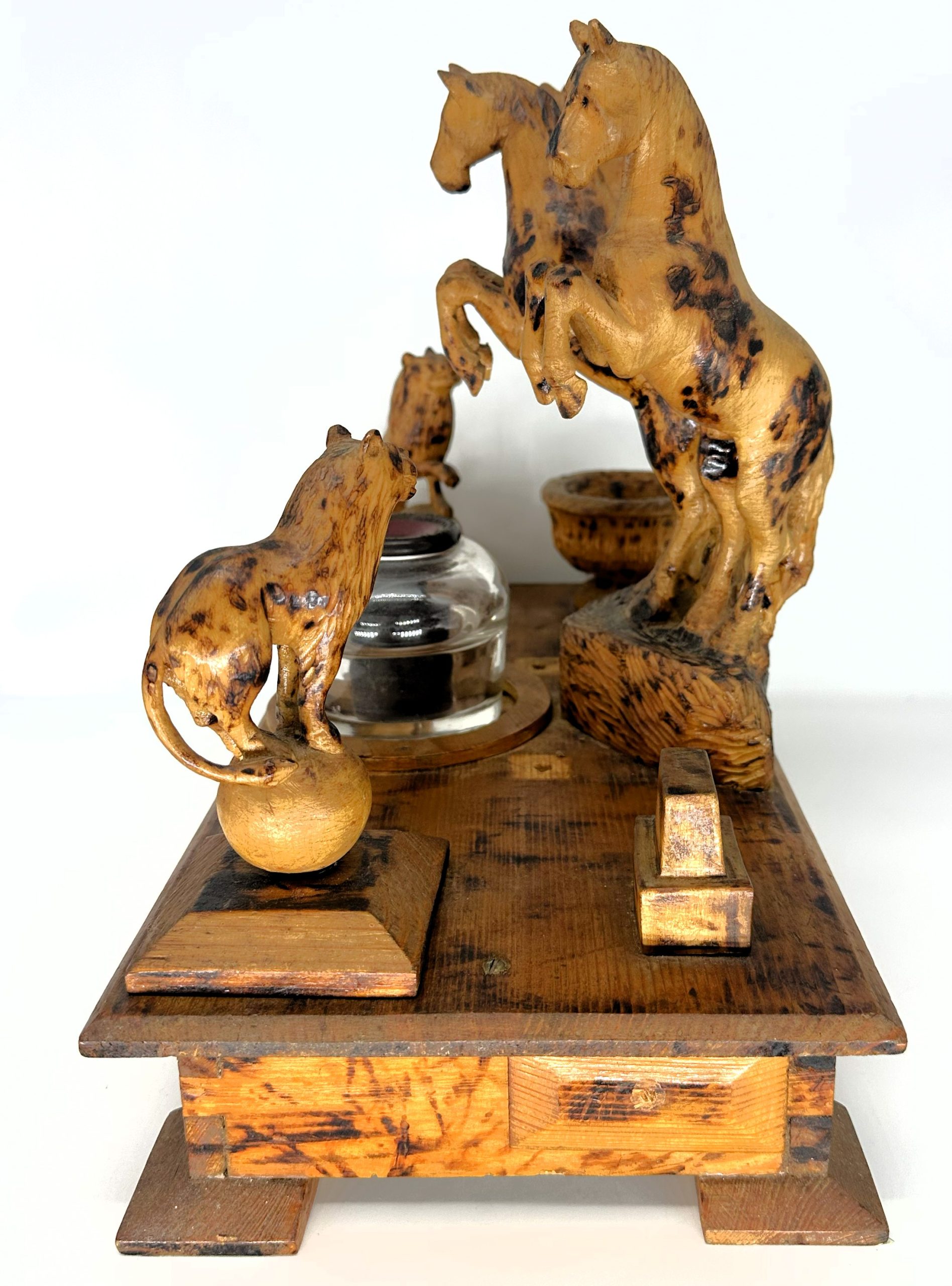
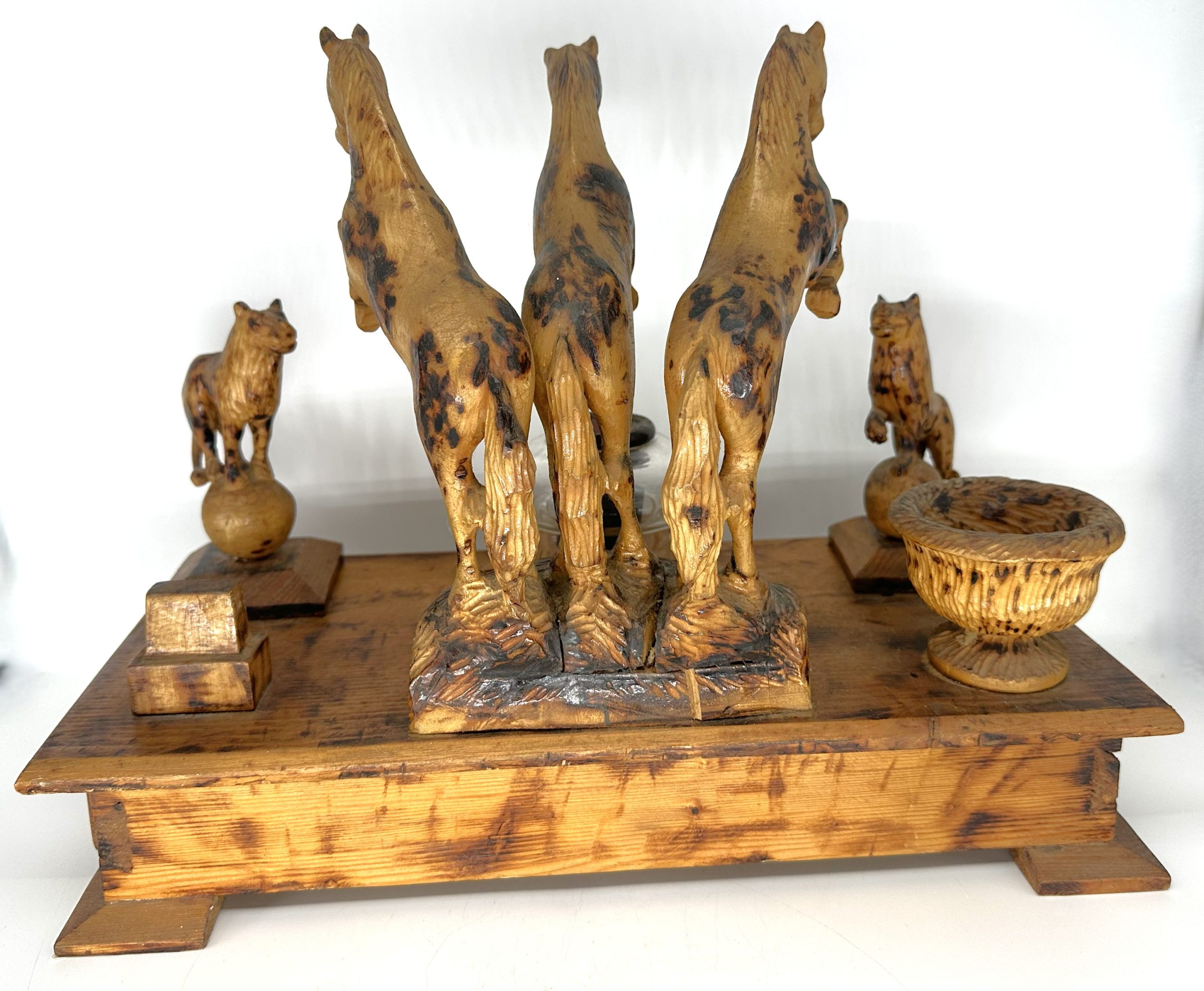
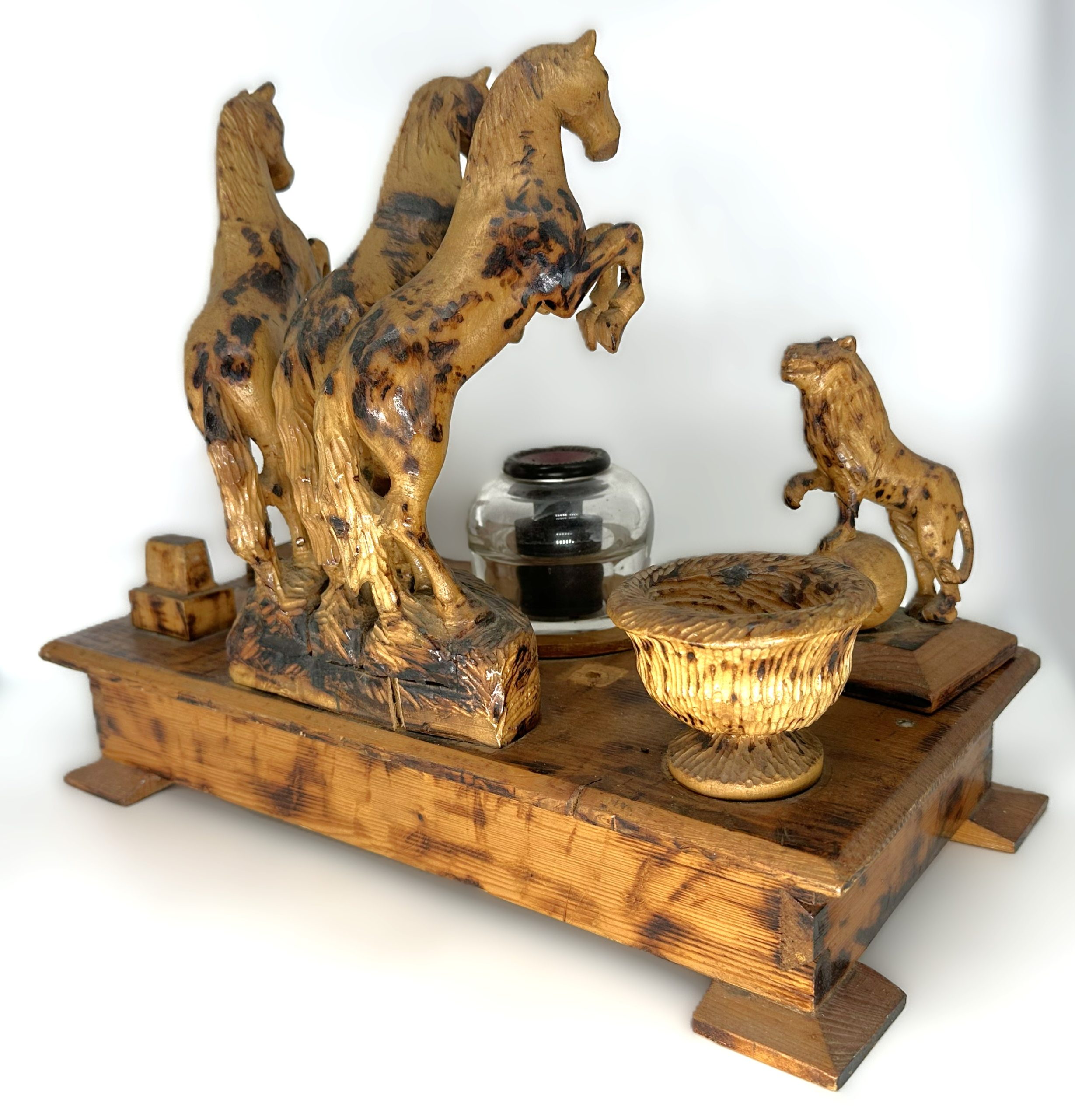
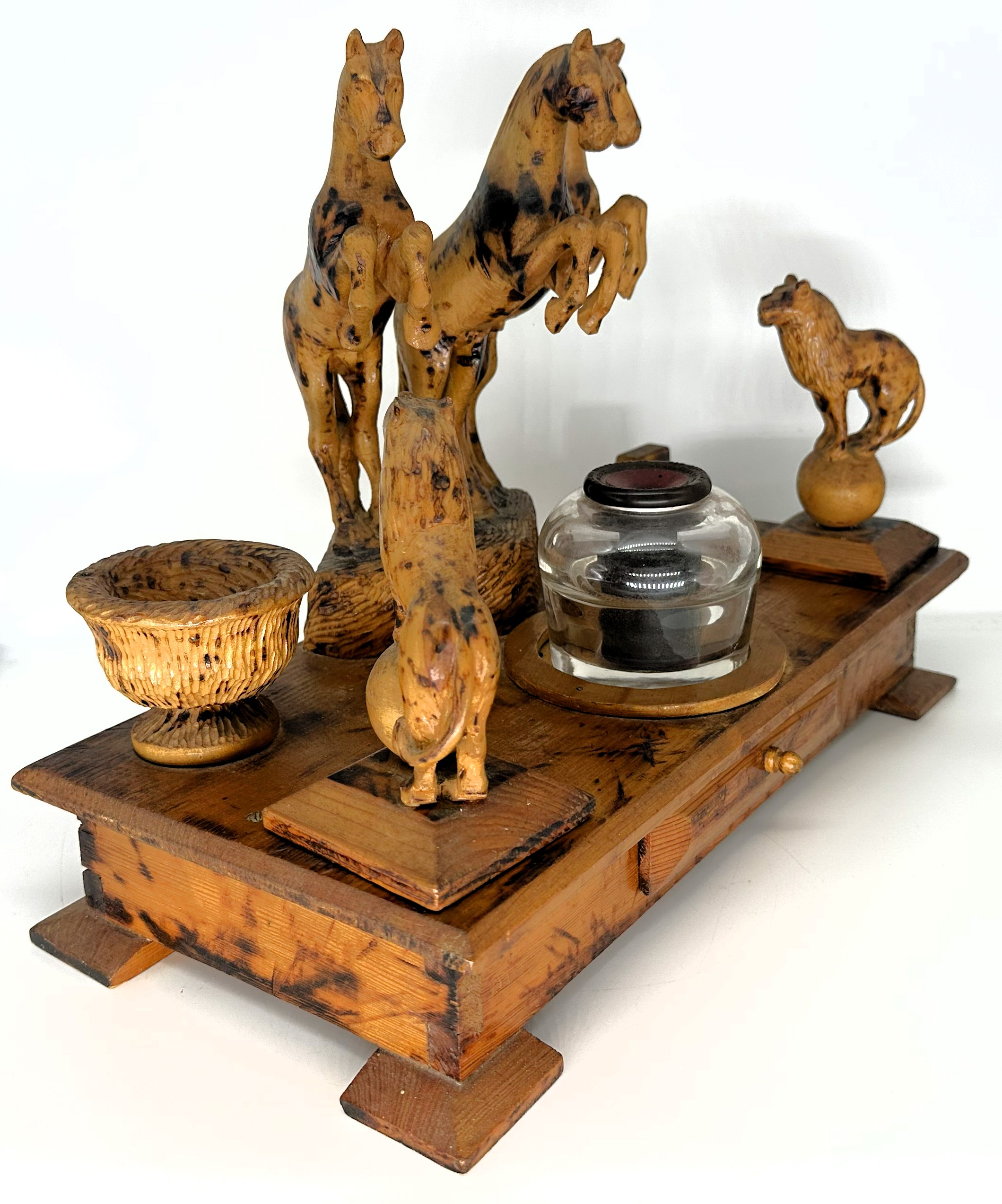
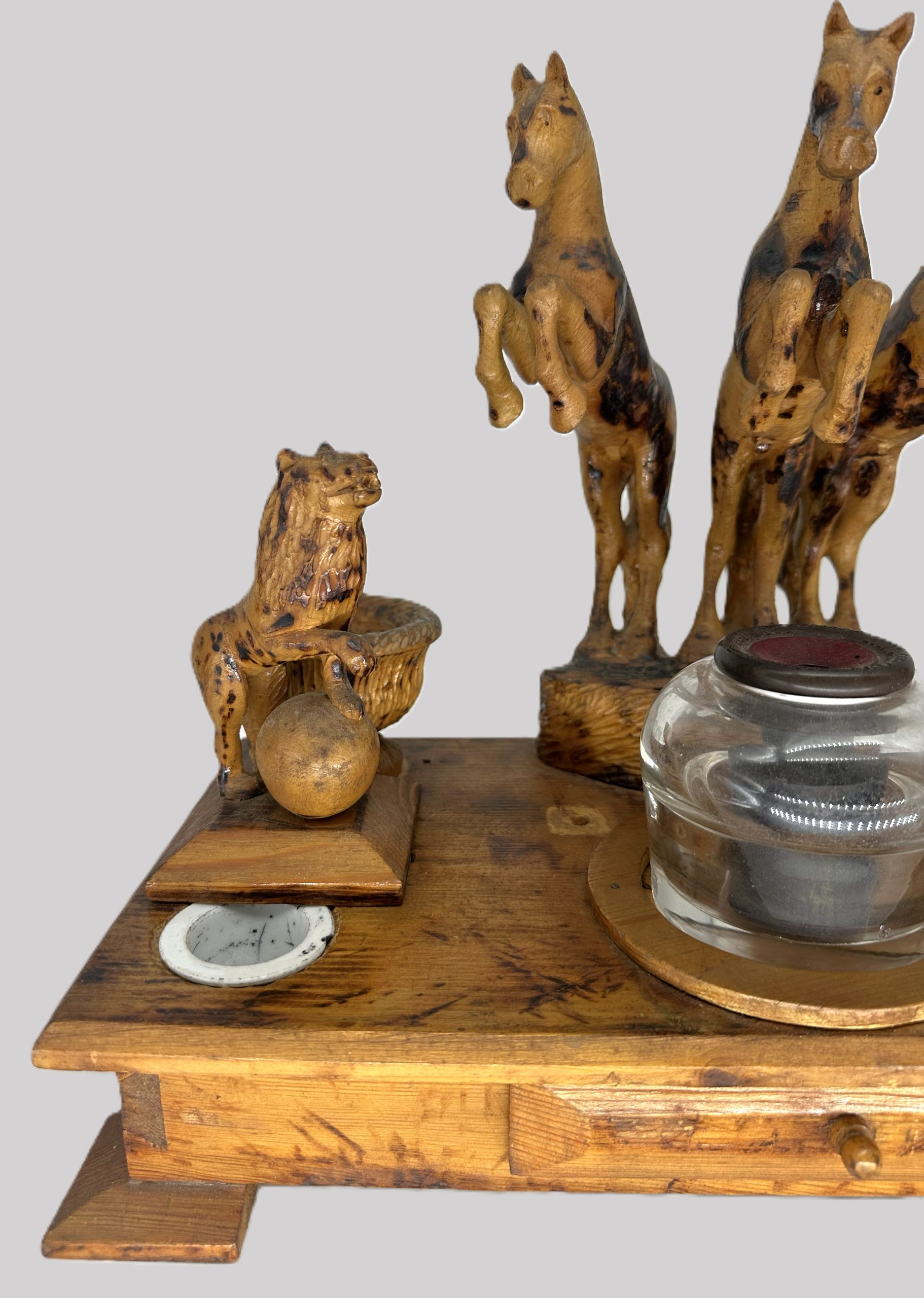
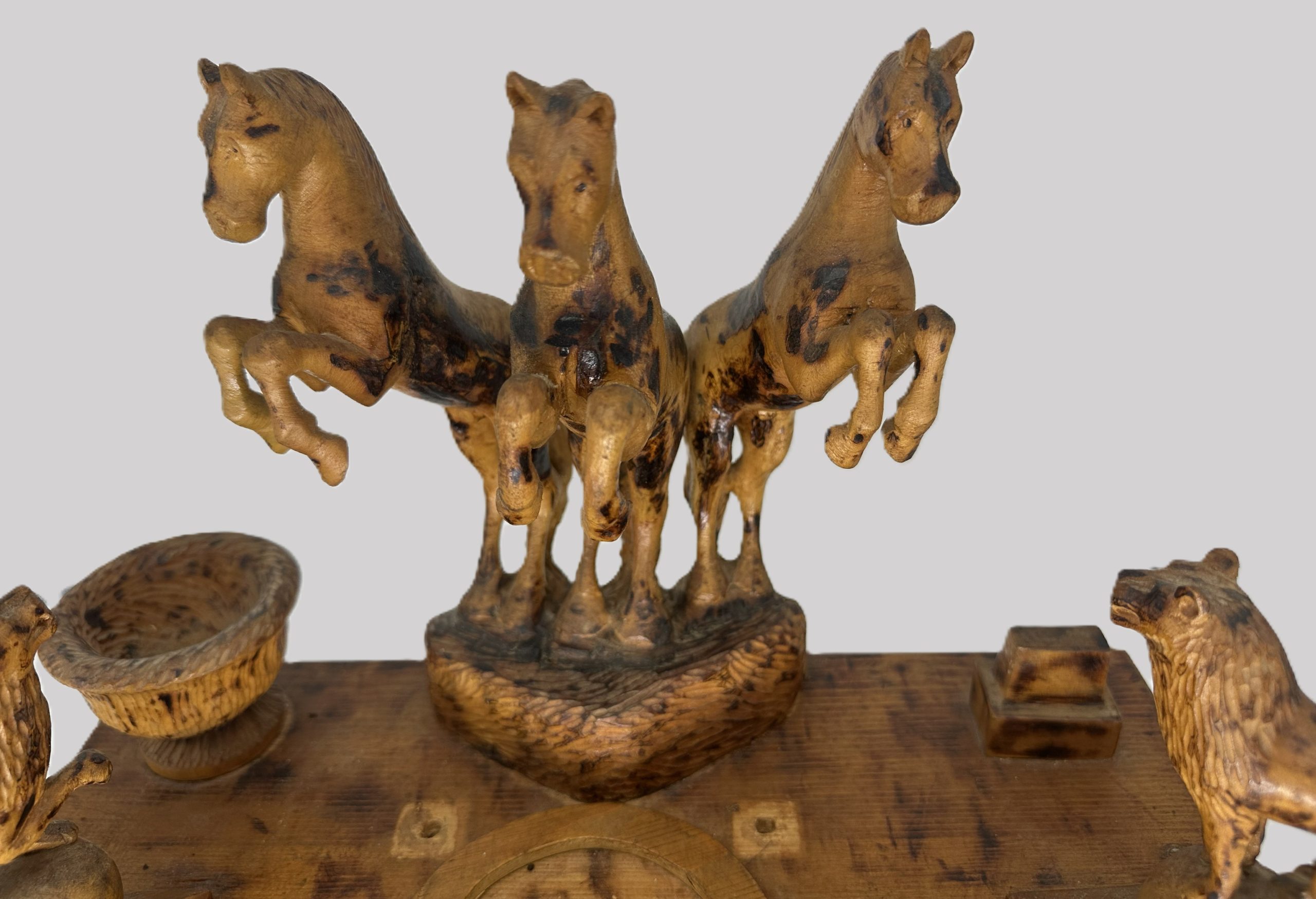
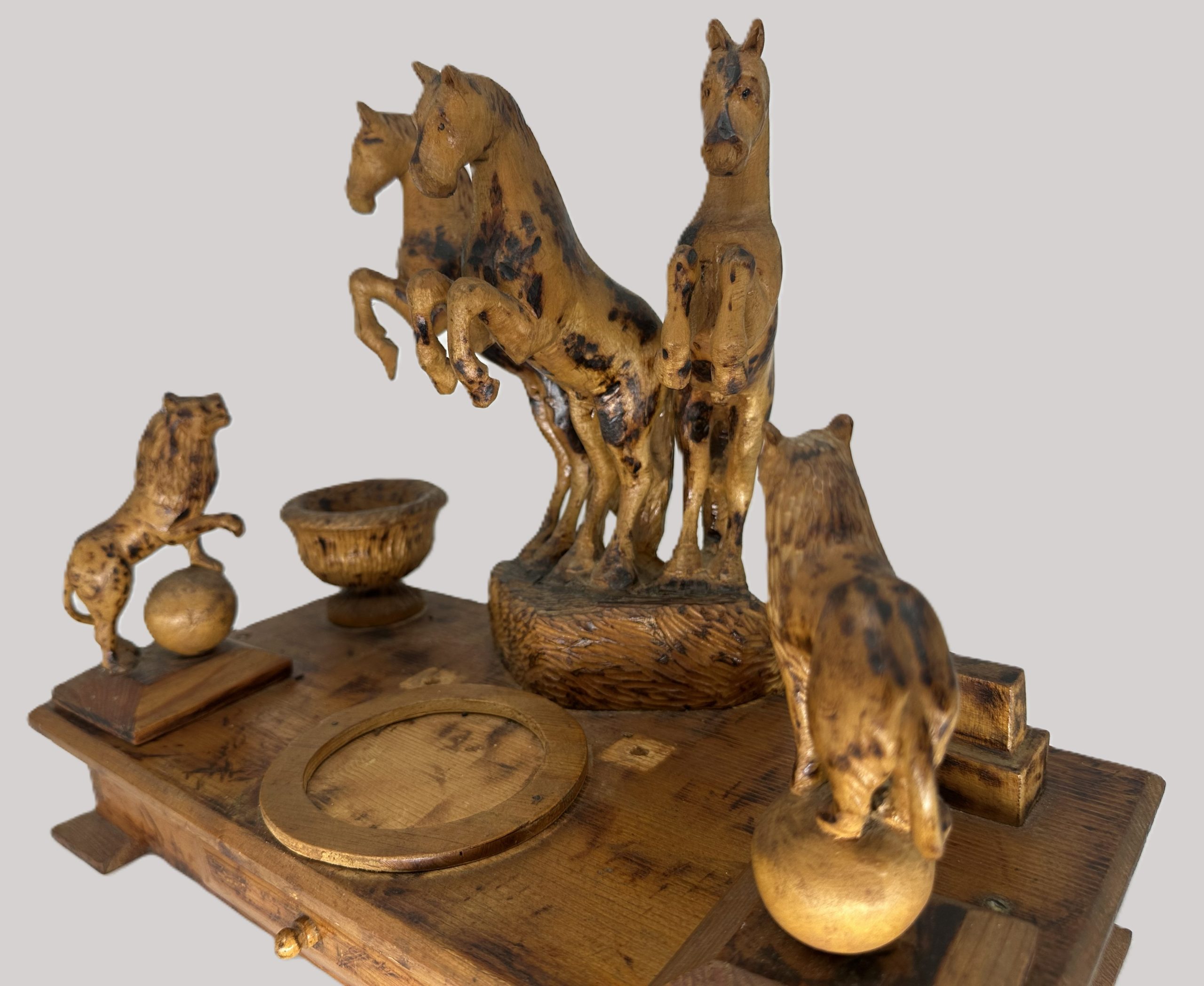
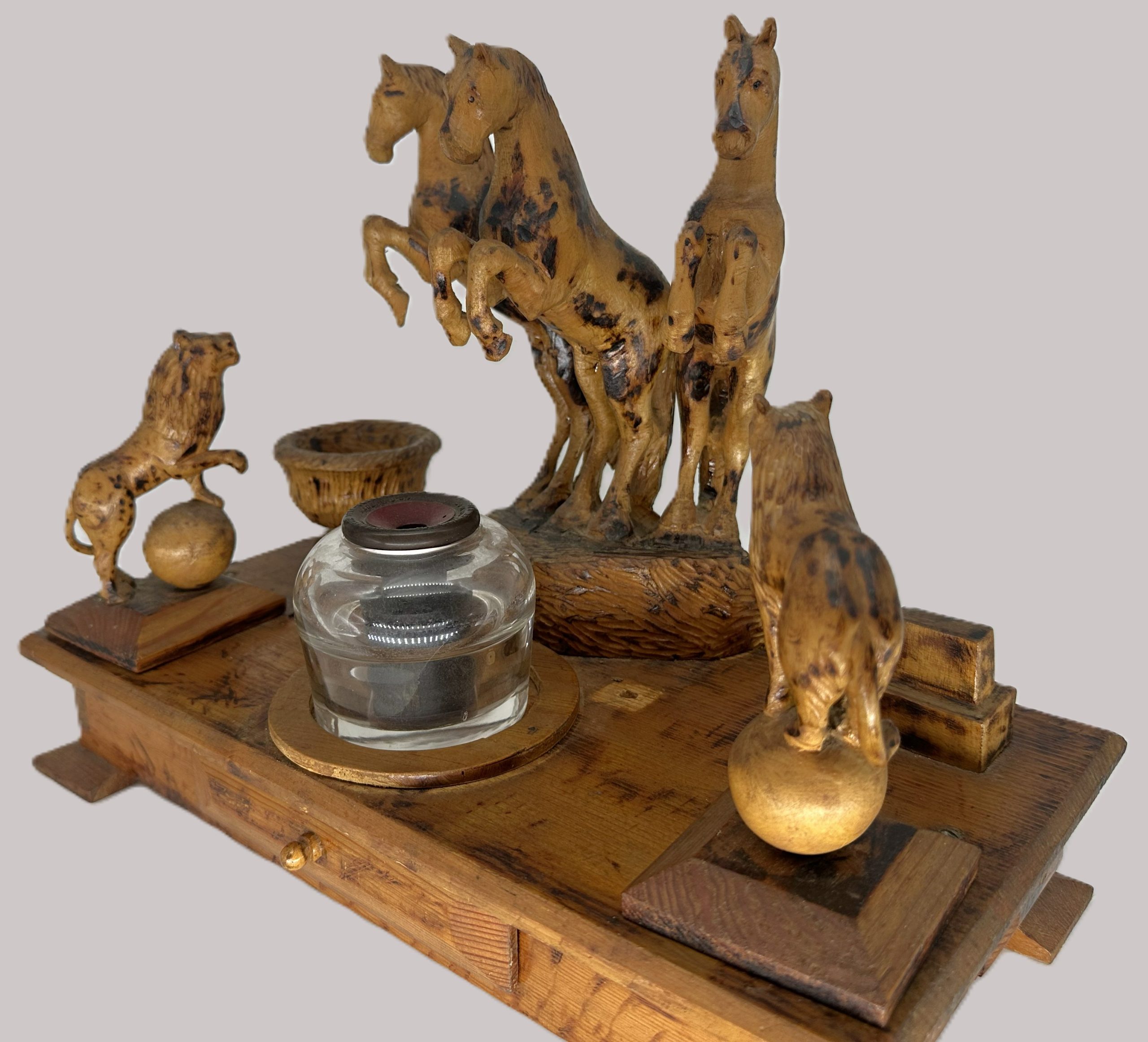
This American folk art desk accessory, featuring performing circus animals, classic tramp art, tells a wonderful story of early 20th-century craftsmanship.
Description
- The Theme & Folk Art Carvings:
The piece strongly suggests a 19th- to early 20th-century traveling circus or menagerie theme.
-
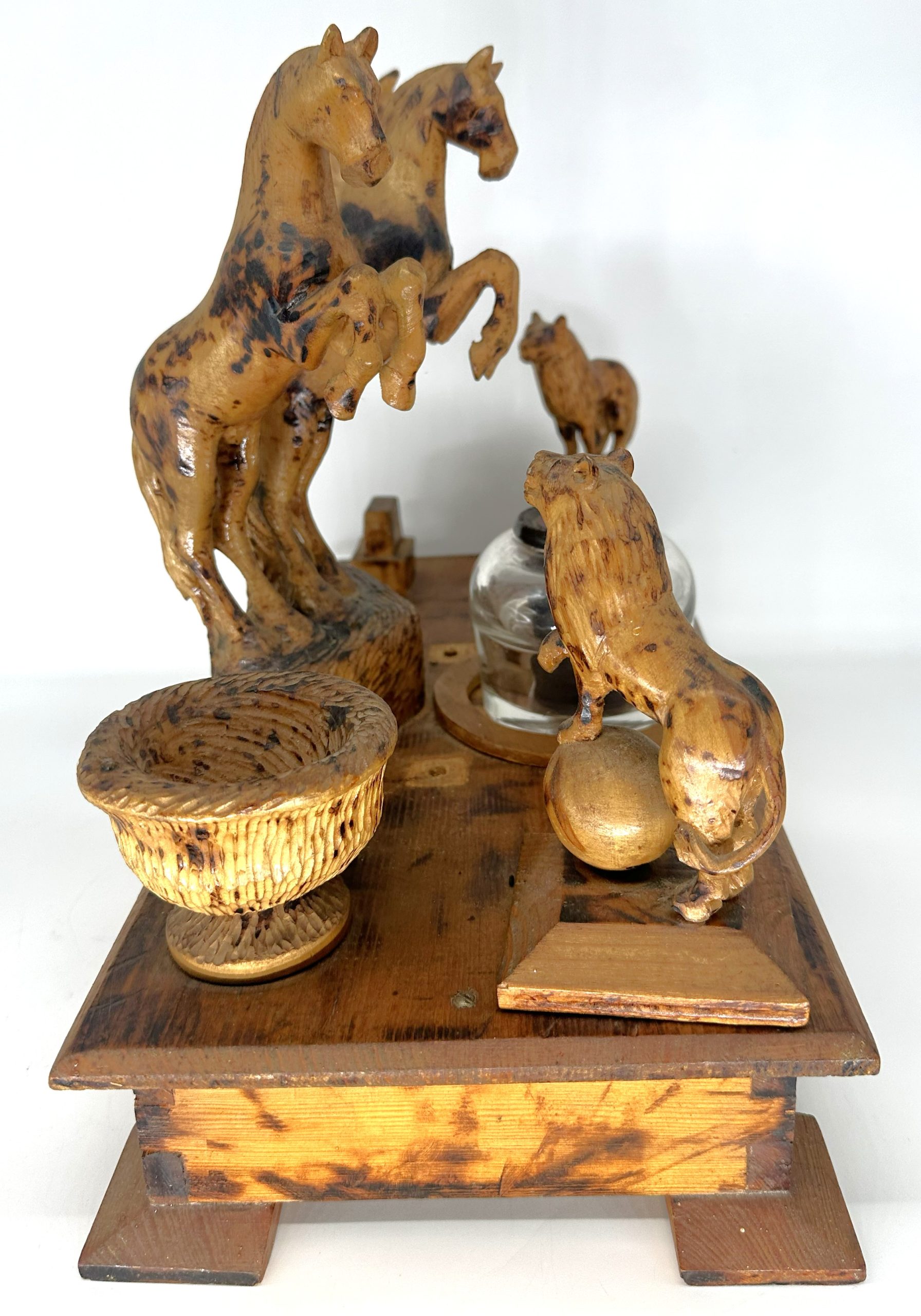
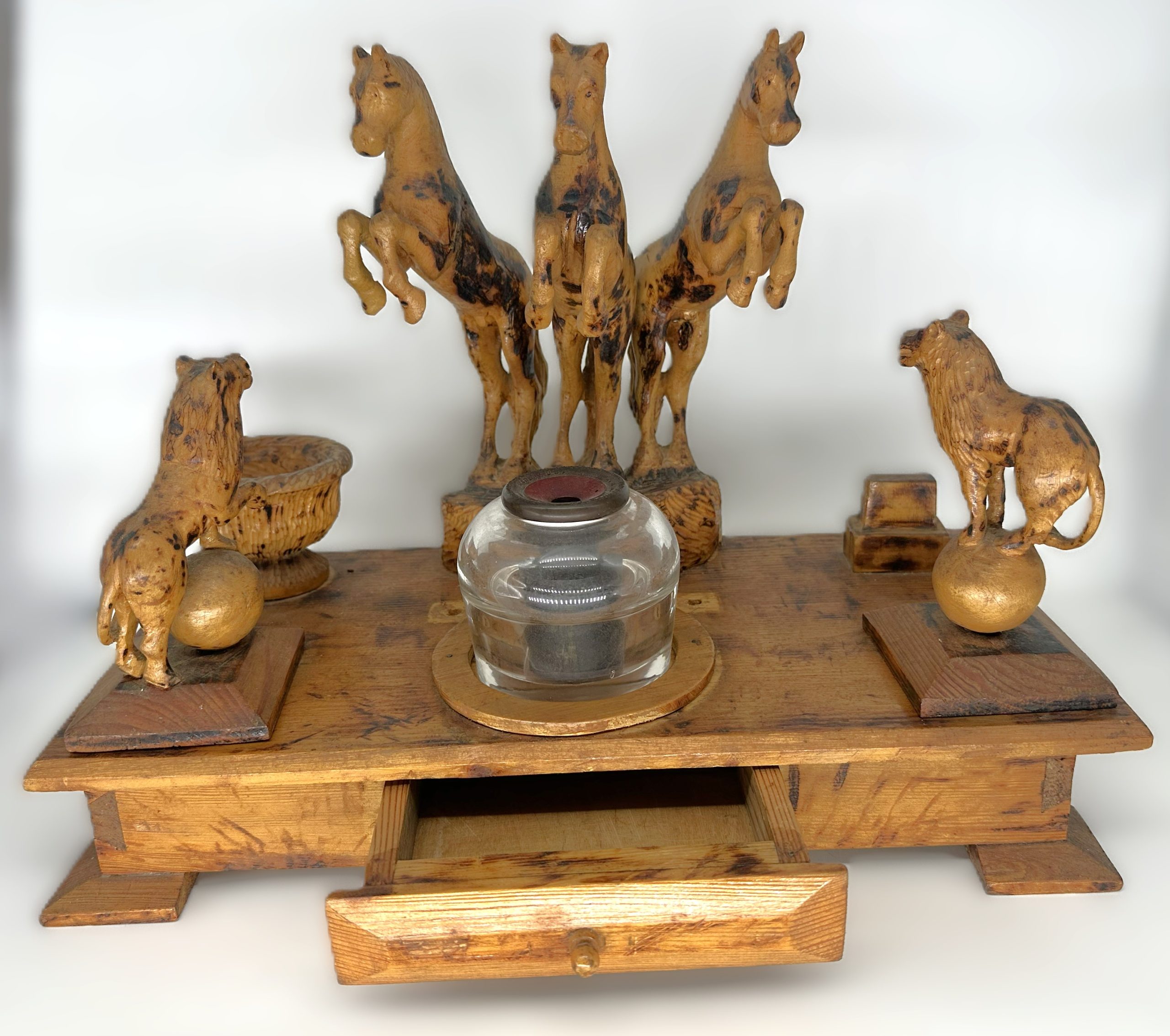
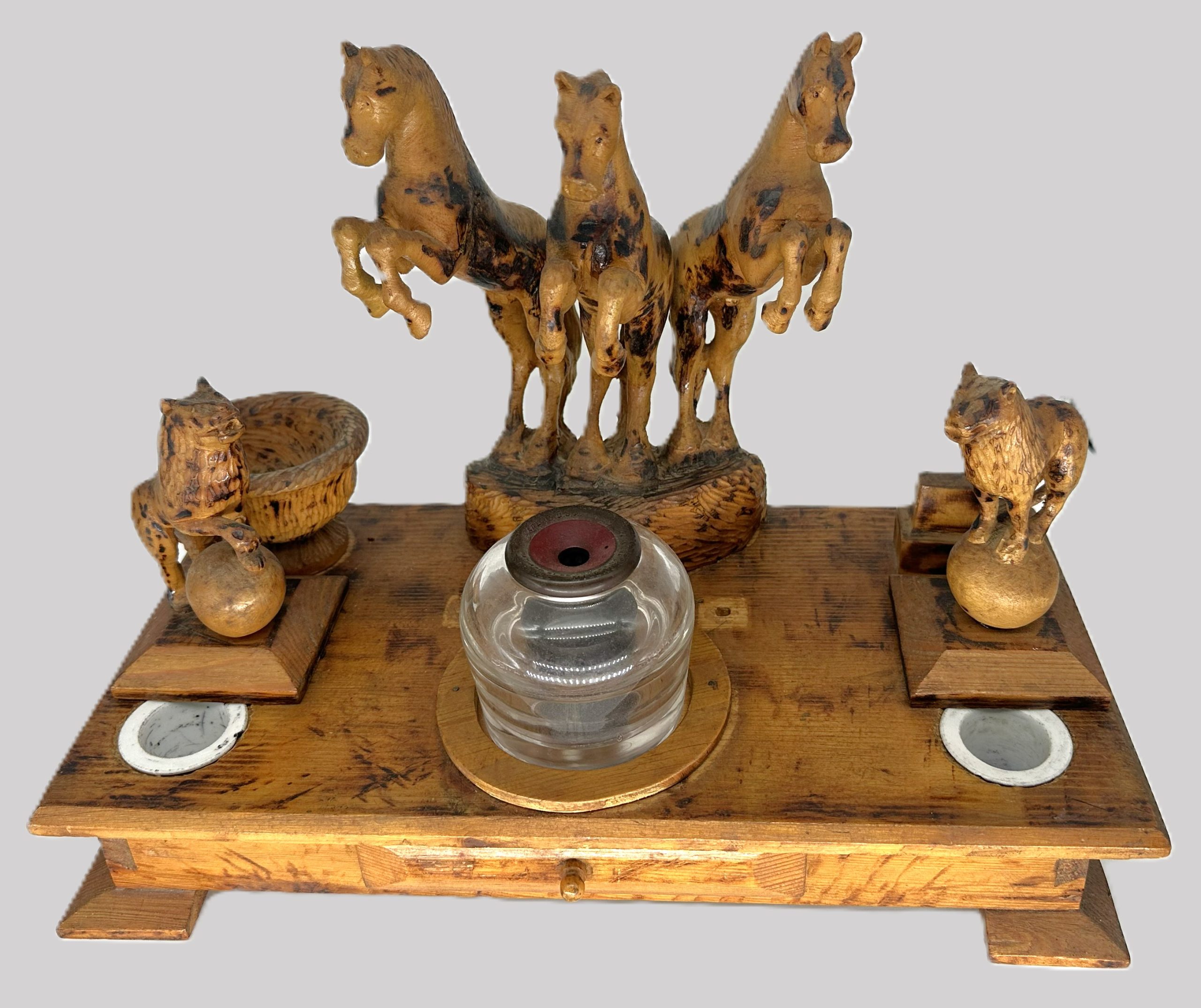
- In the dramatic center tier, three rearing/dancing horses stand side-by-side on a carved wooden mound.
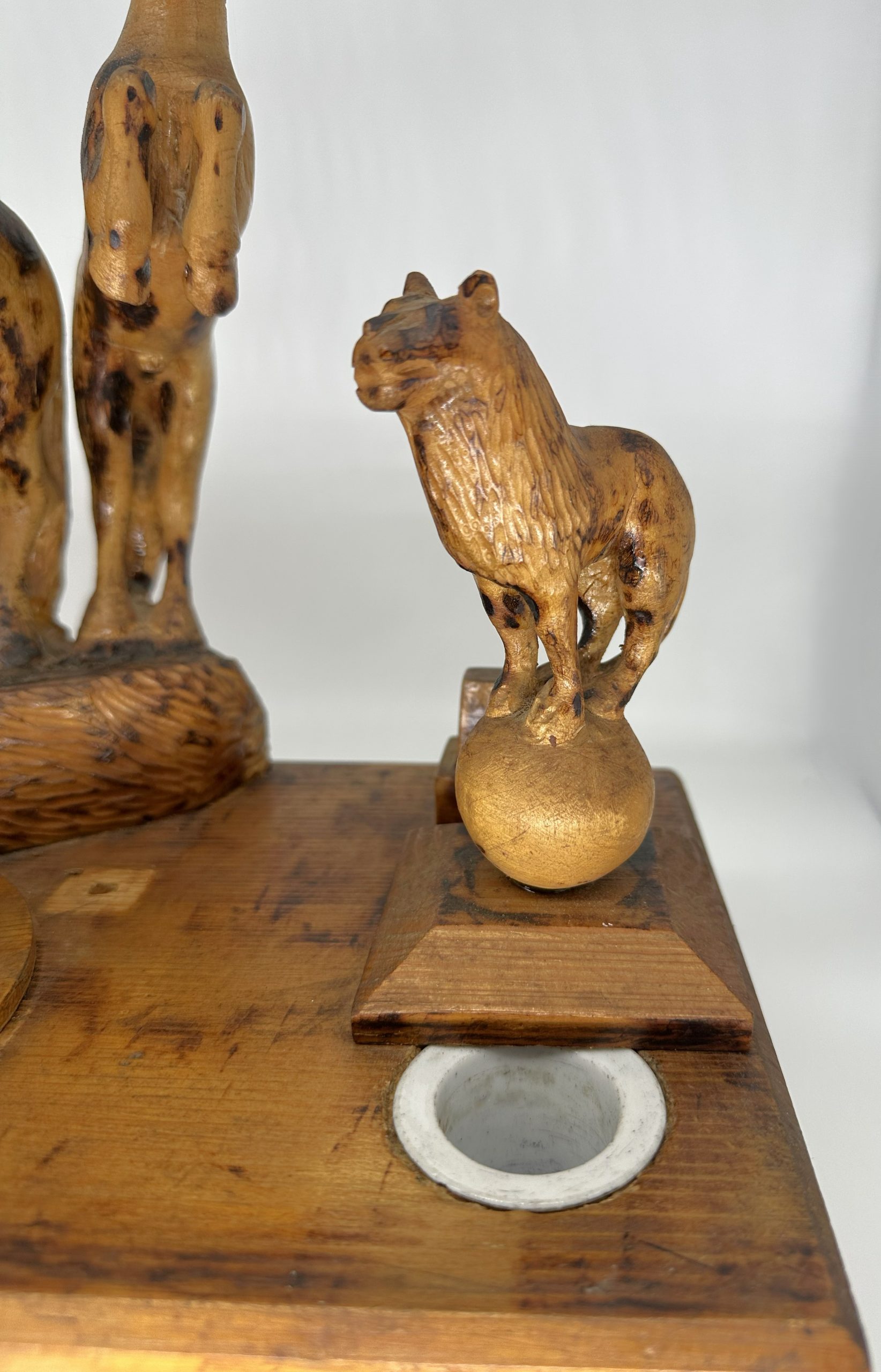
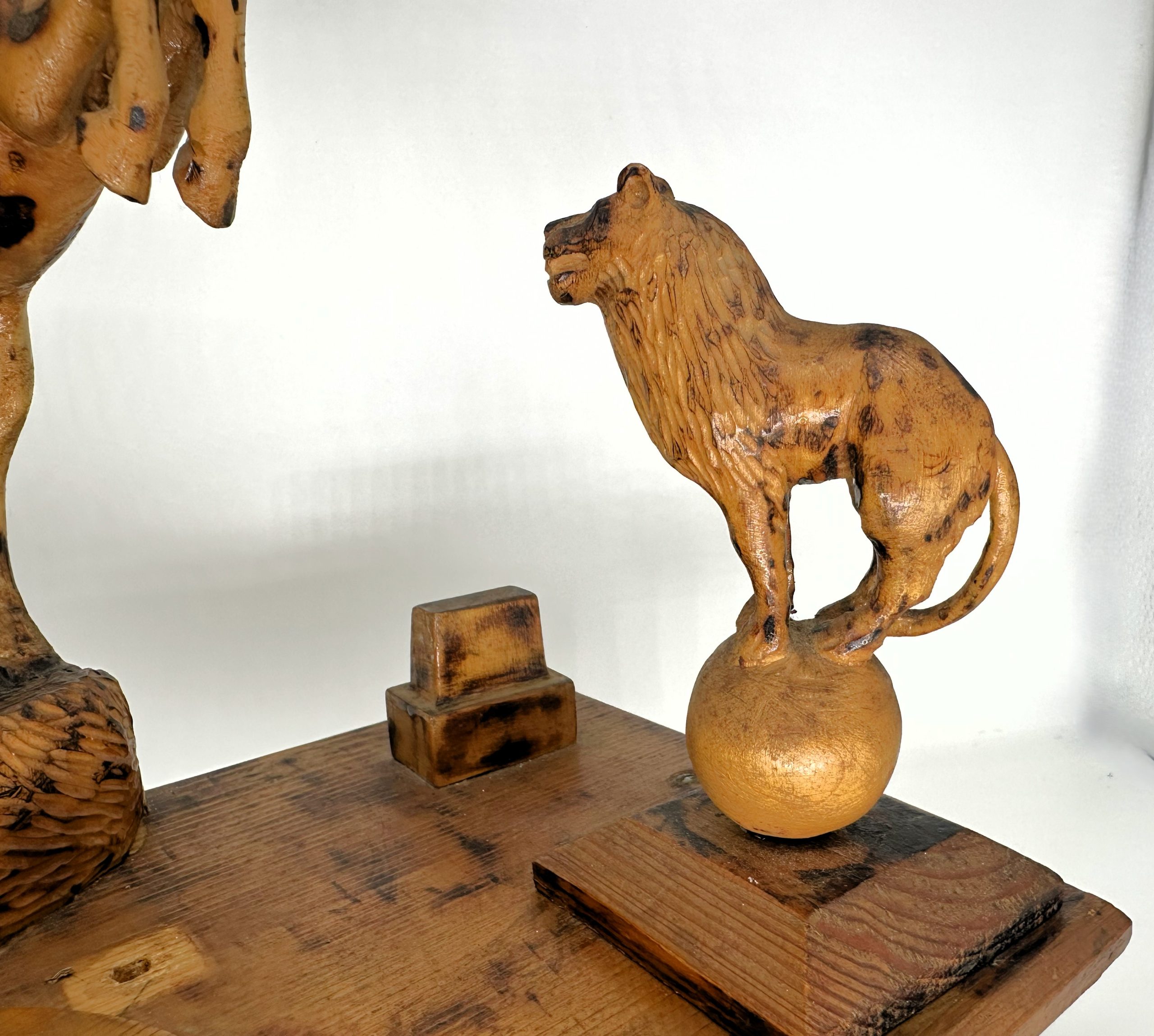
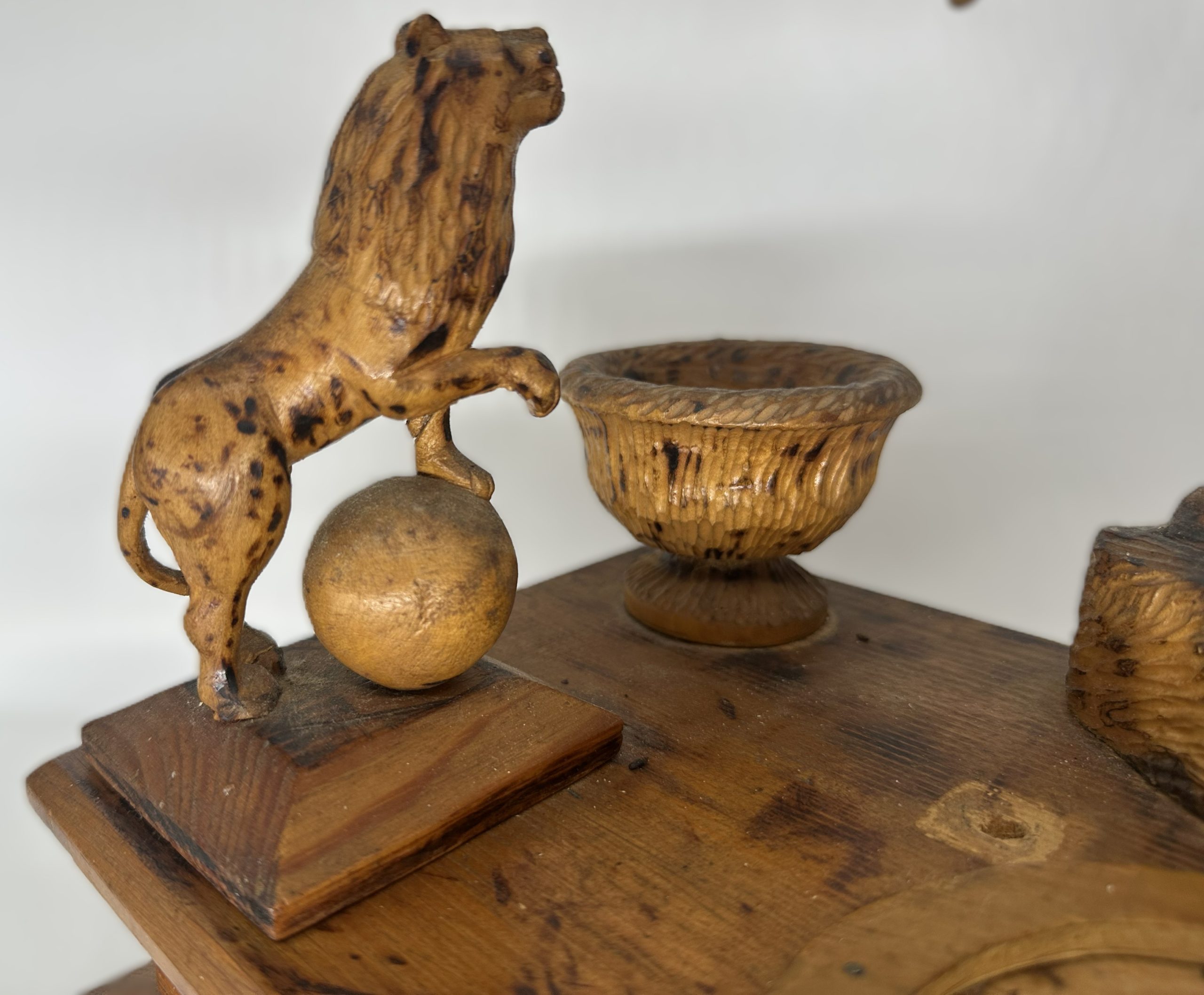
- Flanking the central inkwell are two lions balanced atop circus balls, perfectly capturing classic performing animal acts. Their mounts swivel open on concealed pivots to reveal white porcelain inkwell inserts underneath.
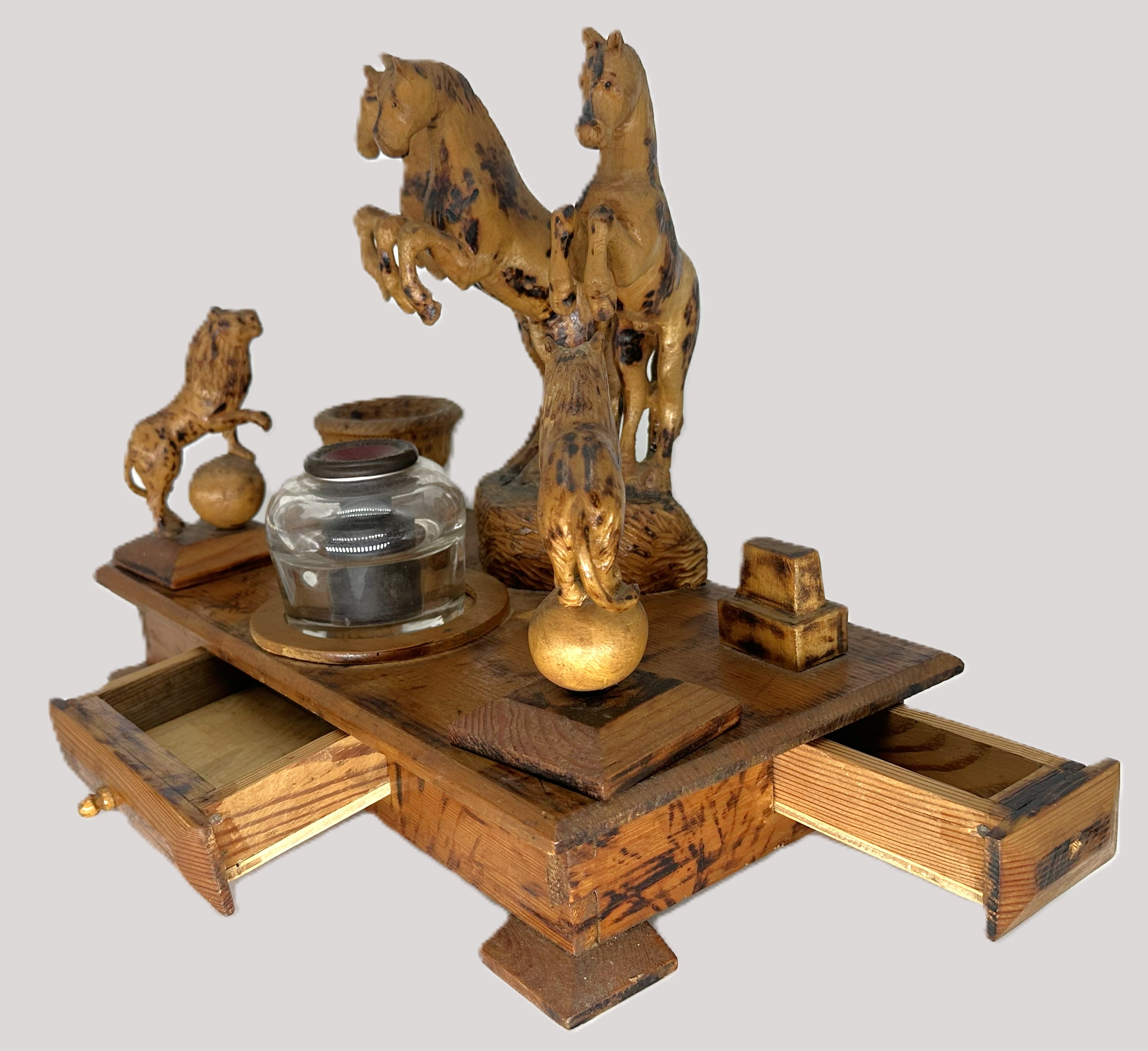
- Additional whimsical elements include a carved wooden pedestal/tub (possibly representing a feed tub or prop) and a stacked geometric block marker/stamp rest.
- The Wooden Base & Storage: The rectangular wooden stand features a striking grained finish with characteristic chip-carved or reeded geometric corner accents and bracket feet. Adding to its utility as a desk organizer, it incorporates two discrete storage drawers: one pull-out drawer centered on the front facade, and a second side-access drawer on the right profile, ideal for nibs, stamps, or keys.
Dating the Piece
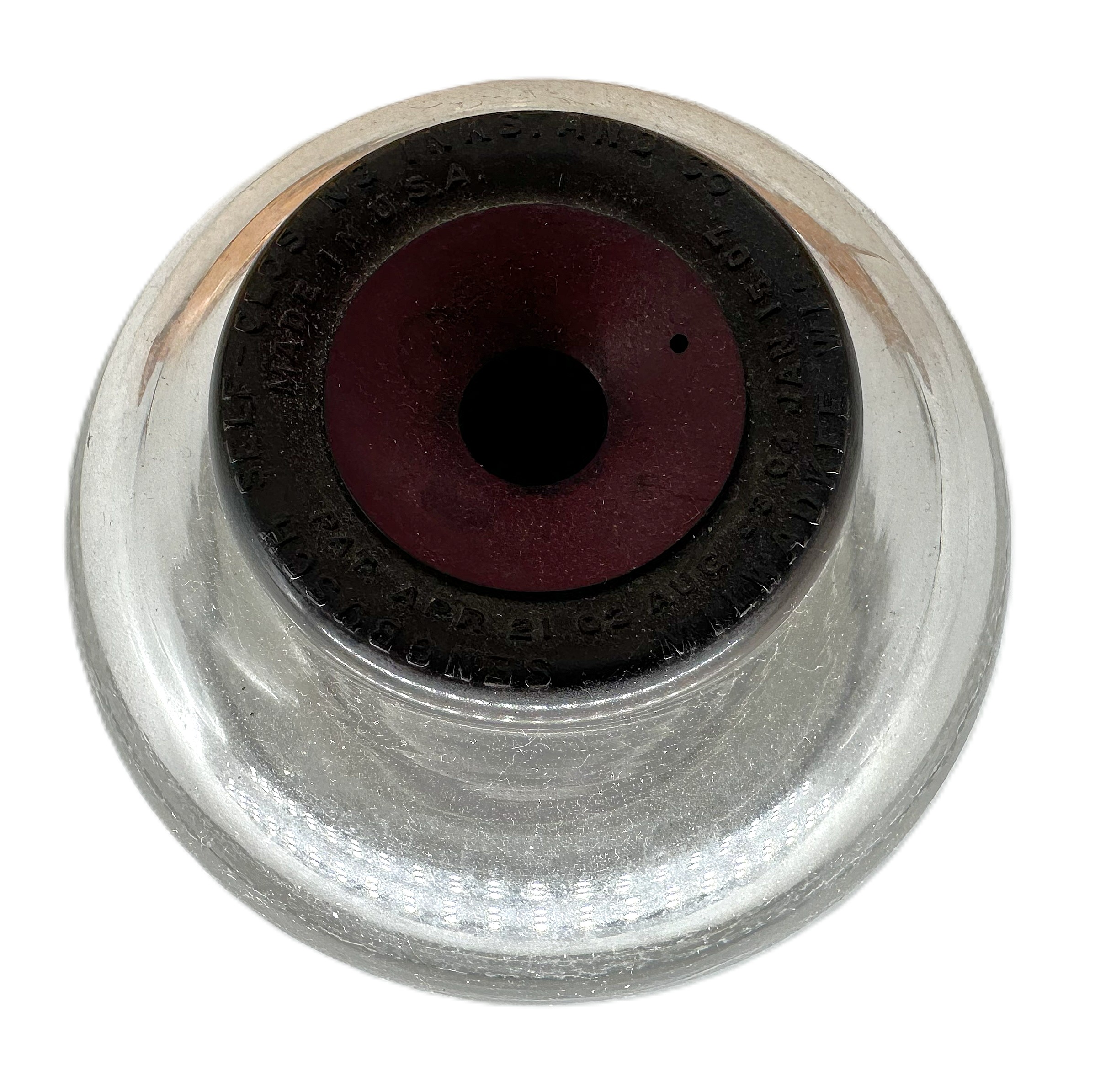
Because the Sengbusch inkstand patent information stamped on the component lists dates up to January 15, 1907, the entire inkstand ensemble must have been assembled and produced after early 1907. Given the style of folk-art carving and the popularity of the Sengbusch self-closing inkwells, this piece likely dates from the 1910s through the 1920s.
While the glass and rubber-component inkwell was manufactured by the Sengbusch Self-Closing Inkstand Co. in Milwaukee, Wisconsin, the hand-carved wooden base and animal figures are an American folk art creation—either custom-built by a talented artisan to house a state-of-the-art commercial inkwell, or creatively adapted using a commercial inkwell inserted into a bespoke, hand-whittled folk art stand.
How the Patented Sengbusch Self-Closing Inkwell Works
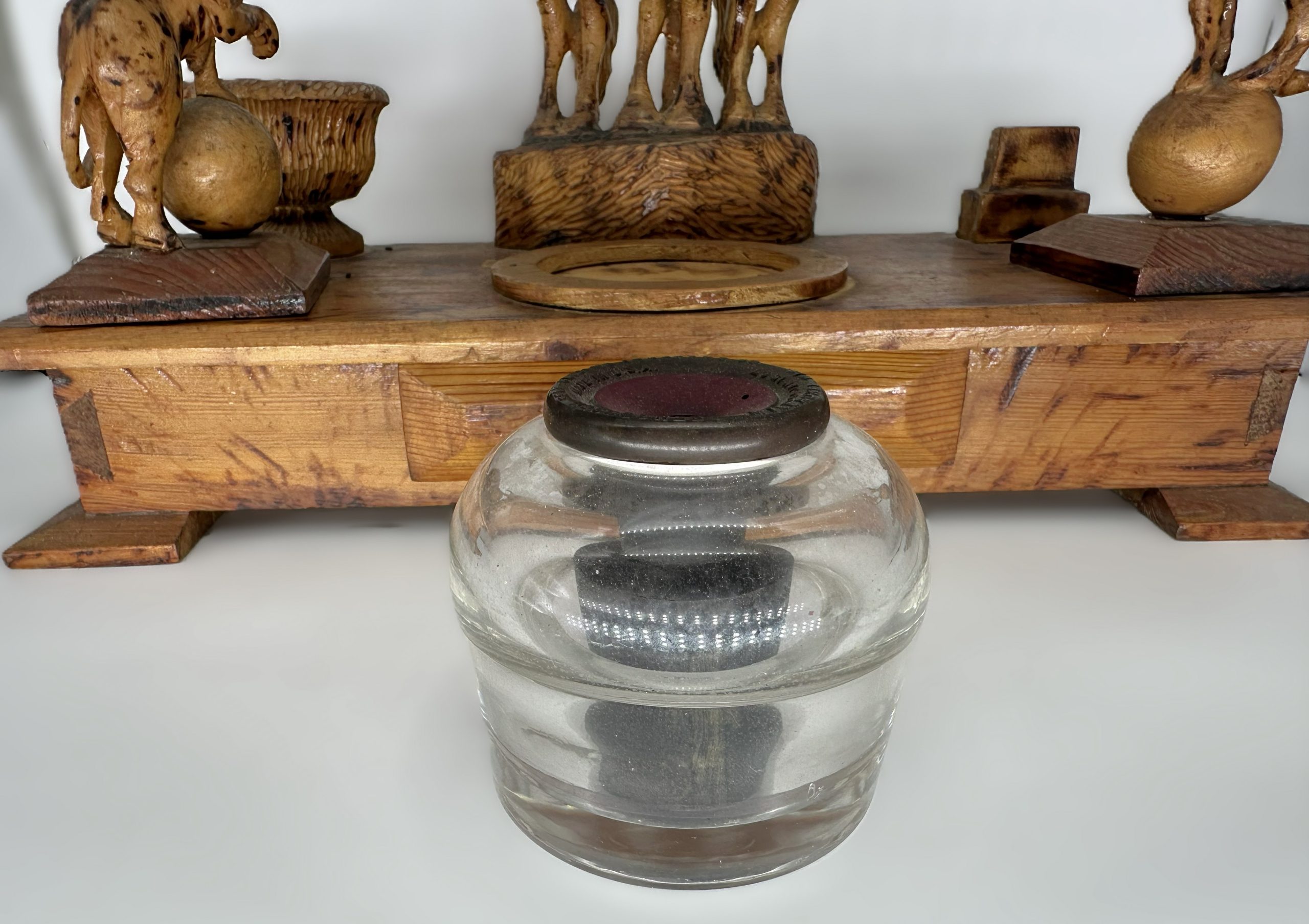
The central glass inkwell is a classic Sengbusch Ideal Self-Closing Inkstand, a revolutionary office accessory design of the era. Here is how it functions:
- The Dip-Funnel Principle: The top cap or collar (made of a rubber-like composition or hard rubber/bakelite style material) forms a narrow funnel leading down into the ink chamber.
- The Internal Weighted Float: Inside the glass reservoir sits a heavy, hard-rubber plunger/float component (visible submerged in the glass body).
- Automatic Seal: When the inkwell is not in use, the internal float rests upward against the bottom of the opening, sealing the ink off from the air. This prevented dust from entering and, crucially, kept the ink from evaporating and thickening—a common frustration with open desk wells of the 19th century.
- Writing Action: When you insert your dip pen into the center hole, the weight of the pen pushes the internal float down just enough to allow a small, perfectly measured pool of fresh ink to rise into the dipping well. When you withdraw the pen, the float springs back up to reseal the well automatically.
Estimated value: $300
Content disclaimer. The information posted is the owner’s best knowledge and may not have been vetted by the SOIC. We welcome comments, corrections, and additions, working to make our website information comprehensive and accurate.
Join the Society of Inkwell Collectors (SOIC) – it’s free!
Founded in 1981 as a non-profit organization,
we are documenting inkwells (and accessories).
We’re here to help and inform!