

Inkipedia
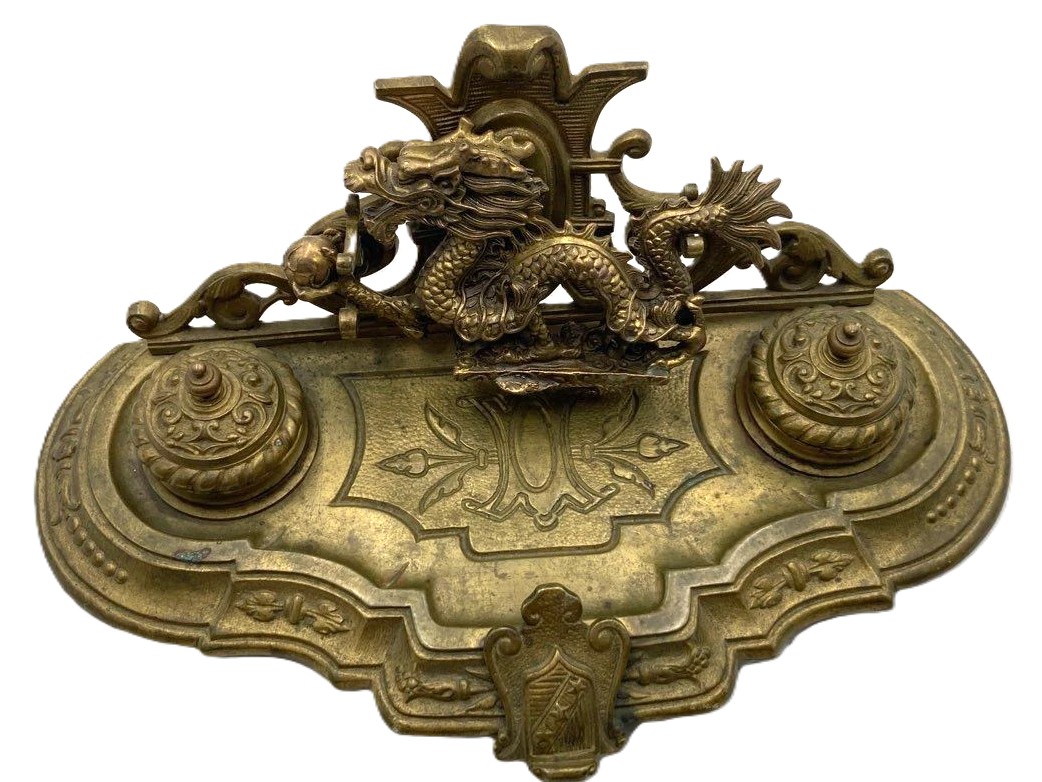
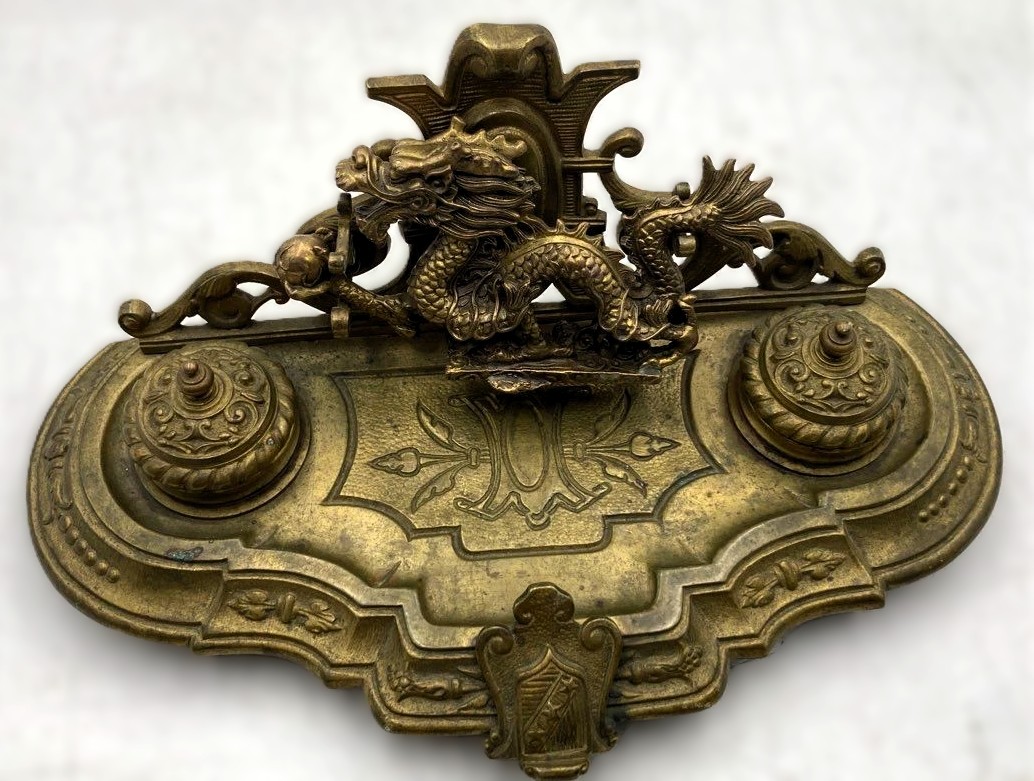
Cast Brass Dragon Inkstand
| Categories | Far East / Oriental |
| Type | Dragon |
| Material | Brass |
| Markings | Unmarked |
| Manufacturer | Undetermined |
| Origin | Undetermined |
| Date or Era | circa 1900 |
Description
This cast brass double inkstand is designed in an eclectic mix of Gothic Revival, Renaissance Revival, and Orientalist (Aesthetic Movement) styles.
Features
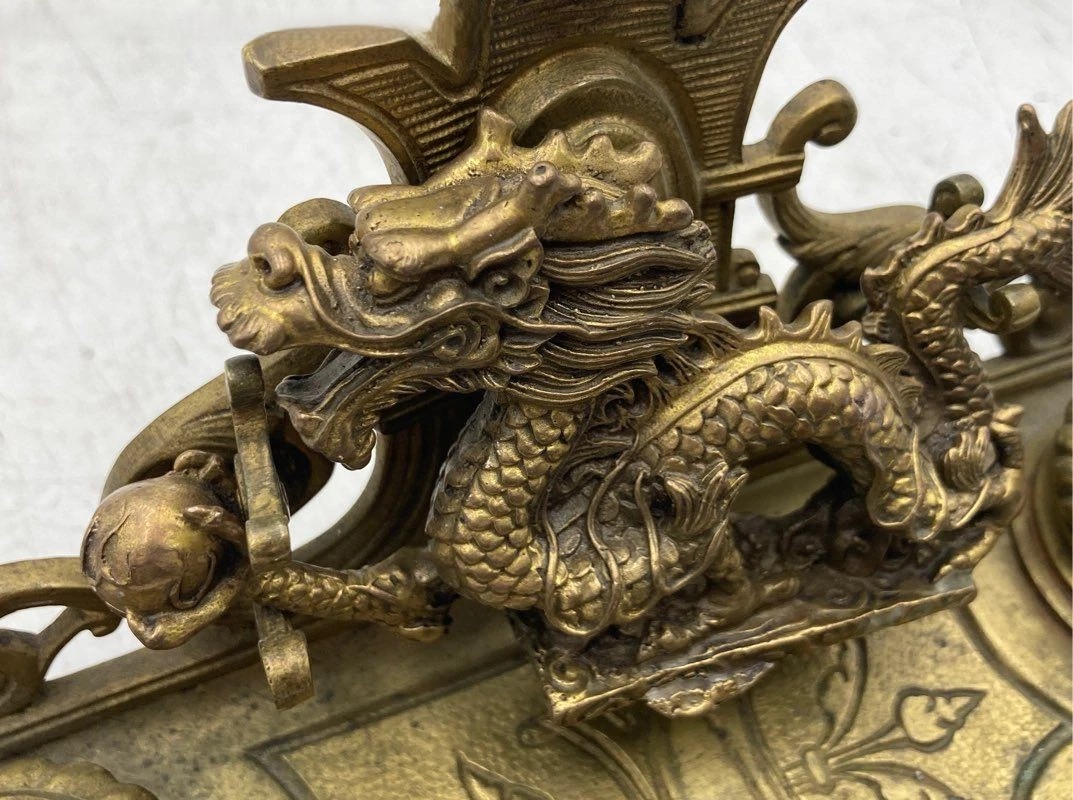
- Central Figure: The primary centerpiece is an Asian-style dragon (an East Asian long-style dragon) resting its claw on a flaming pearl or orb. The dragon is detailed with textured scales and an open, expressive mouth.
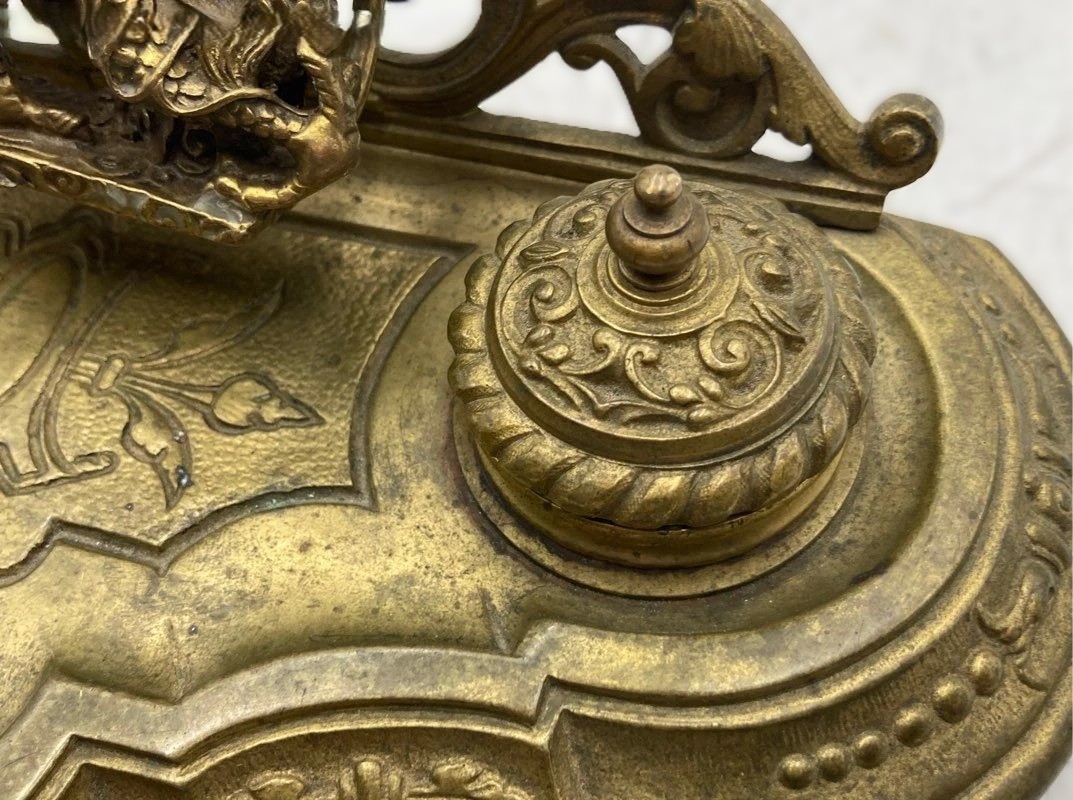
- Rear Backplate: Positioned behind the dragon is a raised, arching gallery featuring geometric, textured diaper-work and scrollwork flanking the center.
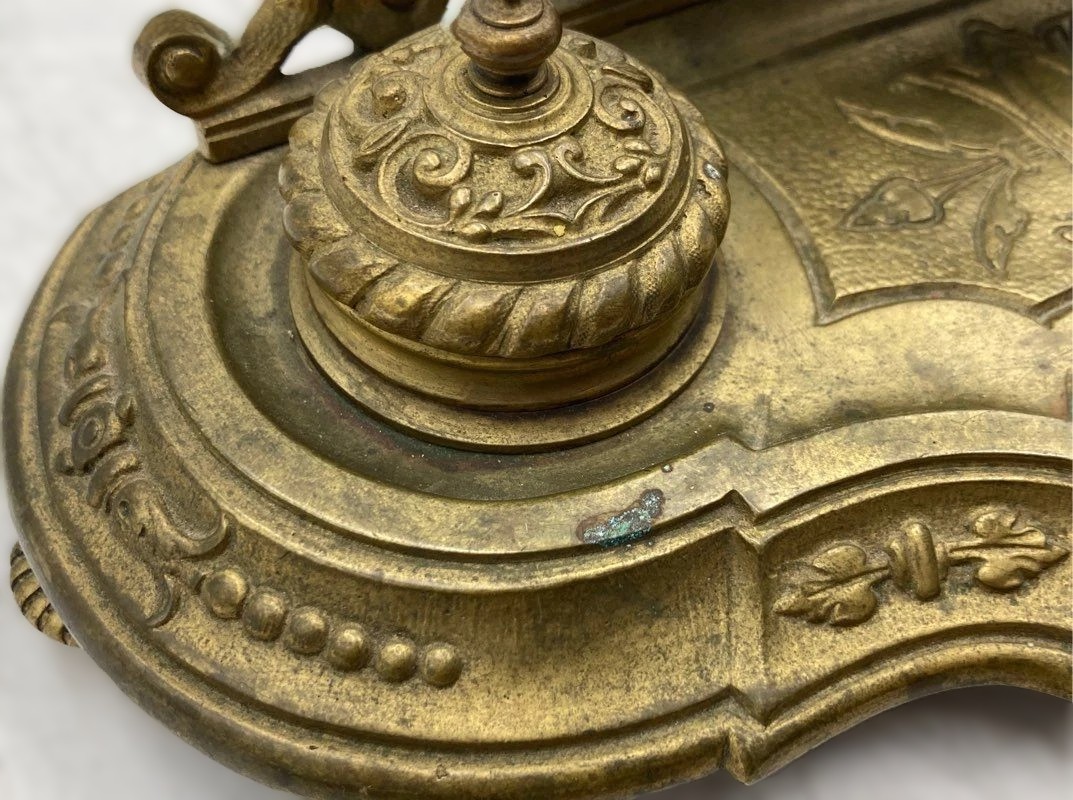
- Dual Inkwells: Situated on either side of the tray are two matching brass inkwells fitted with hinged, domed lids adorned with scrolling foliate motif, twisted rope-pattern rims, and finials.
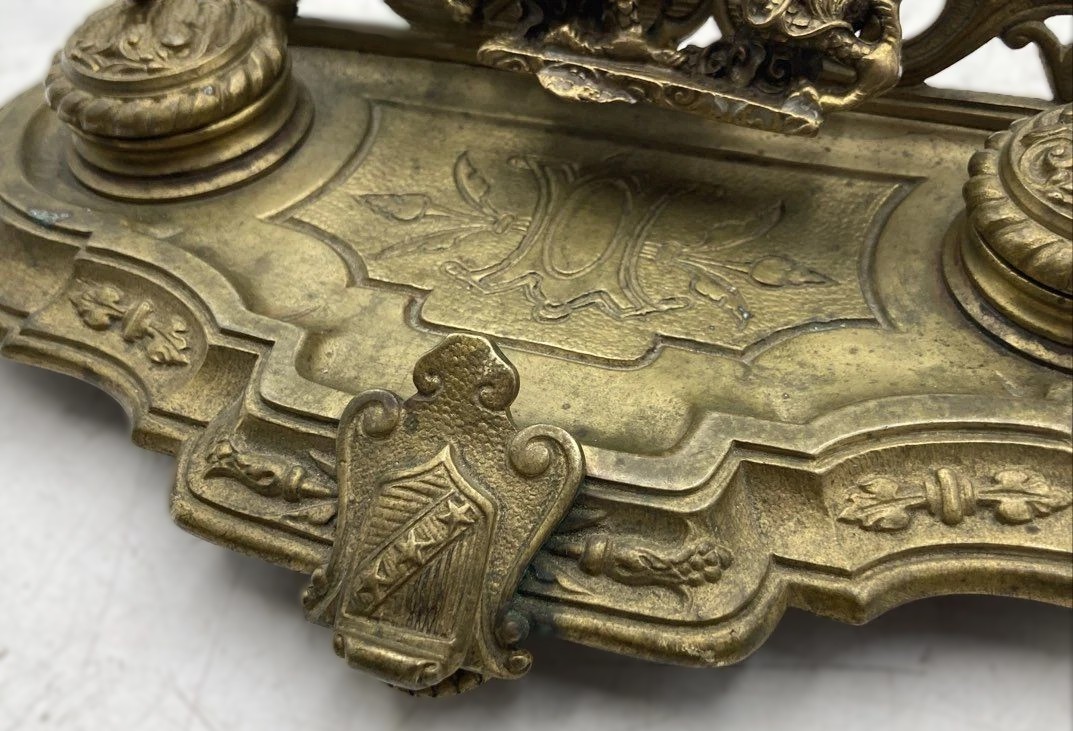
- Base & Tray: The tray has a stepped, lobed base with a textured well designed to hold pens or dip nibs. The center of the tray features an incised heraldic or floral cartouche, while the front apron is mounted with a small heraldic shield/crest with a bend and three stars.
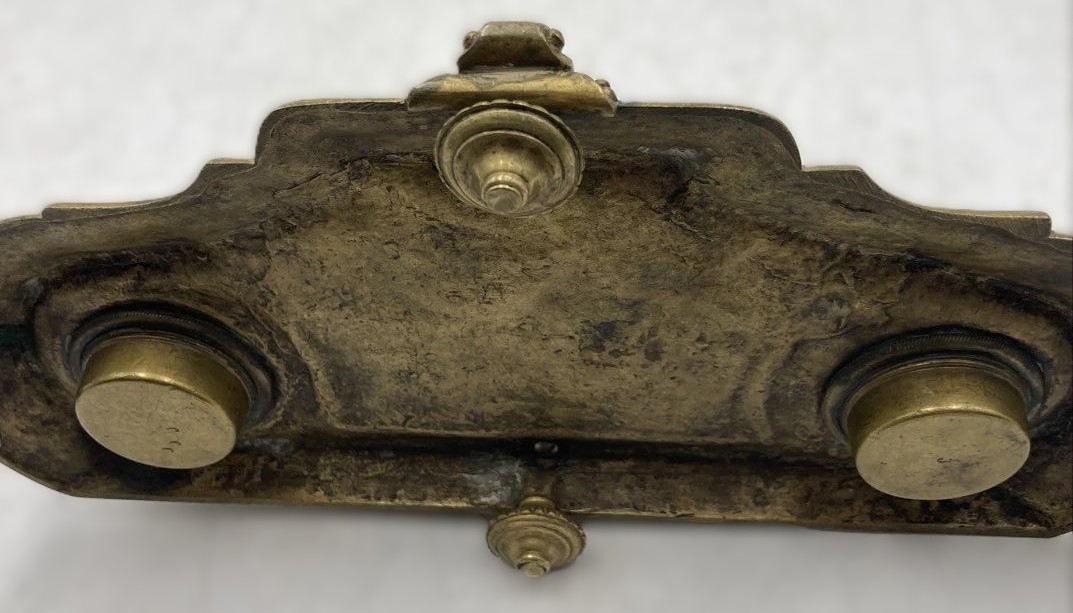
- Underside: The underside shows typical 19th-century sand-casting marks with three finial-style brass feet (two along the back, one centered under the front lip).
Origin, Maker, and Period
Who Made It?
- Unattributed European/British Foundry: Like many decorative cast brass desk accessories of this era, the underside lacks a stamped maker’s mark or registration number. Pieces of this specific type were typically cast by prominent brass foundries in Birmingham, England (the hub of Victorian stamped and cast brassware) or by European foundries in France or Germany specializing in Orientalist and Gothic Revival brassware for export.
Where Was It Made?
- Likely England or Western Europe (France/Germany): The overall silhouette, heavy sand-casting, and turned brass foot construction strongly point to European manufacture. During the late 19th century, European brass makers frequently combined Western heraldry (such as the crest on the front) with exotic Eastern dragon motifs to satisfy the high demand for Chinoiserie and Aesthetic Movement decor.
When Was It Made?
- Circa 1880–1900 (Late Victorian Era): The stylistic synthesis—combining Victorian heraldic elements with East Asian dragon iconography—was particularly popular in the 1880s and 1890s during the height of the Victorian Aesthetic Movement and Orientalism.
Sold for $170 in June 2026
Content disclaimer. The information posted is the owner’s best knowledge and may not have been vetted by the SOIC. We welcome comments, corrections, and additions, working to make our website information comprehensive and accurate.
Join the Society of Inkwell Collectors (SOIC) – it’s free!
Founded in 1981 as a non-profit organization,
we are documenting inkwells (and accessories).
We’re here to help and inform!