



Carvacraft Marbled Green Inkwell
| Categories | Art Deco |
| Material | Plastic/Celluloid |
| Markings | See Narrative |
| Manufacturer | John Dickinson & Co. Ltd - Carvacraft |
| Origin | England |
| Date or Era | circa 1948 |
This Carvacraft inkwell is a quintessential piece of British Art Deco design, though its history contains a few surprises regarding its age and materials.
The Design & Description
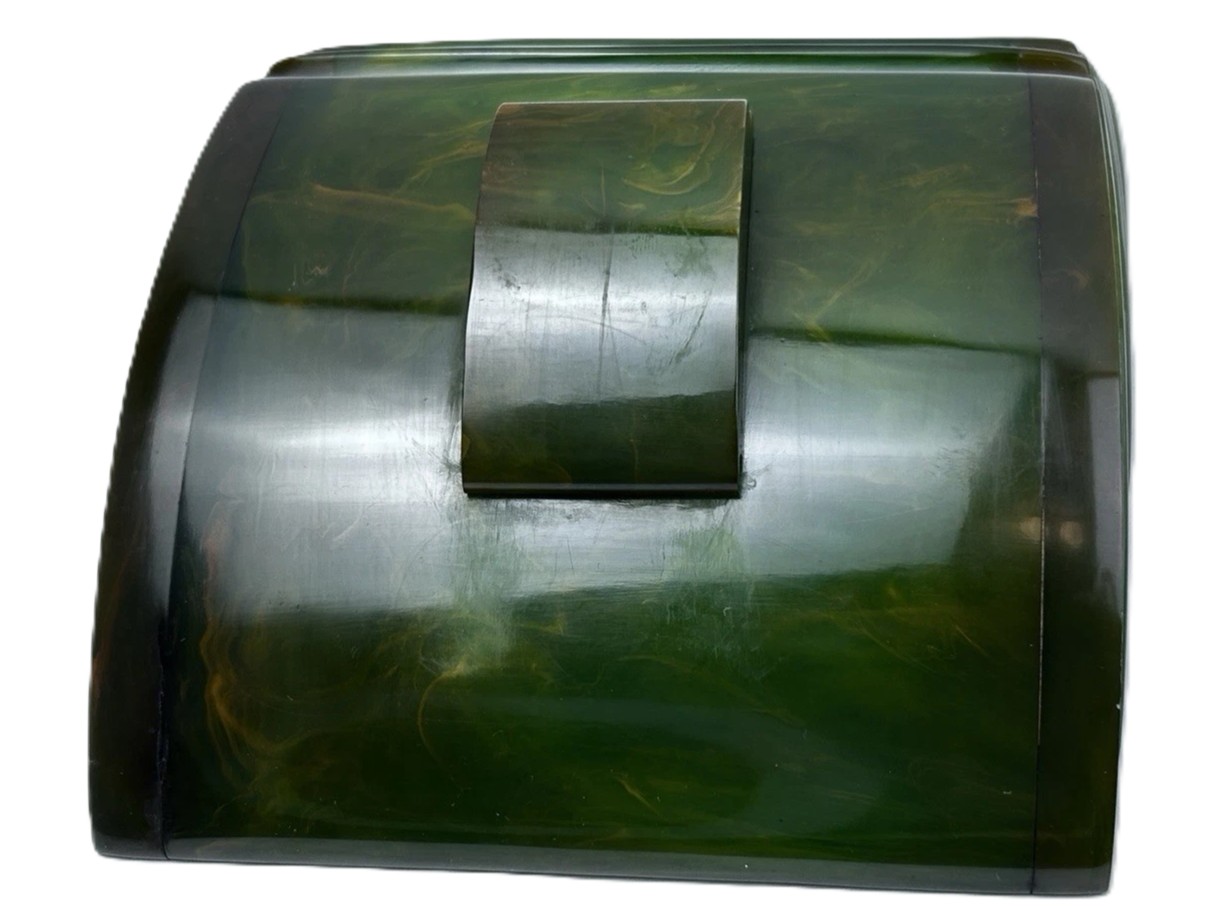
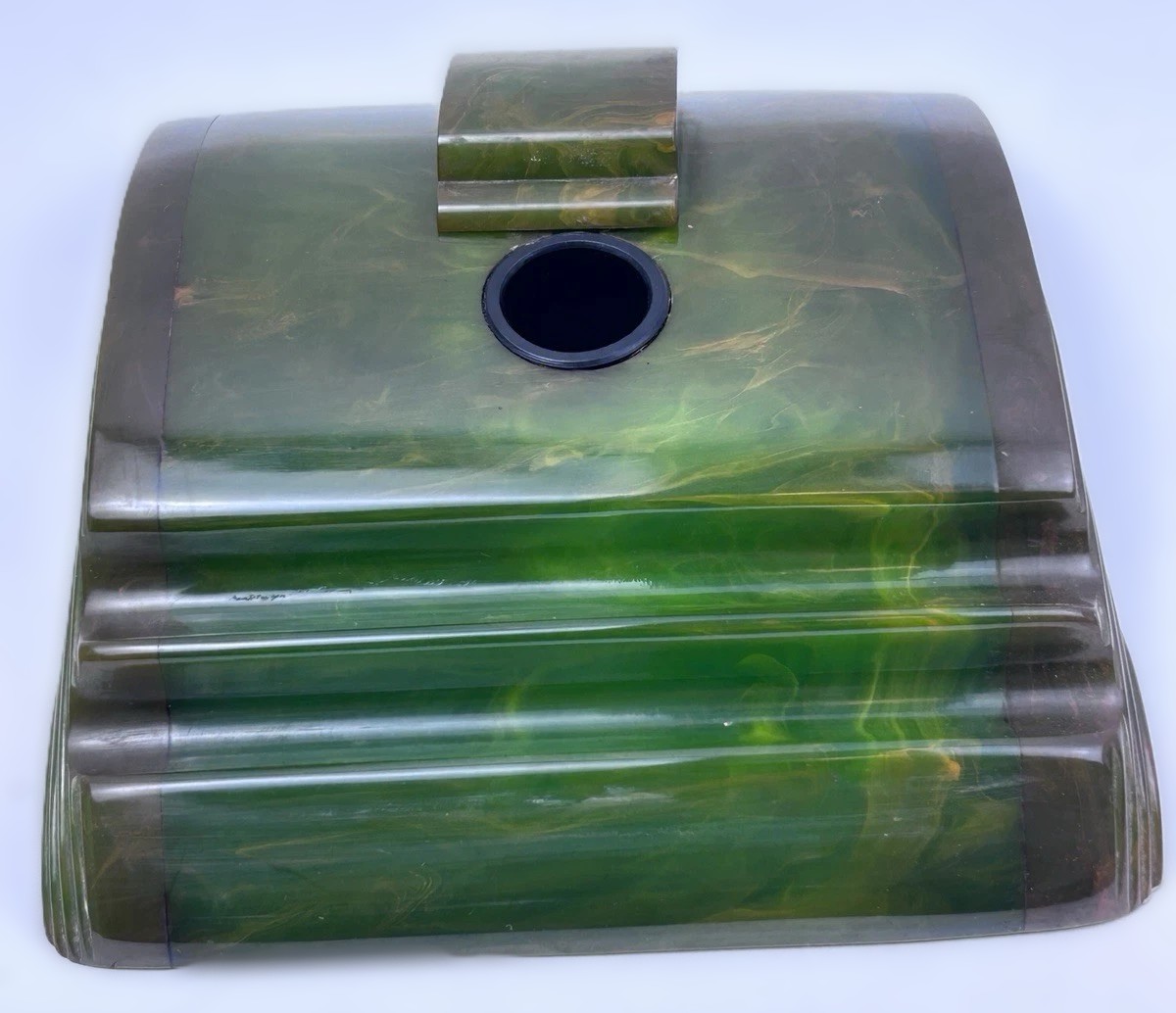
The inkwell features a streamlined, “Odeon” style with stepped parallel arcs (ziggurat shape) on the sides and front. The material is a translucent, marbled green that was marketed to mimic expensive semi-precious stones like onyx or jade.
While the aesthetic is purely 1930s Art Deco, these were actually produced starting in 1948. The design is credited to Charles Boyton, a renowned British silversmith who applied his expertise in luxury metalwork to this “modern” plastic range.
Manufacturer: John Dickinson & Co. Ltd.
The manufacturer, John Dickinson & Co., was primarily a paper and stationery giant (famous for brands like Basildon Bond and the Lion Brand).
- History: Founded in 1804 by John Dickinson, the company dominated the UK paper market for over a century.
- The Plastic Pivot: During World War II, the company shifted production to aid the war effort, which included working with early plastics and engineering.
- Carvacraft Launch: In 1948, leveraging their new plastic manufacturing capabilities, they released the “Carvacraft” line. It was marketed as “Writing Desk Equipment for the Modern Business Executive.”
How it Was Made: The “Carved” Plastic
Despite often being called “Bakelite” by collectors, Carvacraft is actually made of Catalin (a cast phenolic resin).
- The Process: Unlike Bakelite, which was molded from powder, Catalin was cast into large sheets or rods. While the resin was still liquid, dyes were swirled in to create the unique “onyx” marbling.
- The “Carva” Name: Once the resin hardened, the pieces were machined, carved, and polished using traditional woodworking or stone-cutting techniques. This gave the items a weight and luster that felt more “organic” than standard molded plastics—hence the name Carvacraft.
How it Works
This specific model is a sliding-lid inkwell.
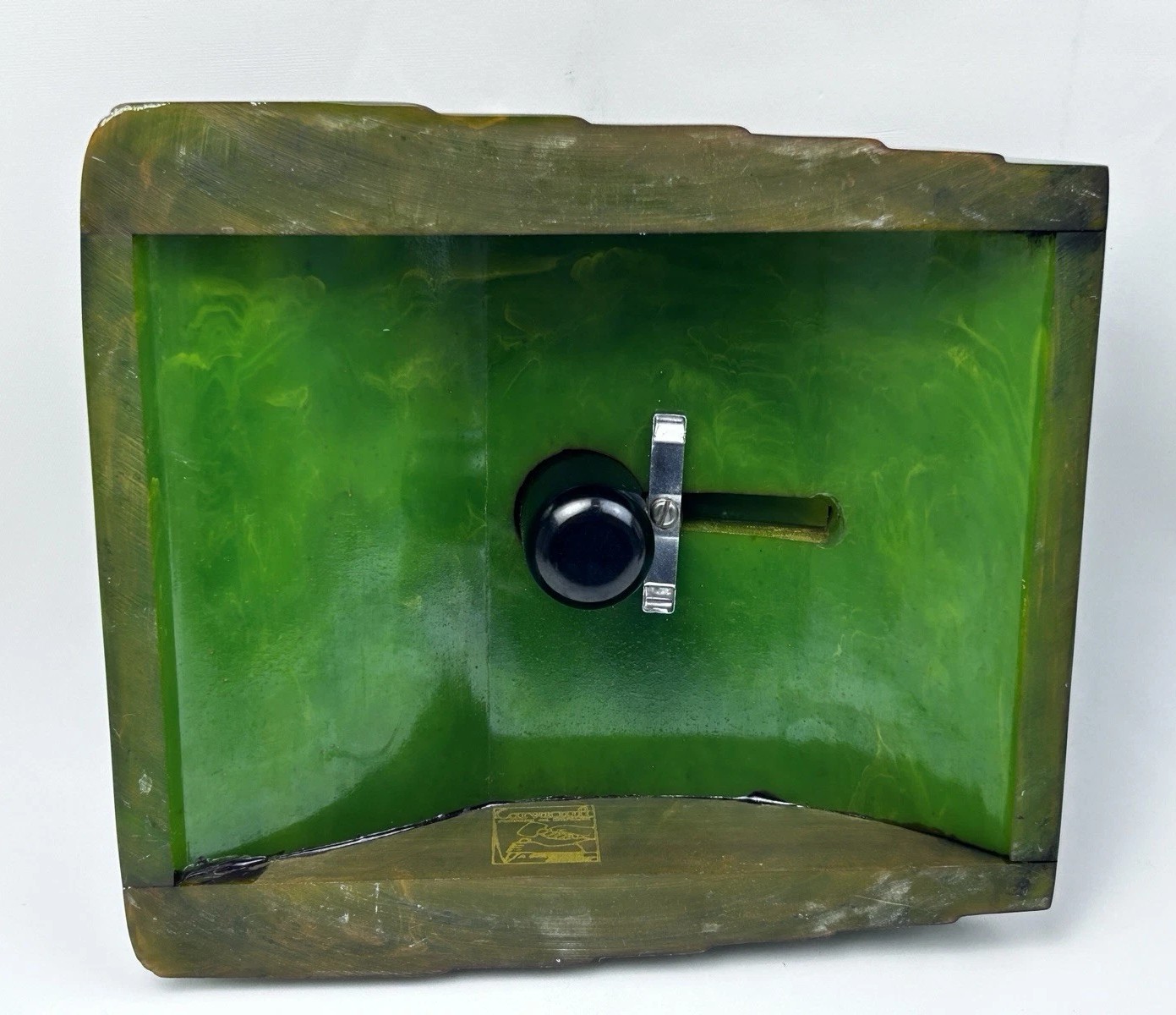
- The Mechanism: A central metal bar acts as a track. The top rectangular component is designed to slide backward toward the rear of the base.
- The Ink Pot: Sliding the lid reveals a circular opening that holds a small reservoir (a black plastic insert).
- Functionality: This design protected the ink from dust and evaporation while maintaining the sleek, unbroken lines of the desk set when not in use.
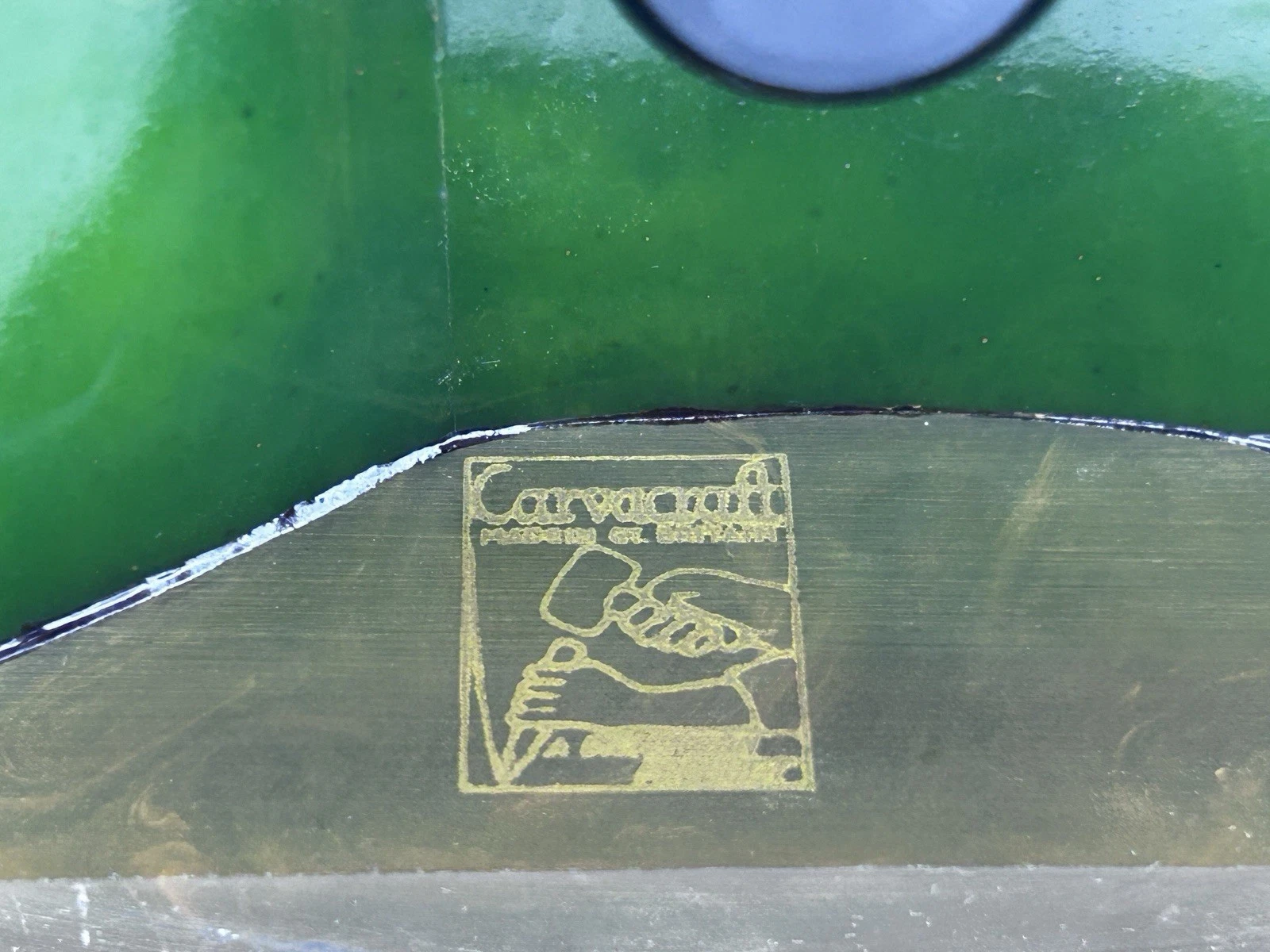
Note: The logo on the bottom depicts a hand with a mallet and chisel. This was a clever marketing tactic to emphasize the “hand-carved” nature of the product, distancing it from the “cheap” reputation of mass-produced plastics of the era.
5/12/26 – Added pictures of a double version
Link to another Carvacraft listing: Art Deco Carvacraft Bakelite Double Inkwell – The Society of Inkwell Collectors (SOIC)
Single sold for $800 in April 2026
Double sold for $1,108 in April 2026.
Content disclaimer. The information posted is the owner’s best knowledge and may not have been vetted by the SOIC. We welcome comments, corrections, and additions, working to make our website information comprehensive and accurate.
Join the Society of Inkwell Collectors (SOIC) – it’s free!
Founded in 1981 as a non-profit organization,
we are documenting inkwells (and accessories).
We’re here to help and inform!