


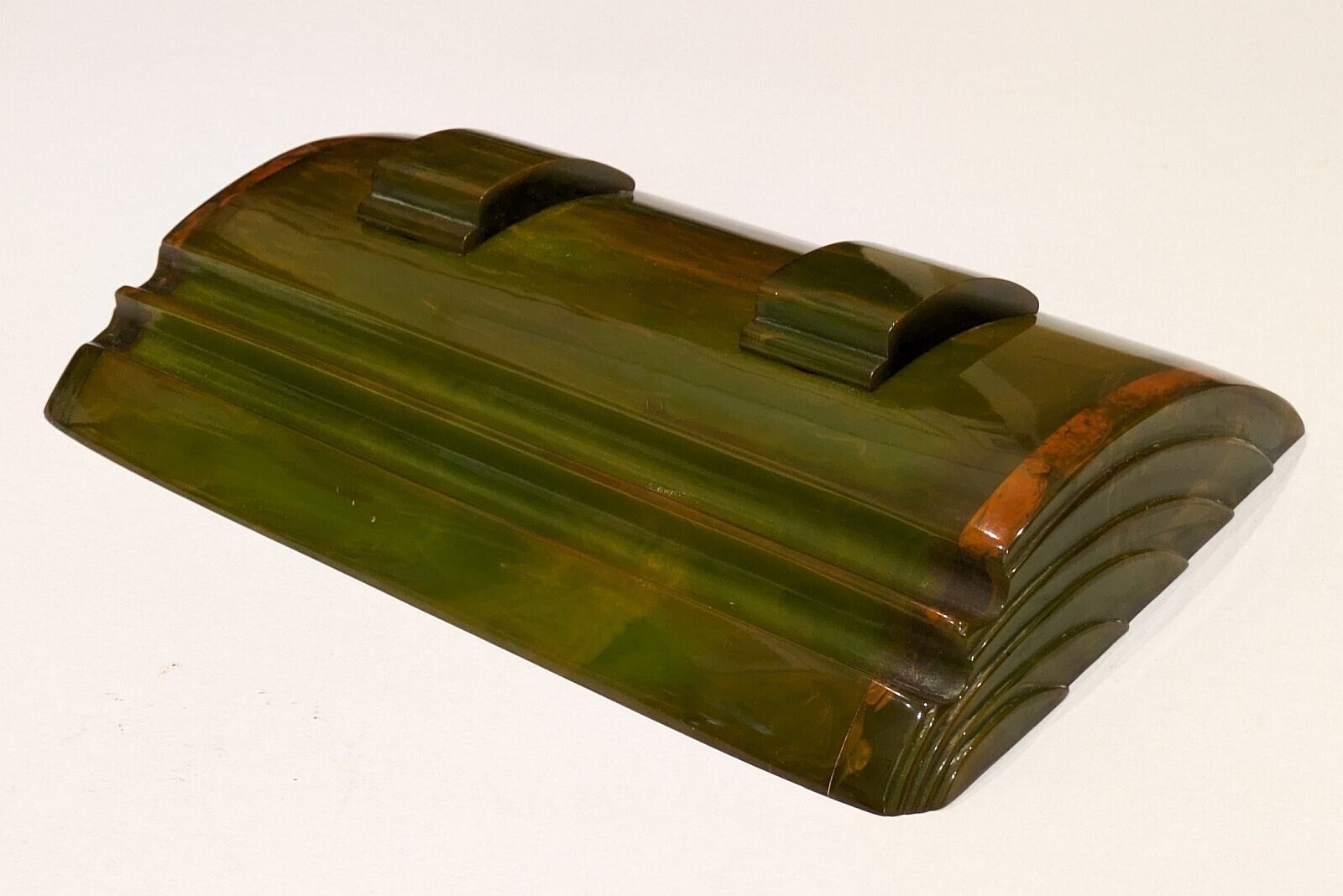
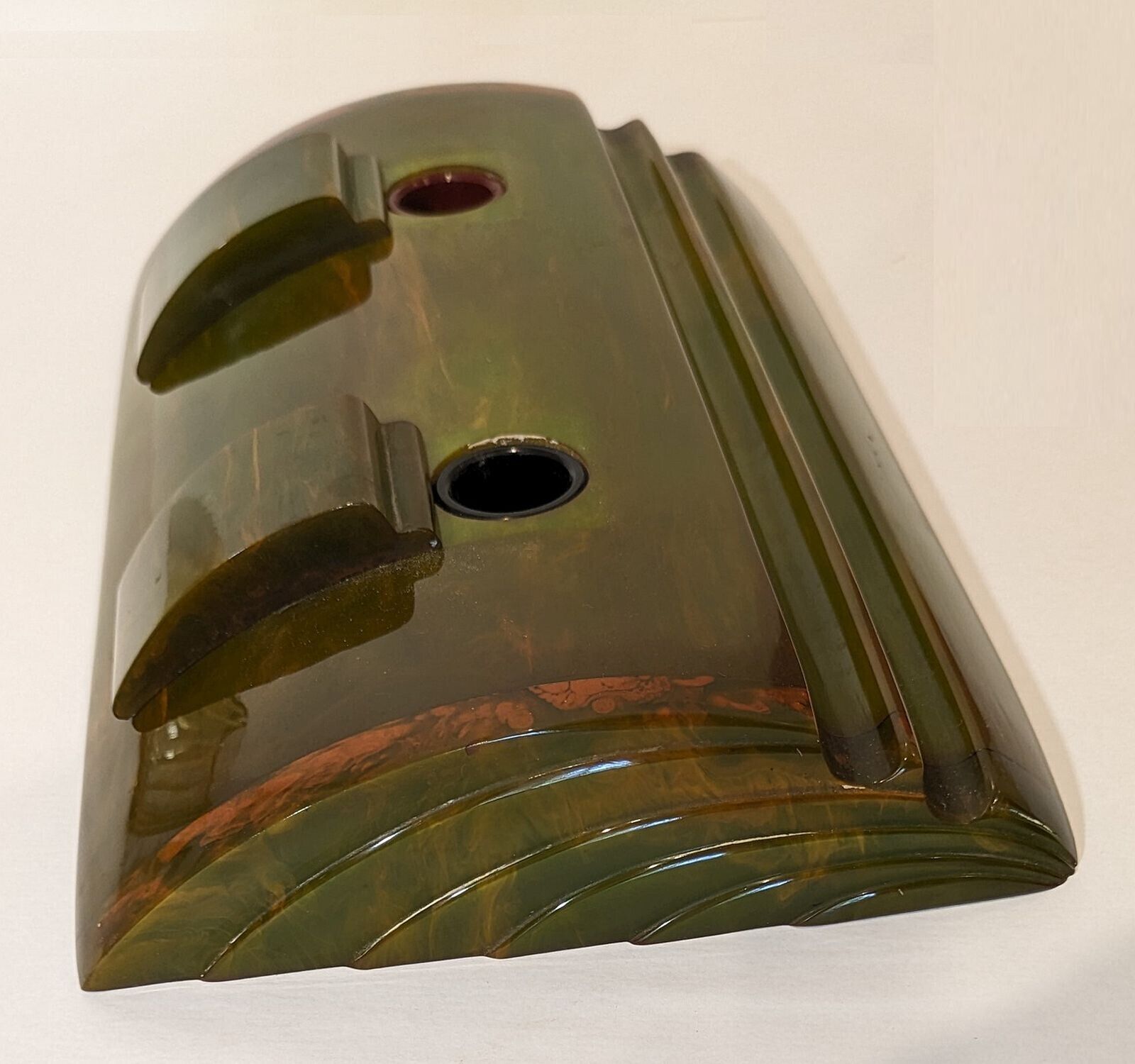
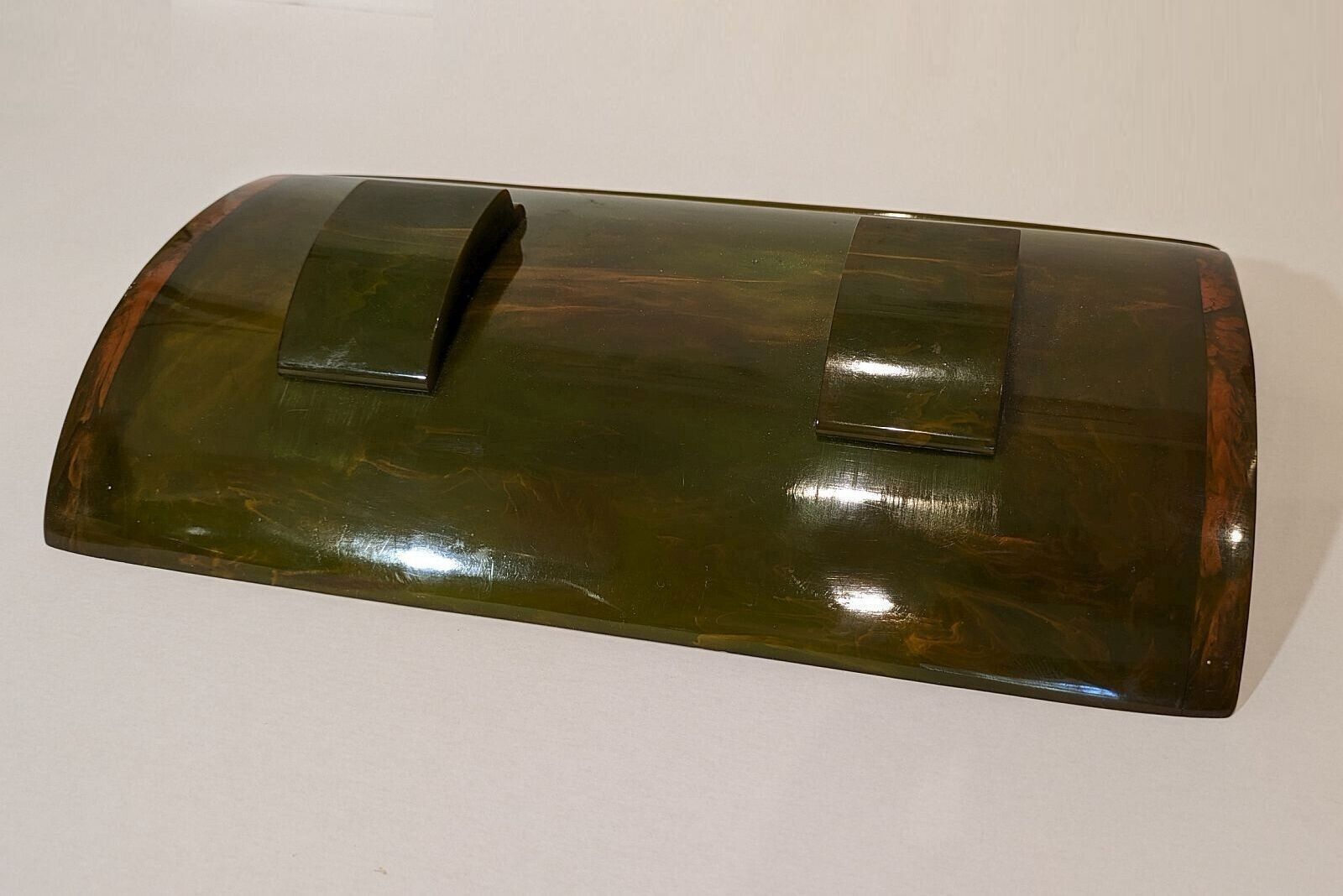
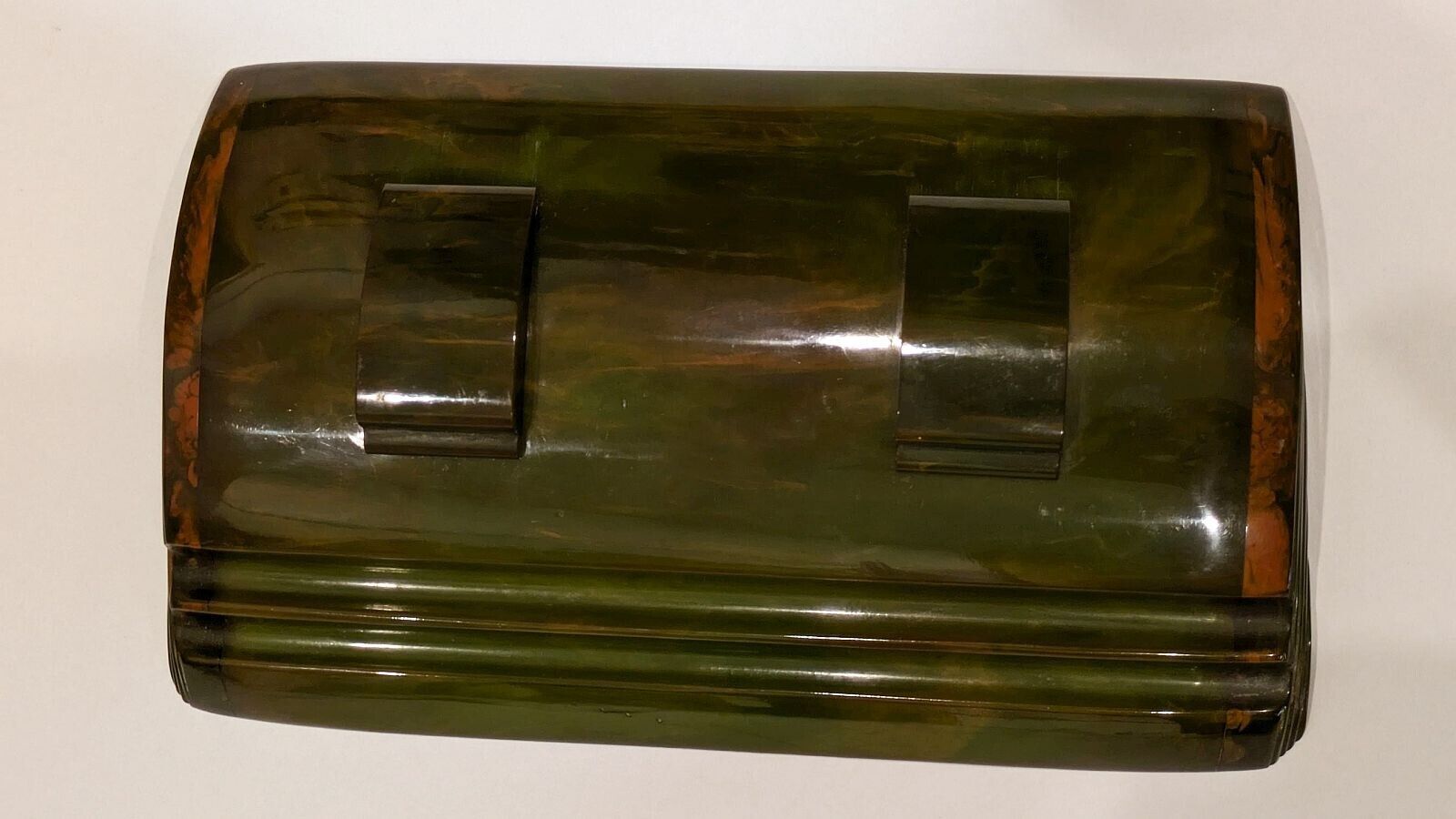
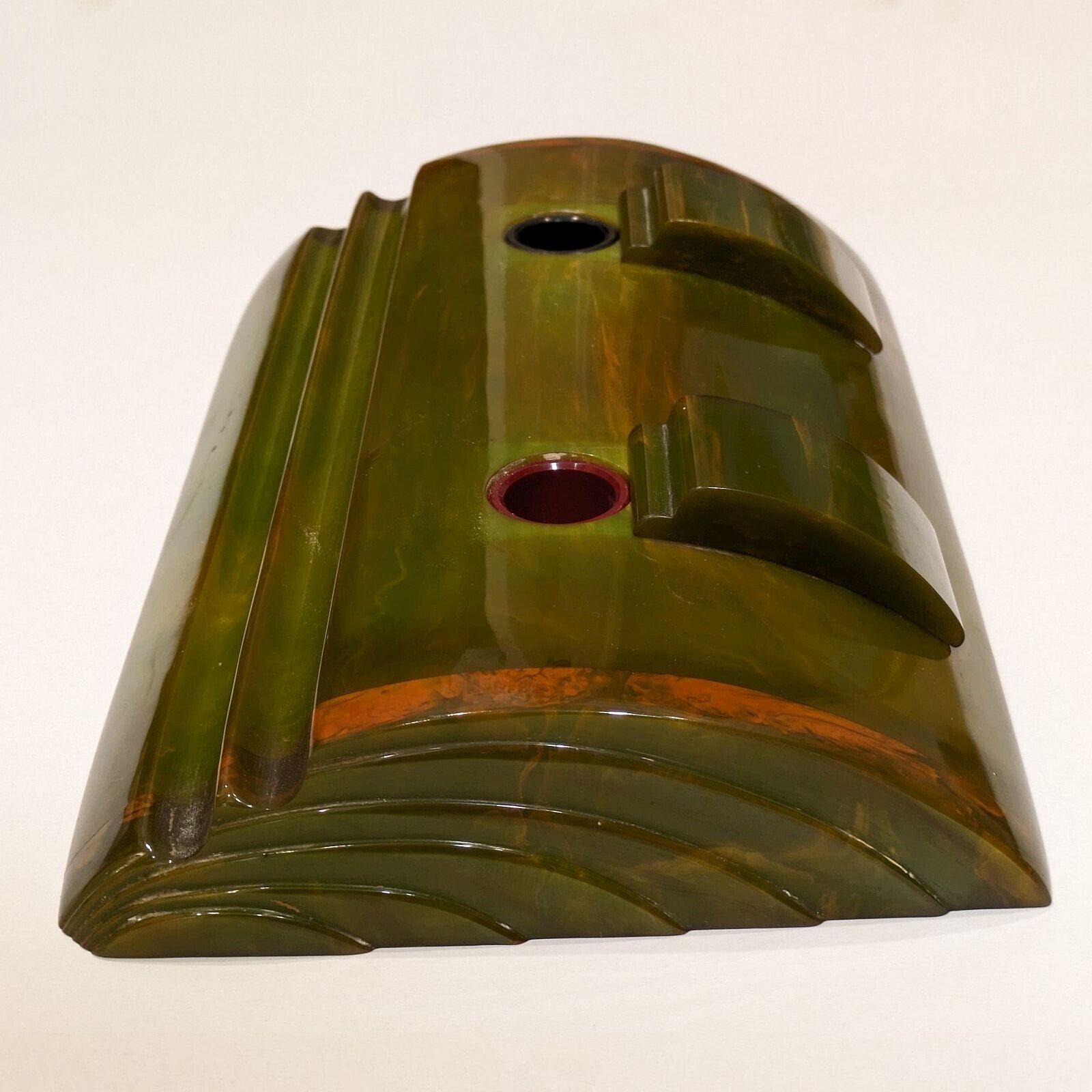
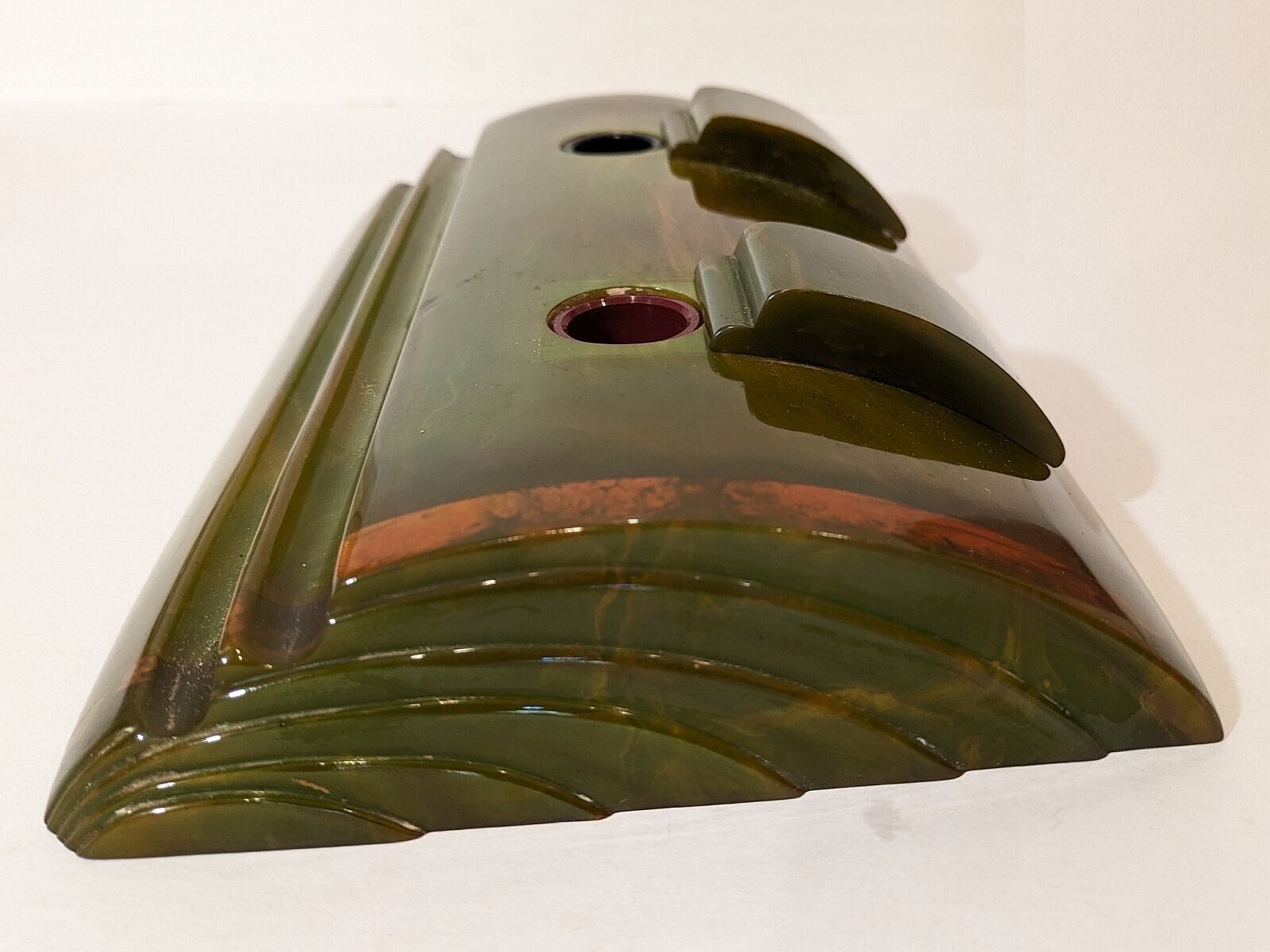
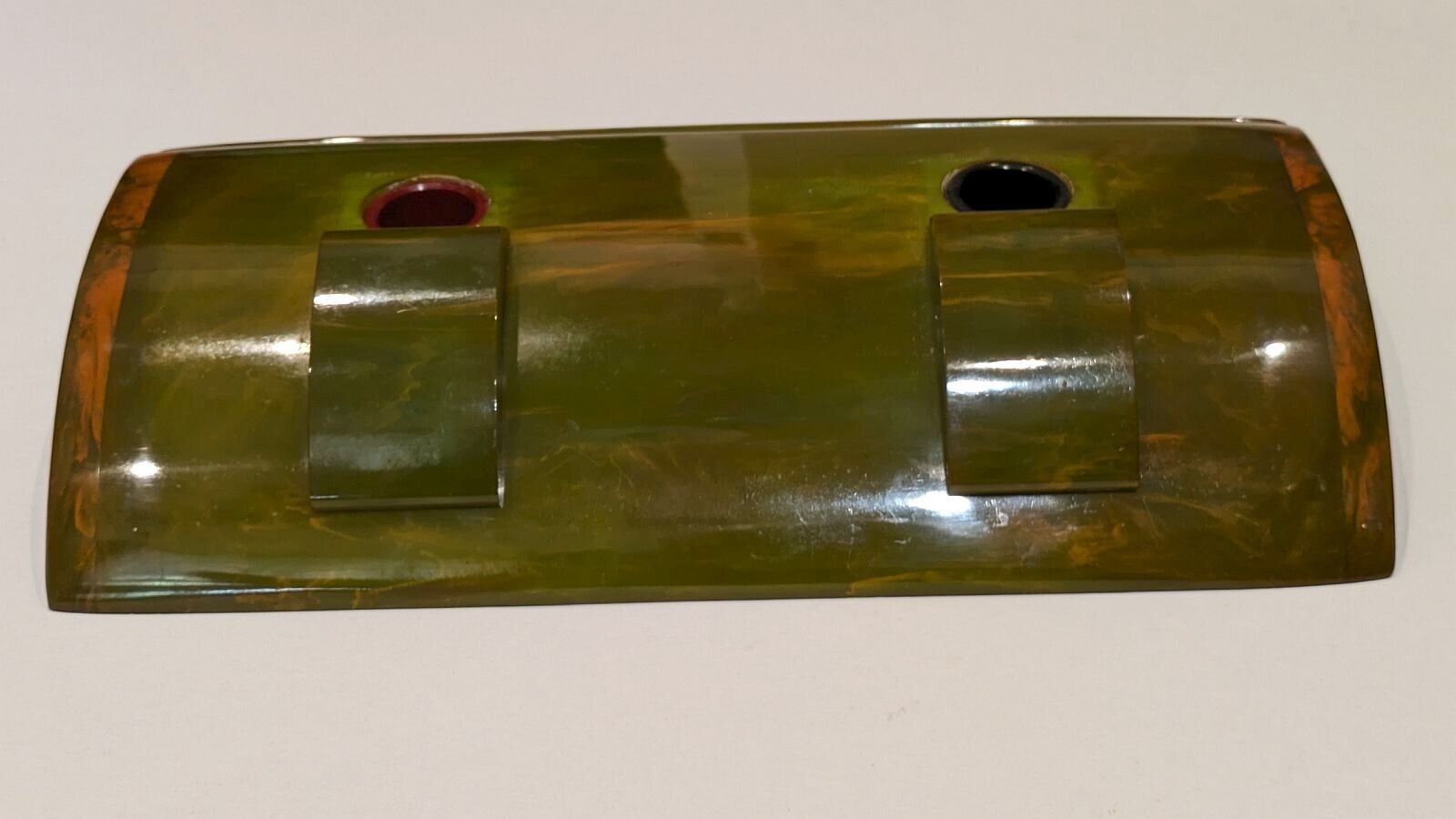
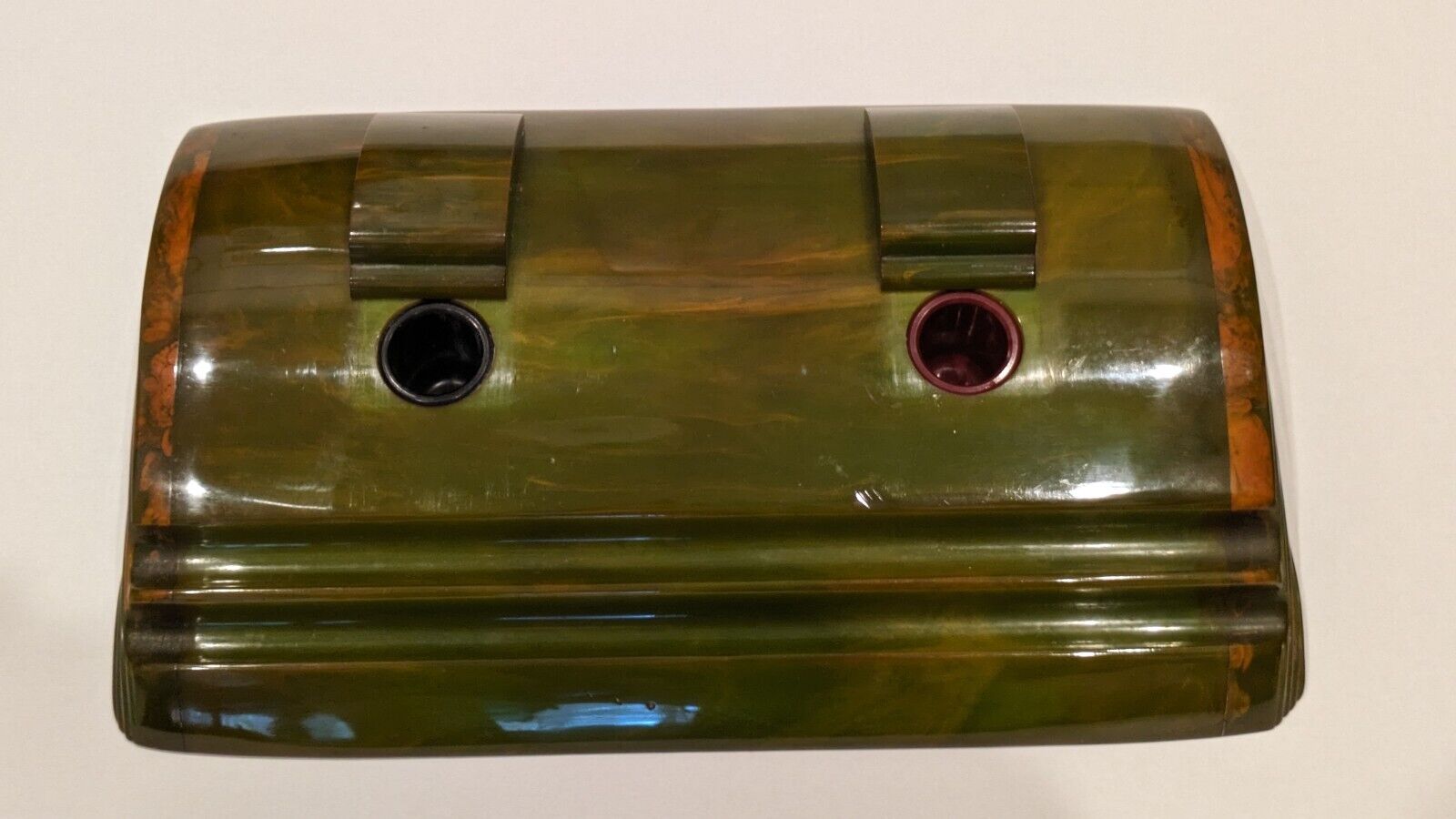


Art Deco Carvacraft Bakelite Double Inkwell
| Categories | Art Deco, Plastic - Bakelite - Gutta Percha |
| Type | Carvacraft |
| Material | Bakelite |
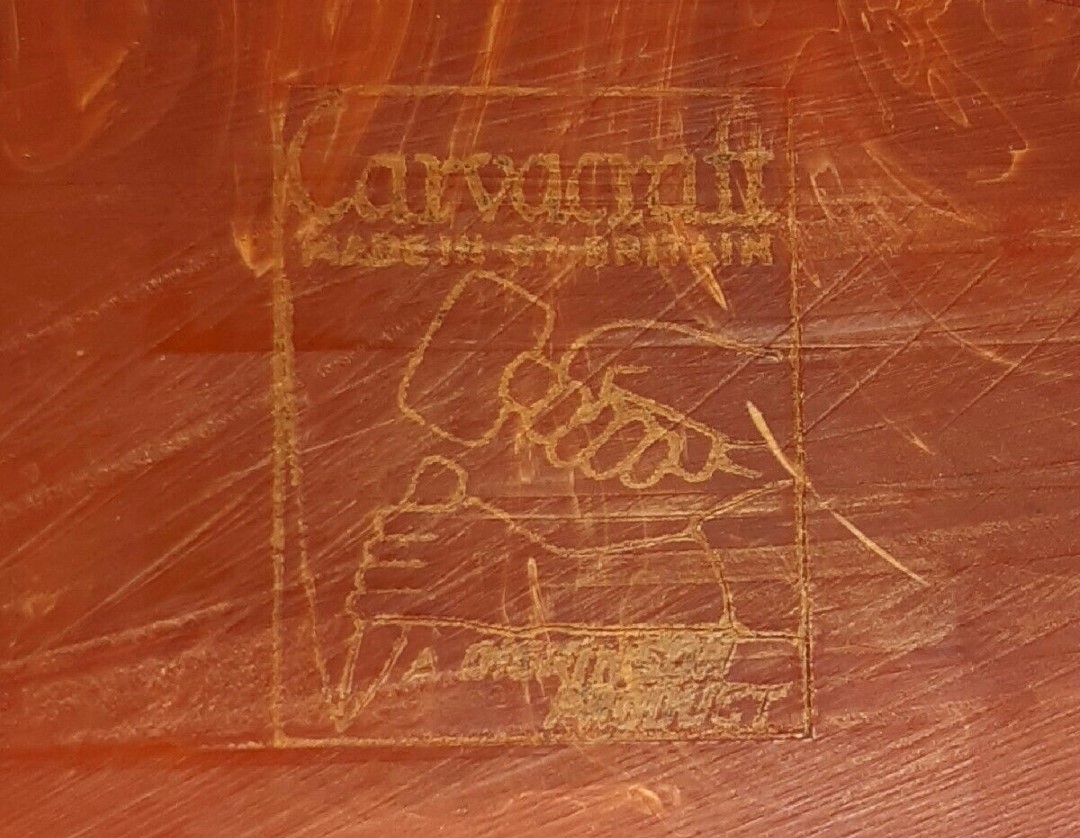
| Markings | See narrative |
| Manufacturer | John Dickinson & Co. Ltd - Carvacraft |
| Origin | England |
| Date or Era | circa 1948 |
| Measuring | 11 ¼” x 6 ¾” x 2 ½” high |
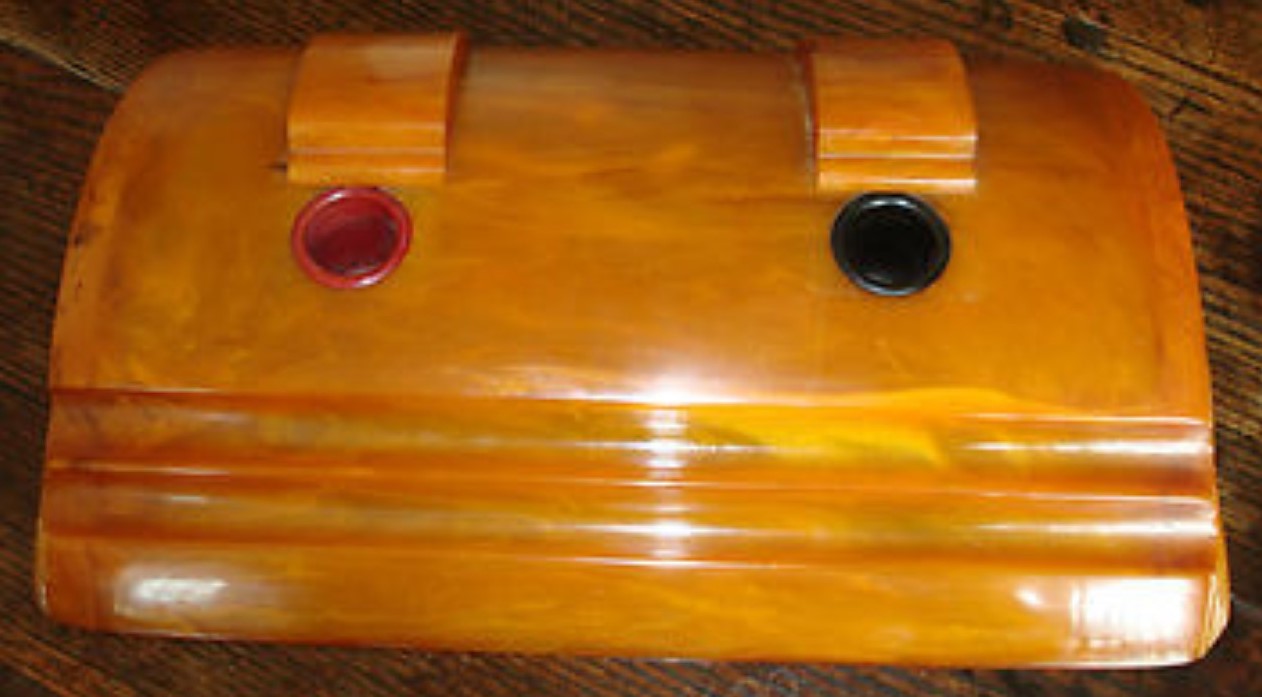
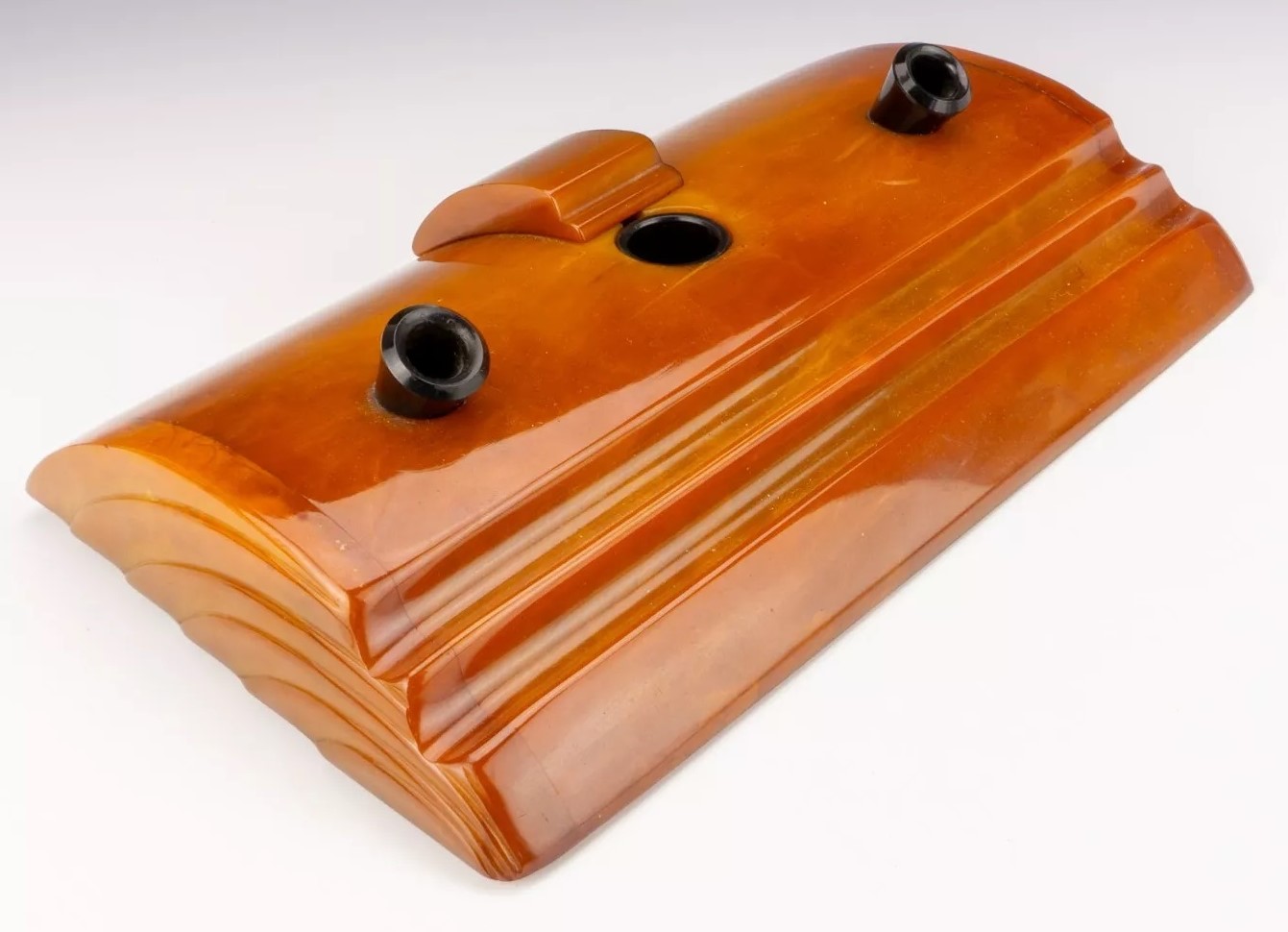
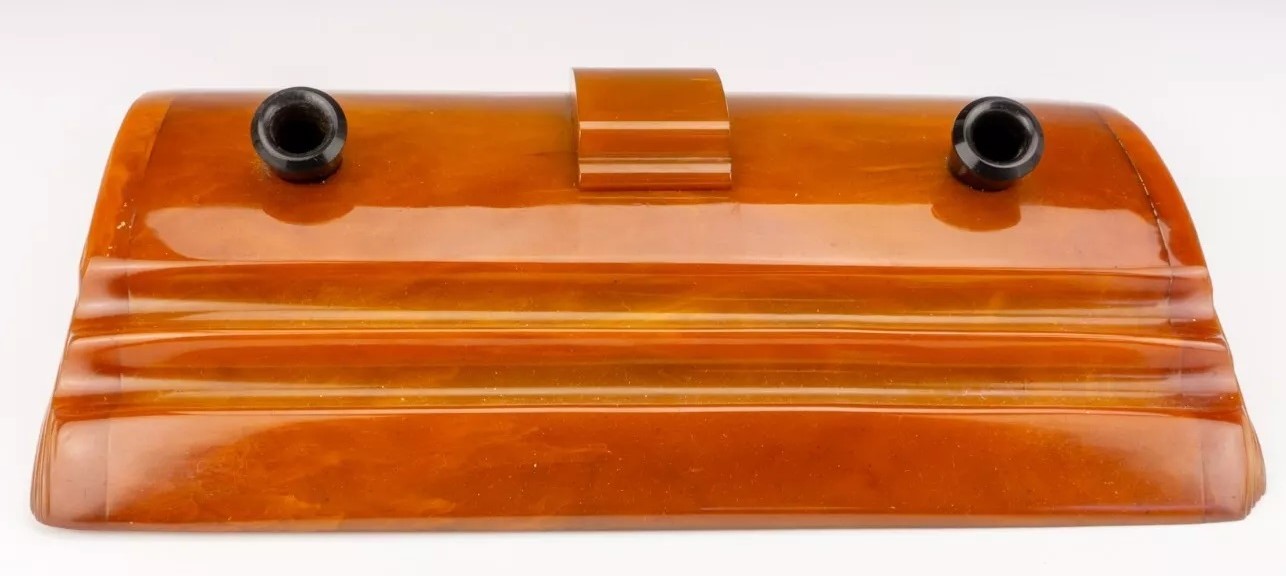
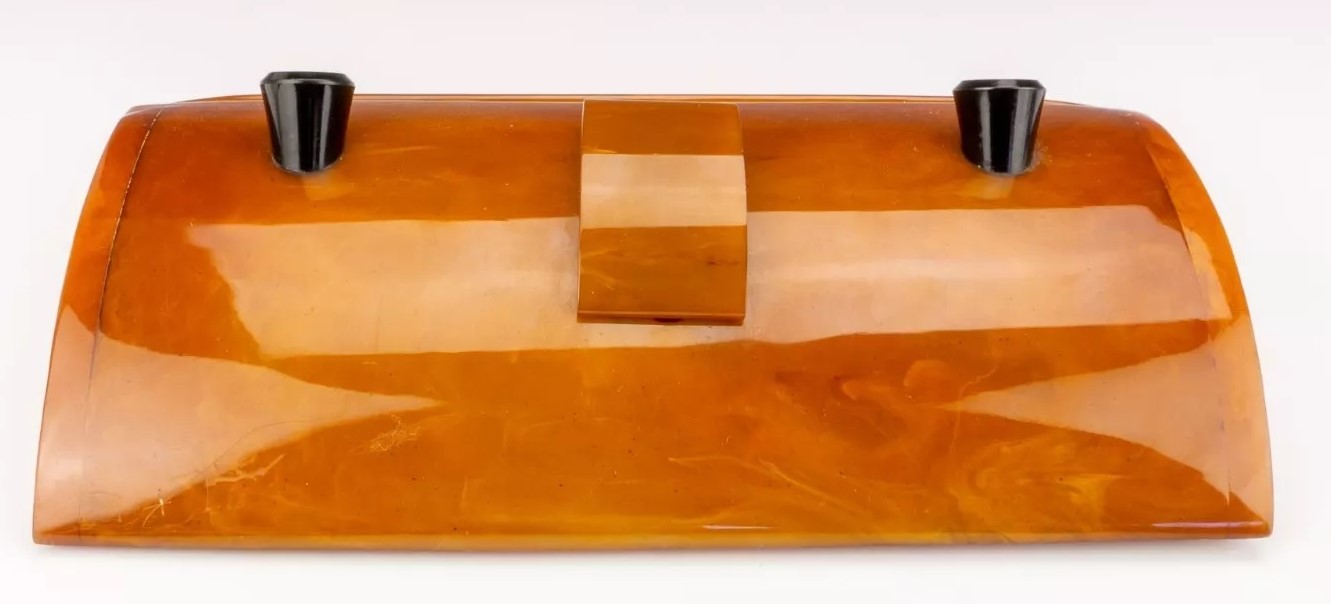
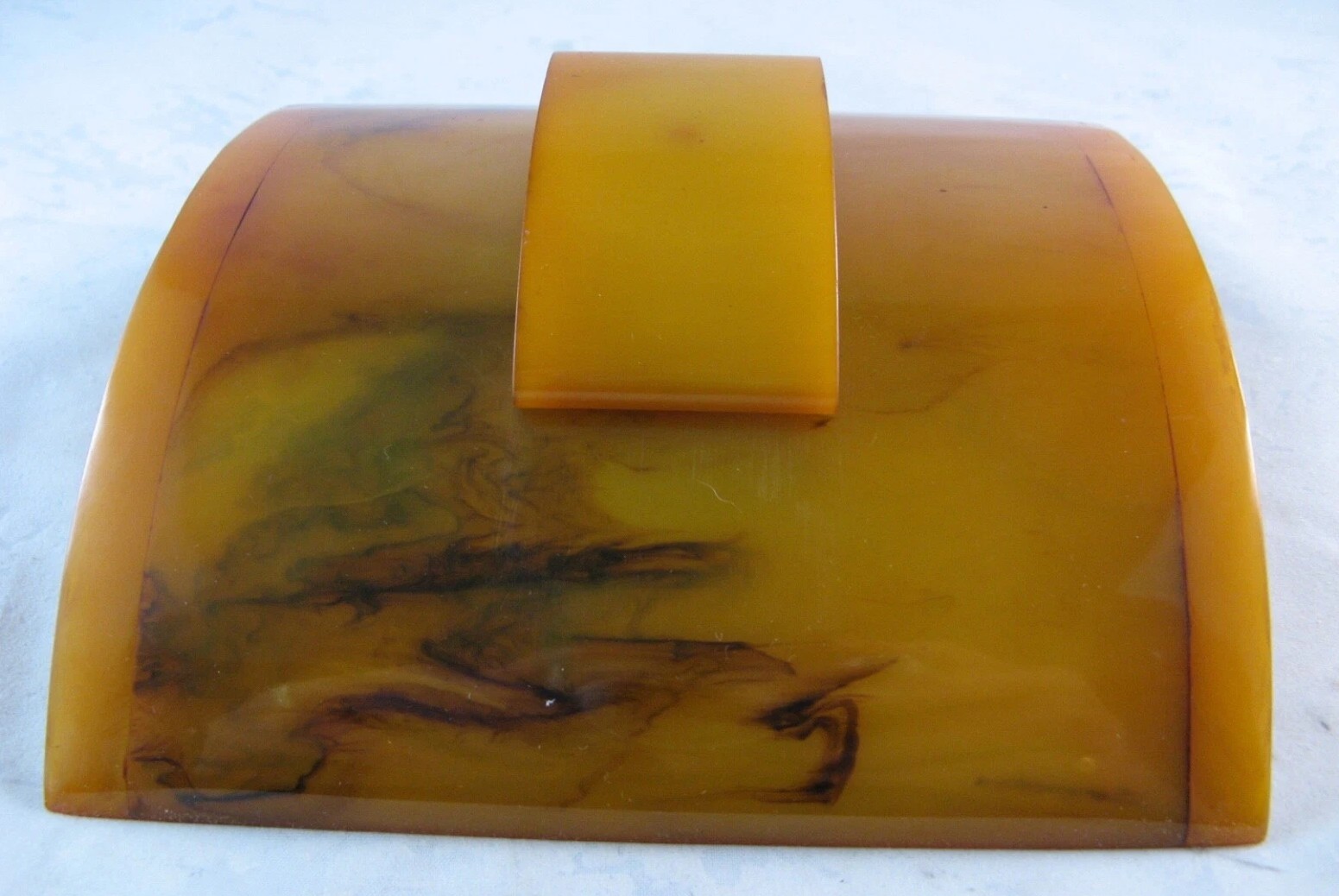
This butterscotch-colored double inkstand is an exceptional example of Carvacraft’s post-war Art Deco revival. This larger model highlights the versatility of the line and the specific functional needs of a mid-century desk.
Design & Aesthetic
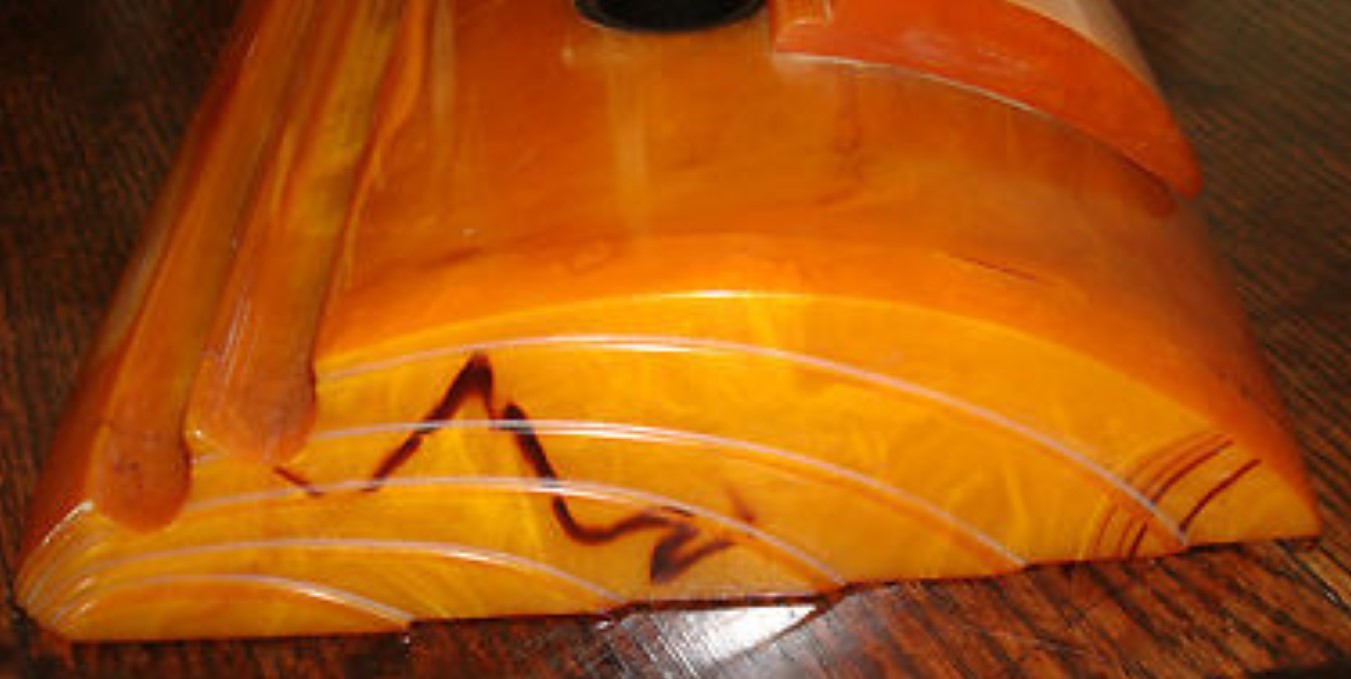
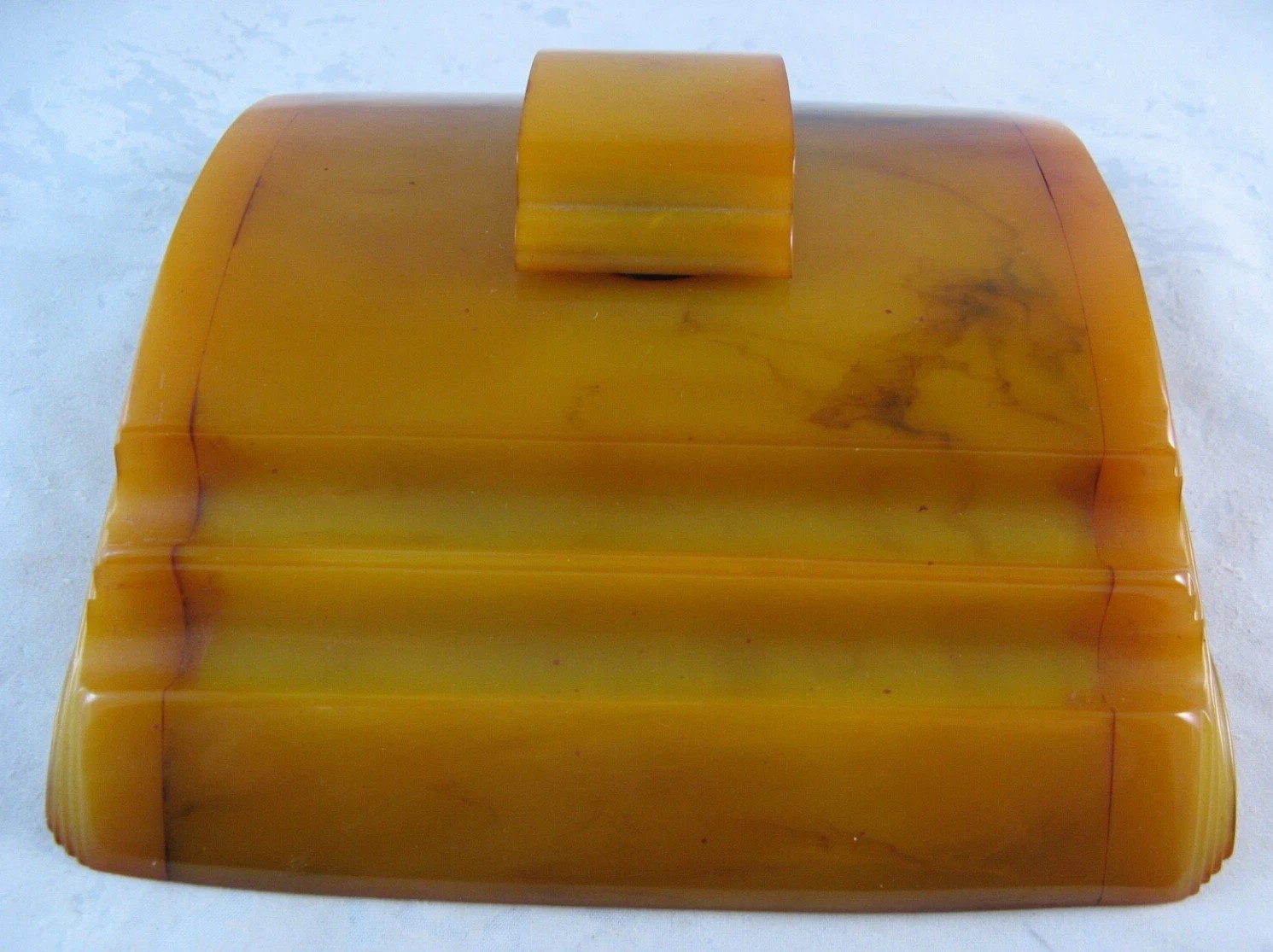
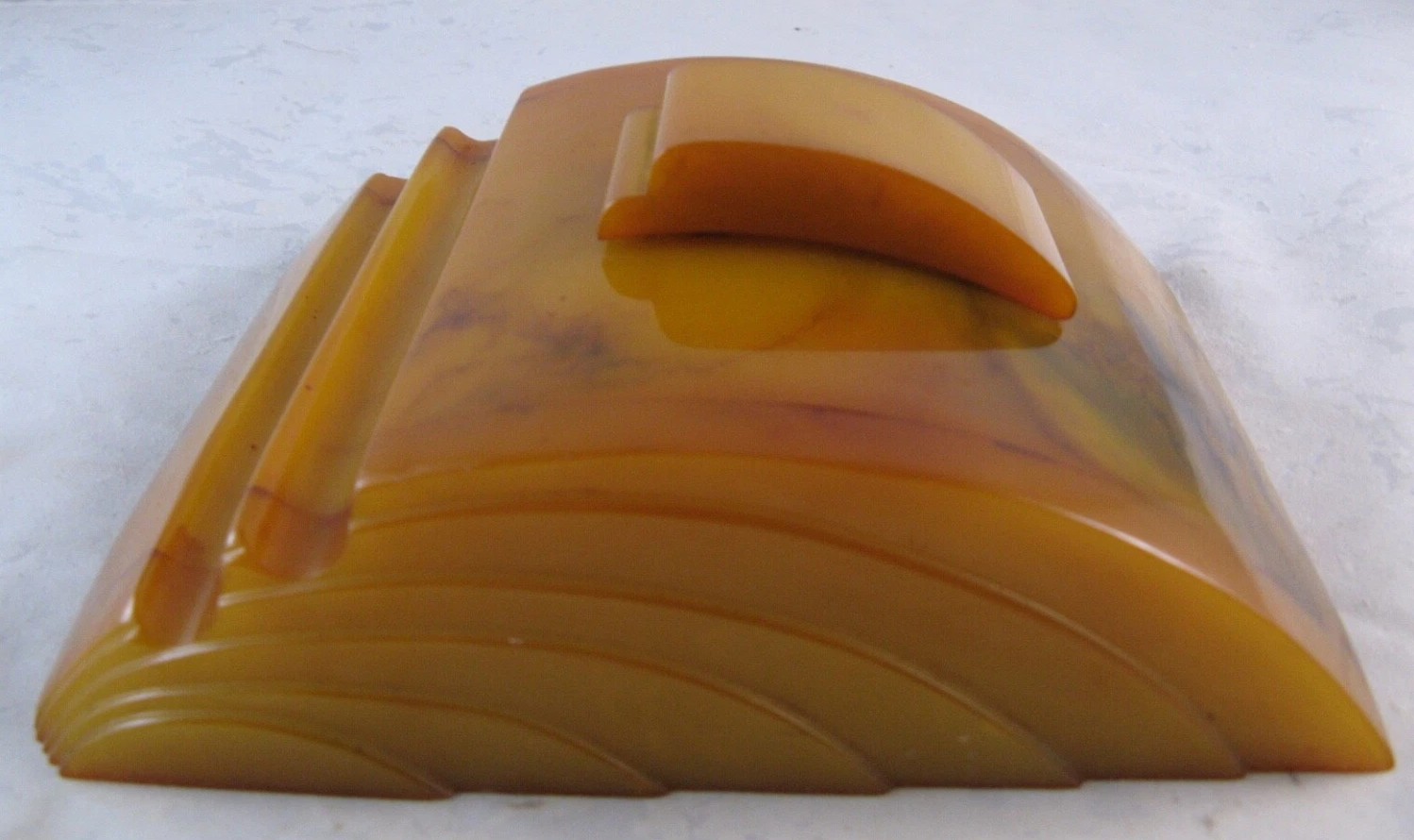
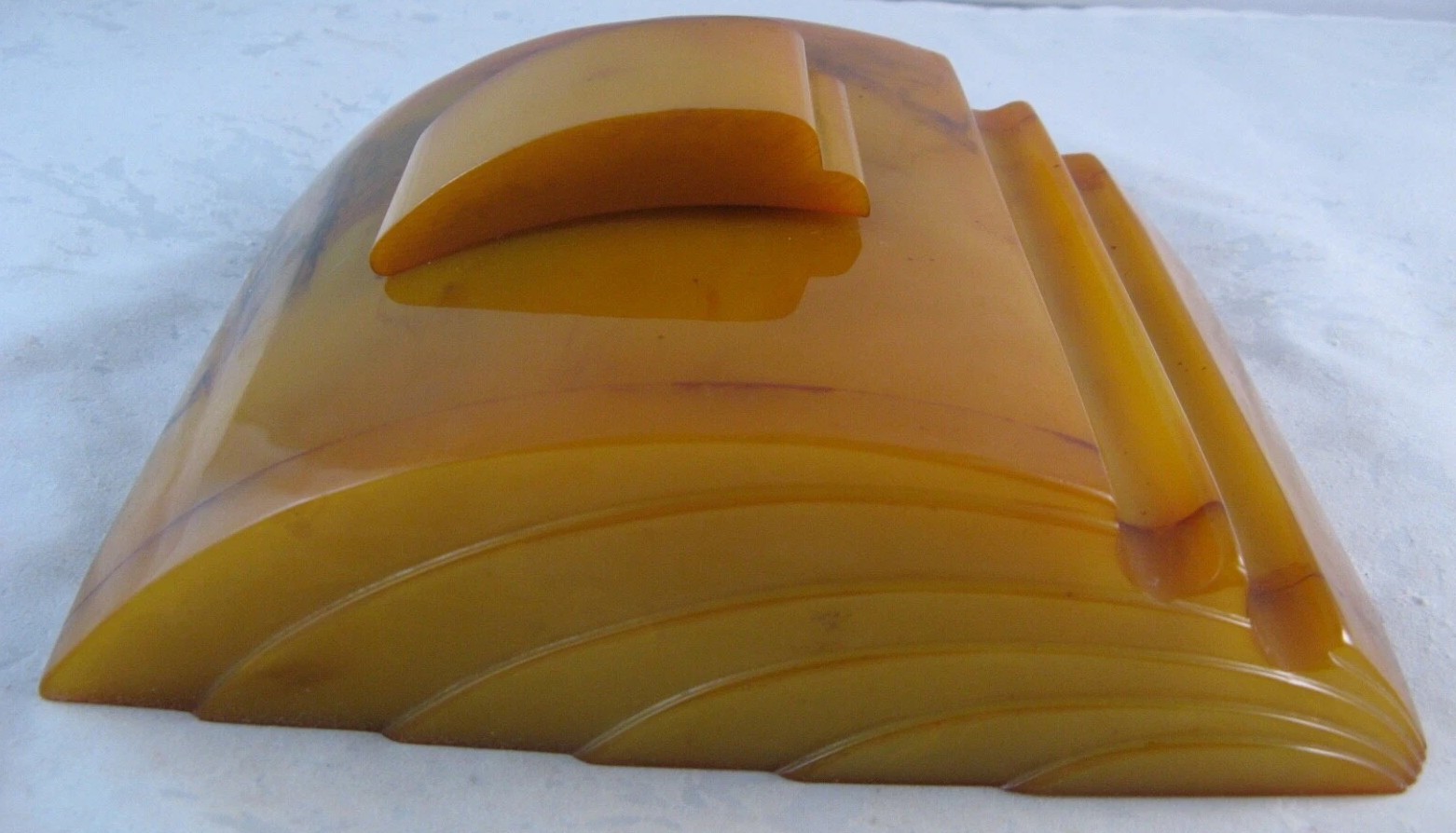
The inkstand features the signature Streamline Moderne “Odeon” style, characterized by the stepped ziggurat arcs on the sides and front. The material is a translucent, marbled butterscotch Catalin, a color highly prized by collectors today. The swirled amber and cream tones were intended to mimic natural substances like tortoiseshell or honeyed onyx, giving the desk set a warm, luxury feel.
The Manufacturer: A Stationery Giant’s Pivot
The Carvacraft line was produced by John Dickinson & Co. Ltd., a titan of the British paper industry known for Basildon Bond stationery.
- The Origin: While the aesthetic is purely 1930s Art Deco, these pieces were launched in 1948. The design is attributed to Charles Boyton, a celebrated silversmith whose background in luxury metalwork is evident in the precise, architectural lines of the resin.
- Post-War Innovation: After shifting production to support the war effort in the early 1940s, Dickinson & Co. utilized their newly honed expertise in plastics to create high-end desk equipment that felt modern and substantial.
Materials: The Art of “Carved” Resin
Collectors often mistake these for Bakelite, but they are actually made of Catalin (a cast phenolic resin).
- The Casting: Unlike molded Bakelite, Catalin was cast into large blocks or sheets while liquid. This allowed the manufacturer to swirl in dyes—creating the “butterscotch” marbling—before the resin hardened.
- The Craftsmanship: Once solid, the blocks were machined, carved, and polished using techniques more common to woodworking or stone masonry than plastic manufacturing. The Carvacraft logo—a hand holding a mallet and chisel—was a deliberate choice to emphasize that these were “carved” rather than simply stamped out of a mold.
Mechanical Functionality
This “Double” model was designed for the serious professional or bookkeeper:
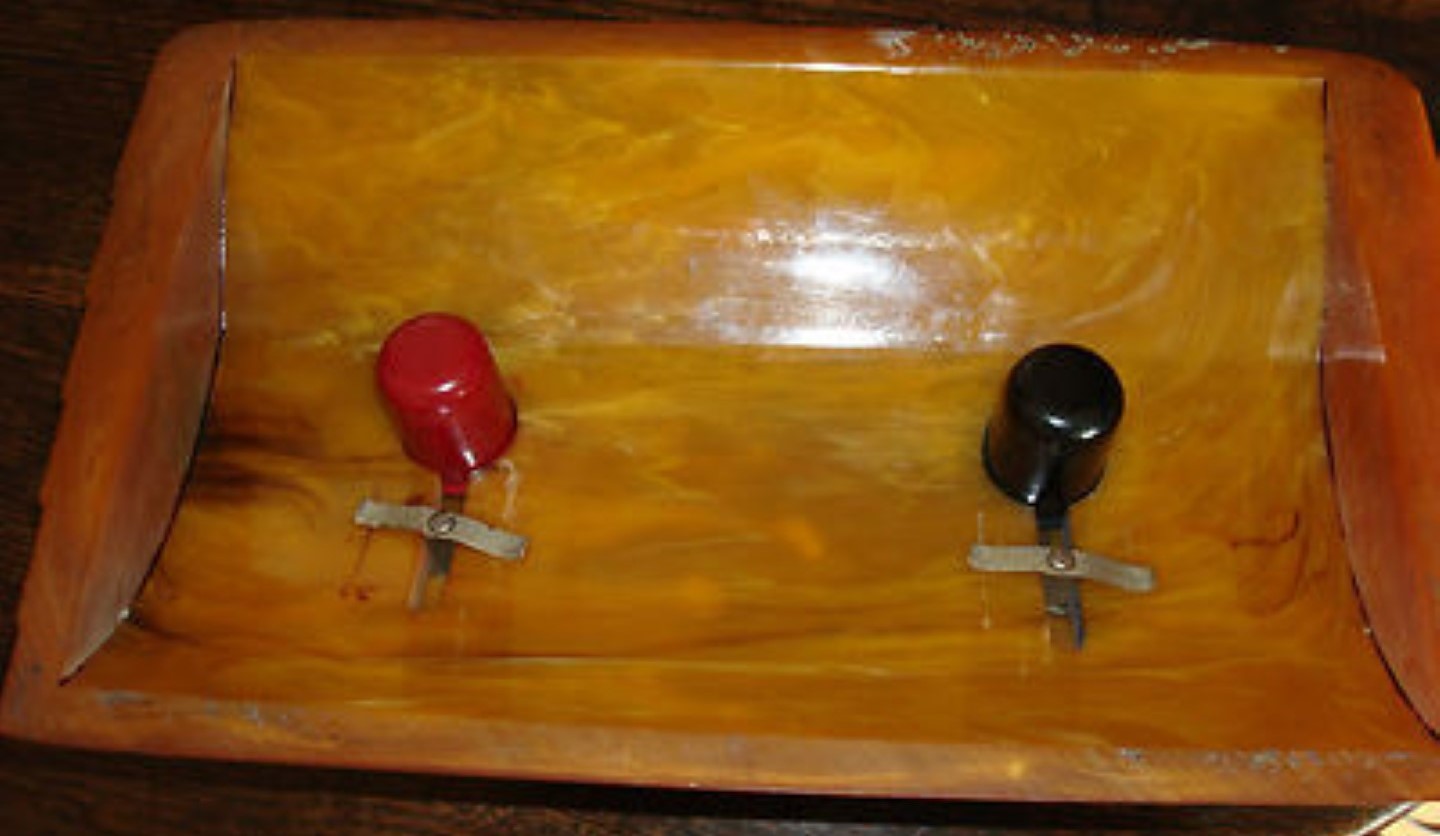
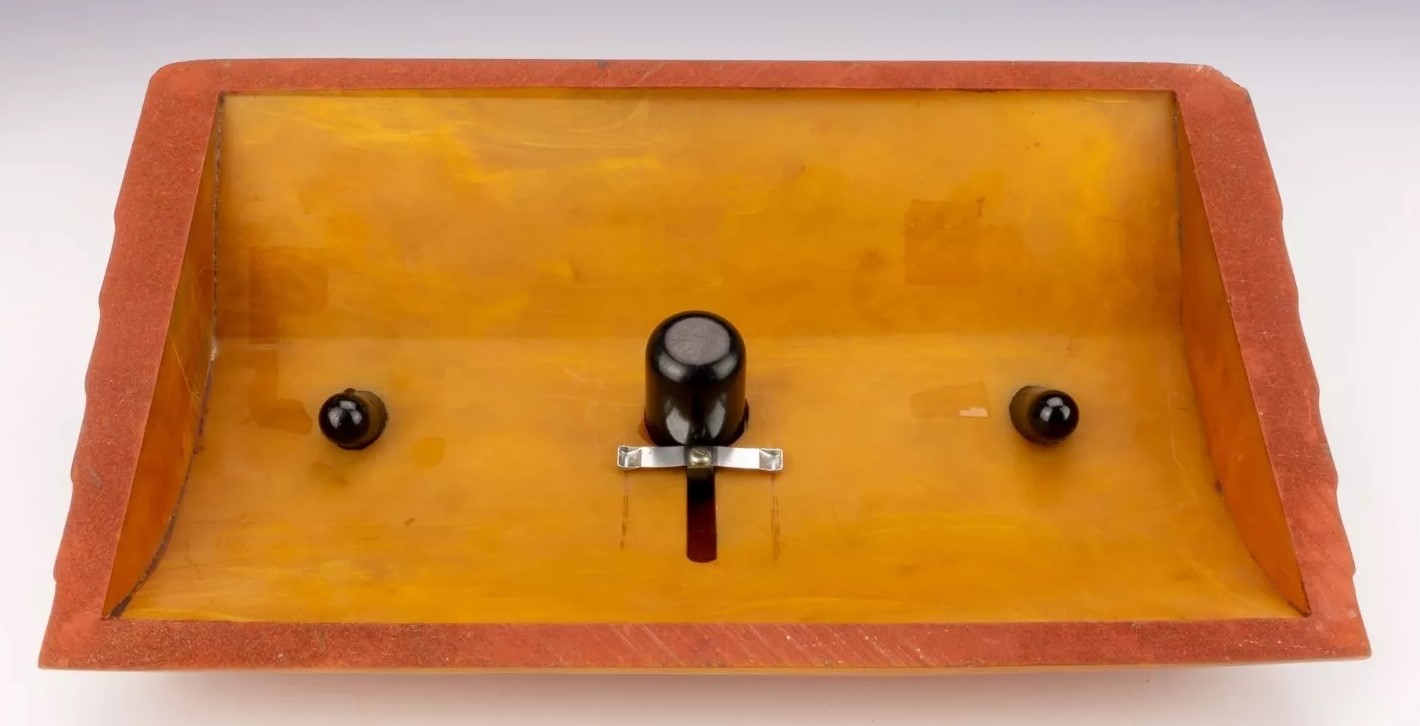
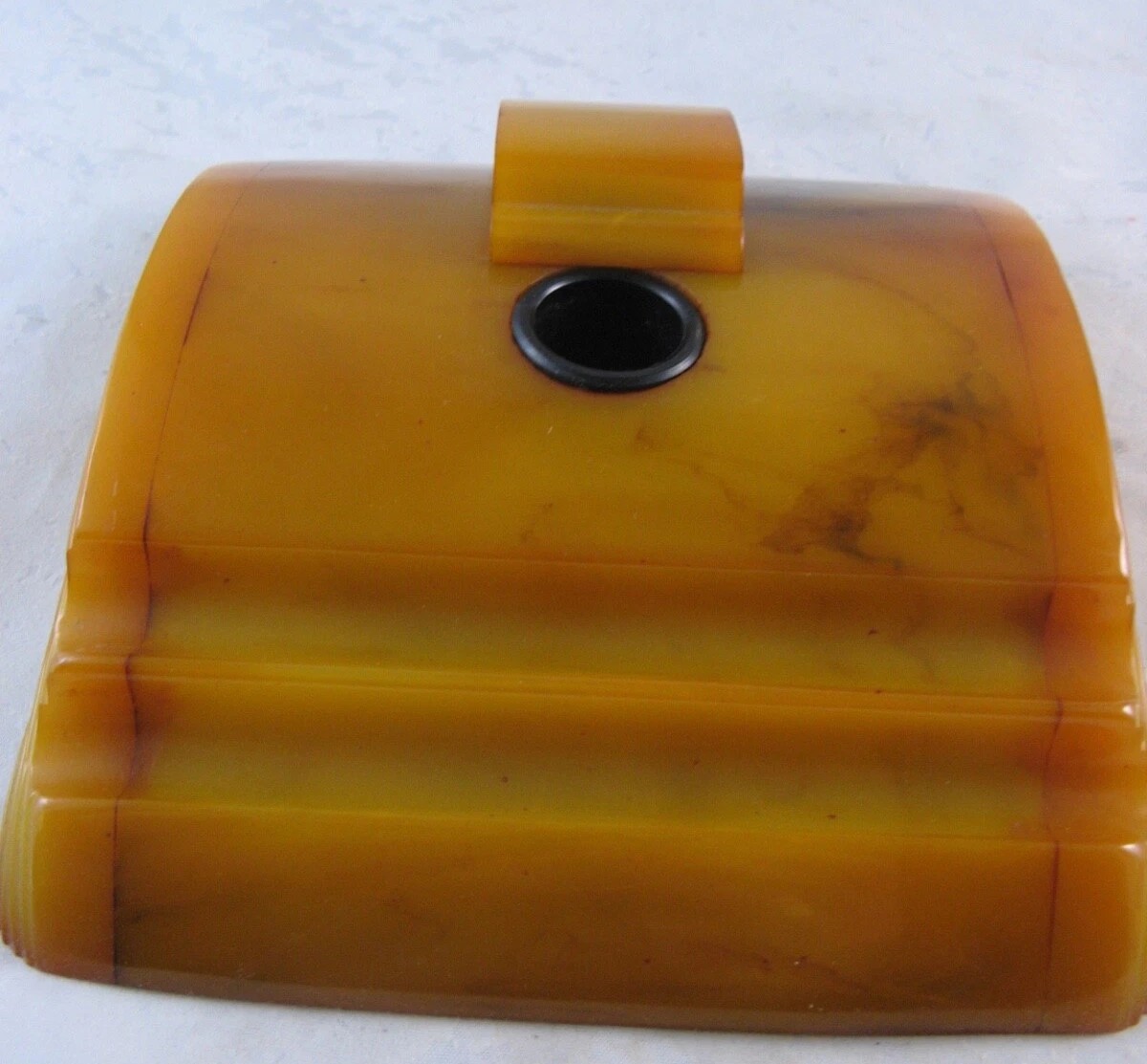
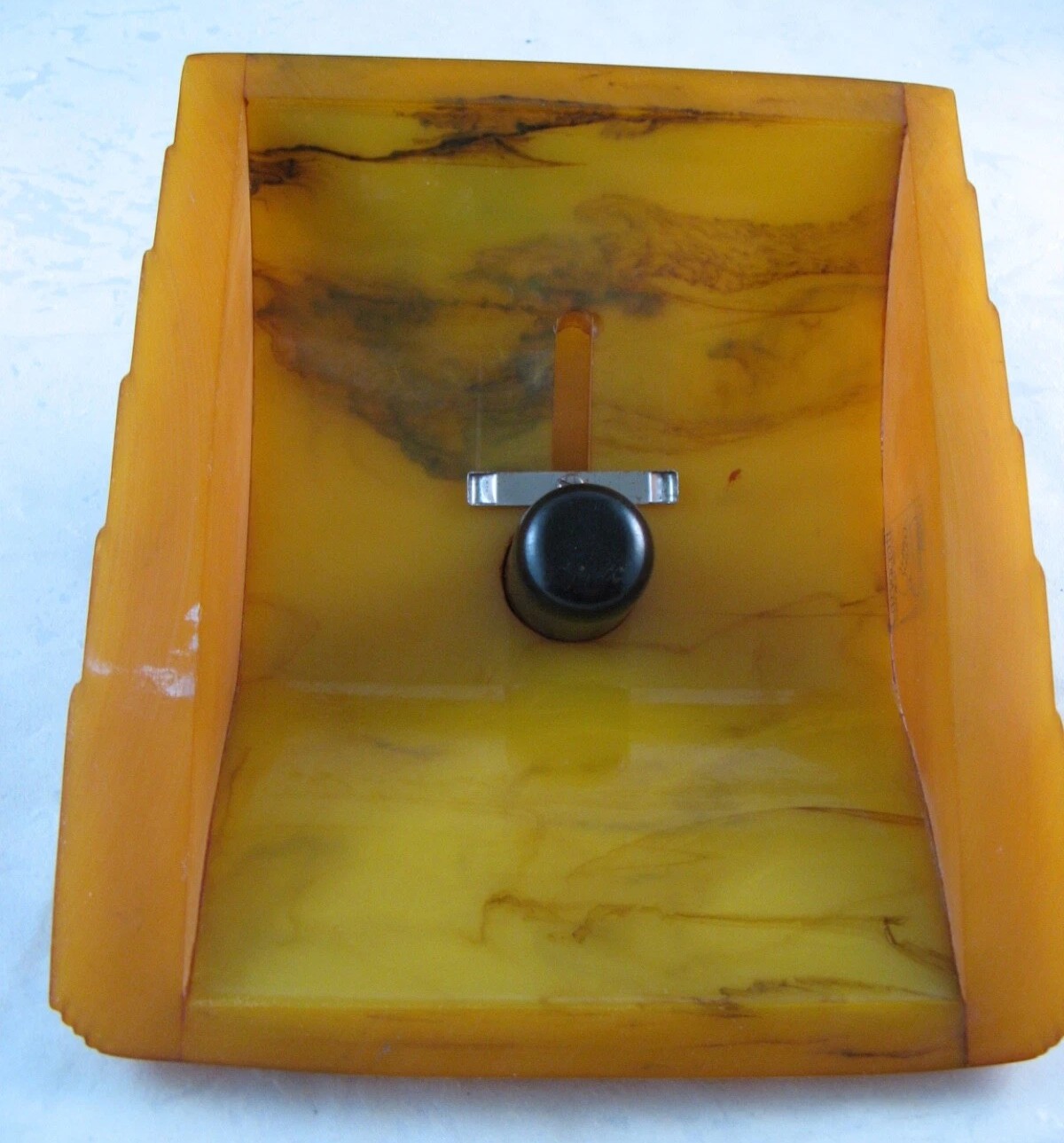
- The Sliding Lids: Each of the two rectangular lids slides independently along a central metal track.
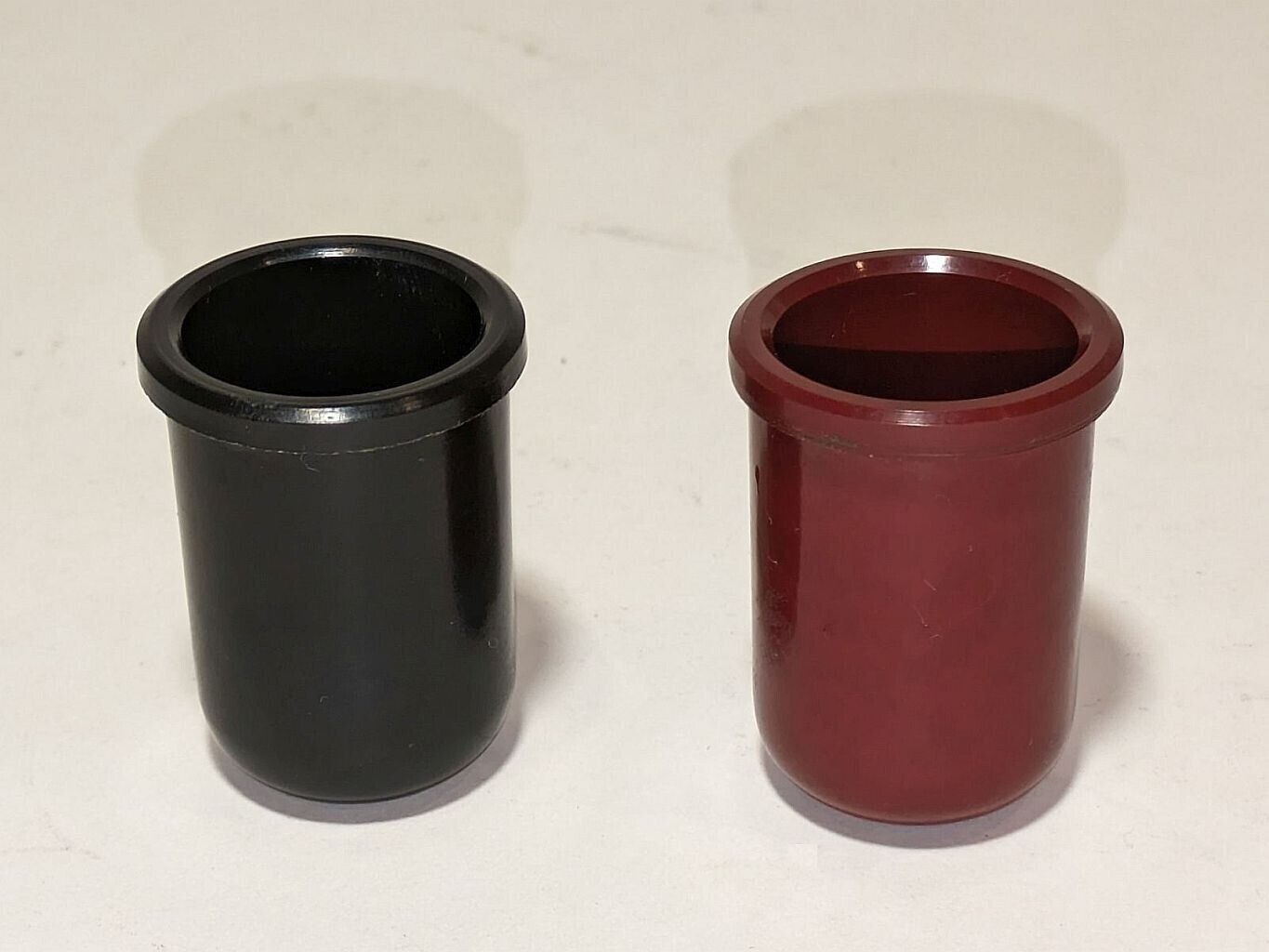
- Dual Reservoirs: Opening the lids reveals two separate ink pots. In this specific set, the inserts are color-coded: one red and one black. This allowed the user to switch seamlessly between standard correspondence and red-ink notations or bookkeeping.
- The Integrated Pen Tray: The deep grooves along the front of the base aren’t just decorative; they serve as a stepped pen rest, designed to keep multiple fountain pens or dip pens securely in place without them rolling away.
Identification Tip: The butterscotch color in Catalin is actually the result of the resin aging. When first manufactured in the late 1940s, this piece likely appeared much lighter—closer to a creamy white or “alabaster”—and has darkened into this rich, sought-after amber hue over the decades.
This double version remains one of the more impressive pieces in the Carvacraft range, perfectly bridging the gap between industrial plastic and traditional craftsmanship.
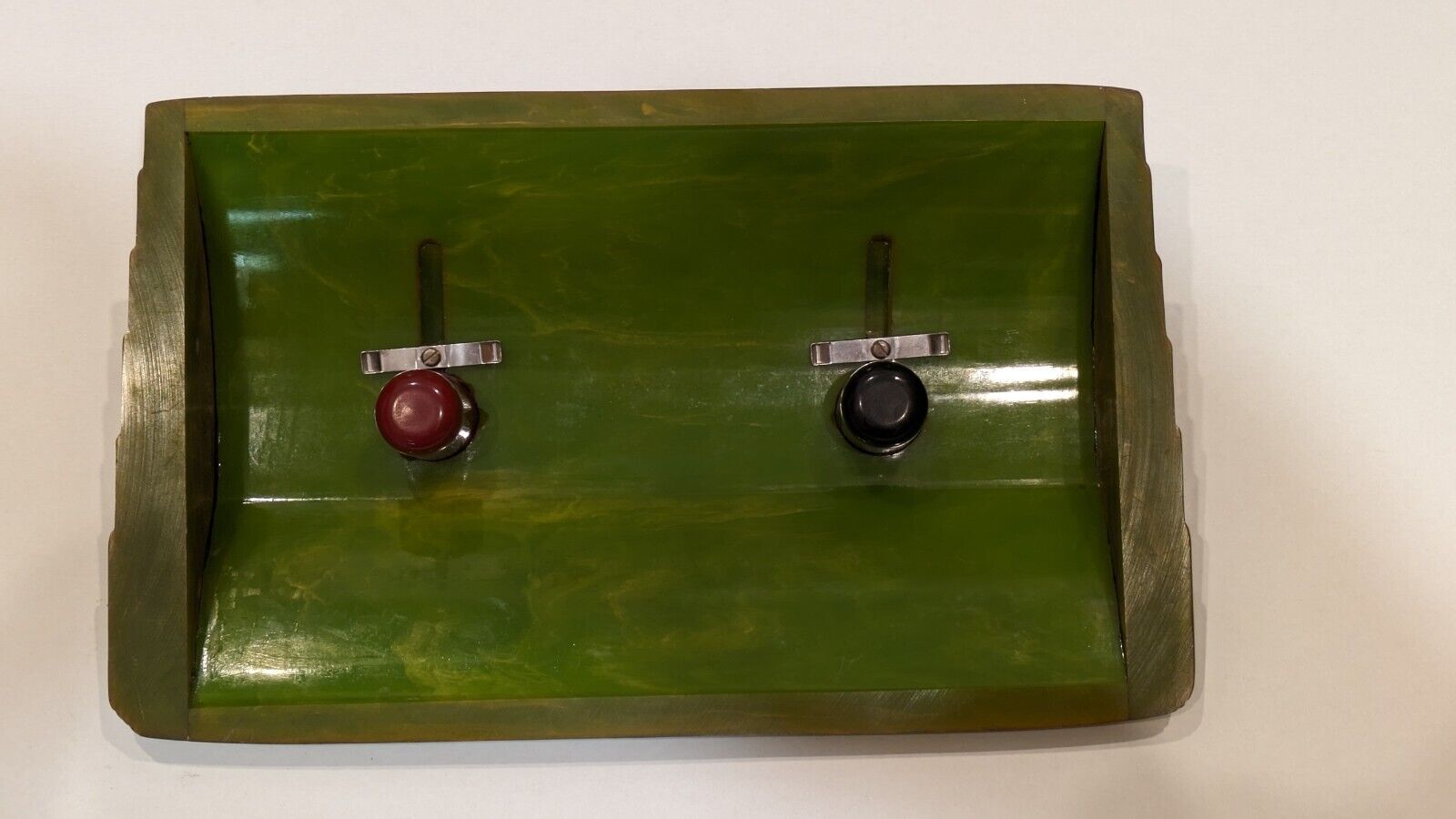
Example #2: Art Deco double inkwell in Phenolic Bakelite Catalin by Carvacraft – green with highlights in swirling orange.
Example #3: Single inkwell, two pen holders
Link to another Carvacraft Inkipedia entry: Carvacraft Marbled Green Inkwell – The Society of Inkwell Collectors (SOIC)
Sold for $450 in June 2023. Similar sold for $492 in June 2024; sold for $1000 in October 2024; similar sold for $1060 in March 2026; similar sold for $1227 in May 2026; sold for $1270 in June 2026; sold for $1982 in July 2026
Example #2 sold for $1137 in February 2024
Example #3 sold for $726 in September 2024
Example #4 ((single) sold for $518 in May 2025
Content disclaimer. The information posted is the owner’s best knowledge and may not have been vetted by the SOIC. We welcome comments, corrections, and additions, working to make our website information comprehensive and accurate.
Join the Society of Inkwell Collectors (SOIC) – it’s free!
Founded in 1981 as a non-profit organization,
we are documenting inkwells (and accessories).
We’re here to help and inform!