

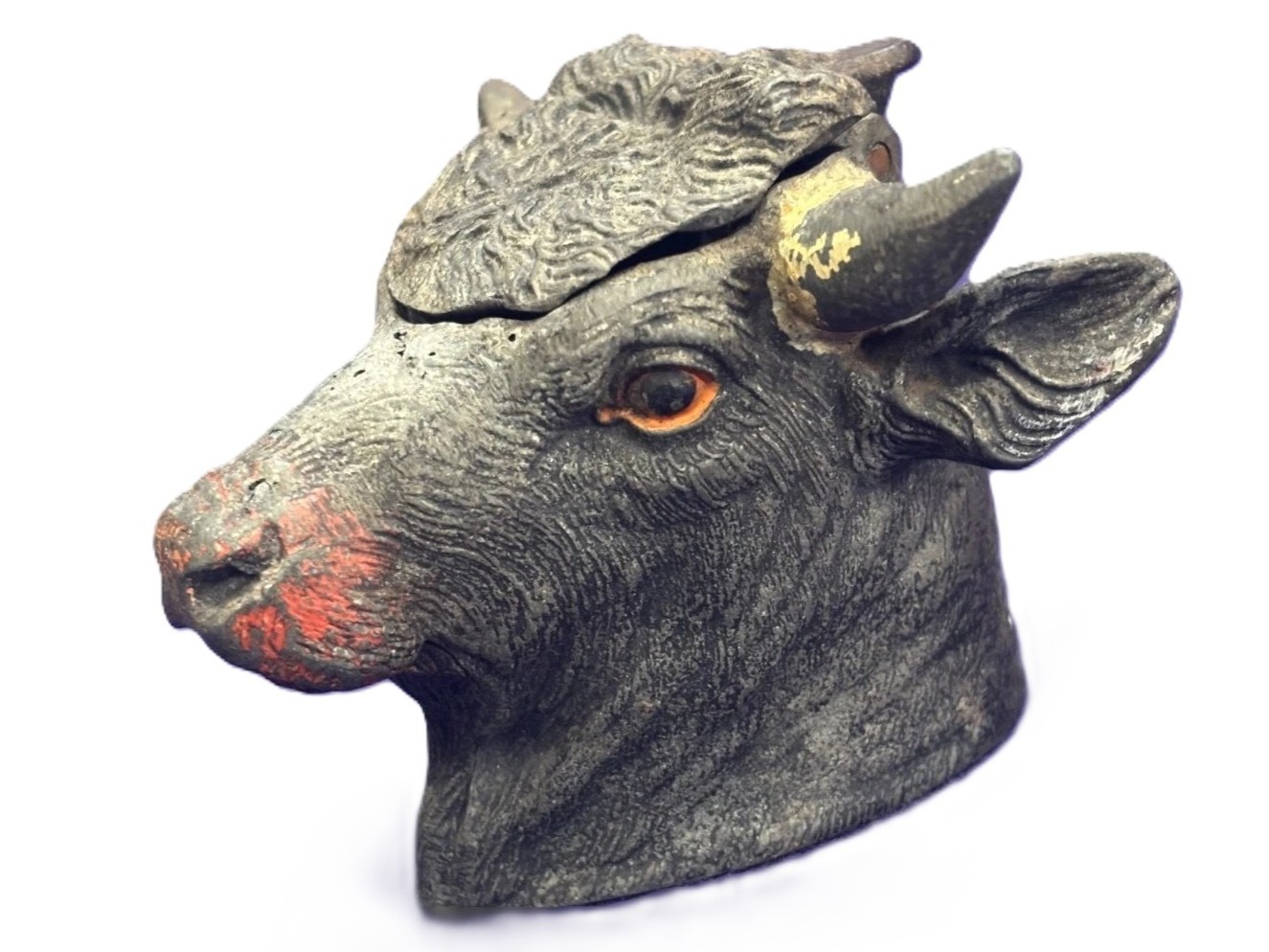
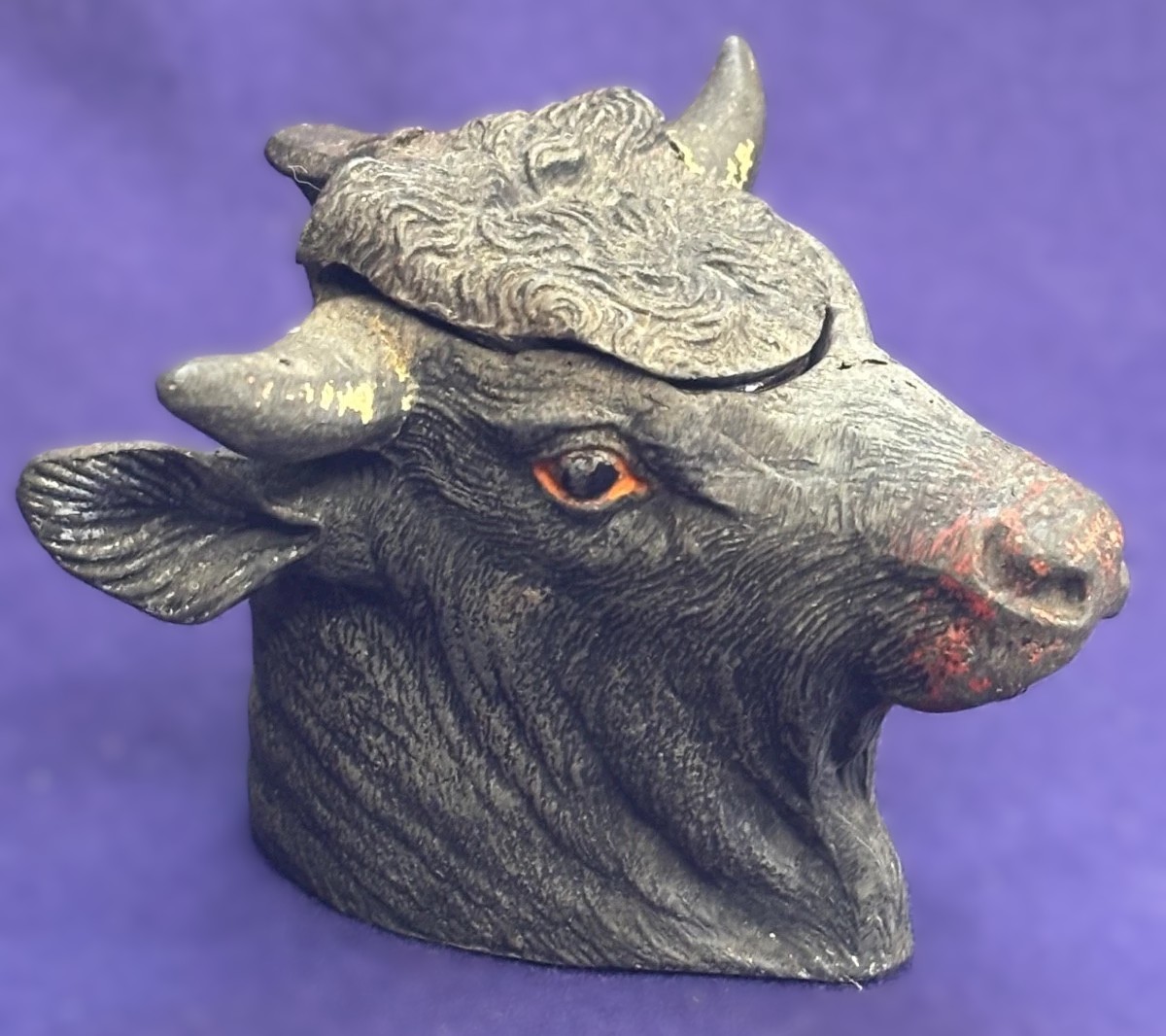
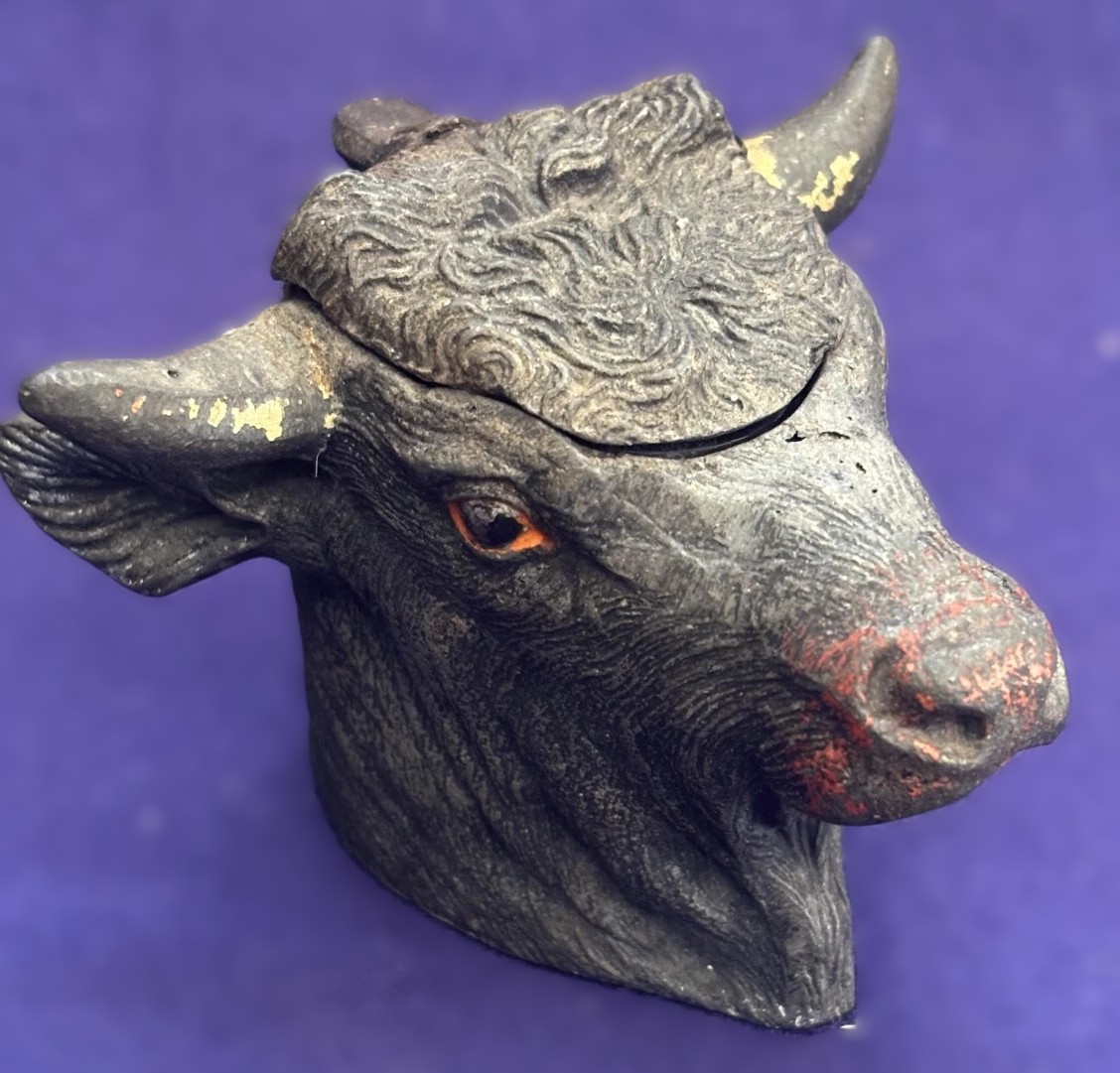
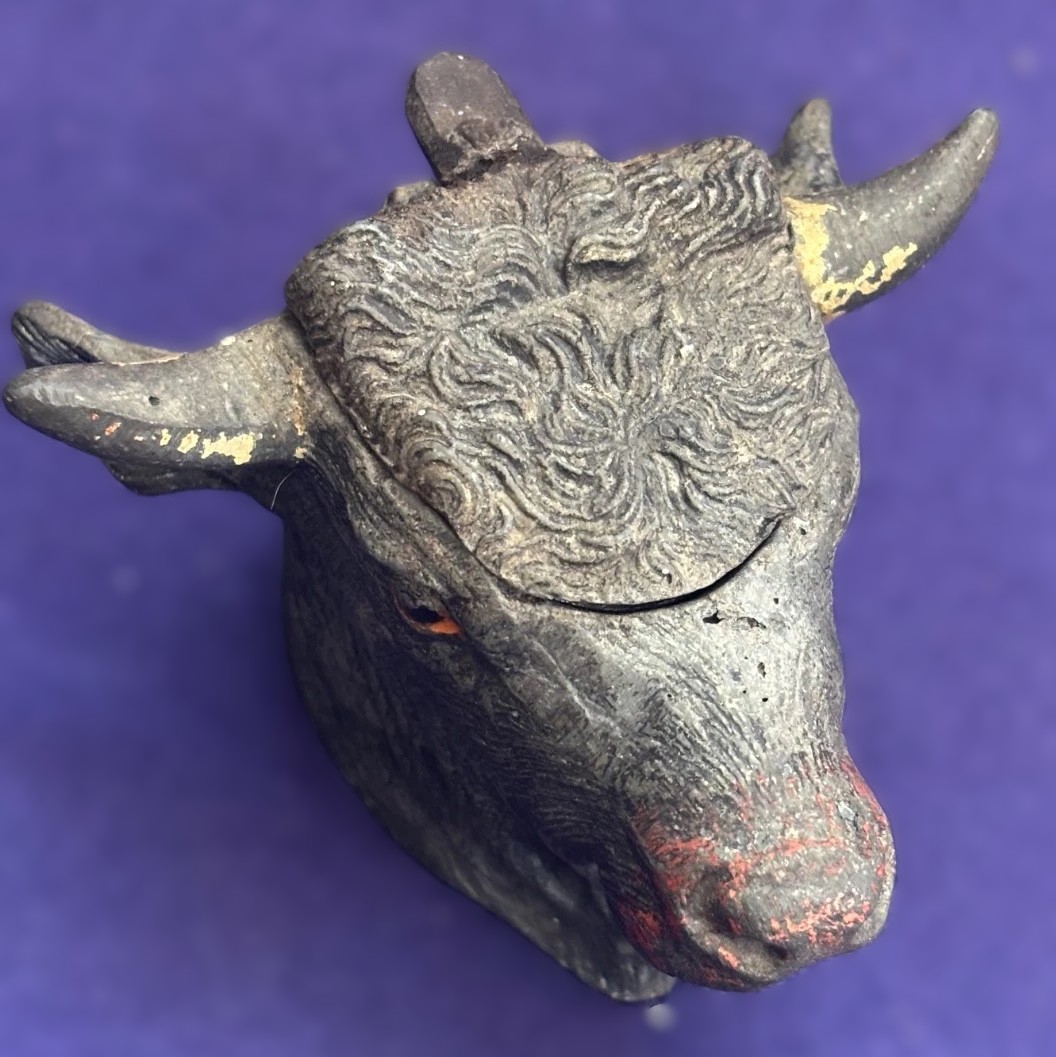
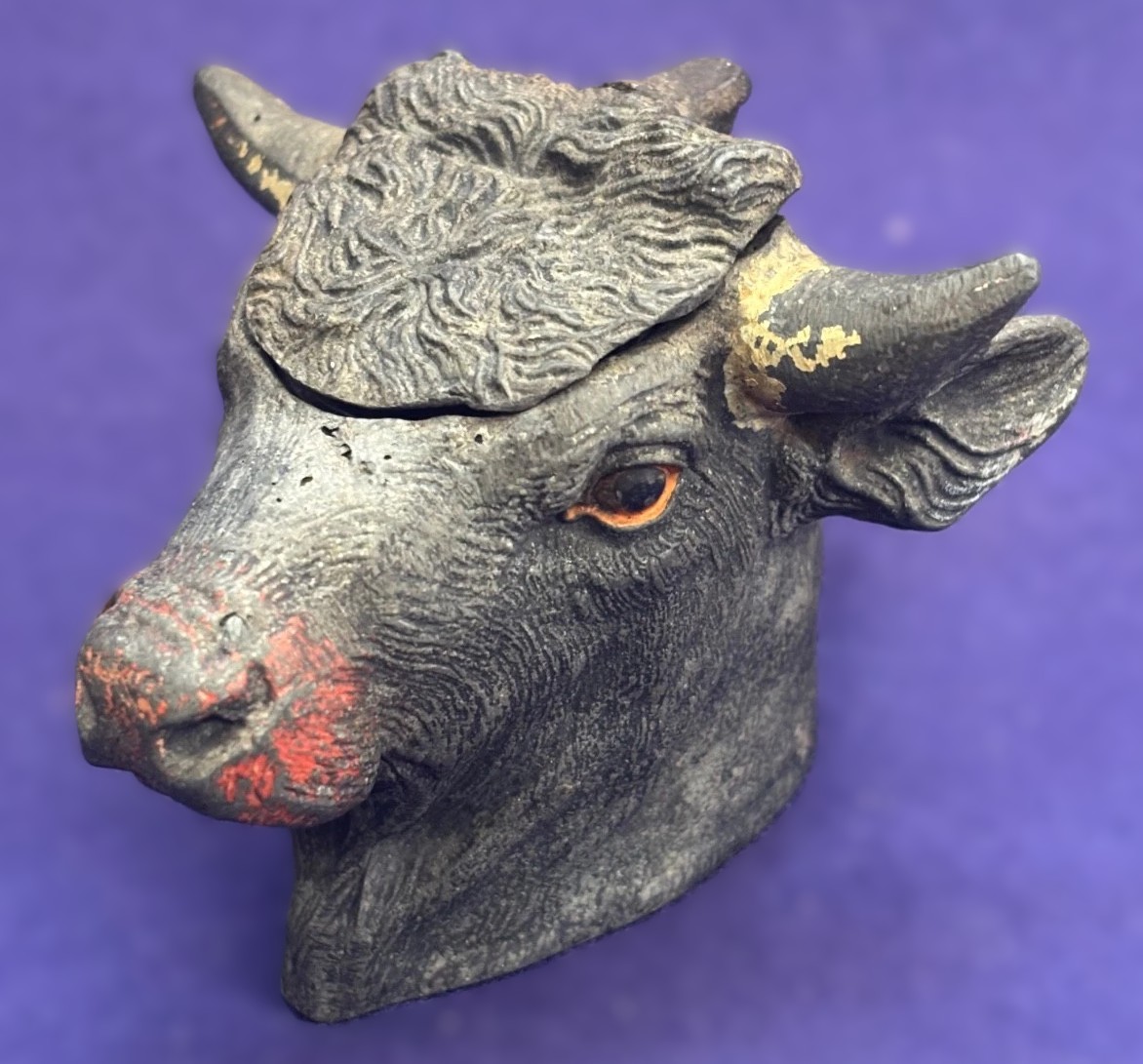
Bull’s (Steer’s) Head Inkwell
| Categories | Figural - Animals & Living Creatures |
| Type | Bull |
| Material | Spelter |
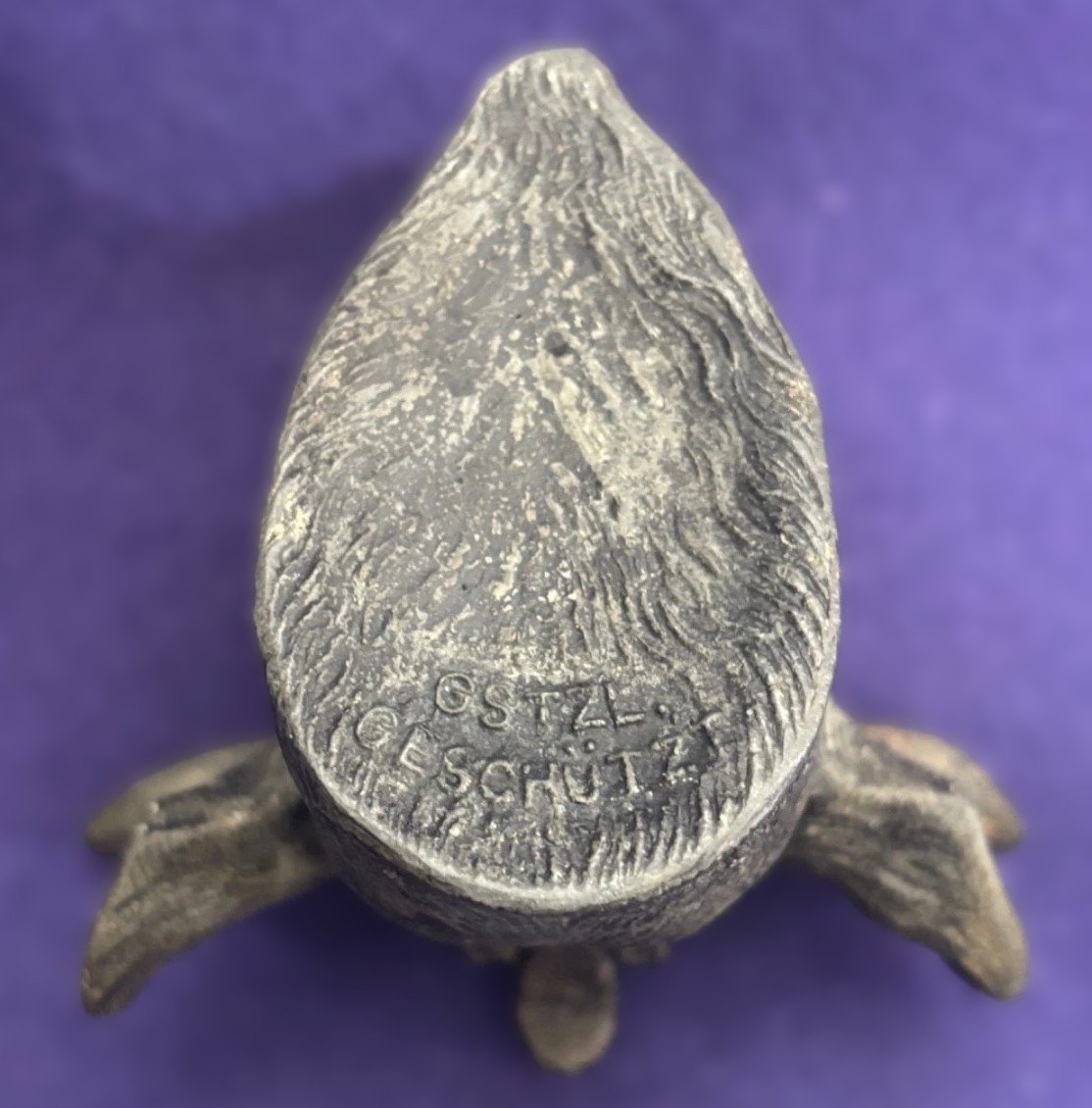
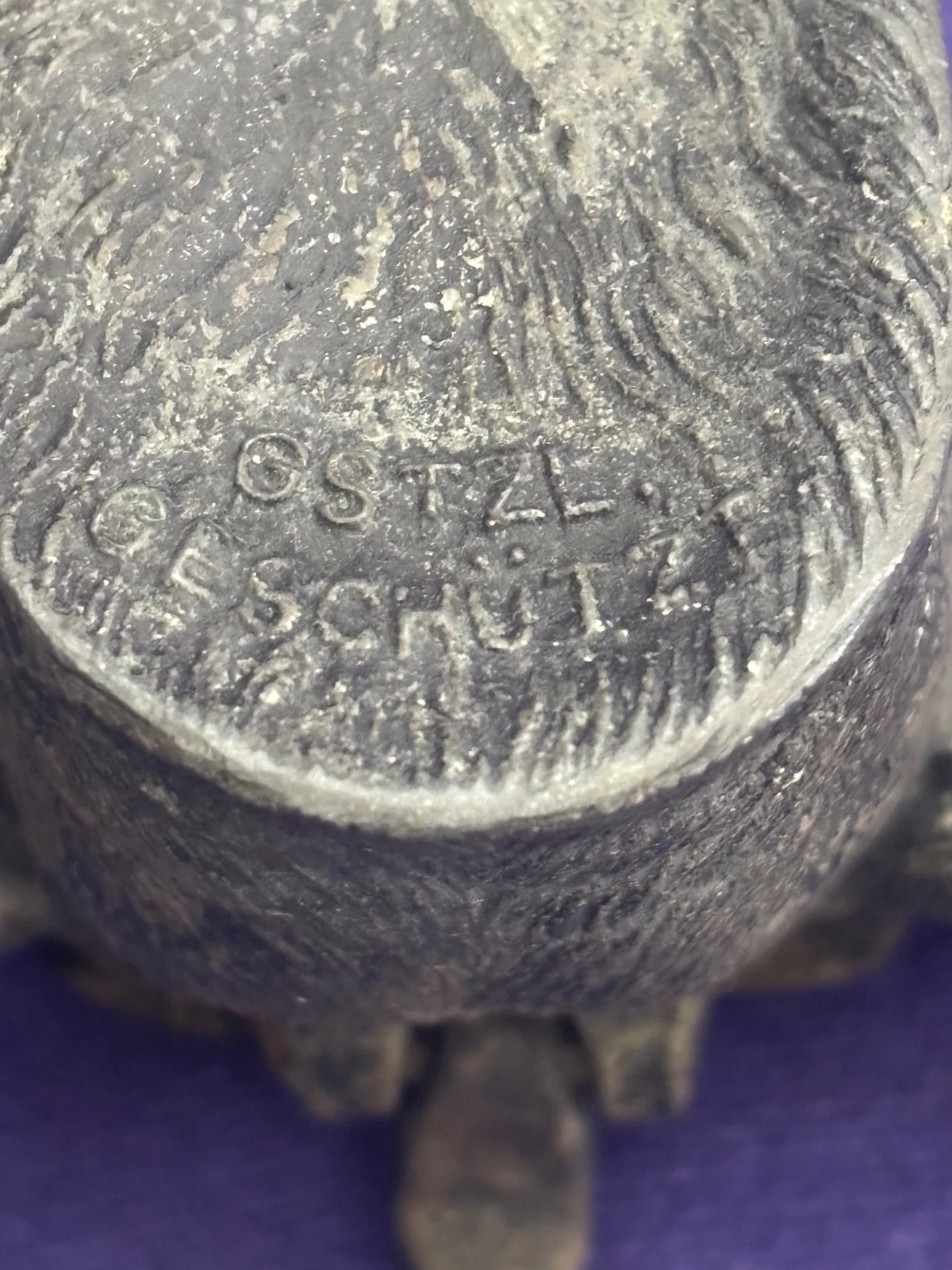
| Markings | See Narrative |
| Manufacturer | Undetermined |
| Origin | Undetermined |
| Date or Era | circa 1900 |
| Measuring | 3 ½” across; 2 ⅝” high |
Description
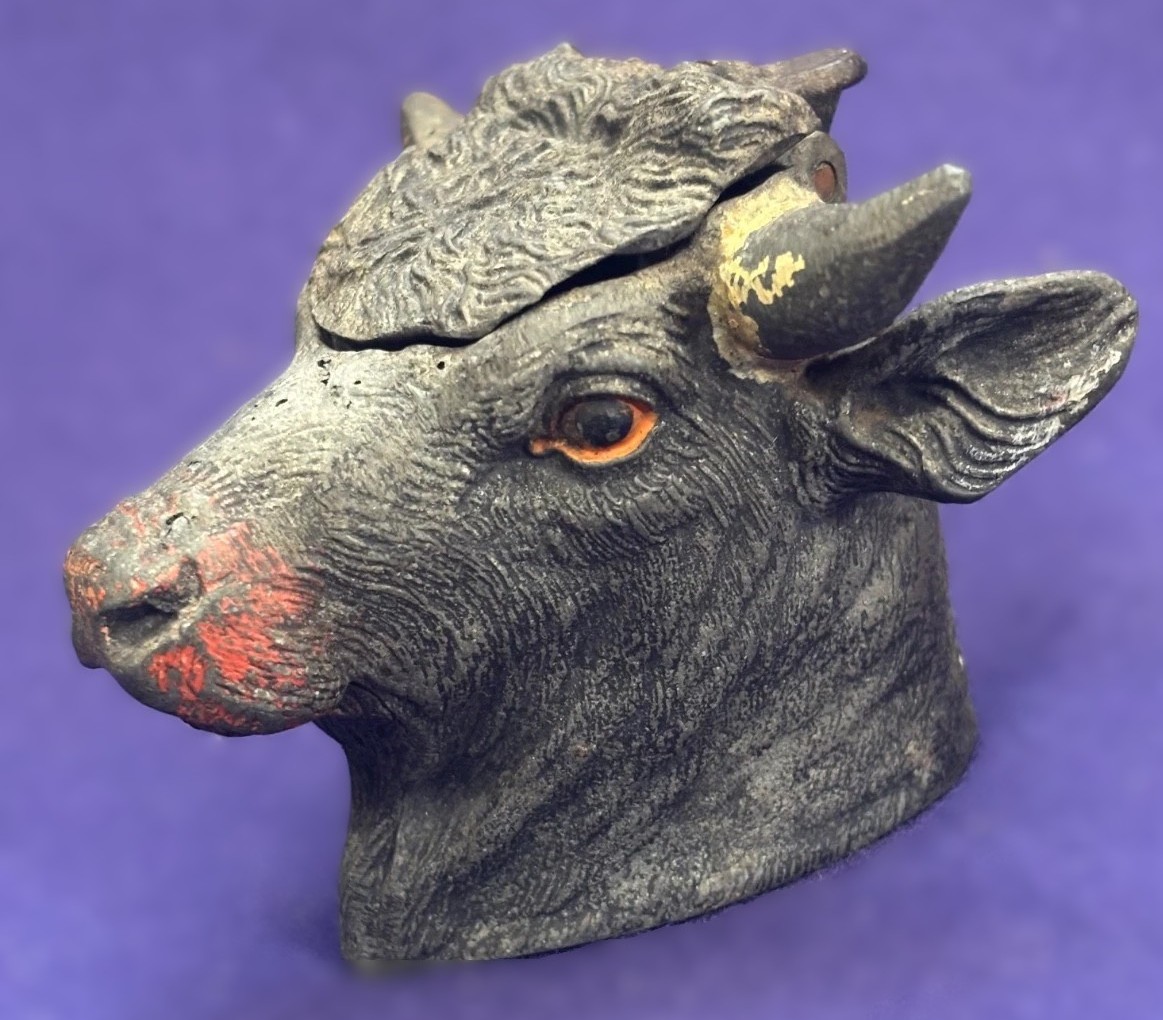
This figural inkwell takes the form of a detailed bull’s (or steer’s) head. Cast in spelter metal with cold-painted polychrome accents, it features:
- Textured Details: Impressive rendering of the animal’s hide, neck muscle folds, textured ears, and realistic horns.
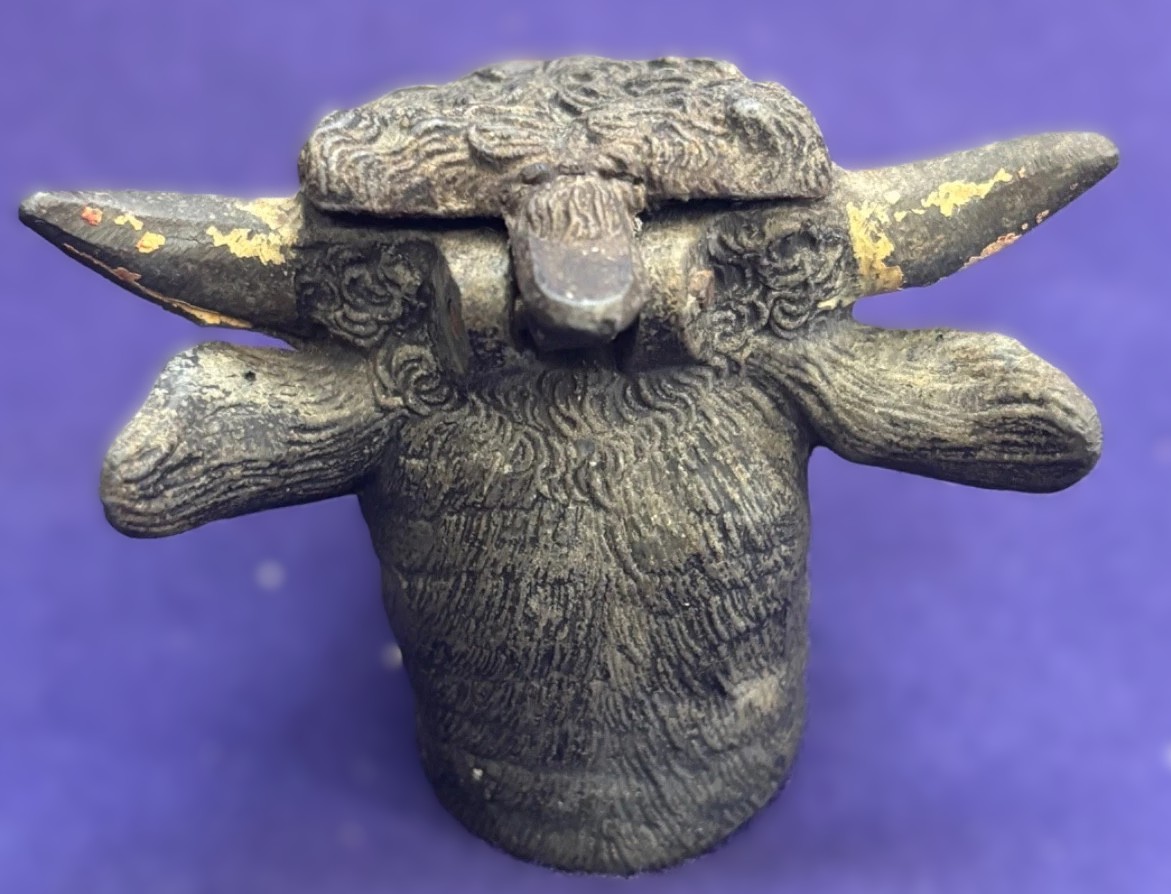
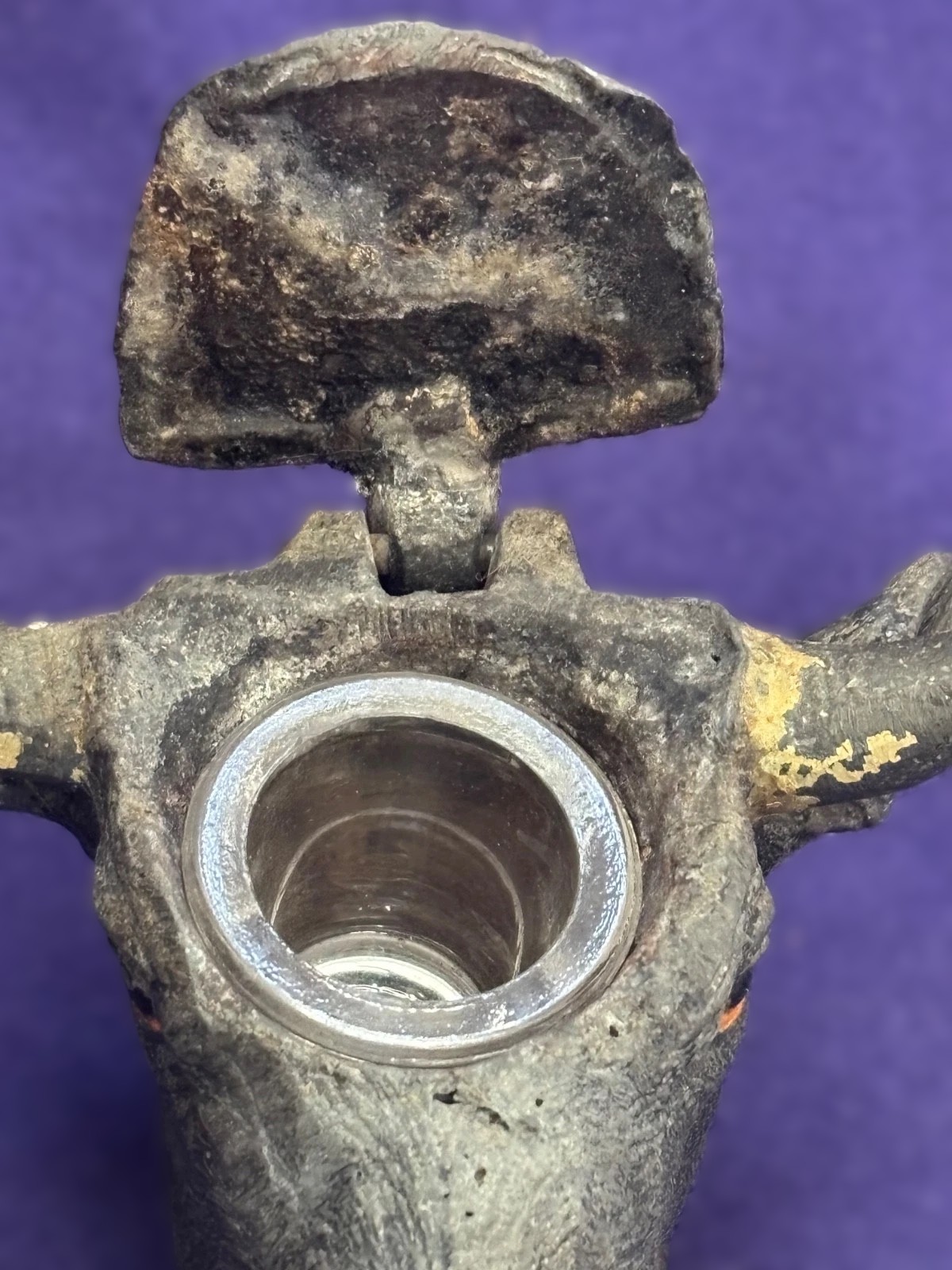
- The Hinged Lid: The top of the head—featuring intricately textured, curly forehead hair—is hinged at the back. When opened, it reveals the interior compartment housing a removable glass insert.
- Coloration: Traces of original cold-painted decoration remain, including amber-orange eyes and reddish-pink accents around the snout.
Origin: Germany or Austria?
The marking “GSTZL. GESCHÜTZT” provides a clear answer regarding its geographic origin.
- Gesetzlich Geschützt is a German phrase meaning ” legally protected” (essentially equivalent to “Registered Design” or “Patent Protected”).
- While the term is German, the abbreviation “GSTZL.” combined with Geschützt is extremely characteristic of decorative metalware, cold-painted bronzes, and desk accessories produced during the late 19th and early 20th centuries in both Germany and Austria (particularly Vienna, which was renowned for figural animal bronzes).
- Because Austria and Germany shared language, legal marking conventions, and closely integrated artistic metal foundry industries during this era, items bearing this mark are generally attributed broadly to Austrian or German manufacture (with Vienna, Austria, being the most common hub for high-end figural inkwells of this specific style).
When Was It Made?
This inkwell dates from the late 19th to early 20th century, specifically circa 1880–1910.
- Why this timeframe? The use of the Gesetzlich Geschützt intellectual property mark became widespread on decorative arts, cast metal, and novelty items following late-19th-century trade and patent law updates in Central Europe. Furthermore, figural animal inkwells with cold-painted finishes reached the height of their popularity and production quality during the peak of the Viennese bronze and German metal foundry eras between 1880 and the onset of World War I in 1914.
Sold for $205 in September 2026
Content disclaimer. The information posted is the owner’s best knowledge and may not have been vetted by the SOIC. We welcome comments, corrections, and additions, working to make our website information comprehensive and accurate.
Join the Society of Inkwell Collectors (SOIC) – it’s free!
Founded in 1981 as a non-profit organization,
we are documenting inkwells (and accessories).
We’re here to help and inform!