


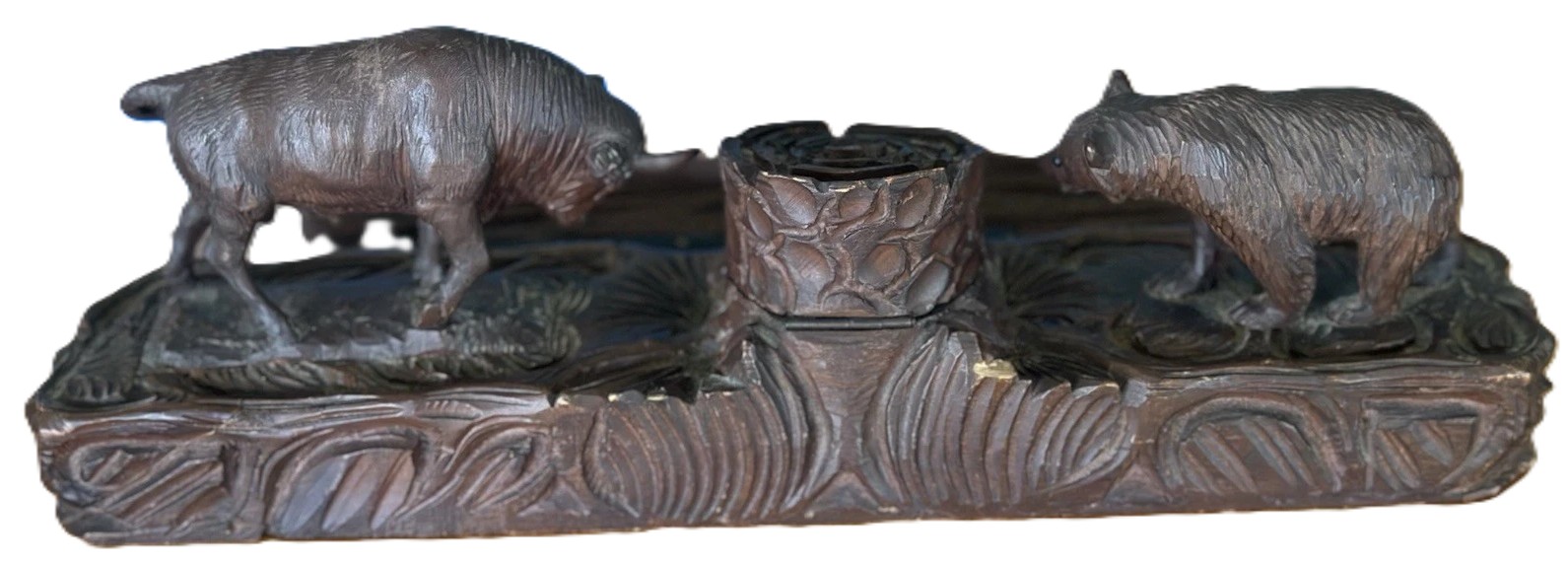



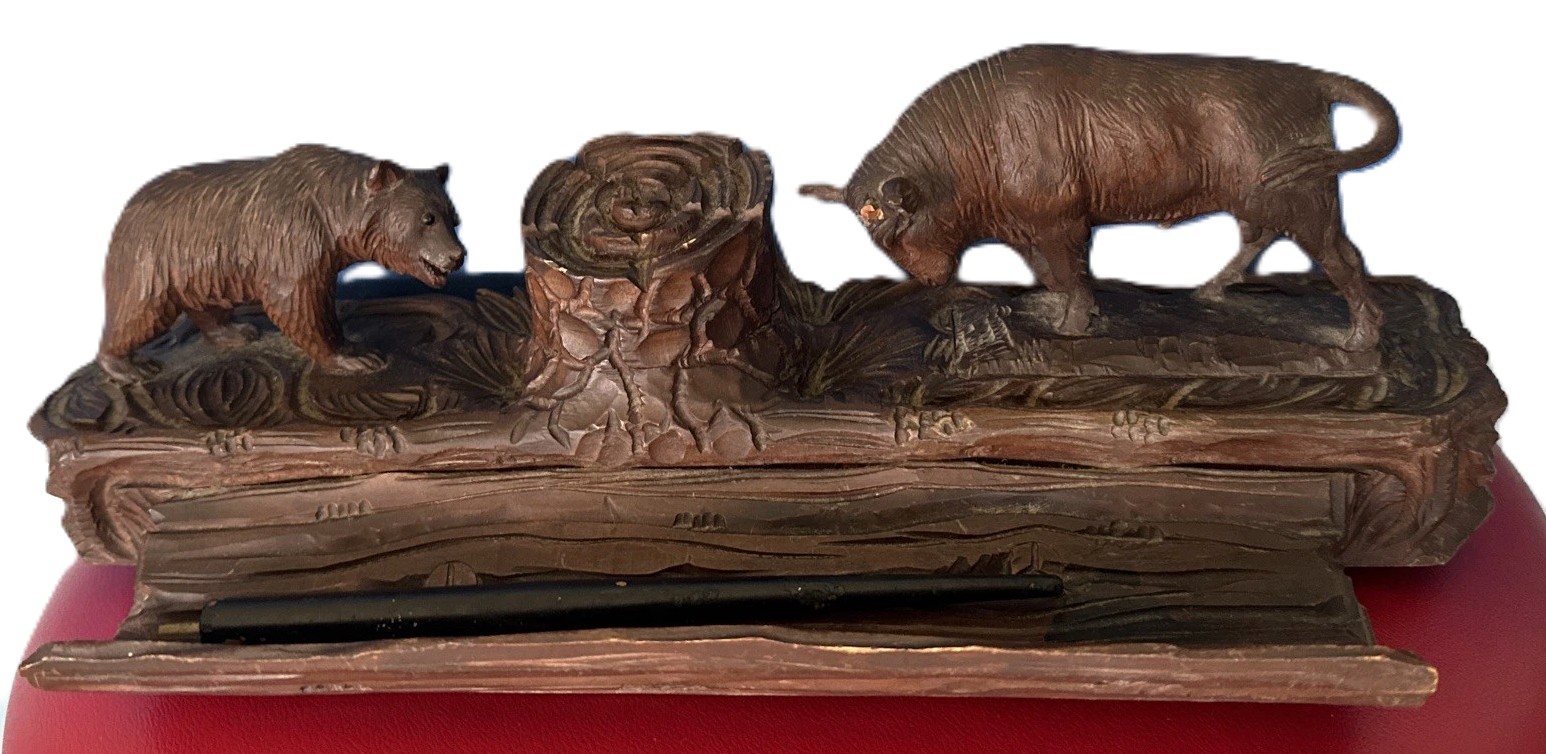
Bull & Bear – Black Forest Inkstand
| Categories | Figural - Animals & Living Creatures |
| Type | Bull, Bear |
| Material | Wood |
| Markings | Unmarked |
| Manufacturer | Black Forest |
| Origin | Germany |
| Date or Era | circa 1900 |
| Measuring | 13” x 4 ¾” x 4” high |
The Carving: Black Forest Style
The piece is characteristic of the Black Forest (Brienzerware) carving tradition that flourished in Switzerland and Germany during the late 19th and early 20th centuries (c. 1880–1910).
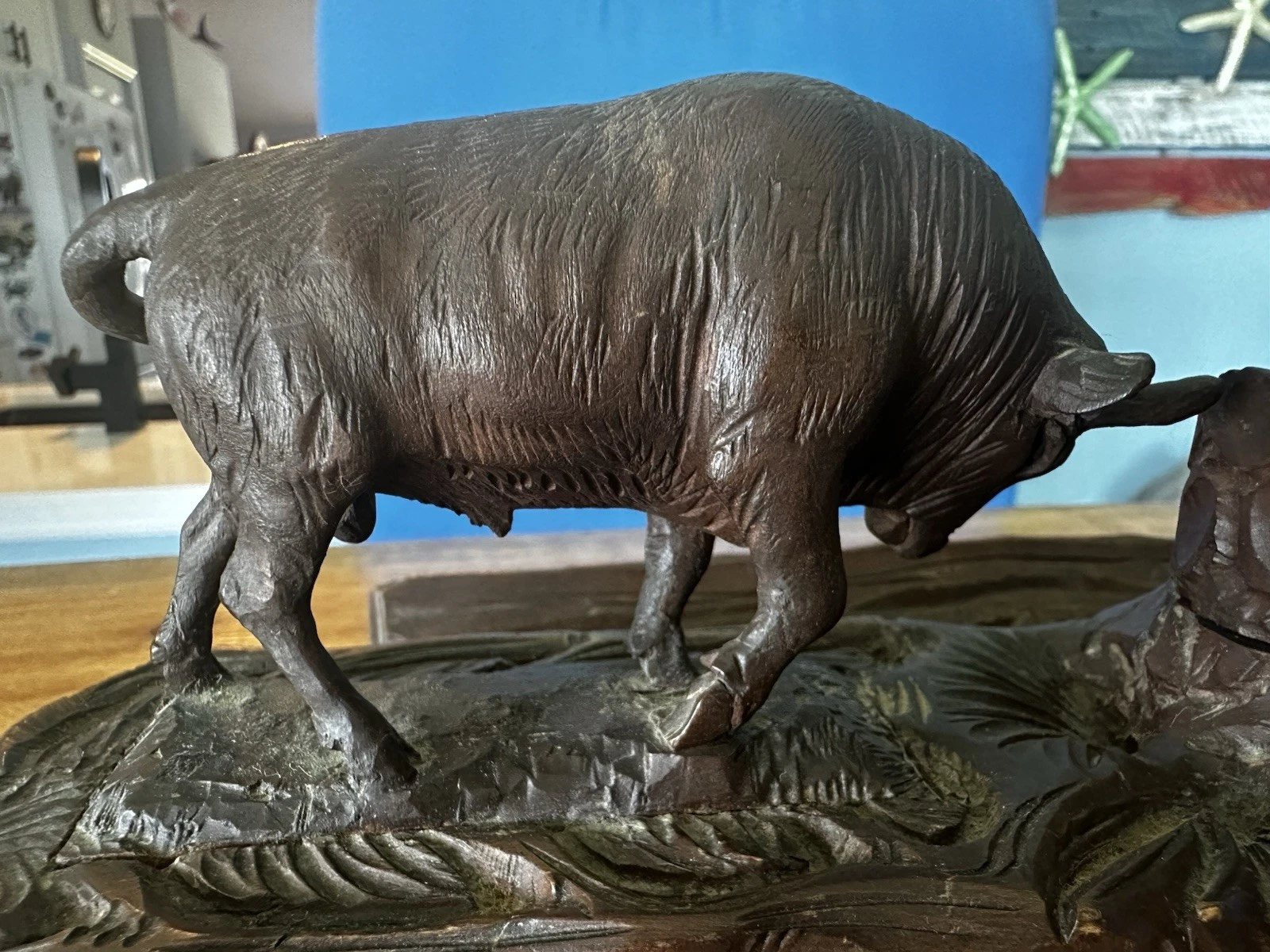
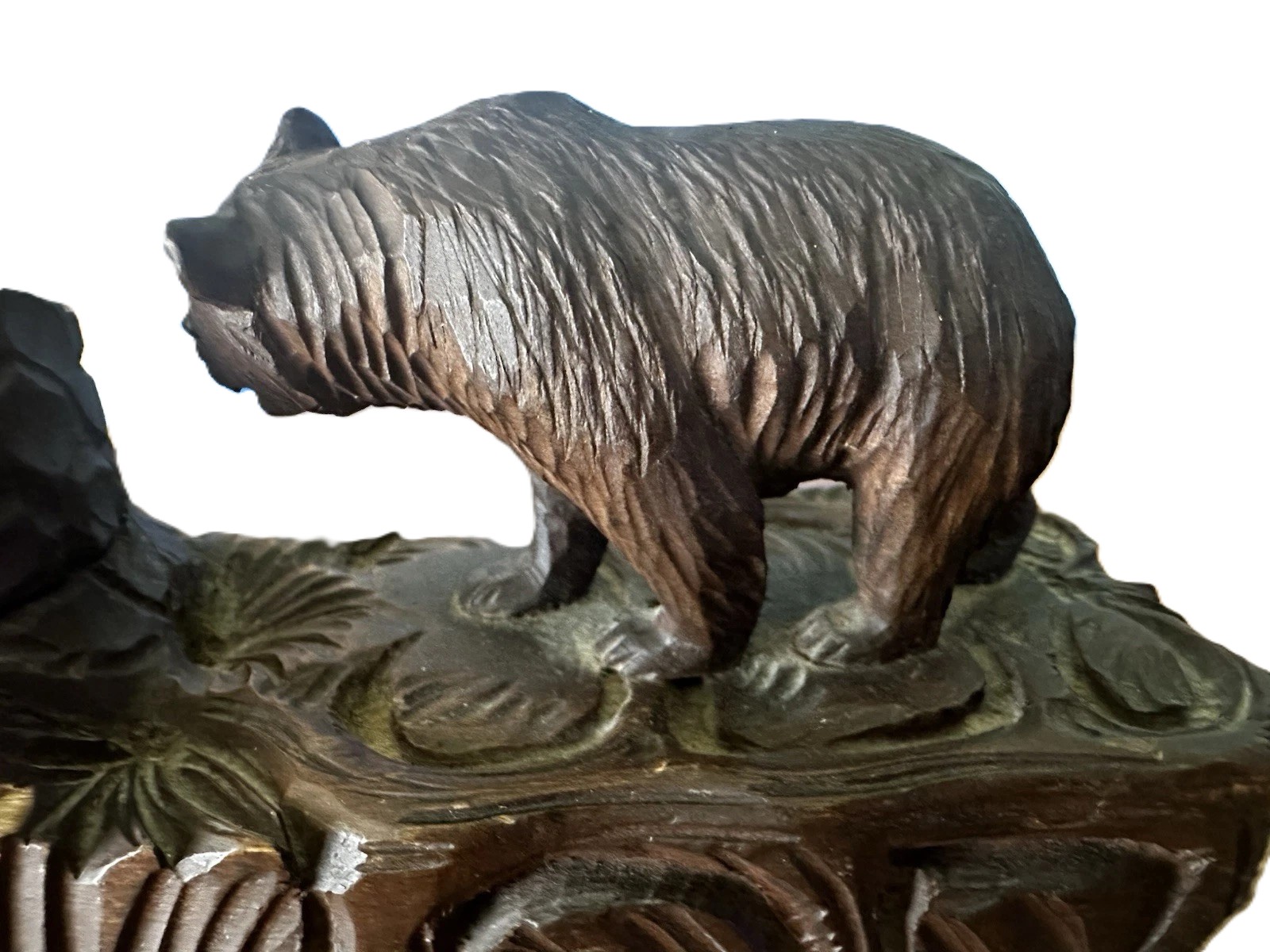
- Material and Technique: It is made of hand-carved wood, likely linden or walnut, and features the intricate detailing and naturalistic texture (such as the animals’ fur) that defined this style.
- Composition: The inkstand is a figural grouping on an integrated base carved to resemble a rocky, wooded terrain.
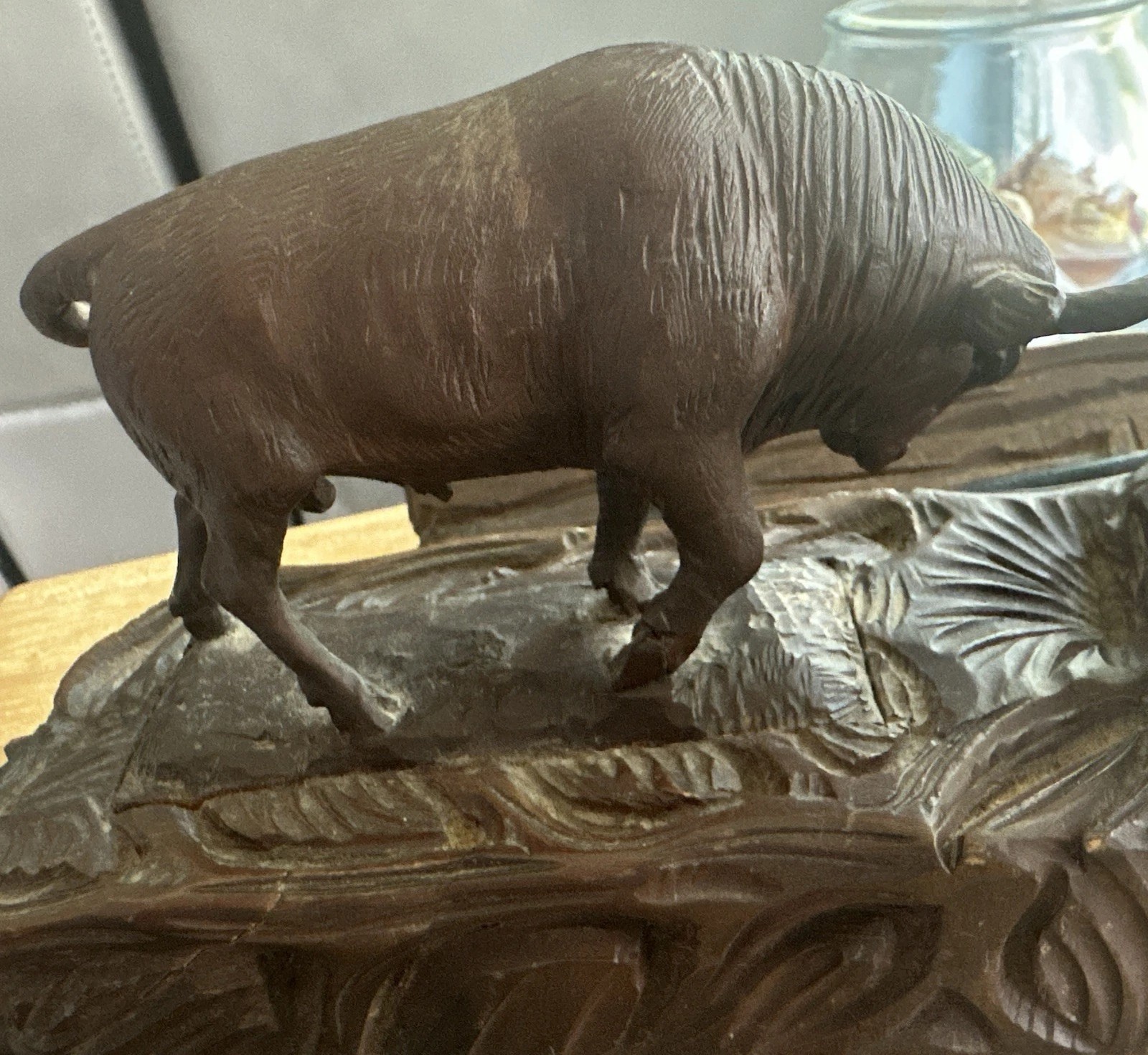
- The Bull: Appears on one side, typically posed in a charging or aggressive stance, representing an upward market trend.
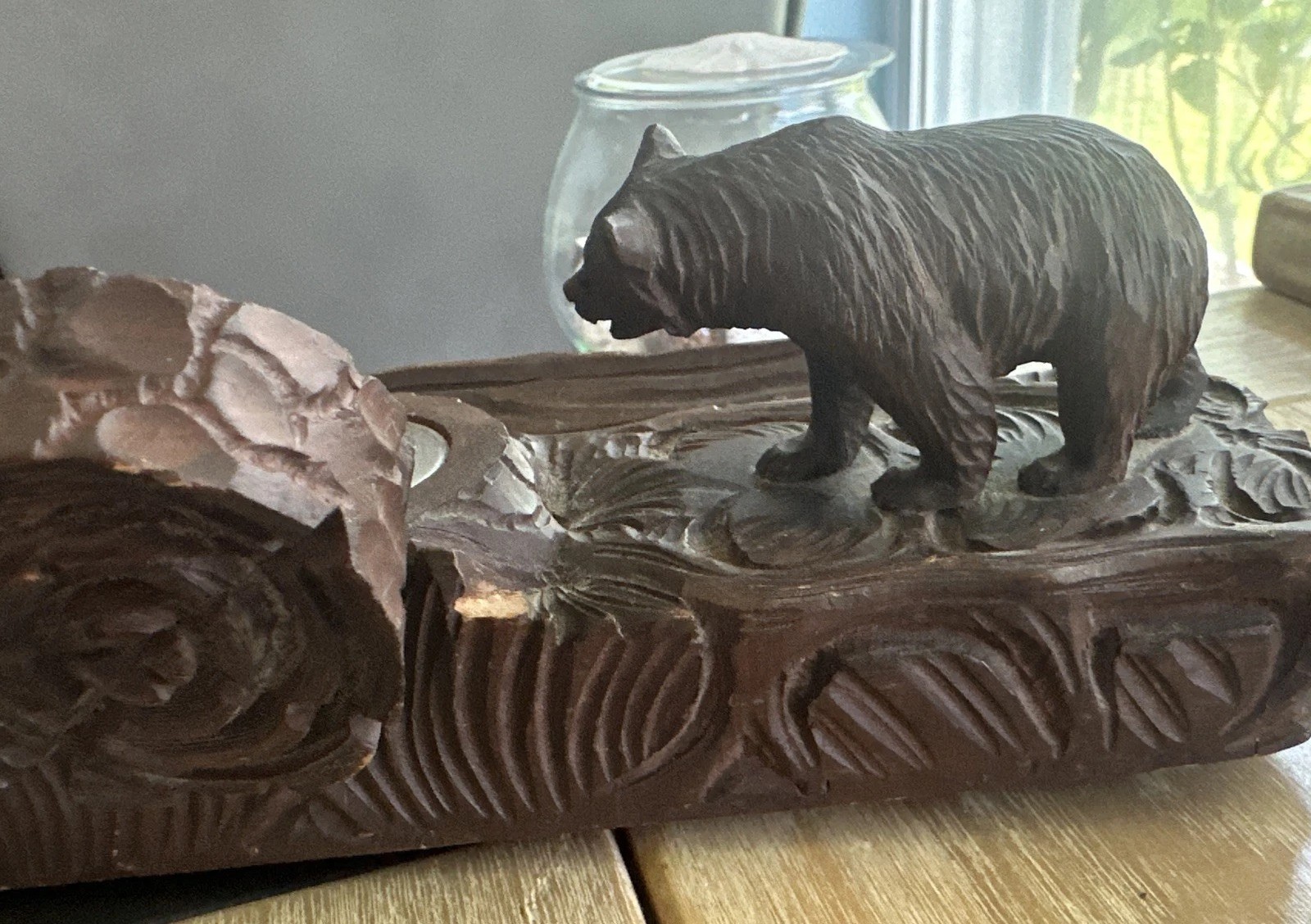
- The Bear: Appears on the opposite side, in a standing, defensive pose, representing a downward market trend.
- Inkwell Housing: The central feature is a carved tree stump that houses the glass inkwell.
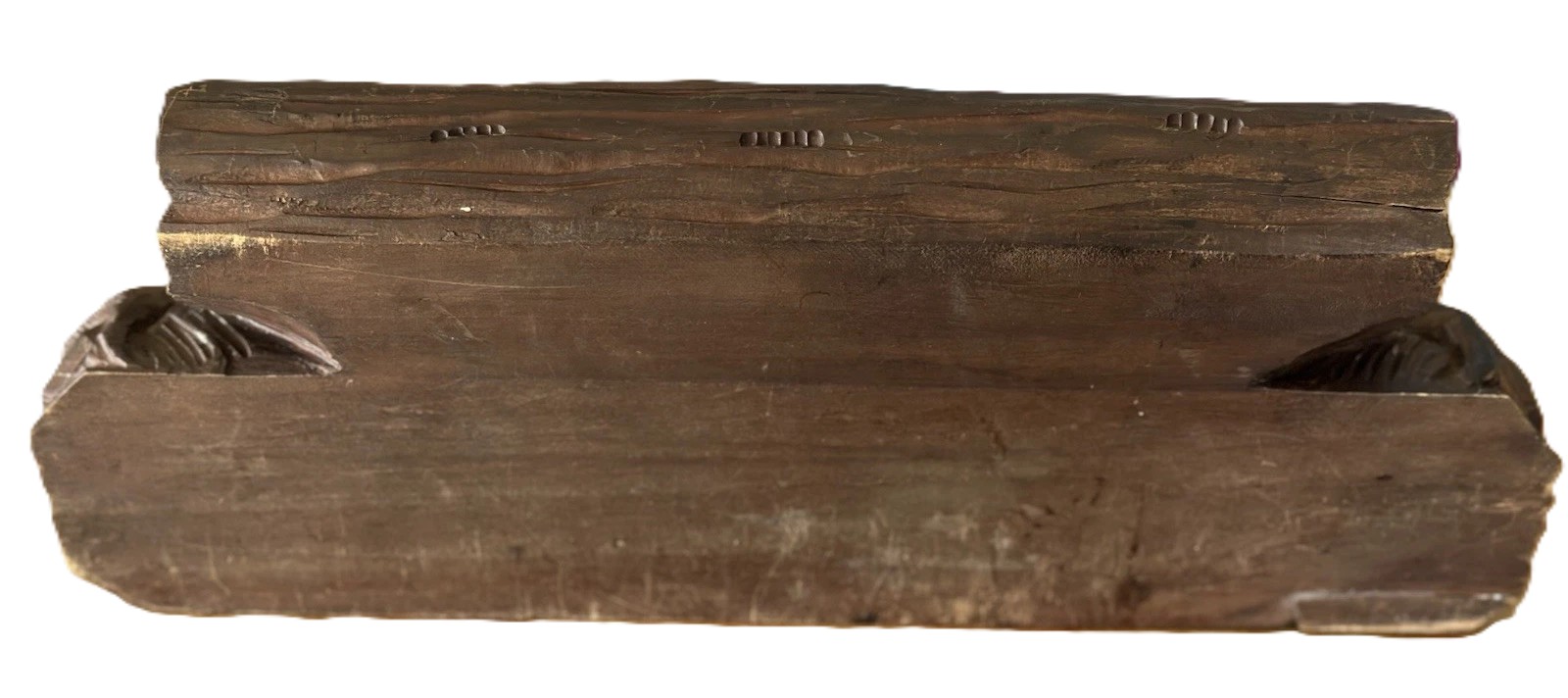
- Pen Tray: A carved shallow trough spans the front of the base, acting as the practical pen rest/tray.
The Symbolism: The Financial Market
Unlike the typical Black Forest subjects (local animals like bears, deer, or dogs), the pairing of the bull and the bear is an explicit, widely understood financial allegory.
- Bull Market: A market in which share prices are rising or are expected to rise. The bull attacks by thrusting its horns upward.
- Bear Market: A market in which prices are falling or are expected to fall. The bear attacks by swiping its paws downward.
The choice of this subject suggests the inkstand was likely commissioned or purchased by an individual with strong ties to finance, trading, or banking, intending it as a status symbol for a prestigious desk in an office or study.
Age and Origin
- Origin: Black Forest Region, Switzerland/Germany (Brienz school).
- Estimated Age: Late 19th Century (c. 1880–1910). This period was the peak for high-quality, specialized Black Forest novelty carvings targeted at wealthy collectors and tourists.
Sold for $125 in October 2025
Content disclaimer. The information posted is the owner’s best knowledge and may not have been vetted by the SOIC. We welcome comments, corrections, and additions, working to make our website information comprehensive and accurate.
Join the Society of Inkwell Collectors (SOIC) – it’s free!
Founded in 1981 as a non-profit organization,
we are documenting inkwells (and accessories).
We’re here to help and inform!