

Bronze-Finished Inkstand with Stag
| Categories | Figural - Animals & Living Creatures |
| Type | Stag/Elk/Reindeer |
| Material | Bronze finish |
| Markings | Unmarked |
| Manufacturer | Undetermined |
| Origin | Undetermined |
| Date or Era | circa 1890 |
| Measuring | 9 ½” x 6” x 4” high |
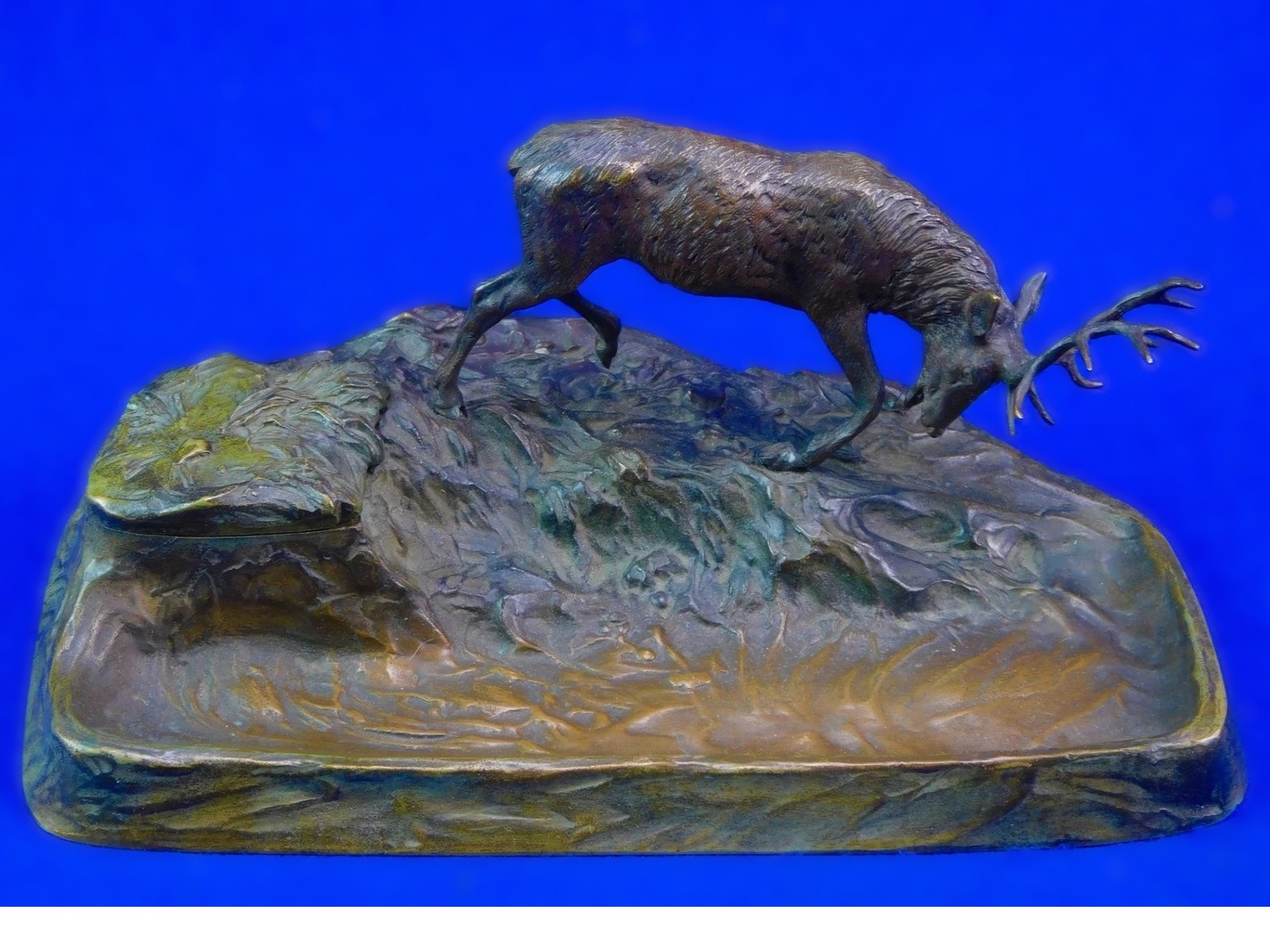
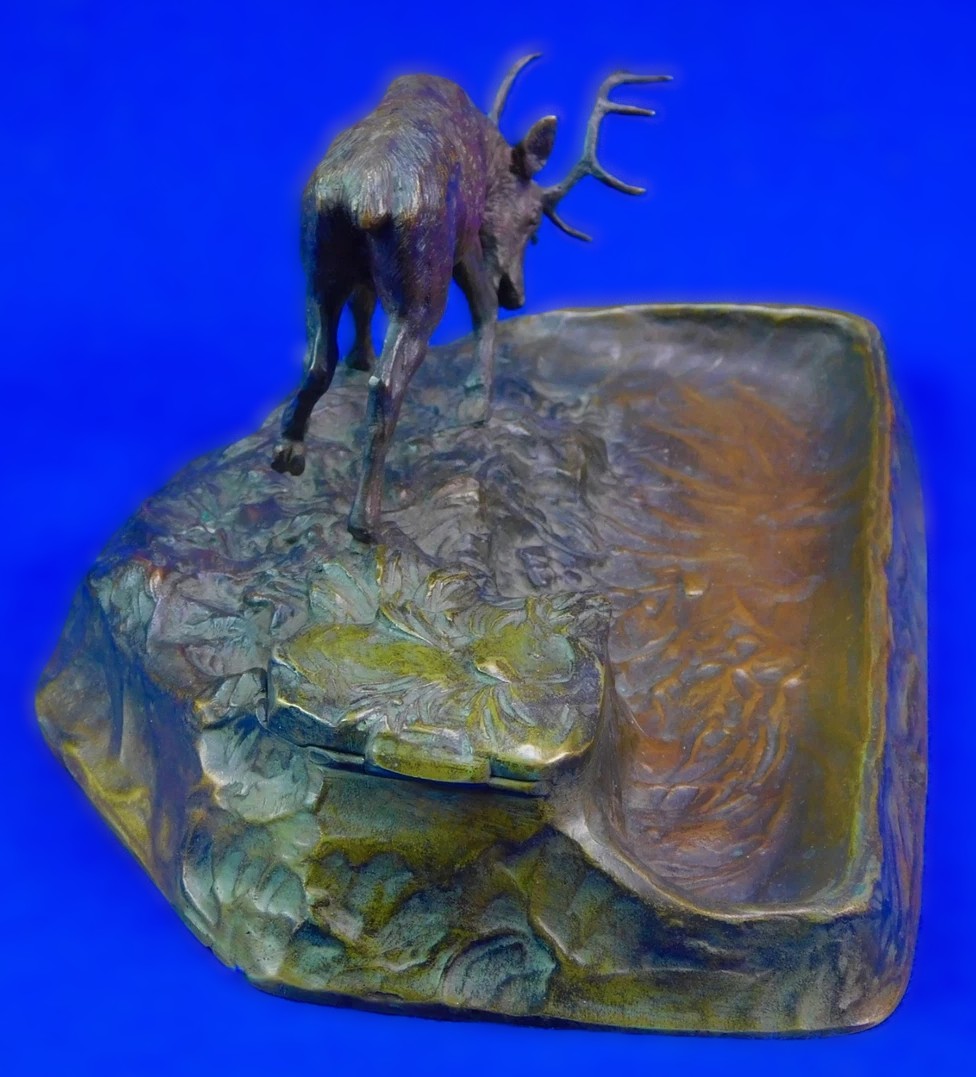
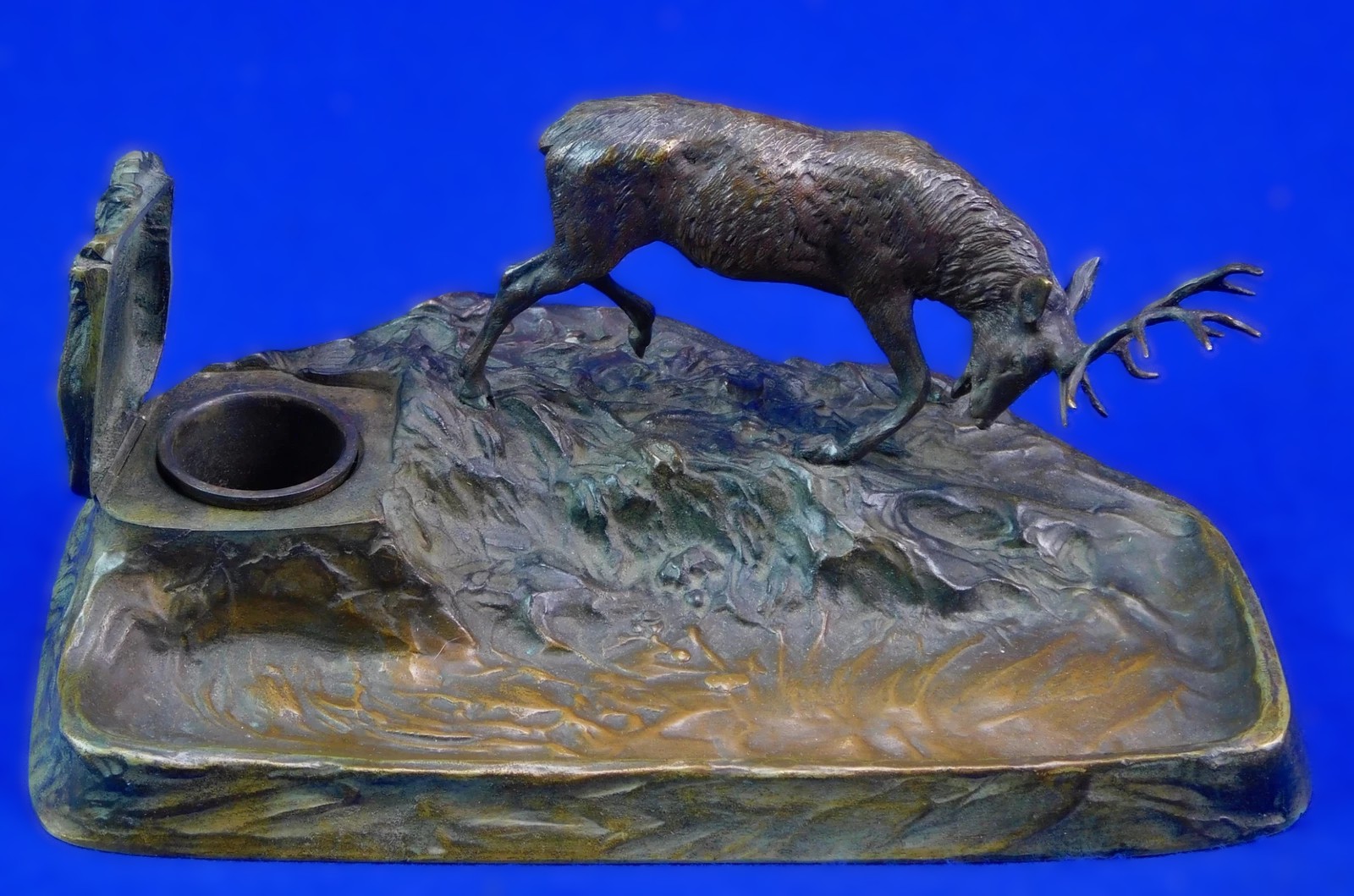
This is an Animalier-style bronze inkstand, dating from the late 19th century (circa 1870–1890). The piece captures the realism and movement characteristic of the French school of animal sculpture that was highly popular across Europe and America.
Description
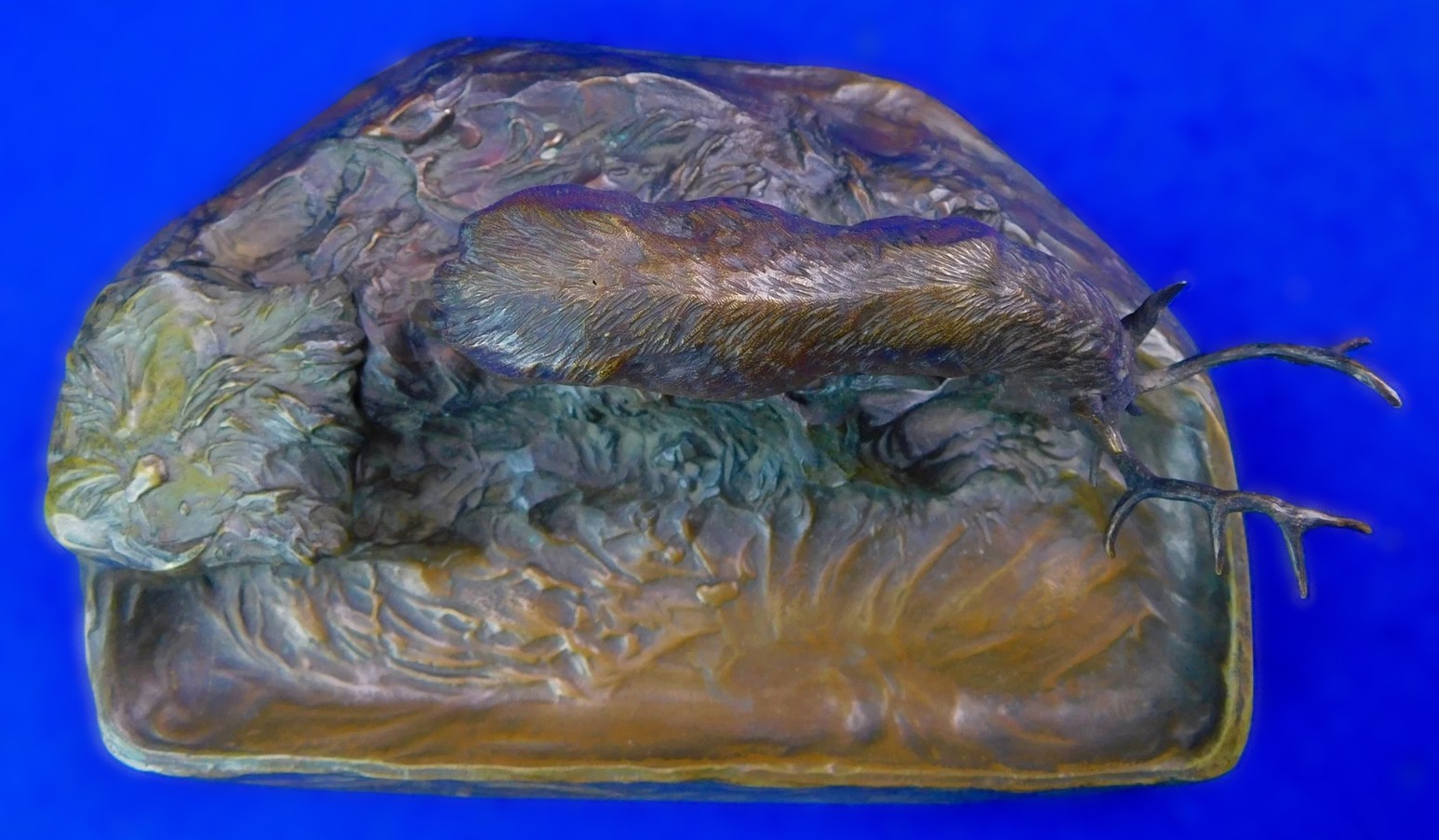
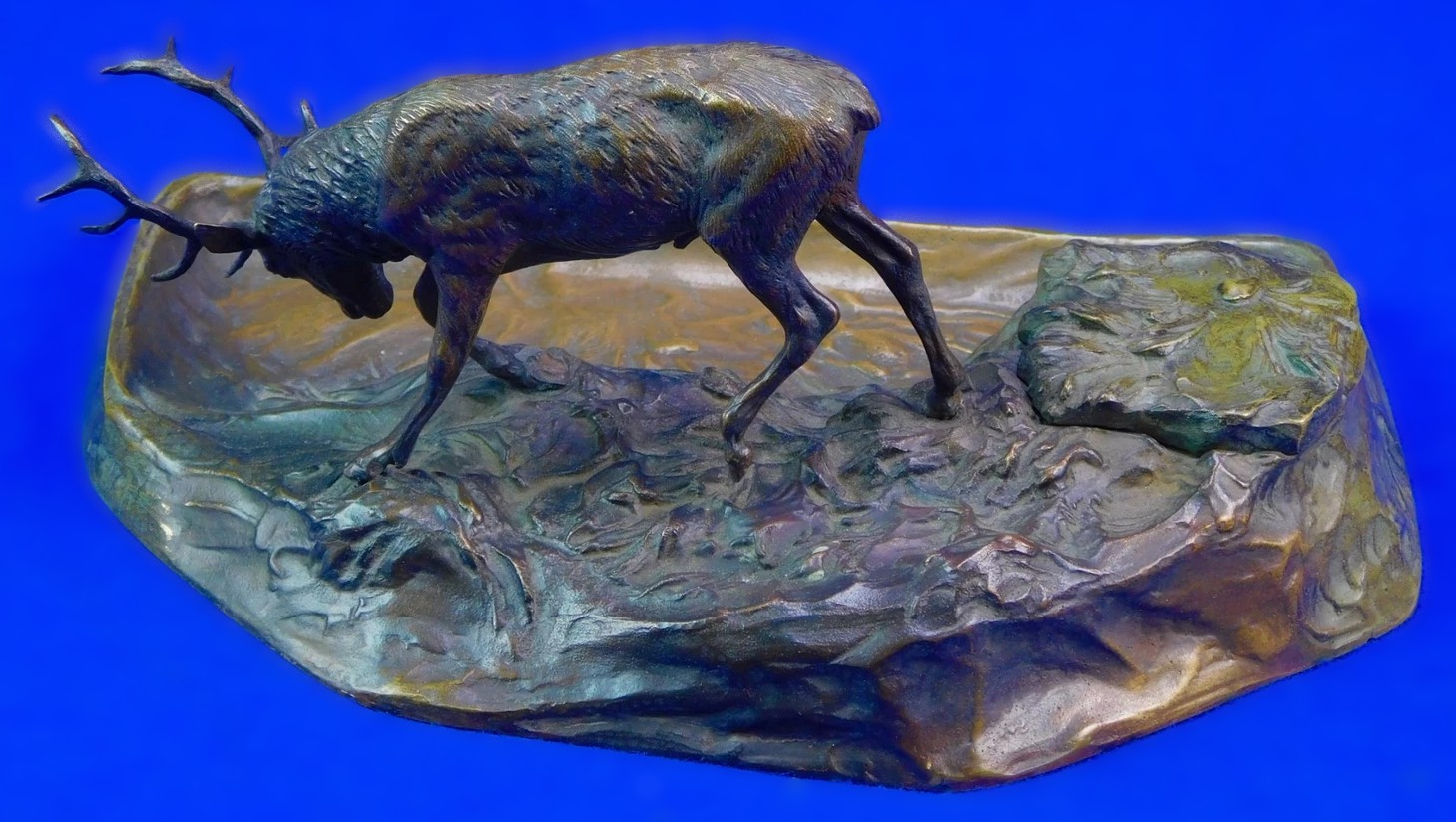
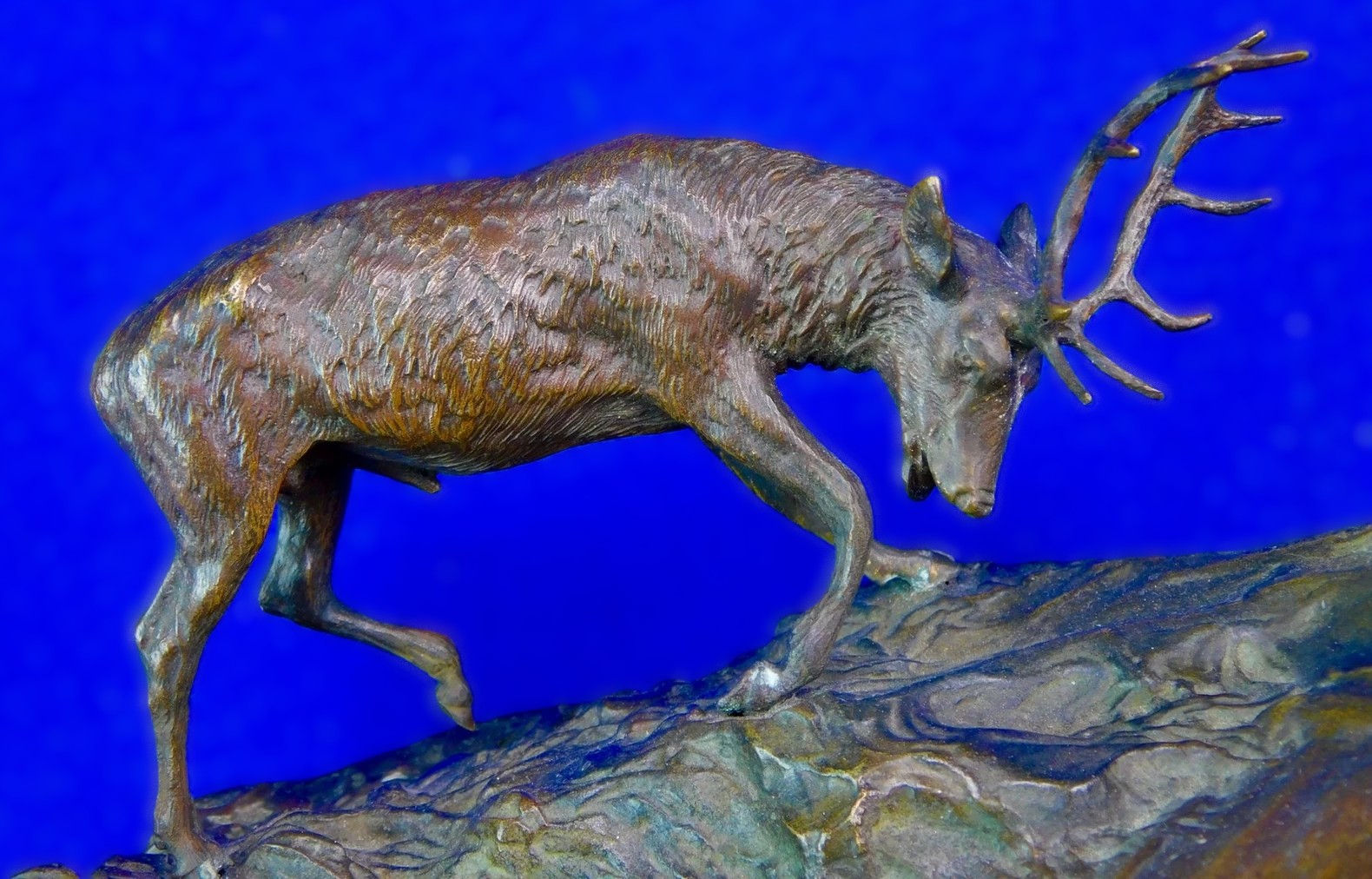
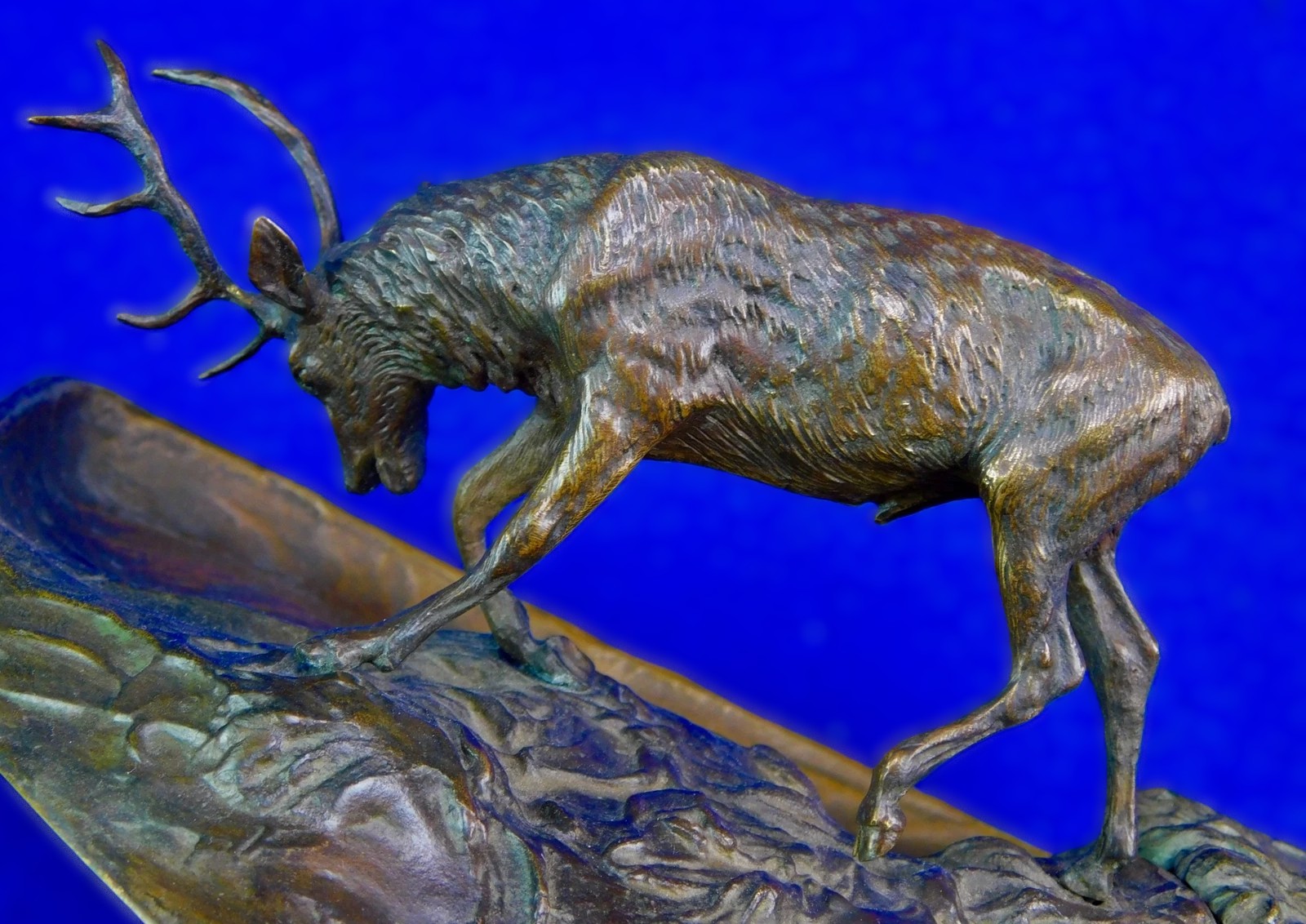
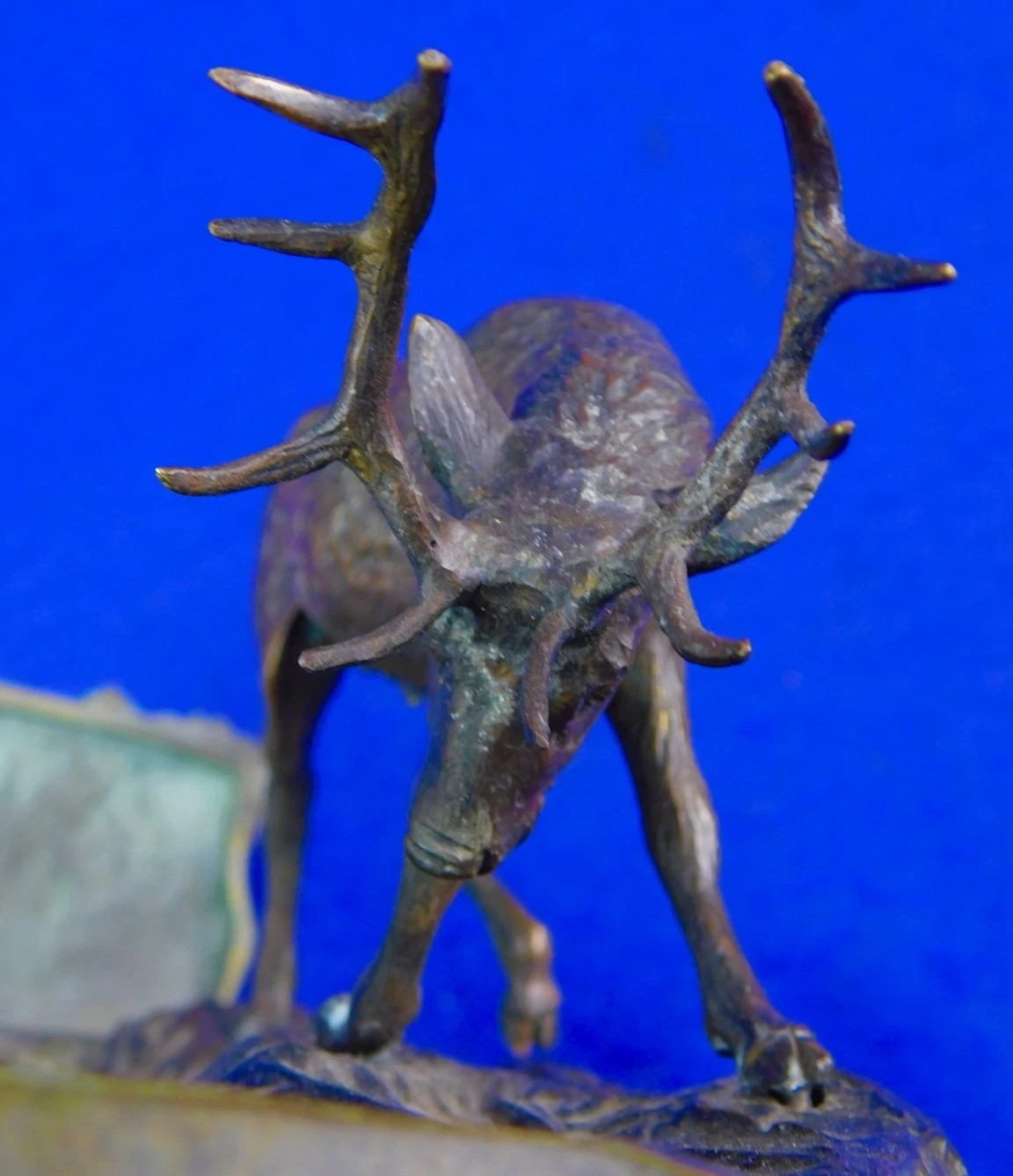
- Subject Matter: The central figure is a majestic red deer stag (sometimes referred to as a buck or hart). The artist has captured it in a dynamic, life-like pose, navigating a rocky, mountainous terrain. The stag’s head is lowered, and its muscular tension is rendered with significant anatomical detail, from the ribcage to the texture of the fur.
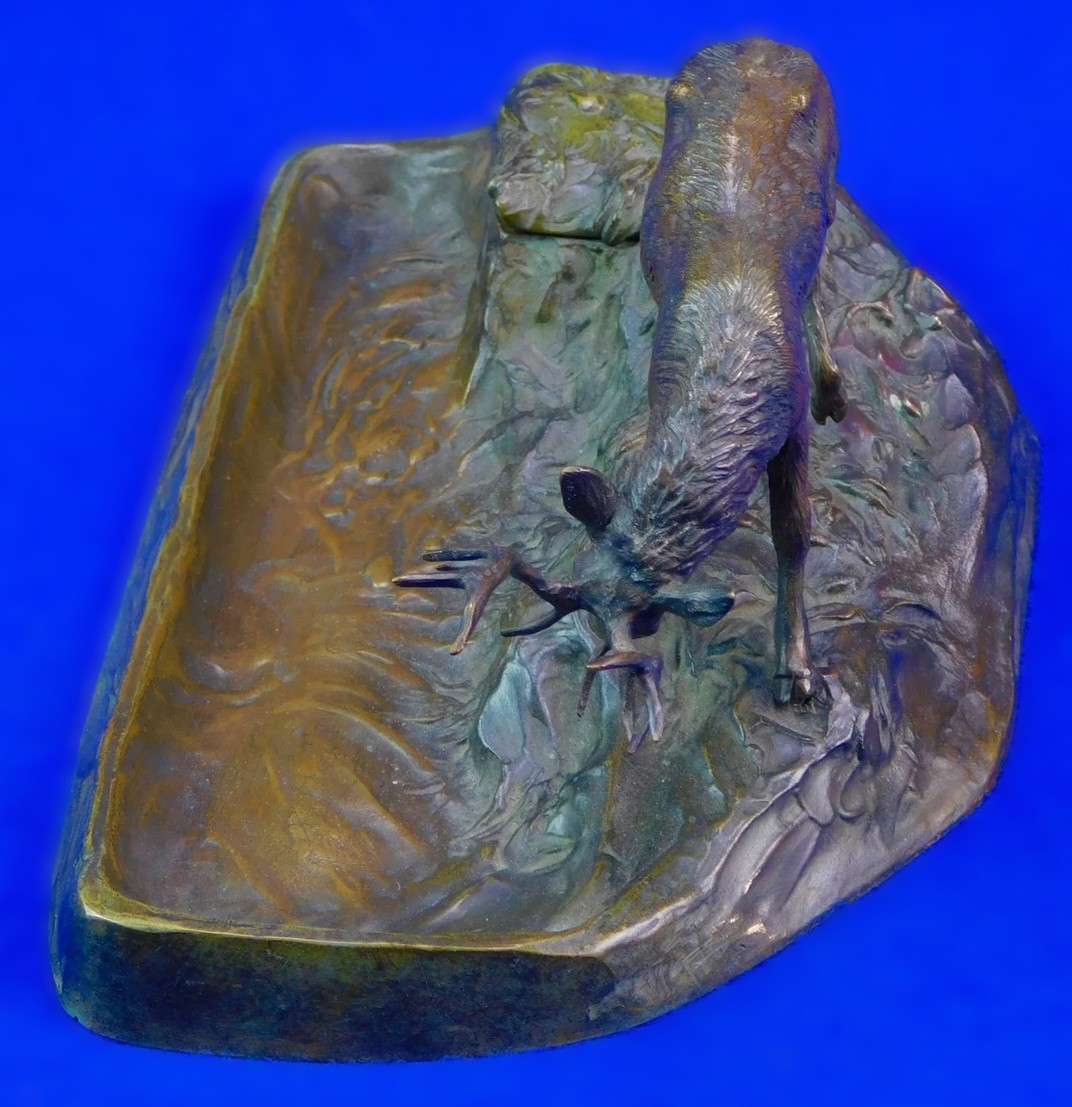
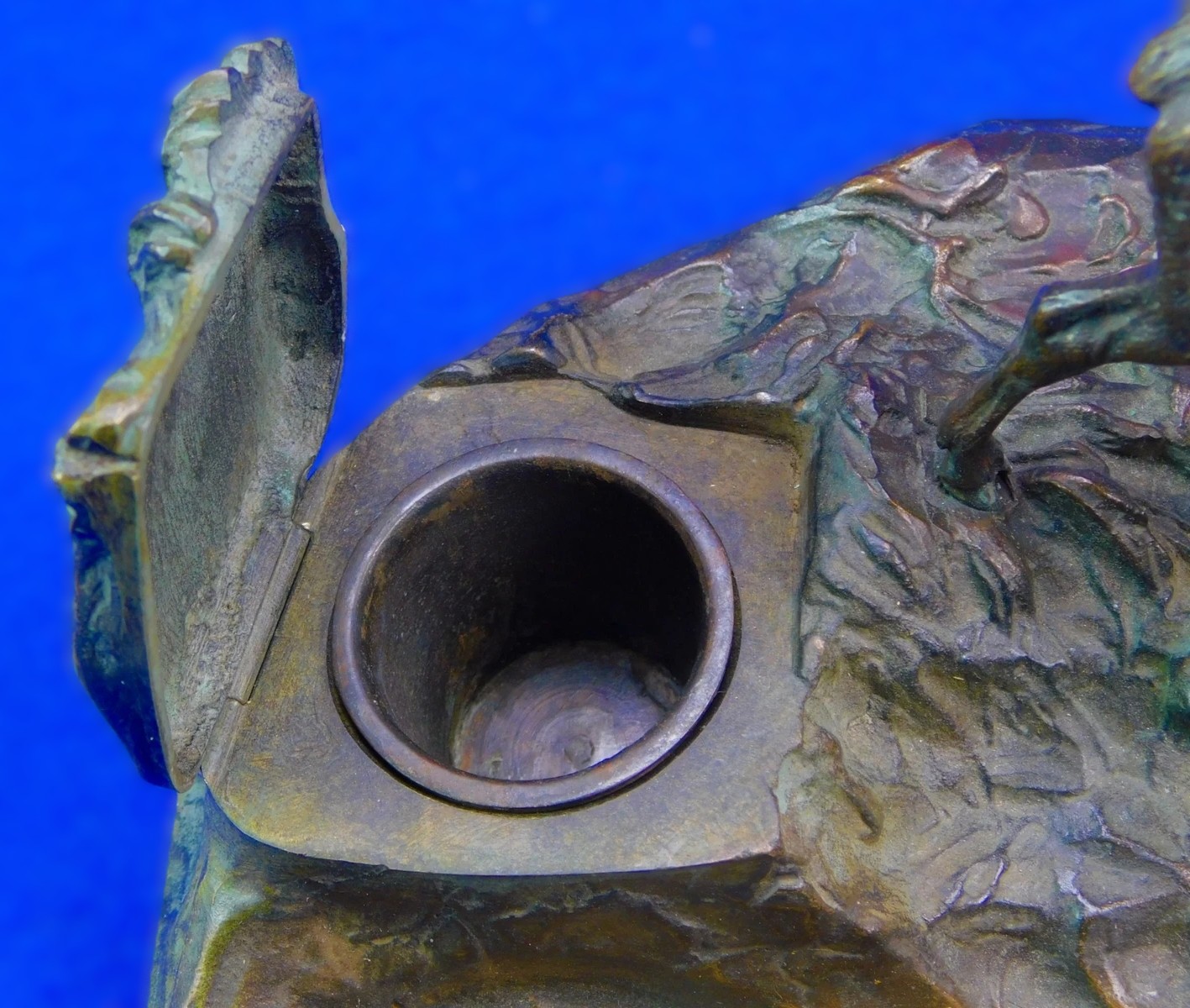
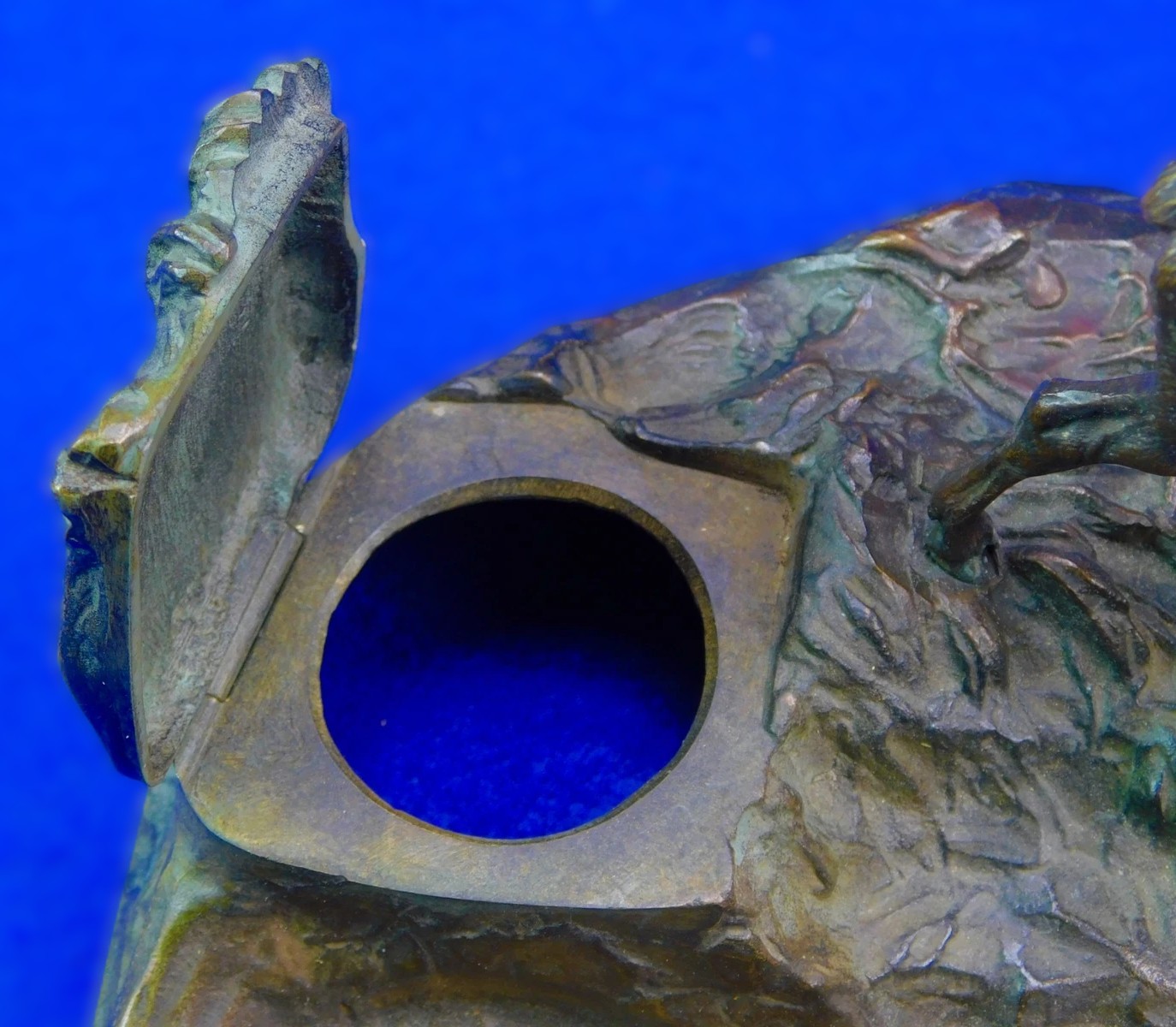
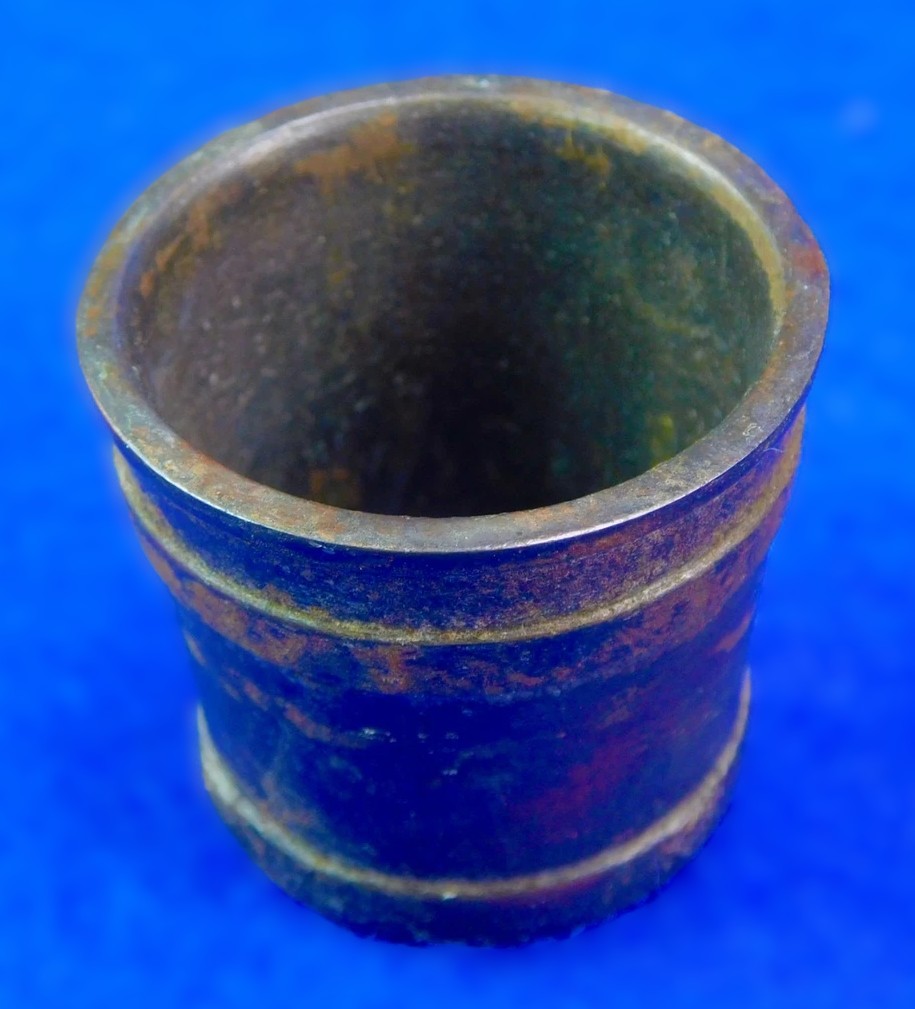
- The Inkwell: Tucked into the “rocky” outcrop on the left is a single ink reservoir. The hinged lid is disguised as part of the natural landscape, blending seamlessly with the craggy texture when closed. Inside sits a removable metal well for holding the ink.
- Base & Pen Tray: The base is designed to resemble a rugged earth floor, with the front section featuring a shallow, elongated depression that serves as a functional pen tray.
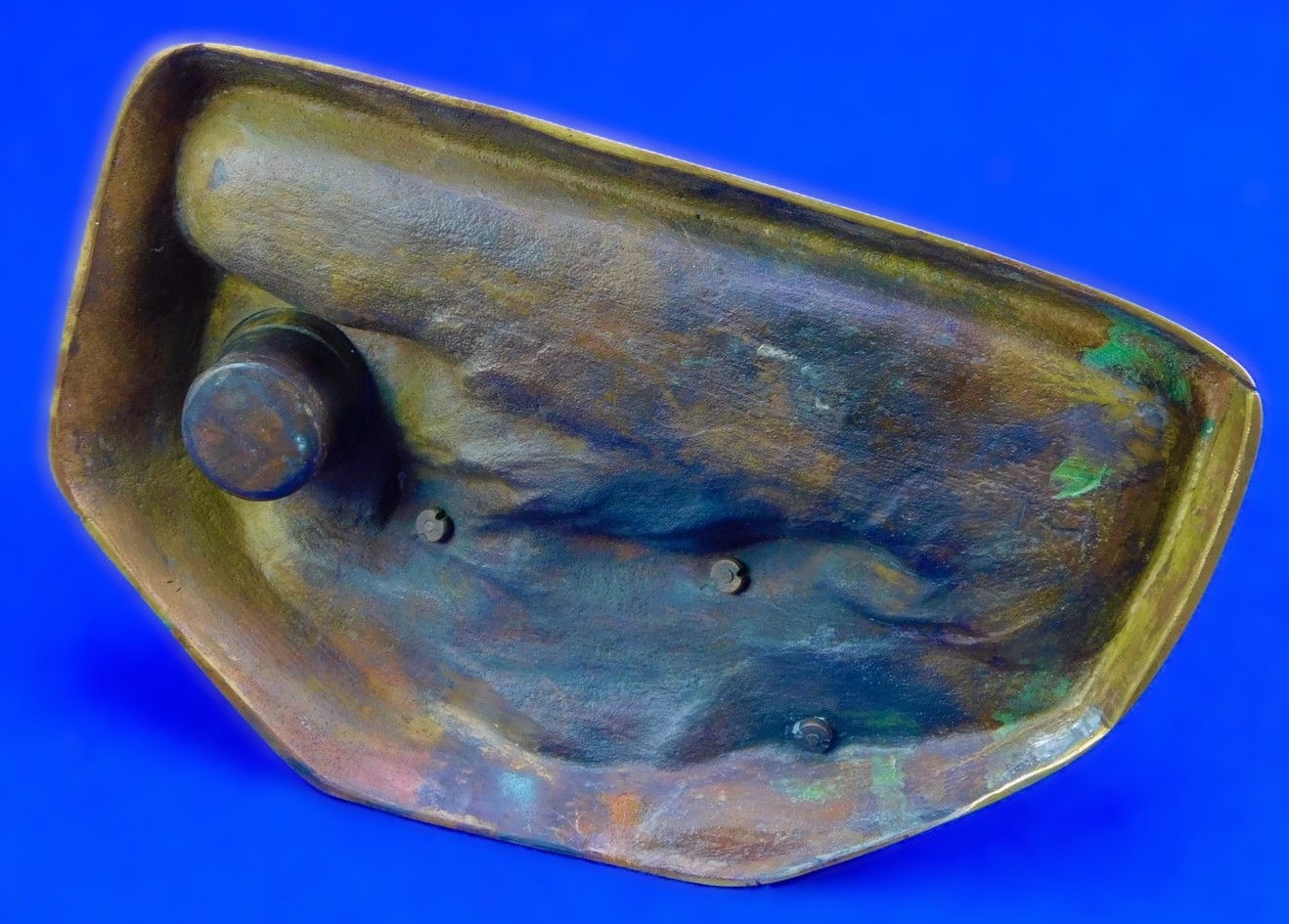
- Material & Finish: The piece is cast in white metal or spelter with a rich bronze patina (indicated by the greenish-verdigris oxidation visible on the underside and in the crevices). The underside shows the hollow casting and the screws used to secure the stag to the base, which is consistent with manufacturing techniques of the late 1800s.
Origin and Attribution
Who Made It? While there are no obvious foundry marks or artist signatures visible in these photos, the style is heavily influenced by the French Animalier sculptors like Antoine-Louis Barye or Pierre-Jules Mêne. However, this specific type of functional desk set—combining high-art sculpture with utilitarian inkwells—was a specialty of several prominent foundries:
- German or Austrian Foundries: Given the subject matter of the stag, this could very well be of German or Austrian (Vienna) origin, where Alpine wildlife themes were popular for library and hunting lodge decor.
When Was It Made? The construction (hollow cast, slotted screws, and the specific “sheared” look of the metal on the underside) points to the 1880s or 1890s. By the turn of the century (the Art Nouveau period), styles shifted toward more flowing, organic lines rather than this rugged, realistic naturalism.
Summary
Antique Animalier Bronze-Finished Inkstand Date: c. 1880–1895 Description: A Victorian-era desk stand featuring a highly detailed figure of a stag with a multi-tine rack of antlers, traversing a rocky terrain. The piece includes a single integrated inkwell with a camouflaged hinged lid and a built-in pen tray. The casting shows exceptional detail in the stag’s coat and the craggy landscape.
Sold for $591 in May 2026
Content disclaimer. The information posted is the owner’s best knowledge and may not have been vetted by the SOIC. We welcome comments, corrections, and additions, working to make our website information comprehensive and accurate.
Join the Society of Inkwell Collectors (SOIC) – it’s free!
Founded in 1981 as a non-profit organization,
we are documenting inkwells (and accessories).
We’re here to help and inform!