

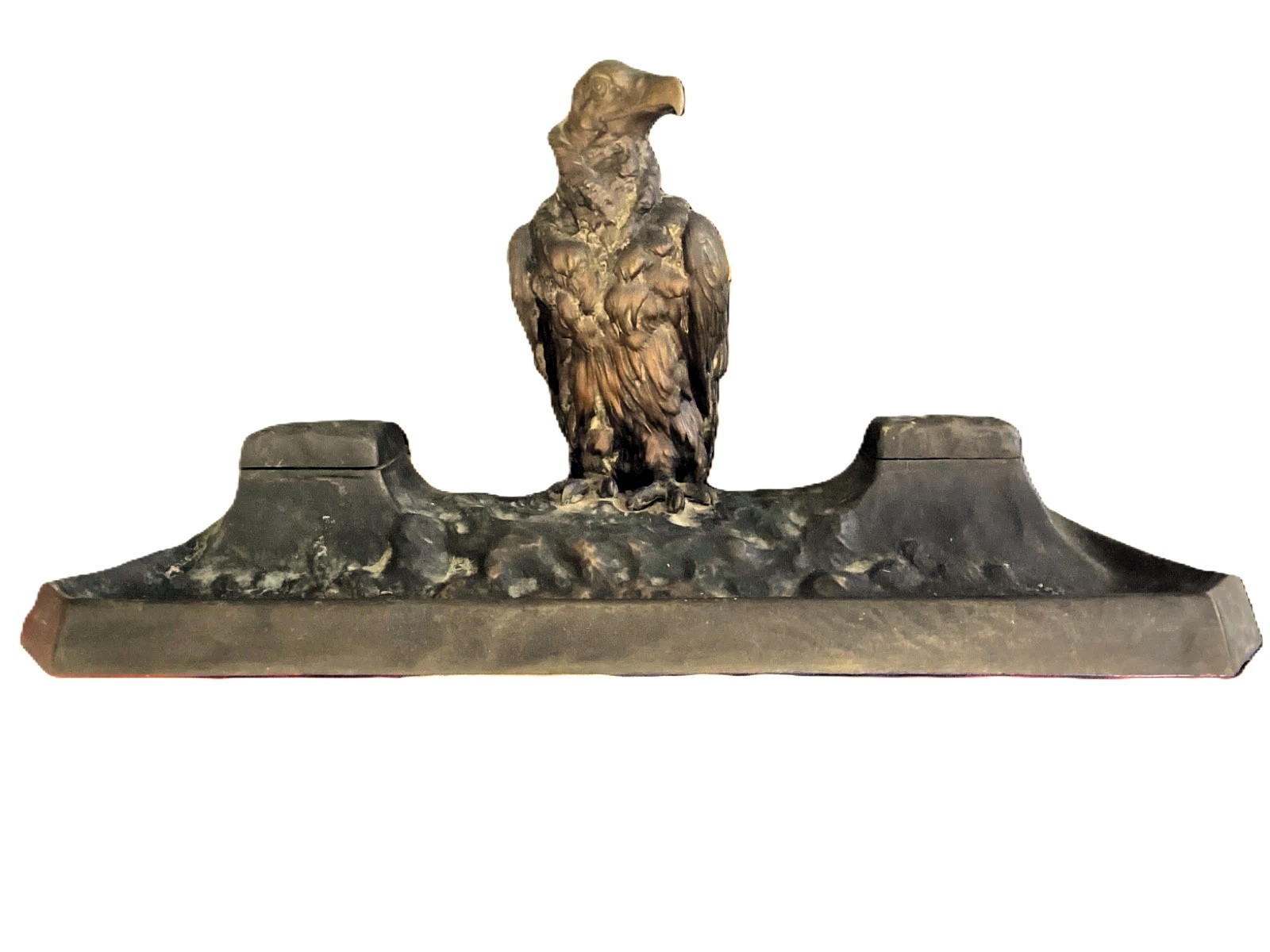
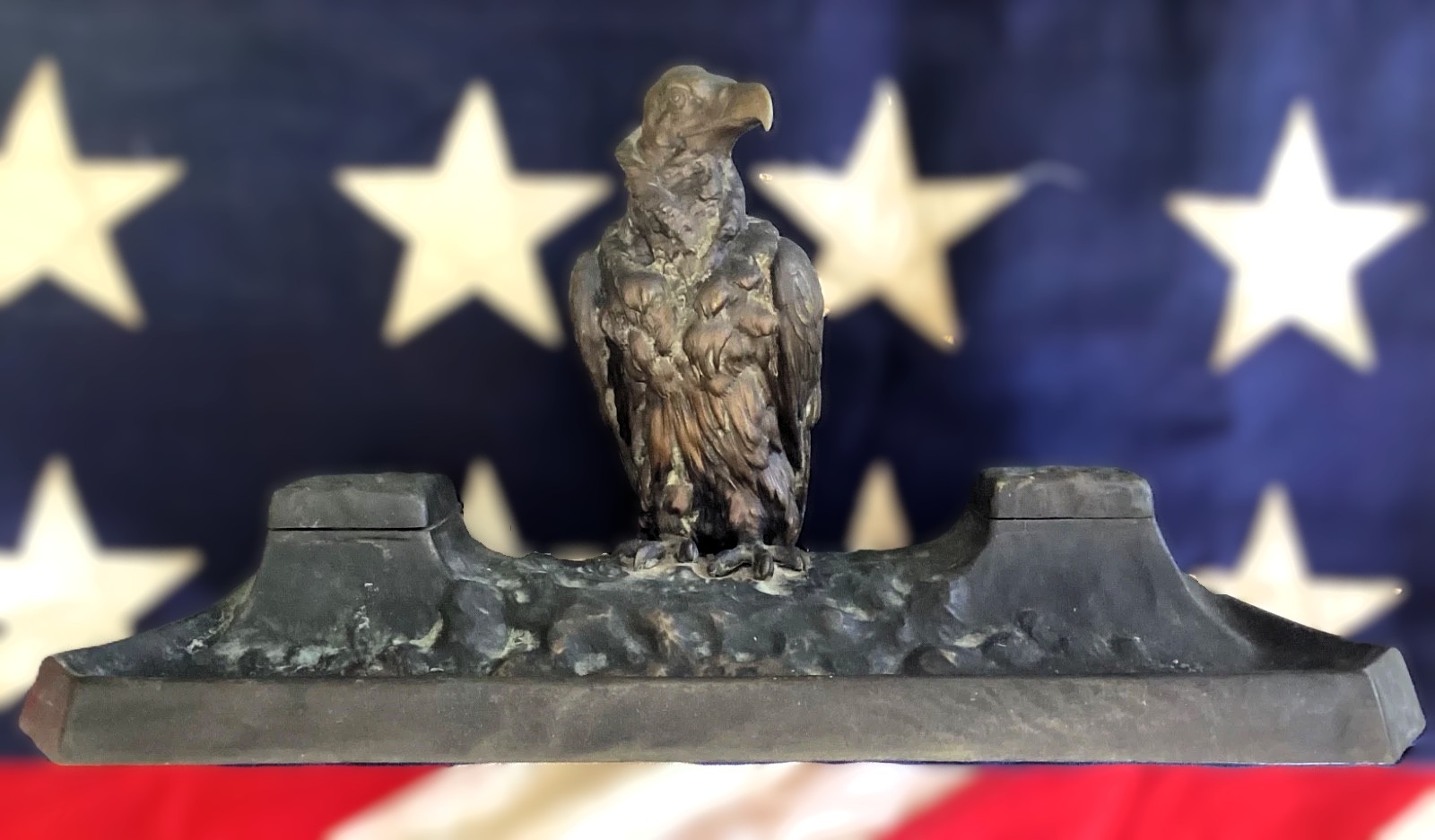
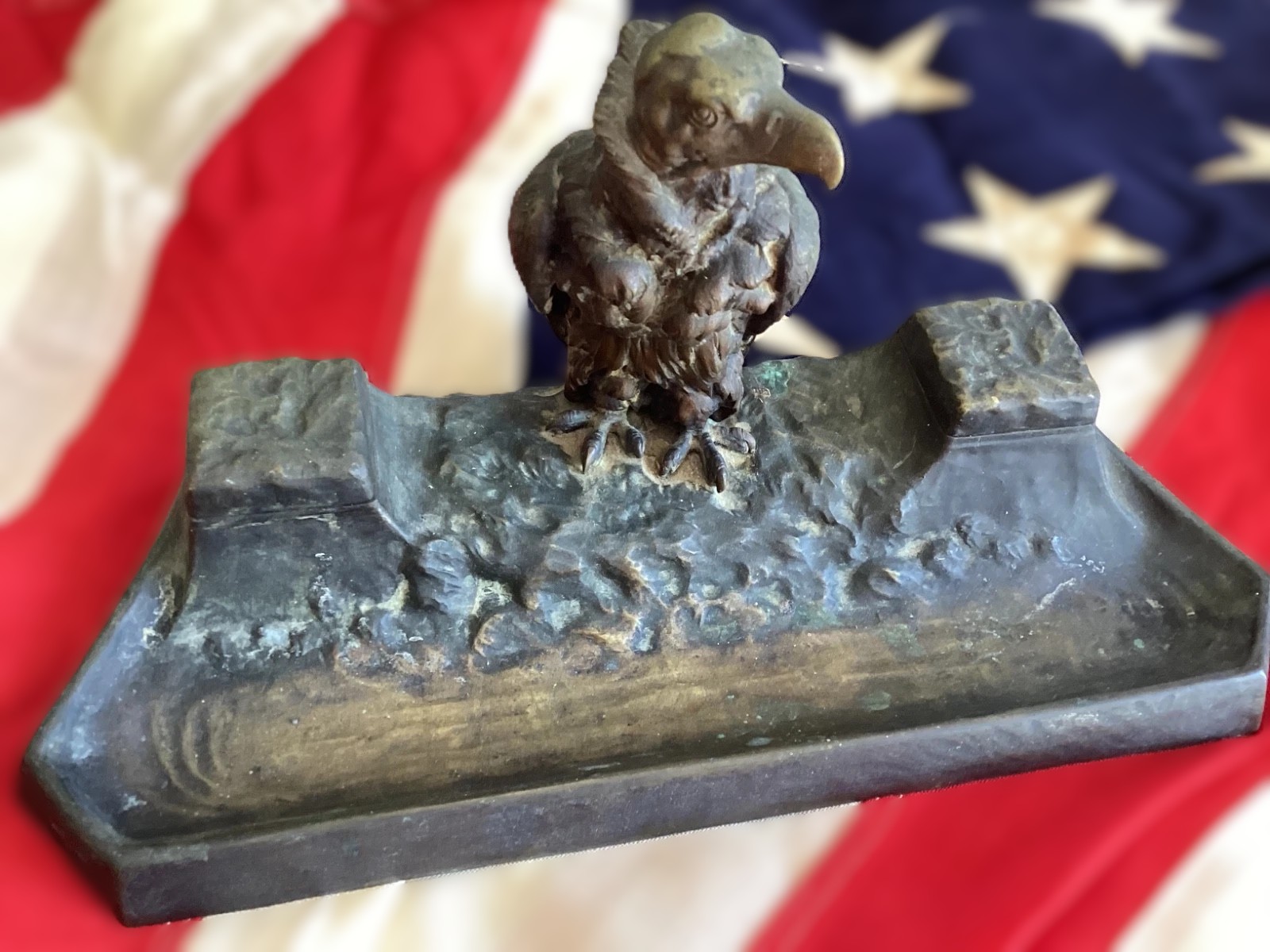
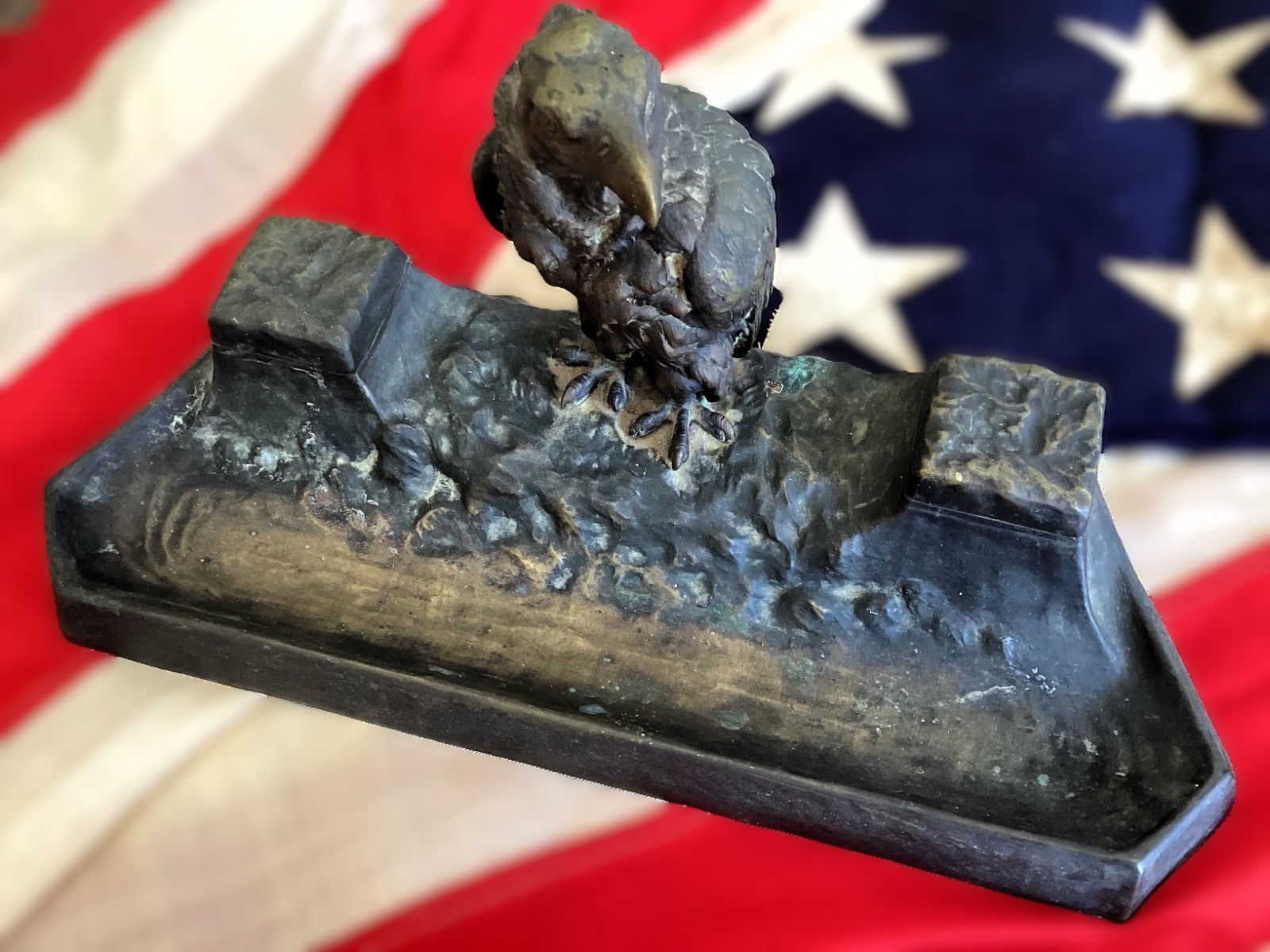
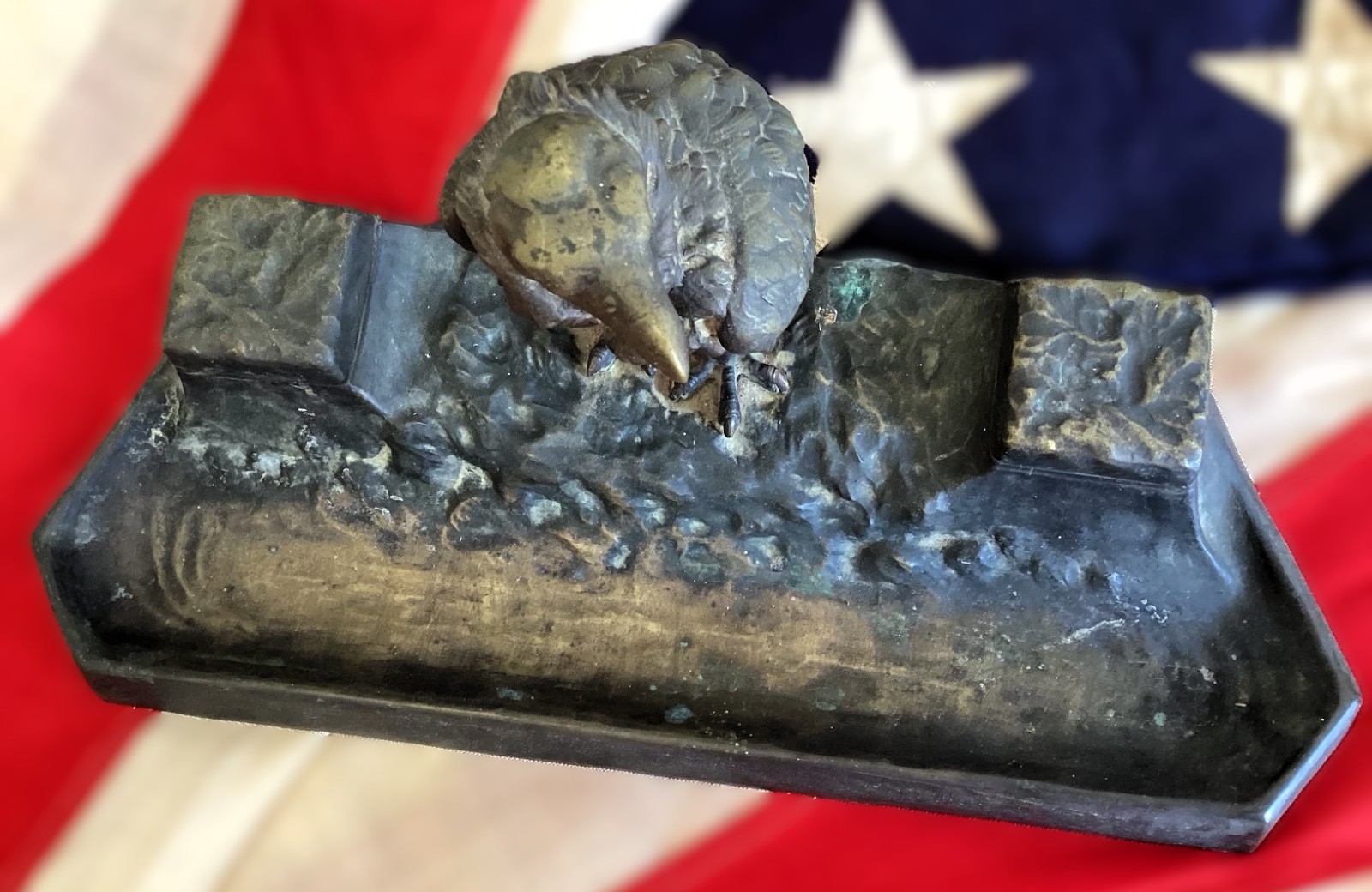
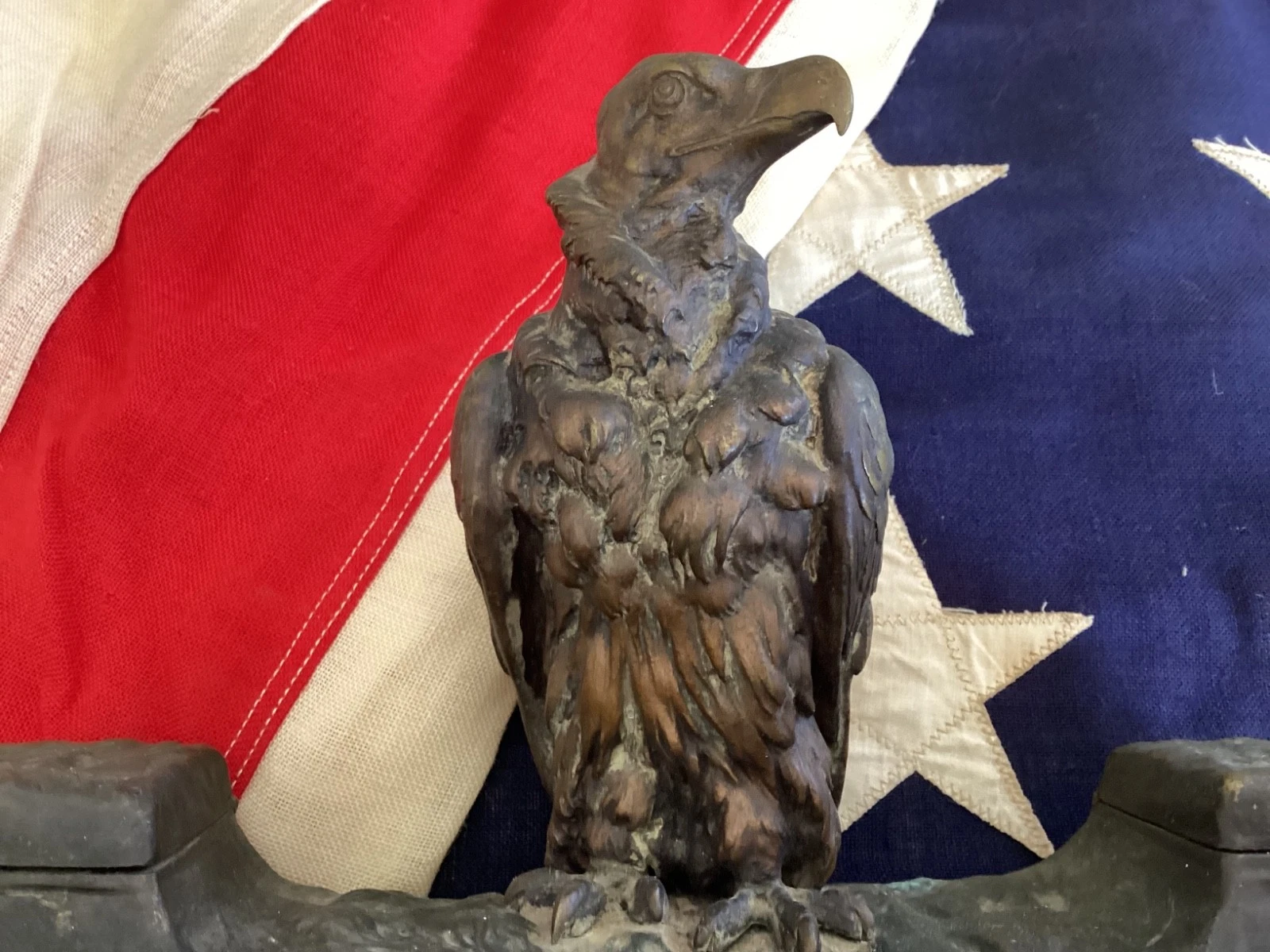
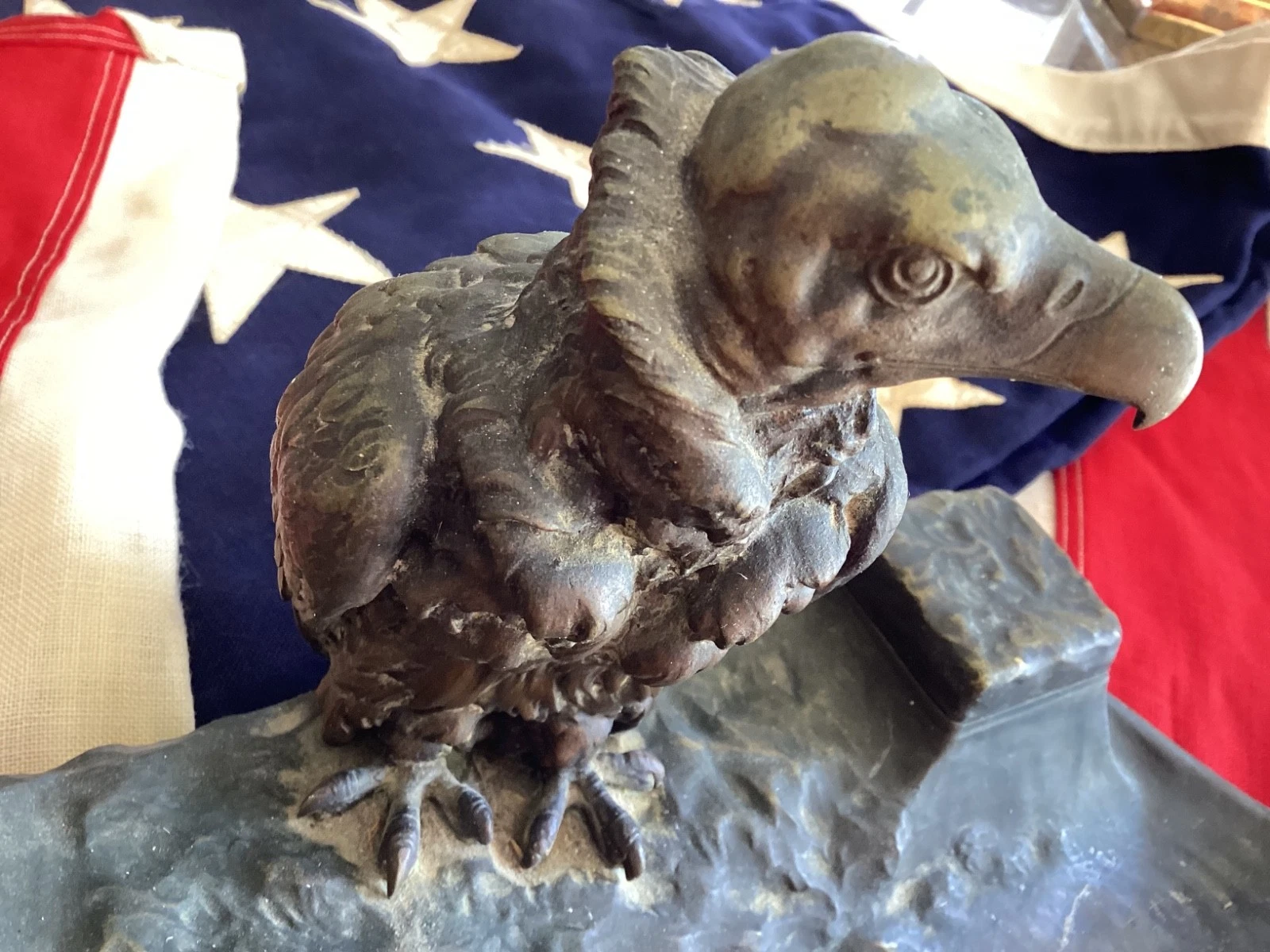
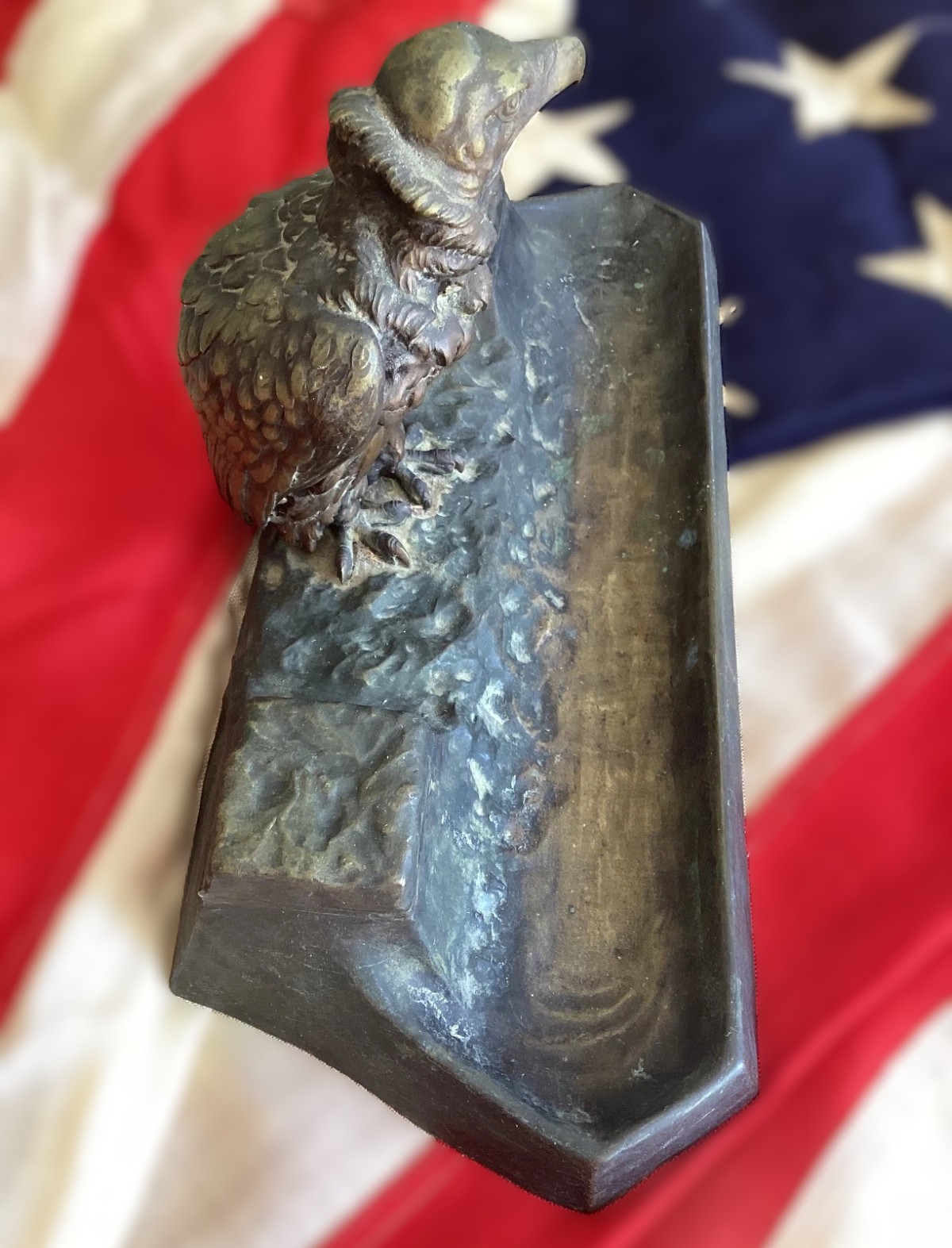
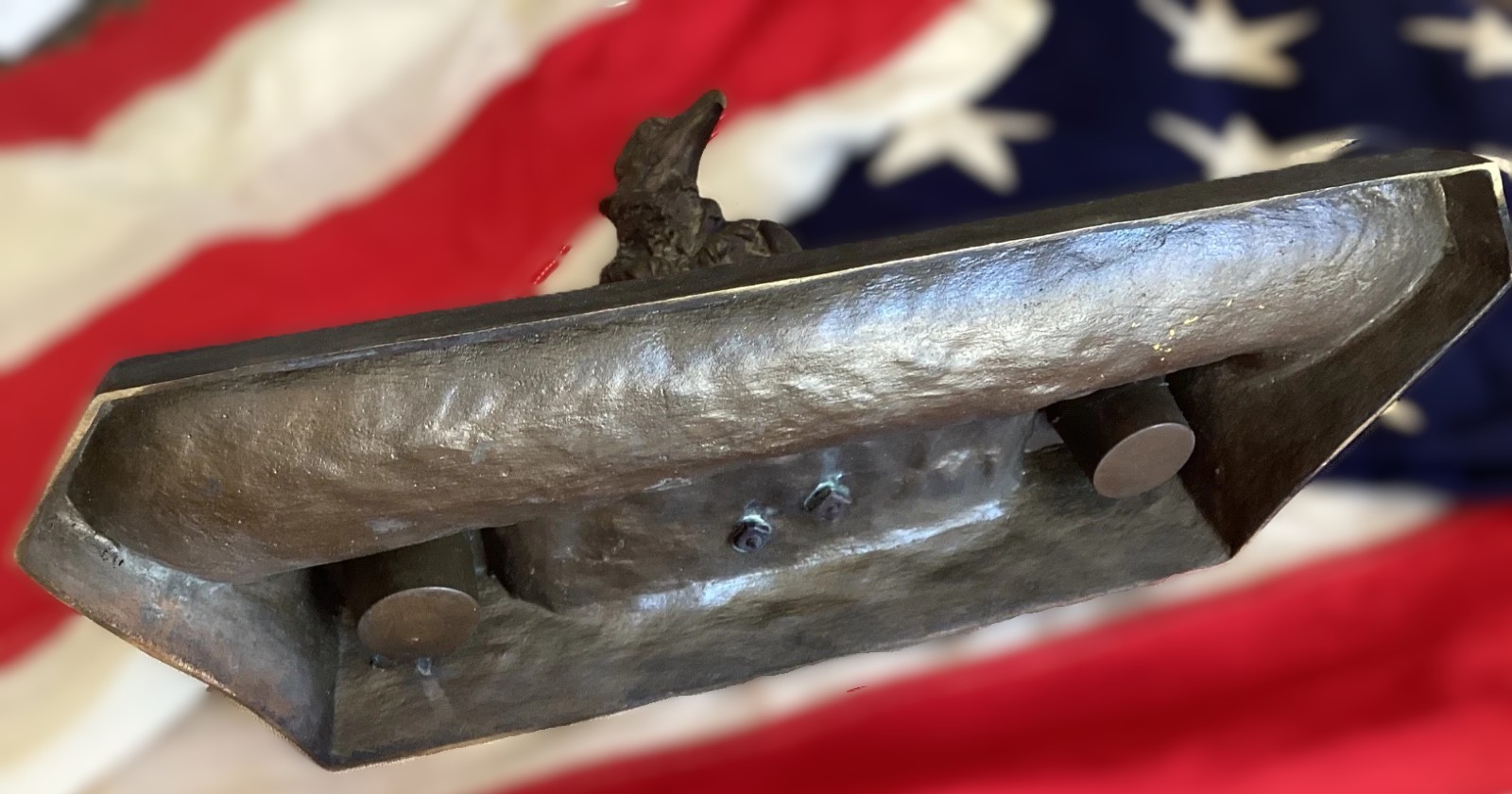
Bronze Double Inkstand with Vulture Motif
| Categories | Figural - Animals & Living Creatures |
| Type | Bird |
| Material | Bronze |
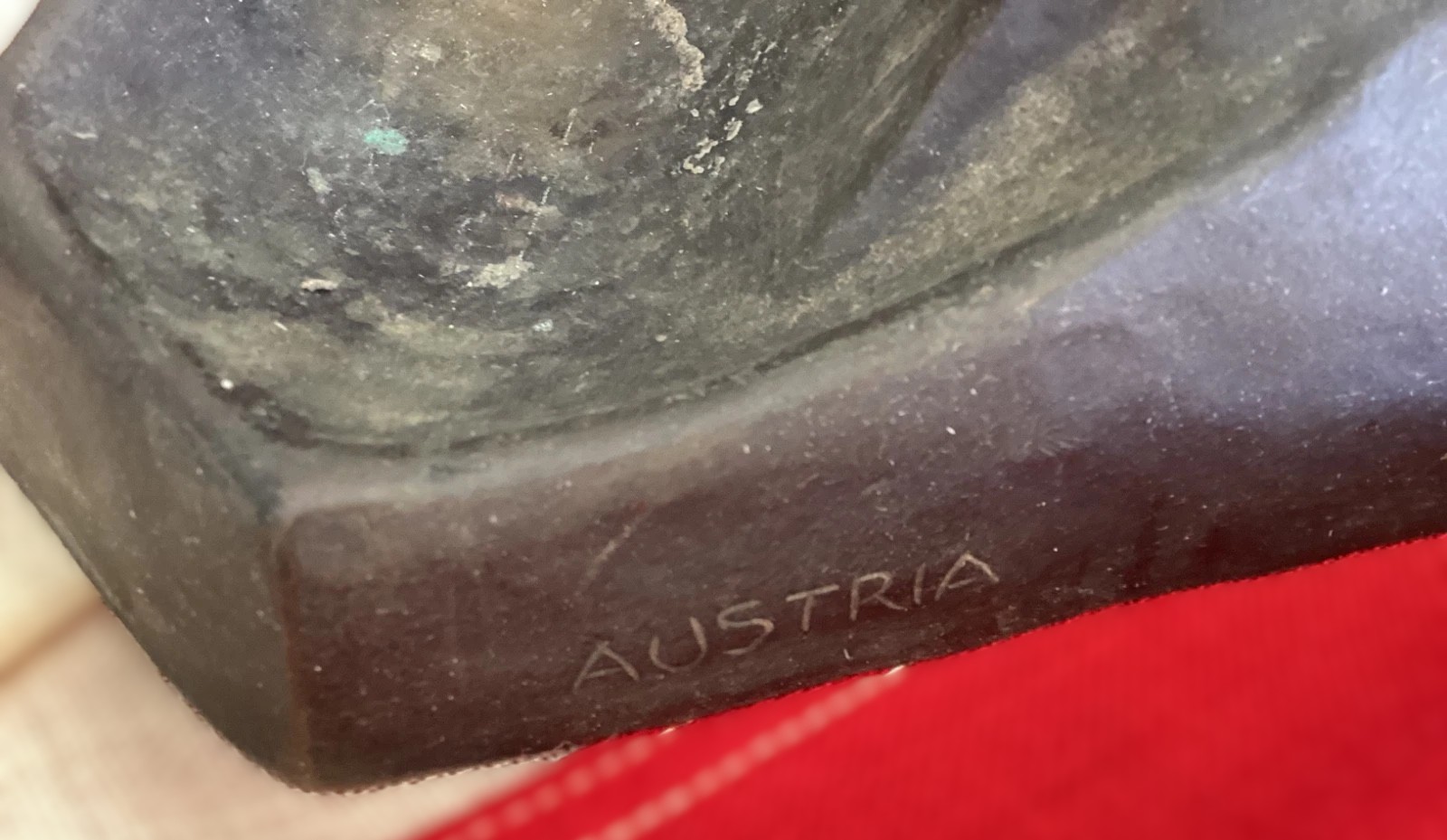
| Markings | AUSTRIA |
| Manufacturer | Undetermined |
| Origin | Austria |
| Date or Era | circa 1900 |
| Measuring | 15” x 6” x 7 ¼” high |
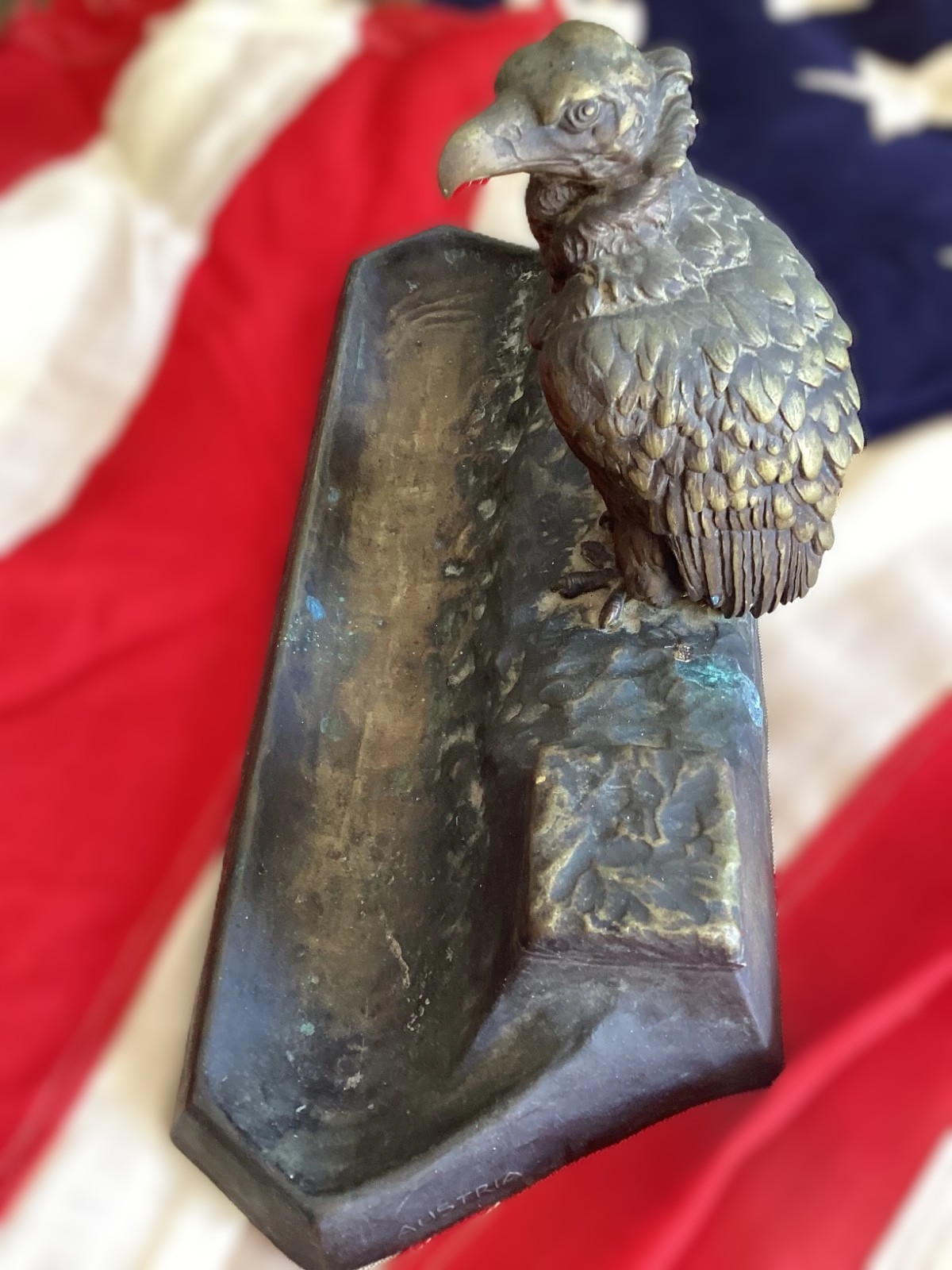
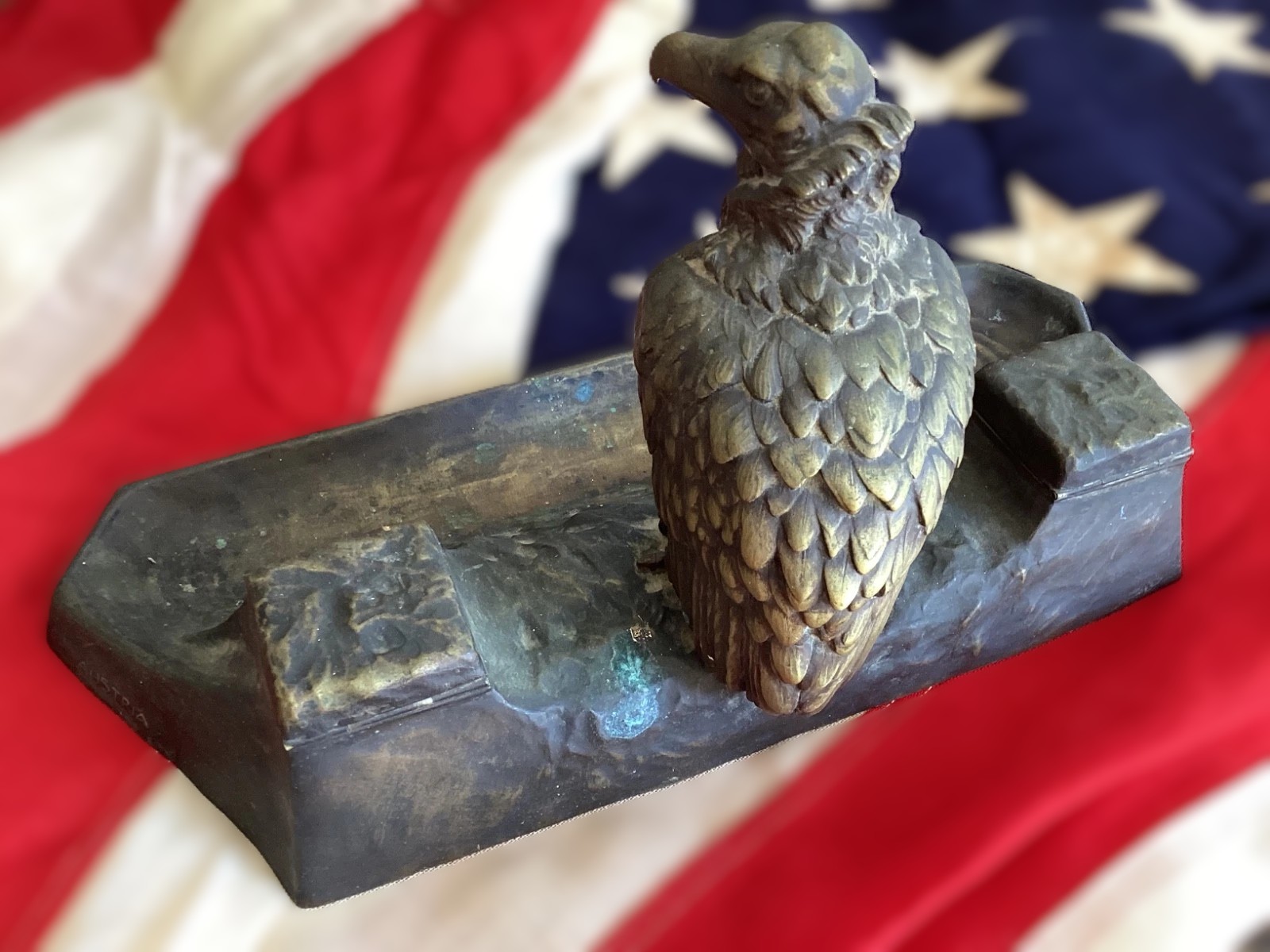
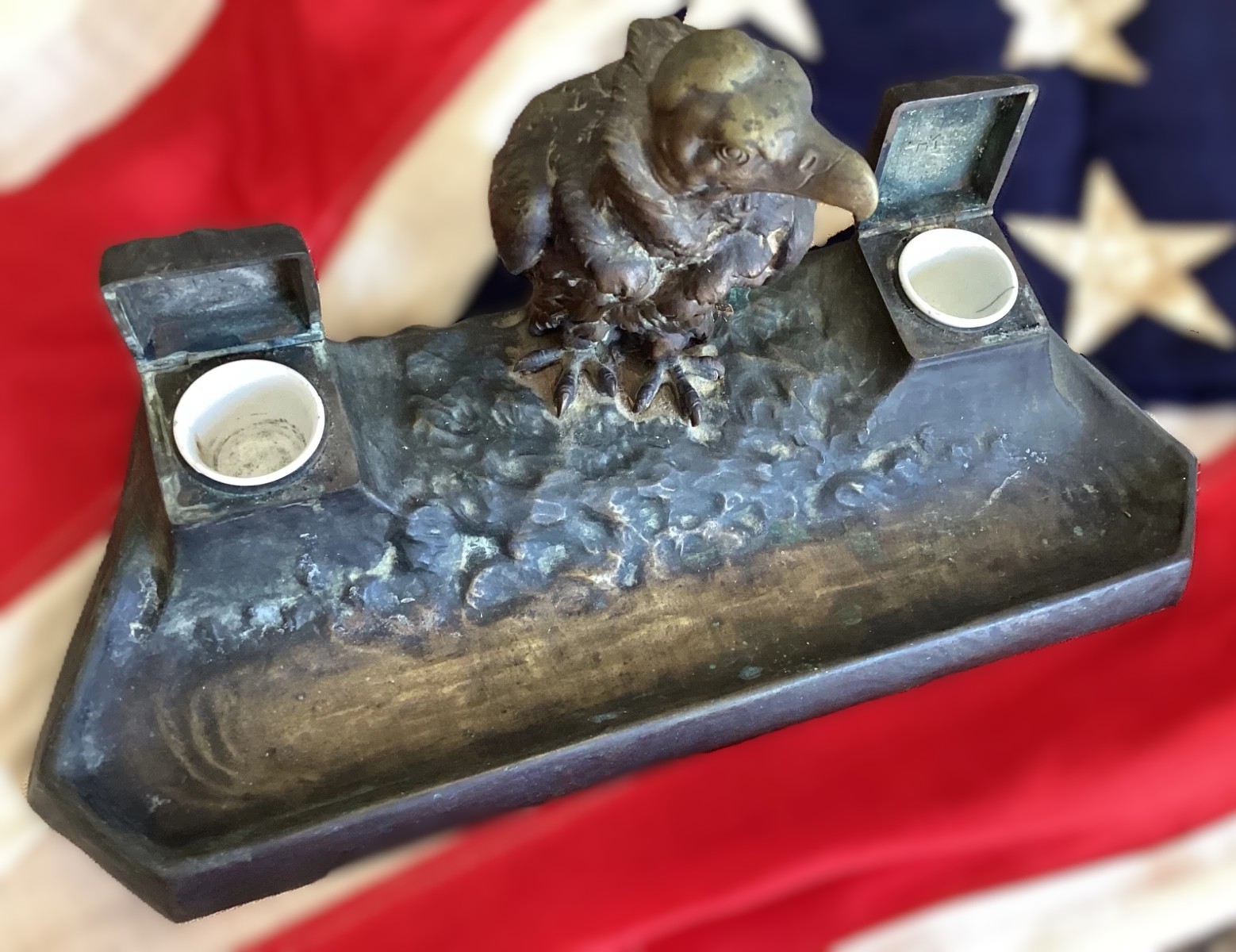
This double inkstand features a sculptural bird figure perched in the center on a textured, rocky outcropping.
Description
- Form & Material: Cast in bronze, the rectangular tray has a beveled perimeter and a built-in pen rest running along the front.
- The Inkwells: Two lidded inkwell compartments anchor the ends of the base. Each features a hinged lid that opens to reveal its original white ceramic insert.
- Marks: The side of the base is cleanly stamped with the country-of-origin mark “AUSTRIA”.
- The Central Figure: Standing centrally between the inkwells is a finely detailed raptor. While often referred to as an eagle, the feather texture, heavy hooked beak, and bald, wrinkled head and neck give it the distinct appearance of a vulture or condor.
This is not a bald eagle, even though its country-of-origin mark (“AUSTRIA”) and patriotic association might make one initially wonder if it was meant to evoke an American symbol.
Several key anatomical details rule out a bald eagle entirely:
- The Plumage Line: A bald eagle has a stark, clean color break where its bright white head feathers sharply meet its dark brown body feathers. On this bird, the feathers on the neck smoothly transition into a ruffled collar or ruff, without any distinct white hood pattern.
- Skin Texture and Shape: A bald eagle’s head is fully feathered, smooth, and aerodynamic. This bird features a distinctively bald crown, wrinkled skin folds around the cheeks and eyes, and a bare neck structure—all classic anatomical features of a vulture or condor.
- Artistic Tradition: European (and specifically Austrian) foundries frequently produced desk accessories featuring scavengers, rugged wilderness outcroppings, and dramatic naturalistic motifs. In the antique marketplace, this exact model is universally documented and cataloged as a vulture or condor inkstand.
Dating & Period
Items bearing the stamp “AUSTRIA” intended for export to English-speaking markets typically date from the late 19th century to the early 20th century (circa 1890–1920).
- The McKinley Tariff Act of 1890: This US legislation required imported goods to be clearly marked with their country of origin in English. Consequently, decorative bronze desk accessories, cold-painted bronzes, and desk standishes produced in Austrian foundries (frequently associated with the rich artistic metalwork traditions of Vienna) were stamped “AUSTRIA” for the American and British markets.
- Stylistic Context: The naturalistic, rugged rock formation paired with detailed animal casting was a hallmark of Viennese bronze workshops during the turn of the 20th century.
Estimated Date: c. 1890–1915 (Turn of the 20th Century)
Sold for $266 in September 2026
Content disclaimer. The information posted is the owner’s best knowledge and may not have been vetted by the SOIC. We welcome comments, corrections, and additions, working to make our website information comprehensive and accurate.
Join the Society of Inkwell Collectors (SOIC) – it’s free!
Founded in 1981 as a non-profit organization,
we are documenting inkwells (and accessories).
We’re here to help and inform!