

Inkipedia
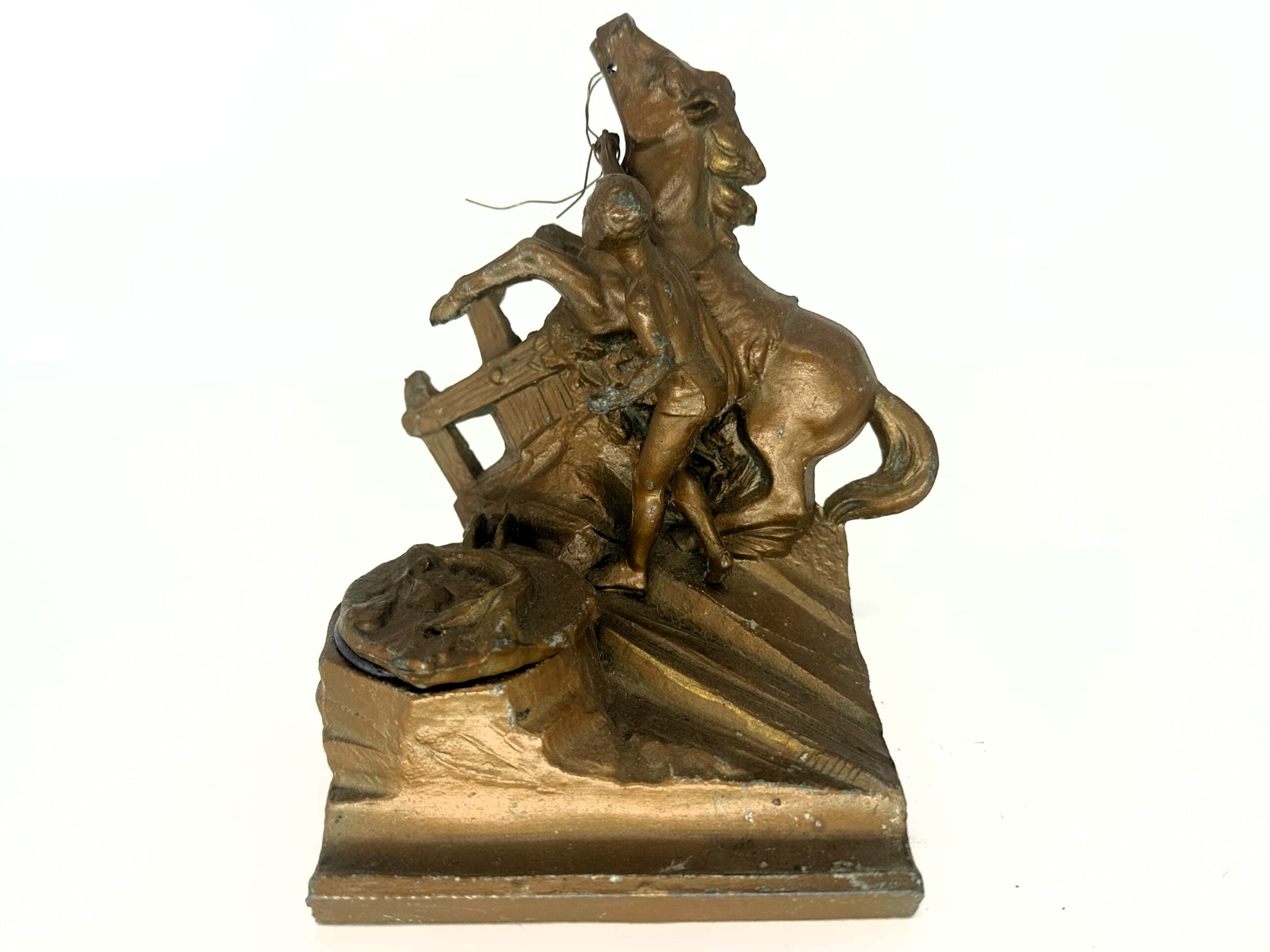
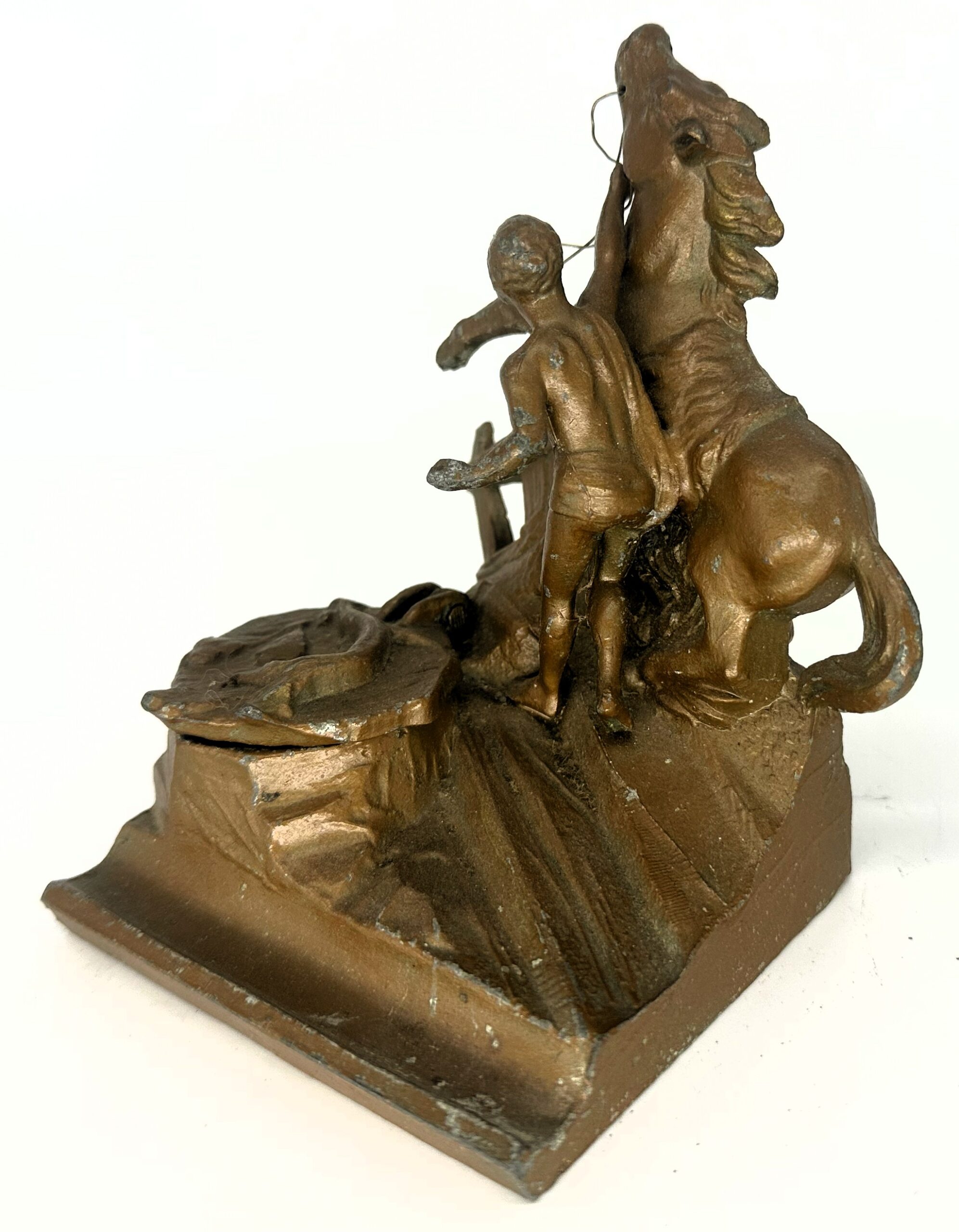
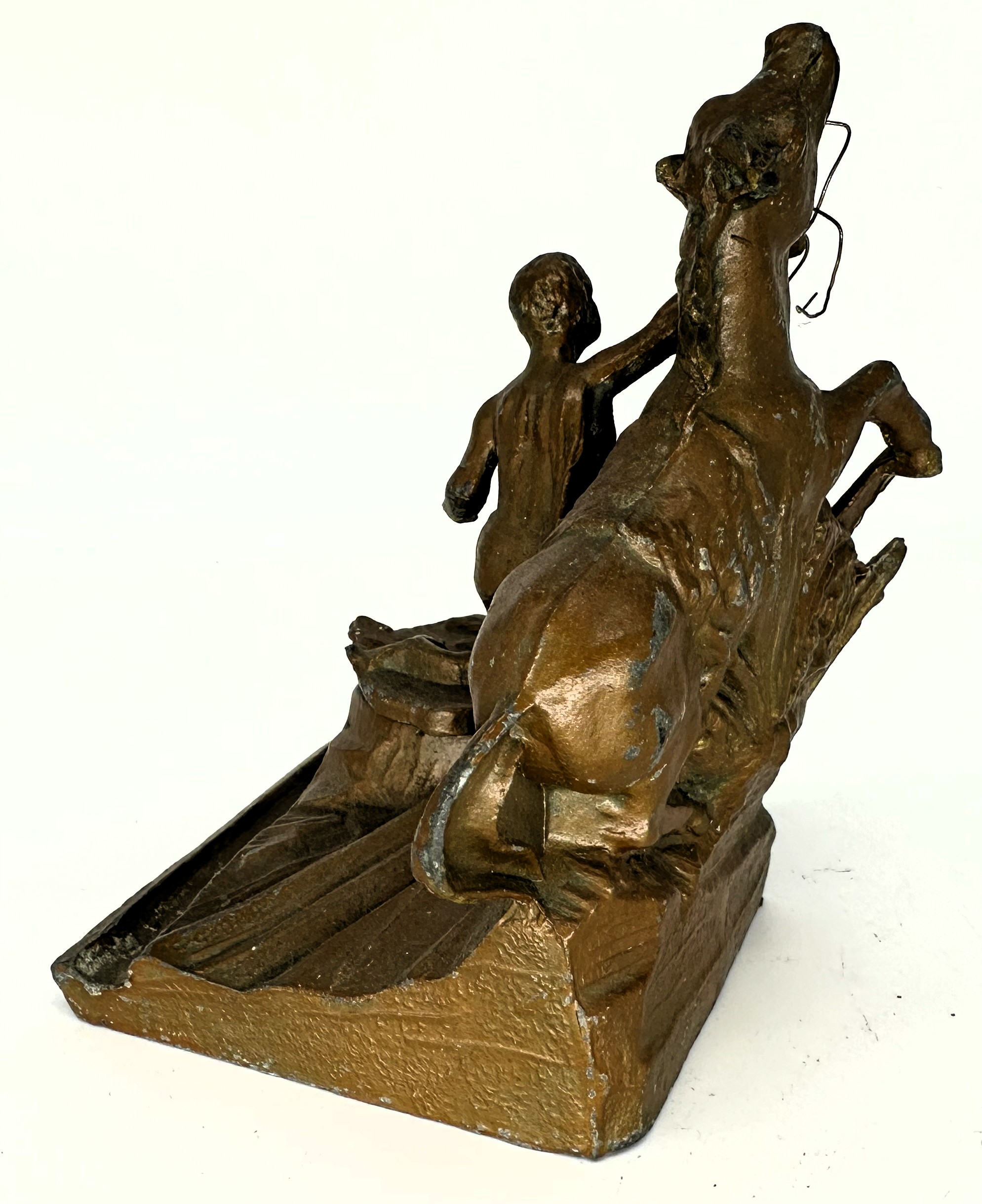
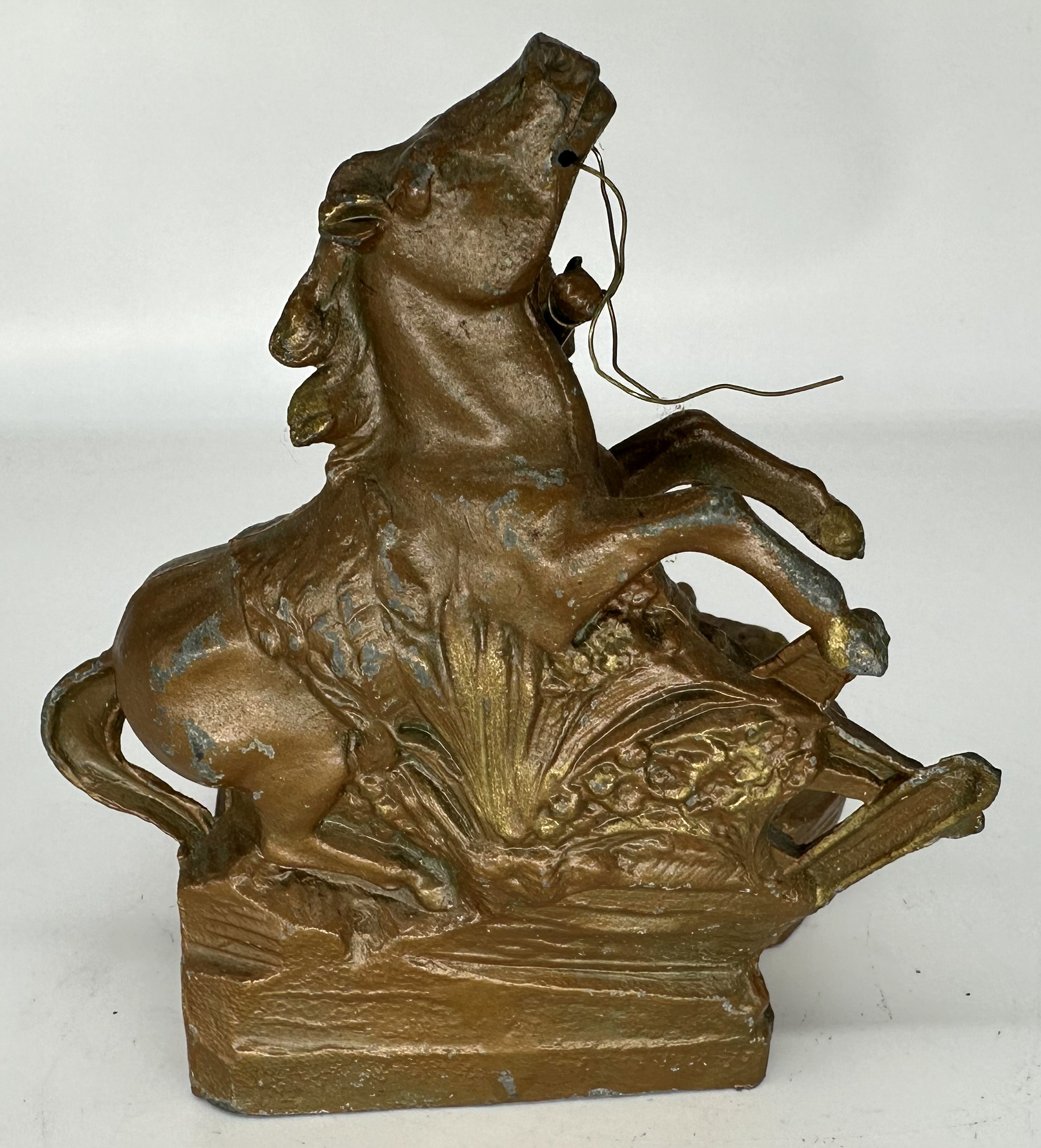
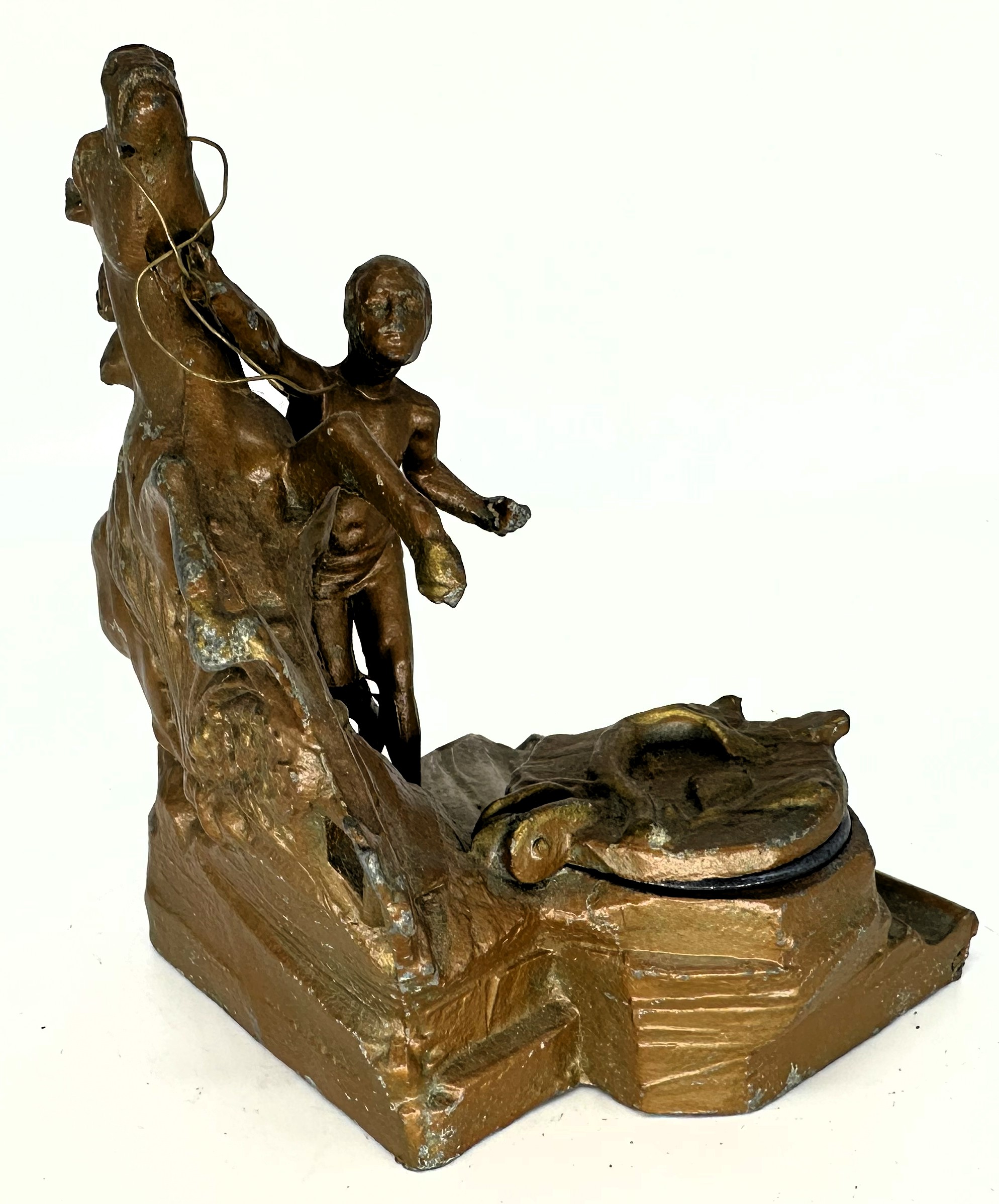

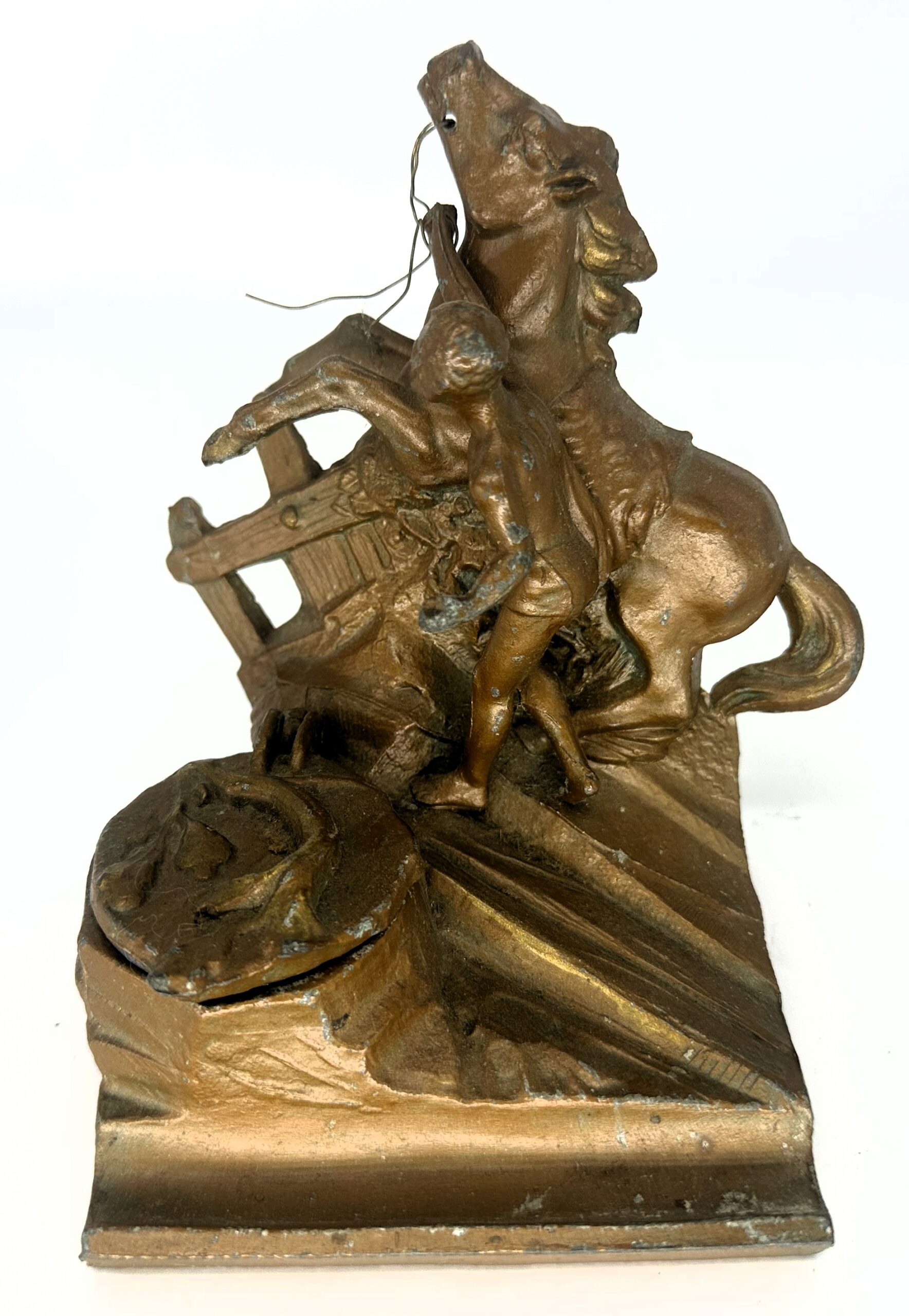
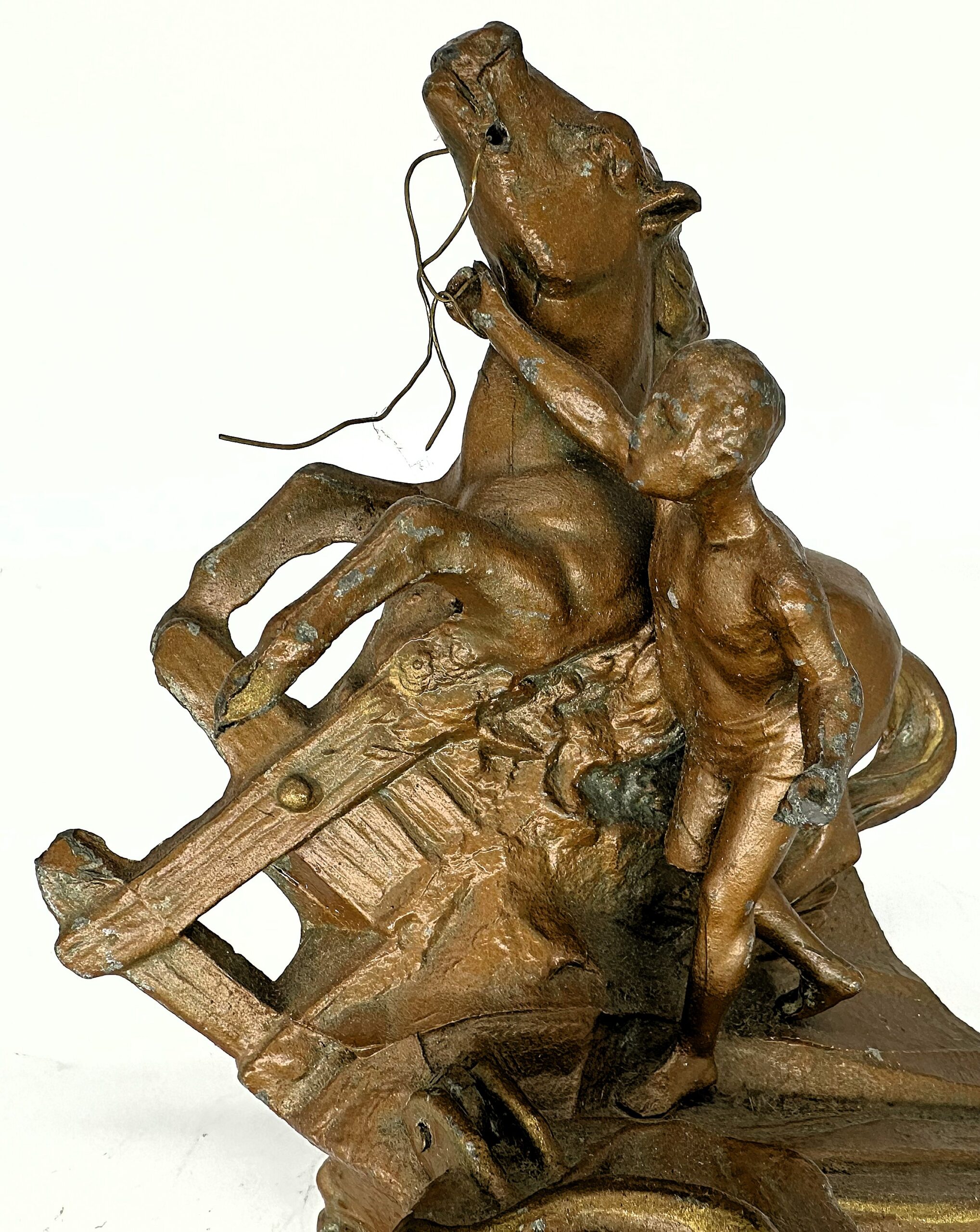
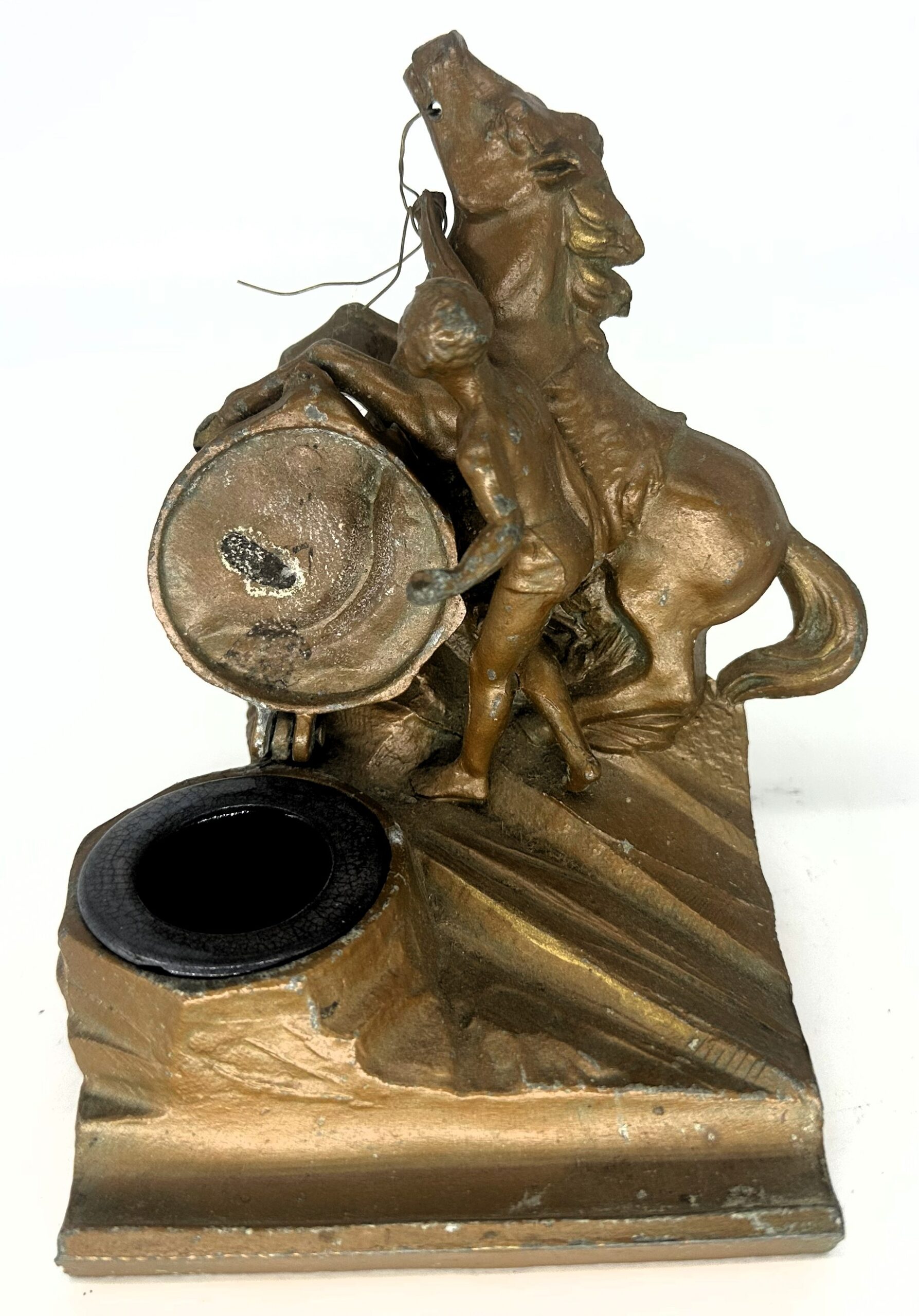
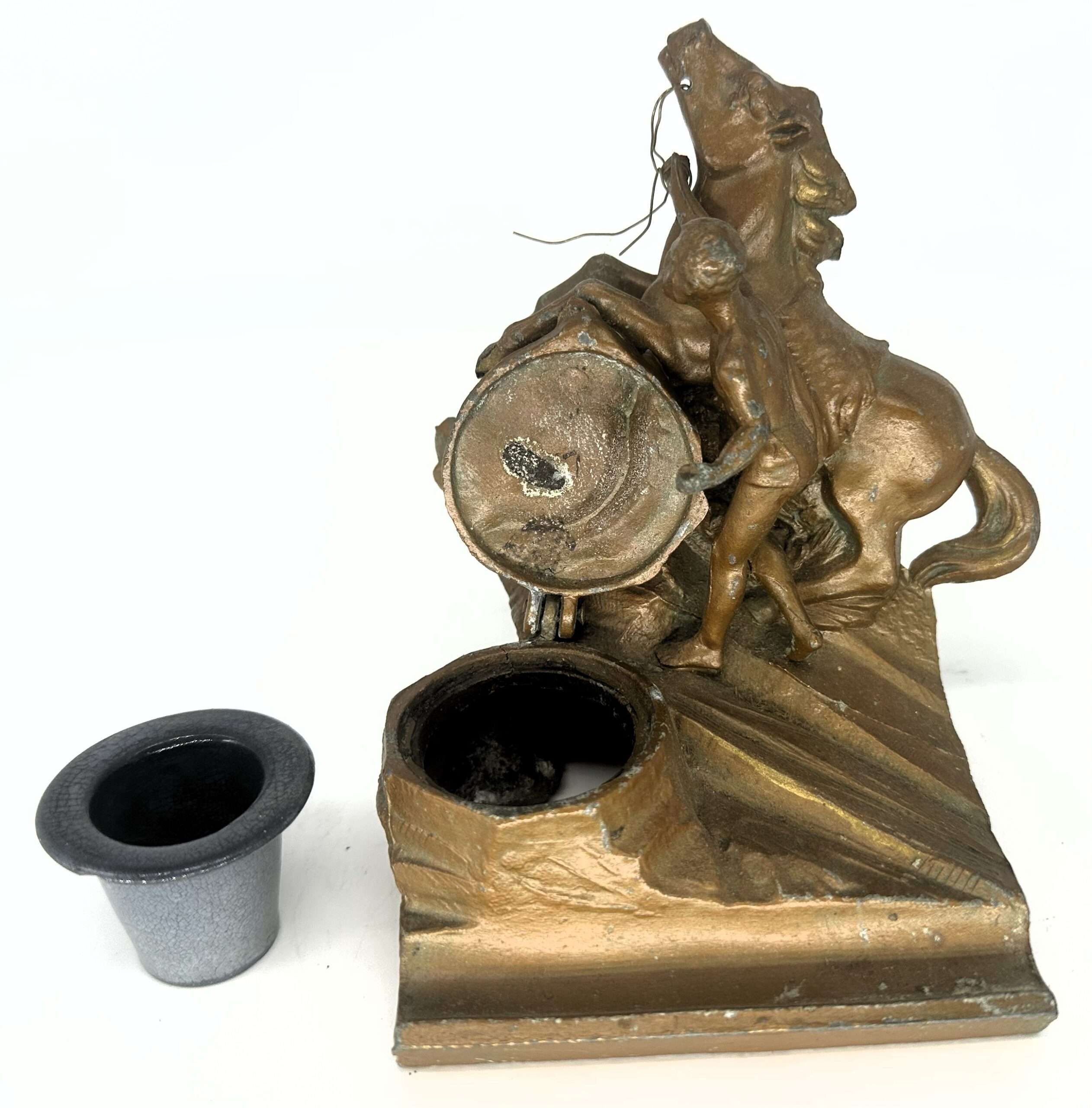
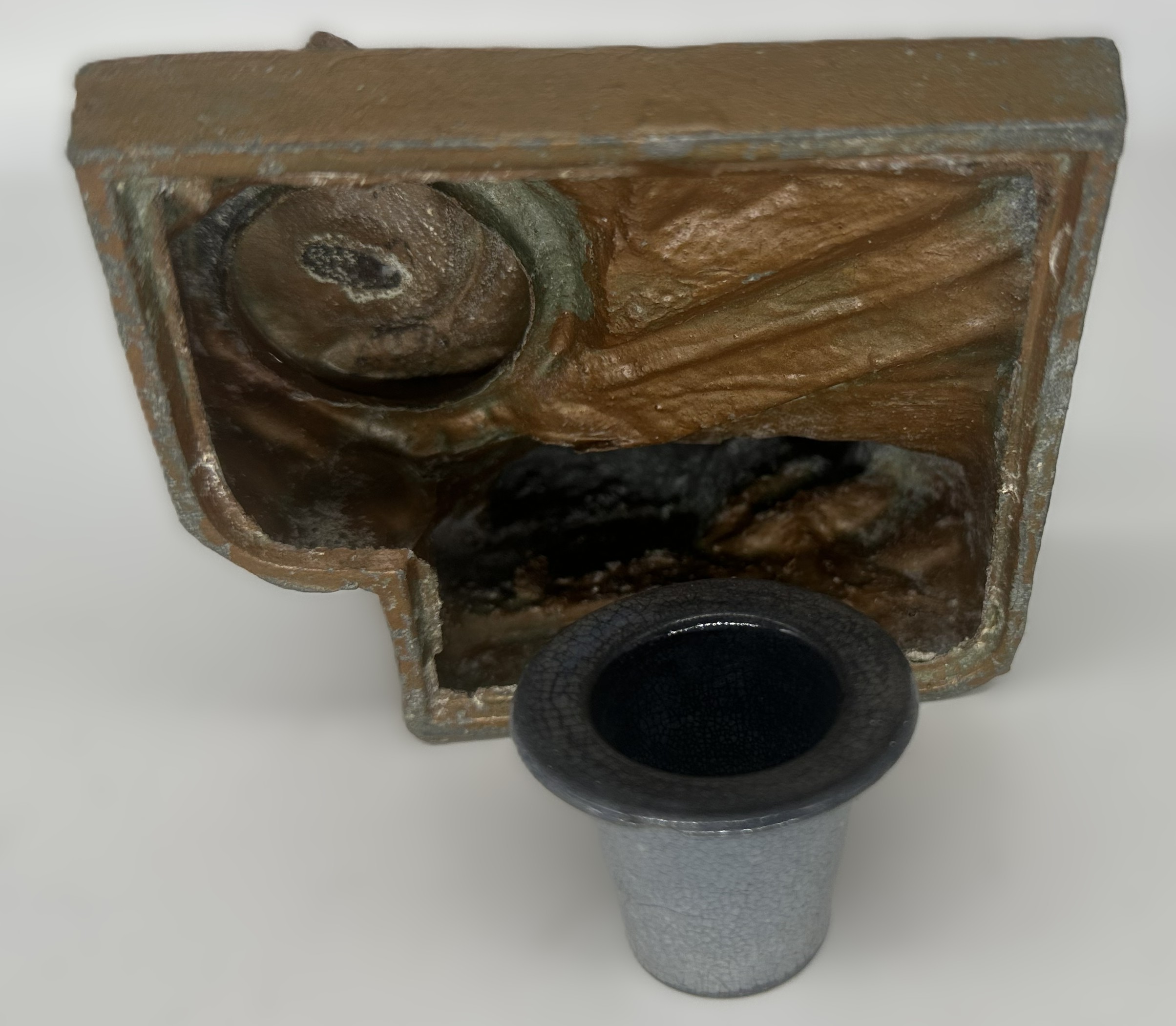
Boy with a Horse
| Categories | Figural - Animals & Living Creatures, Figural - Persons |
| Type | Horse |
| Material | Spelter |
| Markings | Unmarked |
| Manufacturer | Undetermined |
| Origin | Undetermined |
| Date or Era | circa 1890 |
| Measuring | 4” x 4” x 5 ¾” high |
This figural inkstand captures a dynamic moment, characteristic of late 19th-century decorative arts.
Composition and Material
- Primary Material: The piece is constructed of spelter (a zinc alloy), a metal frequently used for cast decorative items in the late 19th and early 20th centuries as an affordable alternative to bronze.
- Finish: The spelter has been treated with a bronze metallic finish.
- Form: It is a single, sculpted base supporting two primary elements: the figural group and the integrated inkwell. The is a pen ledge in the front.
Figural Group (Sculpture)
- Subject: The central scene depicts a dramatic interaction between a young boy and a spirited, rearing horse.
- Horse: The horse is shown in a high state of animation, rearing up on its hind legs. Its pose, with its neck arched and mane flowing, conveys power and energy.
- Boy: The shirtless boy stands at the horse’s head, gripping the lead. His posture suggests he is skillfully controlling the animal’s powerful movement.
- Base/Setting: The figures stand on a rocky, textured, naturalistic base. In the background, there is a representation of a low fence or railing that acts as a scenic backdrop for the vignette.
Inkwell Component
- Integration: The inkwell is concealed within the landscape of the base, blending the utilitarian function with the artistic sculpture.
- Location: The inkwell appears to emerge from a rocky, rugged area to the side of the figural group.
- Lid and Finial: It features a hinged lid. The lid’s handle or finial is molded to resemble a small, broken tree branch or limb, further enhancing the naturalistic, outdoor setting. The opening holds a removable ceramic inkpot.
Age and Origin Assessment (Based on Style and Material)
While the piece is unmarked, the material and style strongly suggest an estimated age and origin:
- Estimated Age: Late 19th Century to Early 20th Century (c. 1880–1910). This period was the height of popularity for figural spelter objects, especially desk sets and small parlor sculptures.
- Estimated Origin: France or United States.
- French Origin: France was a major producer of high-quality decorative spelter pieces, often labeled as Régule. The subject matter—a dynamic, idealized natural scene—is consistent with the French taste for animalier and genre sculpture of the period.
- American Origin: Companies in the United States also produced many spelter pieces, sometimes imitating French designs, particularly during the American Aesthetic Movement.
- Stylistic Influence: The work falls within the Naturalistic or Animalier style, which focused on realistic and dramatic portrayals of animals. The high degree of energy and the realistic setting are common characteristics of sculptures designed to be admired from all angles on a desk or table.
Estimated value: $90
Content disclaimer. The information posted is the owner’s best knowledge and may not have been vetted by the SOIC. We welcome comments, corrections, and additions, working to make our website information comprehensive and accurate.
Join the Society of Inkwell Collectors (SOIC) – it’s free!
Founded in 1981 as a non-profit organization,
we are documenting inkwells (and accessories).
We’re here to help and inform!