

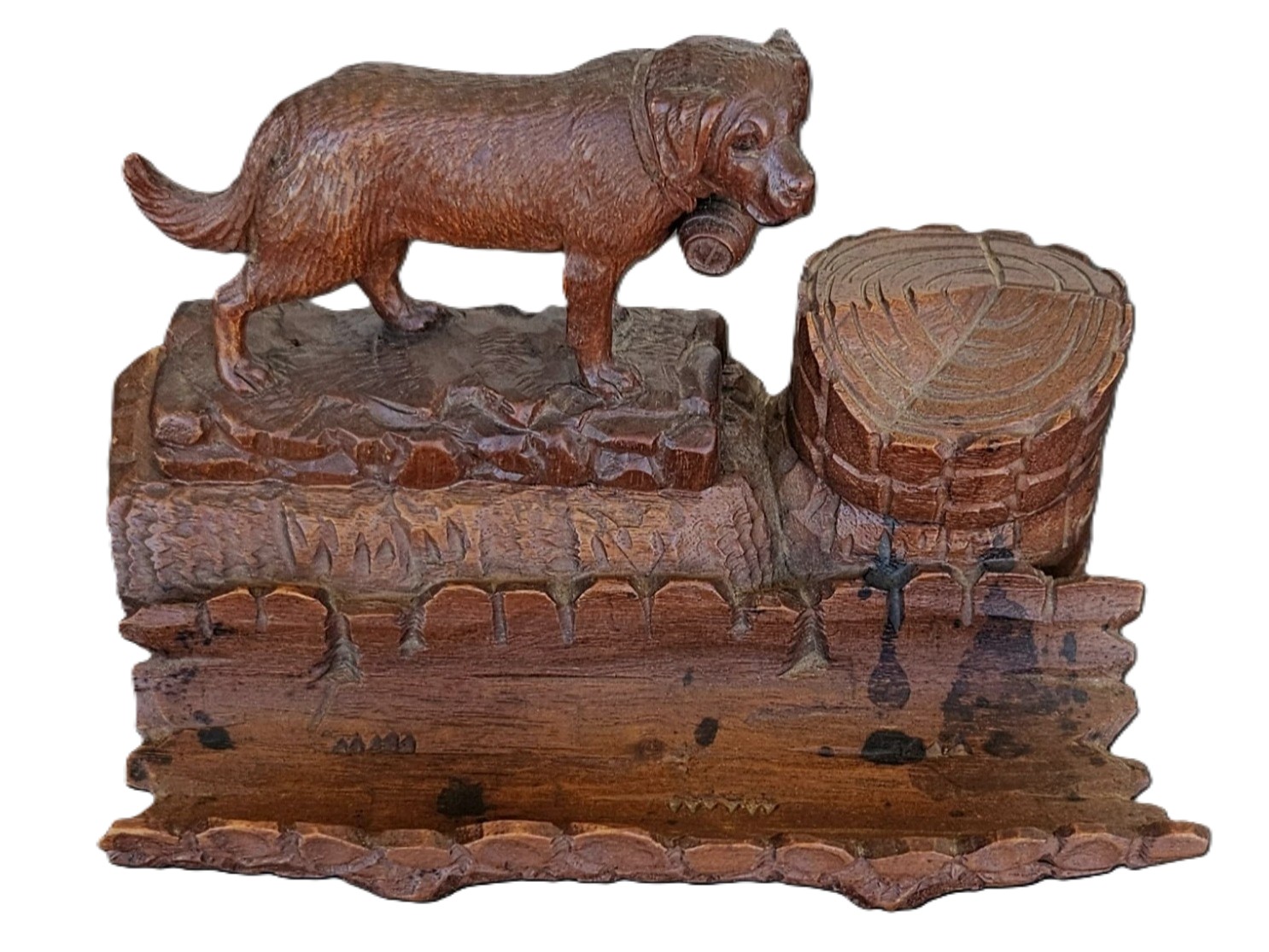
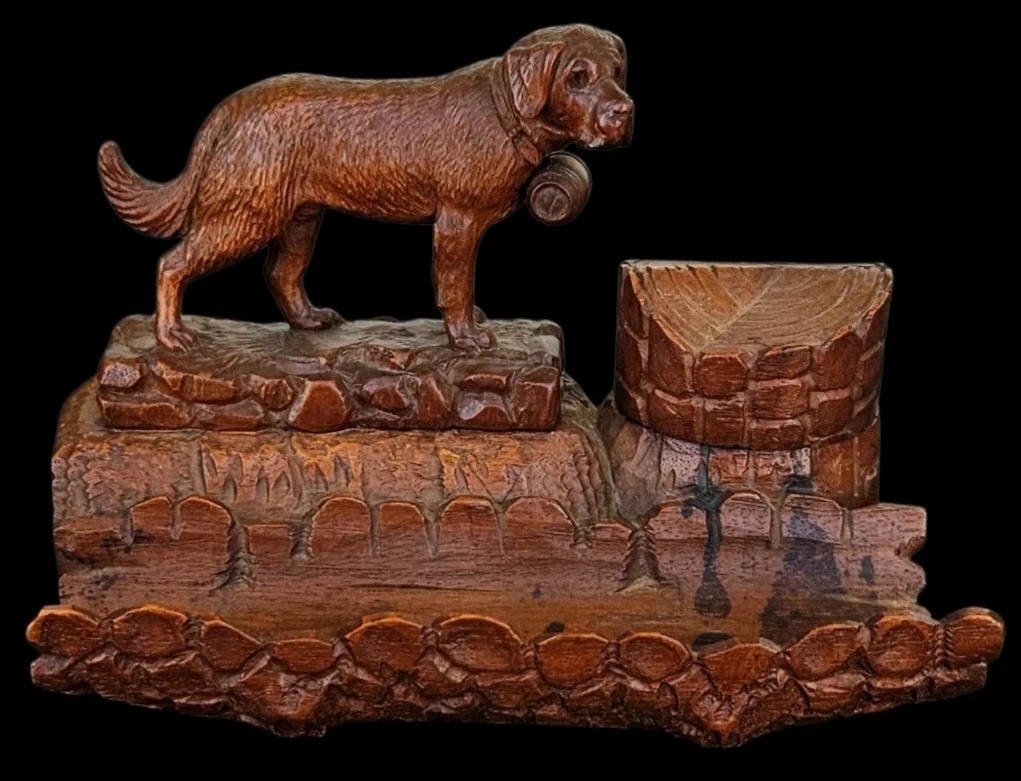
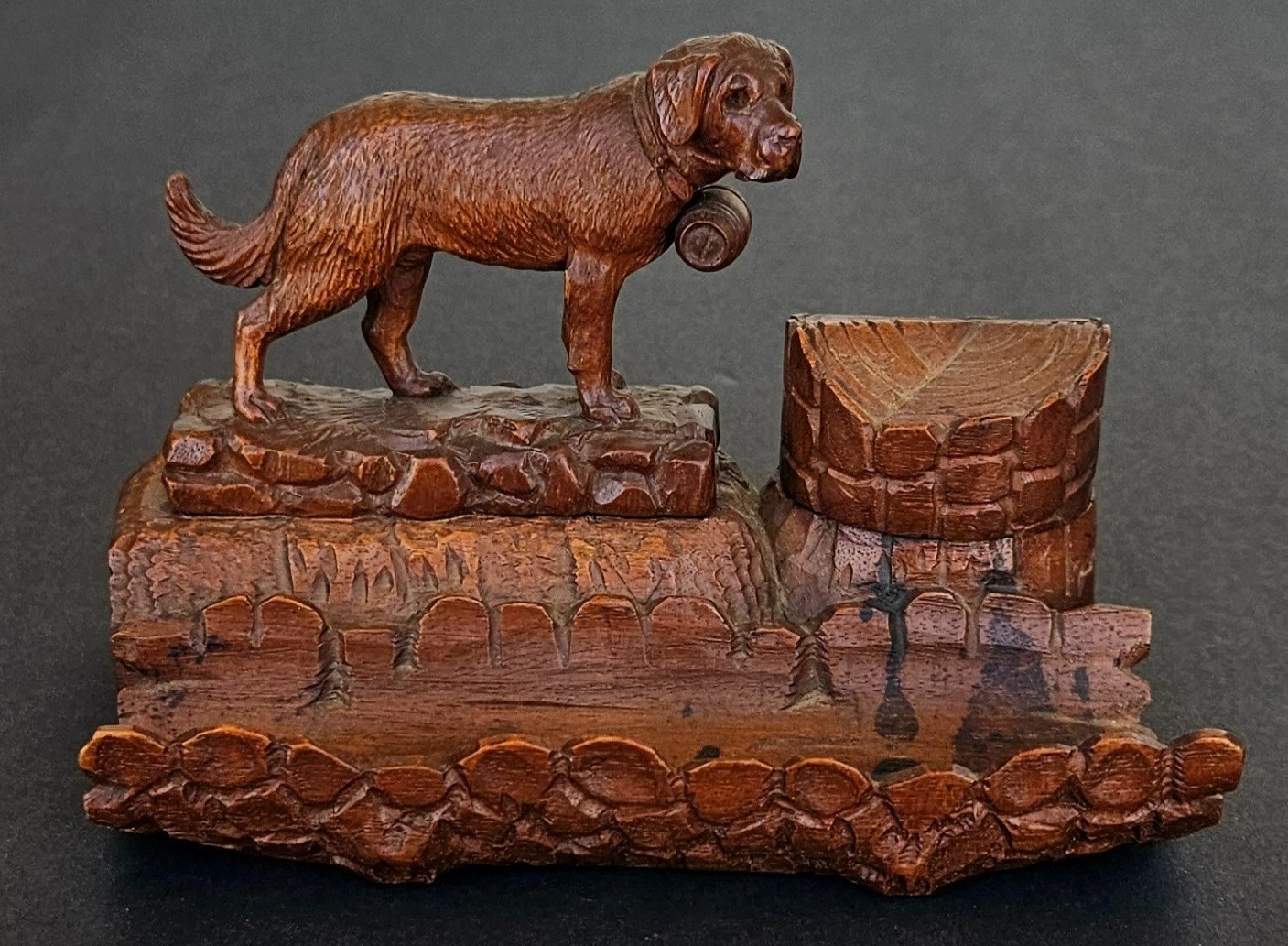
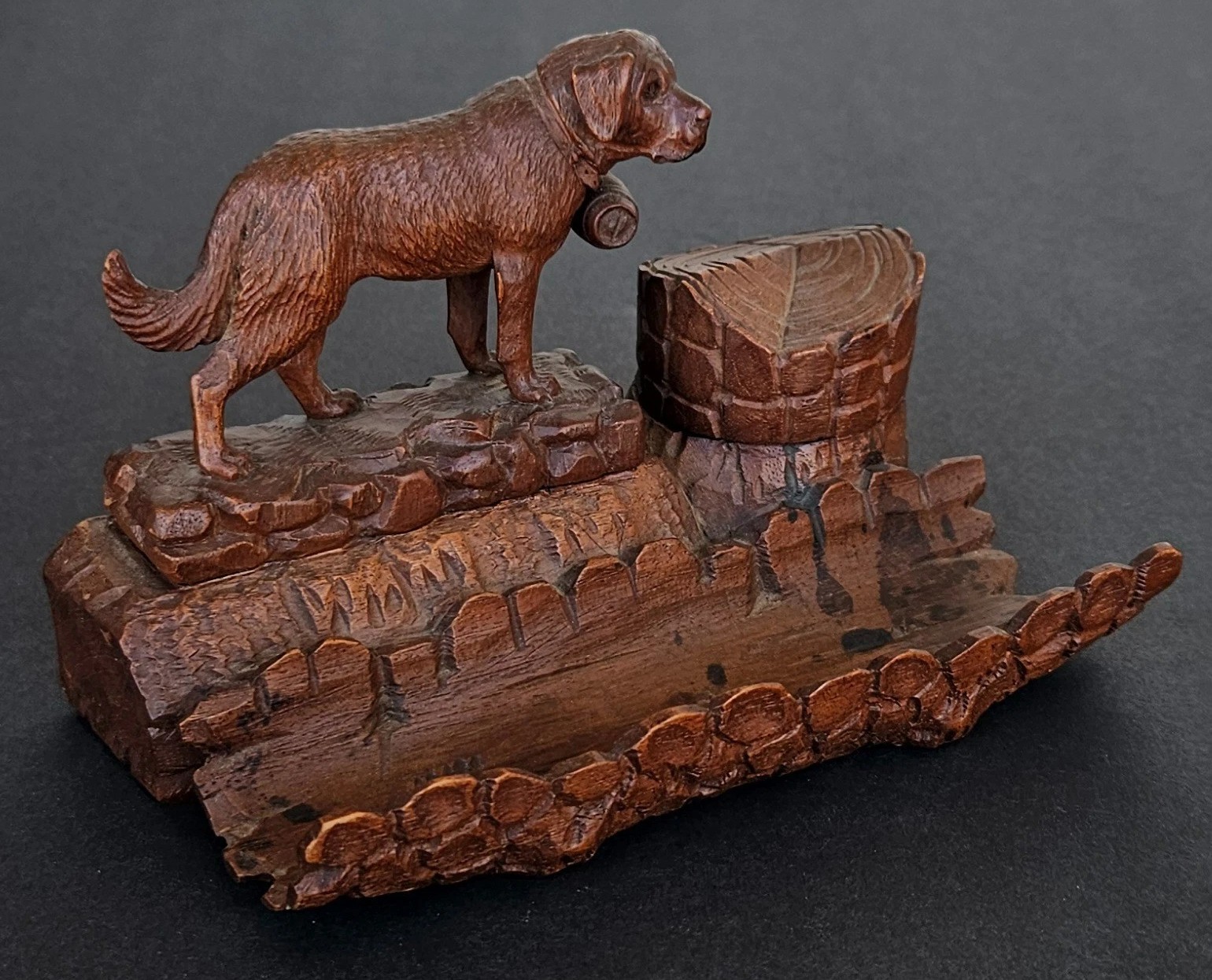
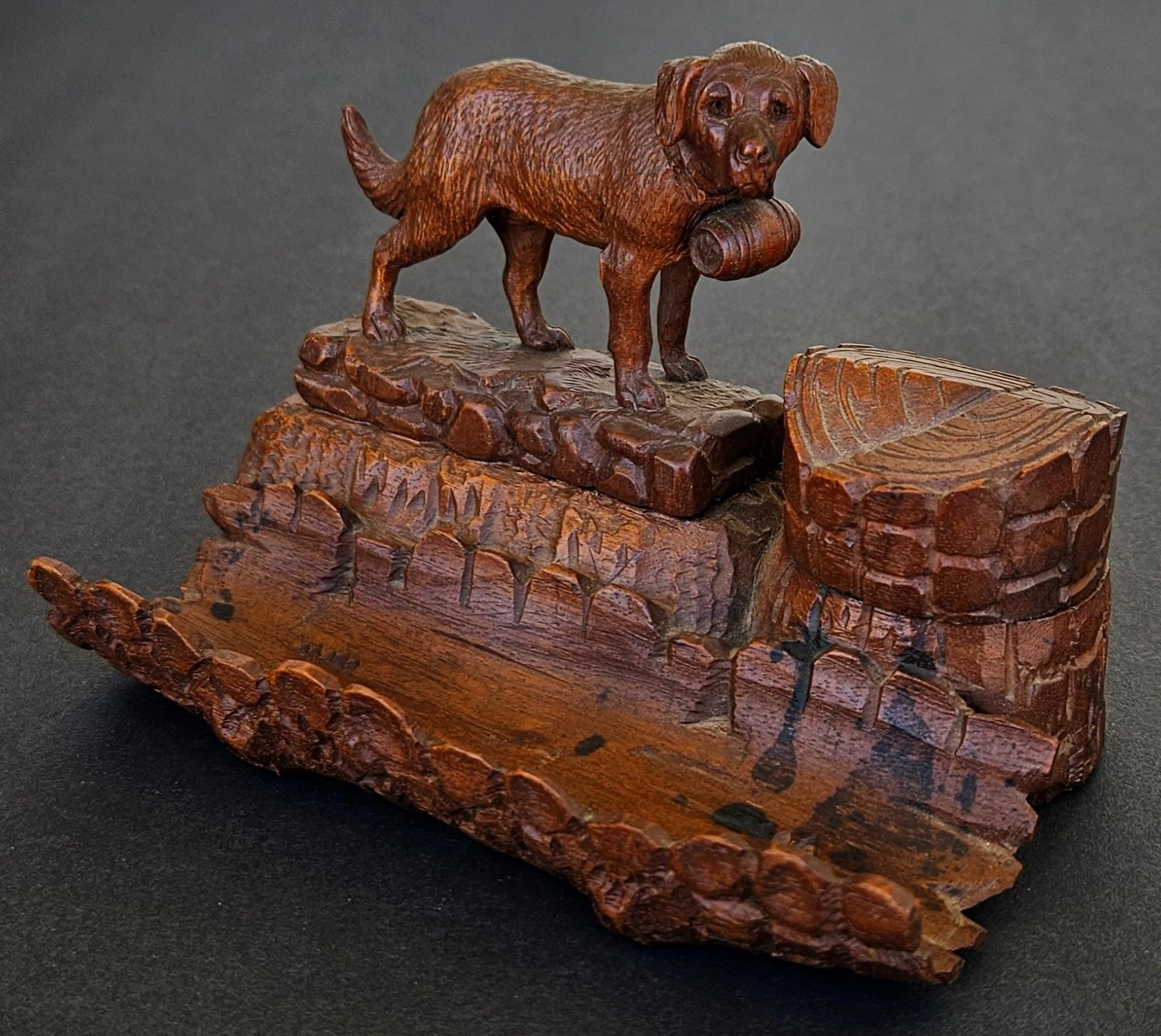
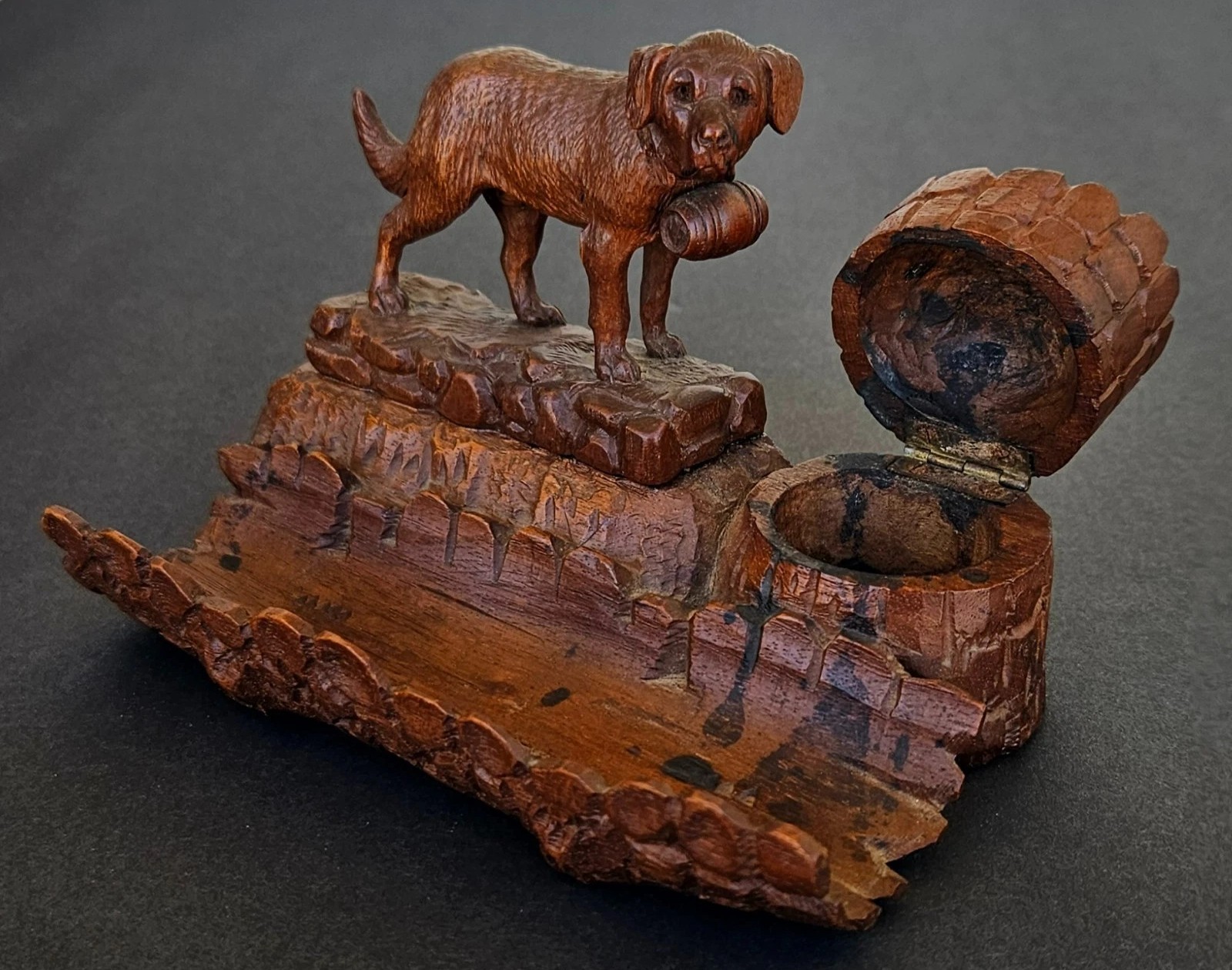
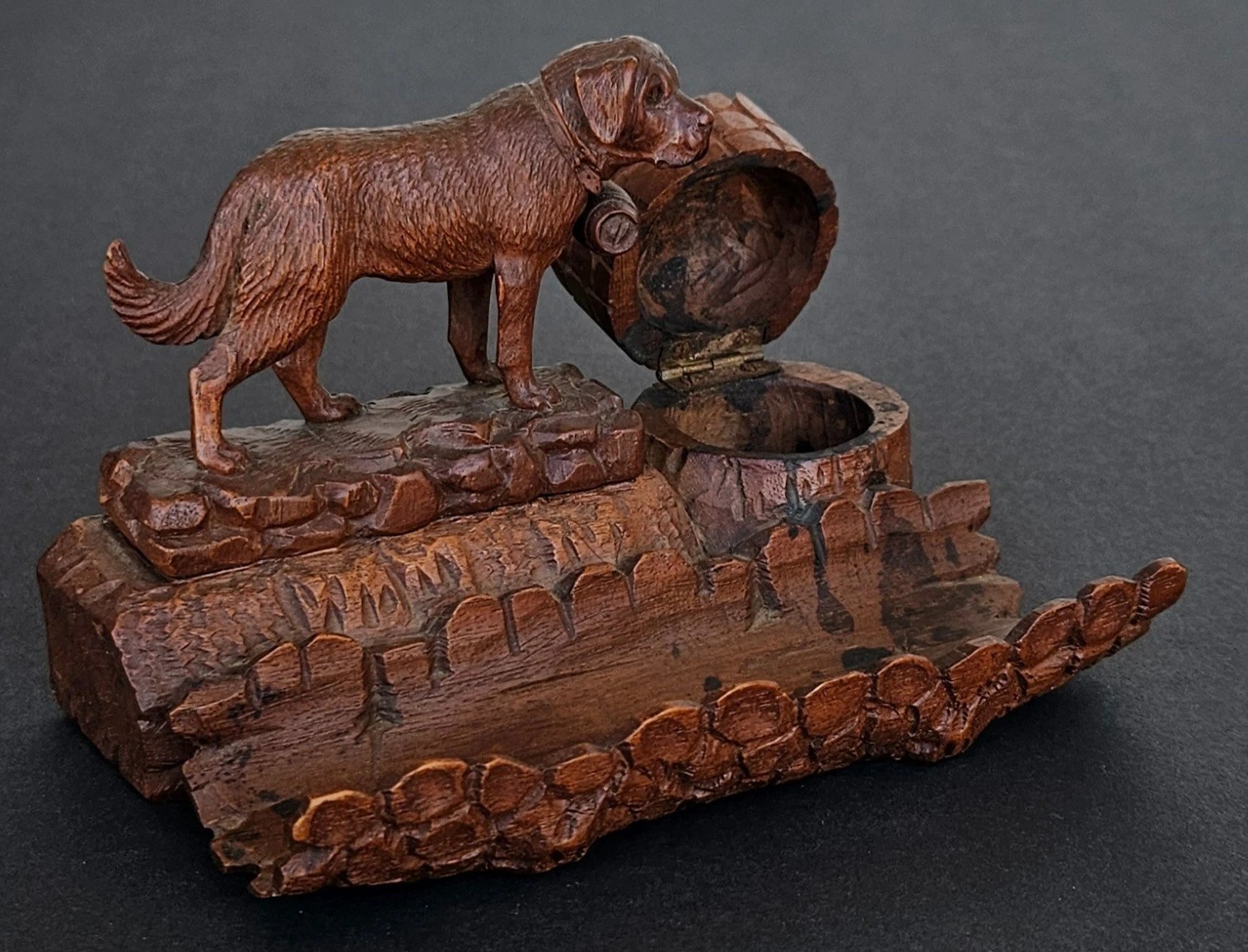
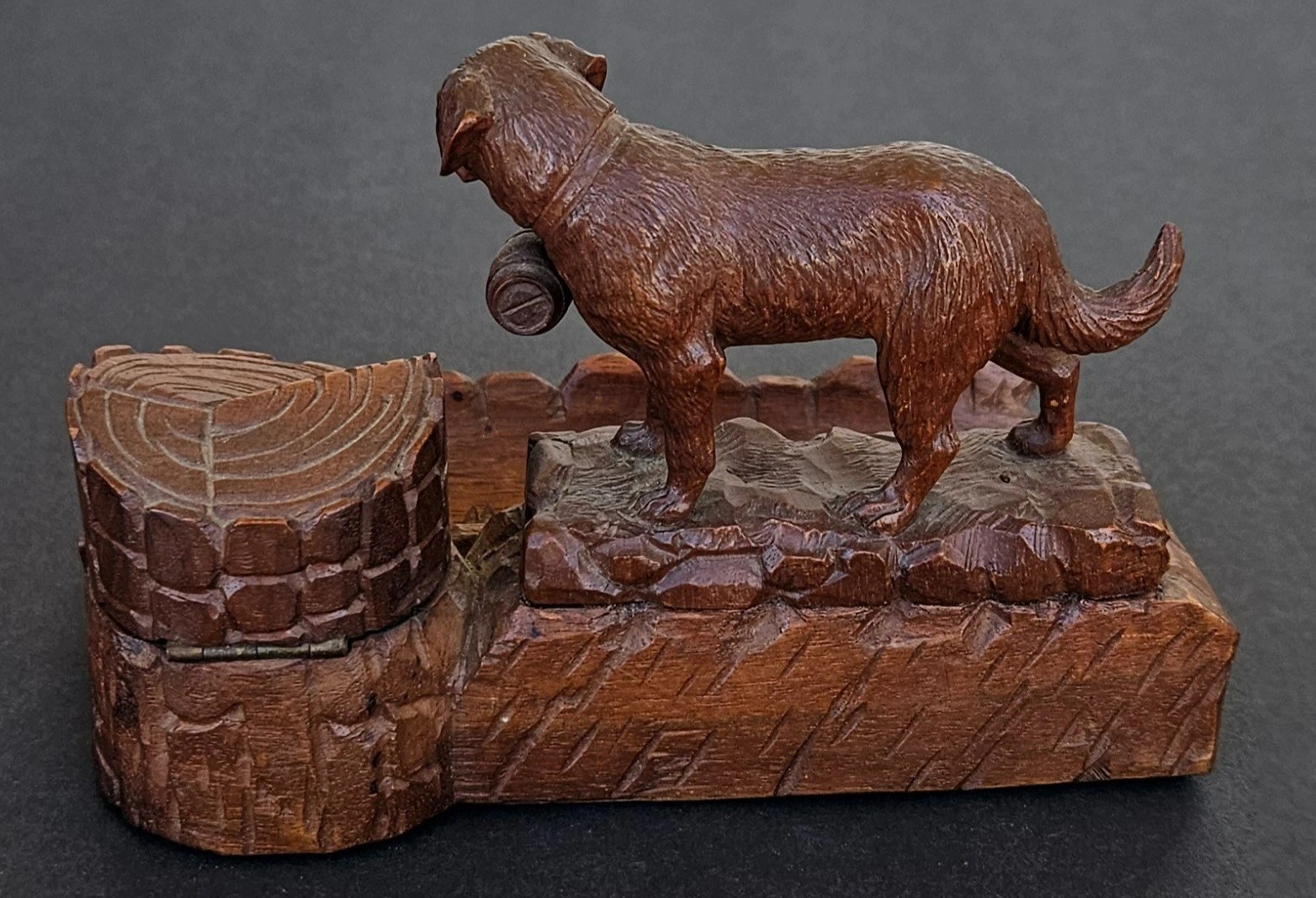
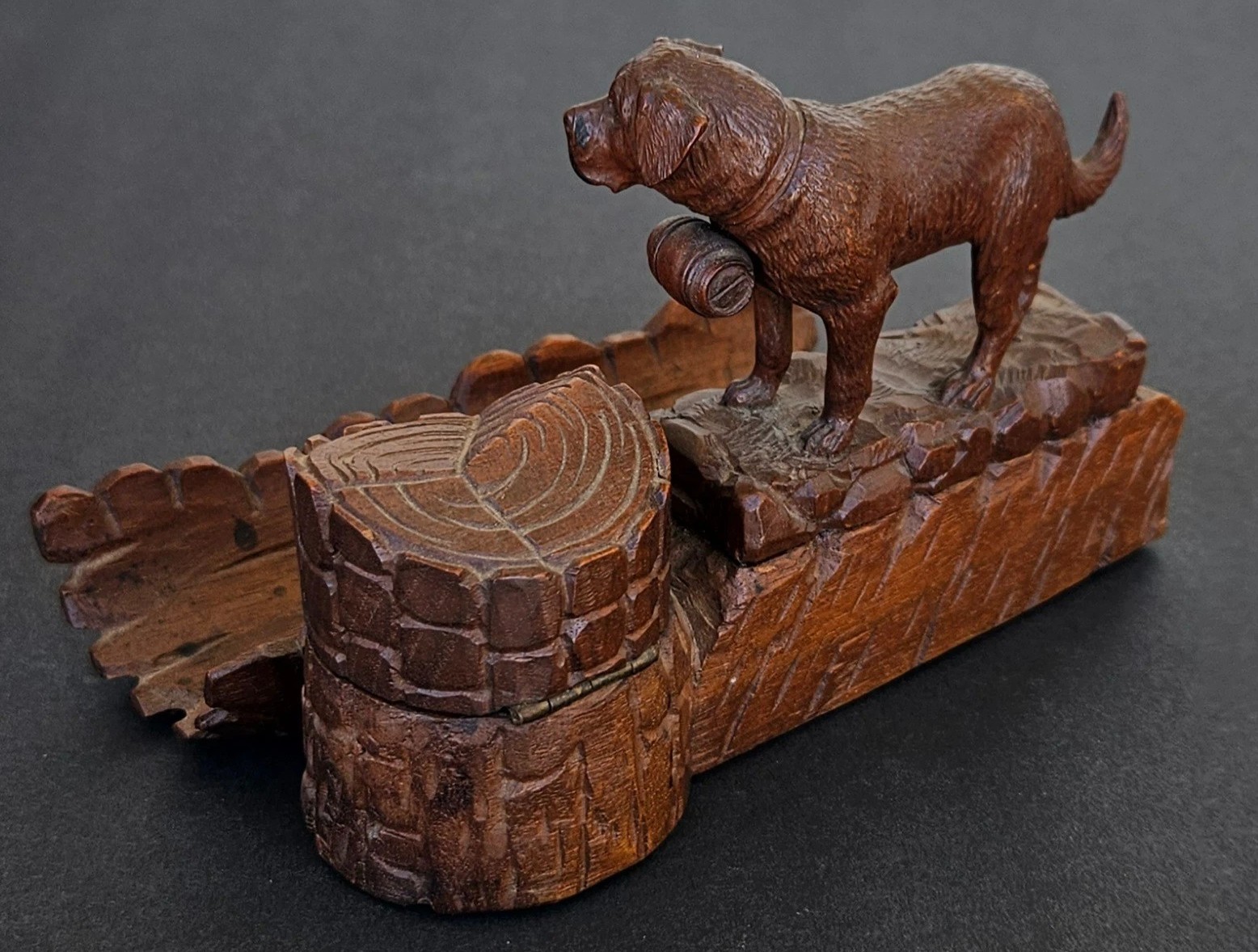
Black Forest St. Bernard Inkstand
| Categories | Figural - Animals & Living Creatures |
| Type | dog |
| Material | Wood |
| Markings | Unmarked |
| Manufacturer | Black Forest |
| Origin | Switzerland |
| Date or Era | circa 1890 |
| Measuring | 6” across; 3 ½” high |
Description
This is a fine example of Black Forest wood carving, produced during the late 19th or early 20th century (circa 1880–1910). Hand-carved from linden wood (limewood), which was favored by artisans in the mountainous Brienz region of Switzerland and the Black Forest region of Germany for its fine grain and ease of intricate shaping, the piece exhibits exceptional sculptural detail.
- The Sculpture: Atop a rocky, textured outcrop stands a lifelike St. Bernard dog with detailed fur texturing, expressive facial features, and a small barrel collar.
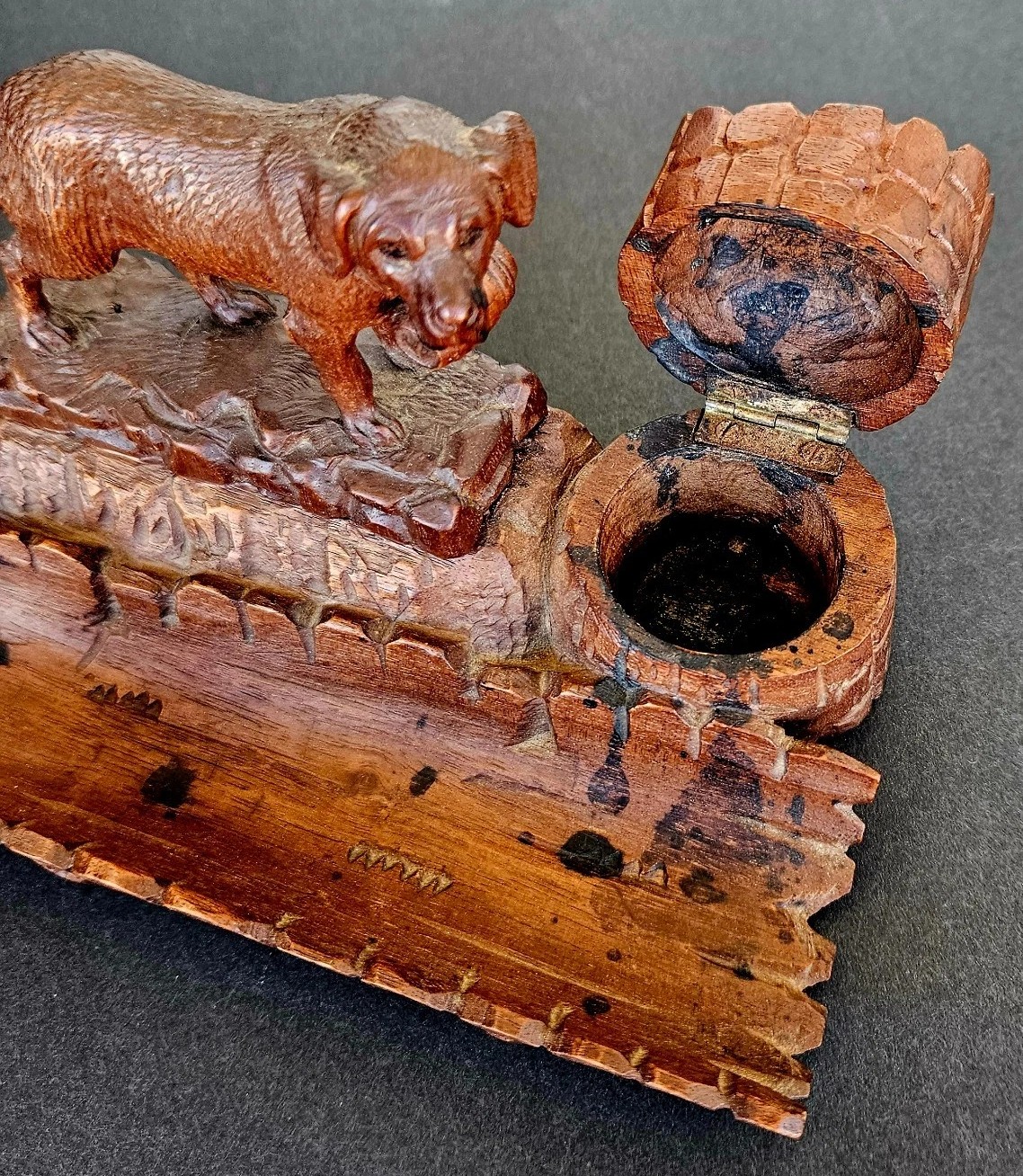
- The Inkwell: The inkwell itself is carved to resemble a tree stump with a hinged lid revealing the internal well (missing the glass insert).
- The Base & Pen Tray: The base is sculpted to mimic natural forest timber, featuring a recessed, carved channel running along the front that serves as an integrated pen tray, bordered by naturalistic bark and log-end motifs.
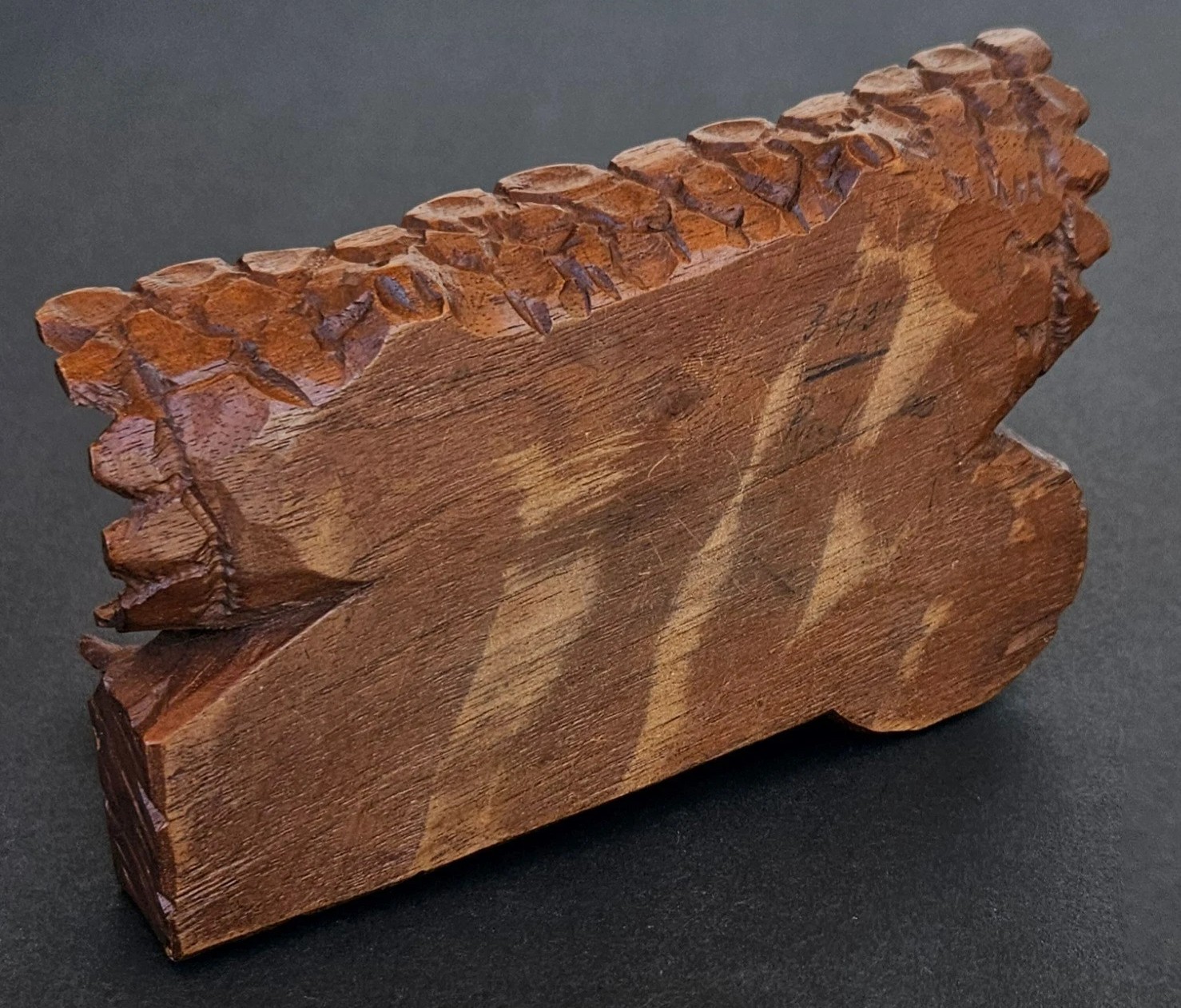
- Underside: The base shows the original rough-hewn grain and hand-carved contours.
The St. Bernard Barrel Tradition
The small barrel worn around the dog’s neck is an iconic feature immortalized in folklore and art, symbolizing the rescue mission of mountain rescue dogs.
- The Legend: Historically, the monks of the Great St. Bernard Hospice in the Swiss Alps trained large mastiff-type dogs to assist in locating travelers lost or trapped in deep snowdrifts and avalanches. Popular lore and Victorian imagination maintained that these barrels contained brandy or spirits to revive freezing, exhausted wanderers.
- The Reality: While the rescue dogs of the hospice did perform legendary life-saving work, they did not actually carry barrels of alcohol on rescues. Alcohol would dilate blood vessels, accelerating hypothermia in freezing victims.
- Origin in Art: The image of the brandy keg was popularized by an 1820 painting titled Alpine Mastiffs Reanimating a Distressed Traveler by British artist Sir Edwin Landseer. The motif captured the public imagination and became a permanent fixture in Victorian decorative arts, toy manufacturing, and Black Forest wood carvings.
Sold for $314 in October 2026
Content disclaimer. The information posted is the owner’s best knowledge and may not have been vetted by the SOIC. We welcome comments, corrections, and additions, working to make our website information comprehensive and accurate.
Join the Society of Inkwell Collectors (SOIC) – it’s free!
Founded in 1981 as a non-profit organization,
we are documenting inkwells (and accessories).
We’re here to help and inform!