

Black Forest Inkstand – Sitting Bear
| Categories | Figural - Animals & Living Creatures |
| Type | Bear |
| Material | Wood |
| Markings | "EE" |
| Manufacturer | Black Forest |
| Origin | Switzerland |
| Date or Era | circa 1900 |
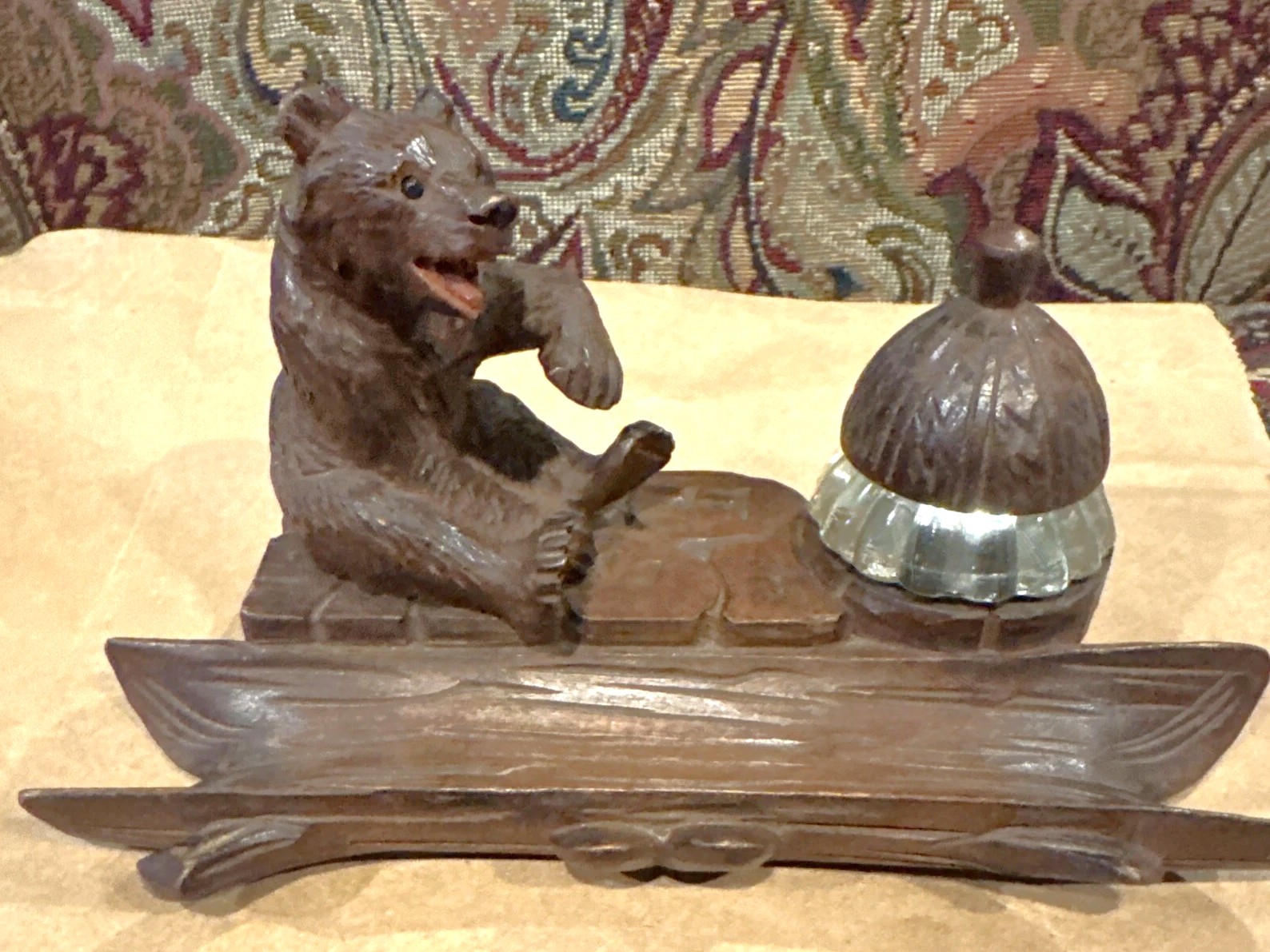
This is a classic example of Swiss Black Forest woodcarving, likely dating from the late 19th or early 20th century. The piece combines rustic naturalism with the whimsical figural work that Brienz is famous for.
The Bear Figure
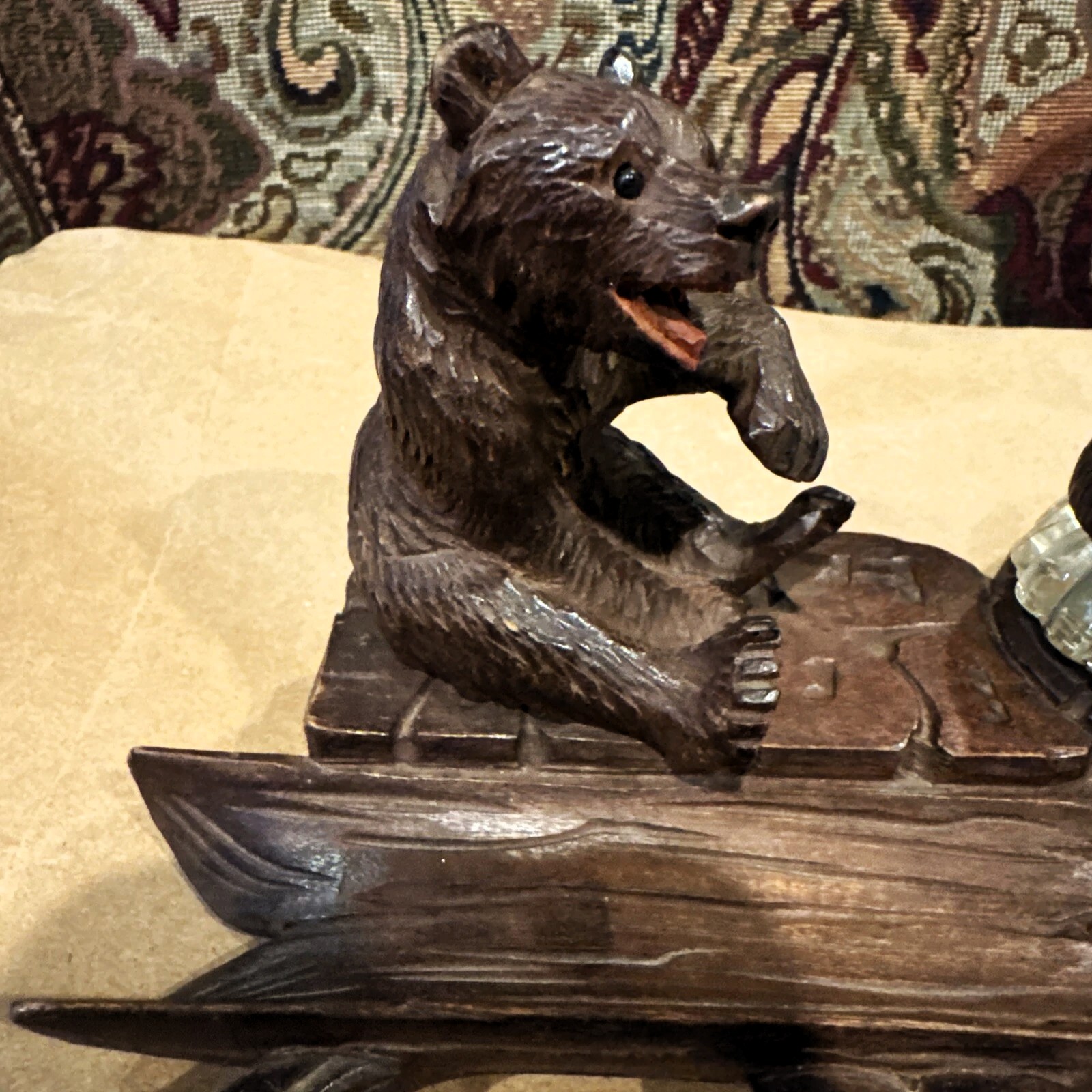
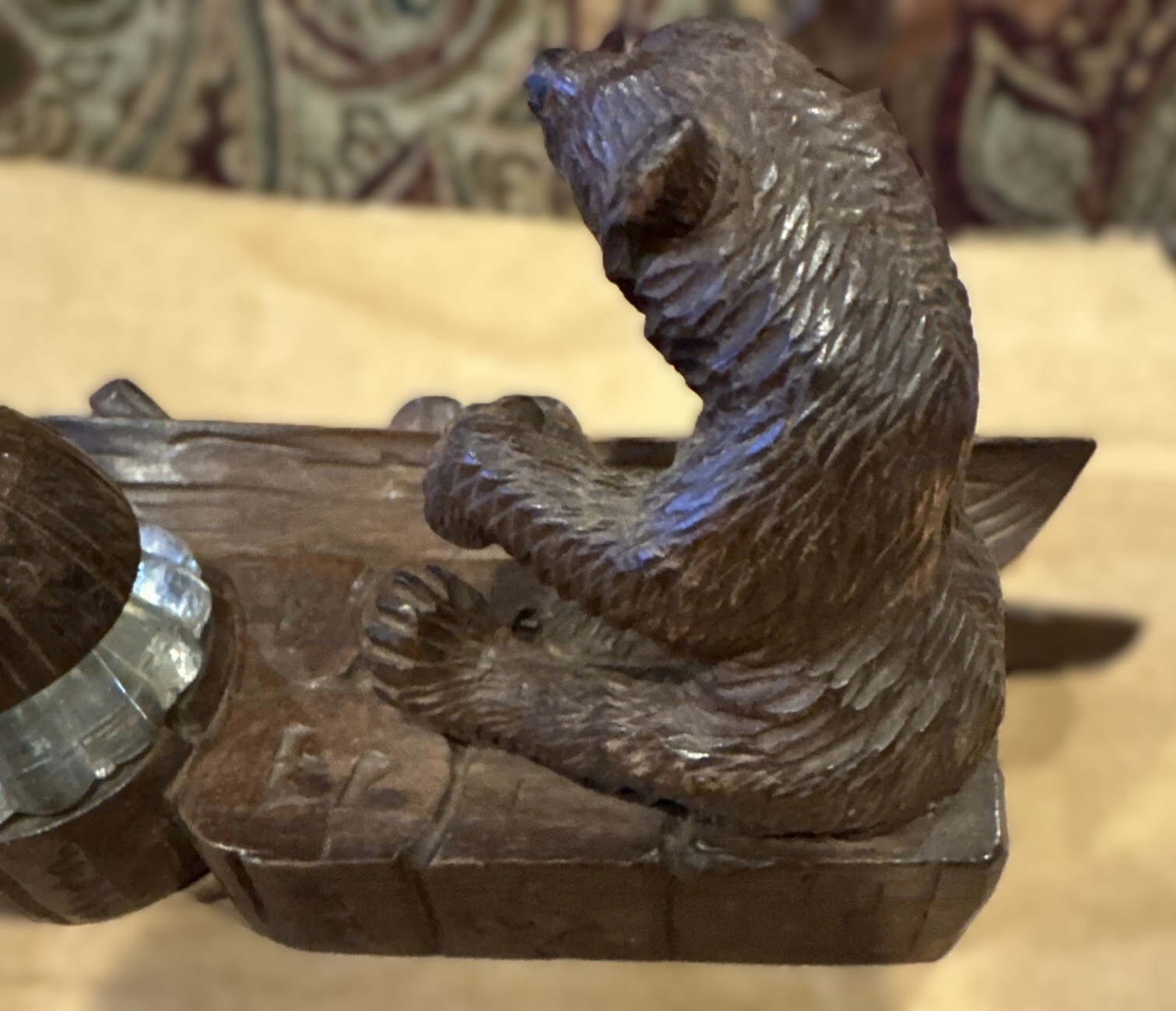
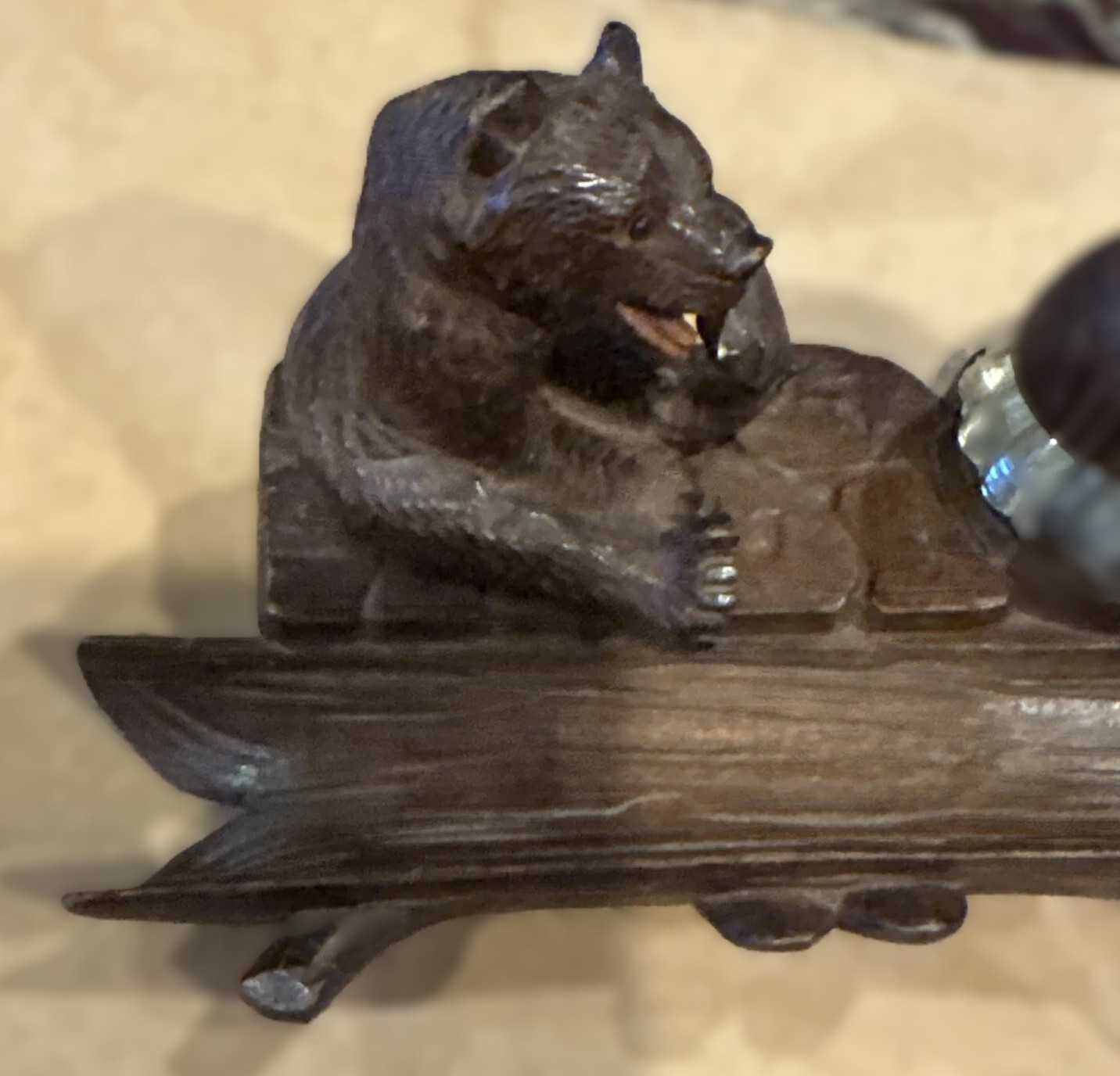
The focal point of the inkstand is a hand-carved linden wood bear seated on the left side of the base.
- Posture: The bear is depicted in a playful, anthropomorphic seated position. One paw is raised near its head, and its mouth is slightly open, revealing a carved tongue and teeth, giving it an expressive, almost vocal appearance.
- Carving Detail: The fur is rendered with deep, rhythmic gouge marks that create a rich texture. The eyes are small, dark glass beads.
The Desk Set Components
The inkstand is designed with a logical layout for a writer’s desk:
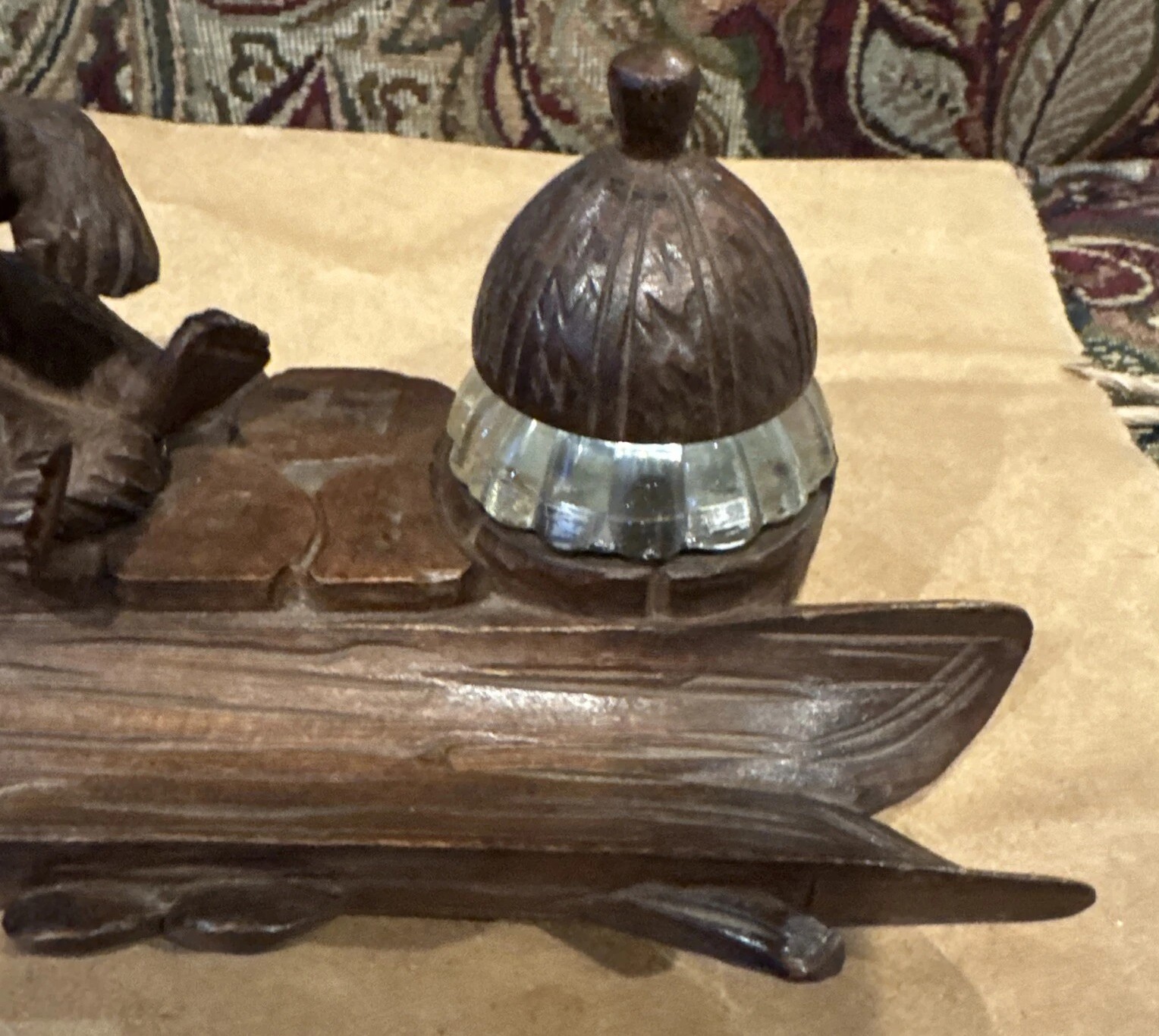
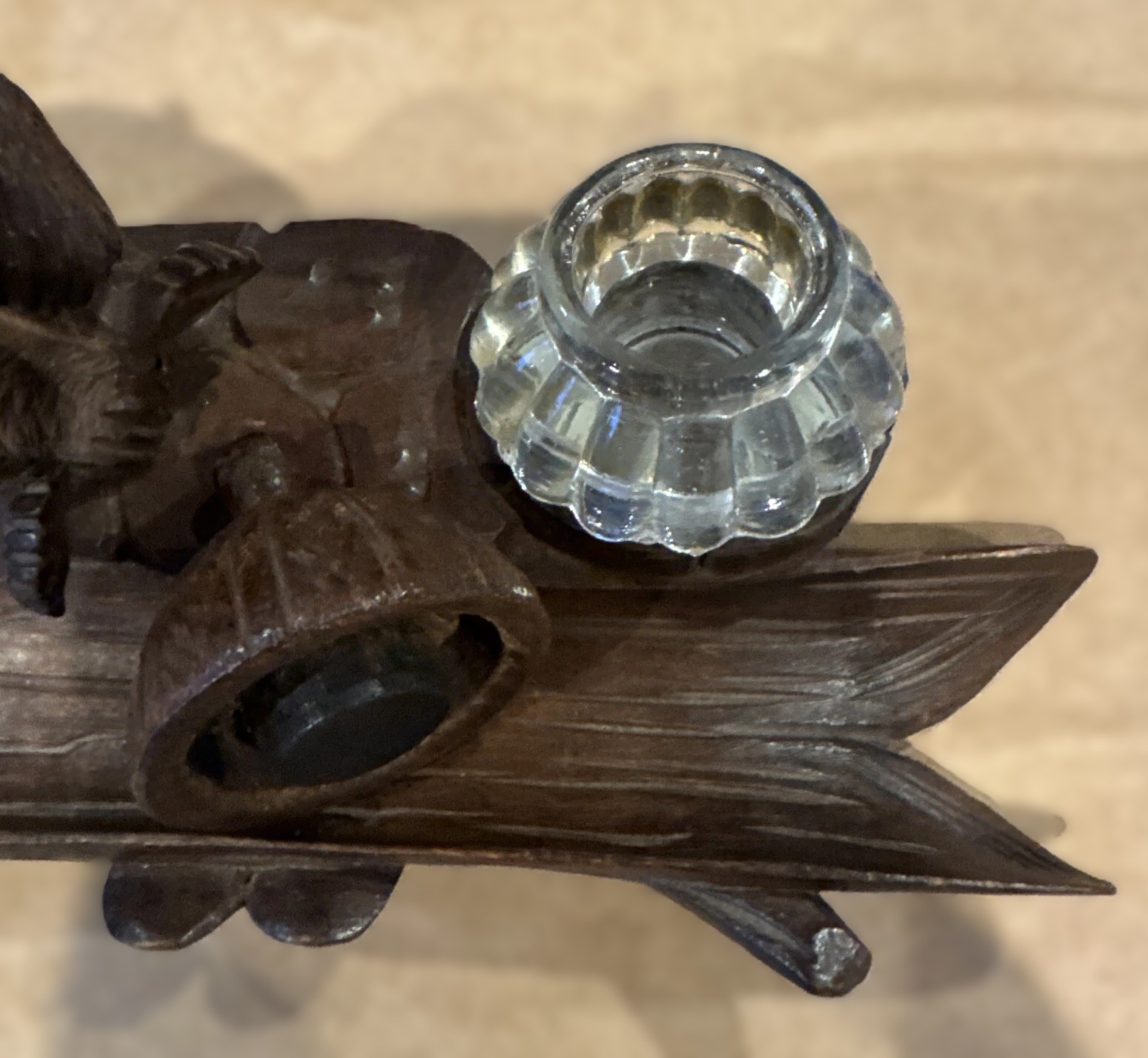
- Pen Channel: The front of the base features a long, wide pen tray carved to resemble a hollowed-out log or a rough-hewn branch. The texture mimics natural bark with long, vertical striations and knots.
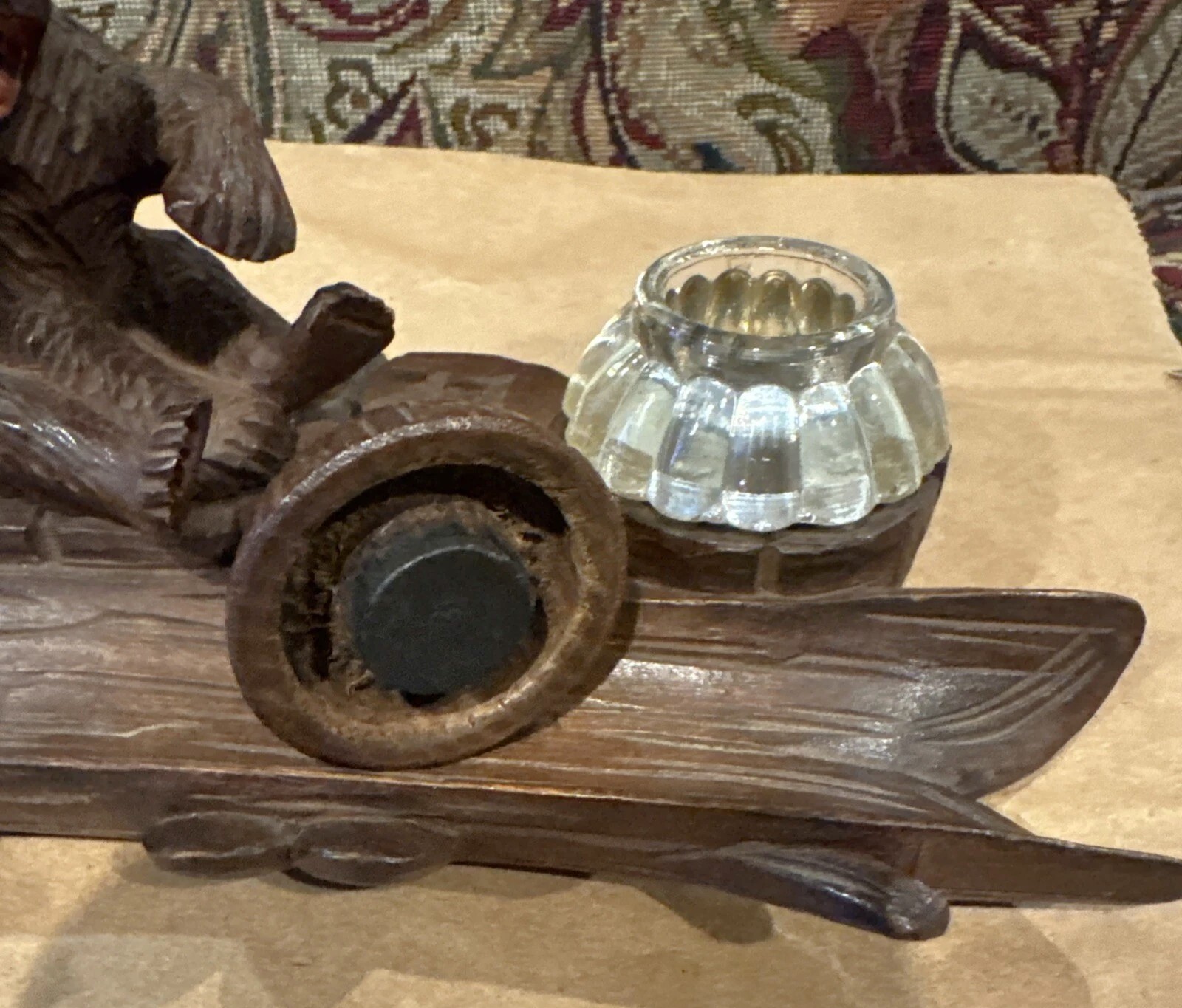
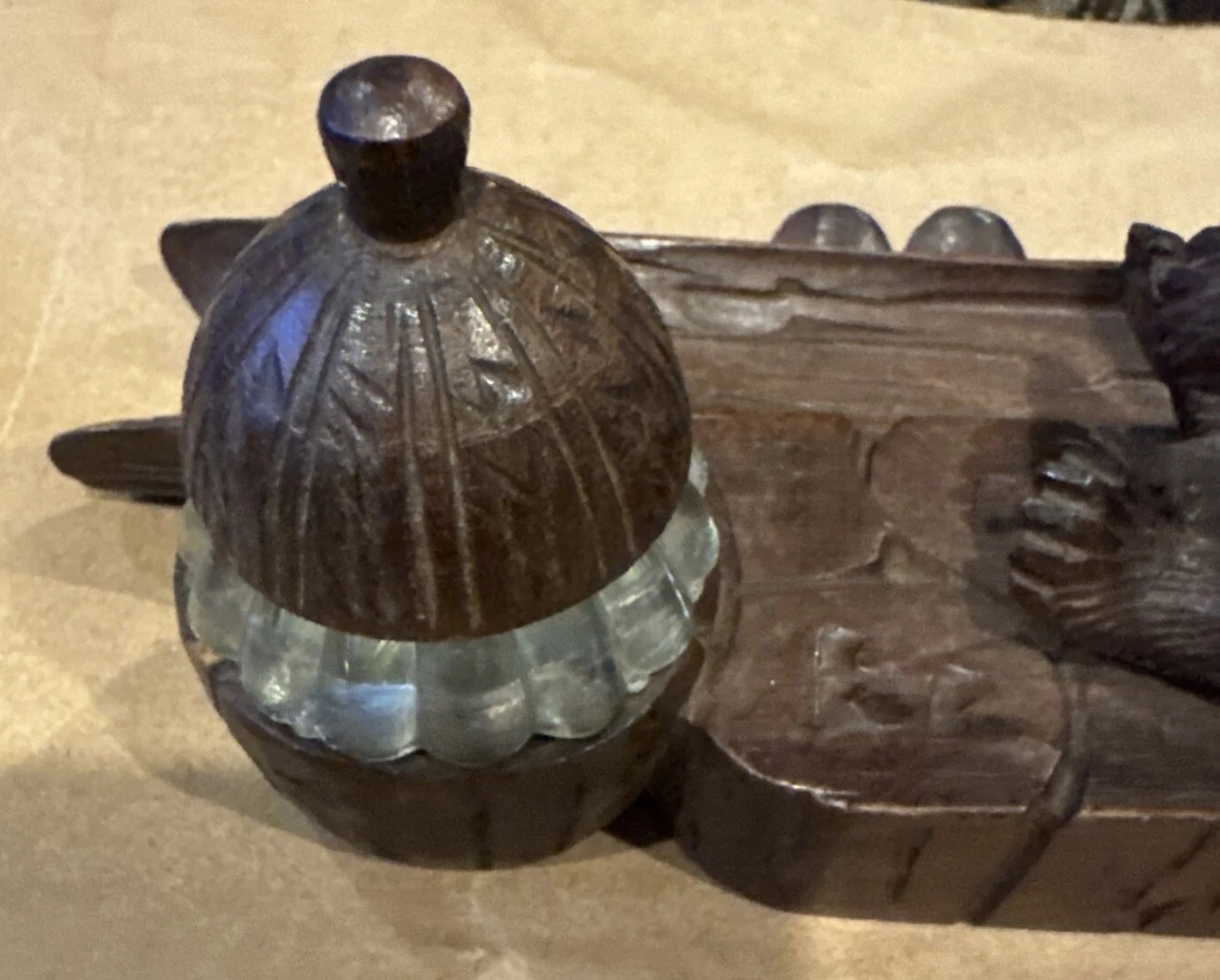
- Inkwell: On the right side sits a faceted clear glass inkwell. It is nestled into a circular carved wooden socket that matches the rustic aesthetic of the base.
- The Lid: The lid is a separate, unattached piece carved from the same dark wood. It features a decorative radial pattern of carved leaves or petals and is topped with a simple, rounded finial. The underside of the lid has a thick stopper (likely cork or wood) to create a snug fit within the glass well.
Base and Identification
- Structure: The entire base is carved from a single piece of wood, designed to look like a section of the forest floor or a stacked timber platform.
- Markings: The initials “EE” are visible, hand-carved into the flat surface of the wood between the bear and the inkwell. This could be the mark of the individual carver or an owner’s monogram.
Note: The “unattached” nature of the lid is common for these pieces, as it allows for easier cleaning of the glass insert and prevents the wood from warping due to ink moisture over time.
The Inkstand’s Design Context
The design of this piece aligns with the naturalistic style promoted by the Brienz Woodcarving School (founded in 1884):
- The Log Pen Channel: Carvers often used “root-work” or “branch-work” motifs to ground the animal figures in a realistic environment.
- The Faceted Glass Well: These were standard inserts, often made by local Swiss or German glassworks.
- The Material: This is almost certainly Linden wood (also known as Lime or Basswood). It was the preferred choice for Black Forest carvers because its soft, close grain allowed for the intricate “fur” texturing seen on this bear.
Sold for $195 in January 2026
Content disclaimer. The information posted is the owner’s best knowledge and may not have been vetted by the SOIC. We welcome comments, corrections, and additions, working to make our website information comprehensive and accurate.
Join the Society of Inkwell Collectors (SOIC) – it’s free!
Founded in 1981 as a non-profit organization,
we are documenting inkwells (and accessories).
We’re here to help and inform!