


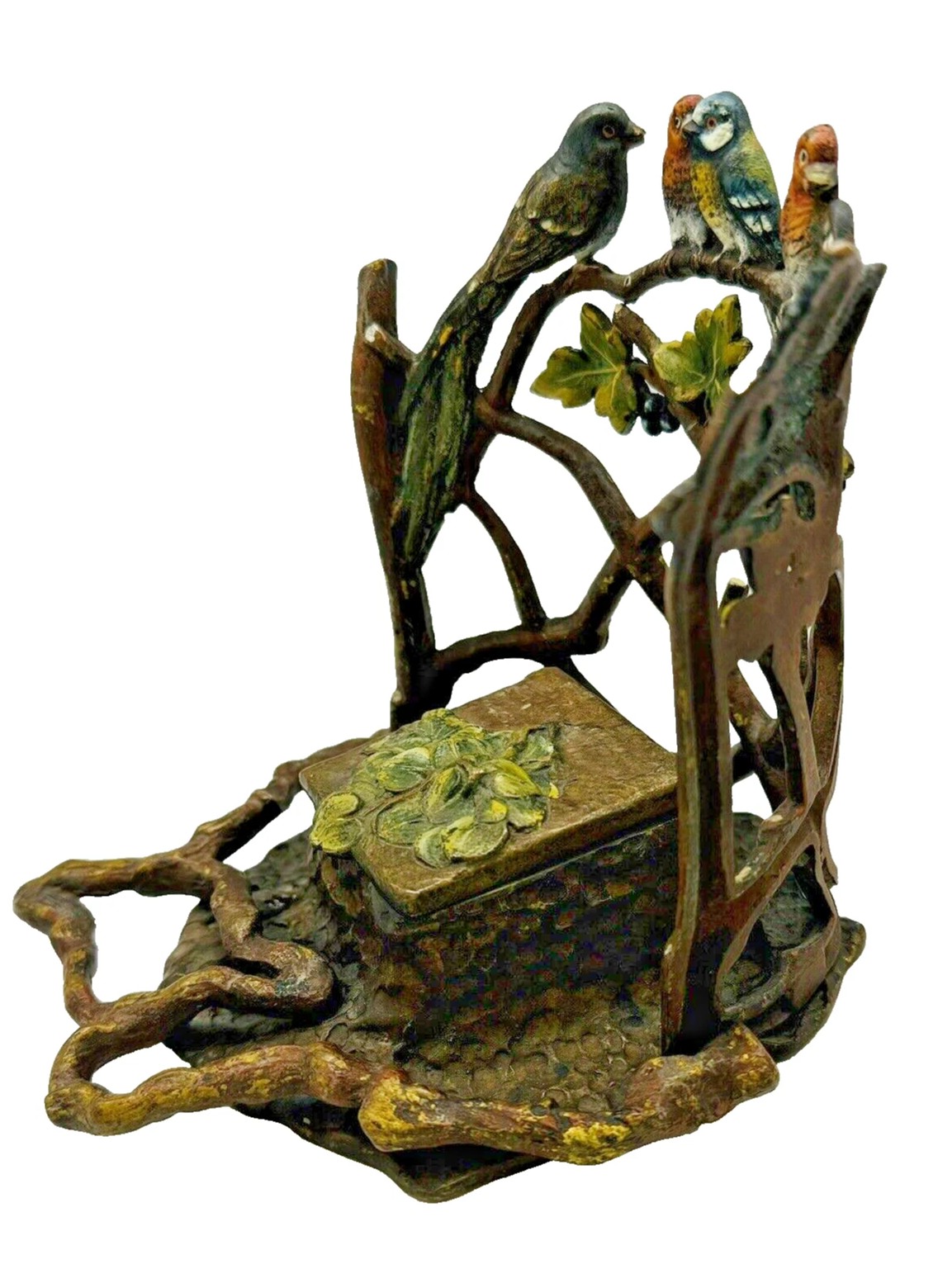
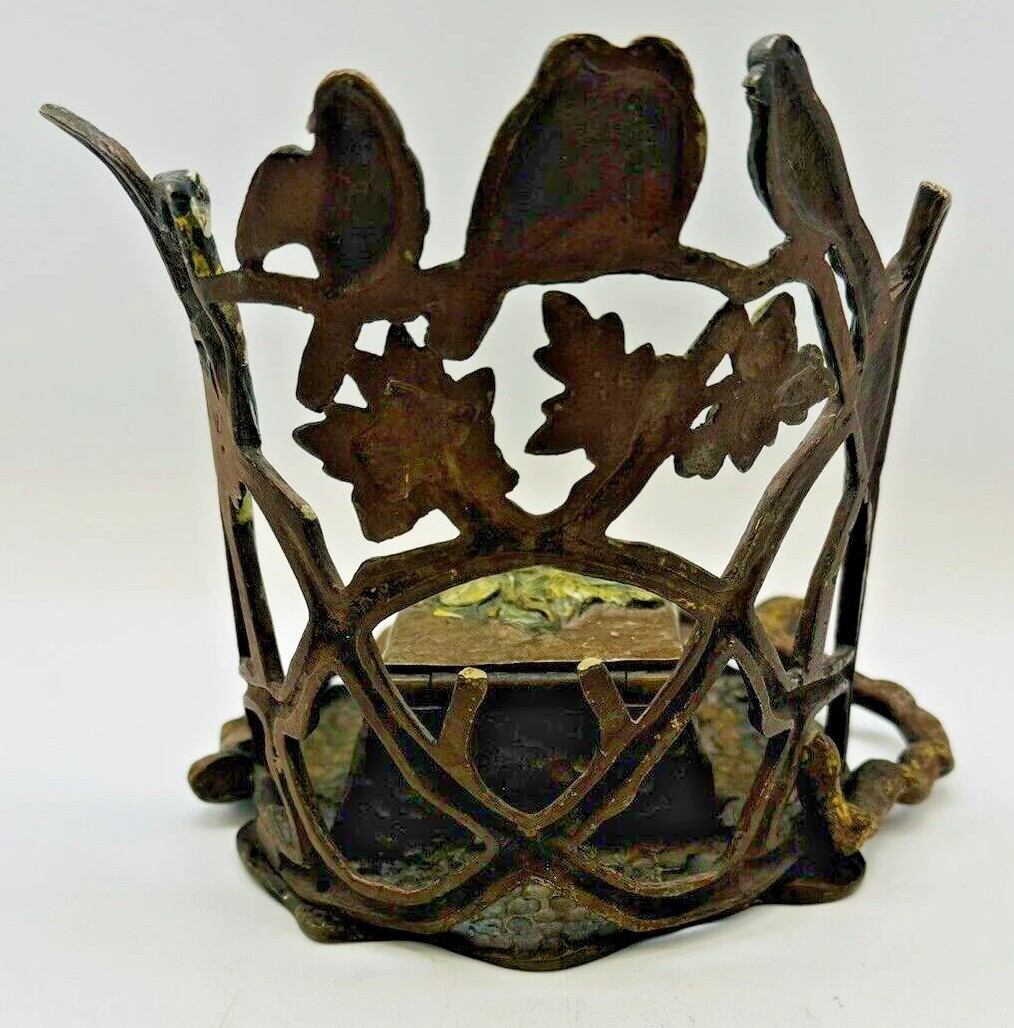
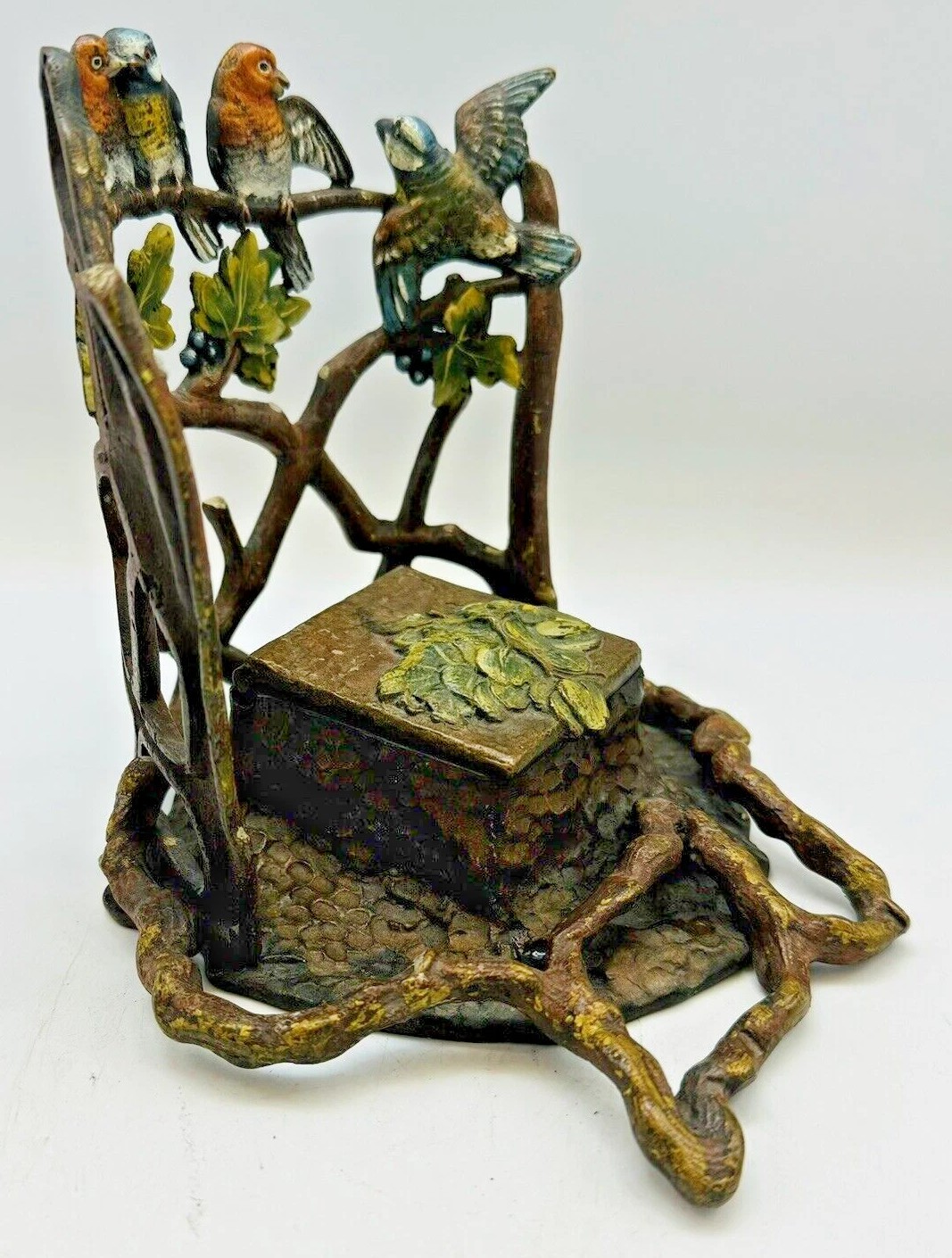
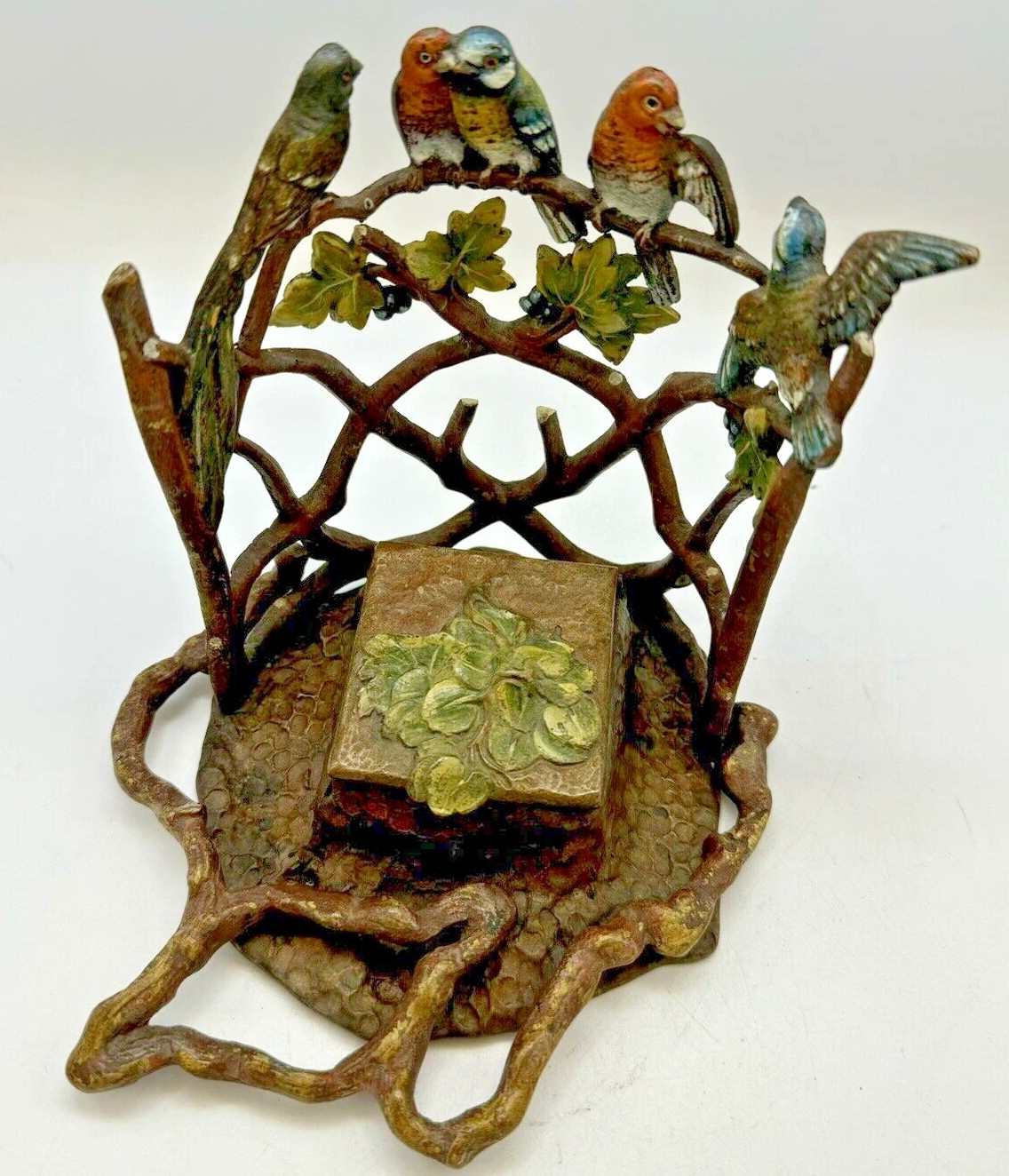
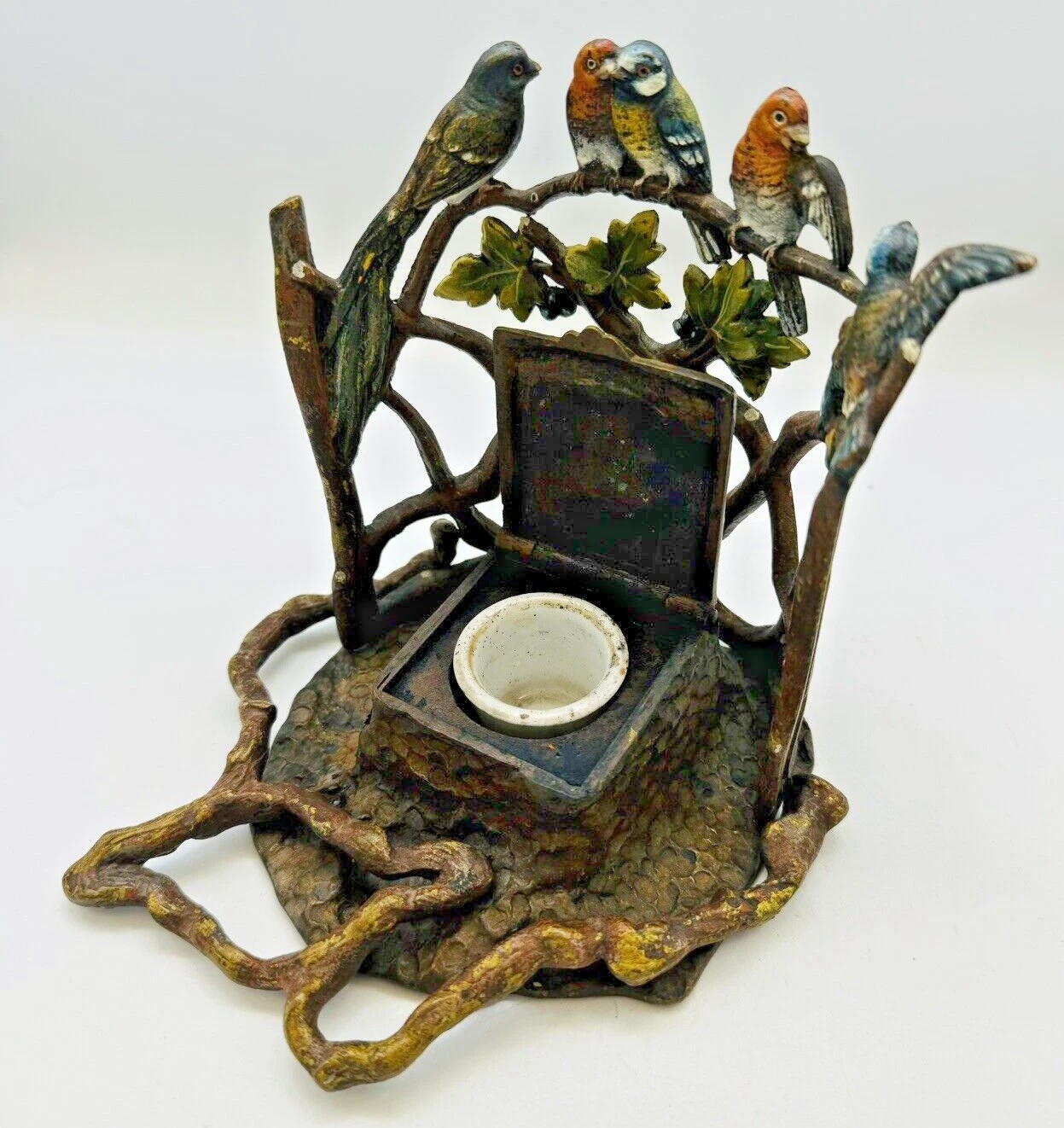
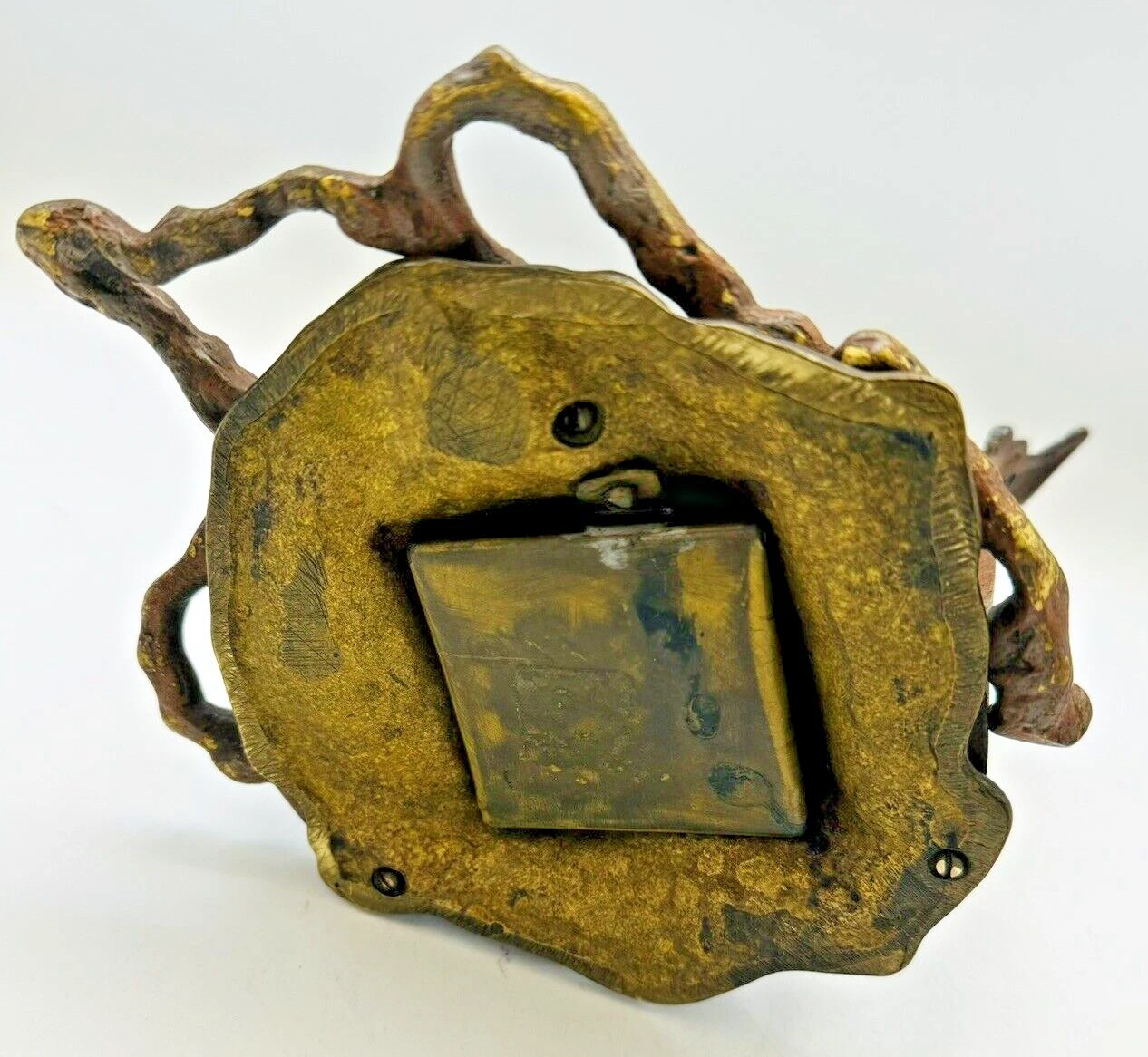
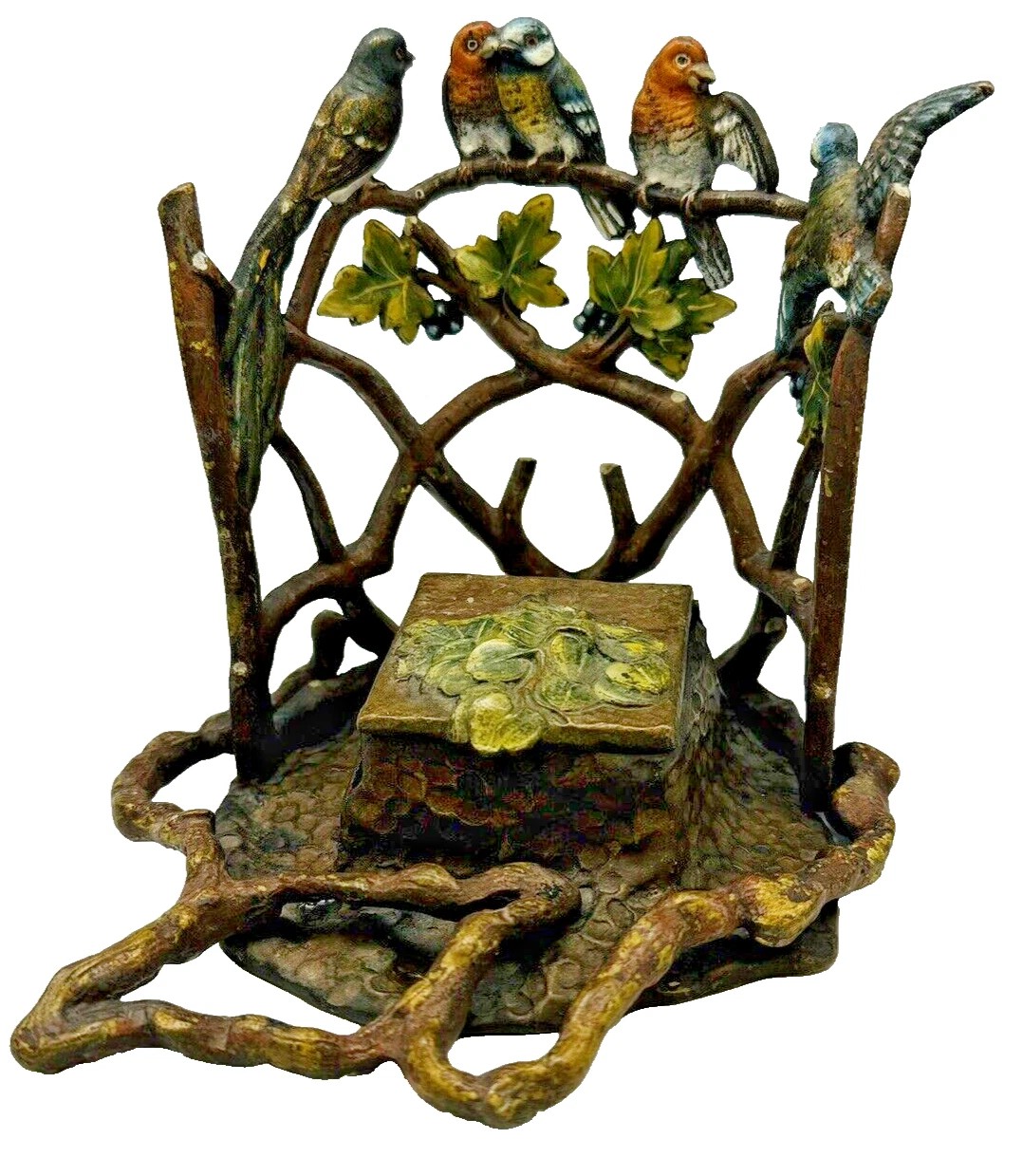
Birds in the Branches- Vienna Bronze Inkstand
| Categories | Figural - Animals & Living Creatures |
| Type | Bird |
| Material | Bronze |
| Markings | Unmarked |
| Manufacturer | Undetermined |
| Origin | Austria |
| Date or Era | circa 1900 |
| Measuring | 6” x 6” x 5 ½” high |
This is a nice example of an Austrian cold-painted bronze inkstand, also referred to as a Vienna Bronze. These pieces were popular in the late 19th and early 20th centuries (circa 1890–1910) for their whimsical, naturalistic detail and vibrant “cold-painted” finish—a process where multiple layers of oil-based pigment were applied to the bronze casting without kiln-firing.
Description
The inkstand is designed as a rustic, three-dimensional scene featuring an intricate trellis of gnarled branches that forms a decorative backplate. The branches are entwined with ivy leaves and clusters of small black berries (ivy berries), a common motif in Victorian and Edwardian desk accessories symbolizing eternity or fidelity.
- The Inkwell: Centrally located is a square, box-form inkwell. The hinged lid is decorated in relief with a cluster of ivy leaves that serves as a naturalistic handle.
- The Interior: The piece retains its original white ceramic (porcelain) insert.
- The Base: The base is textured to resemble a rocky or earthy mound, with “creeping” branches extending forward to serve as pen rests.
Identification of Bird Species
The five birds represent a charming “flock” of common European songbirds. While Viennese artists often took slight creative liberties with color, these most closely resemble:
- Eurasian Blue Tit (Far Right): The bird with its wings spread is likely a Blue Tit, identifiable by its blue-grey wings and cap. This dynamic pose (landing or taking off) is a hallmark of high-quality Vienna bronzes.
- Common Redstart or European Robin (Center Trio): The three birds in the center, particularly the two “cuddling,” feature the characteristic orange-brown breast and head. The blue-grey back on one suggests a male Common Redstart.
- Long-tailed Tit or Wagtail (Far Left): The bird on the left is distinguished by its exceptionally long, dark tail. Given the forest setting, a Long-tailed Tit is a very likely candidate, though it could also represent a Grey Wagtail.
Attribution
The piece is unmarked. This is common for Vienna bronzes. Major foundries like Franz Bergman (marked with a ‘B’ in an urn) or Geschützt often left smaller or multi-part pieces unsigned. The quality of the “chasing” (the fine detail in the feathers and bark) and the preservation of the paint suggest it was produced by one of the leading Viennese foundries.
Sold for $500 in February 2026
Content disclaimer. The information posted is the owner’s best knowledge and may not have been vetted by the SOIC. We welcome comments, corrections, and additions, working to make our website information comprehensive and accurate.
Join the Society of Inkwell Collectors (SOIC) – it’s free!
Founded in 1981 as a non-profit organization,
we are documenting inkwells (and accessories).
We’re here to help and inform!