

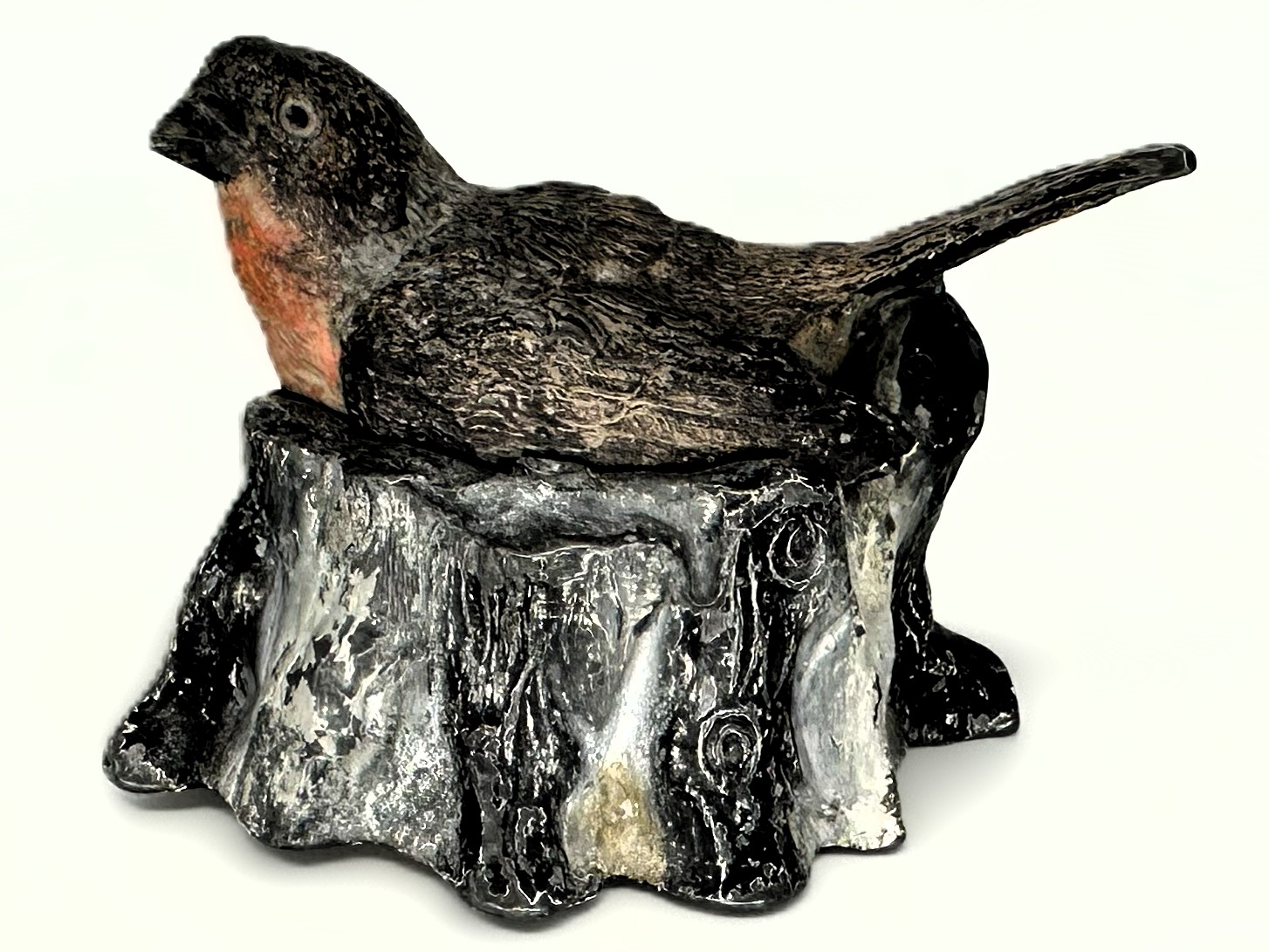
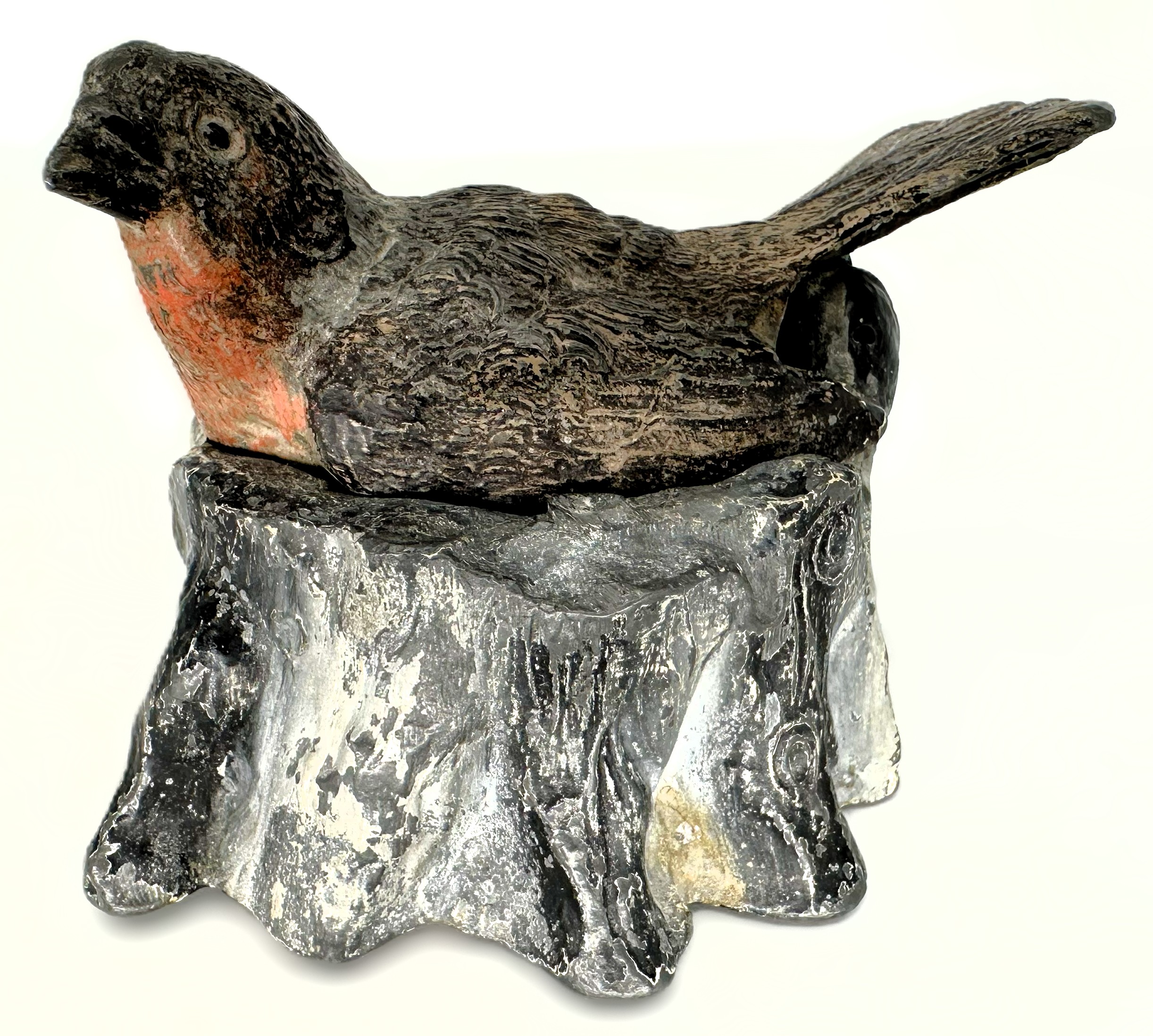
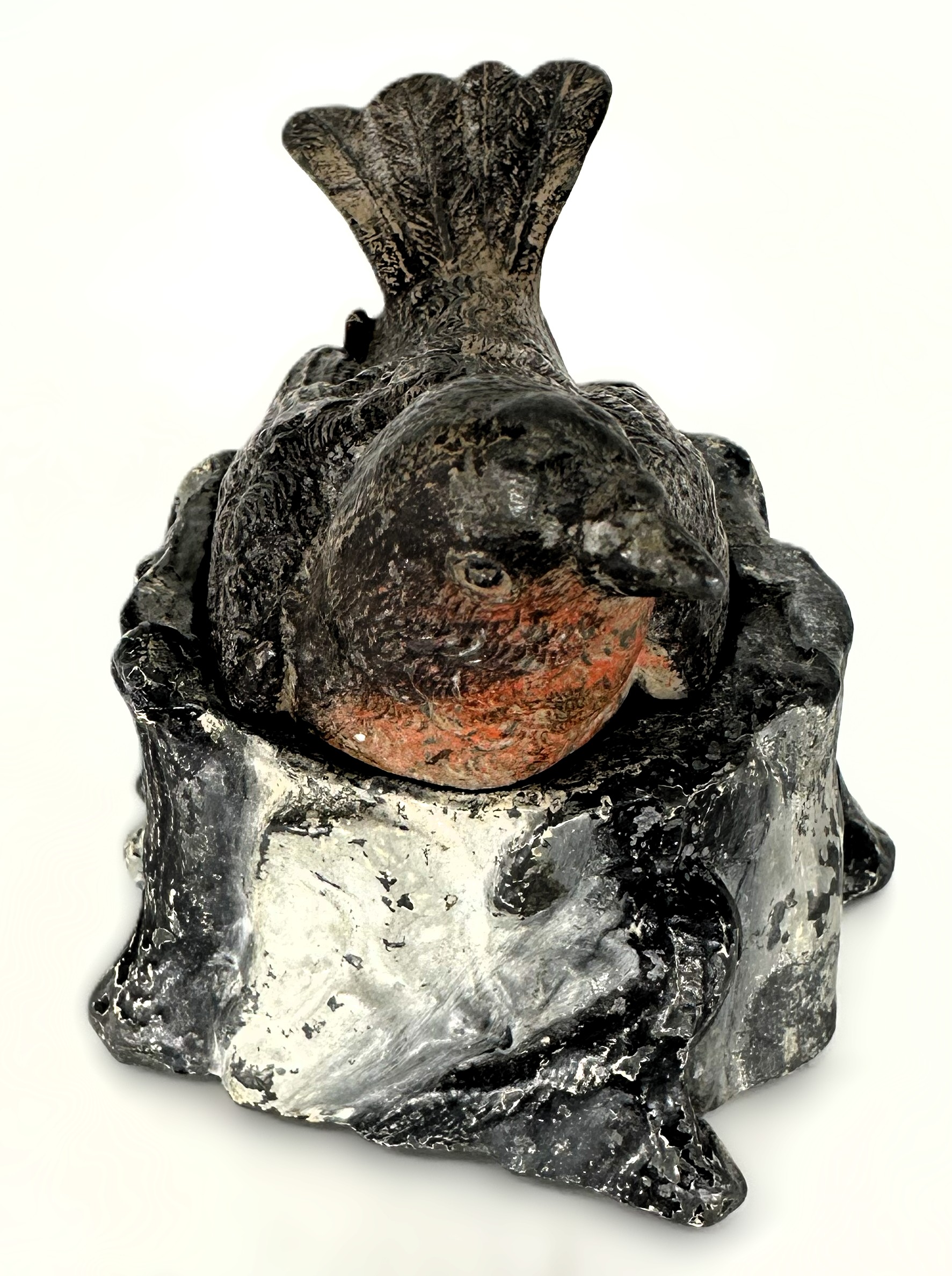
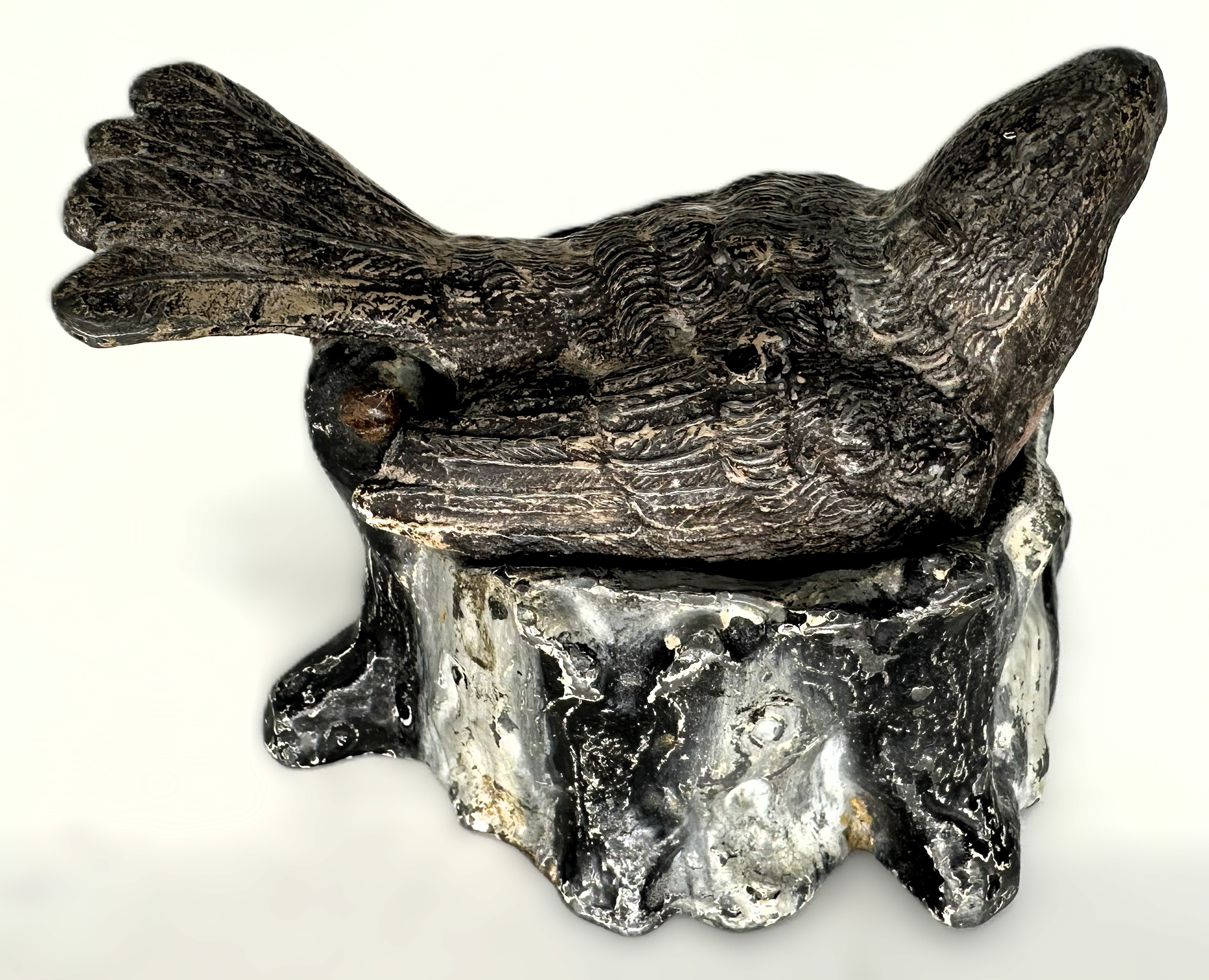
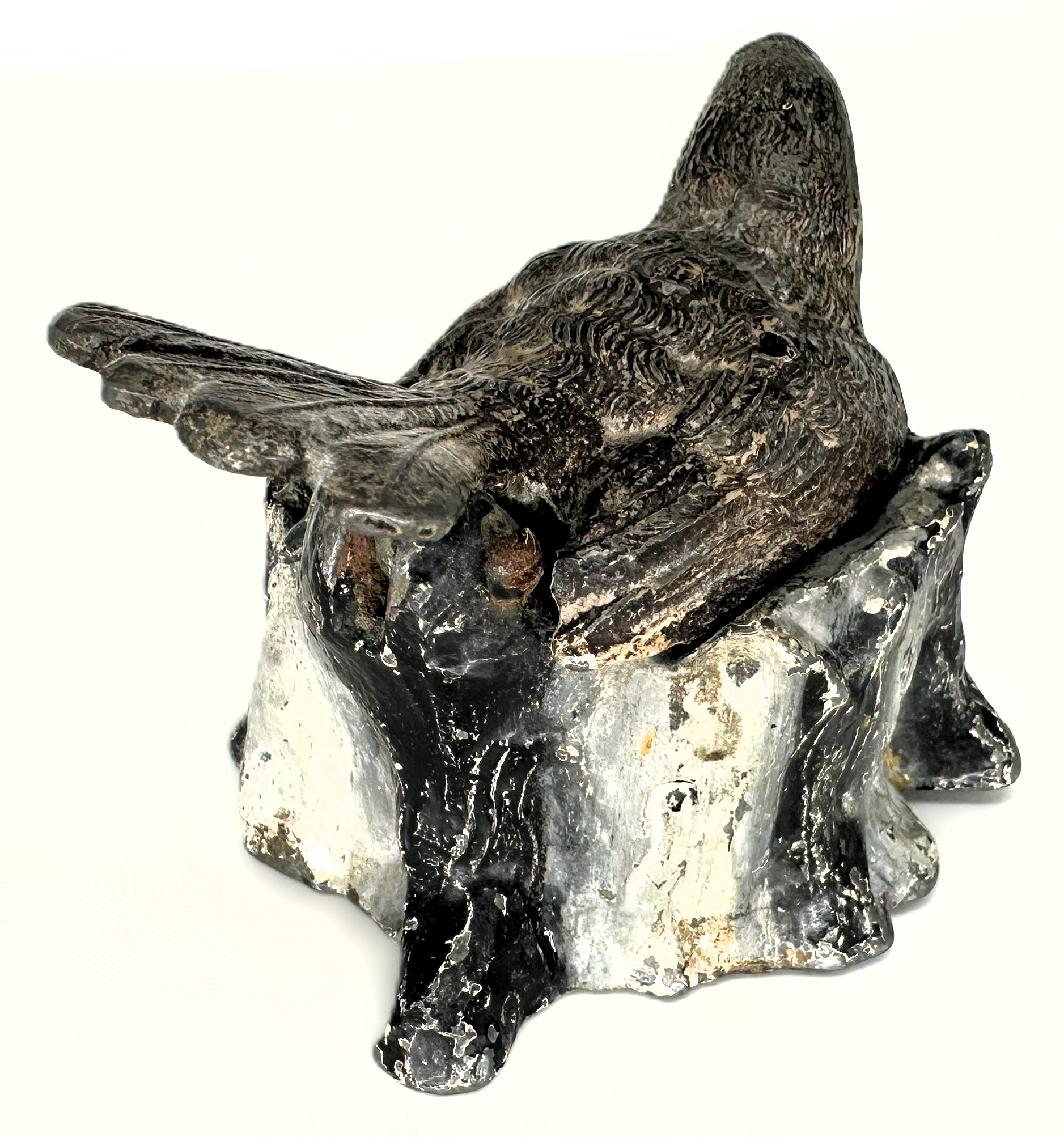
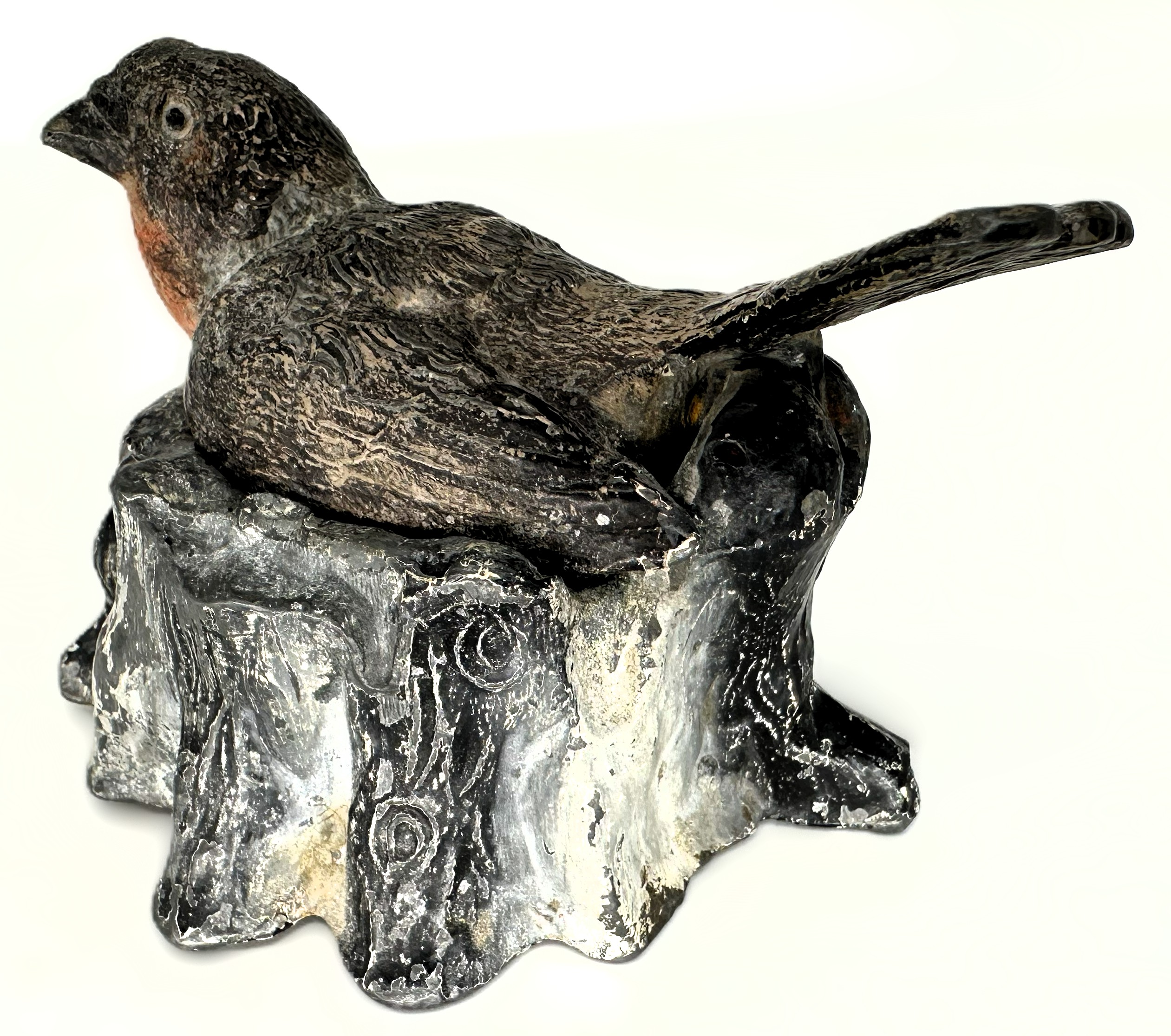
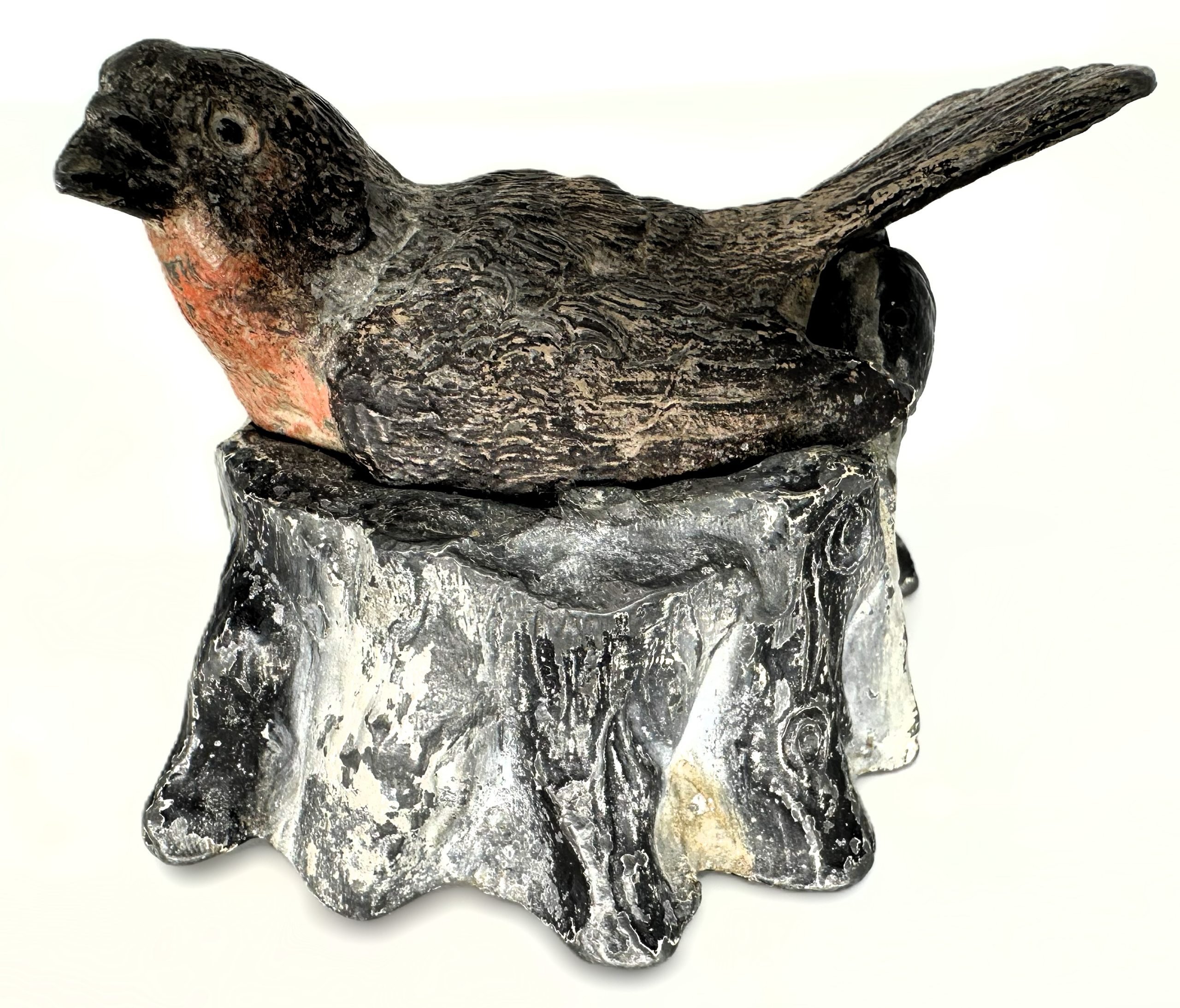
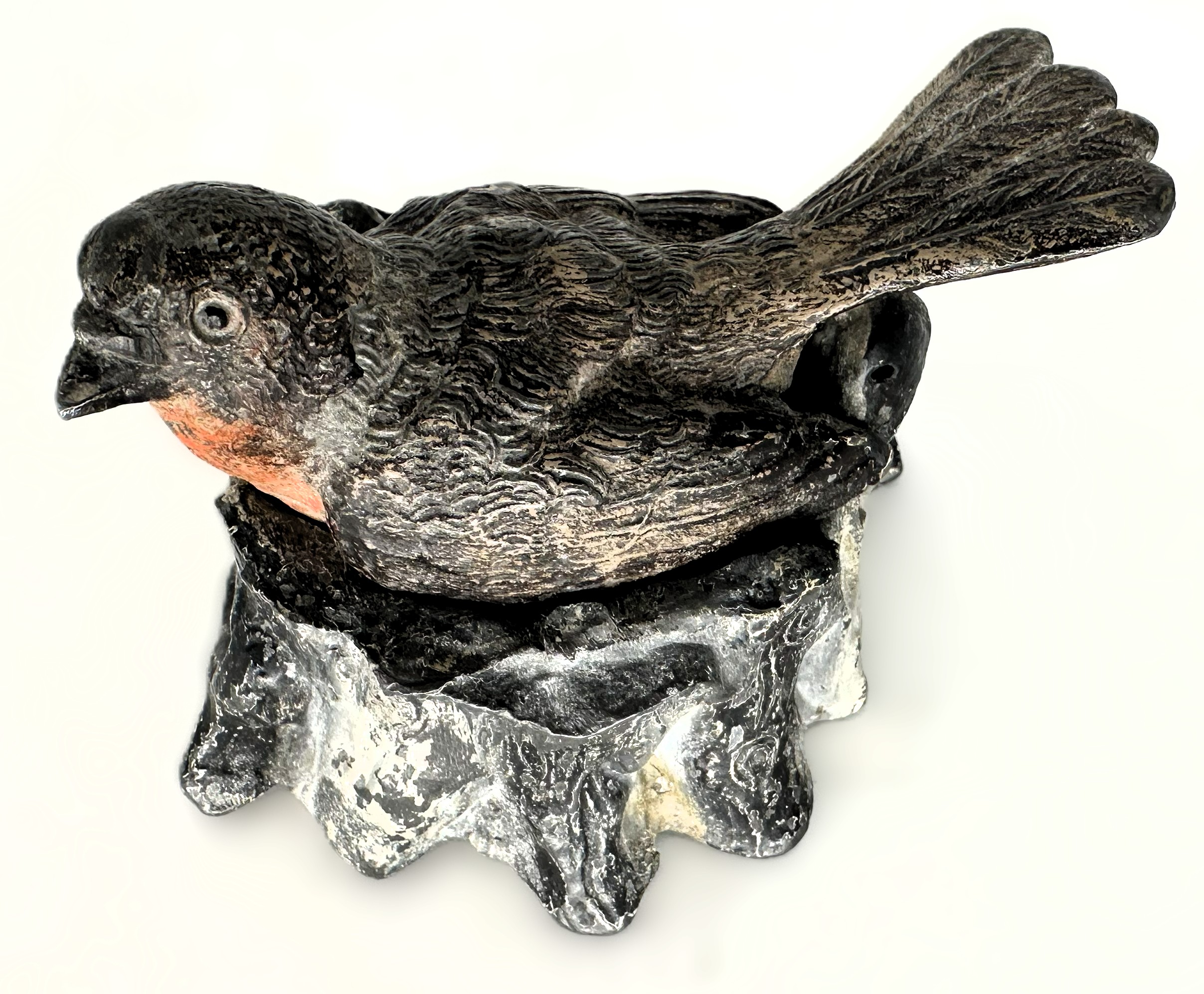
Bird on the Nest
| Categories | Figural - Animals & Living Creatures |
| Type | Bird |
| Material | White metal |
| Markings | GESCHUTZT |
| Manufacturer | Undetermined |
| Origin | Austria |
| Date or Era | circa 1890 |
| Measuring | Nest is approximately 3 ¼” diameter; 2 ¾” high |
Description
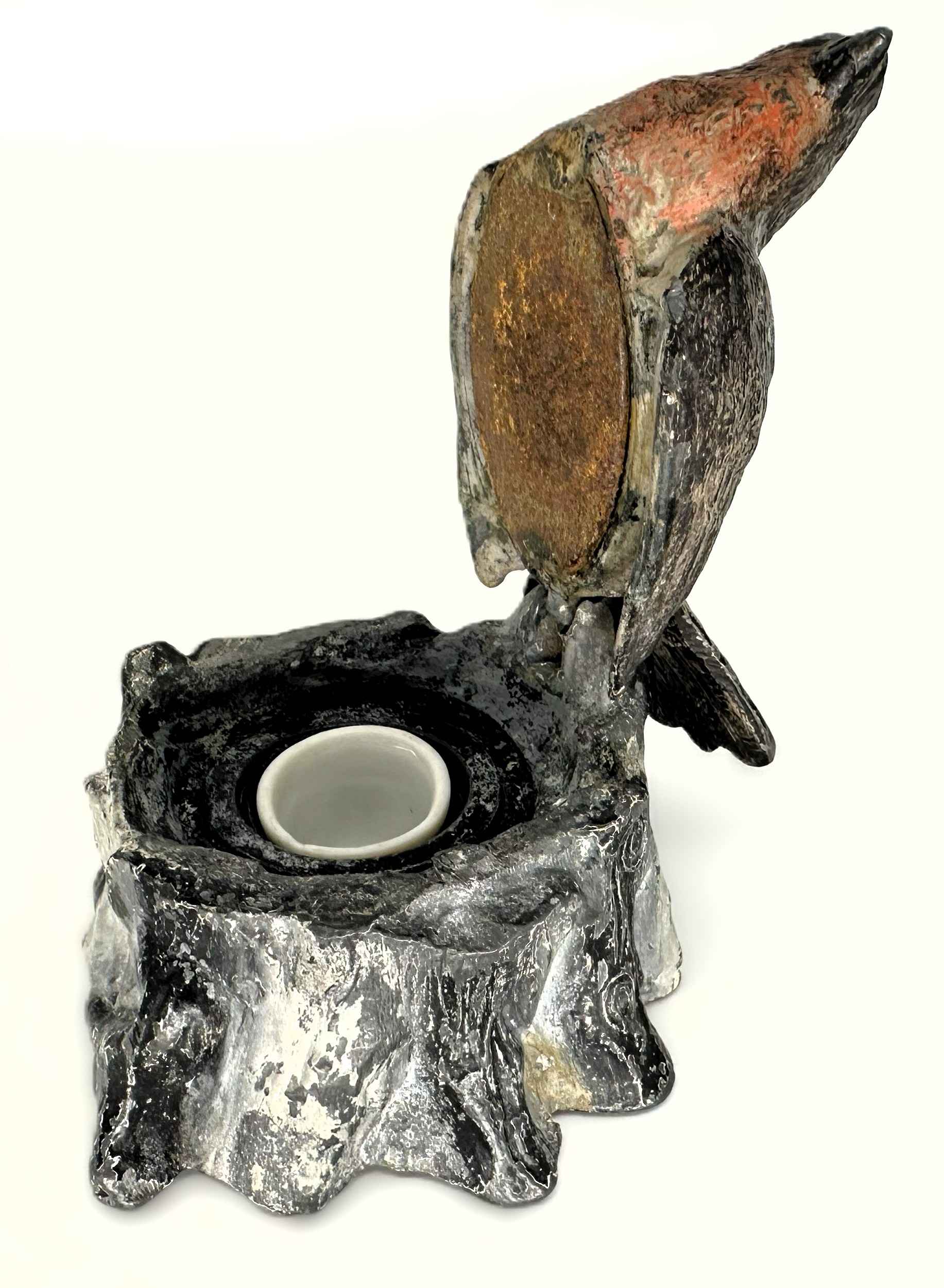
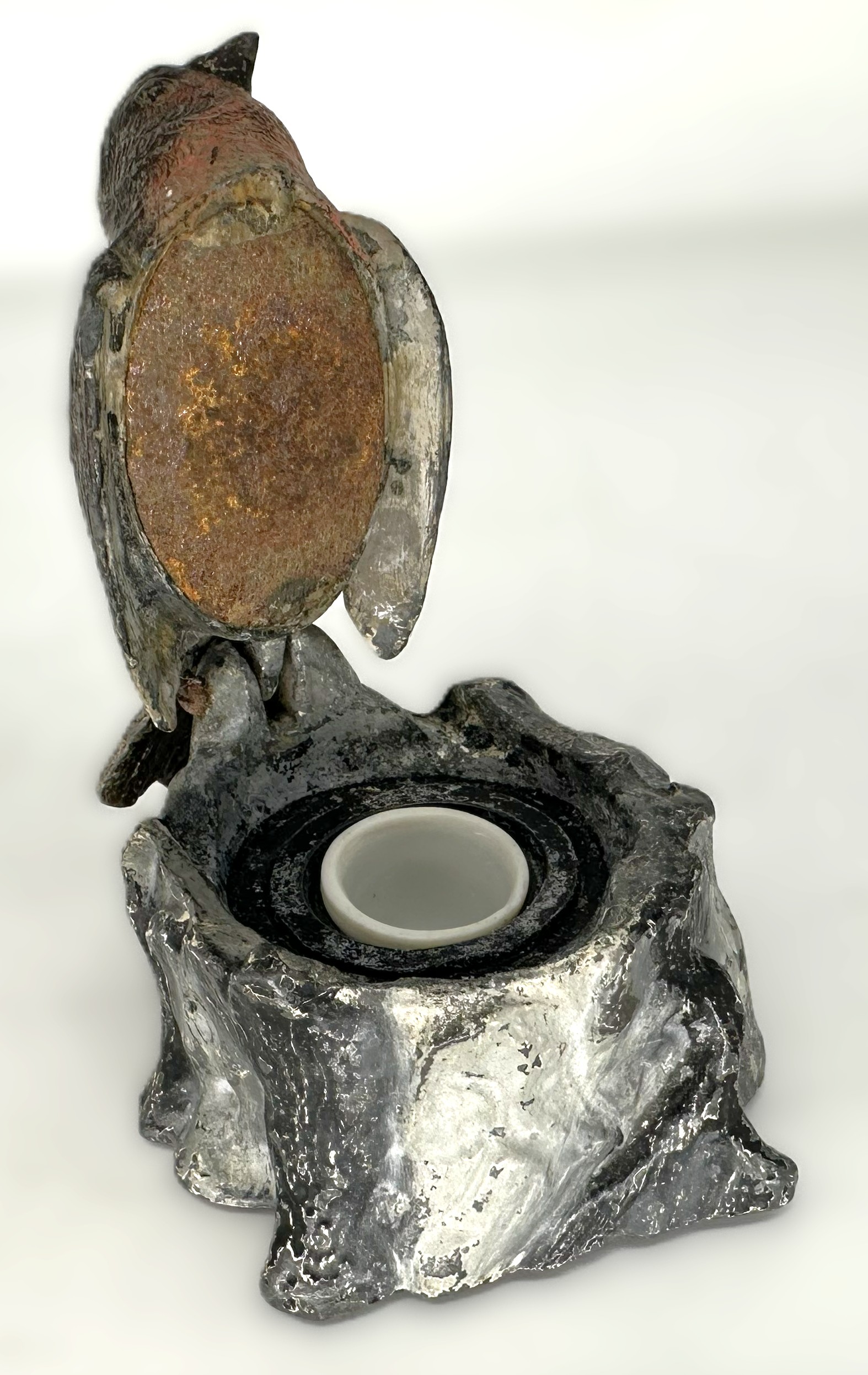
This inkwell is crafted from cold-painted white metal (likely a zinc-based alloy or spelter). It features a naturalistic bird—most likely a robin or a similar small songbird, given the remnants of orange-red paint on the breast—resting atop a base modeled as a weathered tree stump, which serves as the “nest.”
- Construction: The bird’s back and head are integrated into a single hinged lid. When flipped open, it reveals a well containing a white ceramic liner to hold the ink.
- Finish: The “cold-painted” technique involved applying enamel or lacquer over the metal without firing. Over time, this often wears away, which explains the patina and exposed metal you see here.
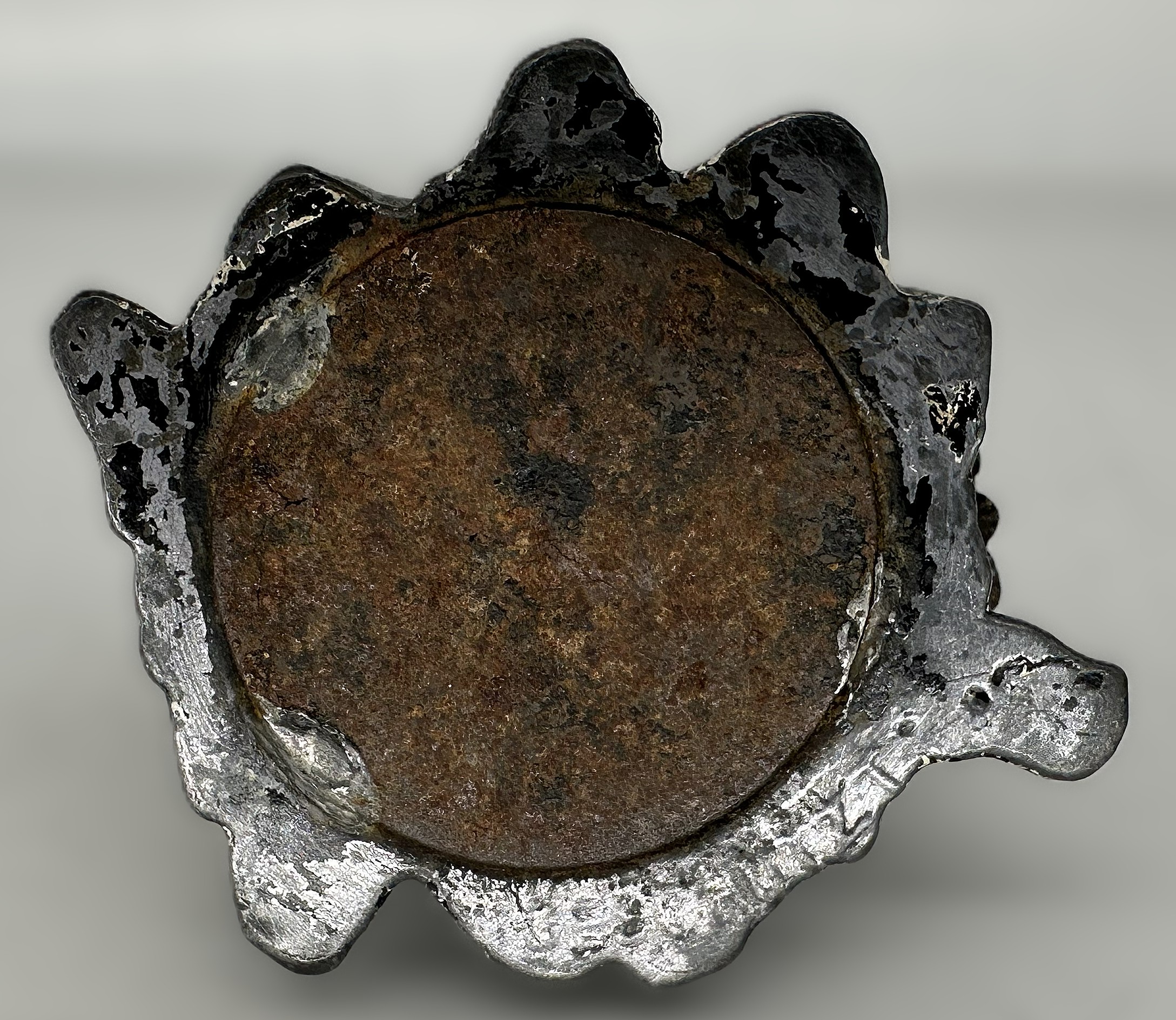
- The Underside: The base is sealed with a circular iron or steel plate that shows significant oxidation, consistent with its age.
Origin: Austria or Germany?
The mark “GESCHÜTZT” is the definitive clue. It is a German term meaning “protected” or “copyrighted” (similar to Depose in France).
While this term was used in both countries, this specific style of cold-painted metalwork is most famously associated with Vienna, Austria. Large foundries like Bergman produced thousands of these high-quality, realistic animal figures. However, German manufacturers in regions like Nuremberg also produced similar white-metal inkwells. Given the “Geschützt” mark and the subject matter, Austrian origin is the leading candidate, though Germany remains a possibility.
Estimated Age
This inkwell dates to the late 19th or very early 20th century (circa 1880–1910). This was the peak period for figural desk accessories, before fountain pens made open-pot inkwells less practical.
Summary Table
| Feature | Details |
| Material | Cold-painted white metal (spelter/zinc) |
| Marking | Geschützt (German for Protected/Copyrighted) |
| Origin | Likely Austria (Vienna style) or Germany |
| Period | Victorian / Edwardian (c. 1890s) |
Sold for $265 in February 2026
Content disclaimer. The information posted is the owner’s best knowledge and may not have been vetted by the SOIC. We welcome comments, corrections, and additions, working to make our website information comprehensive and accurate.
Join the Society of Inkwell Collectors (SOIC) – it’s free!
Founded in 1981 as a non-profit organization,
we are documenting inkwells (and accessories).
We’re here to help and inform!