

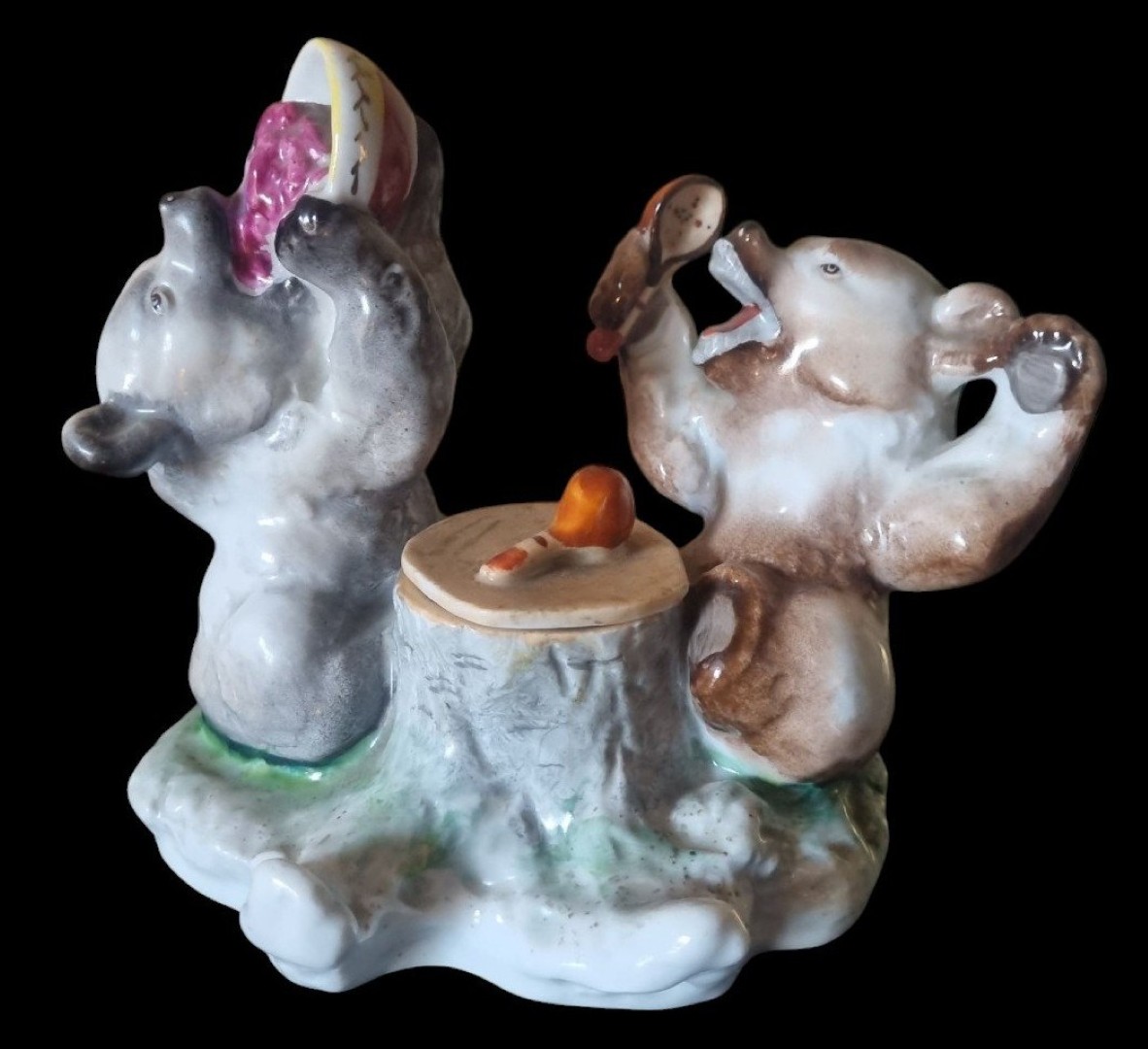
Bear Cubs Feasting on Berries
| Categories | Figural - Animals & Living Creatures |
| Type | Bear |
| Material | Porcelain |
| Markings | See Narrative |
| Manufacturer | LFZ Lomonosov |
| Origin | Russia |
| Date or Era | circa 1950 |
| Measuring | 6 ¼” x 4 ½” x 5 ¼” high |
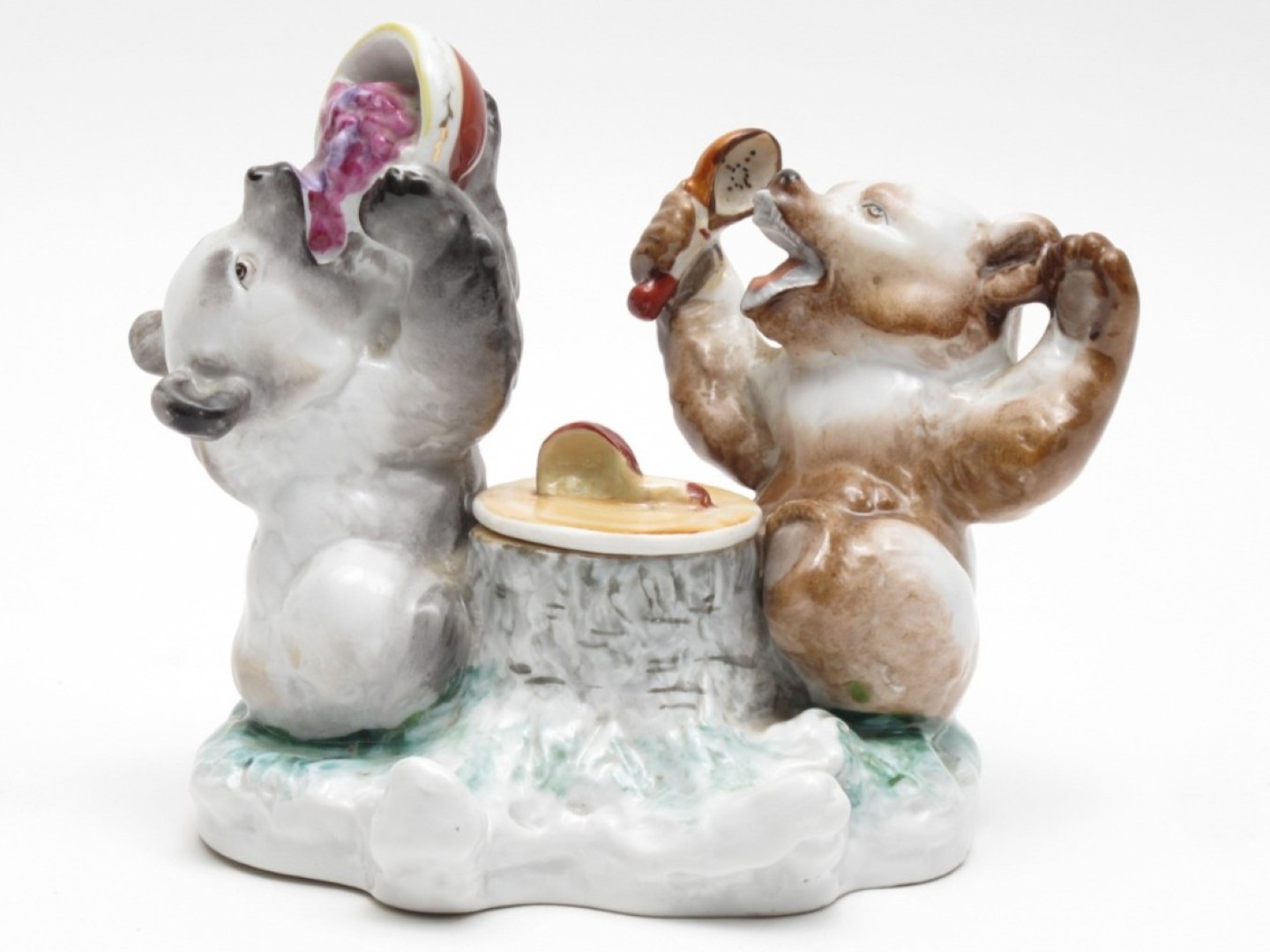
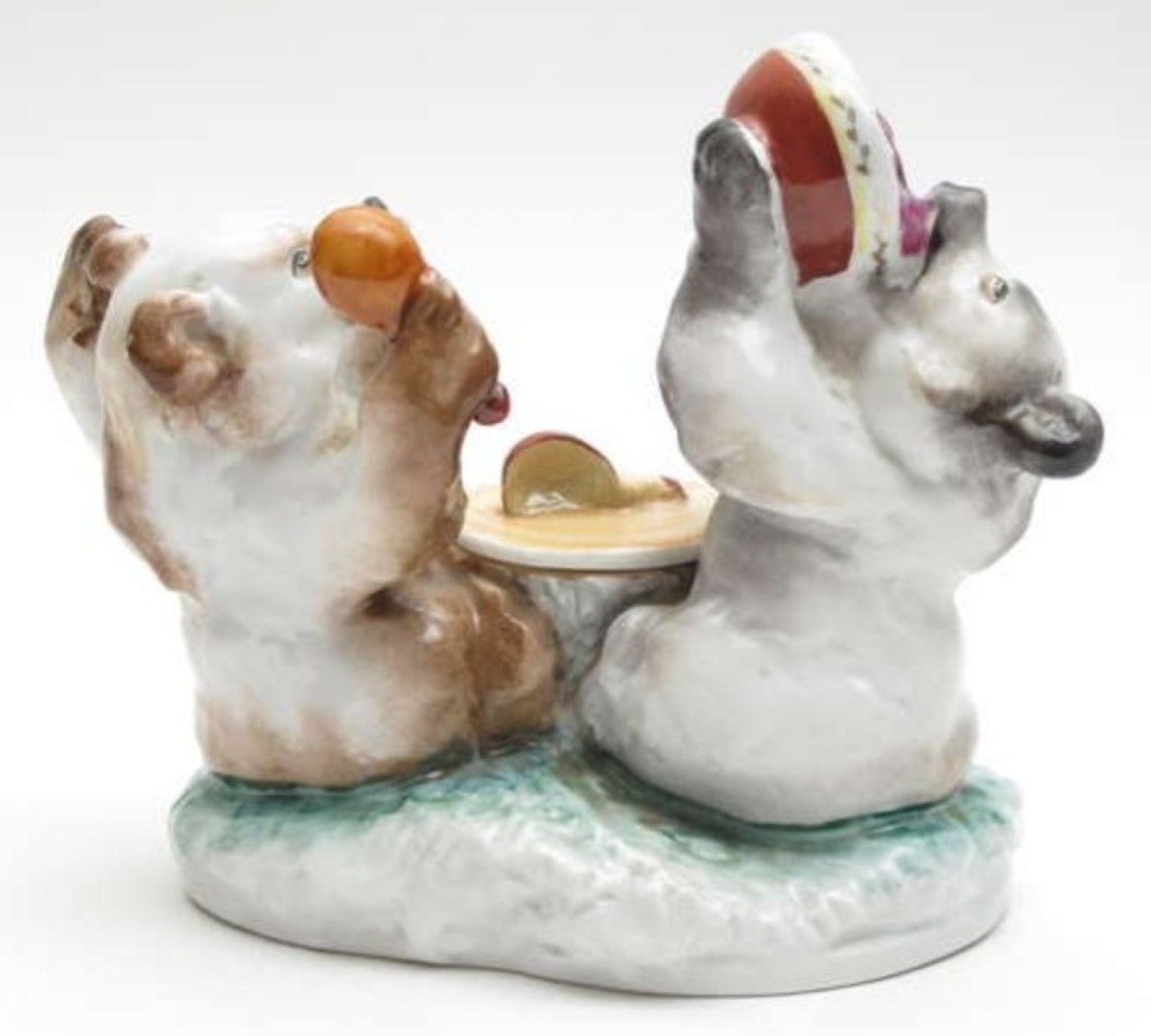
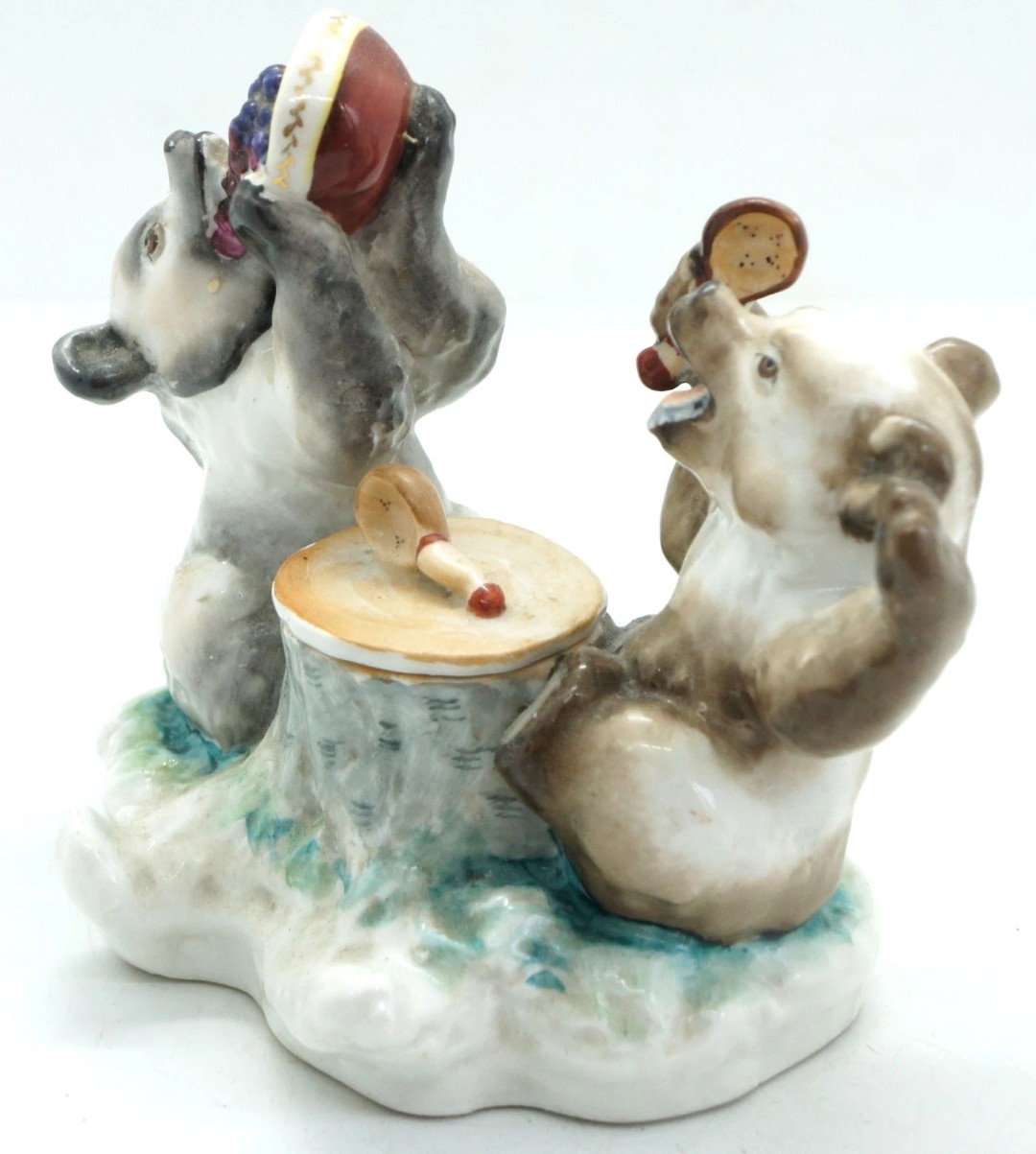
This charming and expressive porcelain inkstand is a classic example of Soviet-era decorative arts, showcasing the collaboration of two of the Leningrad Porcelain Factory’s (LFZ) most celebrated artists.
The Scene: “The Two Greedy Bear Cubs”
The design is inspired by the popular Russian/Hungarian folk tale, “The Two Greedy Bear Cubs” (Два жадных медвежонка). In the original fable, two bear brothers find a wheel of cheese and begin to fight over how to divide it, only to be tricked by a fox who “helps” by eating most of the cheese herself.
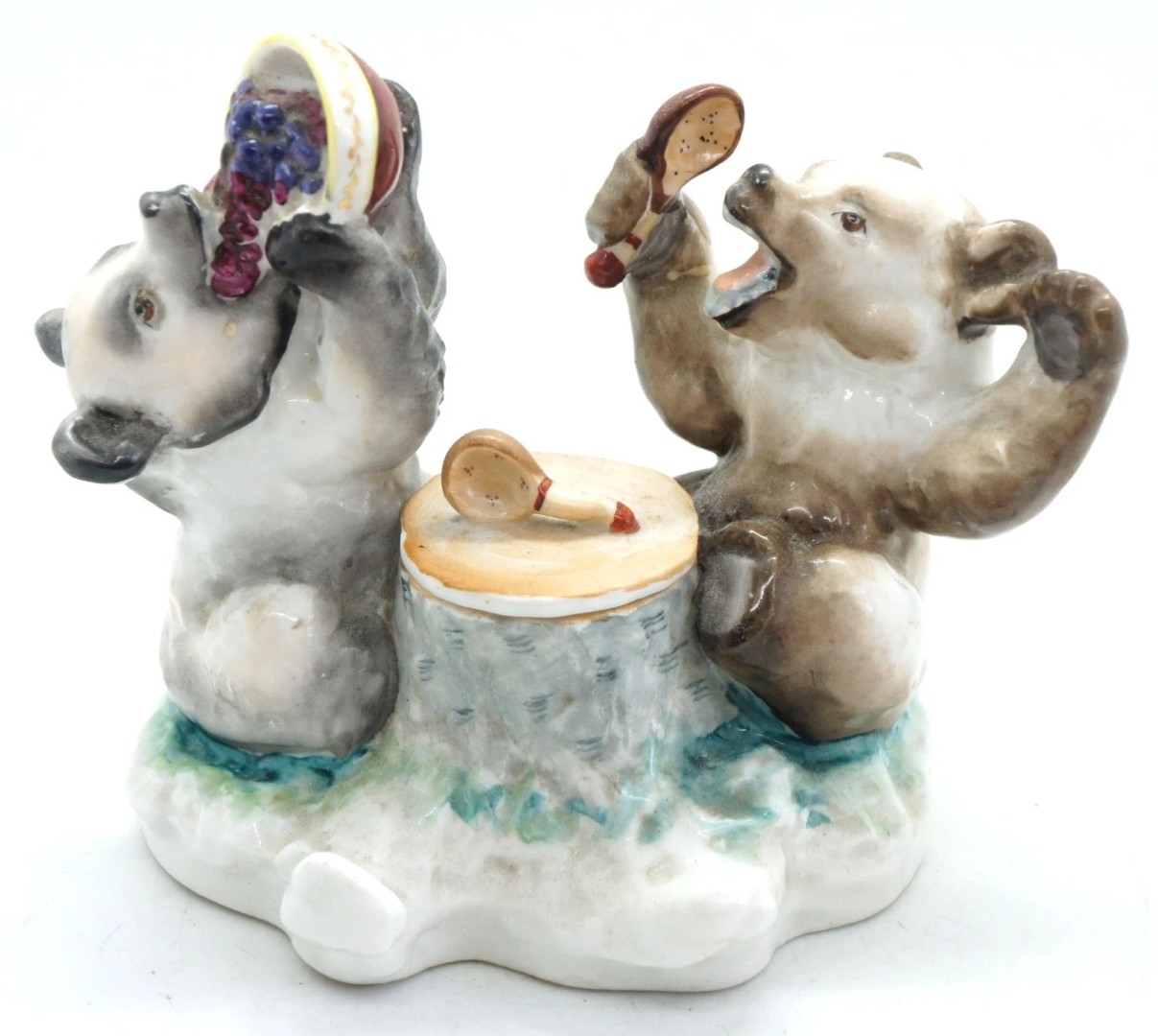
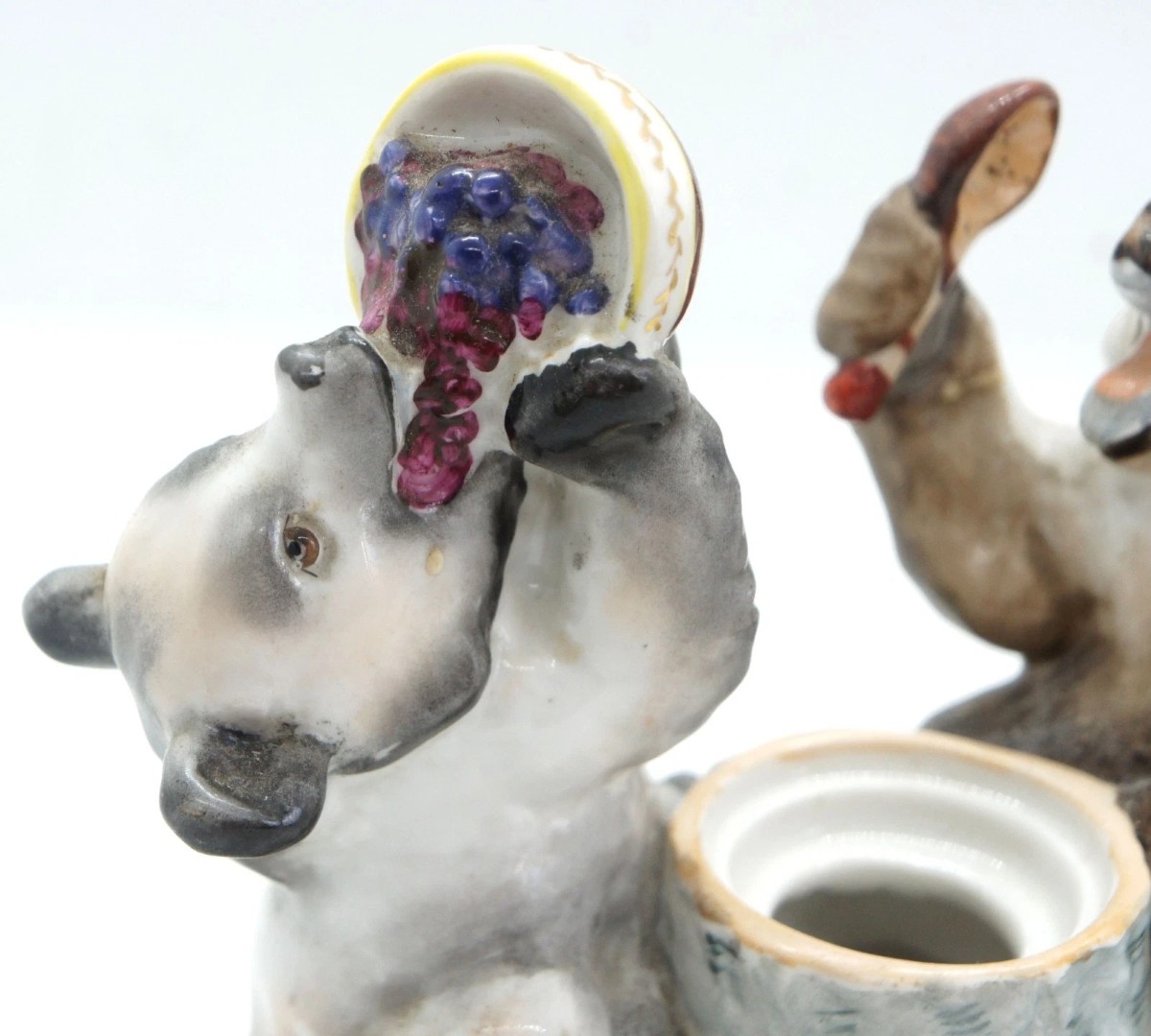
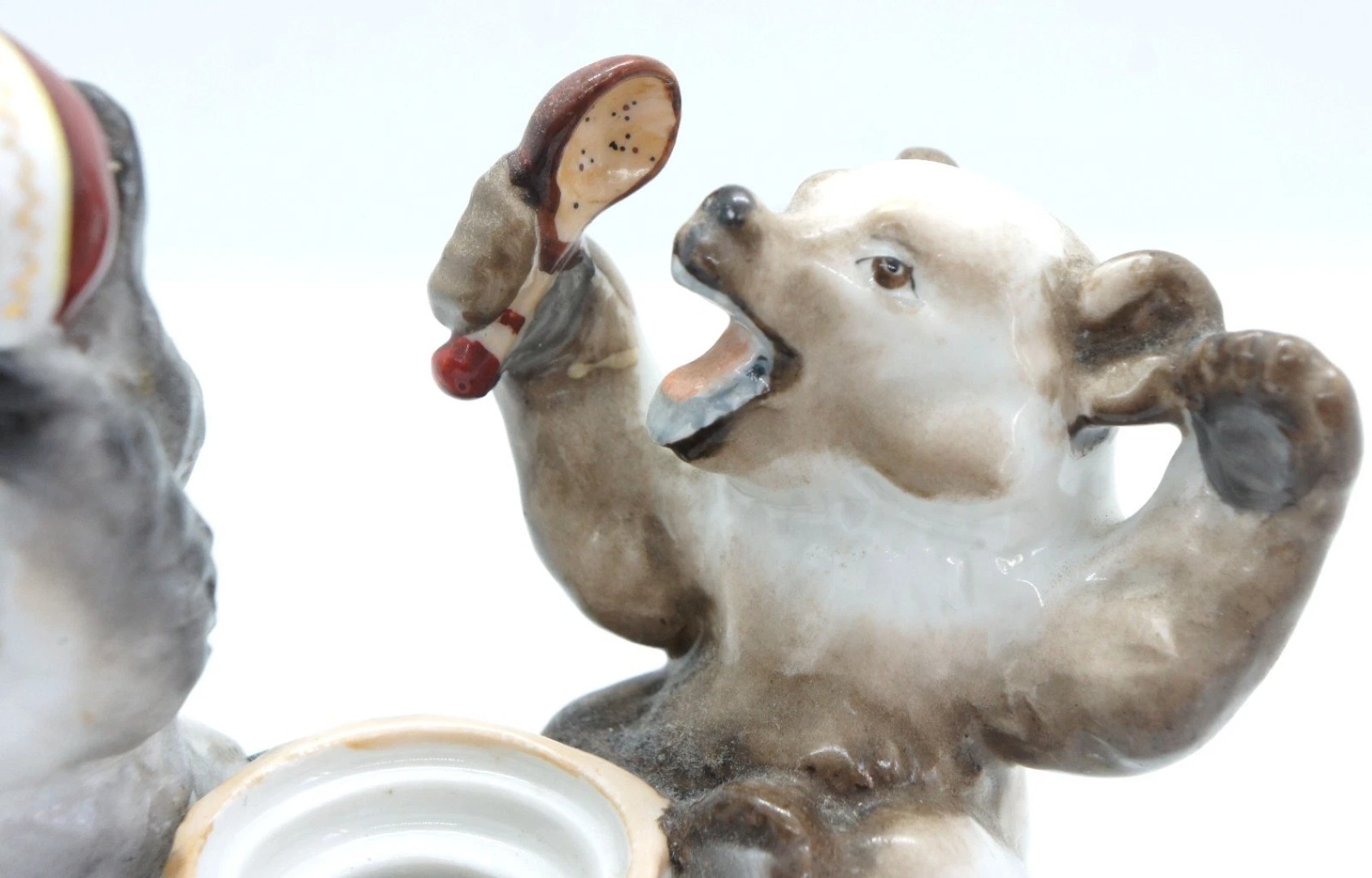
In this porcelain rendition by Evgeniy Charushin, the story is captured with a playful twist. Rather than cheese, the cubs are indulging in wild berries or jam.
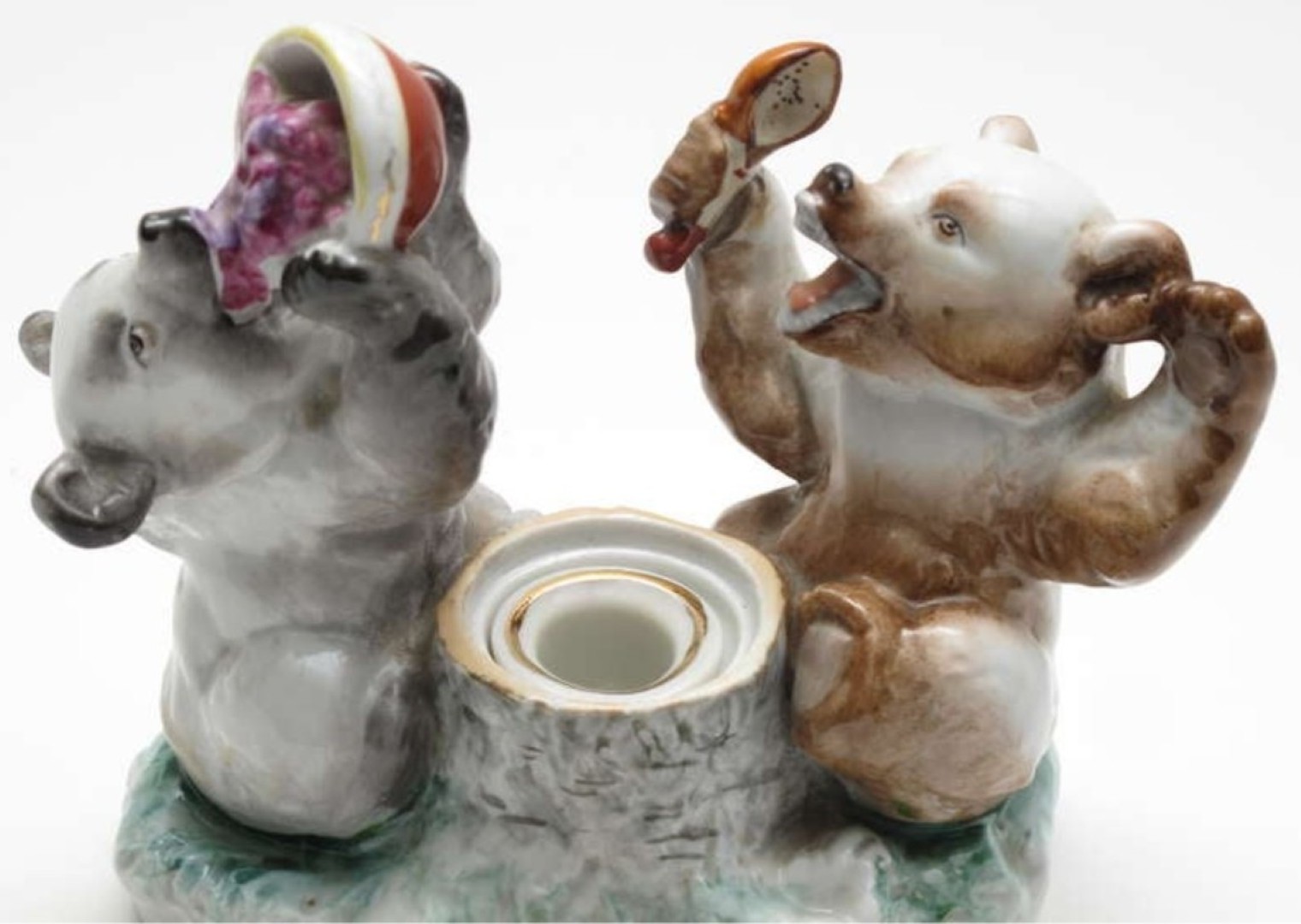
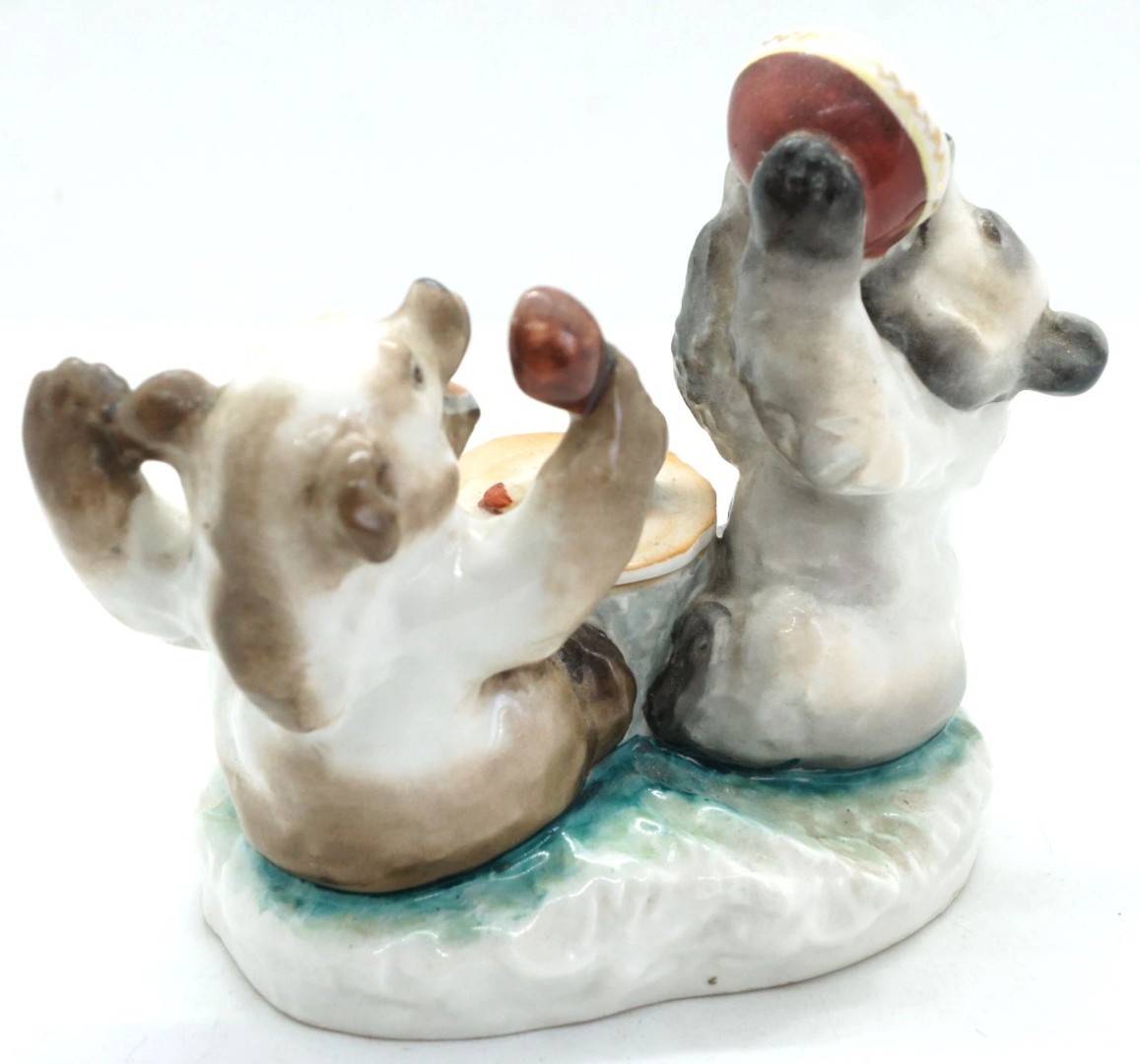
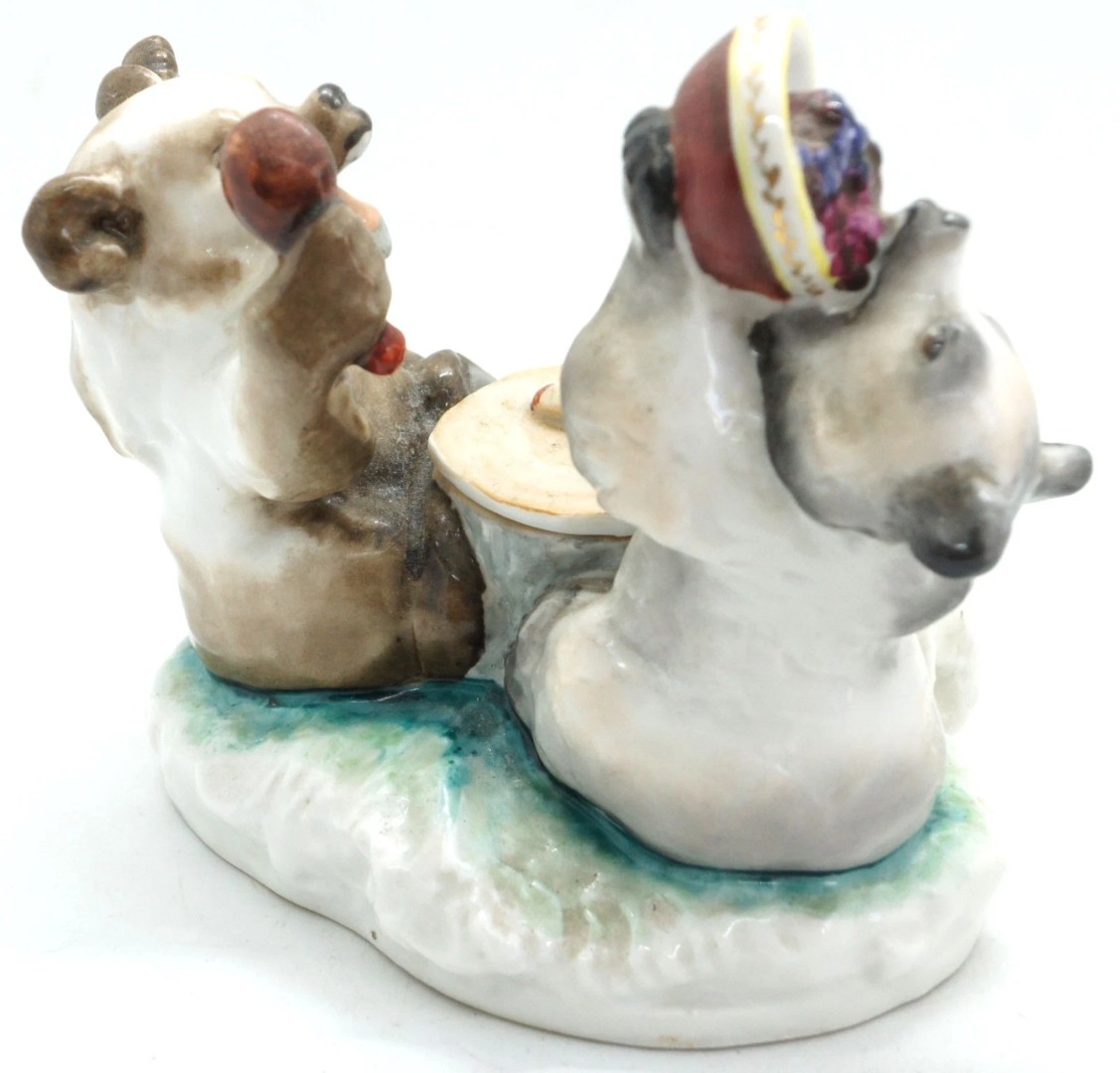
- The Grey Cub: Is depicted in a moment of pure gluttony, tipping a bowl of purple berries directly into his mouth.
- The Brown Cub: Watches with a raised spoon and an open mouth, appearing to either protest his brother’s greed or wait for his own turn.
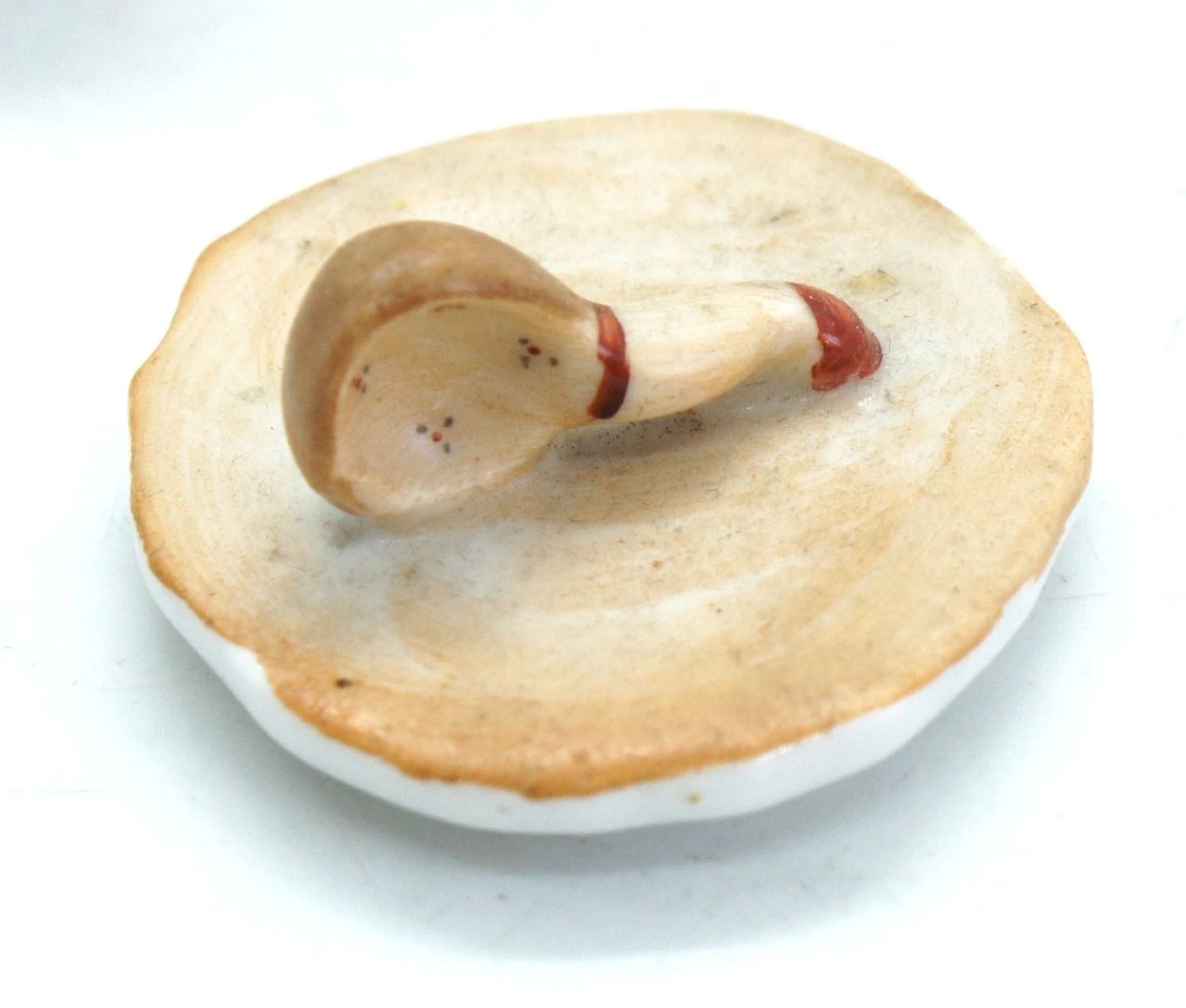
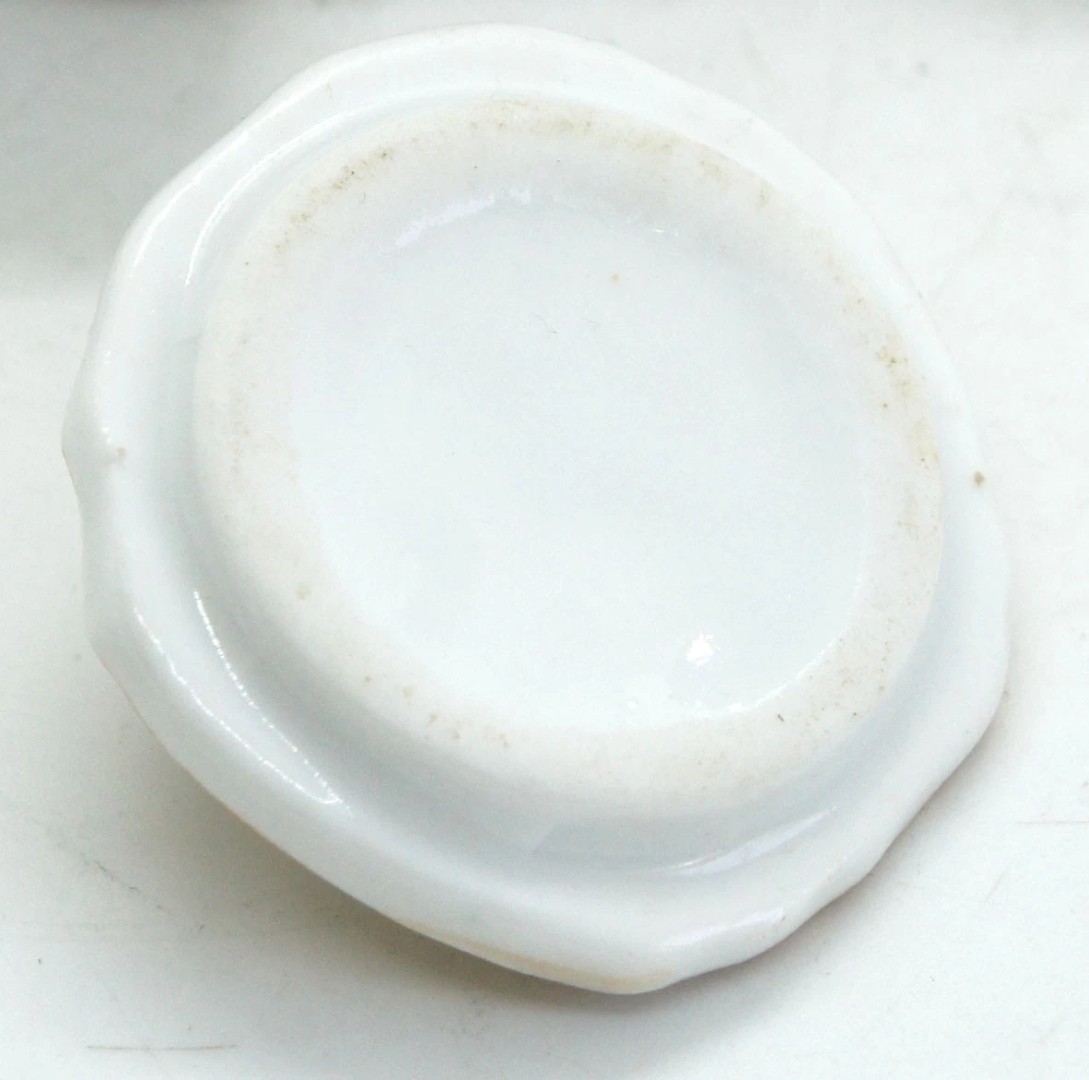
The central tree stump serves as the functional heart of the piece, housing the removable inkwell insert. The lid is decorated with a sculpted spoon handle, mirroring the spoon held by the brown bear and tying the narrative together.
Artistic Provenance
- Sculptor: Evgeniy Charushin (Е. И. Чарушин): A legendary children’s book illustrator and animal sculptor. He was famous for his ability to convey “furry” textures and anthropomorphic emotions in porcelain without losing the animal’s natural essence.
- Painter: Ivan Riznich (И. И. Ризнич): The factory’s leading animalier painter. His signature style is evident in the soft, underglaze hand-painting and the “blended” color transitions on the bears’ coats.
- Manufacturer: Lomonosov Porcelain Factory (LFZ), Leningrad, USSR.
- Period: Circa 1950s.
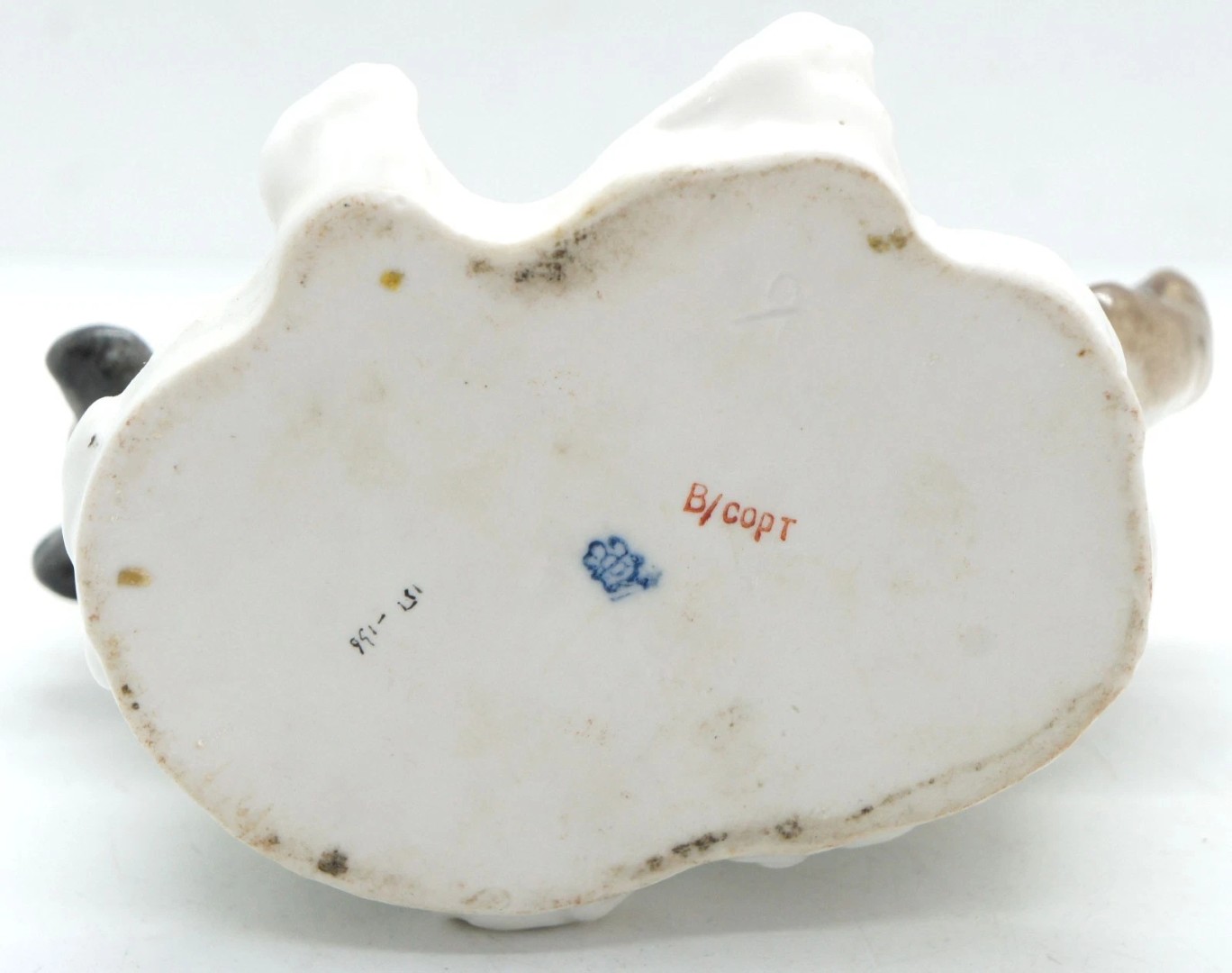
Interpreting the Marks
The markings on the underside provide specific details about the piece’s production and quality:
- Blue LFZ Monogram: This is the stylized logo for the Leningradski Farforovyi Zavod (Leningrad Porcelain Factory).
- Red “В/сорт” Stamp: This stands for Высший сорт (Vysshiy sort), meaning “Highest Quality” or “First Grade.” In Soviet porcelain hierarchy, the red color of the grade stamp confirms it was a top-tier production piece, free of the firing flaws often found in second (blue) or third (green) grade items.
- Numerical Markings (157-156): These are internal factory model or batch numbers used for inventory and production tracking.
Historical Context: Why an Inkwell in the 1950s?
By the 1950s, fountain pens were the standard, and ballpoints were beginning to emerge. However, the Lomonosov factory continued to produce figural inkstands for several reasons:
- Desk Culture & Prestige: In Soviet society, a grand porcelain inkstand was a “prestige” item for the desks of the intelligentsia, high-ranking officials, and educators. They were commonly given as formal diplomatic gifts or awards.
- Educational Incentives: Items featuring folk tales were often placed on children’s desks to encourage literacy and the “civilized” art of letter writing.
- Export Strategy: The USSR used the Lomonosov factory as a cultural ambassador. These whimsical, high-quality figurines were sought after in Western markets (often sold through export firms like Novoexport) to generate hard currency and showcase Soviet craftsmanship.
Production of these specific figural inkwells largely tapered off by the late 1960s as desktop “writing sets” transitioned from functional tools to purely decorative “statue” figurines.
Sold for $99 in May 2026
Content disclaimer. The information posted is the owner’s best knowledge and may not have been vetted by the SOIC. We welcome comments, corrections, and additions, working to make our website information comprehensive and accurate.
Join the Society of Inkwell Collectors (SOIC) – it’s free!
Founded in 1981 as a non-profit organization,
we are documenting inkwells (and accessories).
We’re here to help and inform!