


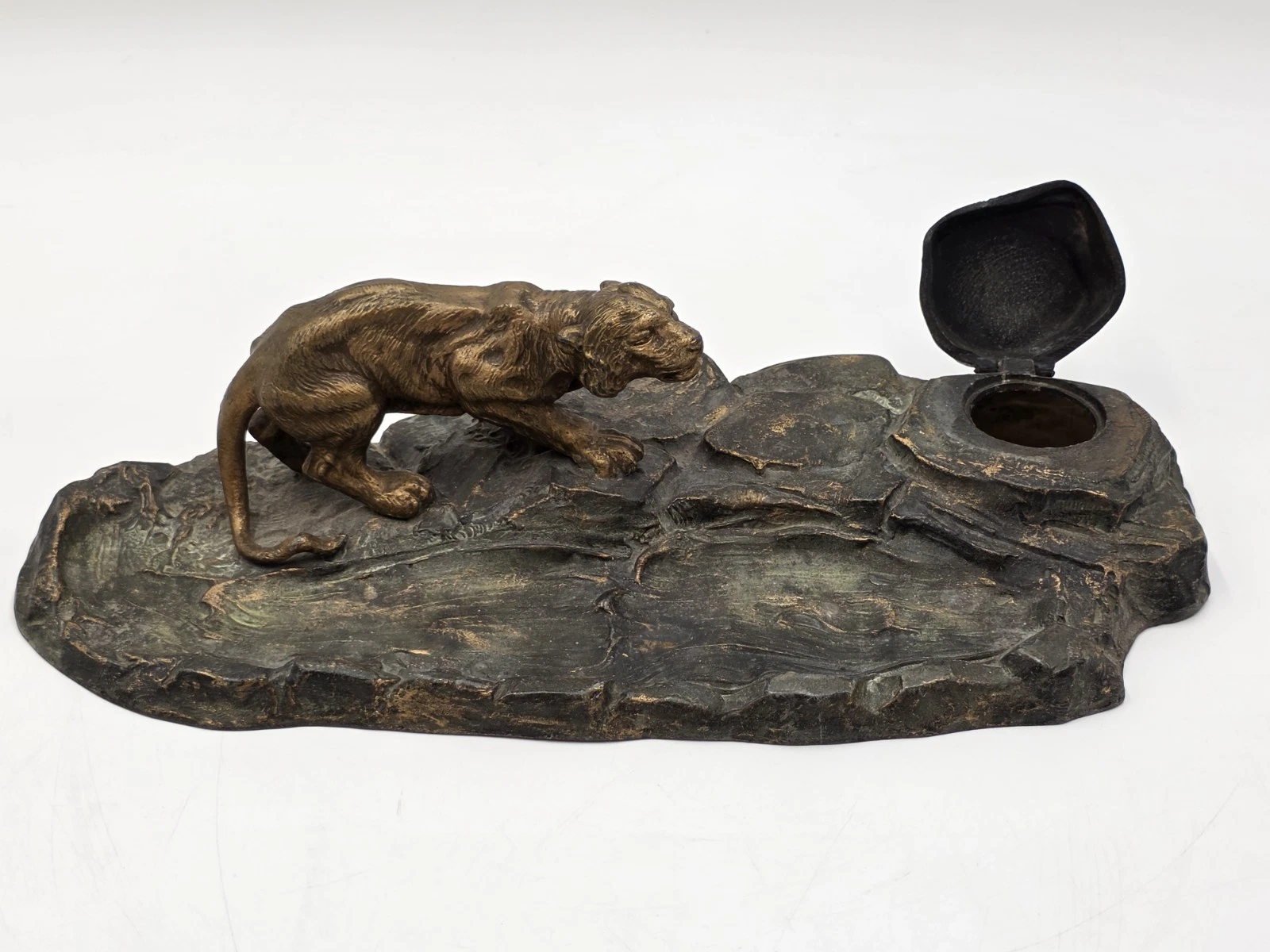
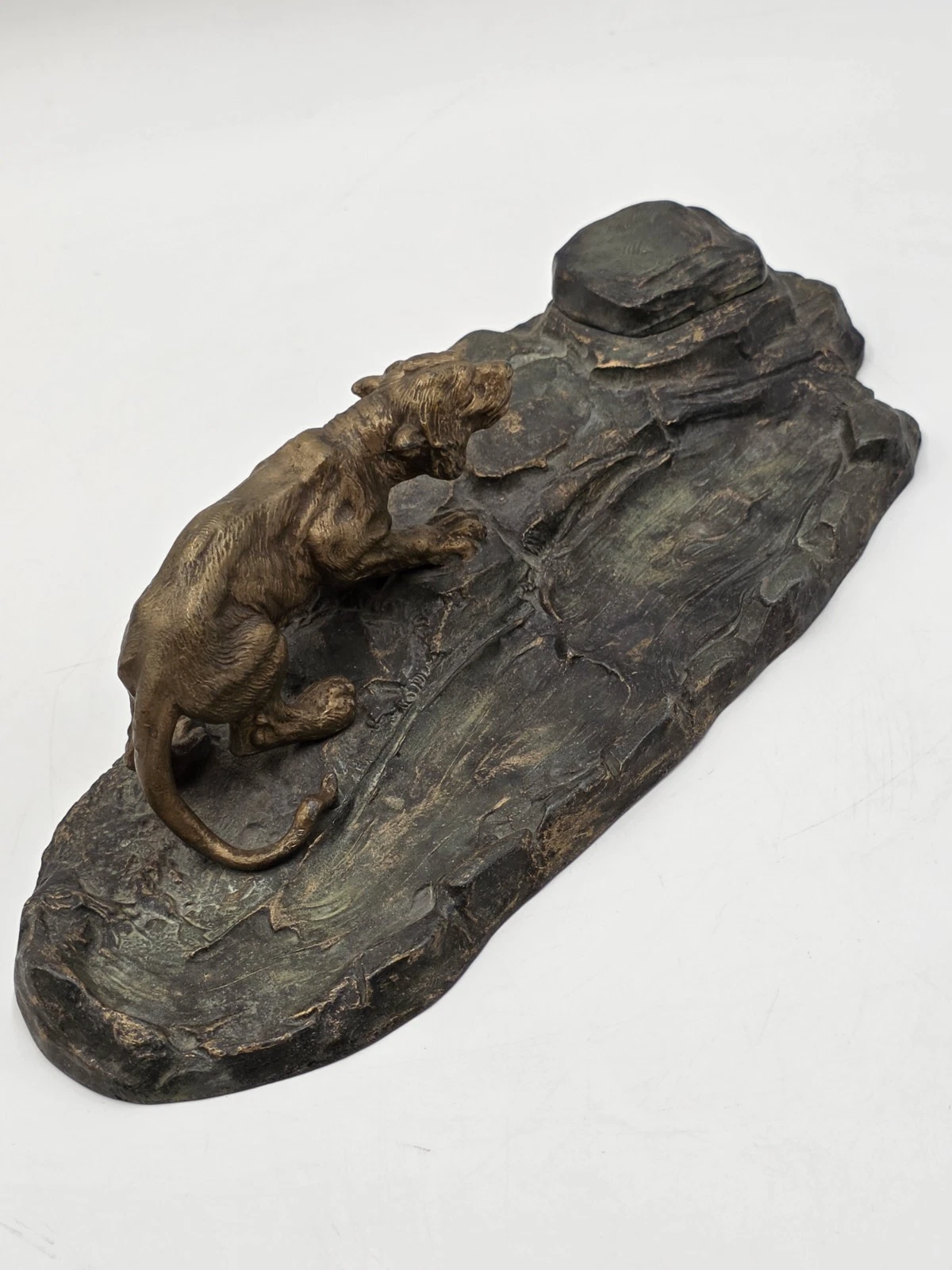
Austrian Figural Inkstand – Lioness
| Categories | Figural - Animals & Living Creatures |
| Type | Lion |
| Material | Spelter |
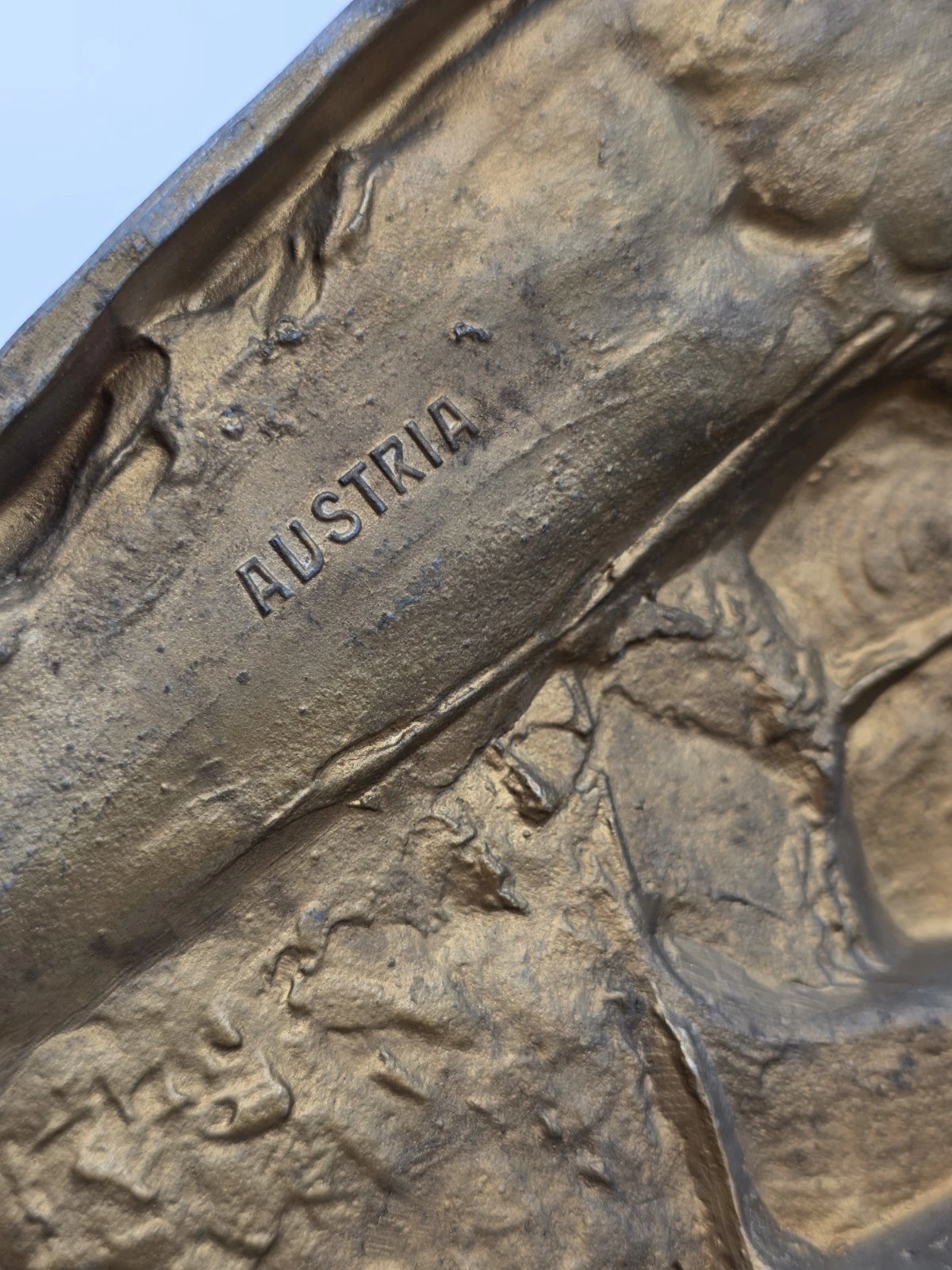
| Markings | "Austria" |
| Manufacturer | Undetermined |
| Origin | Austria |
| Date or Era | circa 1900 |
| Measuring | 12” x 5” x 3 ⅞” high |
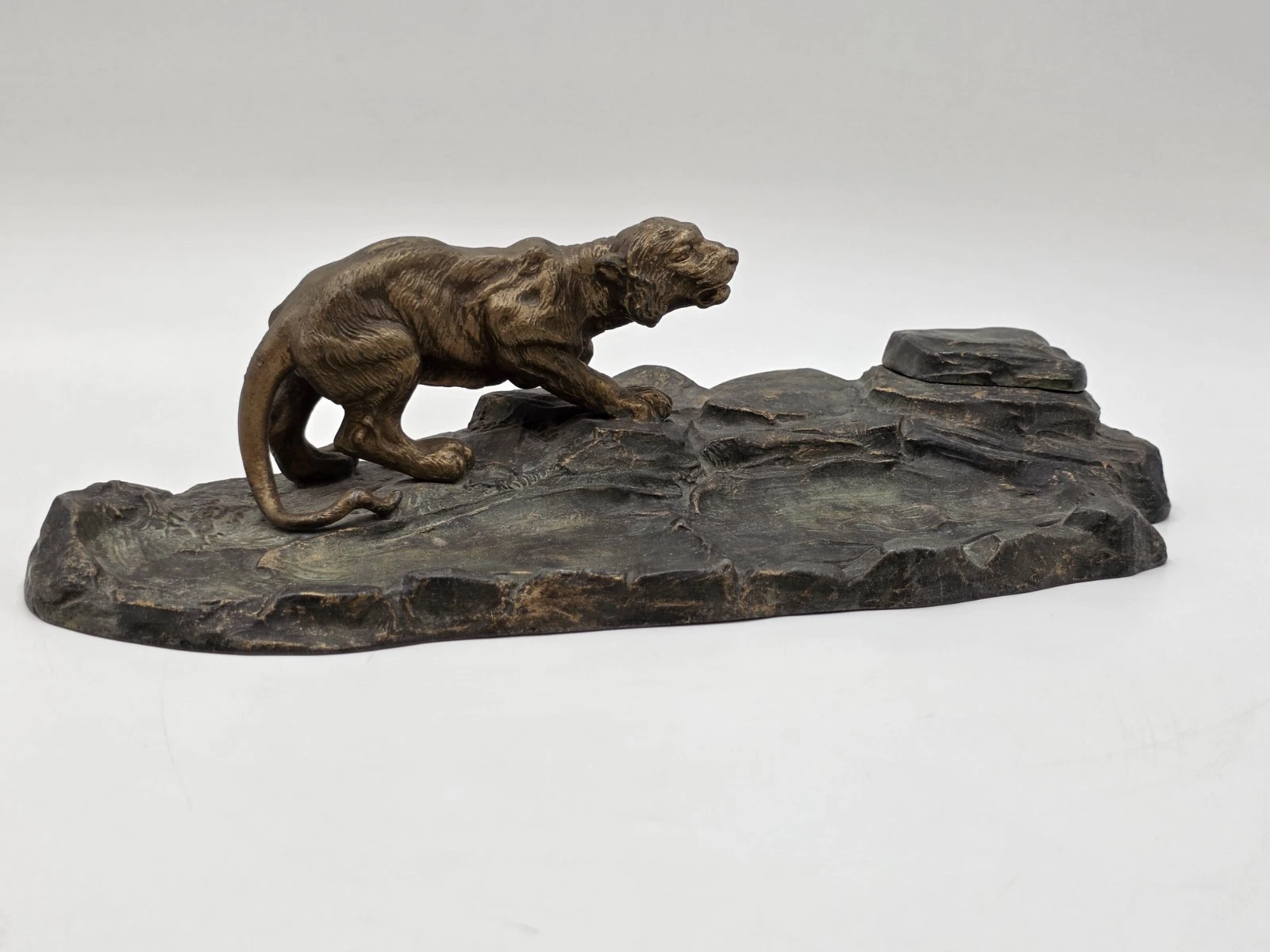
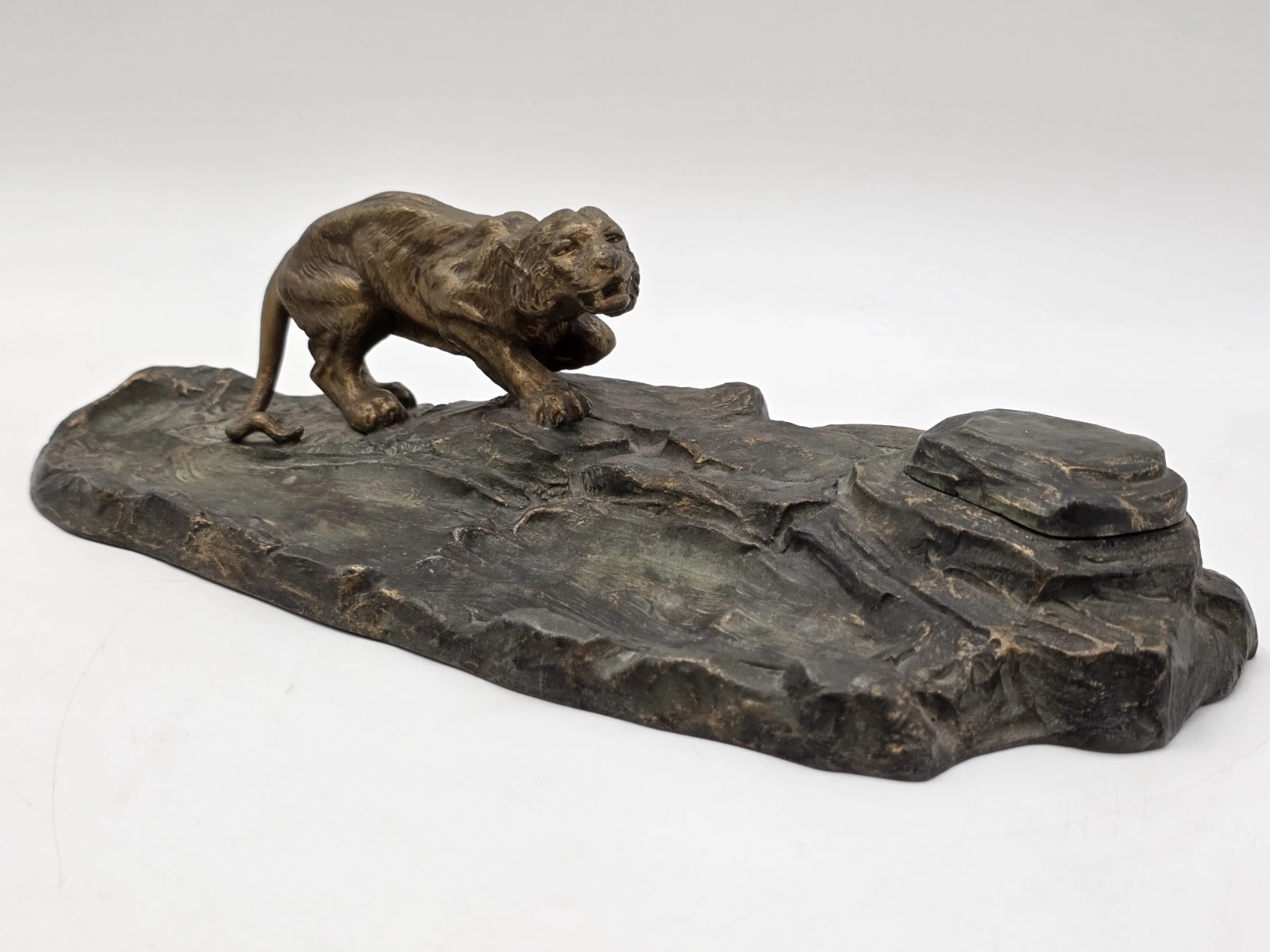
This is a dramatic Austrian figural inkstand in the “Vienna Bronze” style, dating to the early 20th century (c. 1900–1920).
The piece is an example of the “Naturalist” school of desk accessories, where the functional elements (the inkwell) are disguised within a realistic sculpture.
- The Sculpture
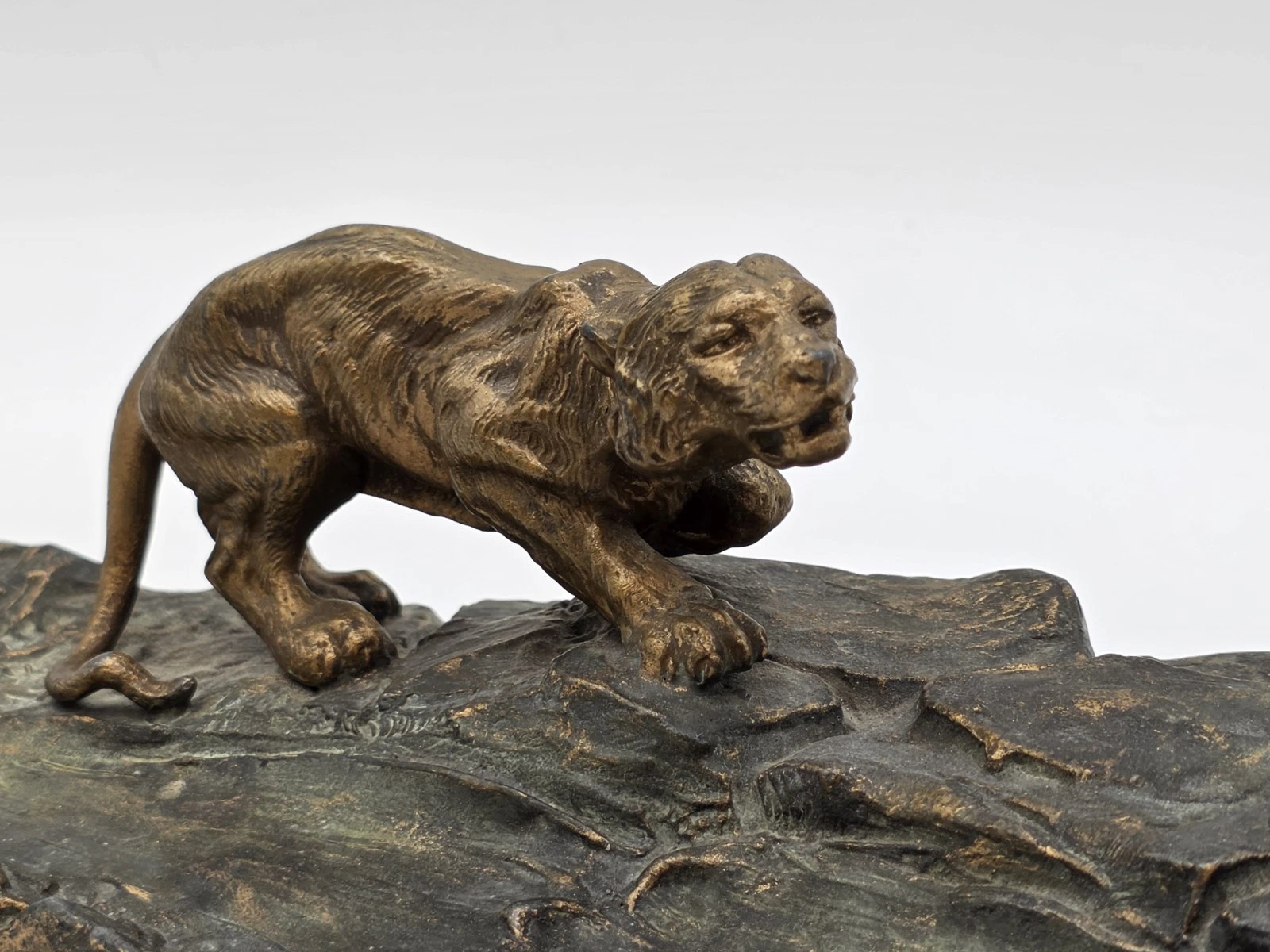
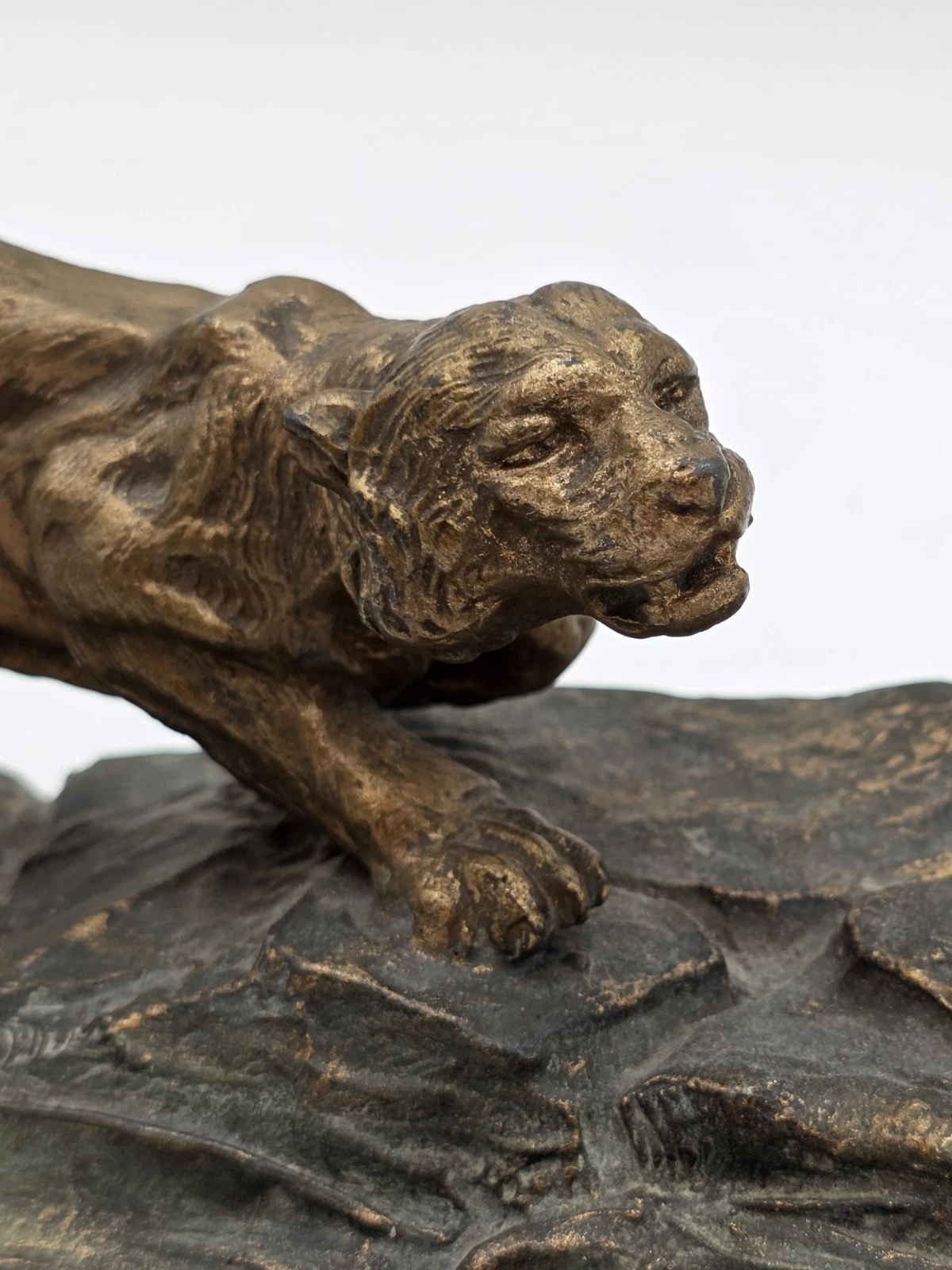
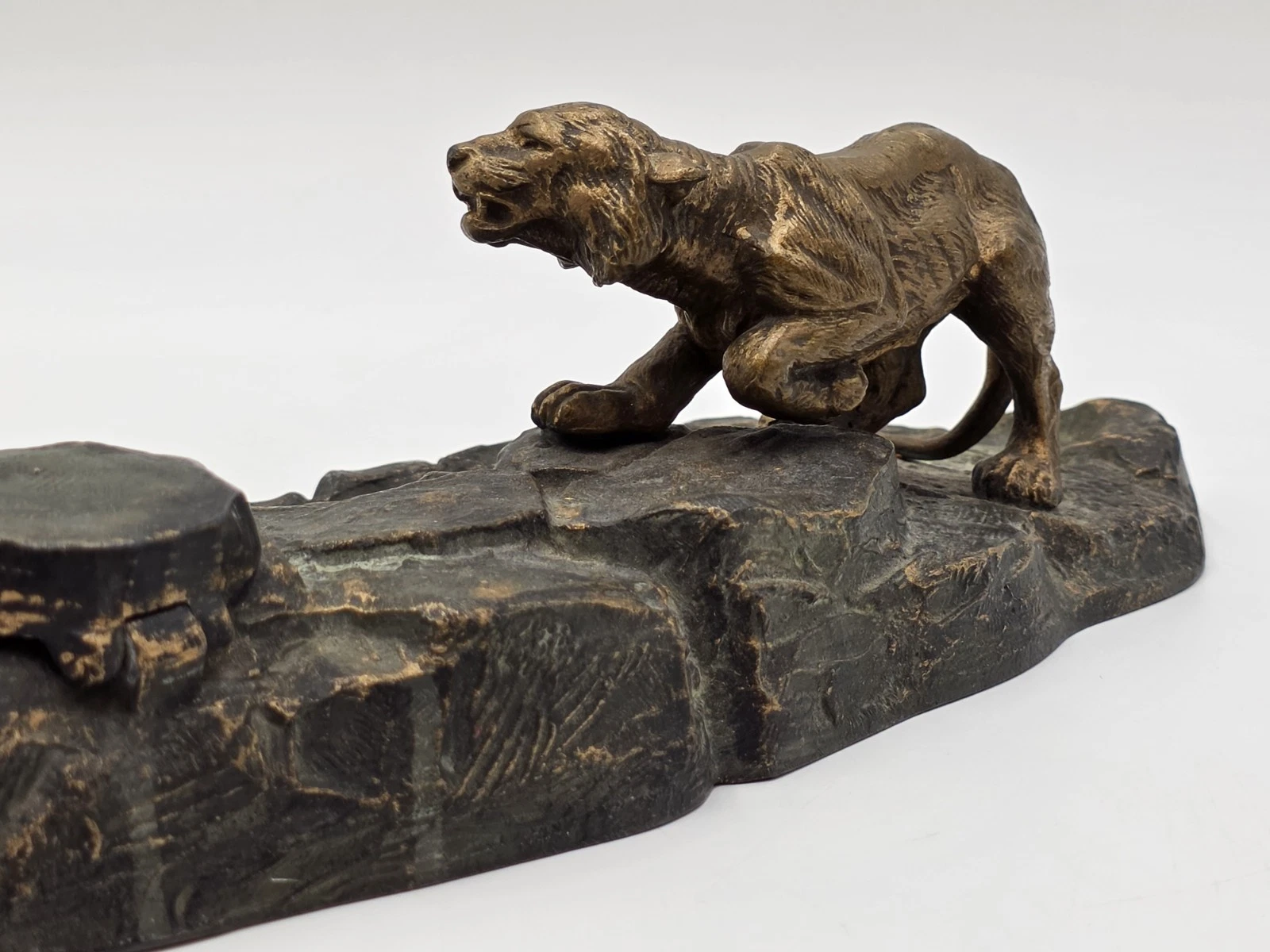
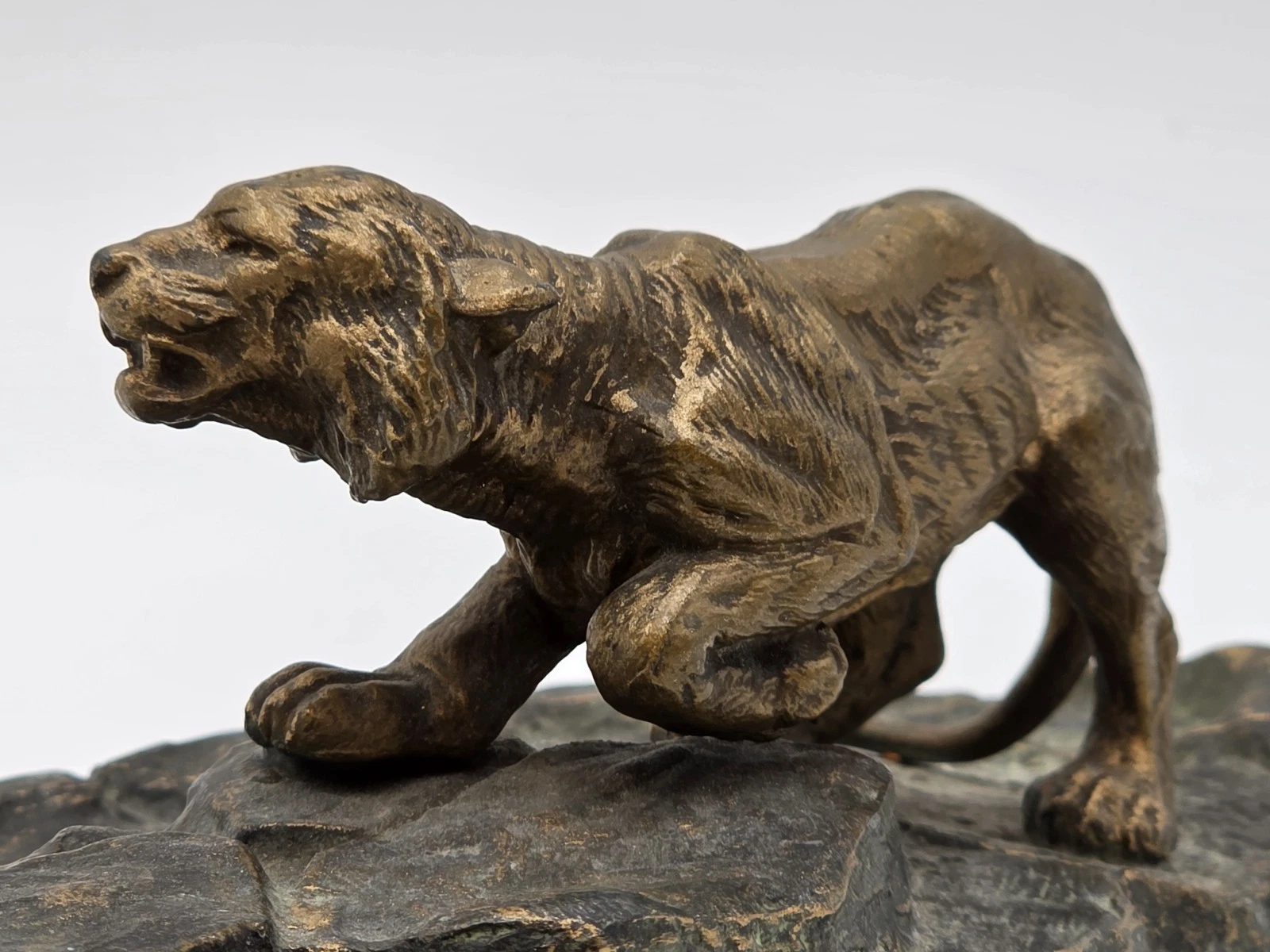
- The Figure: The centerpiece is a powerful, muscular lioness caught in a stalking or crouching pose. The sculptor has paid close attention to anatomy, detailing the ribs, shoulder muscles, and the intensity of the animal’s gaze as it looks toward the inkwell.
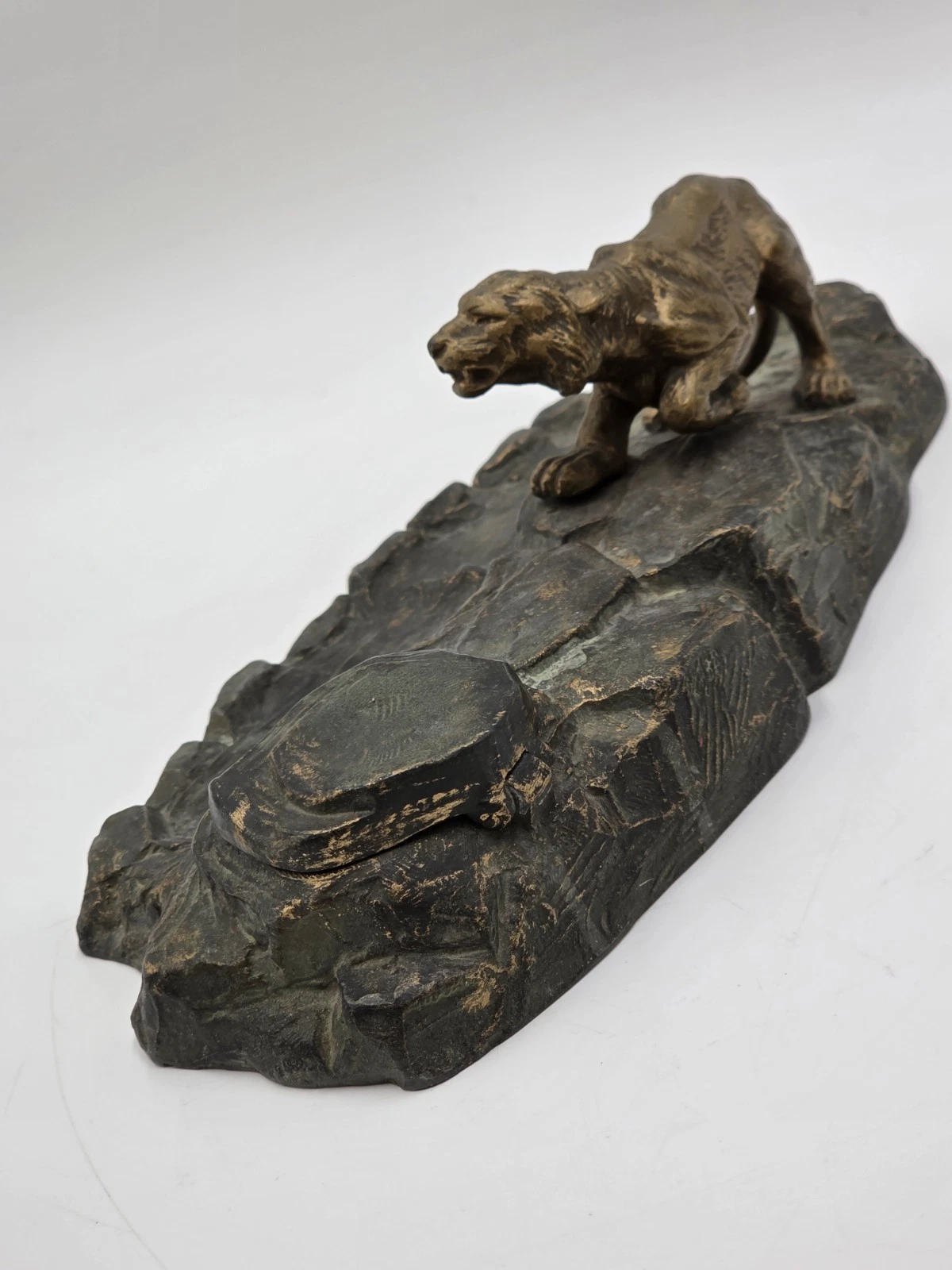
- The Setting: The base is modeled as a rugged, uneven rocky outcrop or terrain. This irregular shape is typical of Austrian naturalistic bronzes, breaking away from the strict rectangular bases of the Victorian era.
- The Hidden Inkwell
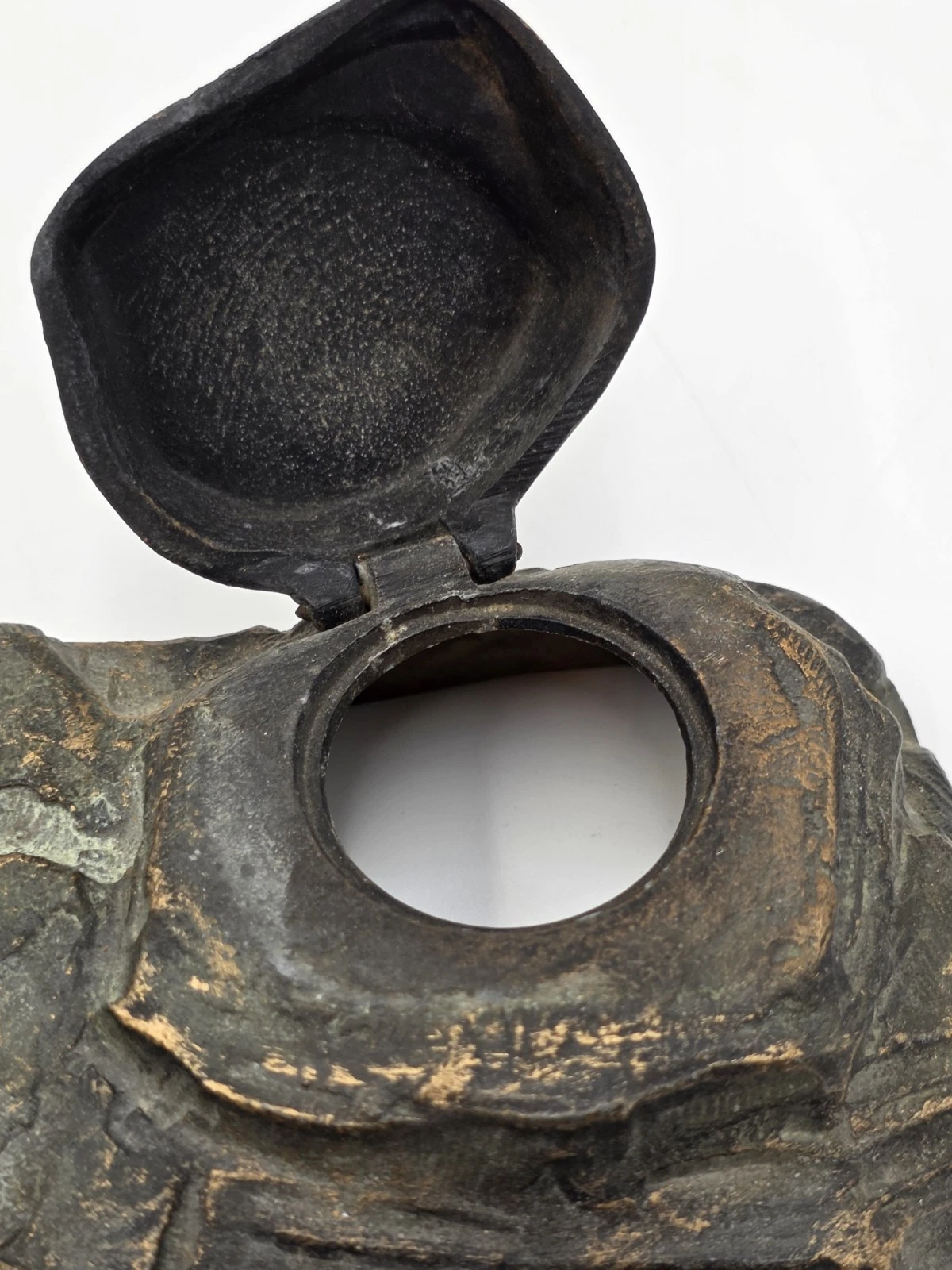
- Trompe-l’œil Design: The inkwell is disguised as a large boulder or rock formation on the right side of the base.
- Mechanism: The “rock” features a hinged lid that flips open to reveal the ink reservoir (missing its insert). This design feature allowed the piece to function as a pure sculpture when not in use.
- Material and Markings
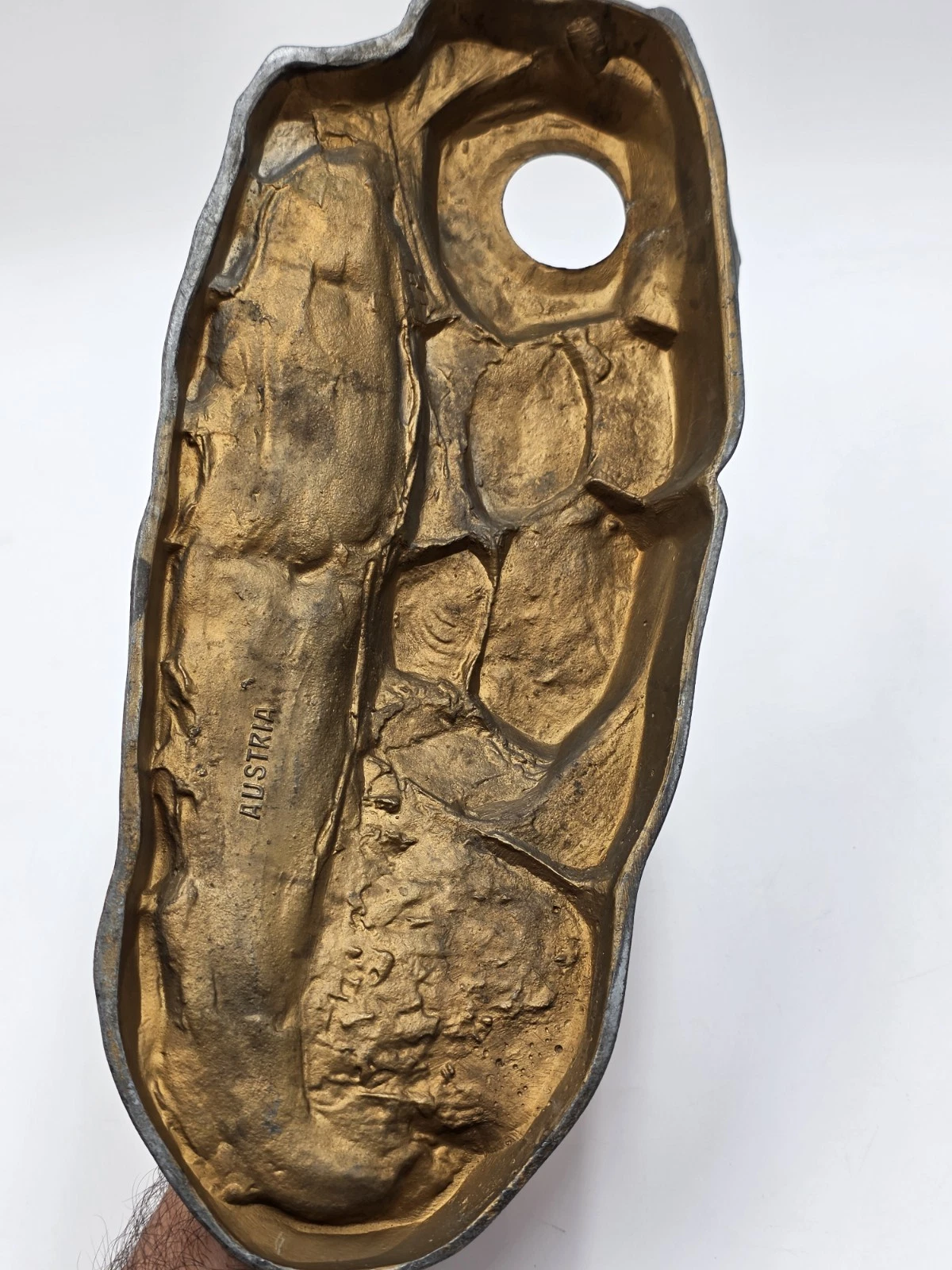
- Marking: The underside of the base is clearly stamped “AUSTRIA”. This mark was required for export to the United States after 1891 (McKinley Tariff Act), confirming its origin and dating it to the turn of the 20th century.
- Material: While often referred to as “Vienna Bronzes,” many of these export pieces (especially those with hollow undersides like this one were cast in spelter (a zinc alloy) and then given a high-quality bronze patina or “wash.” The golden color visible on the underside is a classic characteristic of Austrian spelter casting from this era.
Context
Austrian foundries (such as Bergman or Matthias Bermann) were famous world-wide for their animal figures. While this piece does not bear a specific foundry mark (like the famous “B in an urn”), the quality of the modeling—specifically the tension in the lioness’s pose—marks it as a quality piece of Viennese export art.
Sold for $300 in November 2025
Content disclaimer. The information posted is the owner’s best knowledge and may not have been vetted by the SOIC. We welcome comments, corrections, and additions, working to make our website information comprehensive and accurate.
Join the Society of Inkwell Collectors (SOIC) – it’s free!
Founded in 1981 as a non-profit organization,
we are documenting inkwells (and accessories).
We’re here to help and inform!