





Art Nouveau Lion Inkstand
| Categories | Figural - Animals & Living Creatures |
| Type | Lion |
| Material | Spelter |
| Markings | Unmarked |
| Manufacturer | Undetermined |
| Origin | France |
| Date or Era | circa 1900 |
| Measuring | 13 ¾” x 7” x 9” high |
Description
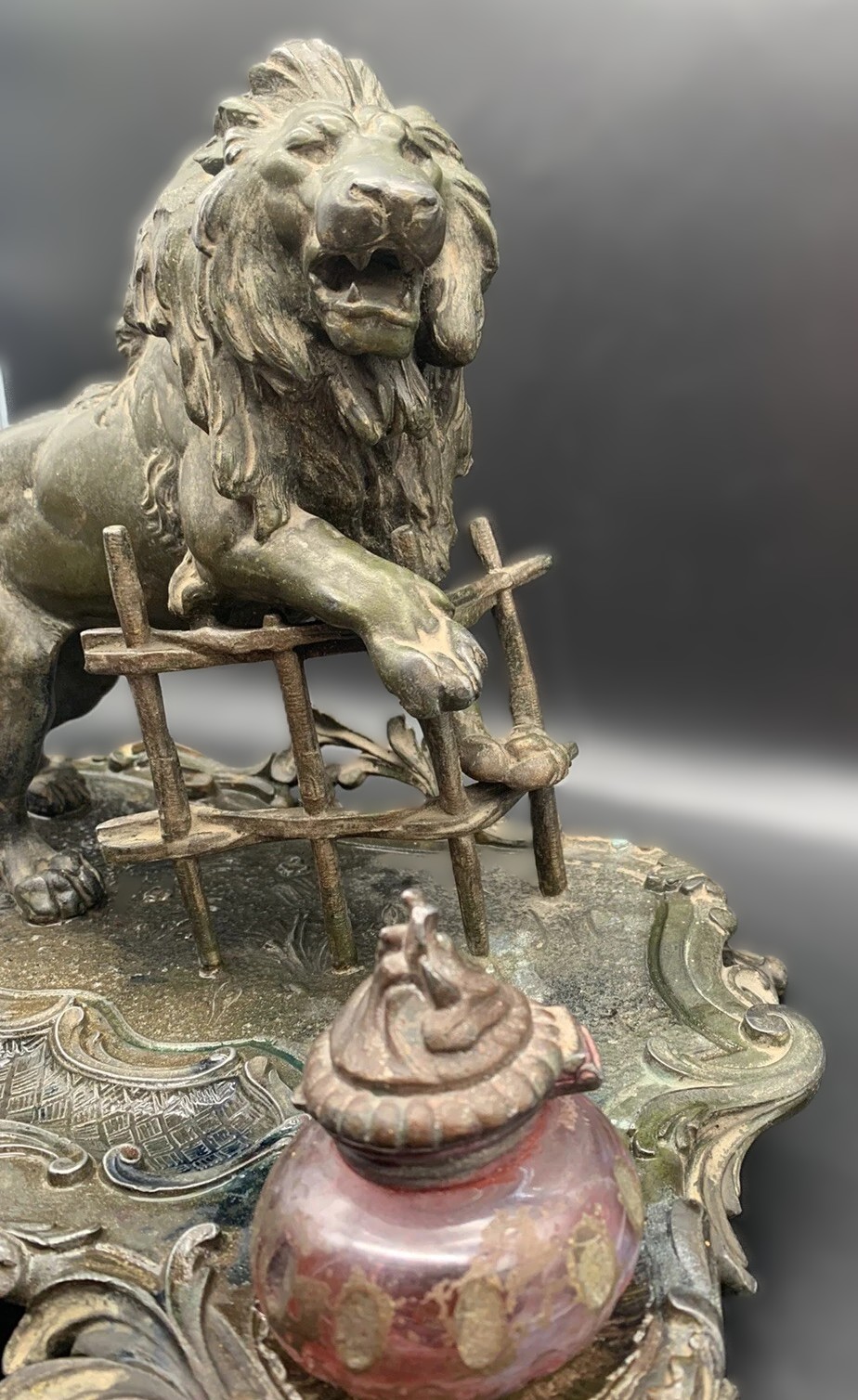
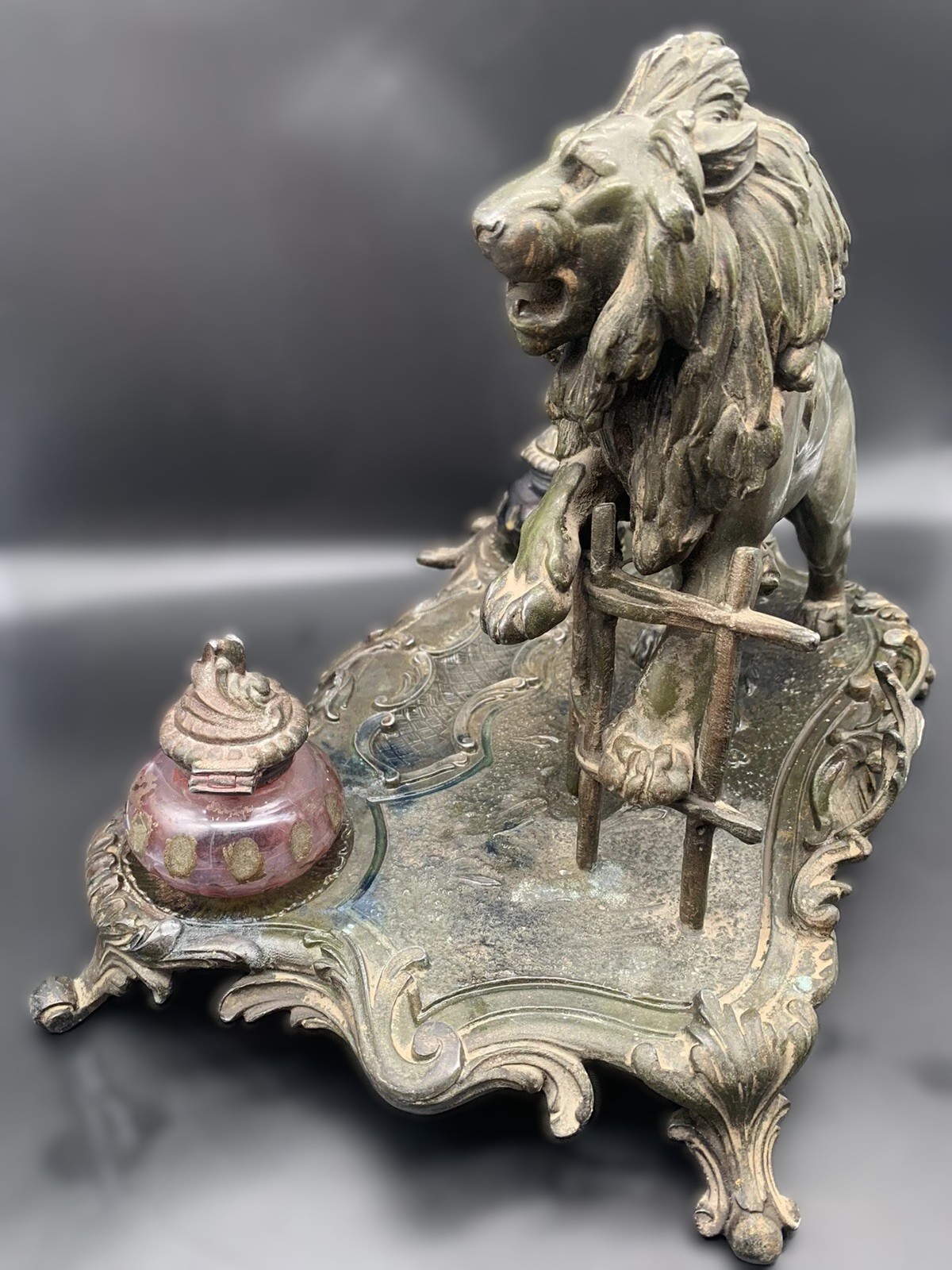
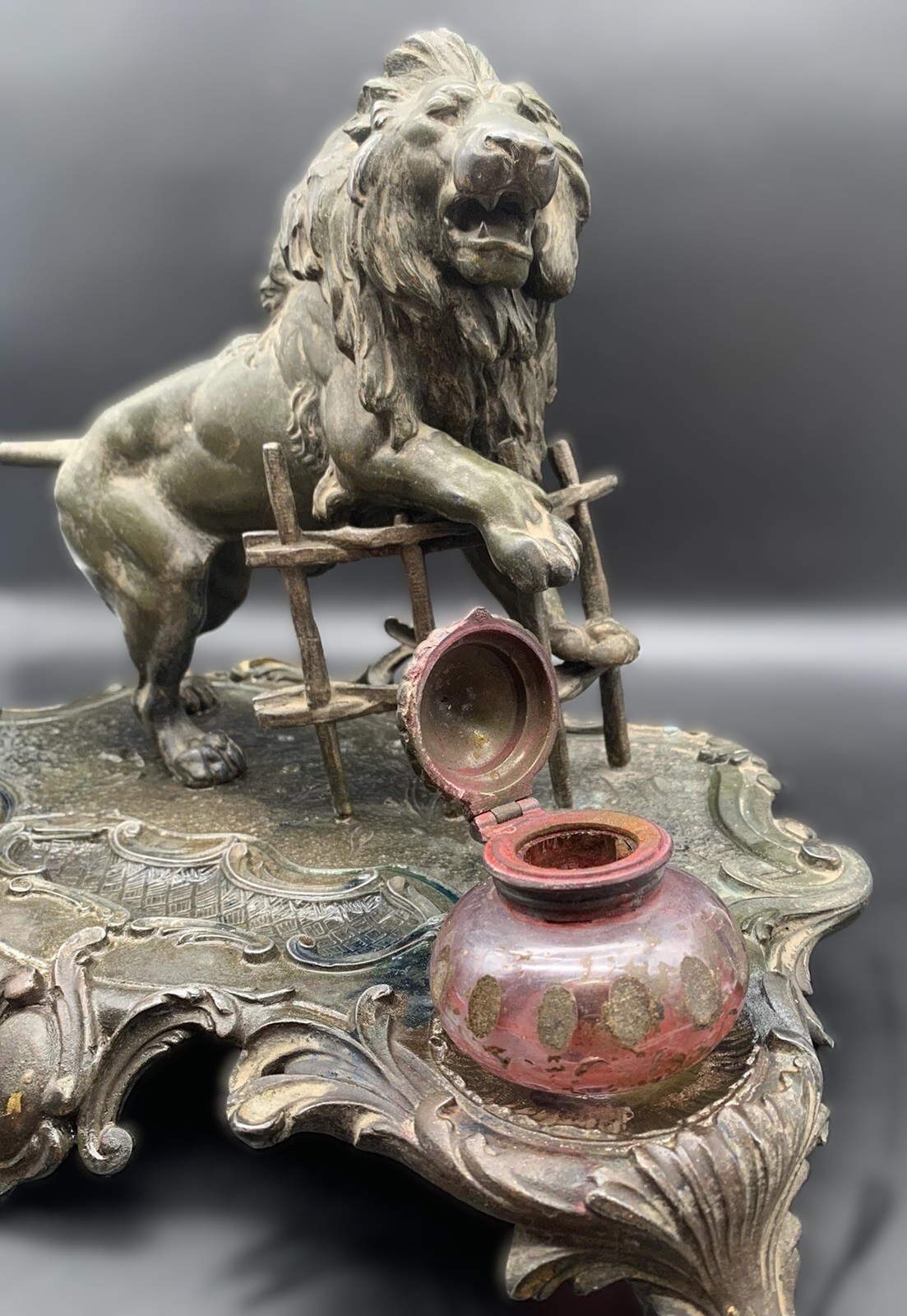
An inkstand made of régule (a lead-tin/zinc white metal alloy), dating from the late 19th or early 20th century, in the Art Nouveau style.
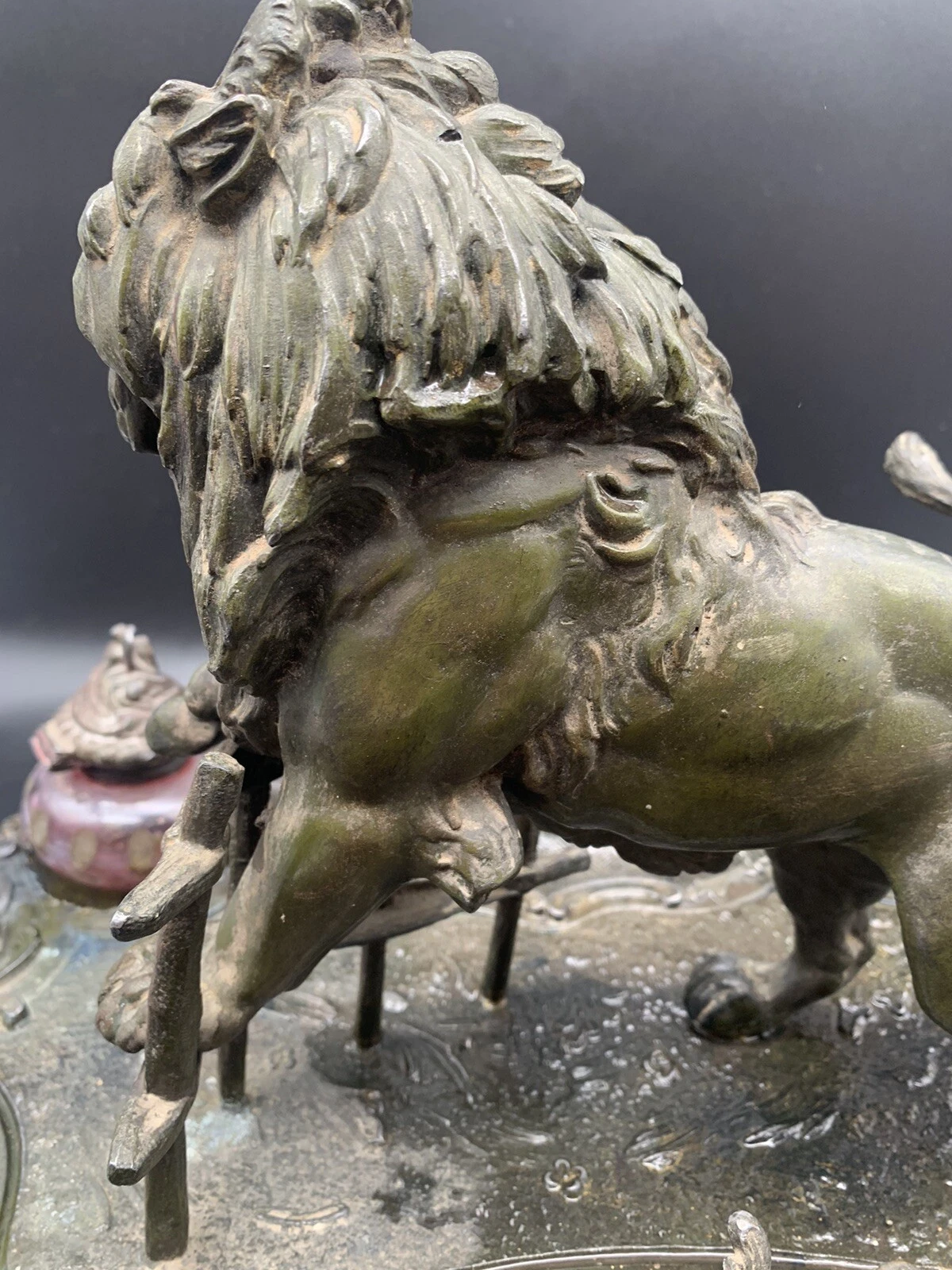
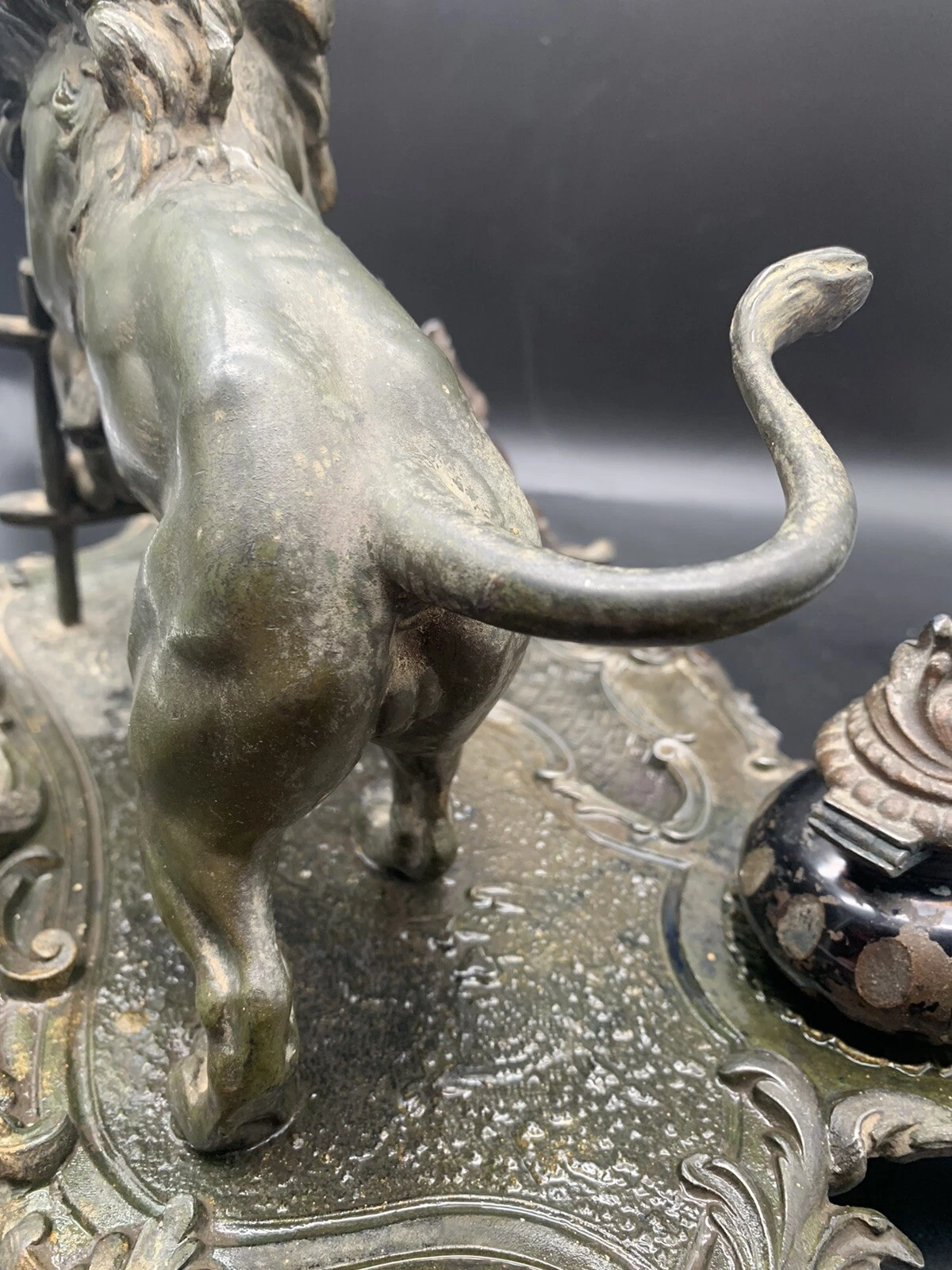
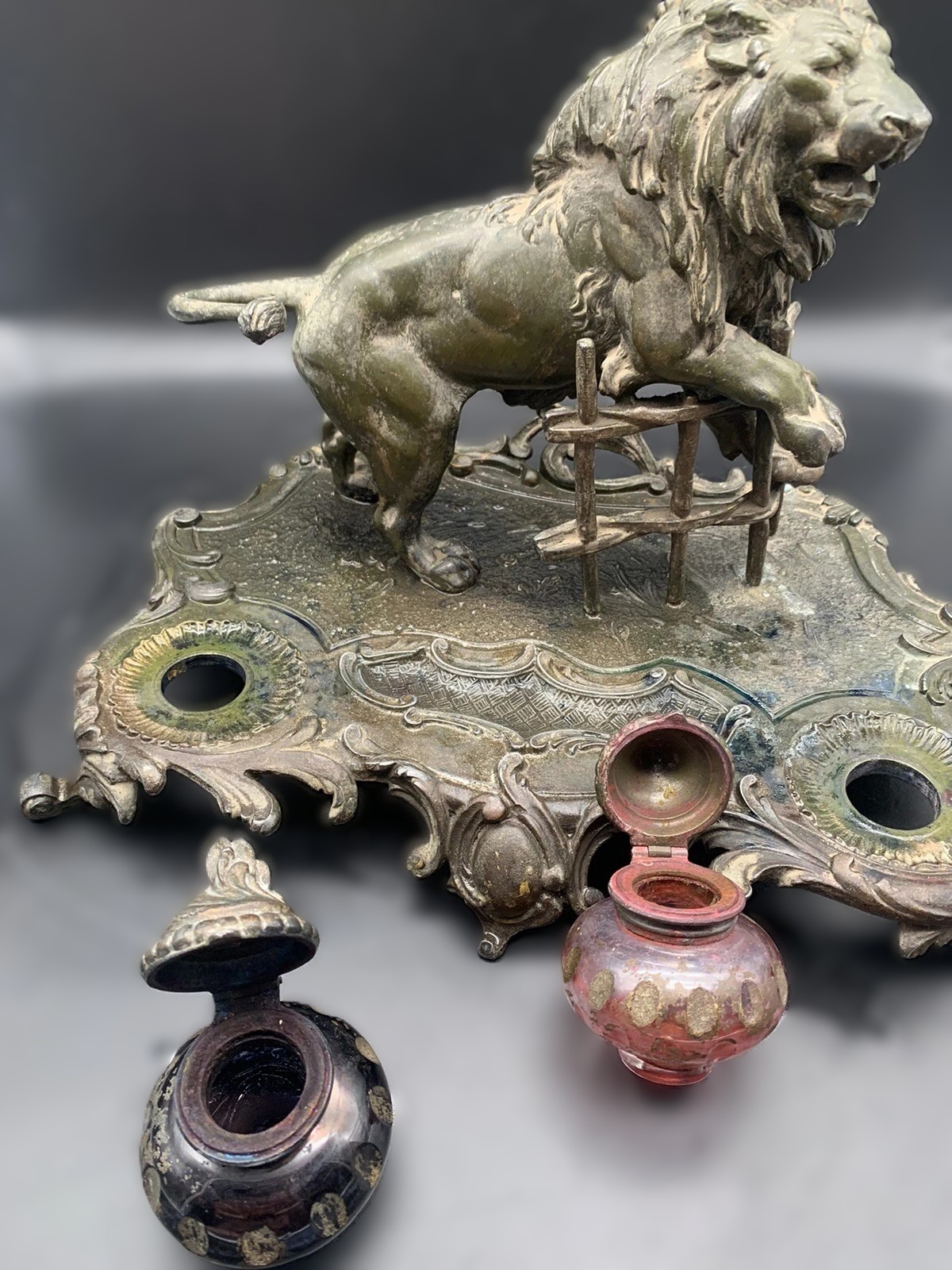
This piece features a majestic lion sculpted in the round (en ronde-bosse), positioned with one front paw resting atop a fence structure. The lion is finely detailed and exhibits a natural greenish patina typical of antique spelter pieces.
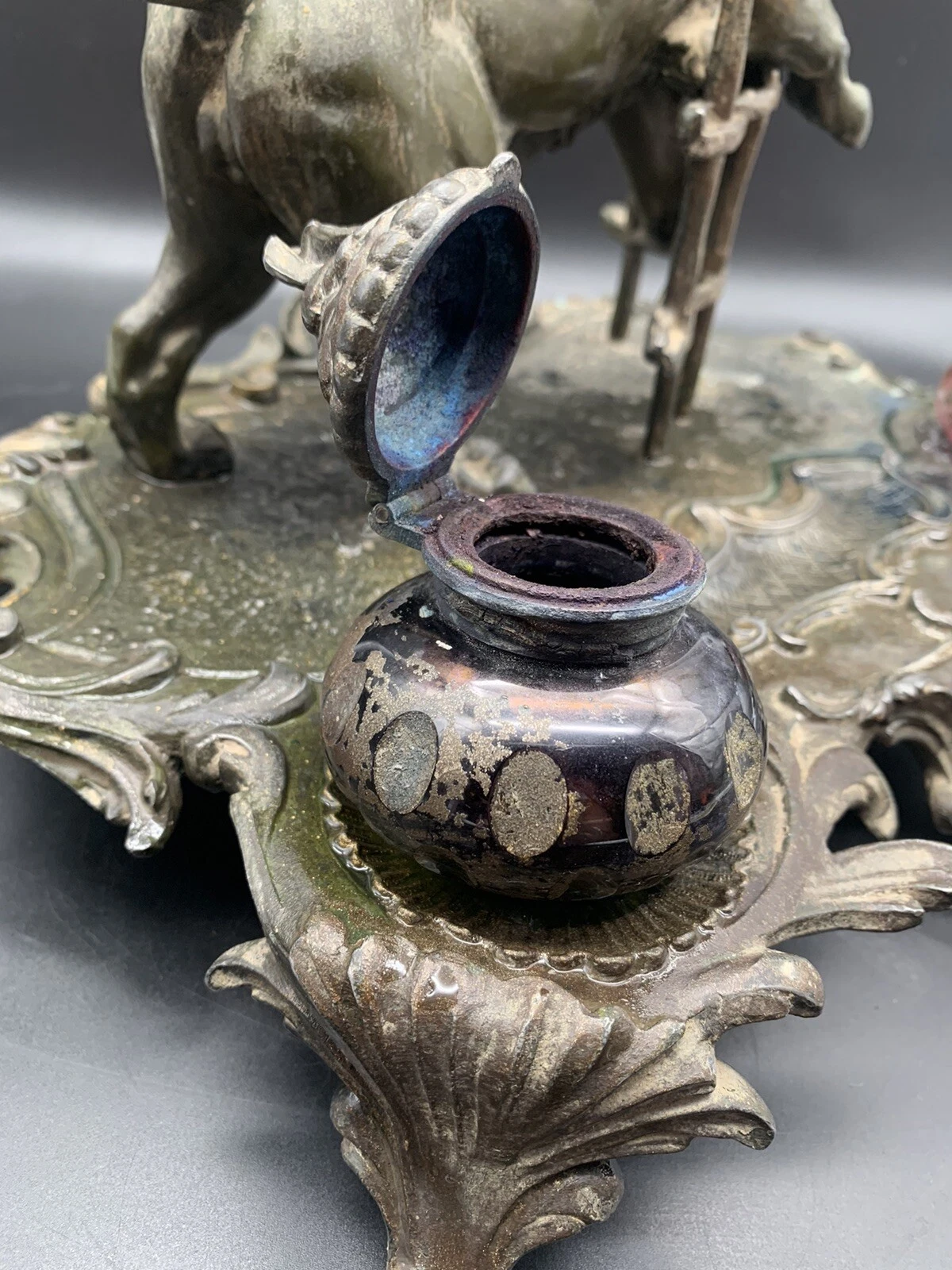
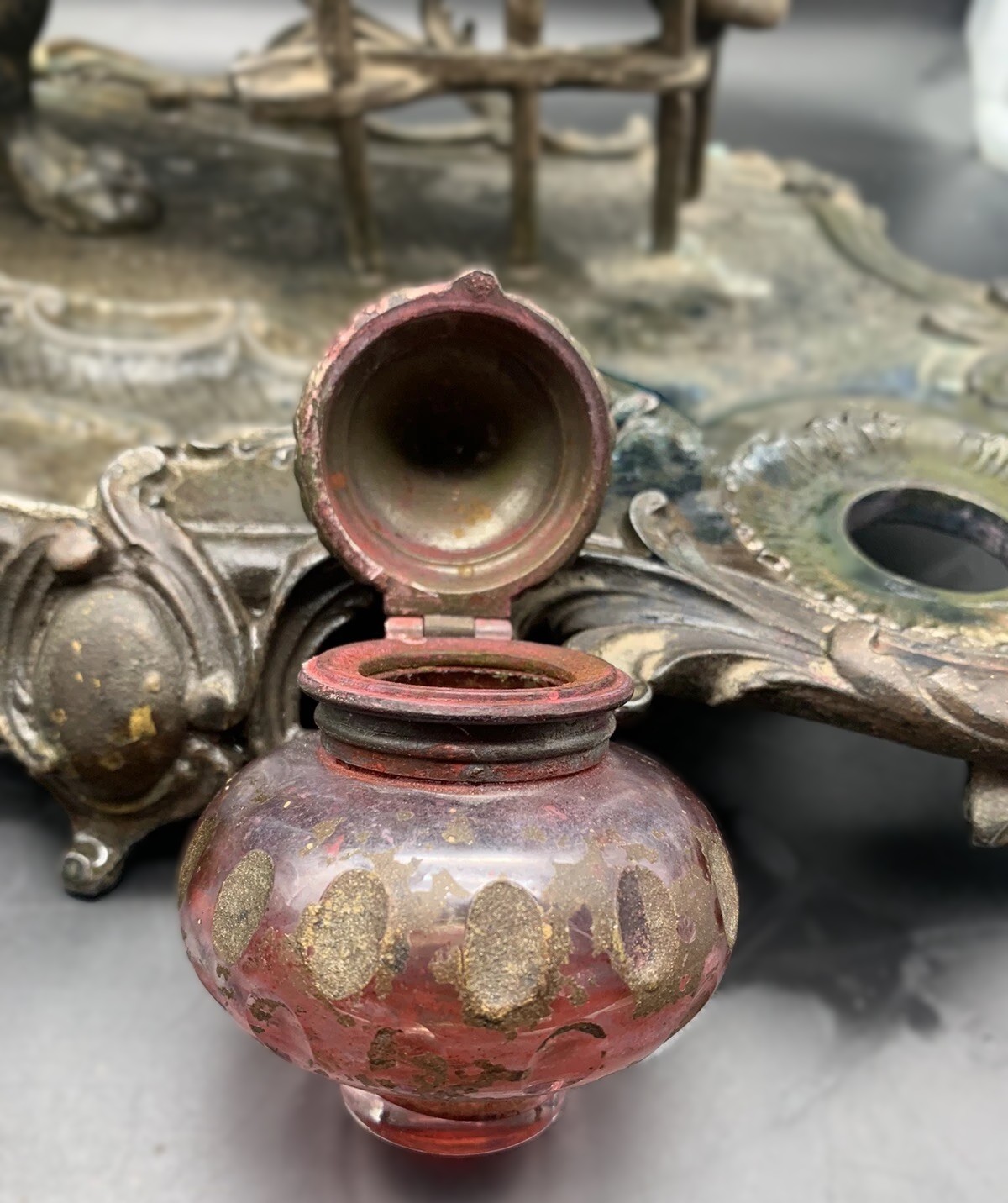
The inkstand holds two inkwells with ink residue, each fitted with a spelter lid with twisted, spiral motifs. The base of the inkstand is decorated with floral motifs and sweeping volutes characteristic of the Art Nouveau aesthetic.
Specifications:
- Materials: Spelter / Régule (body and lion), crystal (inkwells)
- Dimensions: 35 cm long, 18 cm deep, 23 cm high (including the lion)
- Weight: 4.6 kg
- Style: Art Nouveau
- Period: Late 19th / Early 20th century
- Condition: Good overall antique condition. Natural patina on the spelter with minor traces of oxidation. The inkwells show signs of wear but no notable cracks or chips.
- Who Made It?
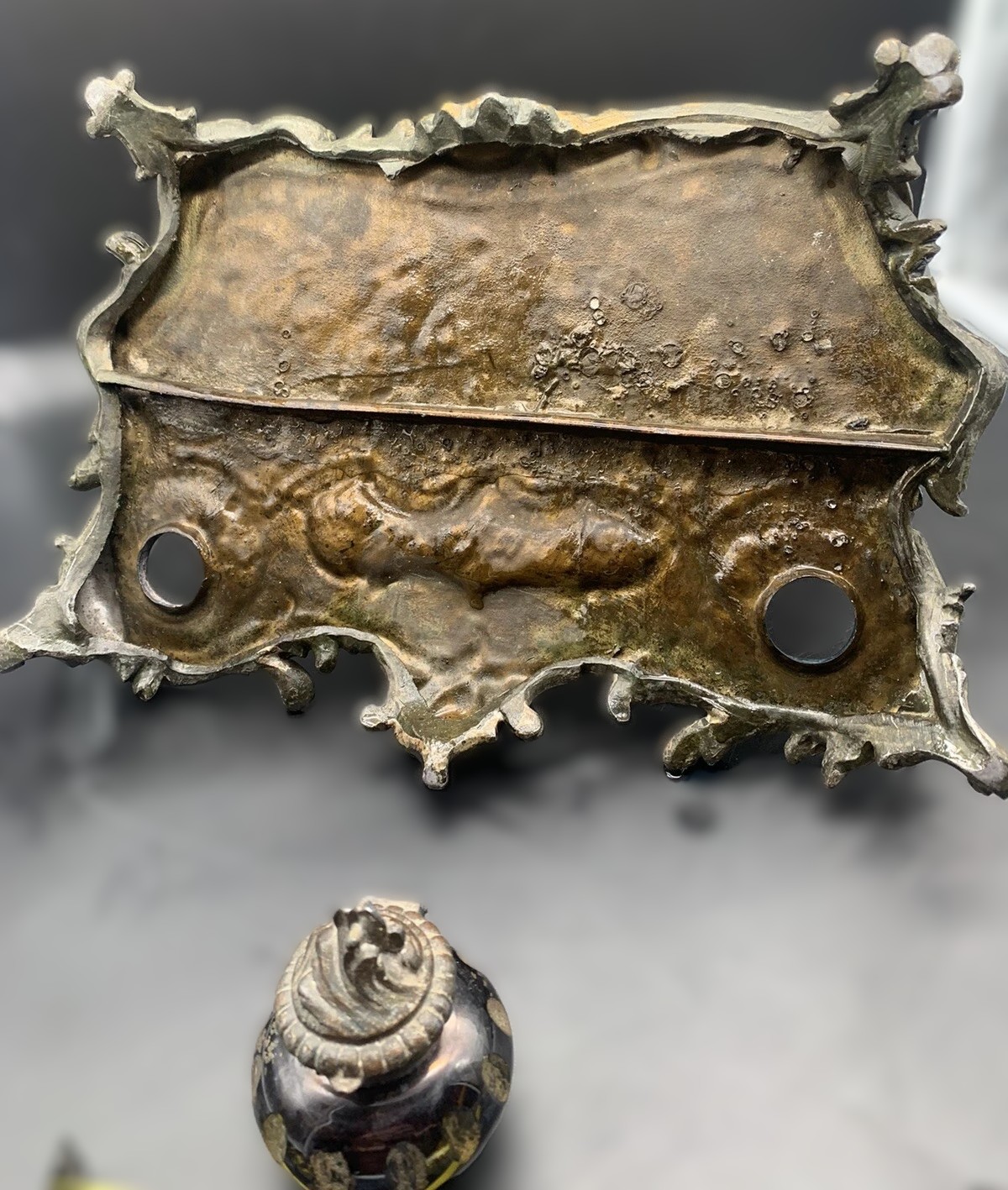
- Attribution: The piece is unmarked. An inspection of the hollow underside reveals a typical raw cast metal finish with a structural stabilizing crossbar, but no visible foundry stamps, sculptor signatures, or Modèle Déposé (registered design) marks.
- Many mass-art spelter pieces from this era were produced by prominent Parisian and northern French foundries mimicking the highly prized bronze works of the Animalier movement. Without a signature hidden in the foliage of the base or on the lion’s paws, it remains an anonymous, high-quality production of a commercial Belle Époque foundry.
- Made in France
- The use of the term régule specifically indicates a French origin, as this specific white metal alloy (chiefly zinc, lead, and tin) was widely popularized by French metal foundries in the late 1800s as an affordable, lightweight alternative to solid bronze.
- The combination of a fierce, romanticized animal subject with an organic, flowing Art Nouveau base is emblematic of late 19th century French desktop decor.
- What is its Age?
- Circa 1890–1910. The execution perfectly captures the transitional style of the turn of the 20th century. While the roaring lion draws heavily from the mid-to-late 19th-century Animalier style (championed by sculptors like Antoine-Louis Barye), the base completely embraces the whip-lash curves, organic asymmetry, and stylized foliage of the Art Nouveau movement, which peaked around 1900.
Detailed Visual Highlights from the Images
- The Figure & Composition: The lion is depicted in an unusually dynamic posture, lunging or climbing over a rustic, faux-wooden fence or gate structure. The texture of the lion’s thick mane and muscular tension is captured in the casting.
- The Inkwells: They feature cut thumbprint or faceted panels around the body. The spelter collars and matching spiral-hinged lids are intact, showing a weathered golden-bronze under-patina where the green verdigris has worn down.
- Condition & Patina: The surface displays a beautiful, authentic multi-toned chemical patina, ranging from deep olive greens to dark charcoal grey. The interior of the glass receptacles shows ink residue and minor scaling consistent with true age and functional use.
Sold for $300 in June 2026
Content disclaimer. The information posted is the owner’s best knowledge and may not have been vetted by the SOIC. We welcome comments, corrections, and additions, working to make our website information comprehensive and accurate.
Join the Society of Inkwell Collectors (SOIC) – it’s free!
Founded in 1981 as a non-profit organization,
we are documenting inkwells (and accessories).
We’re here to help and inform!