






Aqua Glass “Burst-Off” Ink Bottle (c. 1881)
| Categories | Ink Bottle |
| Material | Glass |
| Markings | See Narrative |
| Manufacturer | Greener & Co |
| Origin | England |
| Date or Era | circa 1881 |
| Measuring | 2 ¼” diameter; 2” high |
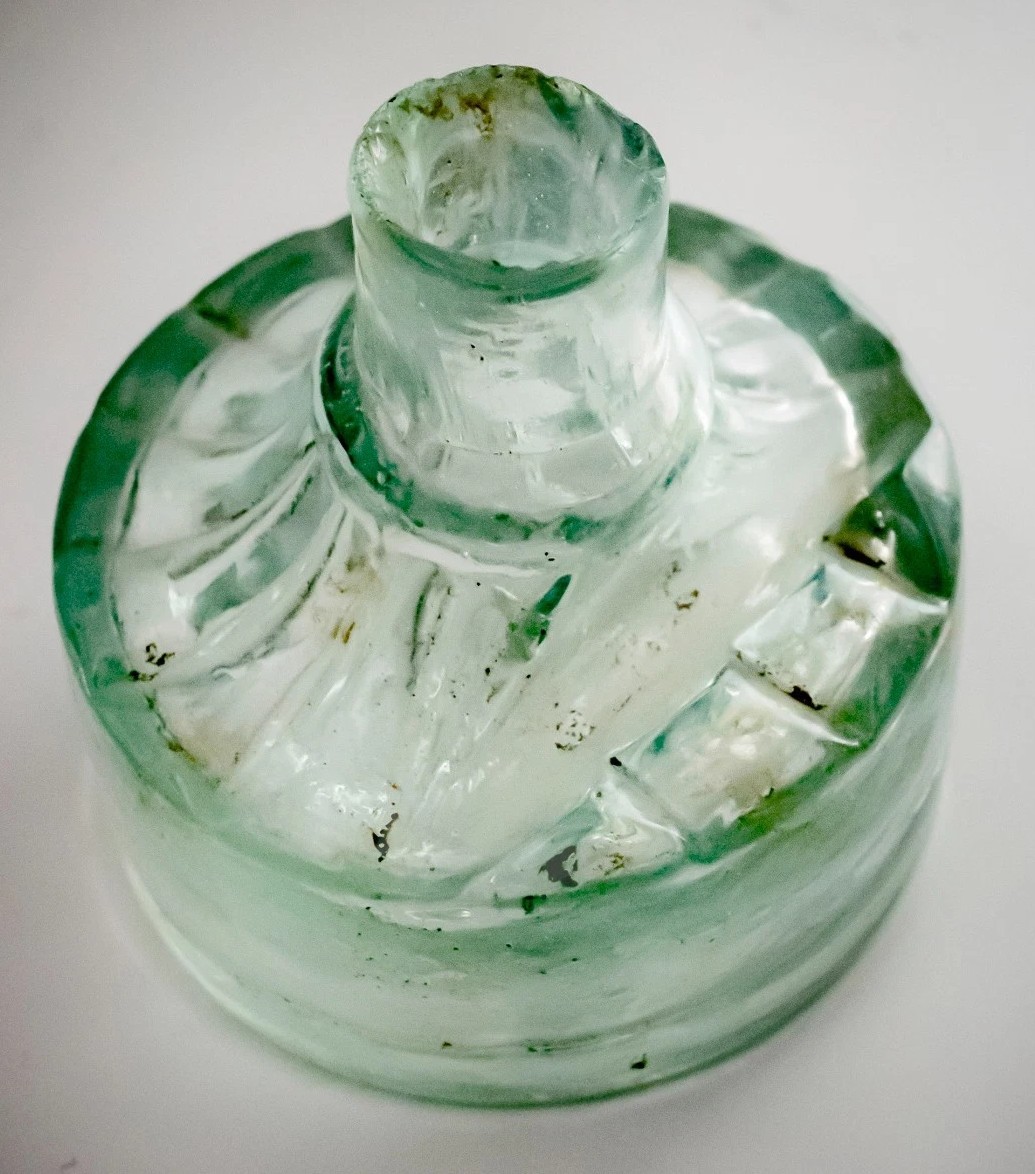
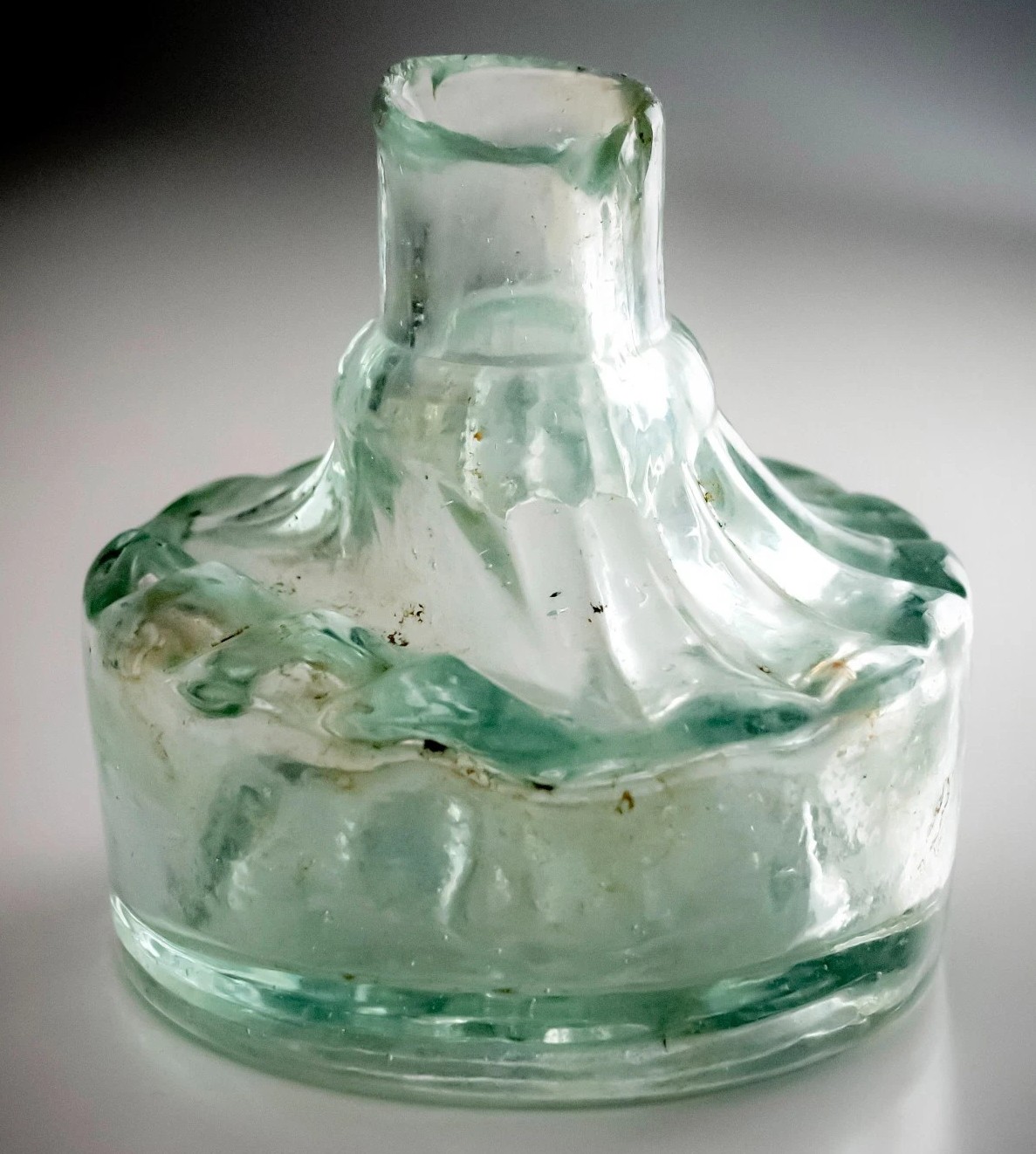
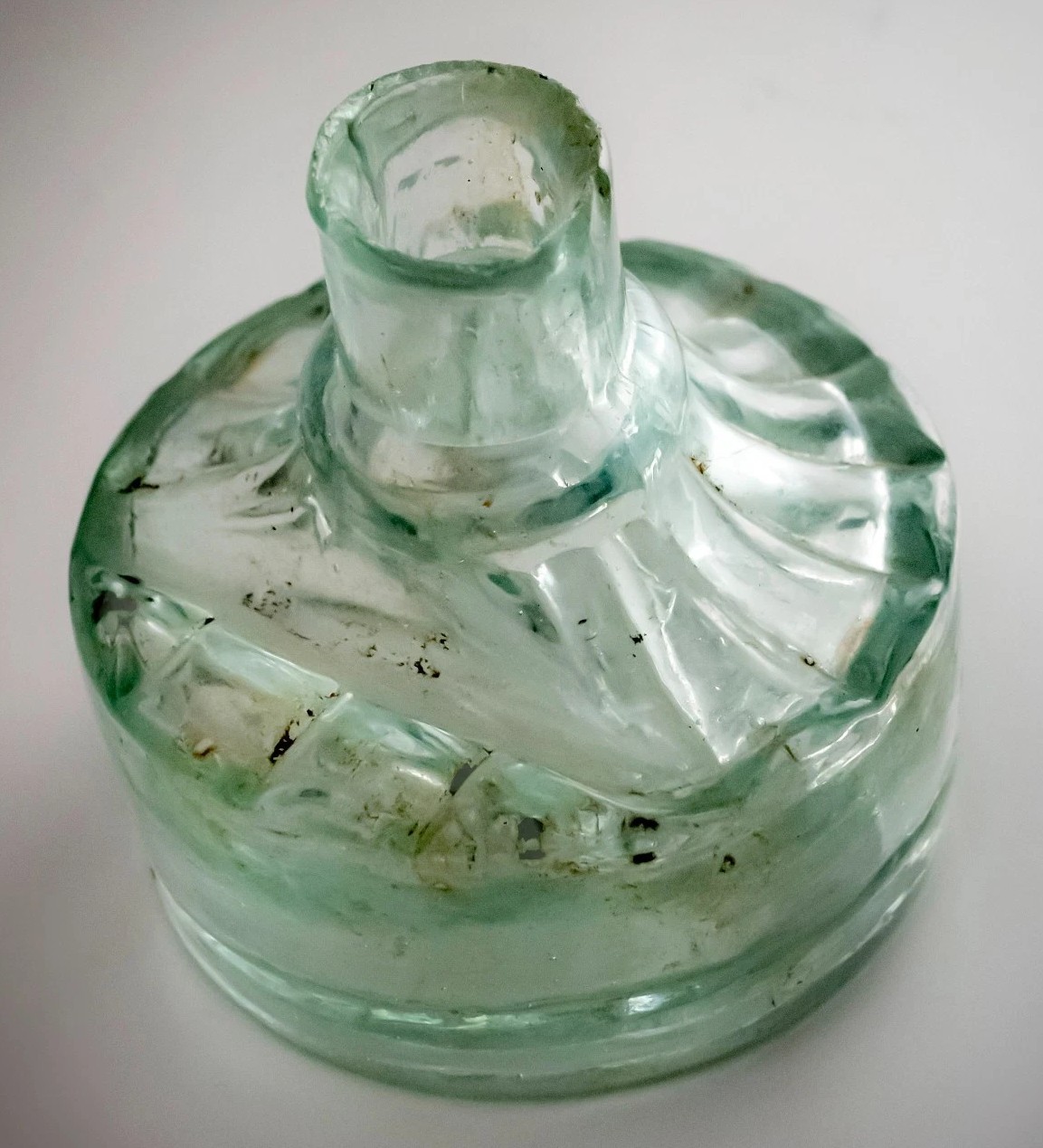
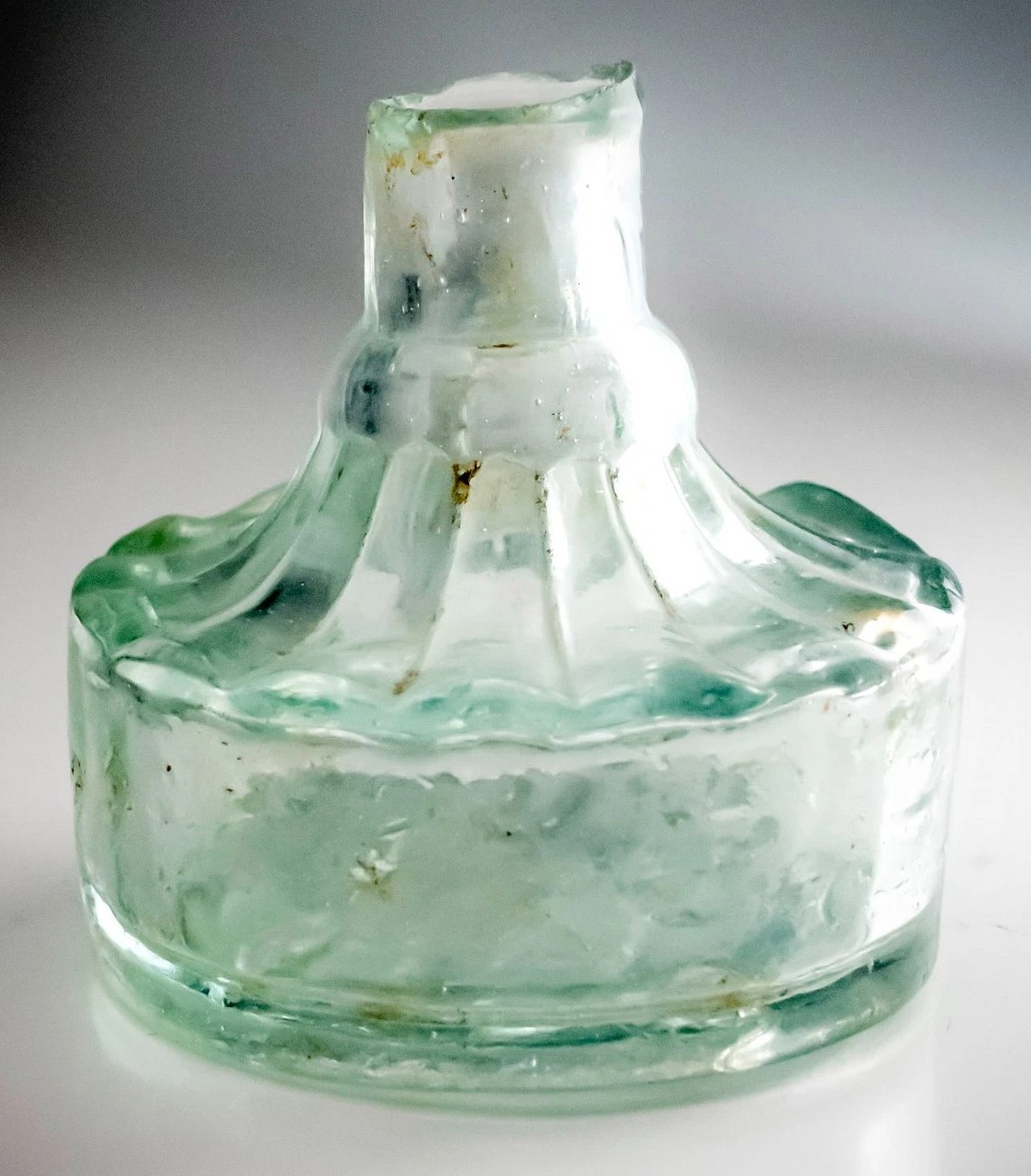
This is a charming and historically significant aqua glass ink bottle, dating to the 1880s. A quintessential piece of 19th-century stationery history, it represents the intersection of early mass production and utilitarian design.
Key Features
- Dimensions: Approximately 2.25 inches (5.5 cm) in diameter and 2 inches (5 cm) tall.
- Color & Texture: Cast in a classic “aqua” (light blue green) glass, the body features a fluted, molded design with vertical ribs that draw the eye toward the neck. The glass contains characteristic “seed bubbles” and slight surface irregularities typical of the period.
- The Pen Rest: The rim features a deliberate, molded slot or “dip” on one side, designed to serve as a convenient rest for a dip pen between letters.
The “Burst-Off” or “Crack-Top” Finish
Unlike more expensive glassware of the era, this inkwell features a burst-off (or crack-top) lip.
- The Process: During manufacturing, the glass was blown into a mold and then literally “cracked” or “burst” away from the blowpipe.
- The Result: This leaves a raw, unpolished, and slightly jagged edge. While these were originally considered “disposable” everyday items intended to be used and discarded once the ink ran dry, their survival today makes them sought after by collectors for their rugged, “as-manufactured” character.
Rare Diamond Registration Mark
What distinguishes this specific example is the embossed diamond registration mark on the base.
Similar to the “lozenge” marks found on British ceramics (1842–1883), this symbol indicates that the specific mold design was protected under the UK Designs Act.
While common on pottery, such marks are significantly rarer on glassware. It serves as a fascinating thumbprint of Victorian intellectual property, confirming the item’s origin and intended status as a quality, “registered” design.
The diamond registration mark (also known as a “kite mark”) on the base is clear. Since there is a number at the top point and a letter on the right, we can confirm this follows the “Second Series” system used between 1868 and 1883.
Here is the breakdown of the code stamped on this ink bottle:
The “Kite Mark” Decoded
| Position | Mark | Meaning |
| Circle (Top Apex) | III | Class III: Identifies the material as Glass. |
| Top (Inside) | 16 | Day of the Month: Registered on the 16th. |
| Right Point | E | Year Code: Represents the year 1881. |
| Bottom Point | M | Month Code: Represents the month of June. |
| Left Point | 4 | Bundle/Parcel: Indicates it was the 4th design registered that day. |
Conclusion
This ink bottle was officially registered with the British Patent Office on June 16, 1881.
The “Rd” at the center of the diamond stands for “Registered,” and the presence of the number “4” suggests that the manufacturer (or the design house) submitted several designs at once on that Tuesday in June. This provides a precise “birth certificate” for the design of this specific mold.
The Manufacturer: Greener & Co.
According to the National Archives records for Design Registrations (BT 43), the design for Class III, June 16, 1881, Bundle 4 was registered by:
Greener & Co. – Wear Flint Glass Works, Millfield, Sunderland, England.
Greener & Co. was one of the most prolific manufacturers of “pressed” and utility glass in the late 19th century. They were particularly famous for their fluted designs, which they produced in massive quantities for the domestic and export markets.
Why This Matters
- Exact Dating: This inkwell isn’t just “Victorian”—it was born (or at least legally protected) on a specific Tuesday: June 16, 1881.
- Utilitarian Quality: While many fluted inks were generic, this comes from a major, named Sunderland glassworks. The “Registration” mark suggests Greener & Co. felt this specific fluted pattern was distinctive enough to warrant legal protection from competitors.
- Aqua Glass: The light blue green (“aqua”) color was the standard for utility glass of the period, as it was the natural color of glass made with sand containing iron impurities.
The base features a rare, embossed diamond registration mark (Kite Mark), which identifies the design as being registered on June 16, 1881, by the renowned Greener & Co. of the Wear Flint Glass Works in Sunderland, England.
Summary
Dating to around 1881, this ink bottle is a survivor of the transition from handmade glass to industrial mass production. It remains a fine example of utilitarian desk glass, possessing a strong “bottled-in-time” character that would elevate any collection of antique writing instruments or Victorian glass.
Sold for $50 in February 2026
Content disclaimer. The information posted is the owner’s best knowledge and may not have been vetted by the SOIC. We welcome comments, corrections, and additions, working to make our website information comprehensive and accurate.
Join the Society of Inkwell Collectors (SOIC) – it’s free!
Founded in 1981 as a non-profit organization,
we are documenting inkwells (and accessories).
We’re here to help and inform!