

Inkipedia

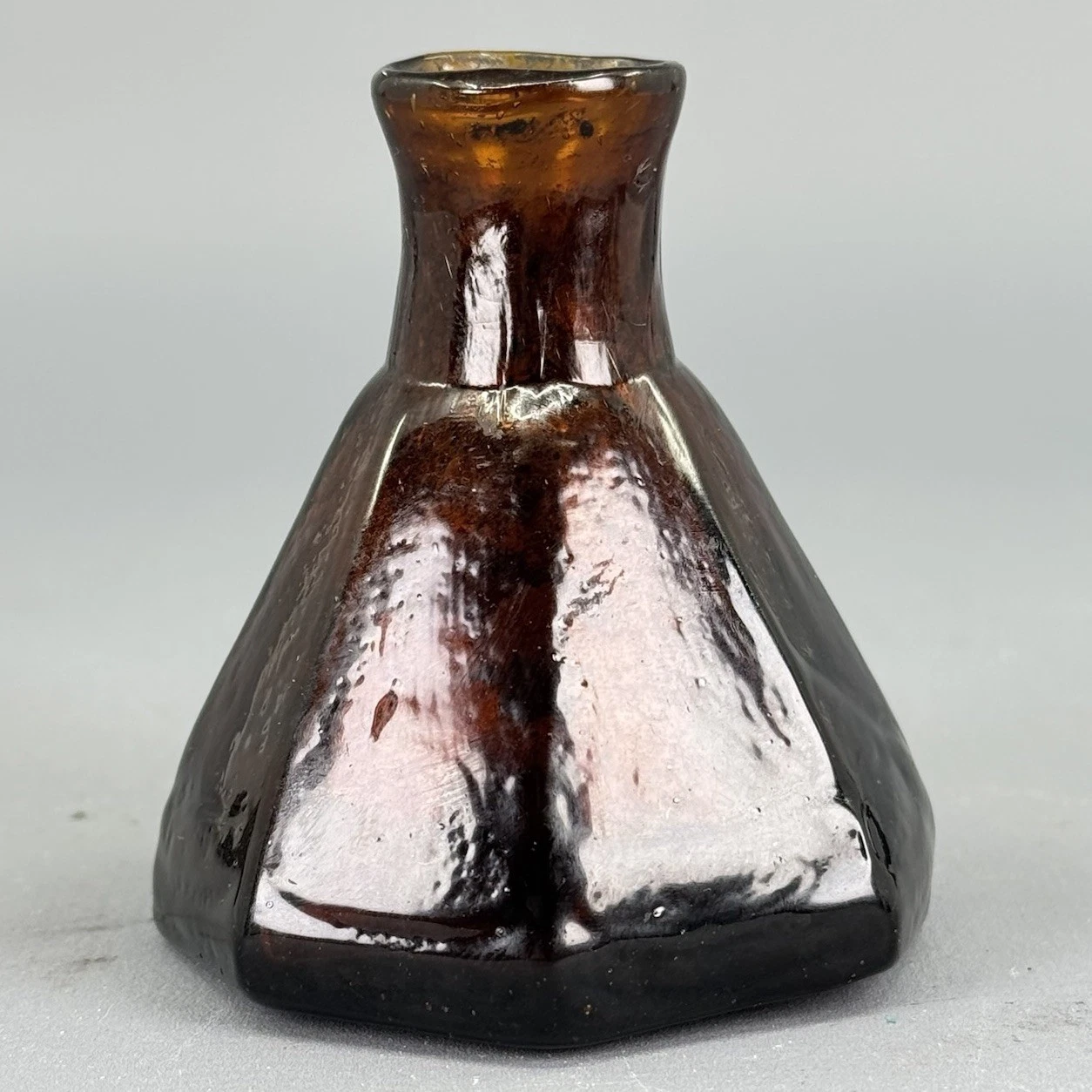
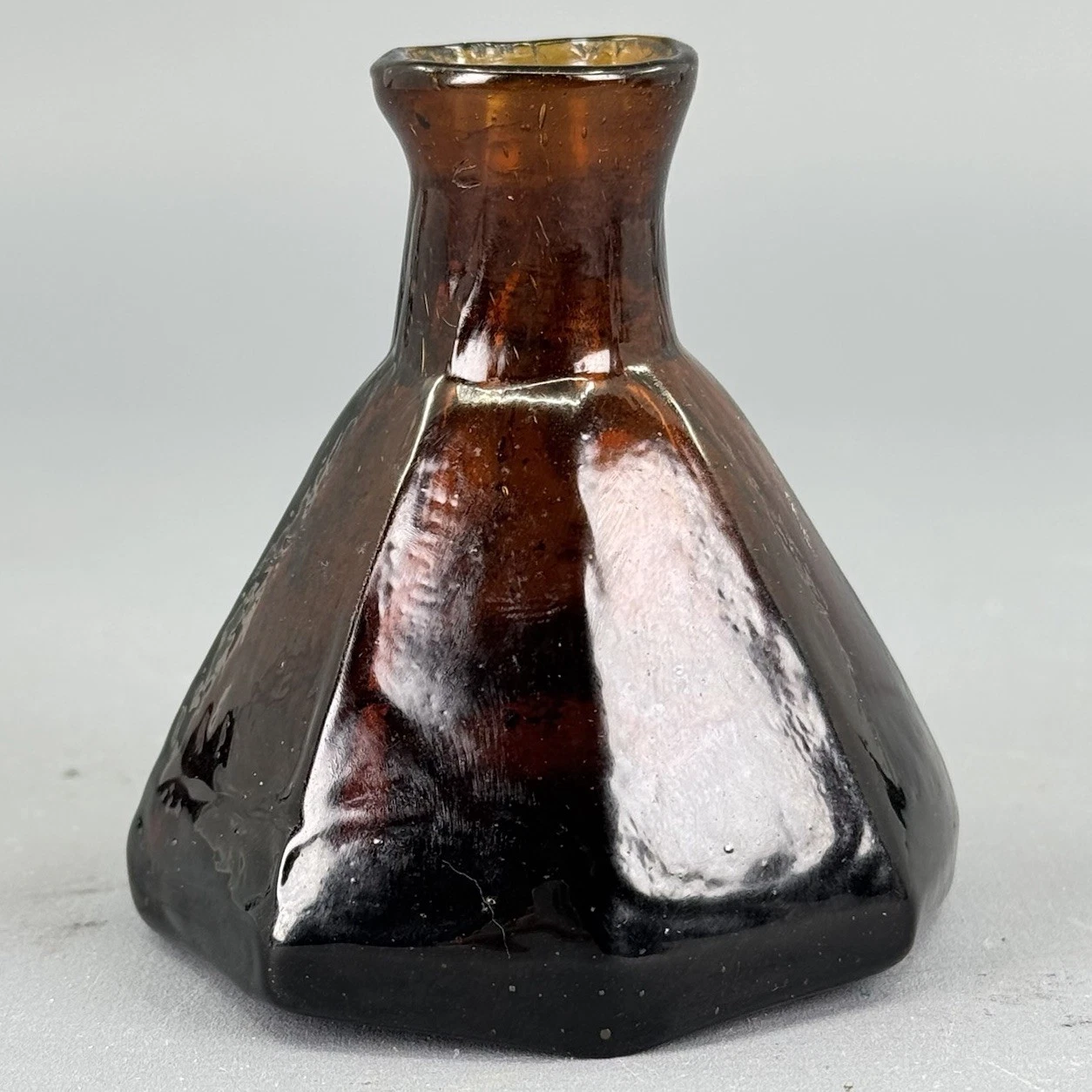
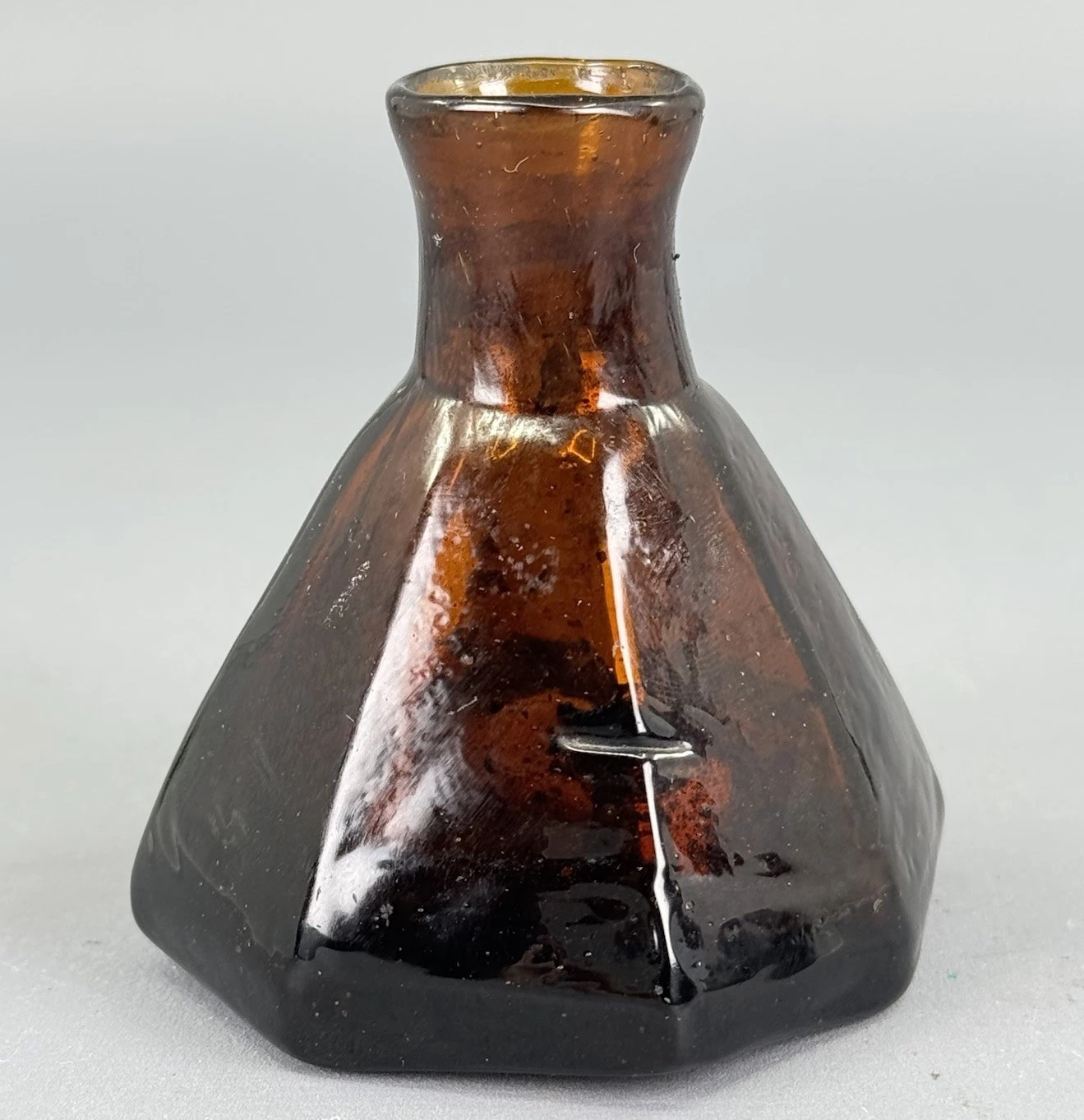
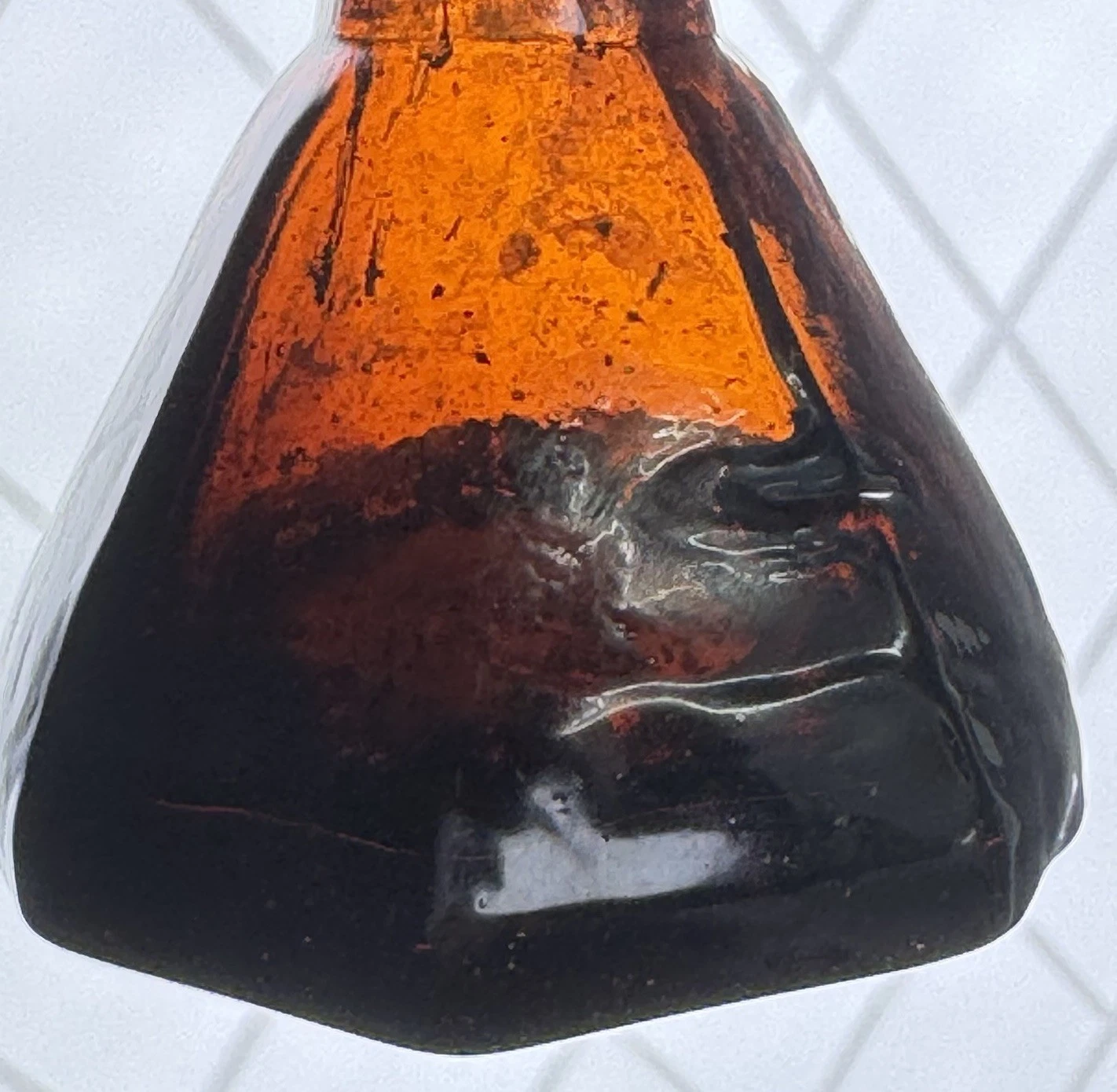
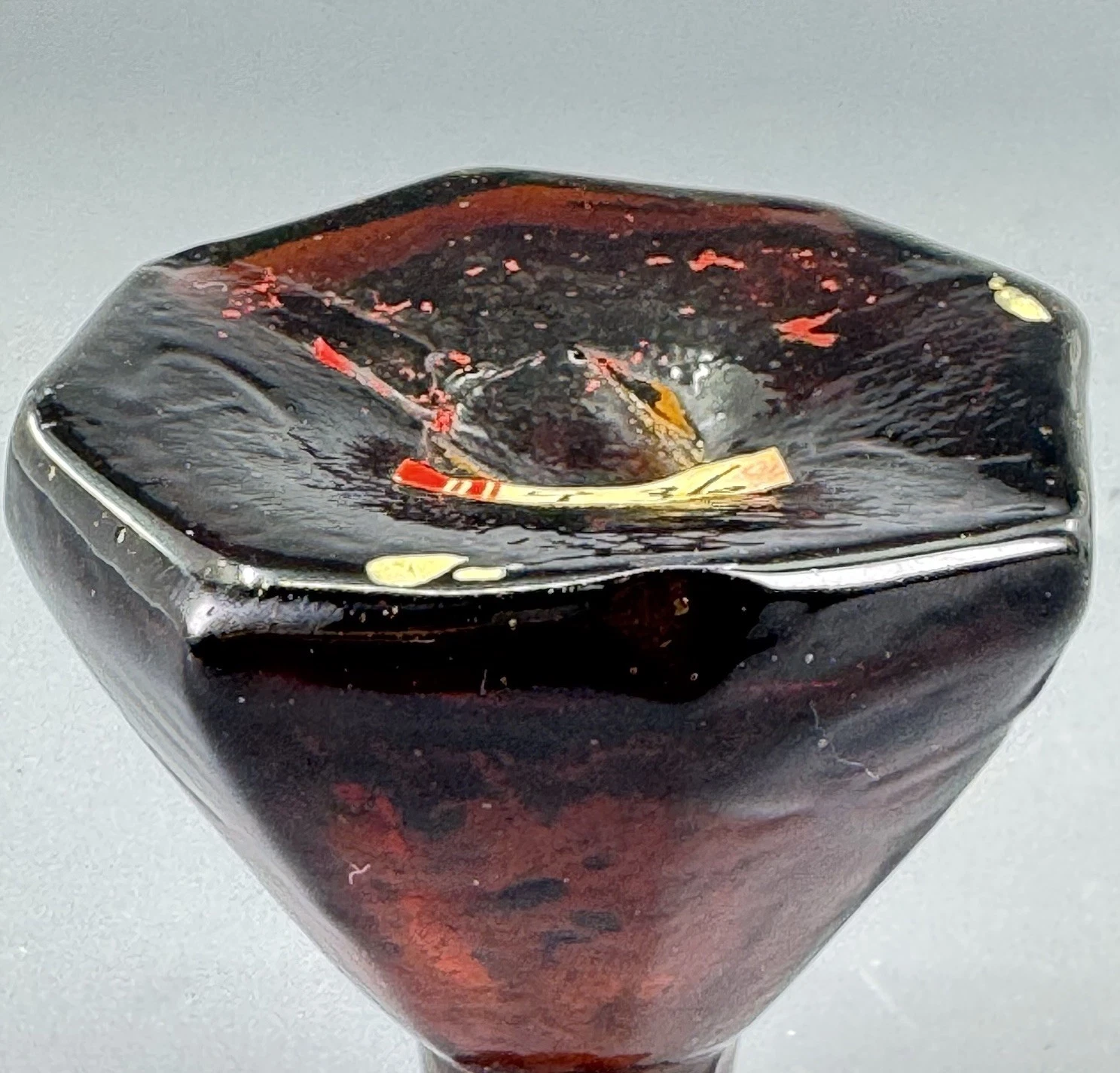
Amber-Olive Umbrella Ink Bottle
| Categories | Ink Bottle |
| Type | Umbrella |
| Material | Glass |
| Markings | Unmarked |
| Manufacturer | Undetermined |
| Origin | United States |
| Date or Era | circa 1850 |
| Measuring | 2 ½” across; 2 ½” high |
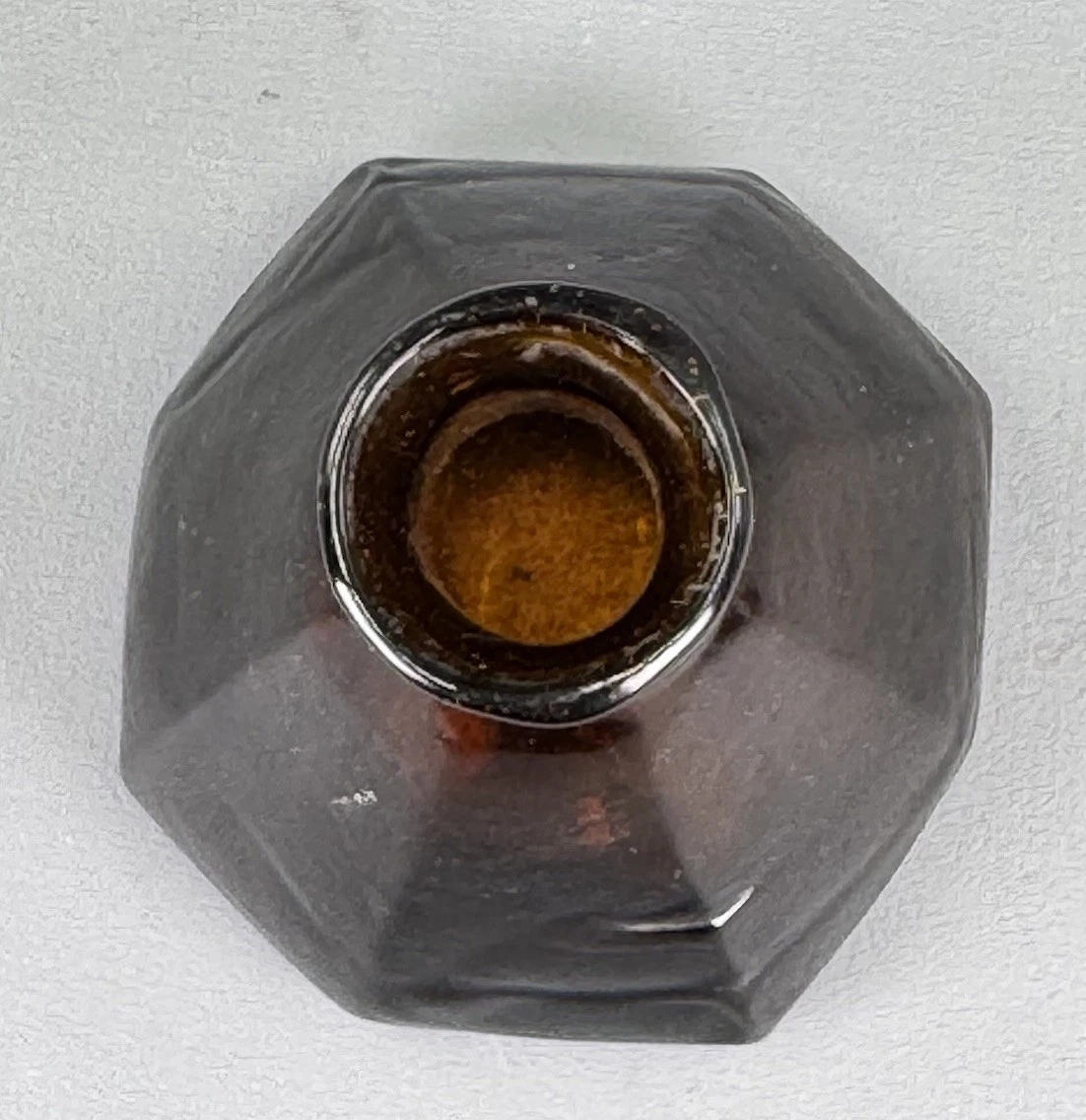
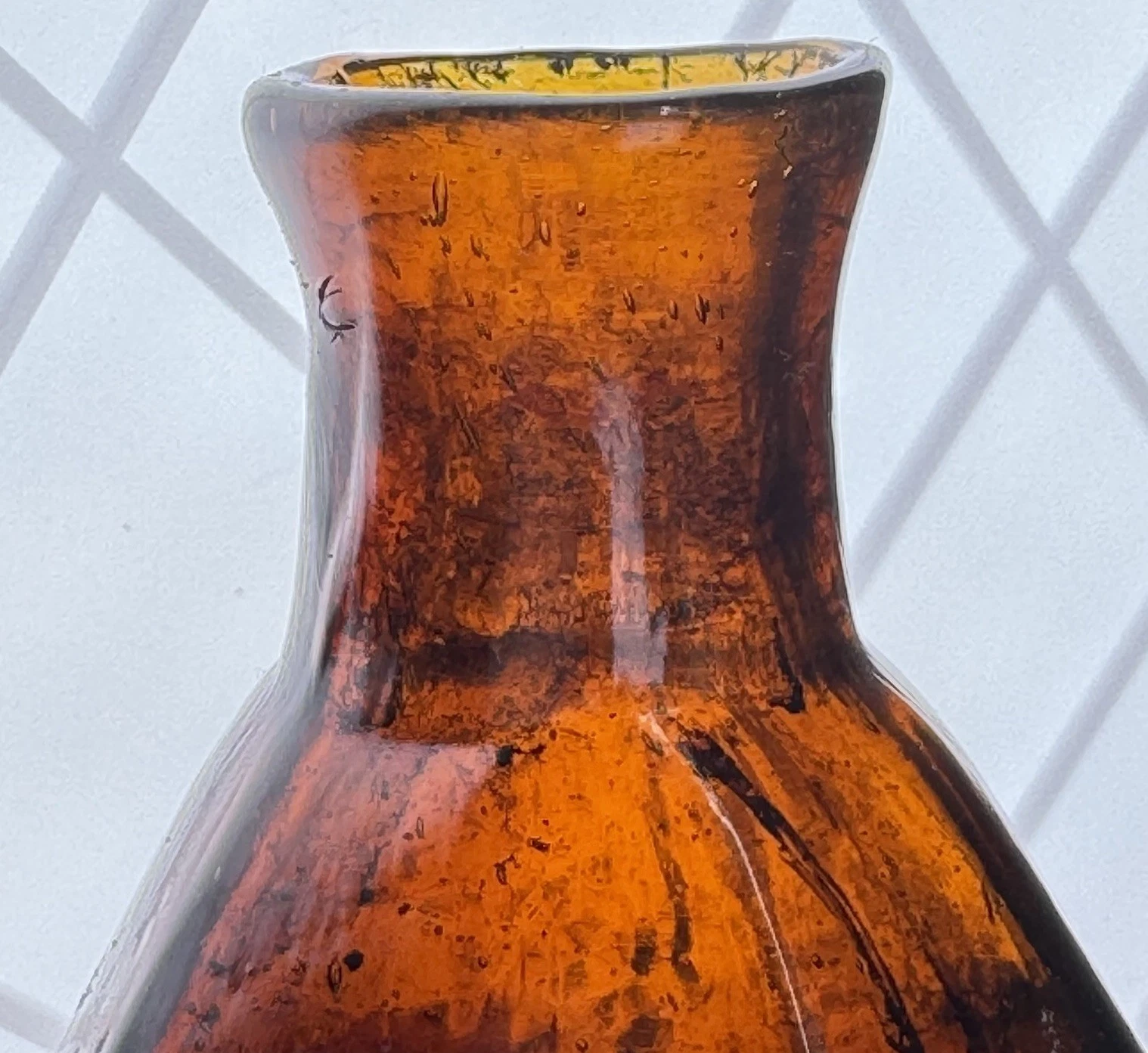
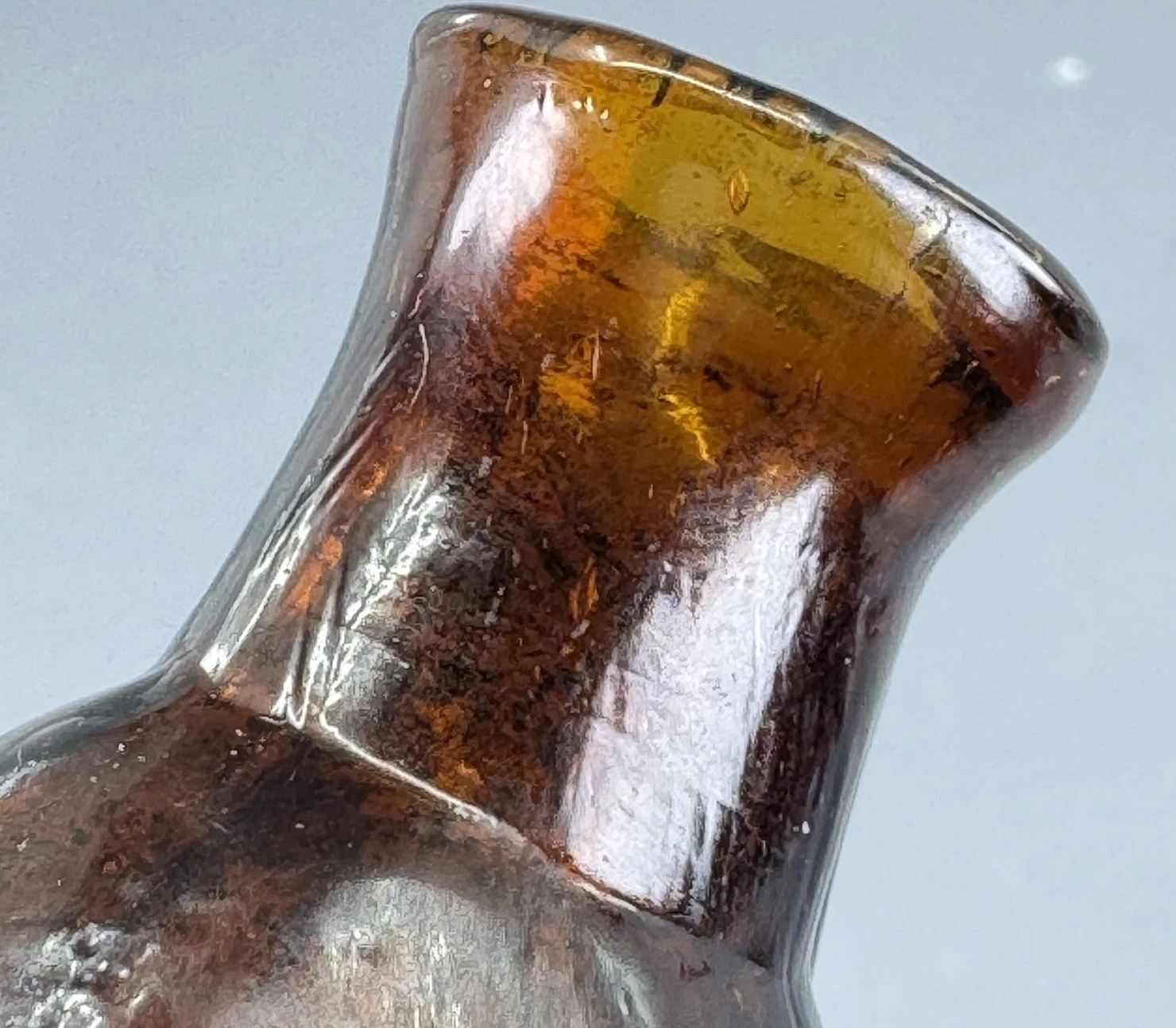
This is a nice example of an early American 8-sided “Umbrella” ink bottle.
- Description
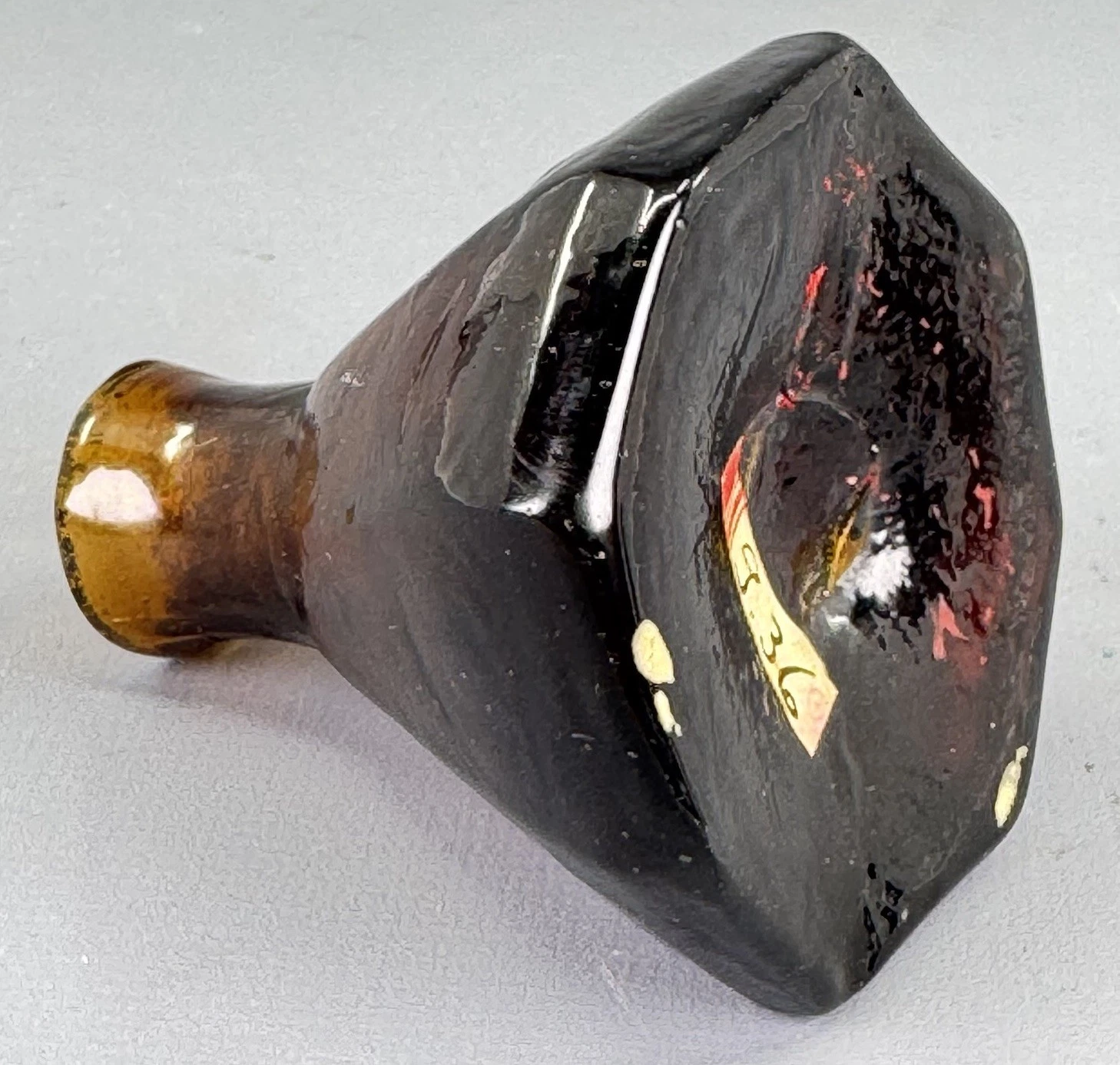
- Shape & Form: It features the classic “umbrella” style, characterized by an octagonal (8-sided) multi-faceted conical body that tapers upward from a wide, stable base toward a narrow neck. The neck flairs out slightly into a simple, sheared, and inward-rolled finish/lip designed to neatly pour or dip a quill.
- Color: The glass is a rich, deep amber-olive (sometimes referred to by collectors as “black glass” when thick, though it glows with warm amber and olive-green tones when held up to direct light).
- Texture & Flaws: The glass surface is heavily textured with “orange peel” crudeness, whittle marks from a cold iron mold, and micro-bubbles (seed bubbles) embedded throughout the glass batch.
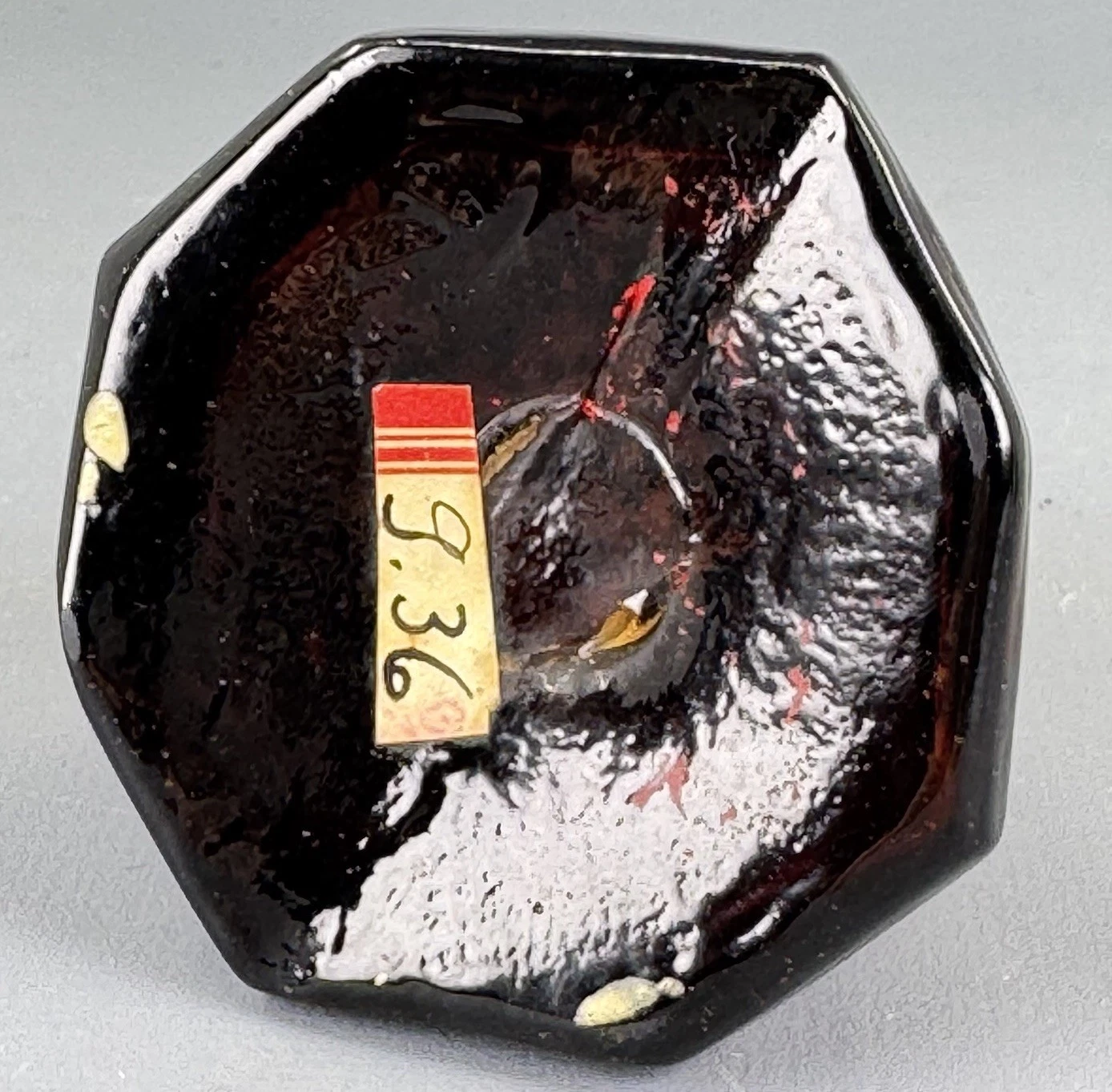
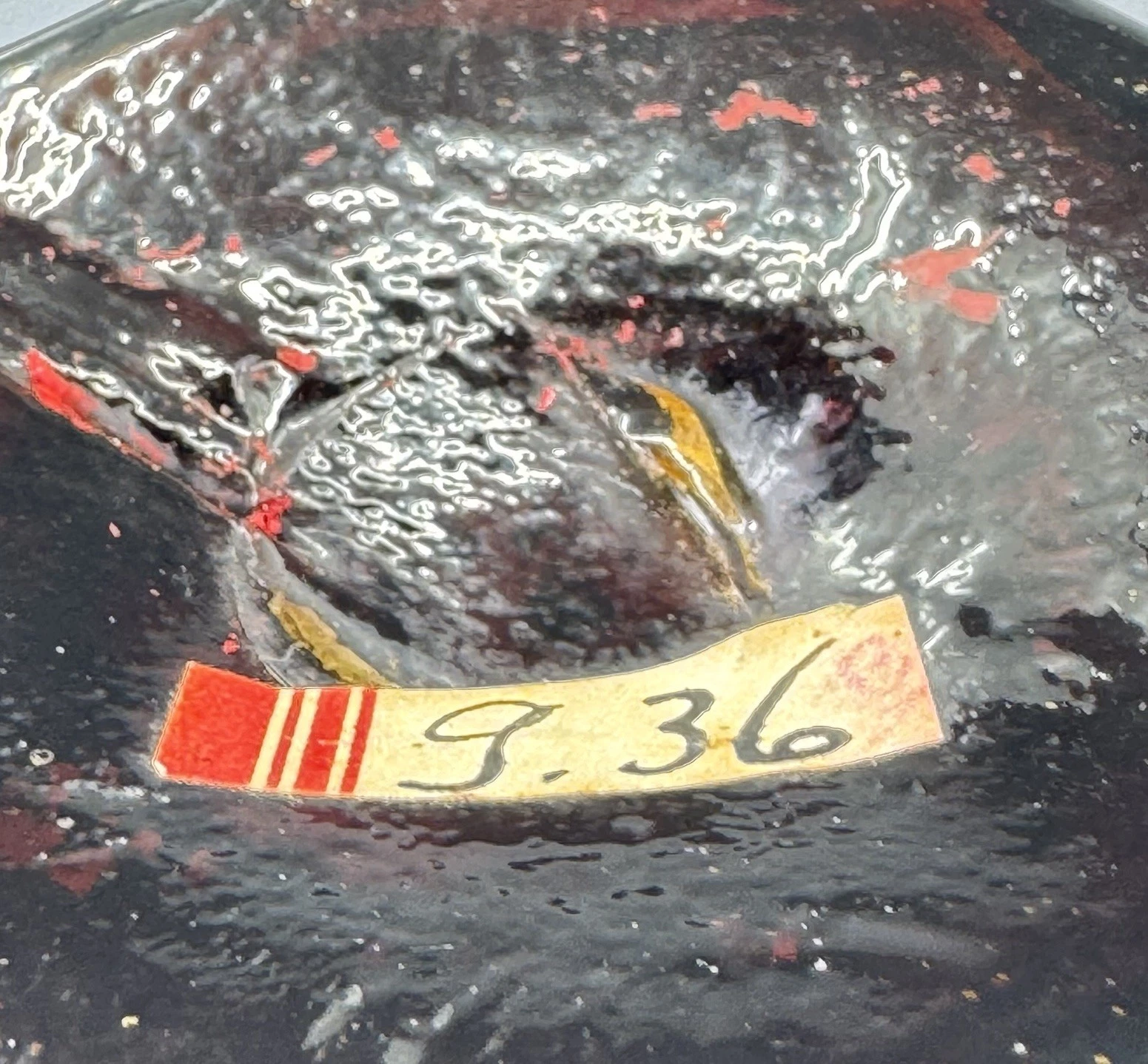
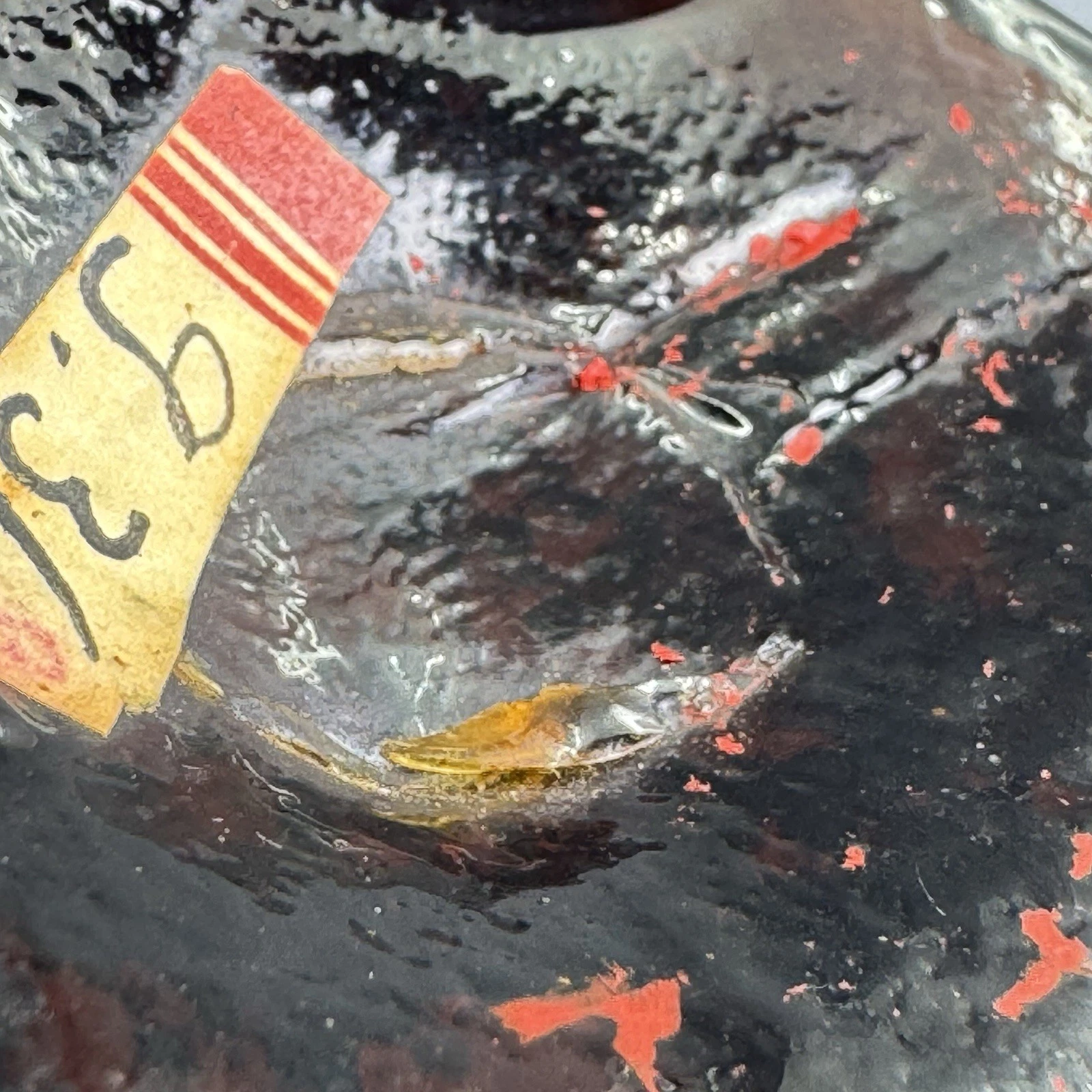
- Base: The base is deeply pushed up (indented) and features a prominent, rough open pontil mark (a circular, jagged scar left behind when the blowpipe or pontil rod was snapped off). There is also an old paper collection label marked “9.36” adhered to the bottom.
- How It Was Made
This bottle was produced using mid-19th-century hand-blown techniques before automated bottle machines existed:
- Mouth-Blown into a Mold: A gather of molten amber-olive glass was collected on the end of a blowpipe. The glassblower lowered the molten glob into a two-piece (or multi-part) iron key mold shaped like an 8-sided umbrella and blew into the pipe to force the glass against the walls of the mold, giving the bottle its paneled shape and textured exterior.
- Pontil Attachment: To finish the neck and lip, an assistant attached a solid iron rod (the pontil rod) with a small dab of molten glass to the pushed-up base of the bottle.
- Sheared & Rolled Lip: The glassblower cracked the blowpipe away from the neck, leaving the bottle held exclusively by the pontil rod. The hot neck was then sheared off and hand-tooled (rolled inward slightly) to form the finished rim.
- The Pontil Scar: Once completed, the bottle was snapped off the pontil rod, leaving the jagged, sharp glass ring—the open pontil—on the bottom. The bottle was then placed into an annealing oven to cool slowly.
- Where & When It Was Made
- Origin: This bottle is almost certainly American, produced by one of the prominent early glassworks operating in the Northeastern United States. Many of these amber-olive variants originated from glasshouses in New England (such as Coventry or Willington in Connecticut, or Stoddard and Keene in New Hampshire) or the Mid-Atlantic region (such as the early glassworks in Philadelphia, Pennsylvania, or southern New Jersey).
- Era: It dates to the 1840s to mid-1860s (circa 1850). The presence of a true open pontil mark indicates it was made before the widespread adoption of the “snap case” tool in the late 1850s and 1860s, which eliminated the rough pontil scar on utilitarian bottles.
Sold for $201 in June 2026
Content disclaimer. The information posted is the owner’s best knowledge and may not have been vetted by the SOIC. We welcome comments, corrections, and additions, working to make our website information comprehensive and accurate.
Join the Society of Inkwell Collectors (SOIC) – it’s free!
Founded in 1981 as a non-profit organization,
we are documenting inkwells (and accessories).
We’re here to help and inform!