


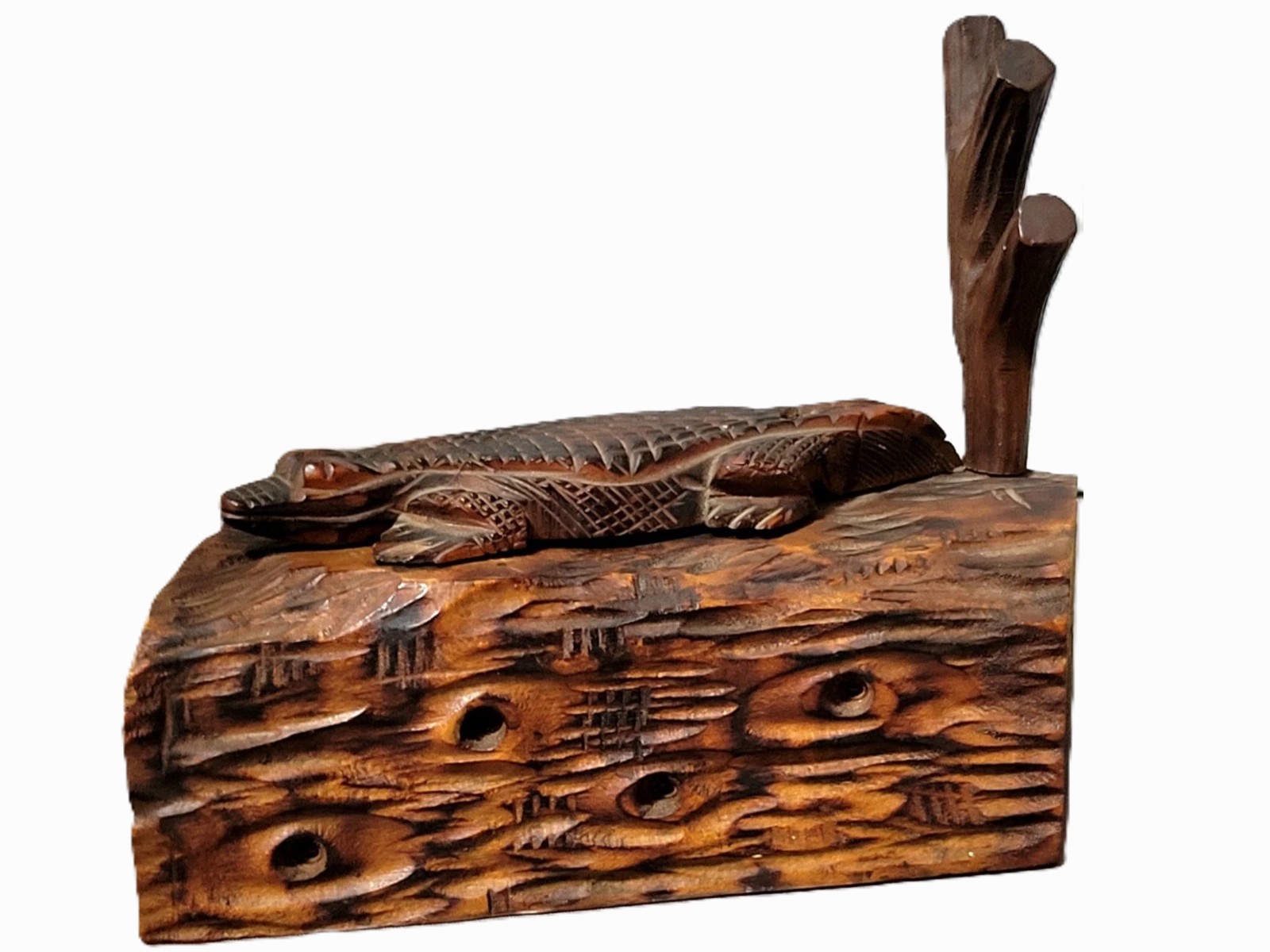
Alligator on a Log
| Categories | Figural - Animals & Living Creatures, Souvenir |
| Type | Alligator |
| Material | Wood |
| Markings | Unmarked |
| Manufacturer | Black Forest |
| Origin | Germany |
| Date or Era | circa 1900 |
| Measuring | 6” x 2 ¾” x 4 ½” high |
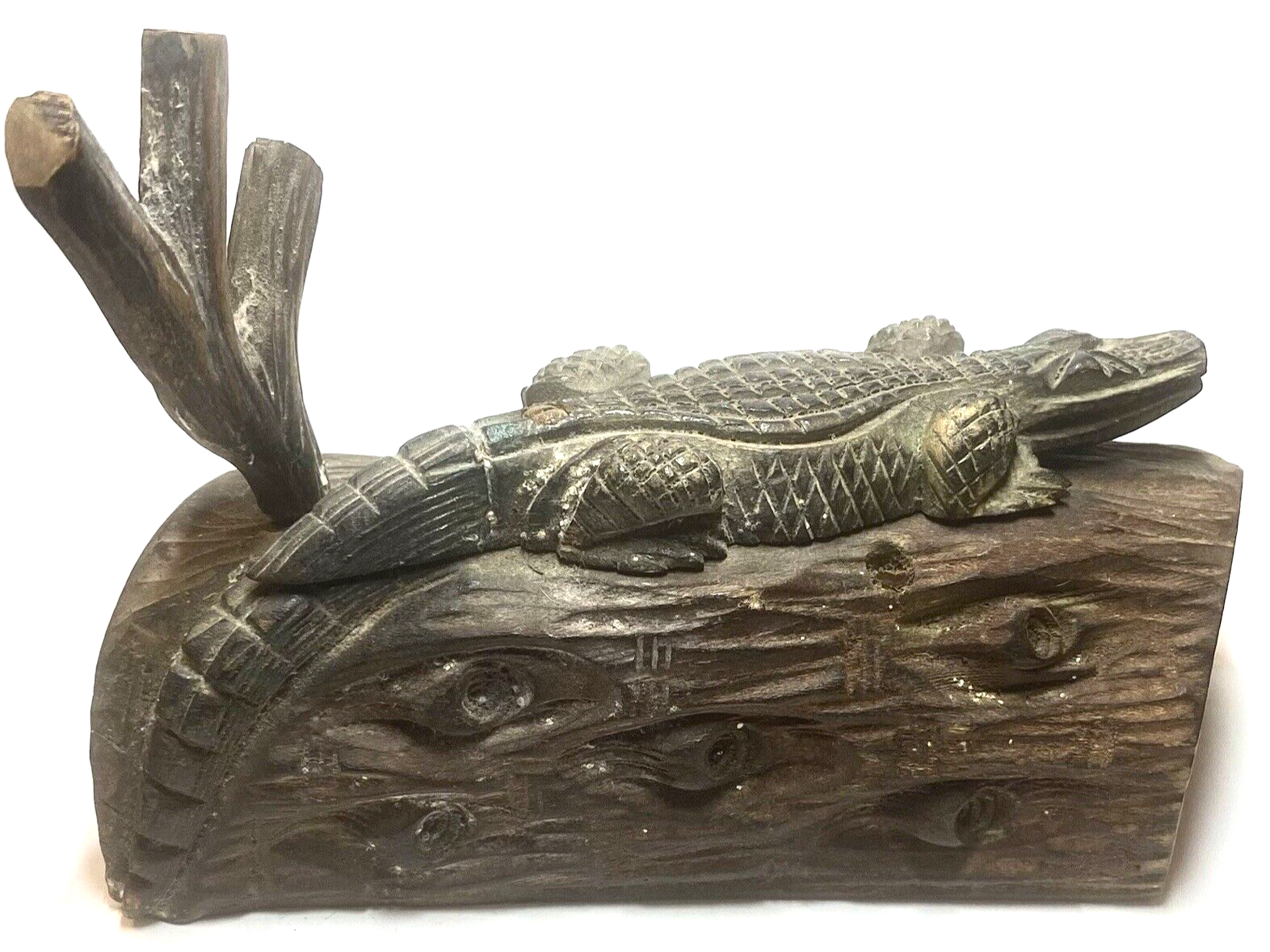
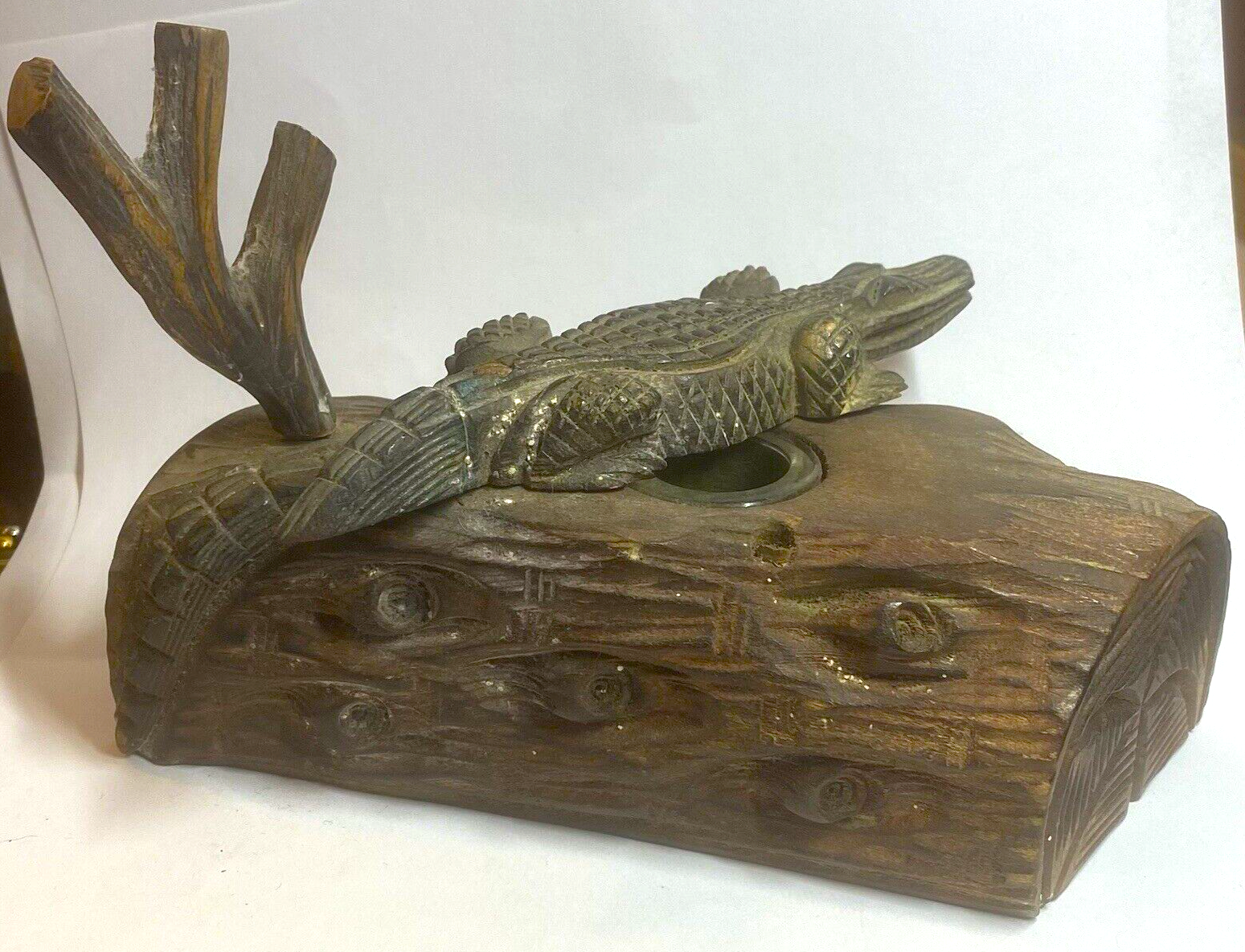
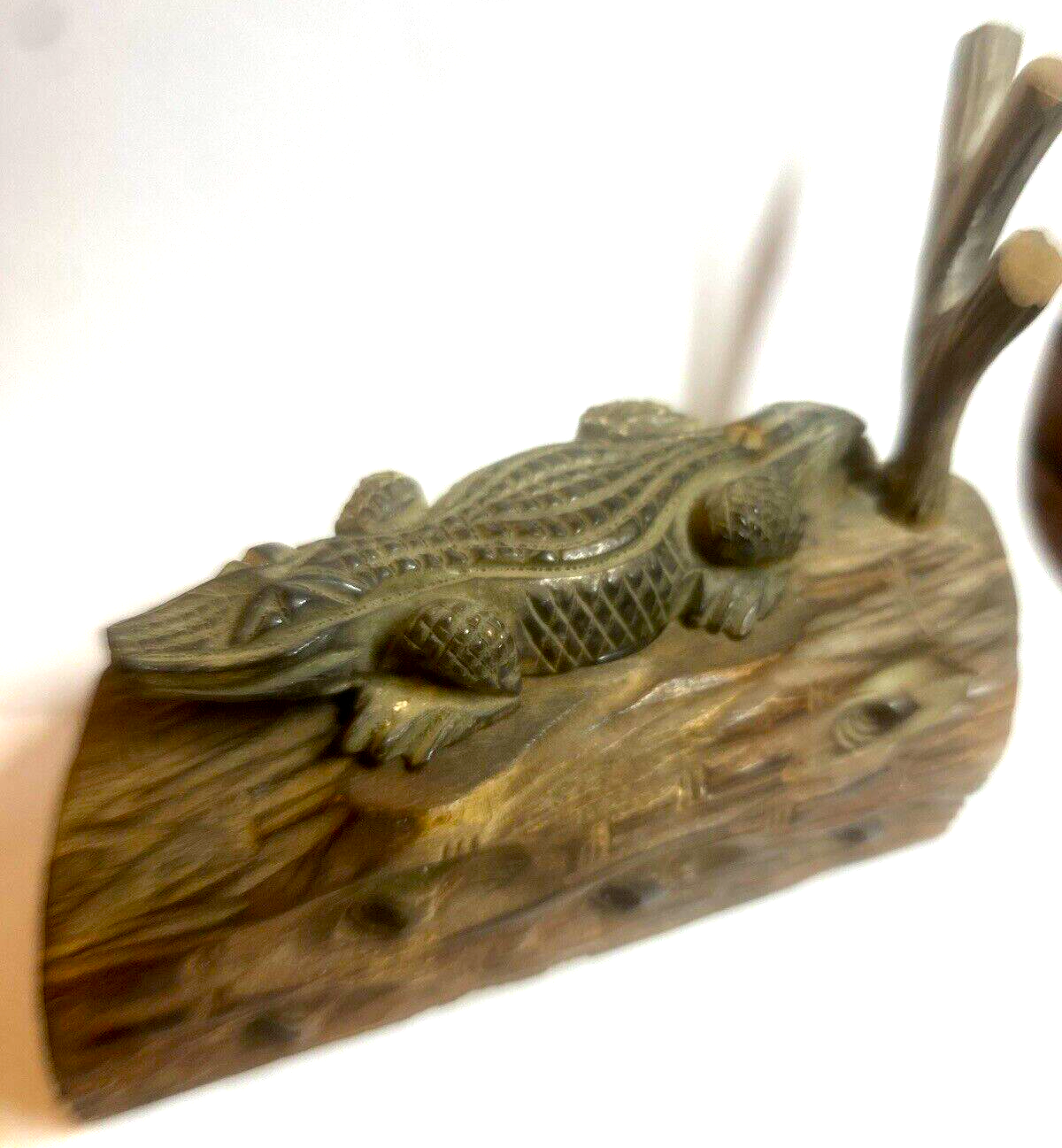
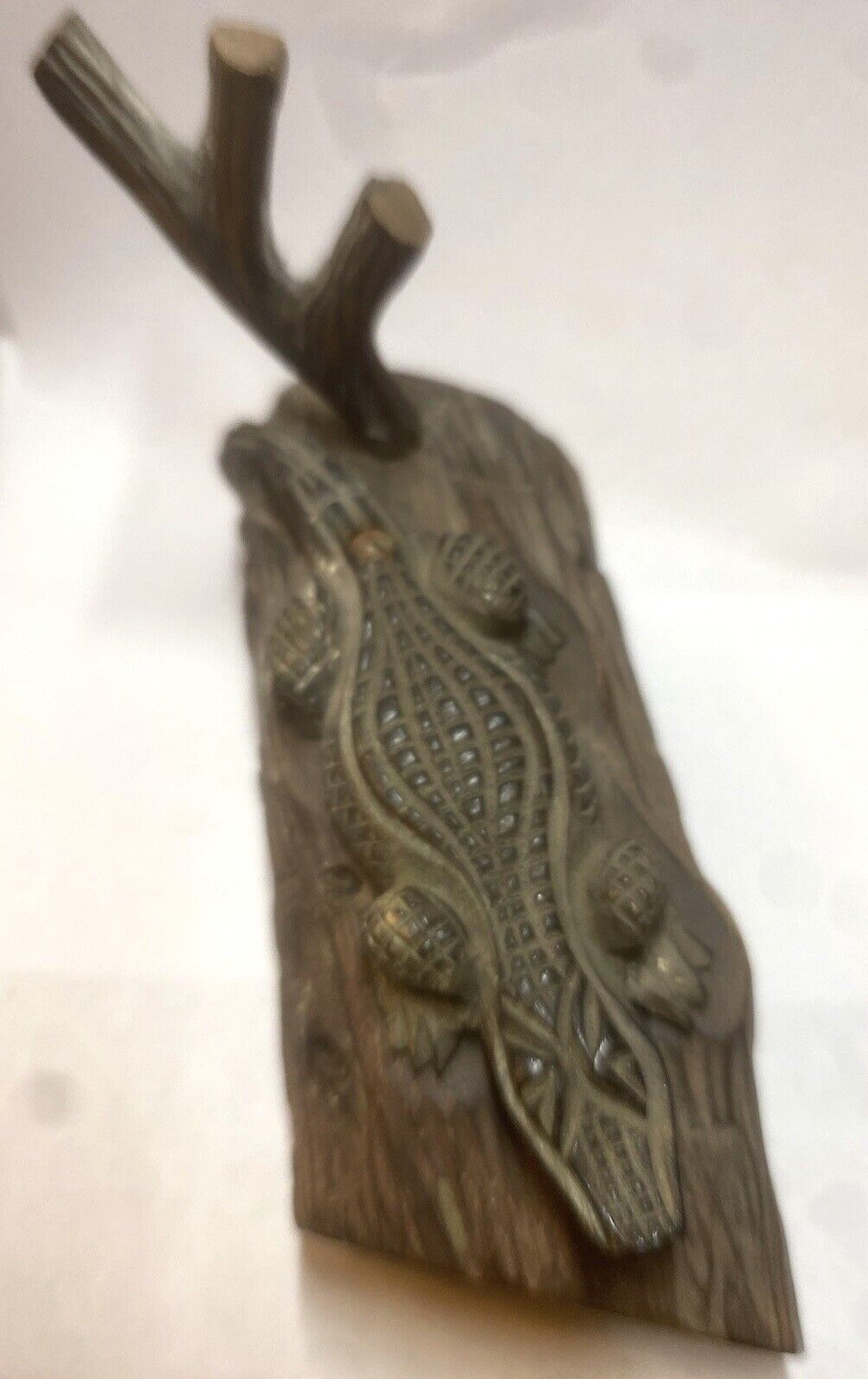
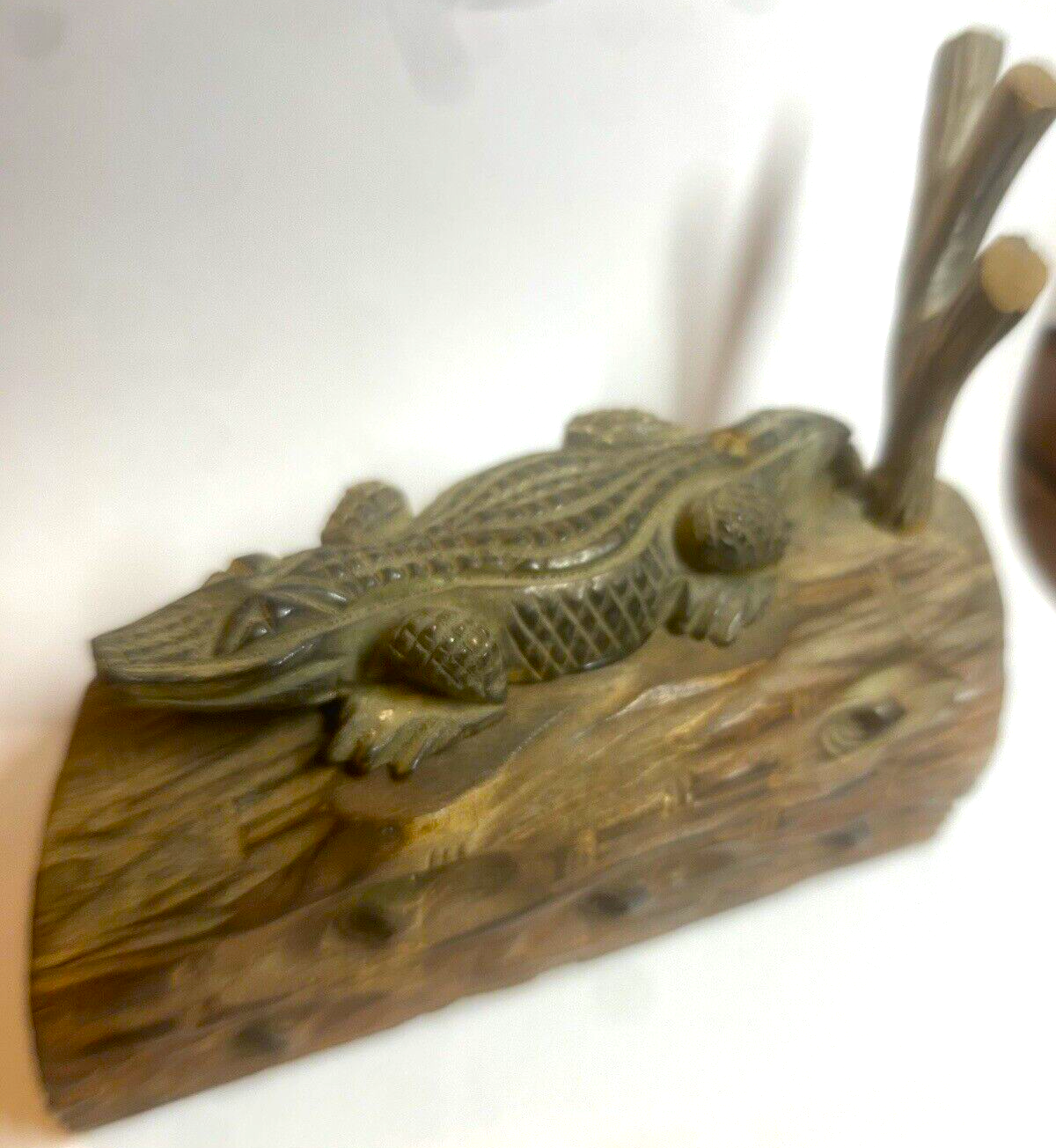
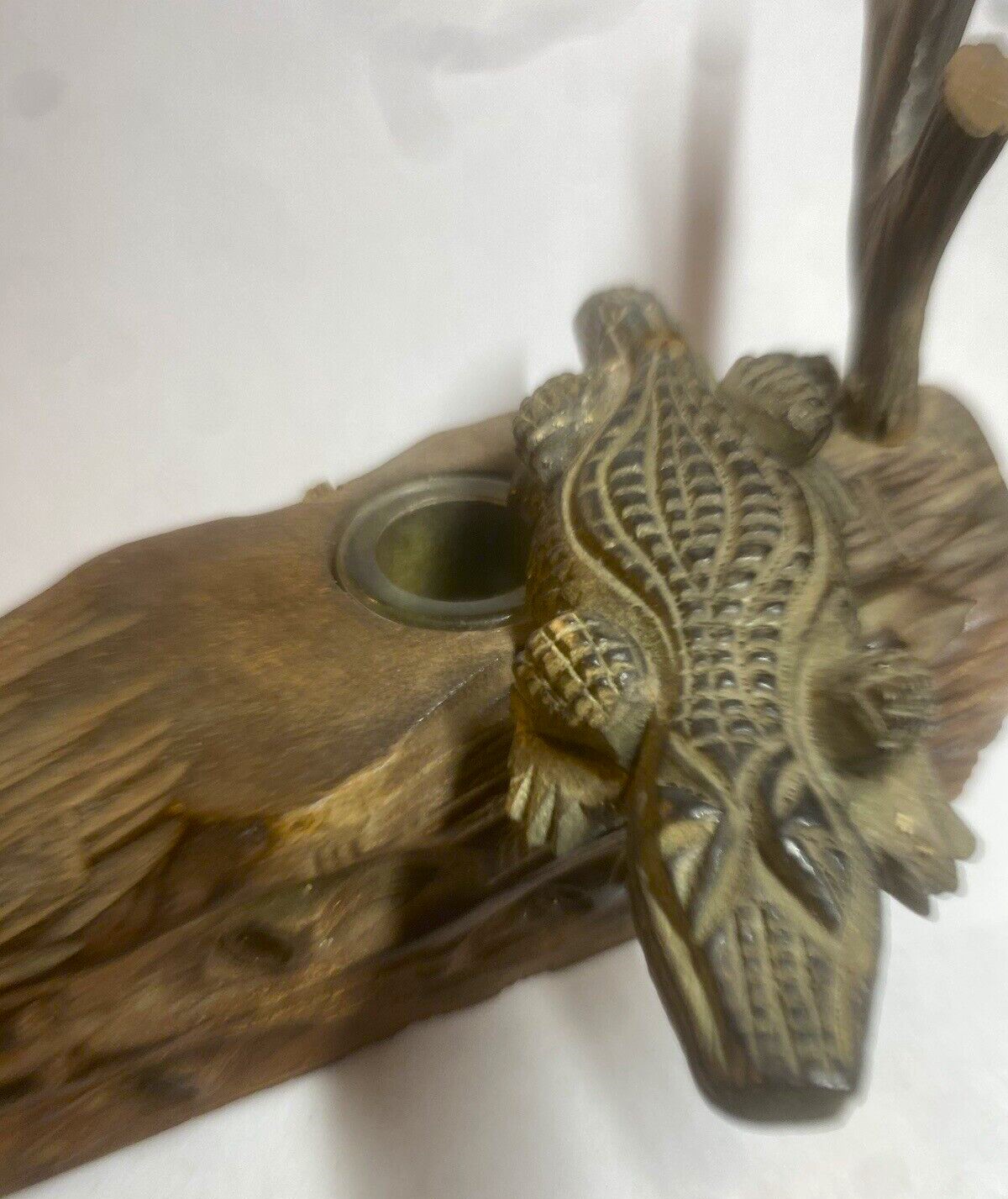
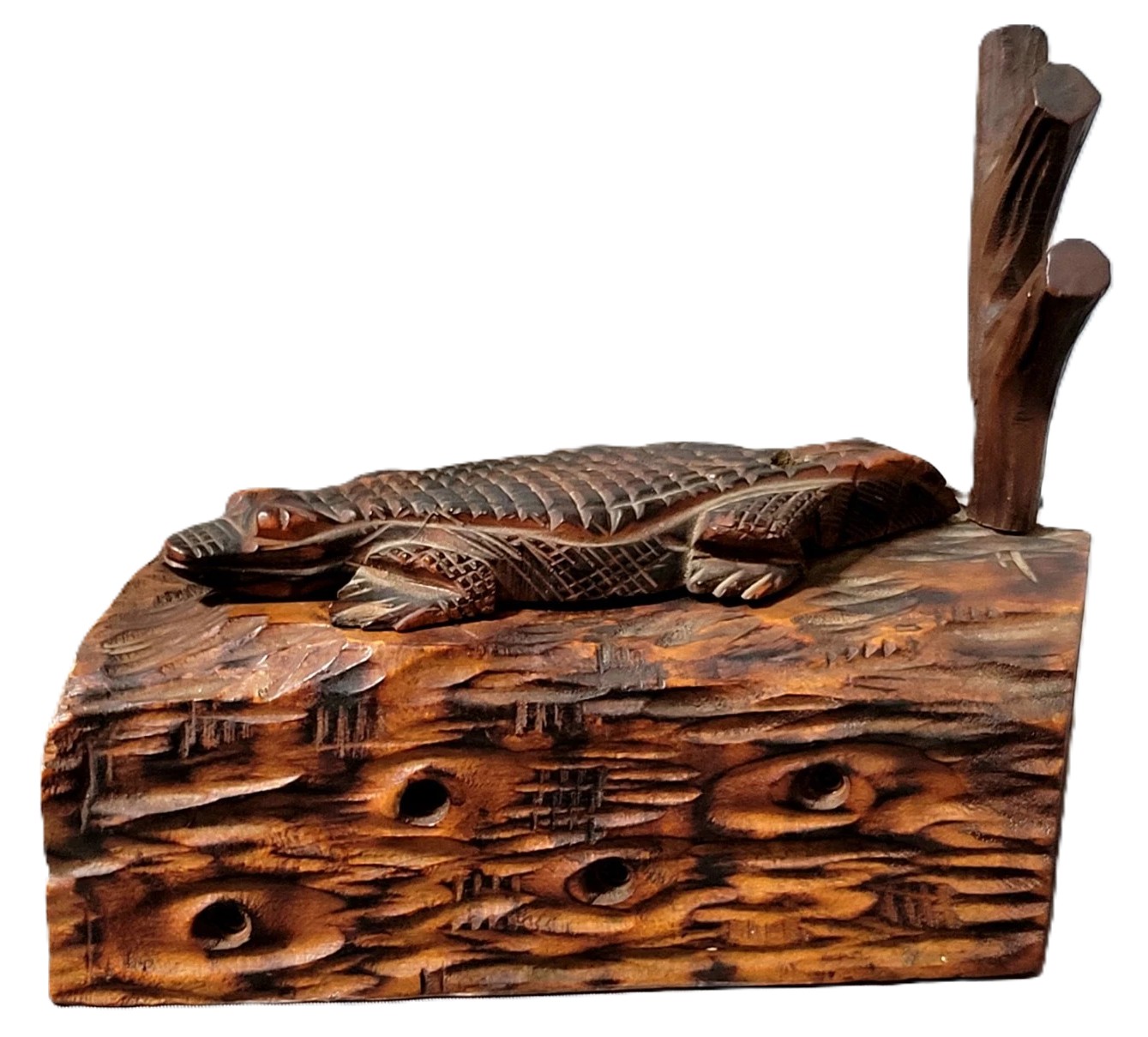
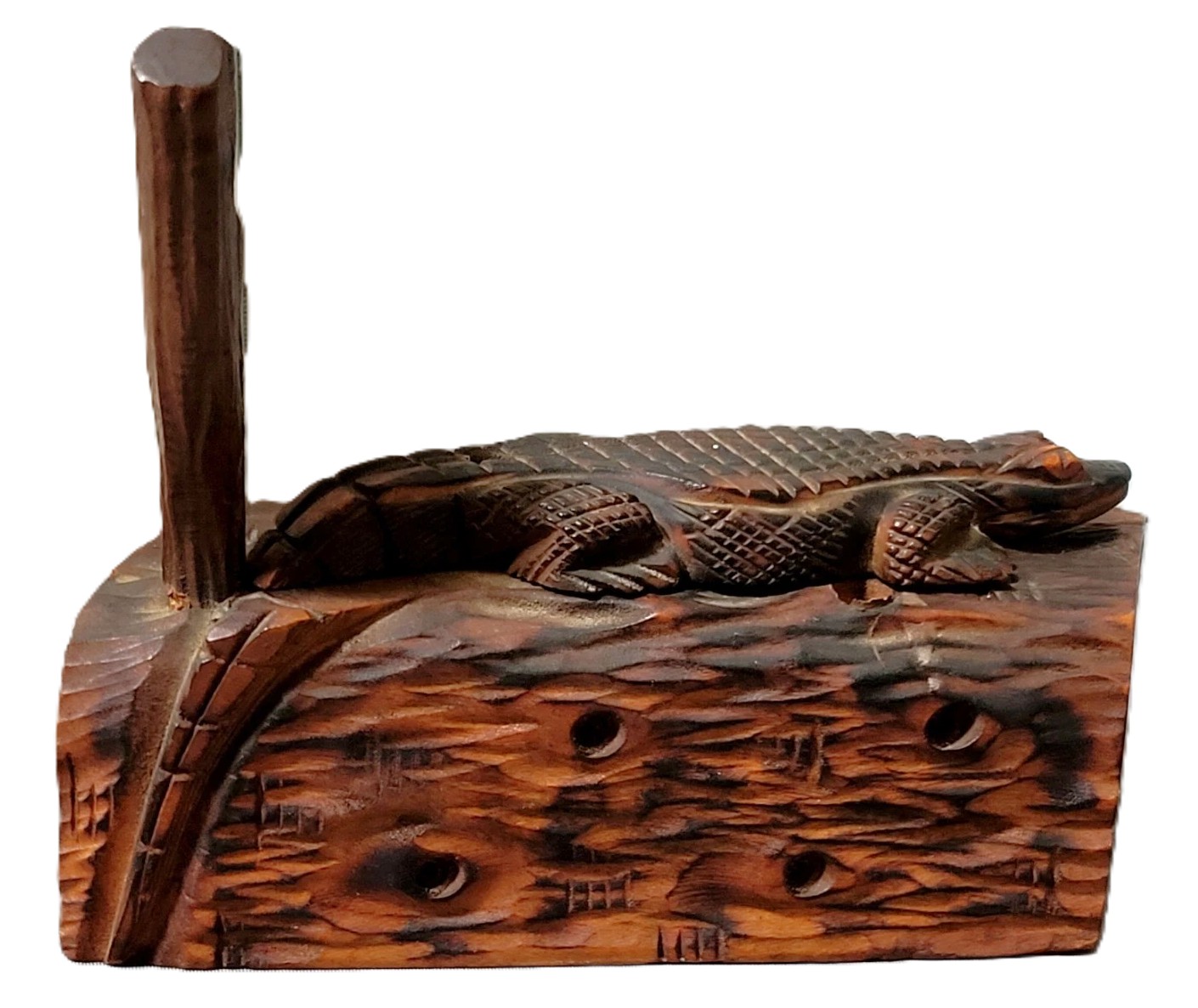
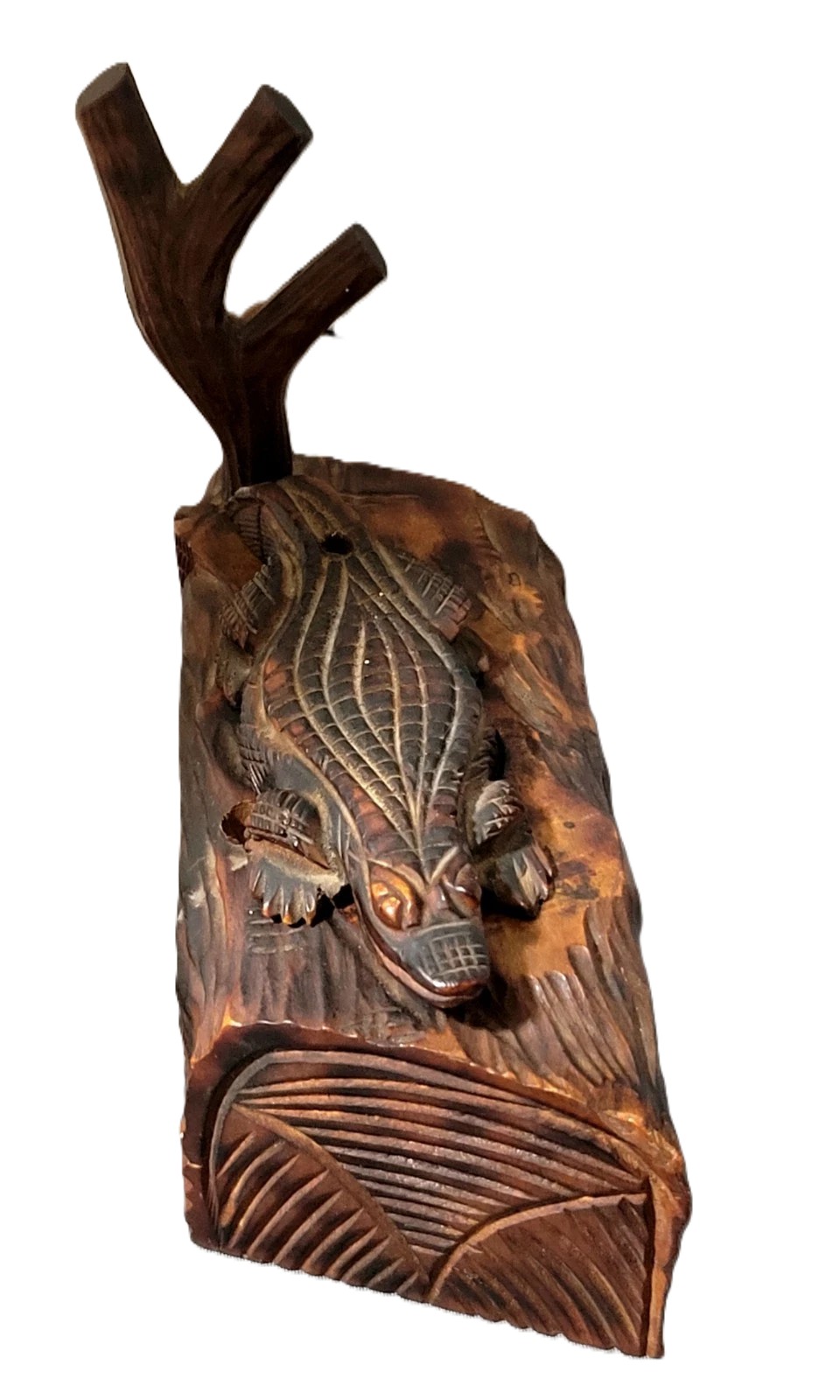
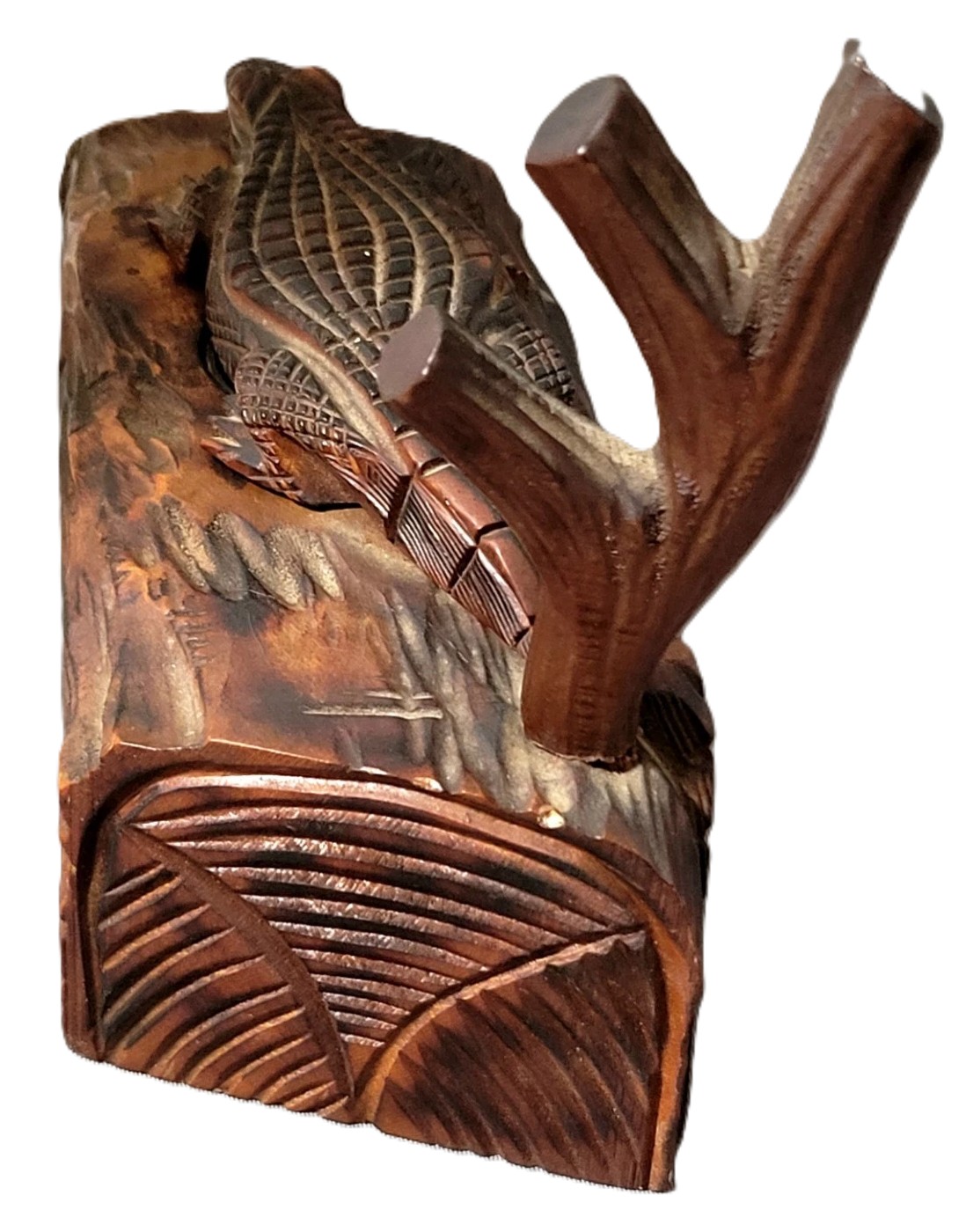
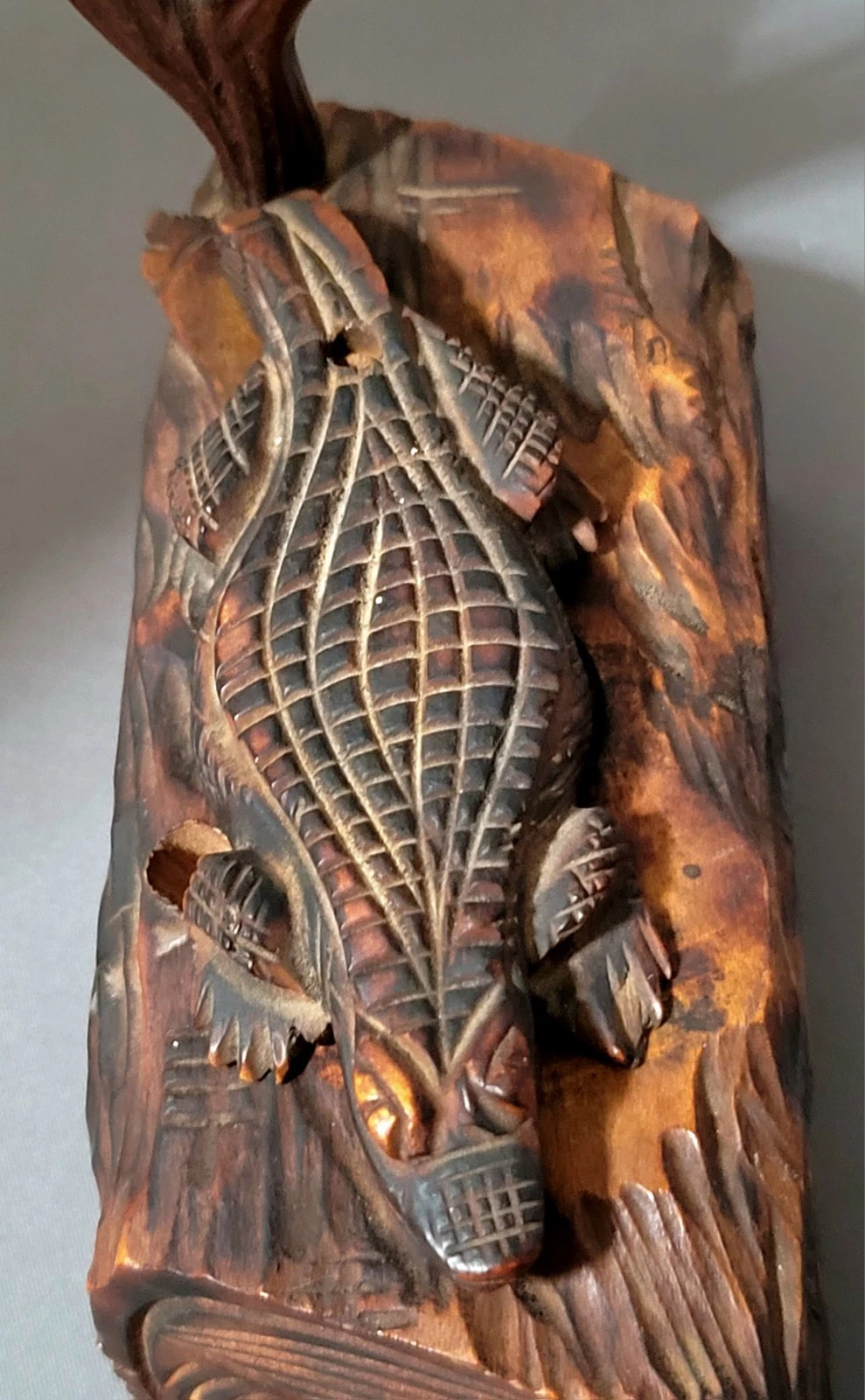
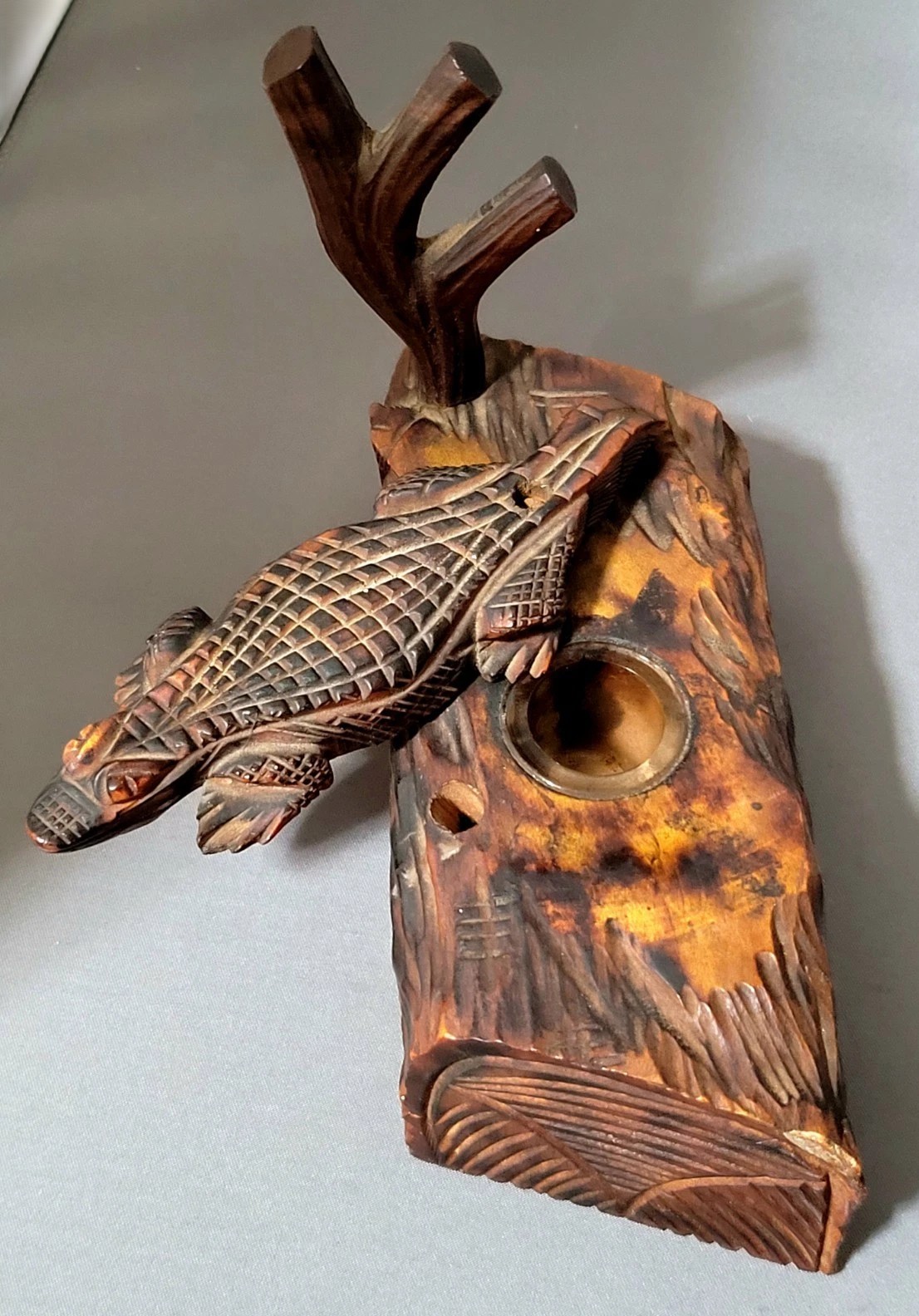
A hand carved wooden alligator lounges on a log with a branch. The gator swivels to access the inkwell.
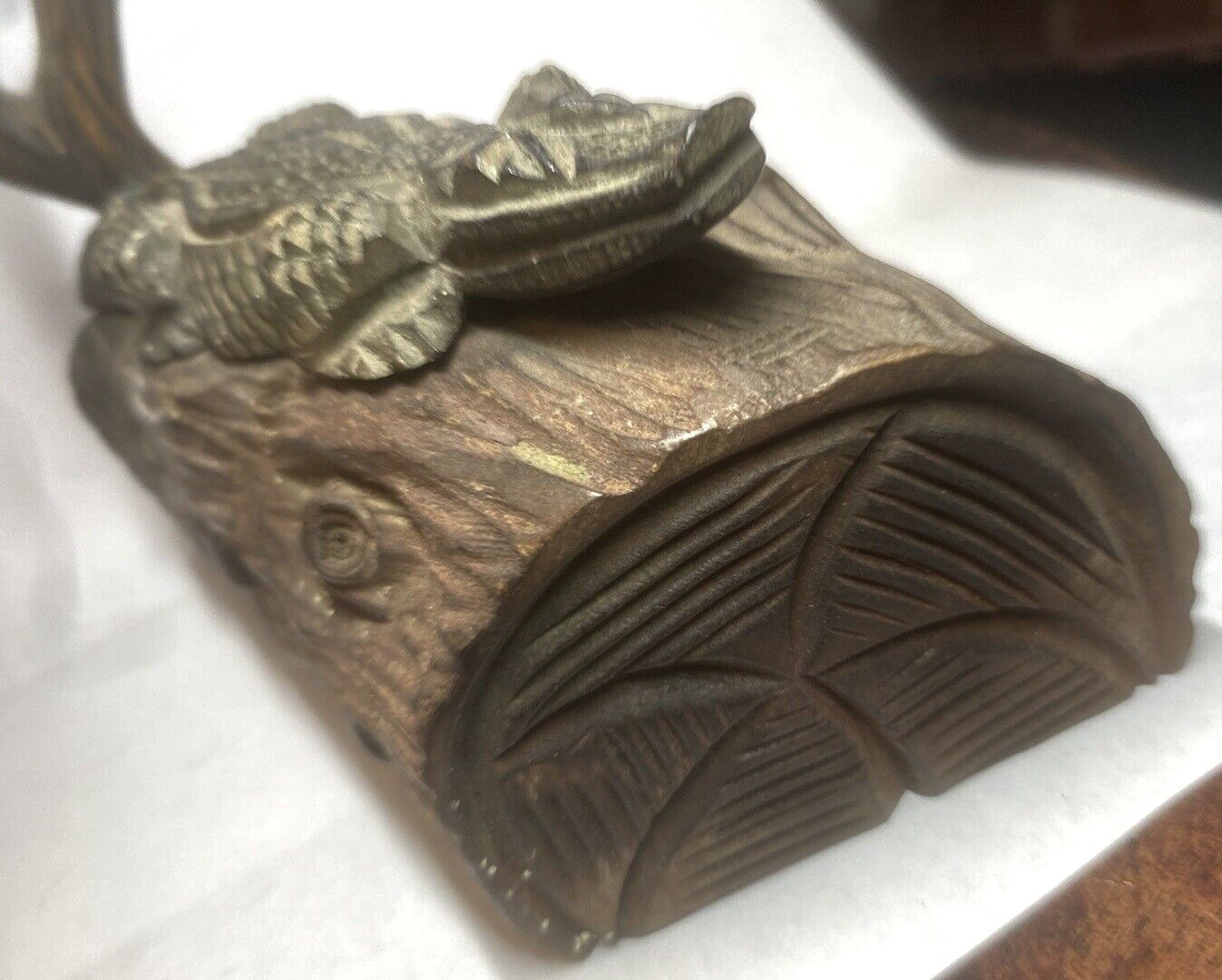
Pictured are two alligator inkstands. They sometimes are sold as “one-of-a-kind” folk art, but a close comparison reveals that these two inkwells are batch-produced or manufactured novelty items following a standardized factory pattern, rather than completely unique individual creations.
Detailed Comparison
- Shared Standardized Design
They have identical structural blueprints:
- The Log Base: Both inkwells feature a base shaped like a rough log with nearly identical positioning of stylized circular “knotholes” along the front face.
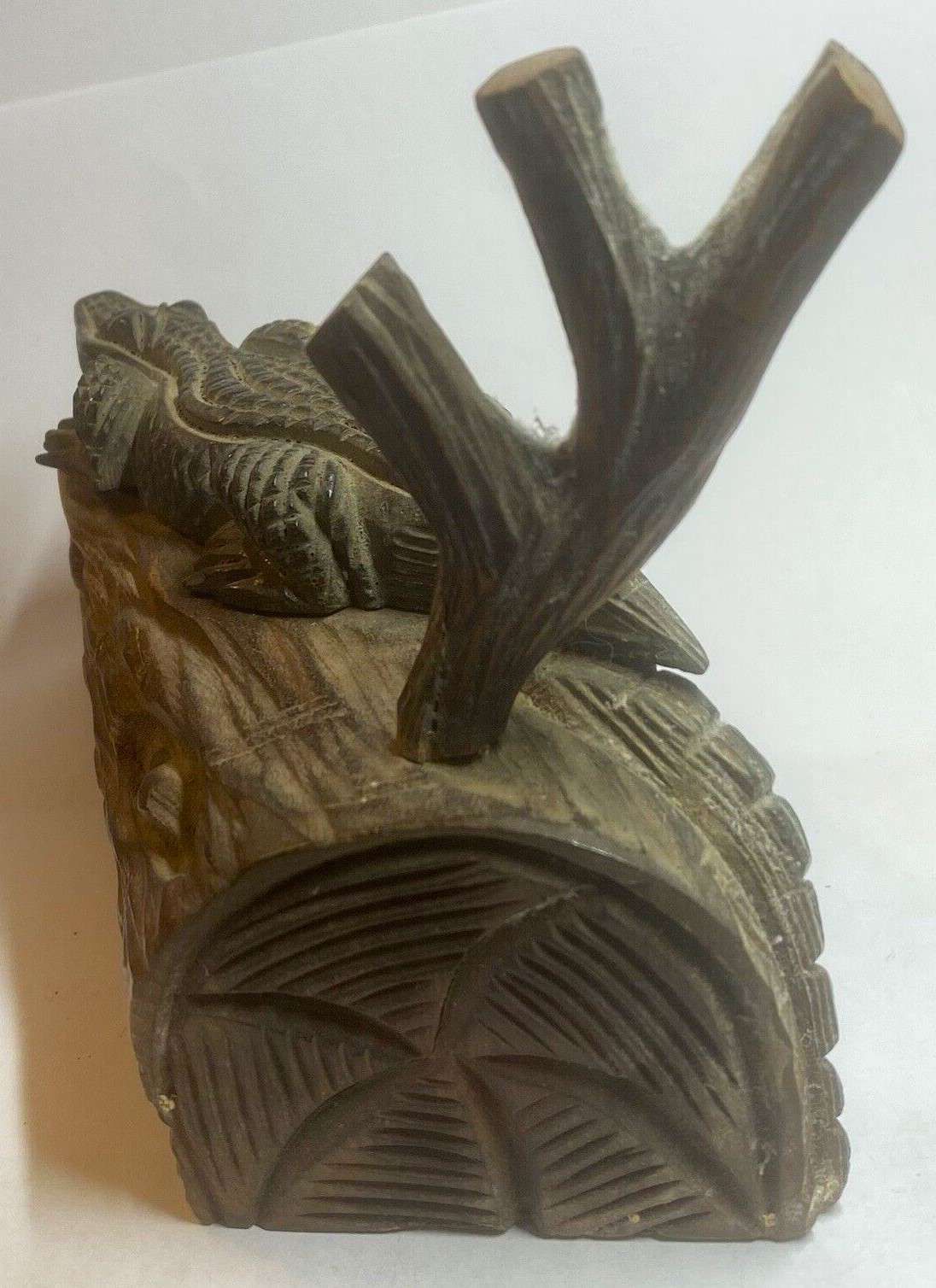
- The Pen Rest: The upright branch at the back of each log serves as a pen rest. It features the exact same stylized, angularly chopped prongs across both items.
- The Swivel Mechanism: Both pieces utilize the exact same functional concept — the alligator pivots horizontally around a pin near its tail to expose a recessed circular inkwell.
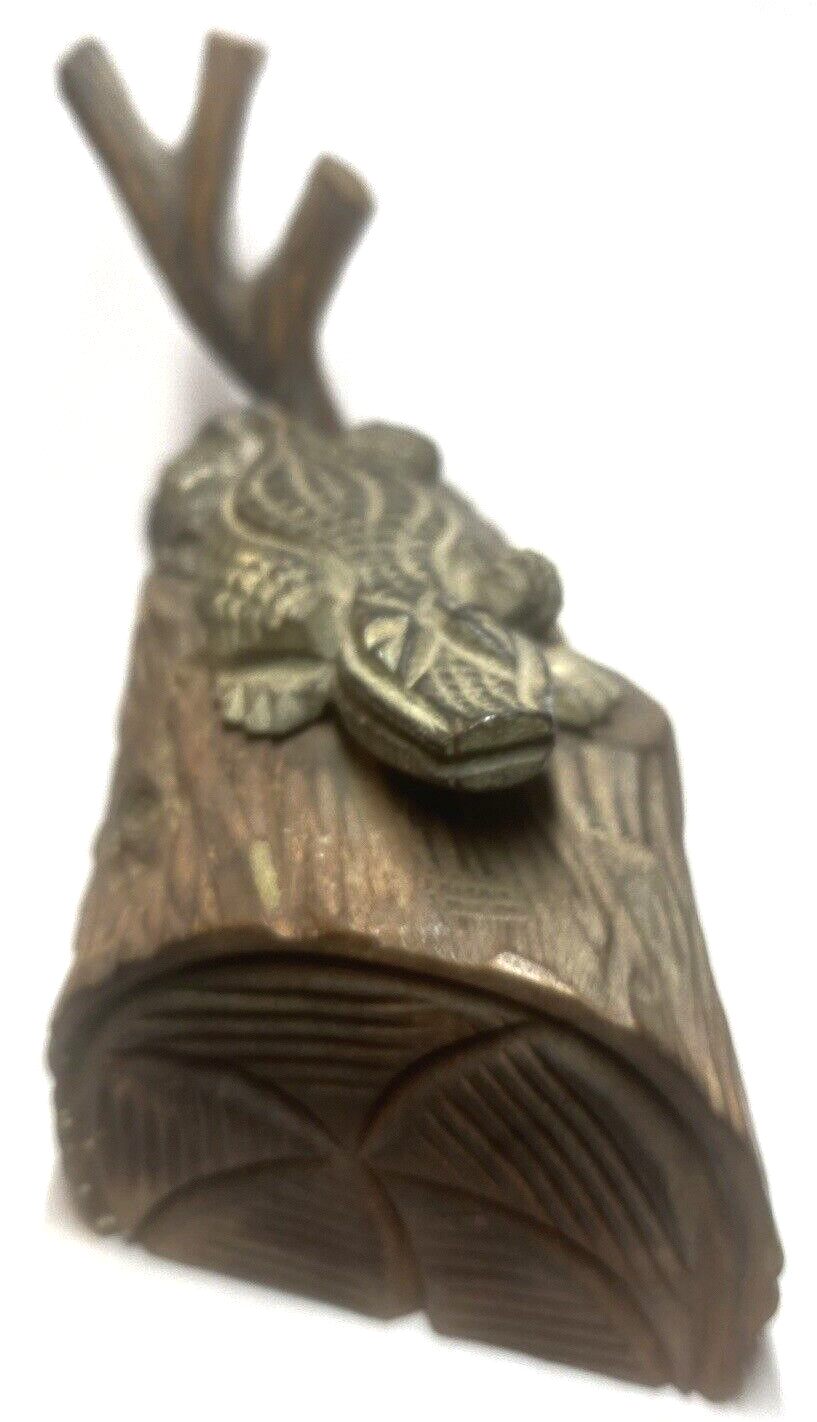
- The End Grain Pattern: The flat cross-section at the end of the logs displays an identical geometric, chevron-style carved pattern used to simulate tree rings.
- Evidence of Manufacture (Hand-Carved vs. Mass-Produced)
These pieces are best described as factory-manufactured with hand-finished details, a common production method for late-19th to mid-20th-century tourist wares.
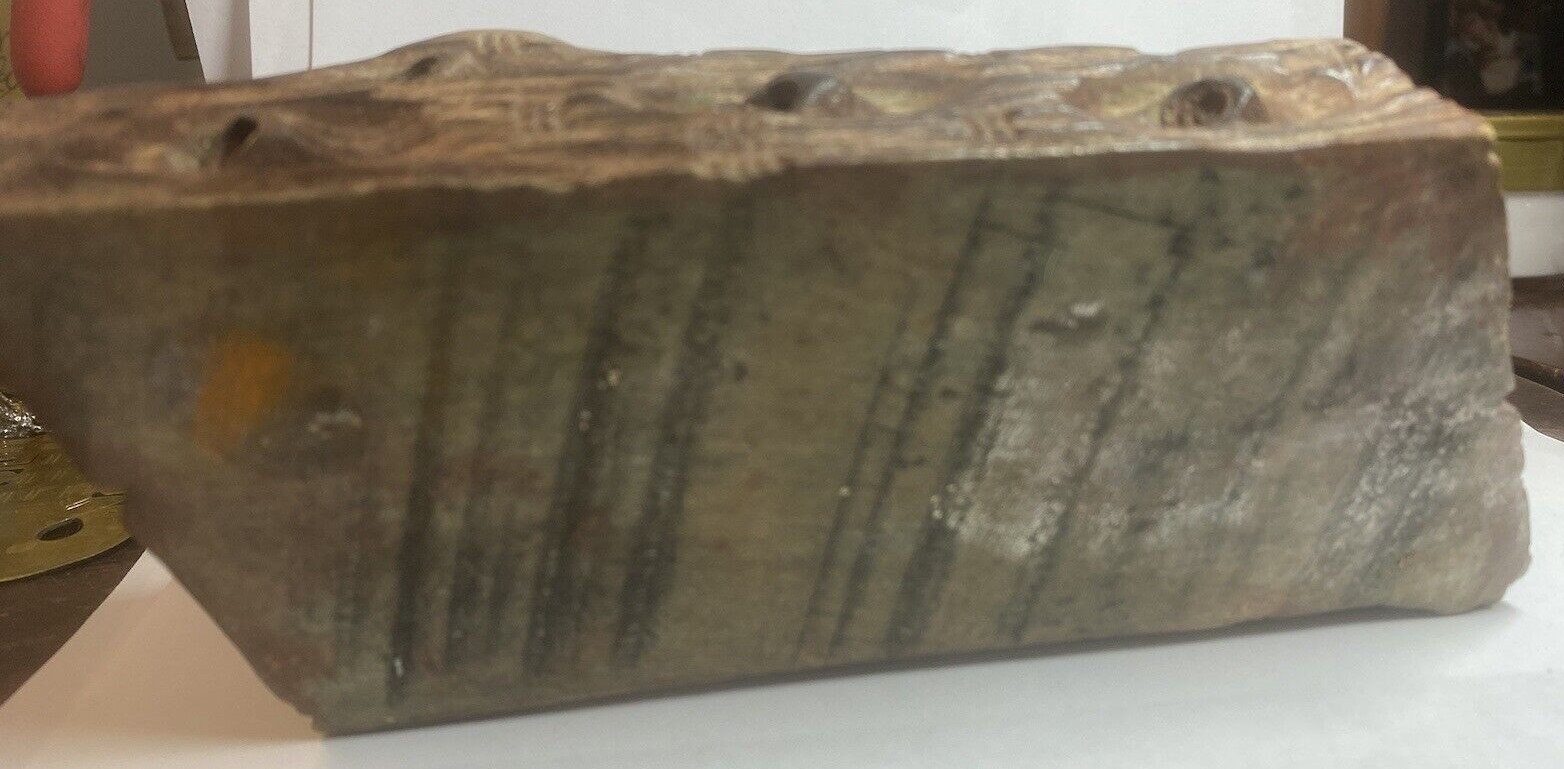
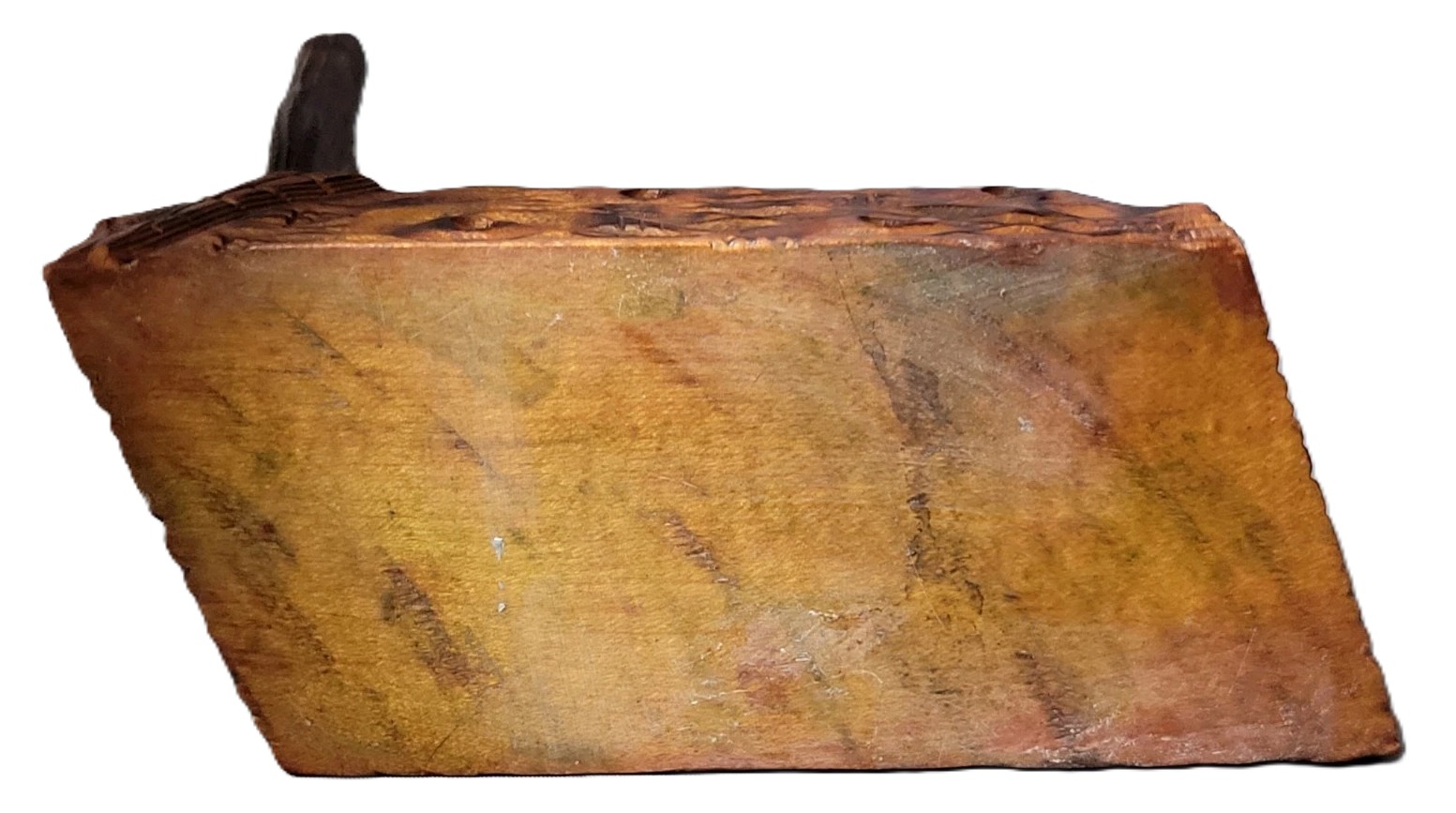
- Machine Saw Marks: The definitive proof of industrial manufacture lies on the undersides. There are distinct, straight, parallel mechanical saw marks left by a commercial mill or workshop saw when cutting the wood blanks.
- Production Method: A factory or workshop likely used a duplication machine (like a pantograph router) to rough out the uniform shape of the logs and alligators from standardized wood blocks. Afterward, factory workers used hand-chisels or stamps to quickly texture the scales, bark, and end grain before applying a dark stain. This explains why they look “carved” but have identical dimensions and structural layouts.
Origin and Context
Alligator-themed novelties and writing accessories were popular souvenirs from the American South (particularly Florida) during the late Victorian era through the early 20th century.
While some of these souvenir pieces were crafted regionally in the United States, a massive volume of specialized carved wooden inkwells from this era were produced in large batch-workshops in Germany, Switzerland, and the Black Forest region specifically for export to global tourist markets.
These specific inkwells were made in the Black Forest region of Europe (Germany/Switzerland) for export, rather than being carved locally in Florida.
Here is why:
- The Manufacturing Fingerprint
As shown by the precise mechanical saw lines on the bottom, these were produced in a commercial workshop utilizing specialized industrial machinery (like duplication routers). During the late 19th and early 20th centuries, the massive woodworking cottage industry of the Black Forest was the undisputed global hub for this type of mass-scale, batch-produced, hand-finished novelty production.
- Stylistic Conventions
The design layout is completely European, borrowing heavily from classic Black Forest “Bear” and “Boar” desk sets:
- The Log & Ring Pattern: The method of carving a stylized log base with a punch-carved geometric chevron pattern for the tree rings is a textbook Black Forest carving convention.
- The Pen Rest Branch: The inclusion of a multi-pronged, angularly chopped branch to hold a dip pen is a signature element of Swiss and German carved desk stands.
The Connection to Florida
While they were physically manufactured in the Black Forest, their destination was likely the Florida tourist market.
In the late 1800s and early 1900s, German and Swiss workshops frequently accepted export contracts to manufacture souvenirs tailored to specific international travel destinations. Just as they carved bears for Switzerland and eagles for the American West, they batched out thousands of these alligator-on-a-log inkwells specifically to be shipped to Florida hotel gift shops and souvenir stands.
So, while it depicts a classic piece of Florida Americana, the craftsmanship itself is entirely Black Forest export ware.
Sold for $106 in December 2023
Second example sold for $300 in May 2026
Content disclaimer. The information posted is the owner’s best knowledge and may not have been vetted by the SOIC. We welcome comments, corrections, and additions, working to make our website information comprehensive and accurate.
Join the Society of Inkwell Collectors (SOIC) – it’s free!
Founded in 1981 as a non-profit organization,
we are documenting inkwells (and accessories).
We’re here to help and inform!