


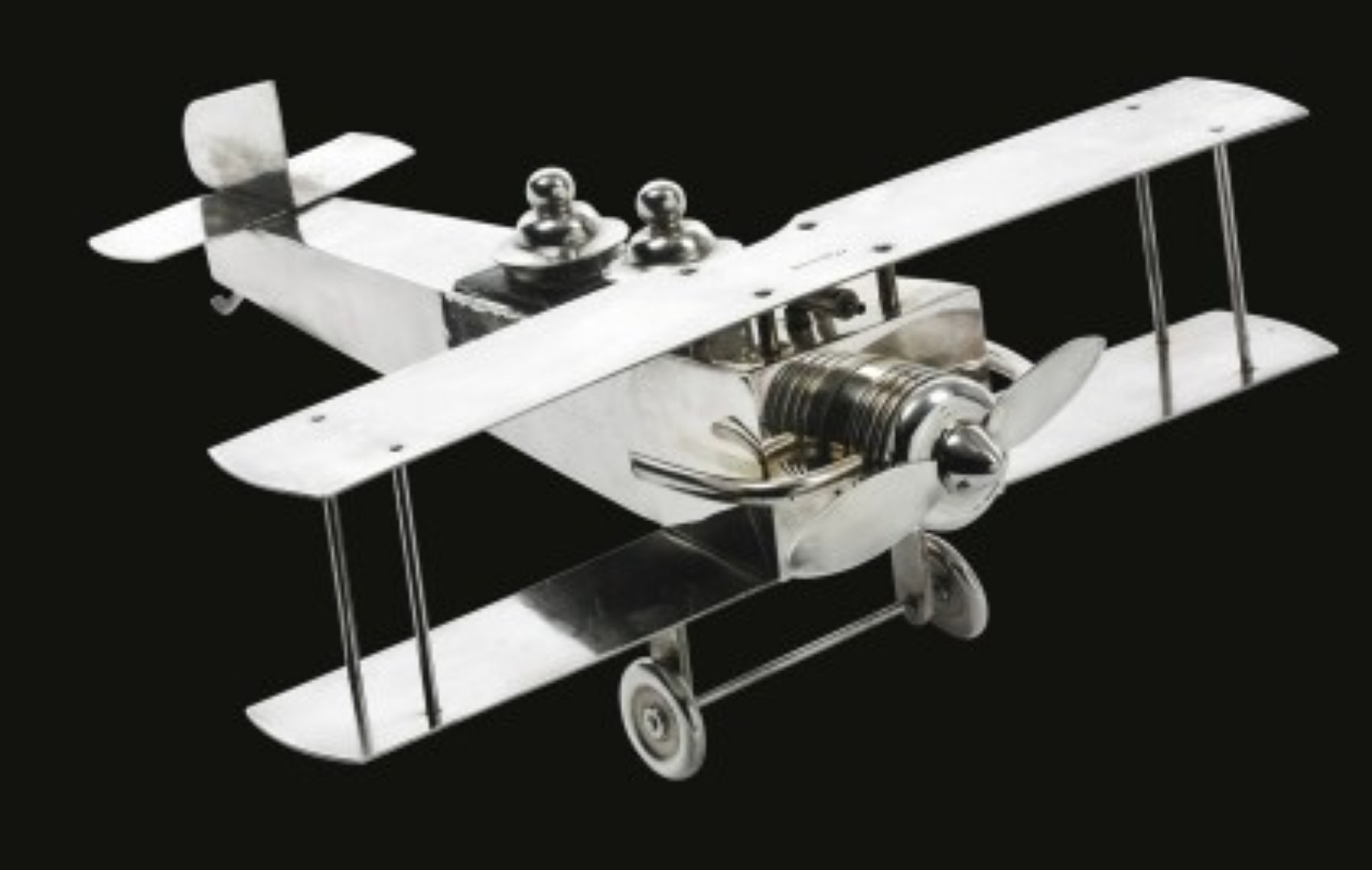
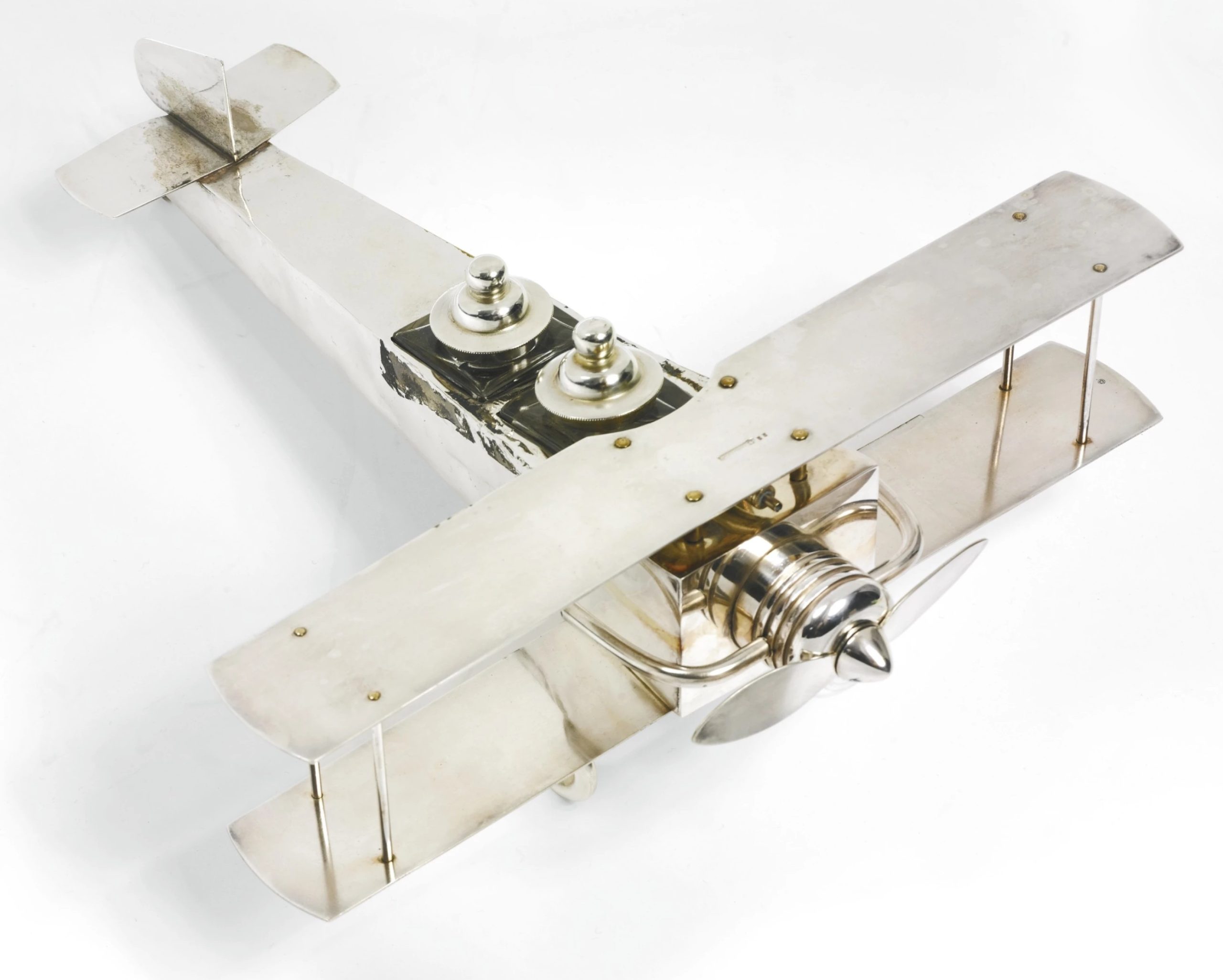
Airplane Form Inkstand
| Categories | Figural - Inanimate |
| Type | Transportation |
| Material | Glass, Silverplate |
| Markings | See narrative |
| Manufacturer | Wiskemann |
| Origin | Belgium |
| Date or Era | circa 1930 |
| Measuring | 14 ½” x 13” x 6” high |
Description
This Art Deco silverplated and glass airplane-form inkstand was produced by Orfèvrerie Wiskemann, Brussels, Belgium, circa 1920–1930
This avant-garde inkstand is fashioned in the form of a stylized biplane, capturing the sleek, geometric aesthetic of the machine age. Constructed from heavy, high-grade silver-plated metal, the airplane features beautifully balanced double wings with stabilizing struts, a detailed radial-style engine cowl, and a rotating two-blade propeller at the nose. The fuselage rests gracefully on a realistic two-wheeled landing gear assembly at the front and a curved tail skid at the rear.
Inset seamlessly into the top of the fuselage are two original, removable square glass inkwells, each fitted with a brilliant, stepped silver-plated collar and a matching dome-topped, tiered cap that echoes the aerodynamic geometry of the plane. The upper wing is distinctly impressed with the manufacturer’s mark WISKEMANN alongside the model code 44. Exhibiting a brilliant luster and immaculate proportions, this piece is an extraordinary survival of premium European Art Deco luxury desk ware.
Background on Wiskemann
Wiskemann is the manufacturer. Orfèvrerie Wiskemann was Belgium’s premier luxury silversmith and maker of high-end electroplated tableware, catering to royalty, elite private residences, and grand hotels across Europe.
- The Founder: The company was established in Brussels in 1872 by Otto Leonard Wiskemann. He descended from a German family of traditional silversmiths but learned the cutting-edge trade of industrial electroplating as an apprentice in Paris under Charles Christofle (who famously introduced commercial silver plating to continental Europe).
- The Reputation: Armed with this expertise, Wiskemann set up his workshop in Brussels and quickly became the “Christofle of Belgium.” The company was renowned for using exceptionally heavy, durable silver plating over high-quality base metals.
- The Heyday: The company reached its peak of international prestige between the two World Wars, precisely when this sleek, avant-garde piece was created. The firm eventually closed in the 1970s.
When Was It Made?
This inkstand was produced during the height of the Art Deco period, circa 1920–1930.
The “44” impressed next to the maker’s name is not a year, but rather a manufacturing or catalog shape/model number, which Wiskemann used consistently to identify their specific hollowware designs.
The piece perfectly mirrors the era’s collective obsession with modern aviation, speed, and industrial design. Following the pioneering flights of the 1910s and Charles Lindbergh’s transatlantic crossing in 1927, stylized airplane-form desk accessories became the ultimate luxury status symbol.
Sold for $4500 in July 2016
Content disclaimer. The information posted is the owner’s best knowledge and may not have been vetted by the SOIC. We welcome comments, corrections, and additions, working to make our website information comprehensive and accurate.
Join the Society of Inkwell Collectors (SOIC) – it’s free!
Founded in 1981 as a non-profit organization,
we are documenting inkwells (and accessories).
We’re here to help and inform!