

Inkipedia
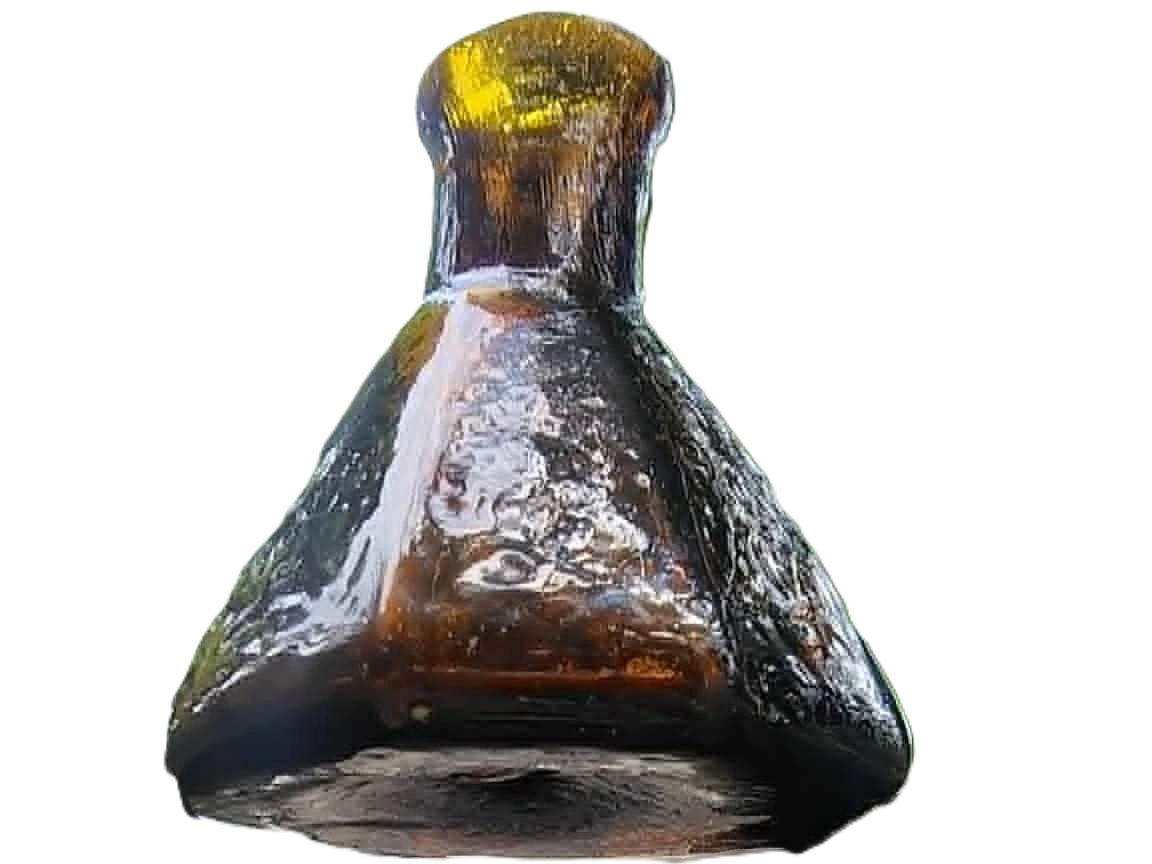
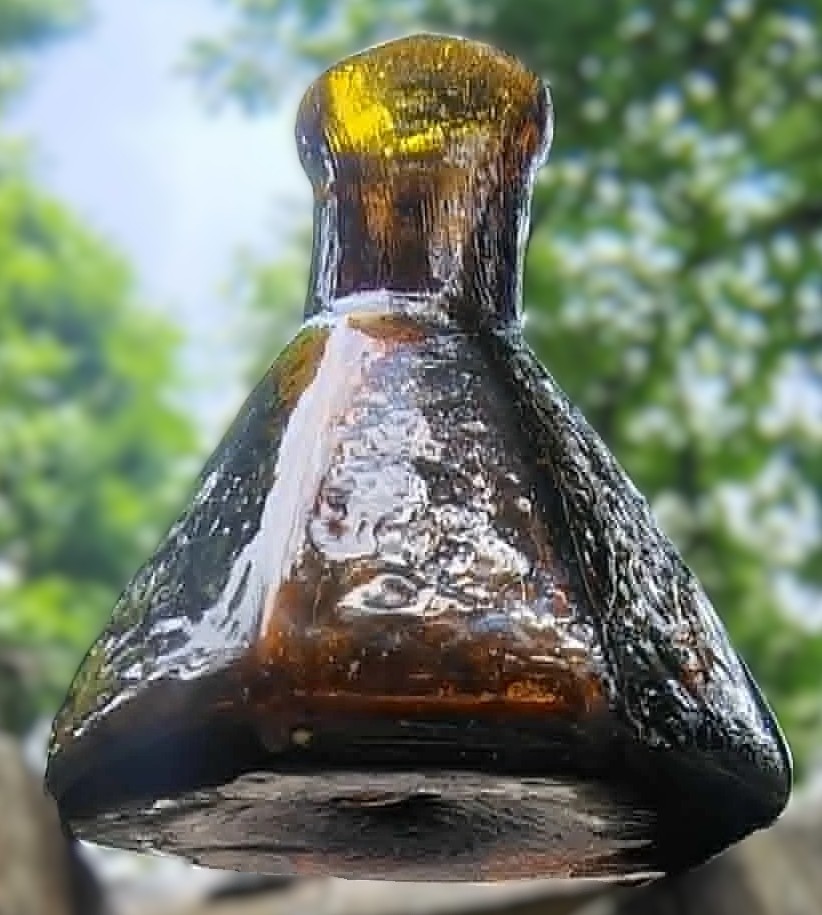
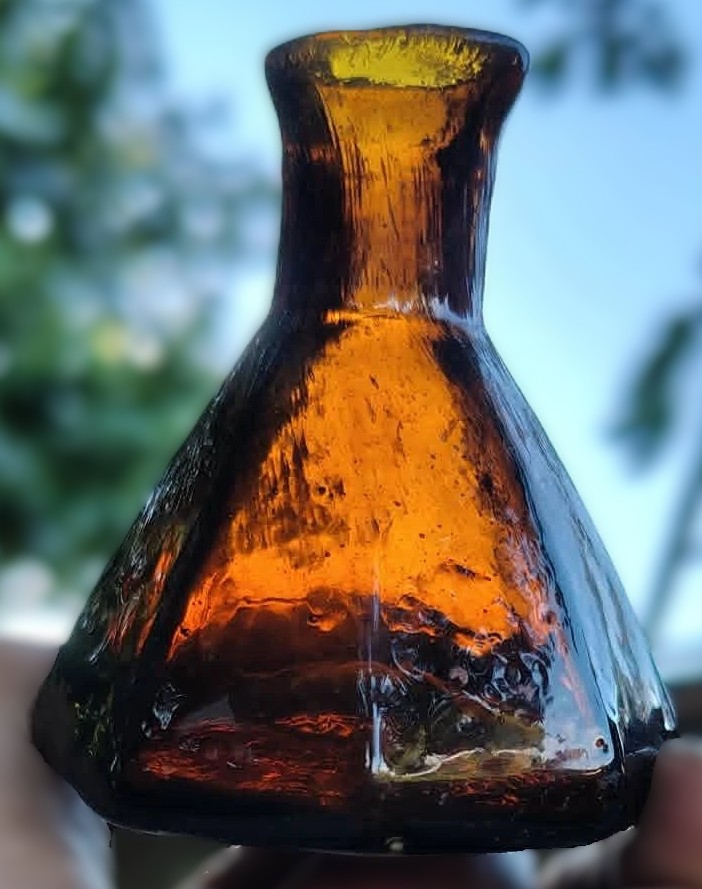
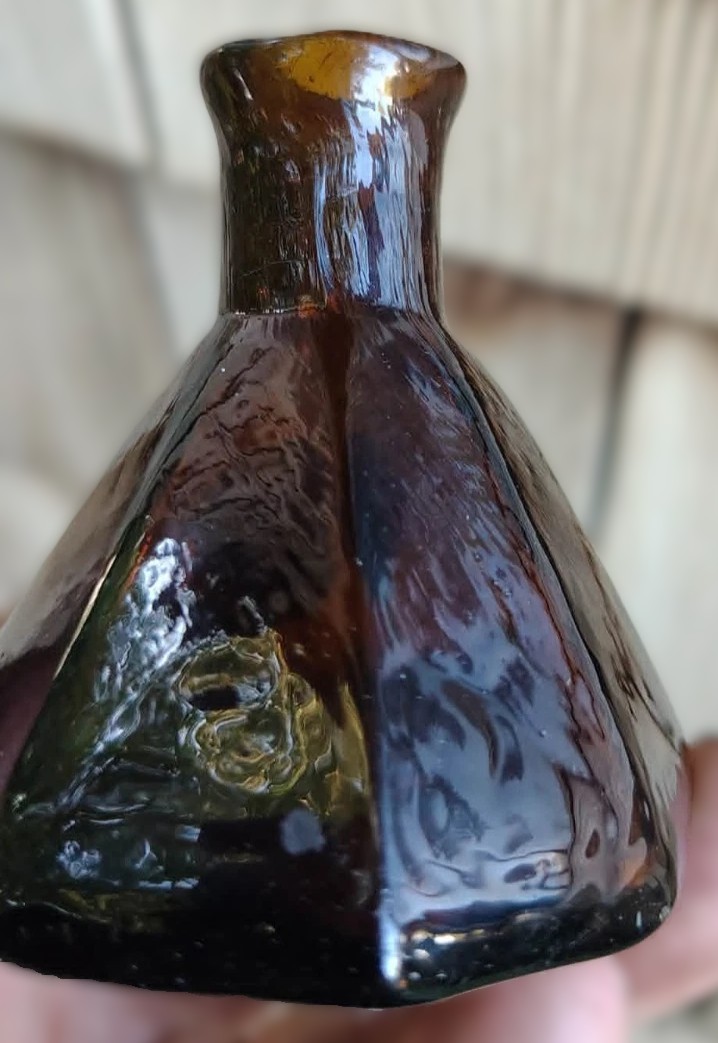
8-Sided Amber “Umbrella” Ink Bottle
| Categories | Ink Bottle |
| Type | Umbrella |
| Material | Glass |
| Markings | Unmarked |
| Manufacturer | Undetermined |
| Origin | United States |
| Date or Era | circa 1850 |
| Measuring | 2 ½” high |
Description
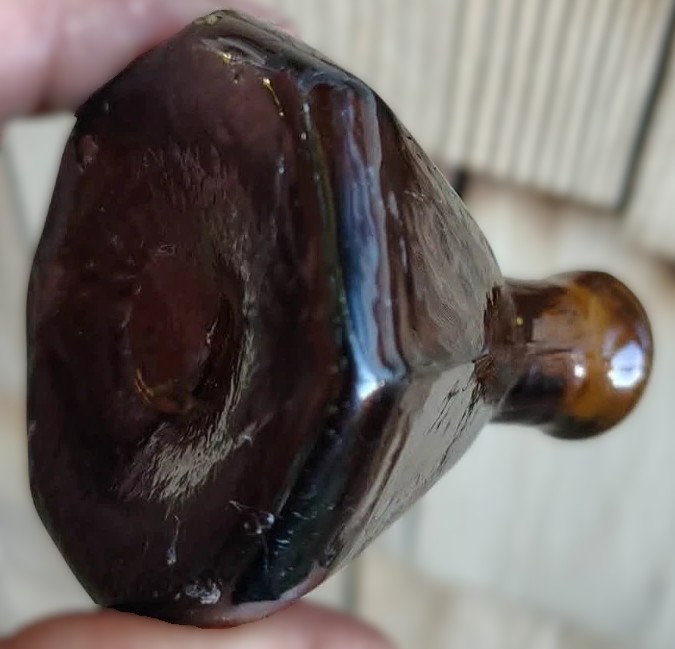
- Form: Classic “umbrella” inkwell featuring 8 faceted panels sloping down from the shoulder to an octagonal base. The wide, low-center-of-gravity design was specifically engineered in the 19th century to prevent accidental tipping on a writing desk.
- Color: Rich, deep warm amber (often referred to as old amber or honey-amber in direct light).
- Dimensions: Stands 2 ½” tall.
- Glass Characteristics: Heavy, thick glass at the base and side walls with pronounced whittle marks (surface crinkle/texture), subtle striations, and embedded seed bubbles characteristic of early batch mixing.
- Finish / Lip: Distinct hand-tooled, flared (rolled/sheared and flared) mouth.
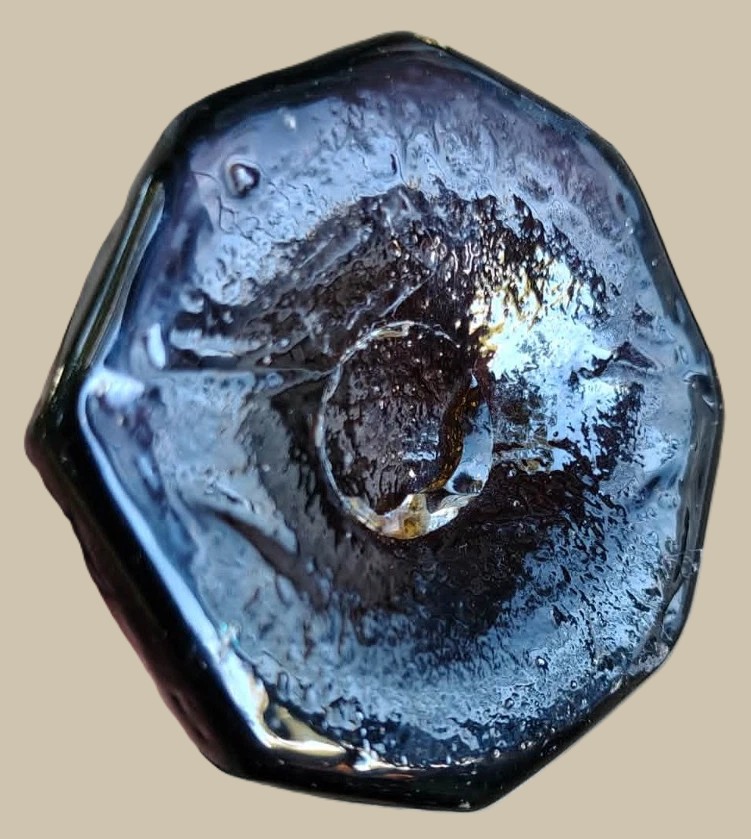
- Base: Push-up/indented base featuring a prominent, sharp tubular open pontil scar.
- Circa: c. 1840s – 1850s (American blown-in-mold manufacture).
- Condition: Mint; intact, sharp pontil, crisp panel edges, and no chips, cracks, or post-production damage.
How It Was Made: 19th-Century Manufacturing Process
This bottle was crafted during the height of the pontiled utility bottle era using traditional glassblowing and hand-finishing techniques:
- Gathering & Dip/Hinged Mold Blowing
- The gaffer (glassblower) gathered a measured blob of molten amber glass from the pot on the end of a hollow blowpipe.
- After brief marvering (shaping on an iron plate), the gather was inserted into a multi-part cast iron or brass open-and-shut (or hinged) mold cut with the 8-sided faceted profile.
- The blower expanded the glass with air pressure against the interior walls of the mold, imparting the octagonal shape, panel seams, and basal indent. The “whittled” texture seen across the panels was created when the hot molten glass made contact with the slightly cooler iron mold surface.
- Pontil Attachment (Transfer)
- Once the body formed and solidified enough to hold its shape, a helper dipped a solid iron rod (pontil rod or punty) into molten glass to get a small ring of glass on its tip.
- This rod was adhered directly to the center of the bottle’s indented base.
- The blowpipe was then cracked off from the top of the bottle near the neck, transferring the bottle to the pontil rod so the glassmaker could manipulate the top.
- Hand-Finishing the Flared Neck & Lip
- Holding the bottle solely by the pontil rod, the glassmaker reheated the sheared neck at the furnace glory hole.
- Using hand-manipulated forming tools (such as lipping calipers or a simple wood/iron shaping paddle), the craftsman flared and smoothed the mouth outward into a clean, trumpet-like lip designed to accommodate cork stoppers and ease dipping of quill or dip pens.
- Removal & Annealing
- Once finished, the pontil rod was sharply tapped, snapping it away from the base. This deliberate detachment left behind the distinctive circular, rough, and sharp glass ring known as the open pontil scar.
- The finished inkwell was immediately placed in a lehr (annealing oven) to cool slowly over many hours, preventing structural thermal shock and internal stress in the thick glass.
Sold for $410 in July 2026
Content disclaimer. The information posted is the owner’s best knowledge and may not have been vetted by the SOIC. We welcome comments, corrections, and additions, working to make our website information comprehensive and accurate.
Join the Society of Inkwell Collectors (SOIC) – it’s free!
Founded in 1981 as a non-profit organization,
we are documenting inkwells (and accessories).
We’re here to help and inform!