


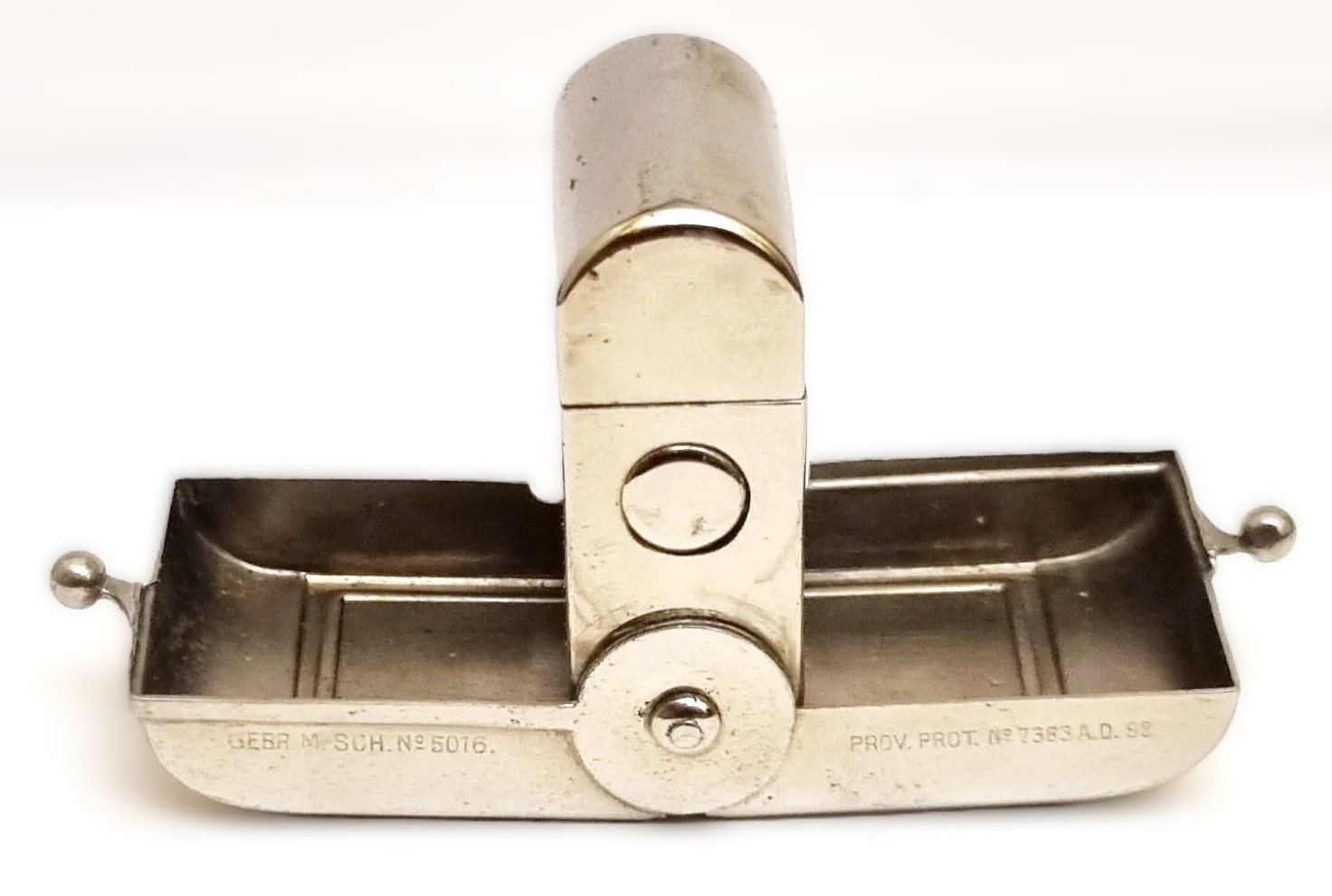
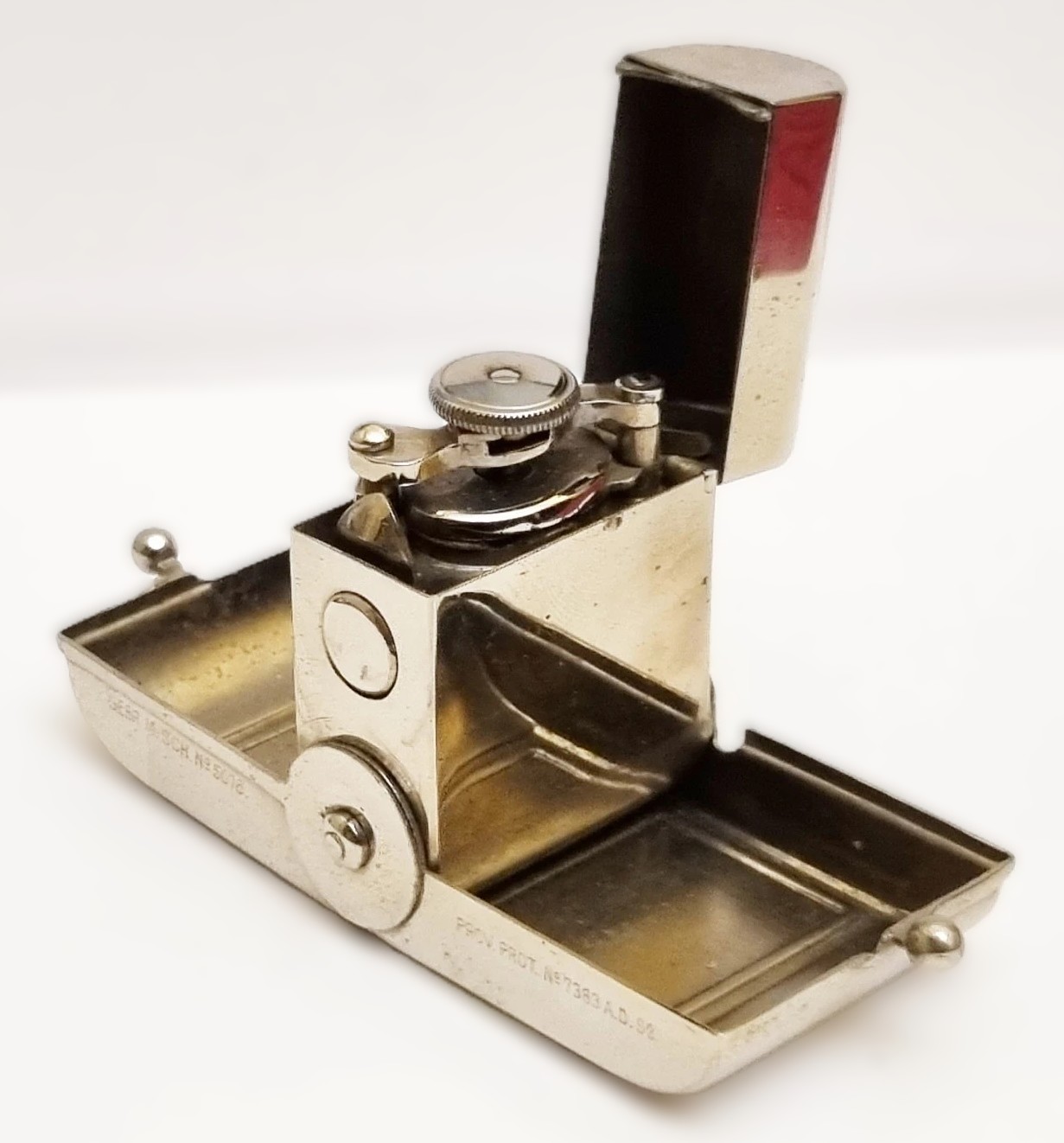


1892 “Coin Purse” Traveling Inkwell
| Categories | Travel |
| Material | Nickel Plated Brass |
| Markings | See Narrative |
| Manufacturer | Undetermined |
| Origin | Germany |
| Date or Era | circa 1892 |
| Measuring | 2 ⅛” x 2” when closed |
This traveling inkwell is a fascinating piece of late 19th-century engineering, combining the portability of a pocket accessory with the stability of a stationary desk set.
Description & Identification
- Manufacturer: The hallmark “Gebr.M.Sch.” stands for Gebrüder M. Sch. (Brothers M. Sch.). While several German metalworking firms fit this abbreviation, it is most frequently associated with manufacturers in Germany (likely the Solingen or Nuremberg regions) who specialized in nickel-plated brass travel goods.
- Material: It is made of nickel-plated brass (often mistaken for chrome, though industrial chromium plating was not widespread until the 1920s). The ochre velvet inserts are a luxury touch that serves a dual purpose: aesthetic appeal and practical friction.
- The “Coin Purse” Design: This is a “folding” or “bridge” style inkwell. The kiss-lock closure mimics a Victorian lady’s coin purse, making it discreet and elegant when carried in a pocket or travel bag.
Patent Information & Origin
- Date: The engraving “A.D. 92” refers to the year 1892, marking the date the design was first registered or protected.
- Patent Meaning: The abbreviation “Prov. Prot.” stands for Provisional Protection (Provisorisches Patent or Provisorische Protokollierung).
- German or Austrian? While the manufacturer is German, the “Prov. Prot.” marking is specifically Austrian patent terminology. During this period, the Austro-Hungarian Empire and the German Empire had significant trade overlap. German companies frequently registered their designs in Austria to protect their exports in that market. Therefore, it is a German-made item intended for sale across the German and Austrian empires.
How to Use This Inkwell
1892 “Coin Purse” Traveling Inkwell
This design was intended for the “on-the-go” writer (journalists, soldiers, or travelers) who needed to write on uneven surfaces like a lap or a train seat.
- Opening: You release the “coin purse” clasp at the top.
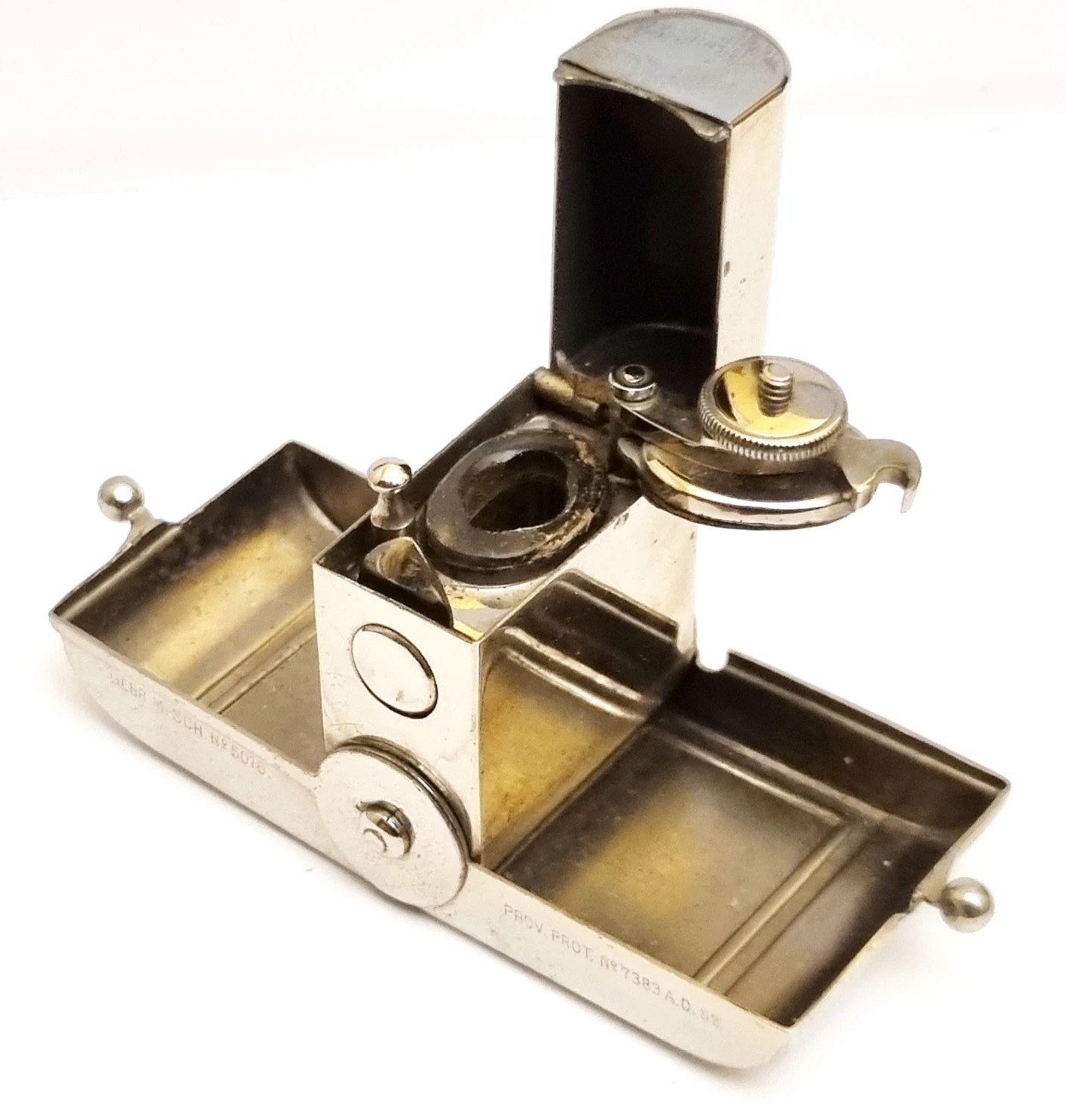
- Stabilizing: As the two outer shells swing downward, they form a wide, flat V-shaped base. The velvet inserts provide grip and “padding” against the table or surface, preventing the metal from sliding or scratching.
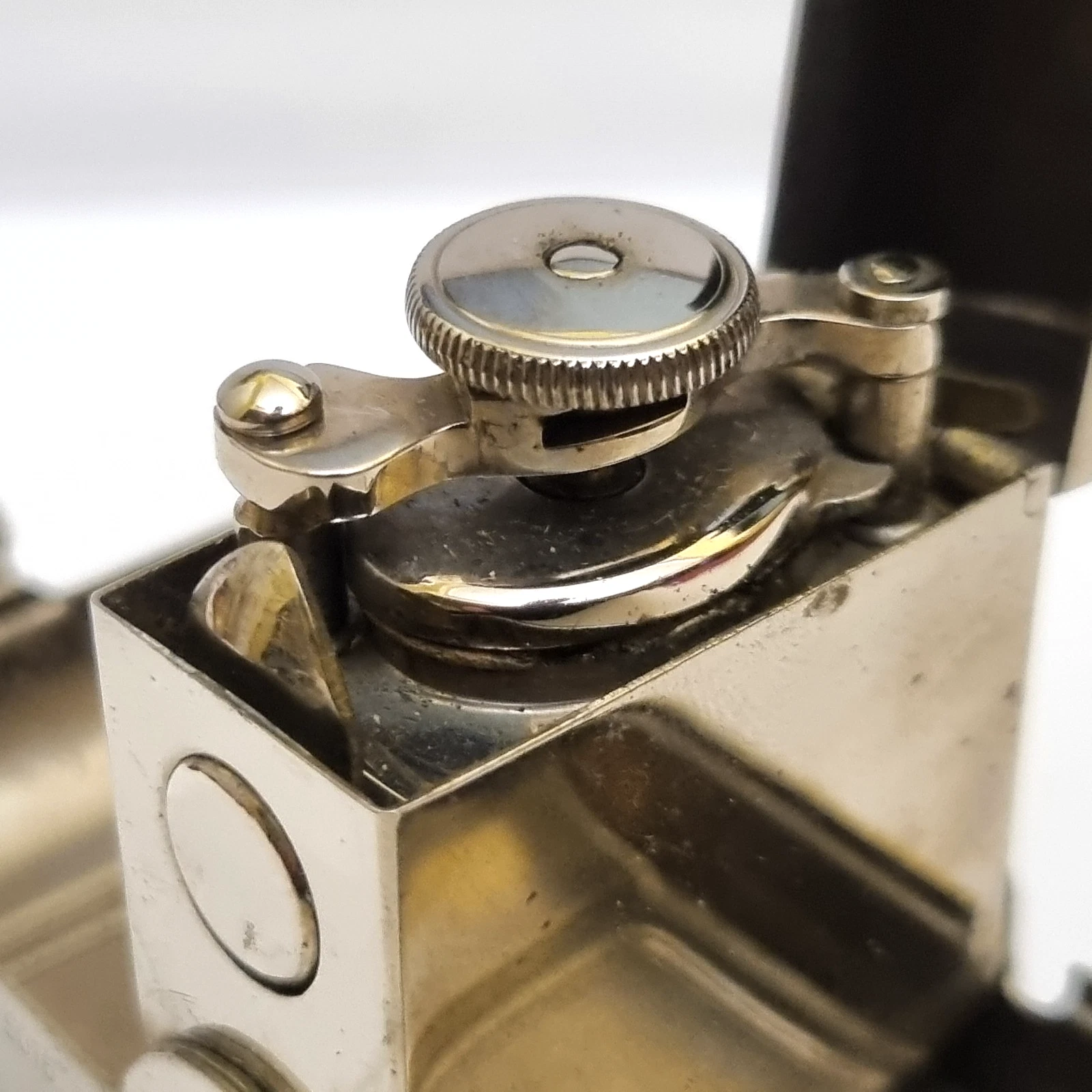
- Accessing the Ink: The central upright section contains the glass ink bottle. You unscrew the hermetic metal cap. This cap was designed with a thick rubber seal to ensure that the ink wouldn’t leak even if the inkwell was tossed around in a bag.
- Writing: Once the cap is removed and the “wings” are spread, the inkwell is tip resistant.
- Storing: After writing, you screw the cap back on tightly, fold the wings upward, and snap the clasp shut.
Added Insights
The “Gebr. M. Sch. No 5016” is a specific model number. These were highly popular gifts for men entering military service or for those embarking on a “Grand Tour.” Because of the “A.D. 92” patent date, this piece was likely manufactured between 1892 and 1910.
Sold for $130 in January 2026
Content disclaimer. The information posted is the owner’s best knowledge and may not have been vetted by the SOIC. We welcome comments, corrections, and additions, working to make our website information comprehensive and accurate.
Join the Society of Inkwell Collectors (SOIC) – it’s free!
Founded in 1981 as a non-profit organization,
we are documenting inkwells (and accessories).
We’re here to help and inform!