

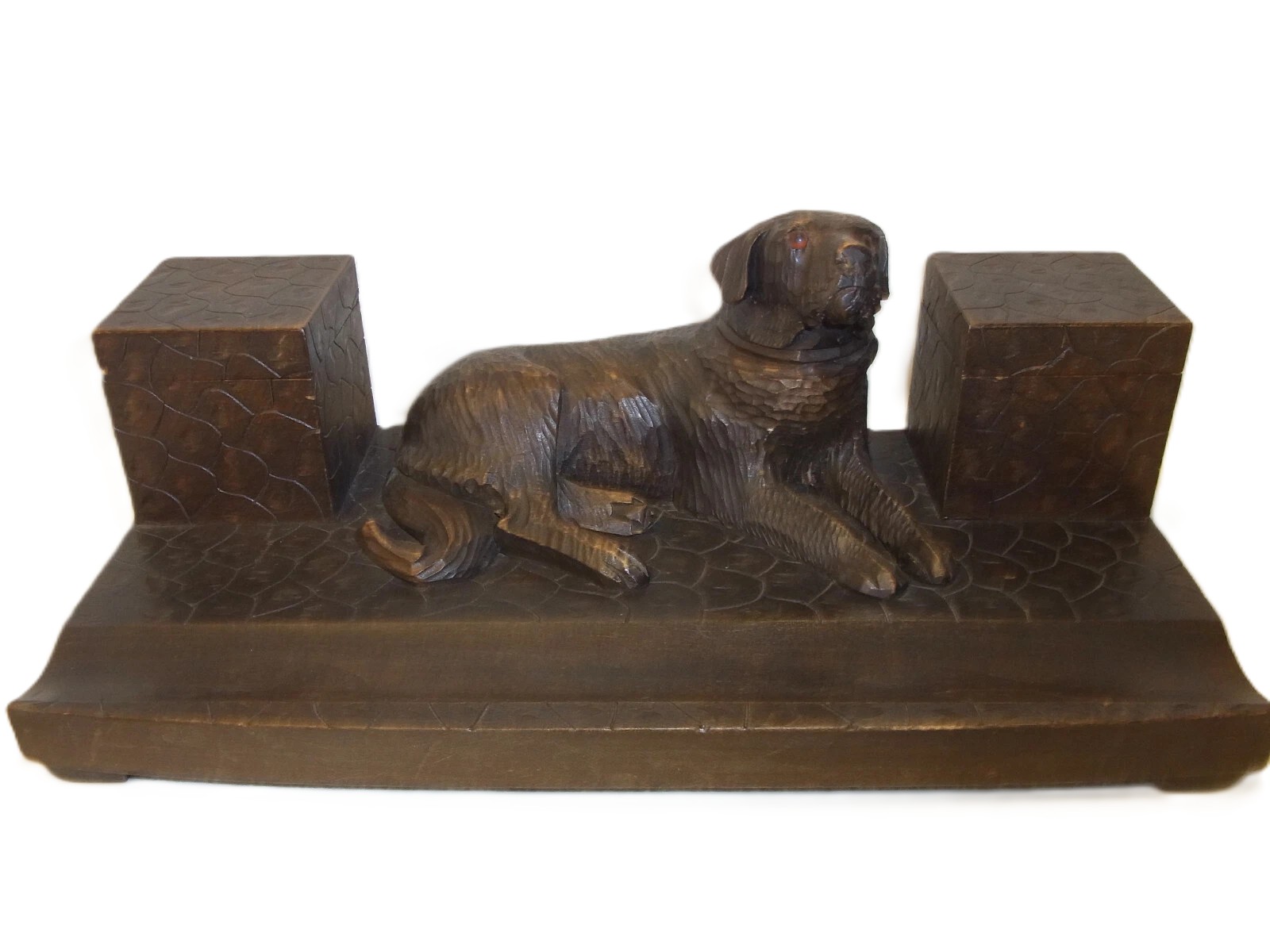
Thuringian Carved Wooden Double Inkstand with Glass-Eyed Dog
| Categories | Figural - Animals & Living Creatures |
| Type | dog |
| Material | Wood |
| Markings | See Narrative |
| Manufacturer | Undetermined |
| Origin | Germany |
| Date or Era | circa 1950 |
| Measuring | 11 ¾” x 5 ⅞” x 4 ⅜” high |
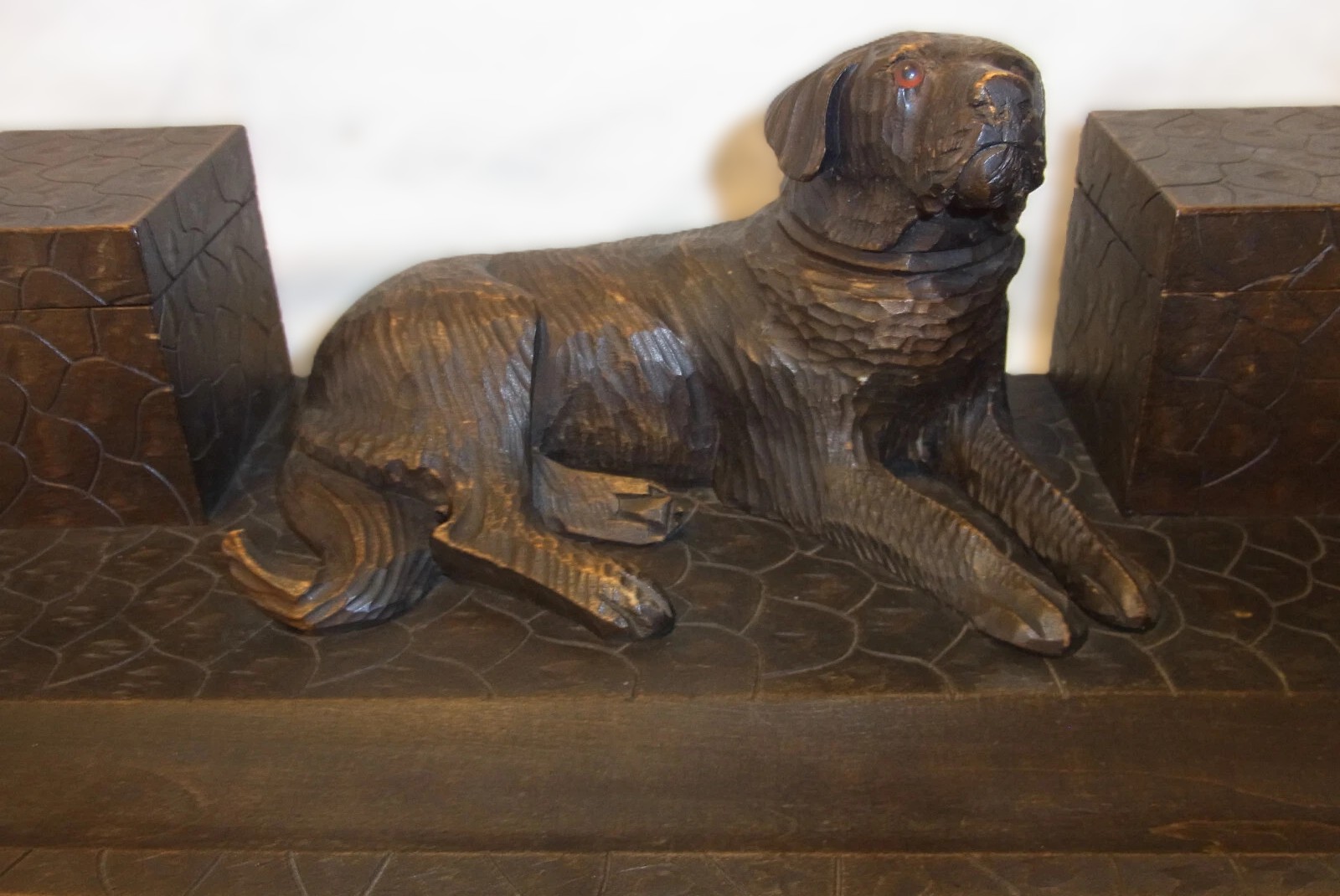
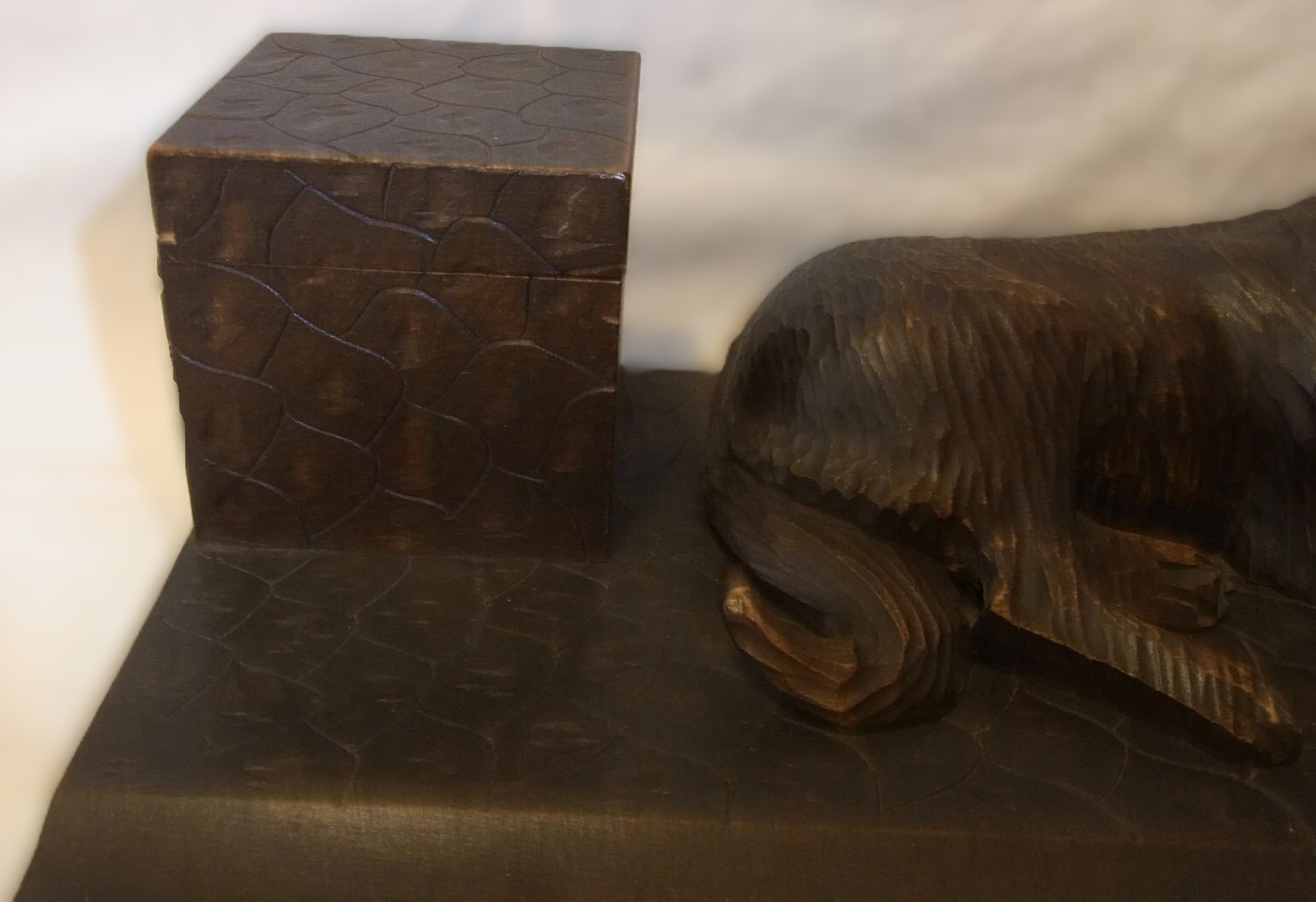
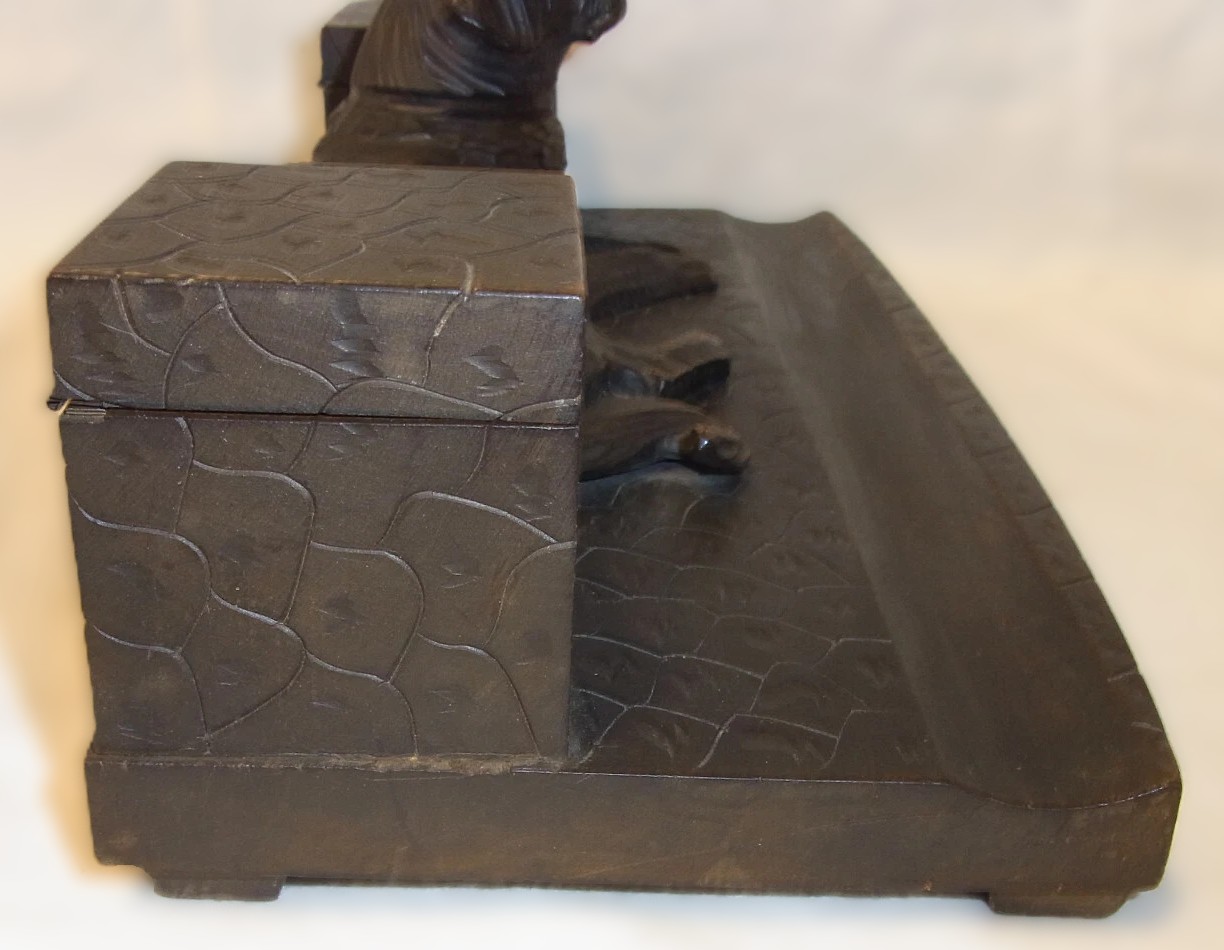
This double inkstand is carved from dark-stained wood with a textured, pebble- or crazy-pave stone-like motif across the base and the exterior of the inkwell blocks.
Description
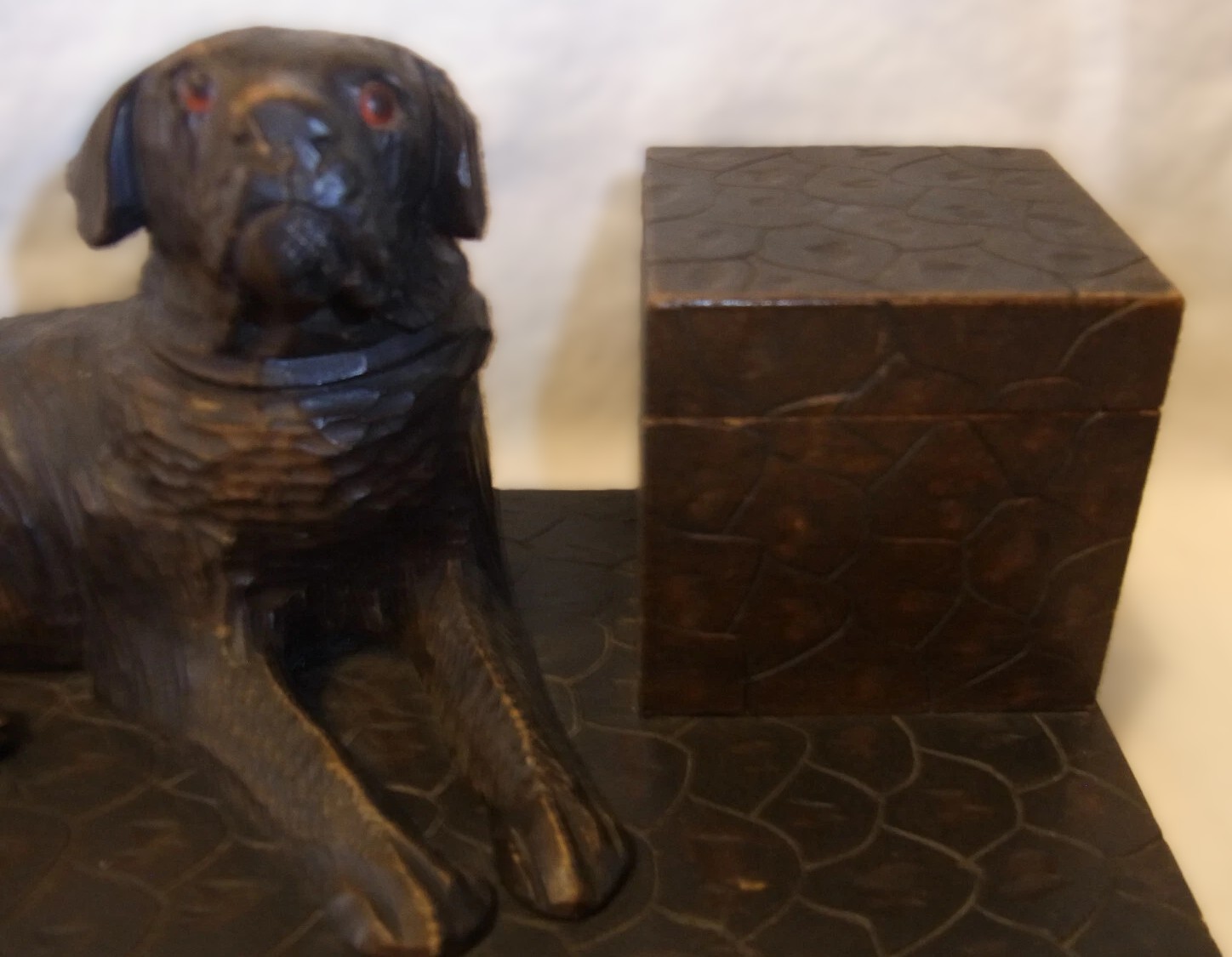
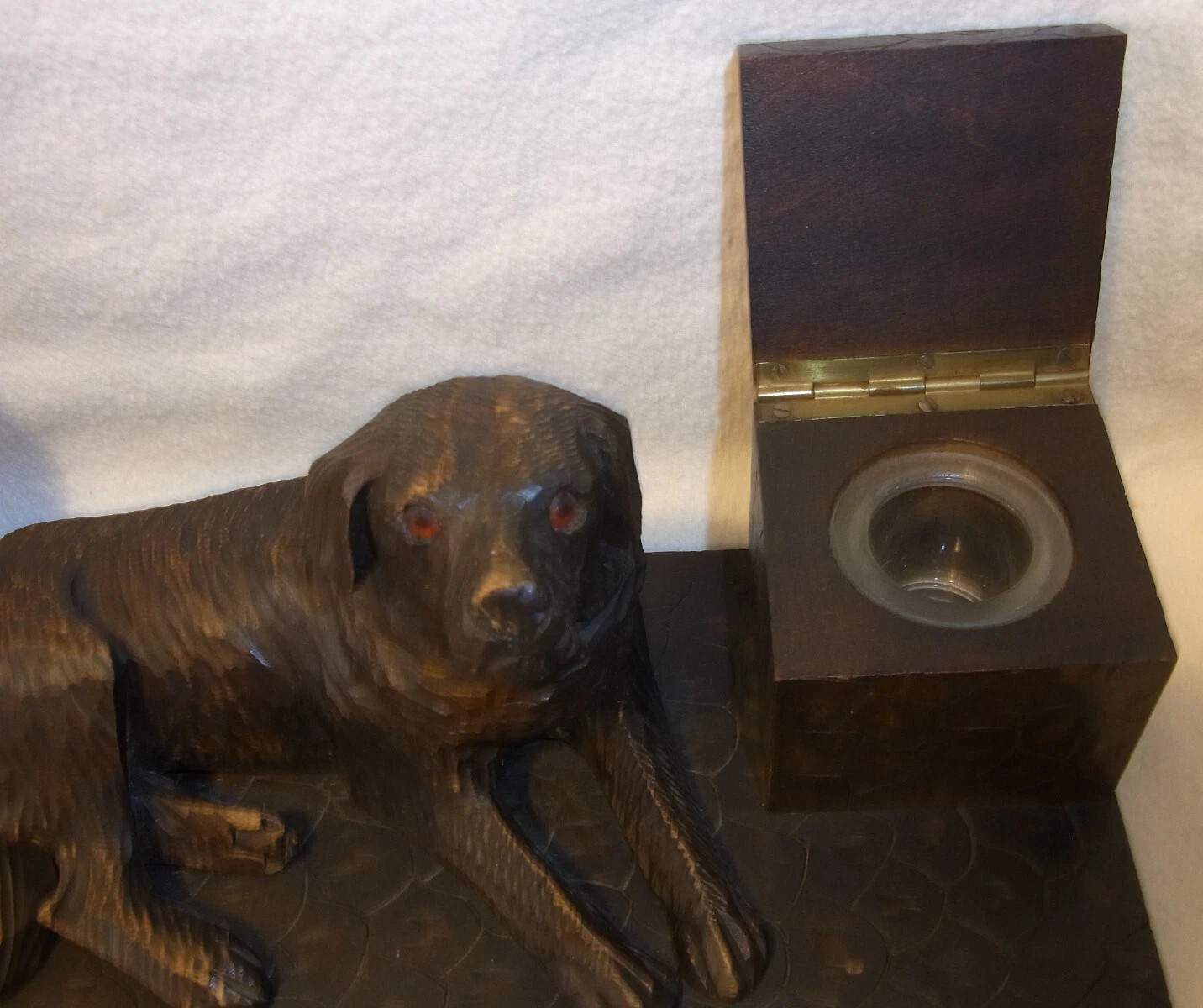
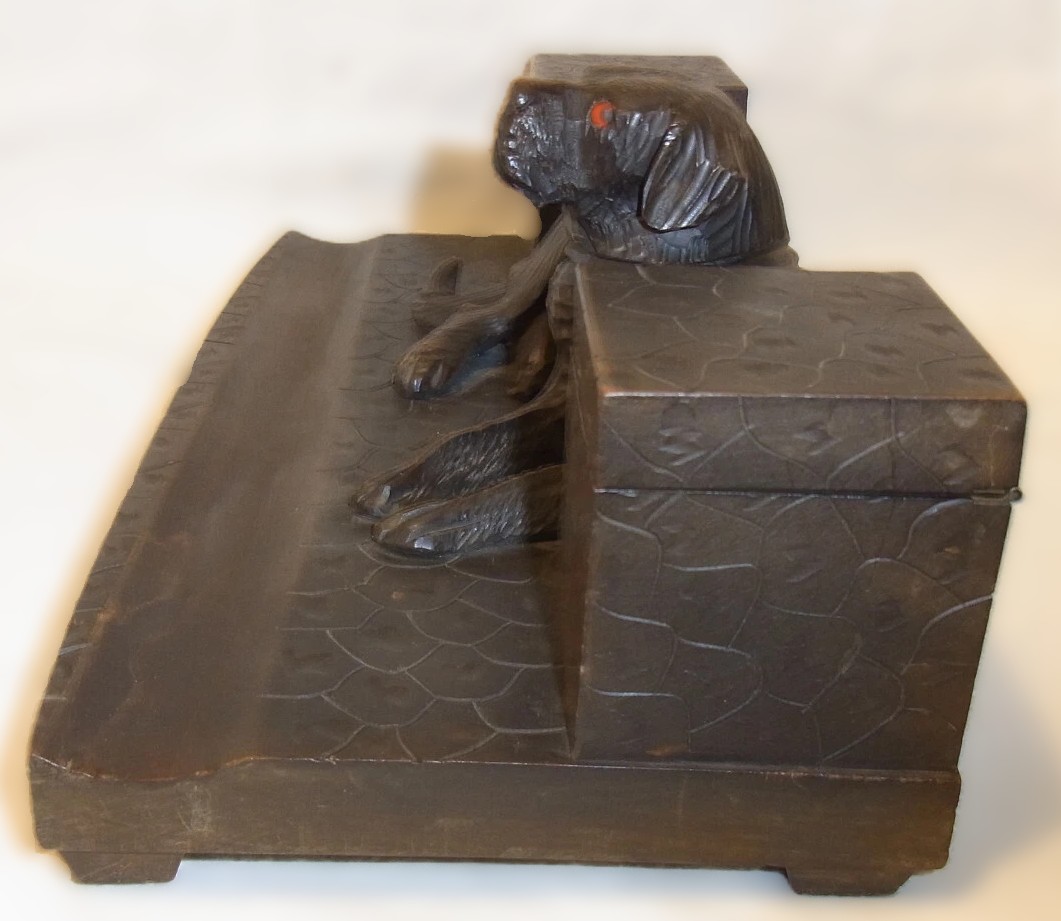
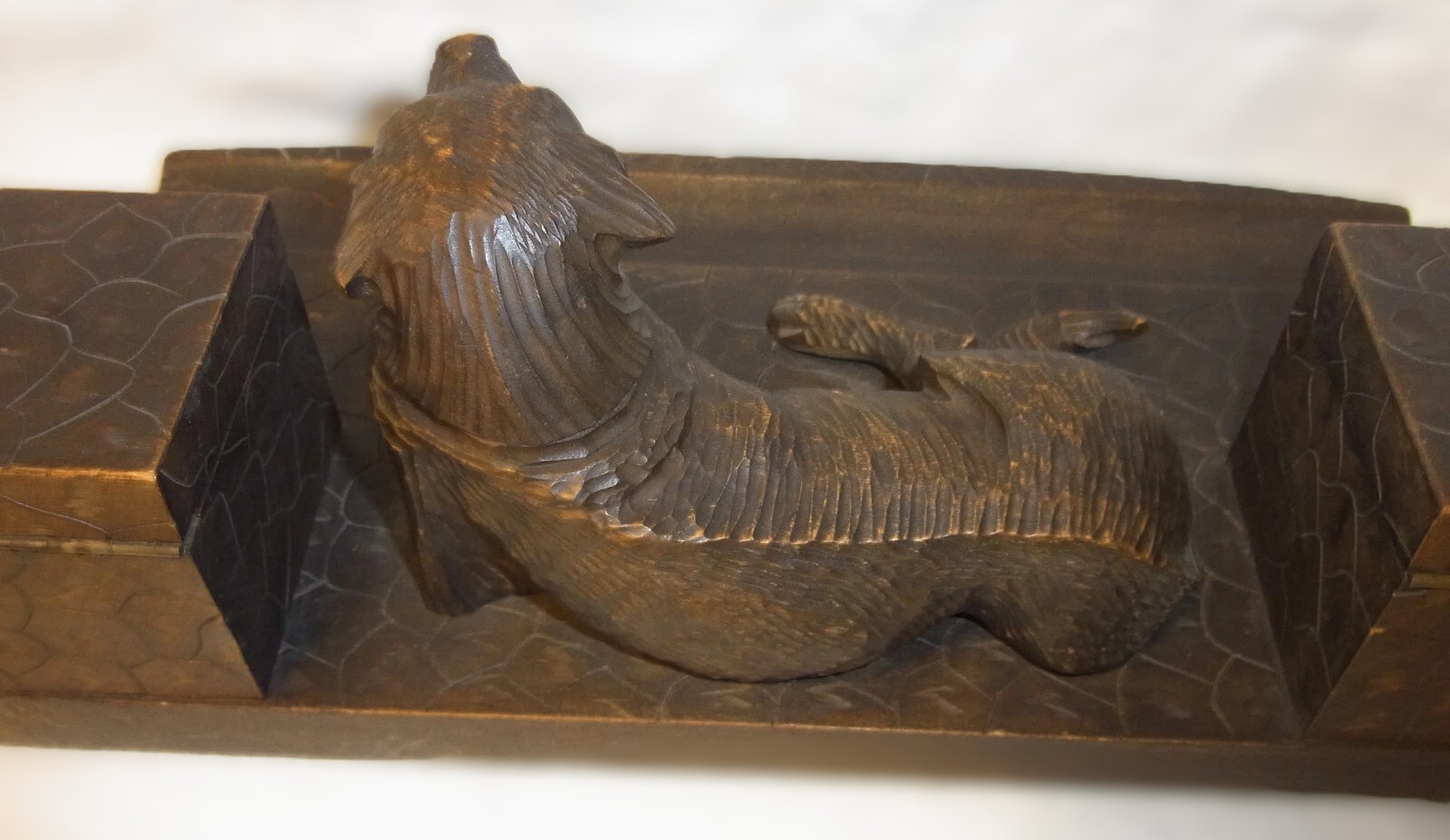
- The Central Figure: A dog (resembling a hound or sporting dog) lies recumbent in the center, sporting a detailed collar, textured fur carved with expressive gouge marks, and striking, reddish-amber glass inset eyes.
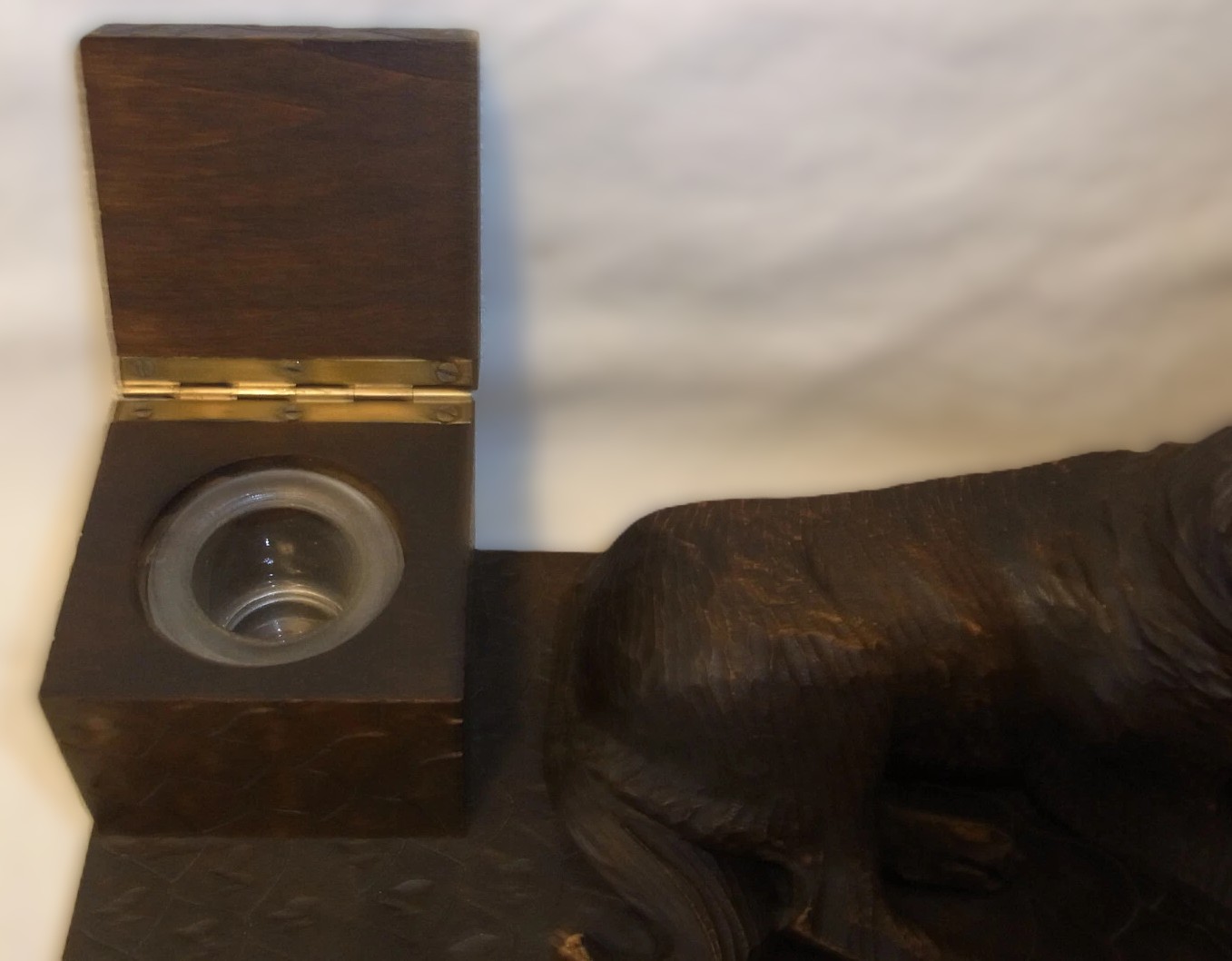
- The Inkwells: Flanking the dog are two matching, cube-shaped inkwell compartments with hinged lids secured by brass hardware. Inside both compartments, the original glass inserts are intact.
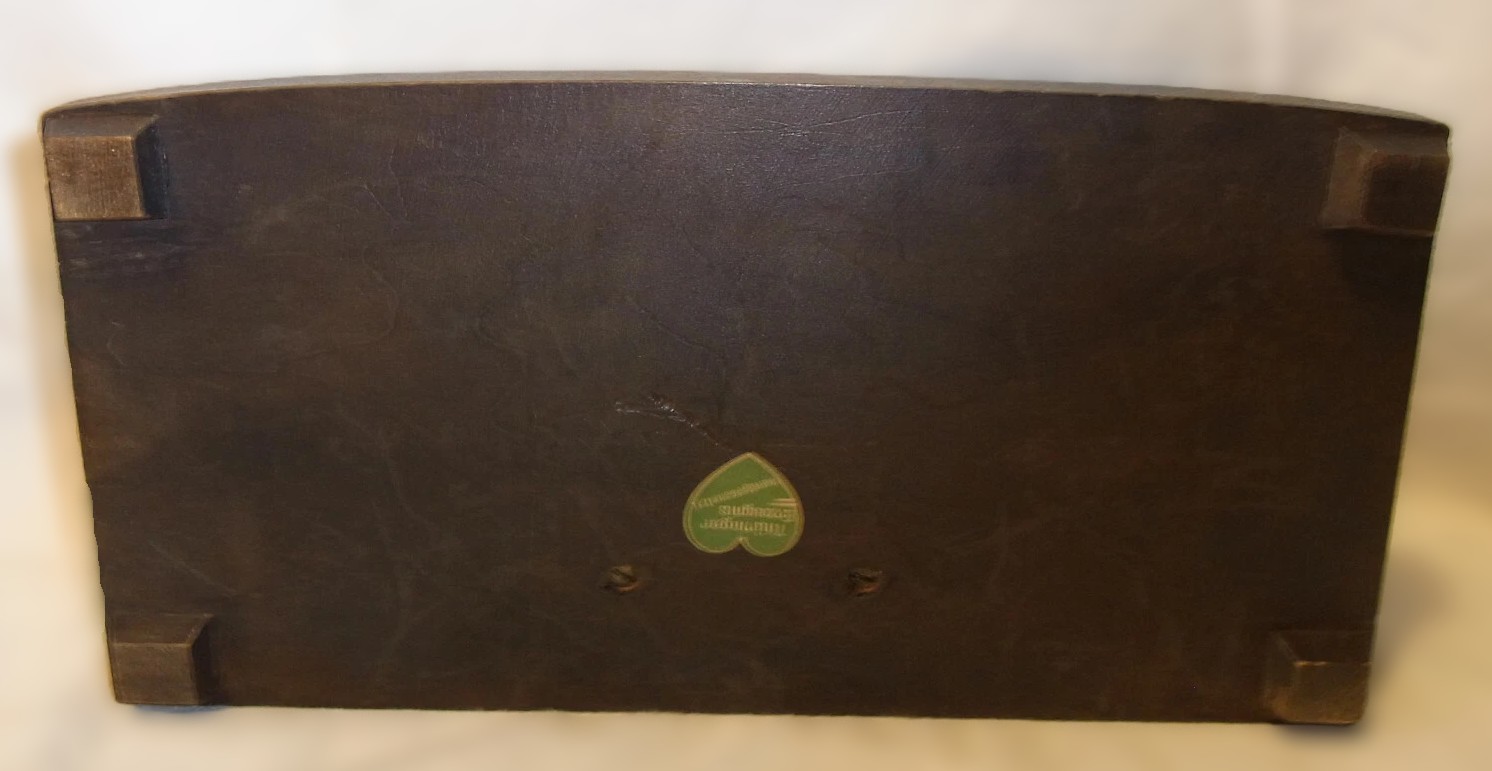
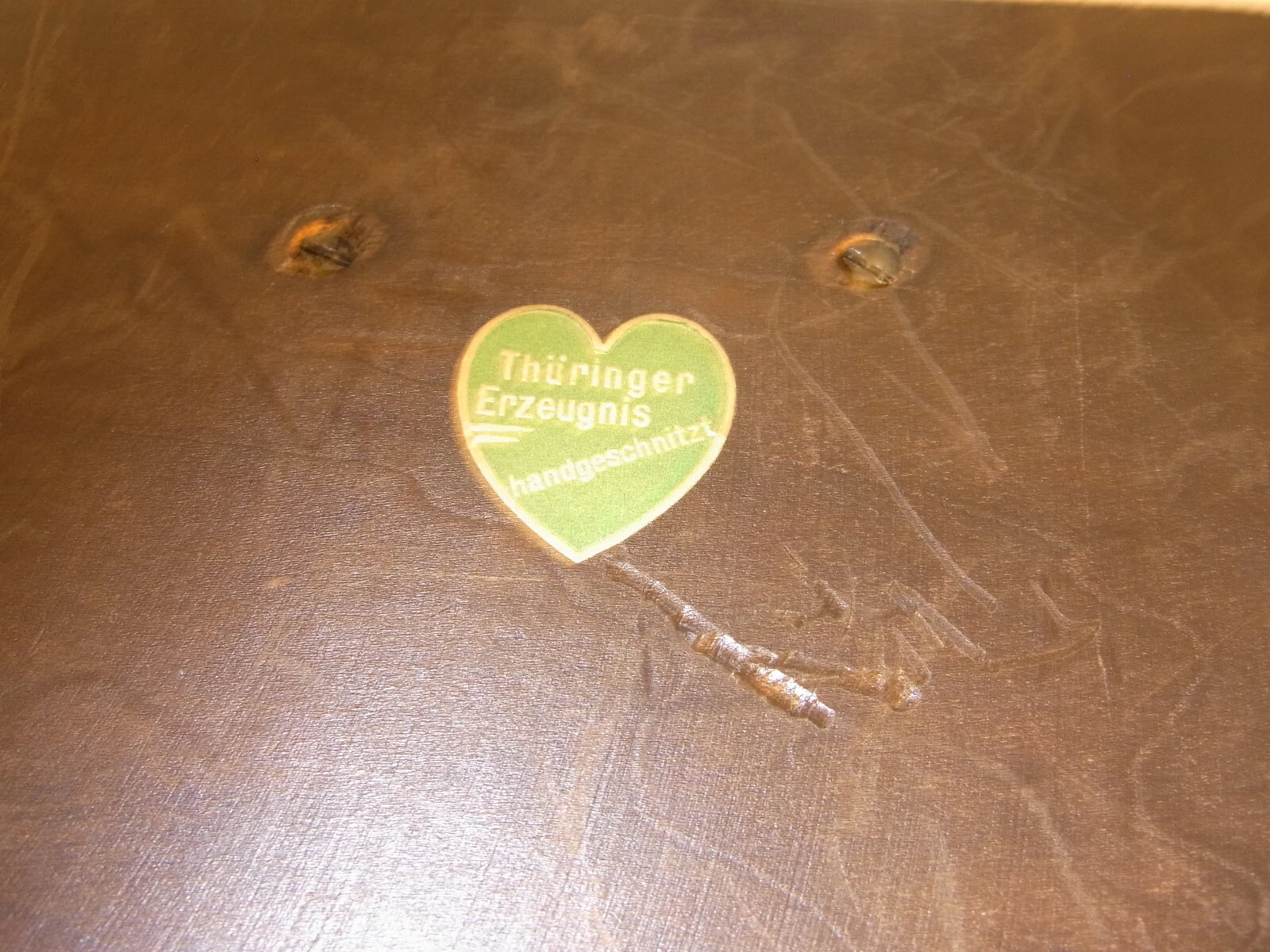
- The Base: The front features an integrated, sloping pen rest channel spanning the width of the stand. The underside rests on four small corner feet and bears a distinctive green heart-shaped foil sticker reading “Thüringer Erzeugnis / handgeschnitzt” (Thuringian Product / Hand-carved).
Estimated Date of Manufacture
This piece most likely dates from the mid-20th century (circa 1950s–1970s).
While Thuringia (in central Germany) has a long, rich history of traditional wood carving and folk art—particularly in regions like the Rhön Mountains—the specific green heart-shaped sticker style, typography, and export labeling point to the post-WWII era (frequently associated with production and folk-art cooperatives during the mid-to-late GDR / East German period).
Handmade vs. Machine-Made with Hand Detailing
Pieces like this typically involve a hybrid approach of machine roughing and hand finishing:
- The Blocking and Core Shaping: The primary rectangular blocks, base slabs, and the rough volumetric cuts of the inkwell cubes and blank wood stock were likely shaped, squared, and hollowed using woodworking machinery (such as saws, routers, or copying lathes) for efficiency and uniform sizing.
- The Detailing and Carving: The textured “stone” background patterning, the intricate gouge work rendering the dog’s fur, the shaping of its facial features, and the final fitting are executed by hand. Glass eyes and hardware are always set manually.
Therefore, it is best classified as a semi-handcrafted folk art or production piece—utilizing machinery for structural mass-cutting but relying heavily on skilled artisan hands for the sculptural carving, texturing, and assembly that give it its unique character.
Sold for $125 in September 2026
Content disclaimer. The information posted is the owner’s best knowledge and may not have been vetted by the SOIC. We welcome comments, corrections, and additions, working to make our website information comprehensive and accurate.
Join the Society of Inkwell Collectors (SOIC) – it’s free!
Founded in 1981 as a non-profit organization,
we are documenting inkwells (and accessories).
We’re here to help and inform!