

Inkipedia
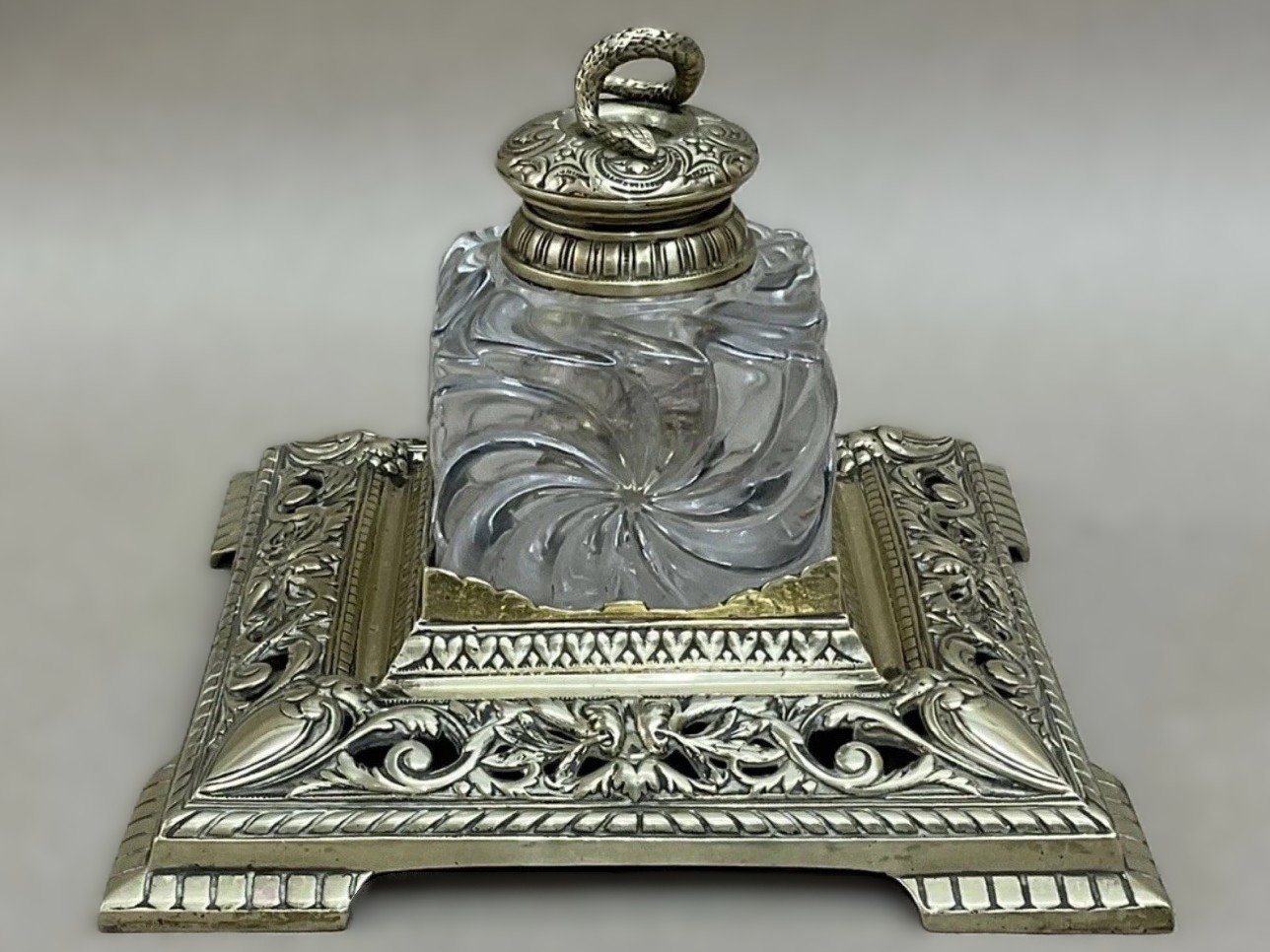
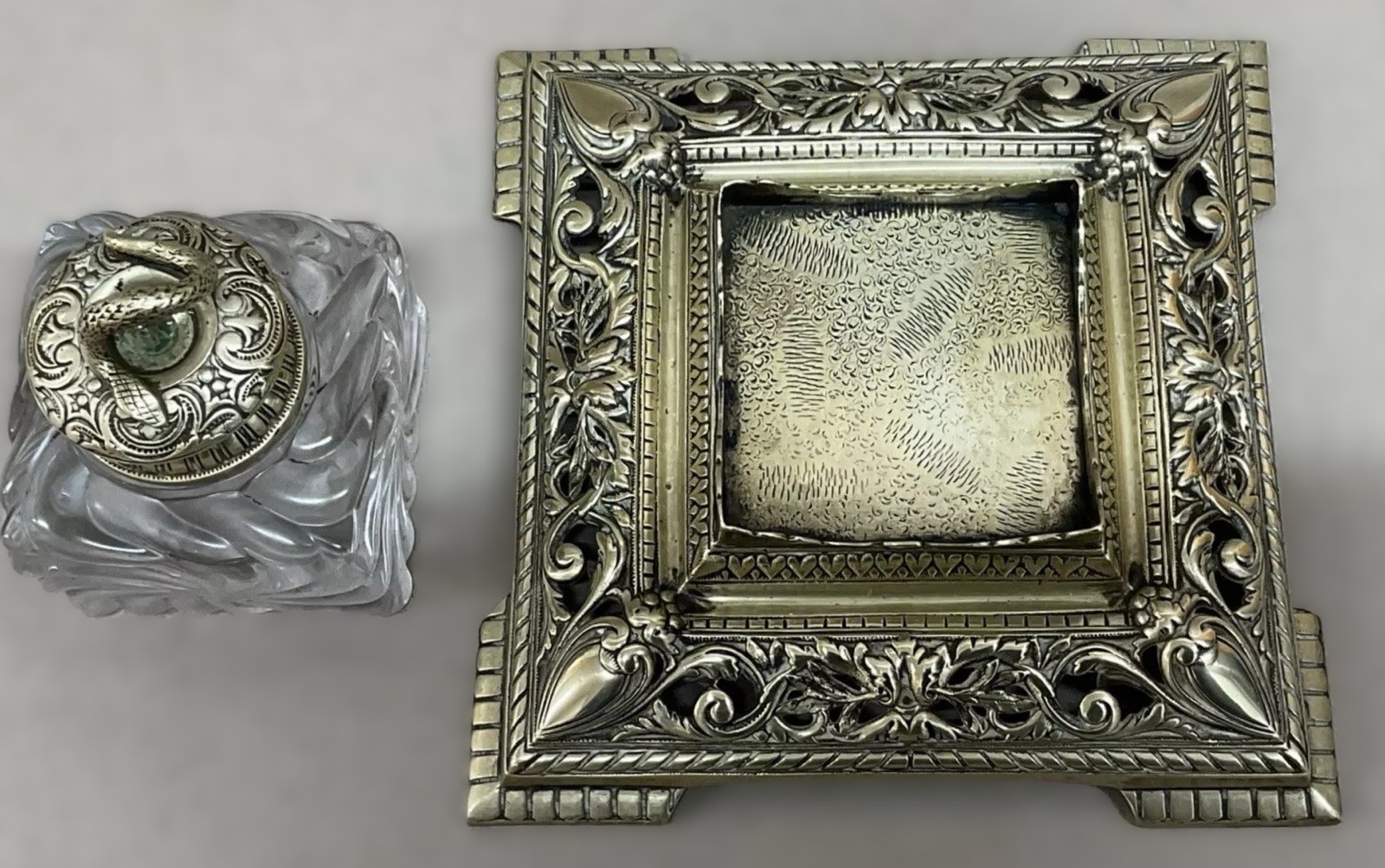
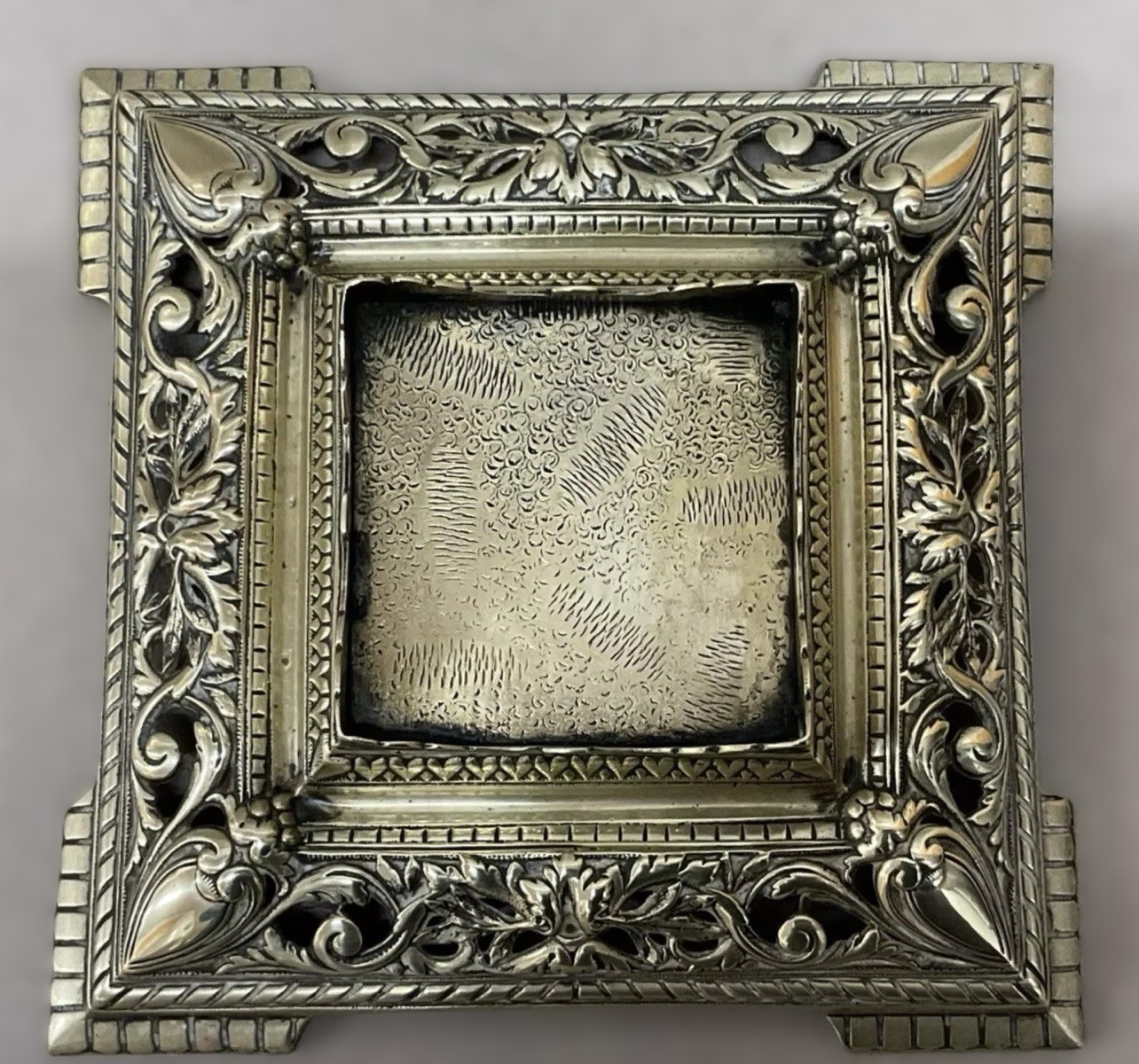
English Aesthetic Inkwell with Coiled Serpent Handle
| Categories | Figural - Animals & Living Creatures |
| Type | Snake / Serpent |
| Material | Brass, Glass |
| Markings | See Narrative |
| Manufacturer | Undetermined |
| Origin | England |
| Date or Era | circa 1870 |
| Measuring | 7 ½” x 7 ½” x 4 ¼” high |
Description
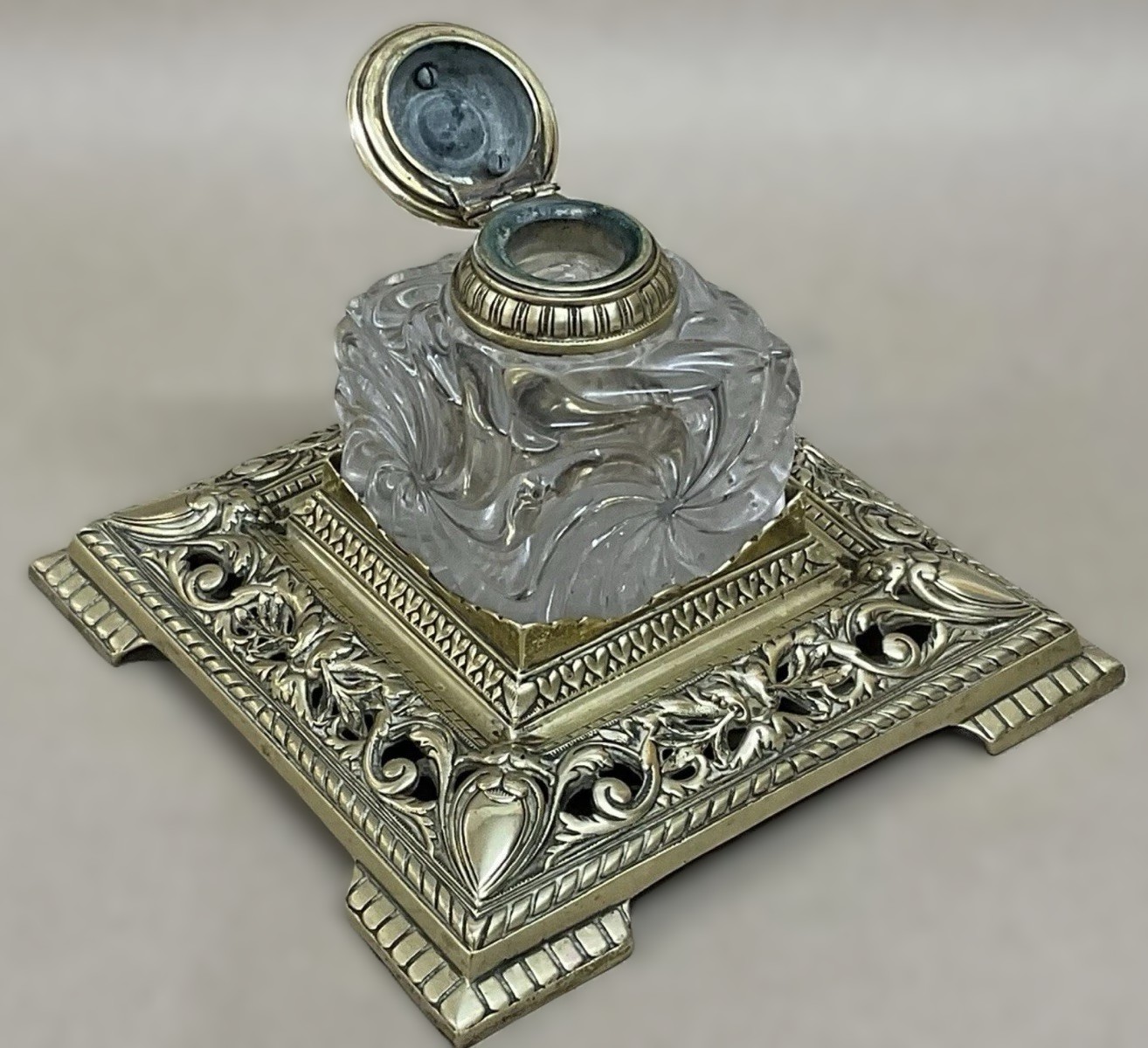
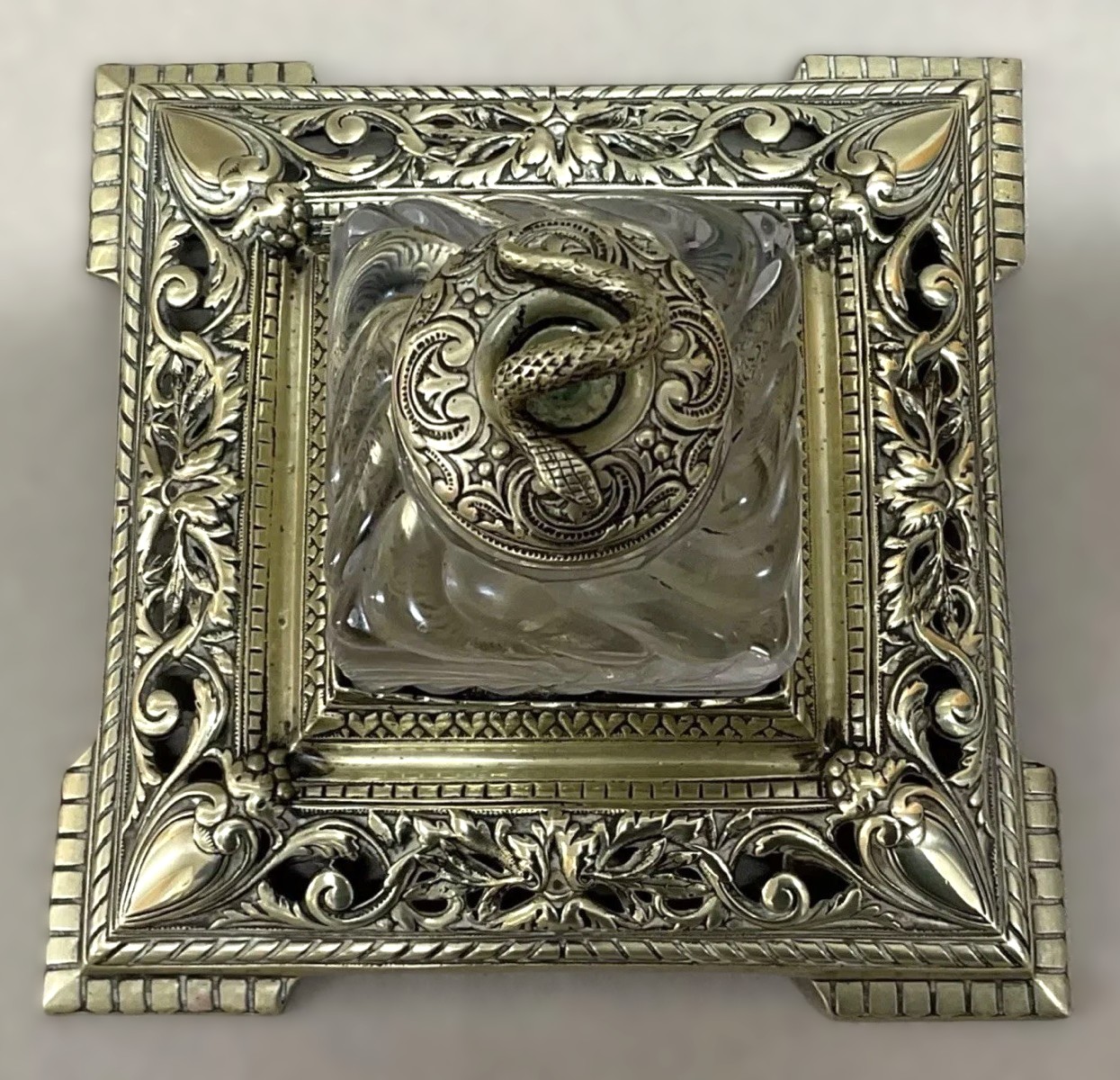
- The Stand / Base: A heavy, square cast-brass or ormolu-finished stand featuring ornate pierced openwork scrolling foliage, acanthus leaves, and corner cartouches. The corners flare outward into stepped bracket feet with reeded accents, and the perimeter features a delicate rope-twist or cable border. The recessed well in the center has a textured stippled ground designed to catch and anchor the ink bottle securely.
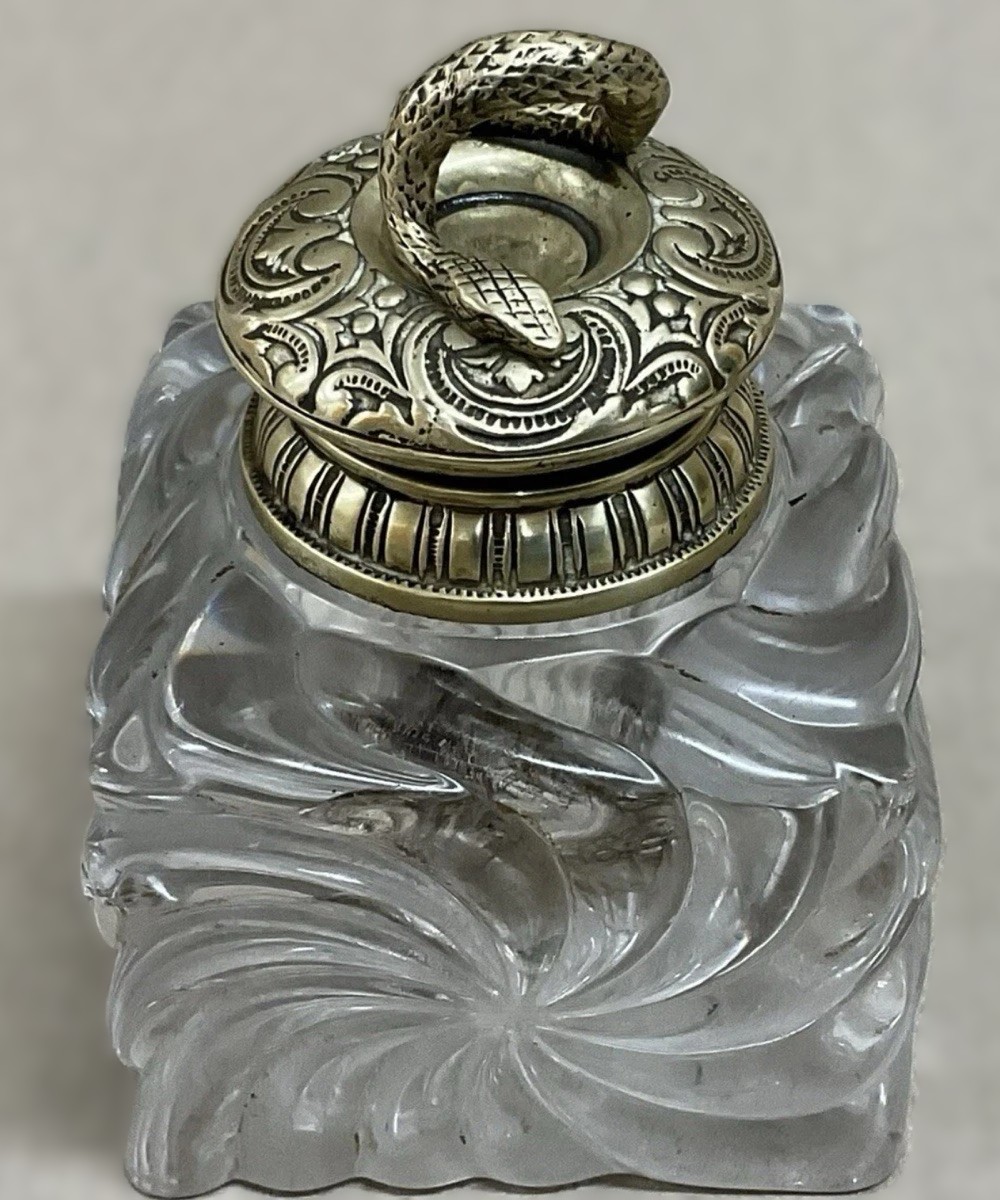
- The Inkwell & Insert: Housed within the frame is a thick, heavy-gauge clear cut-glass ink reservoir featuring a distinct spiral-fluted (or optic-swirl) pattern that radiates from the base and sides, creating a dynamic play of light.
- The Lid & Finial: The domed brass collar and hinged lid are richly embossed with symmetrical Rococo-revival scrollwork and floral tooling. Crowning the lid is a striking, coiling serpent-shaped finial that serves as the thumb-lift or handle to open the inkwell.
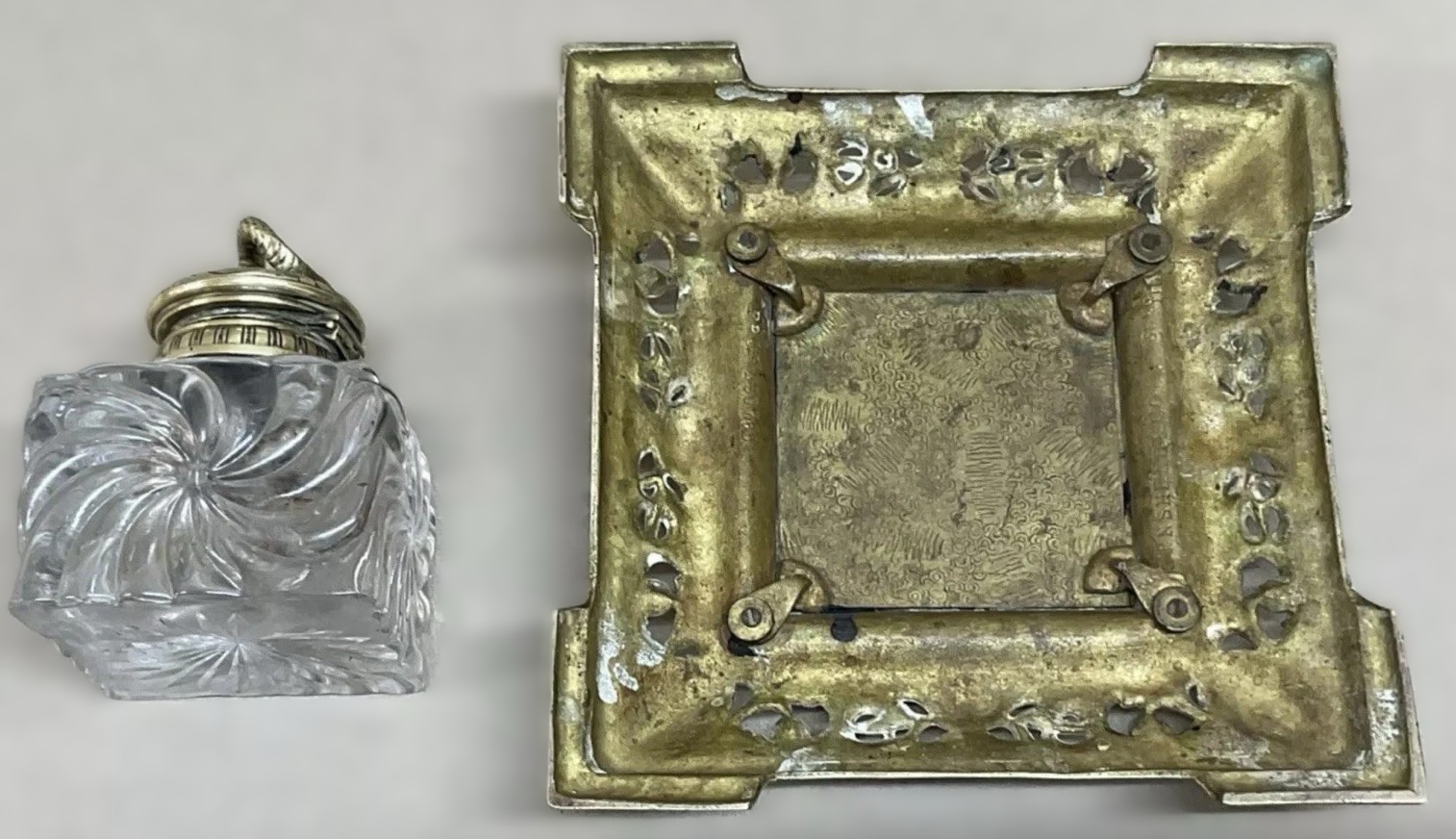
- Information on the UndersideThe metal framework reveals structural corner braces fastened with screws, alongside a stamped registration number. The visible lettering typically found on hardware components of this type points to a mid-to-late 19th-century registry or foundry mark, reflecting standard British manufacturing practices of the period. While the individual digits of the specific design registration number are partially obscured or worn along the casting bar, markings of this exact style indicate a British-registered design from the Victorian era.
- Period & Date: The inkstand dates from the mid-to-late Victorian era, specifically circa 1860–1880. The combination of heavy cast brass, Rococo scroll motifs, and organic serpent and floral symbolism was exceptionally popular during the Height of the Victorian period and the subsequent Aesthetic Movement.
- The Aesthetic Movement – a prominent late 19th-century art and design movement that championed the doctrine of “art for art’s sake.” Originating in Britain during the 1860s and peaking through the 1870s and 1880s, it marked a sharp rebellion against the heavily moralizing, highly ornate, and industrialized design standards of the mid-Victorian era. Aestheticism argued that art’s primary value lay solely in its beauty. Proponents believed that beauty had intrinsic worth and that objects, interiors, and literature should be appreciated for their sensory and formal qualities (color, line, harmony, and composition) rather than what they taught or represented.
Sold for $160 in September 2026
Content disclaimer. The information posted is the owner’s best knowledge and may not have been vetted by the SOIC. We welcome comments, corrections, and additions, working to make our website information comprehensive and accurate.
Join the Society of Inkwell Collectors (SOIC) – it’s free!
Founded in 1981 as a non-profit organization,
we are documenting inkwells (and accessories).
We’re here to help and inform!