

Charles W. Livermore’s Stylographic Pen Company Ink Bottle
| Categories | Ink Bottle |
| Material | Glass |
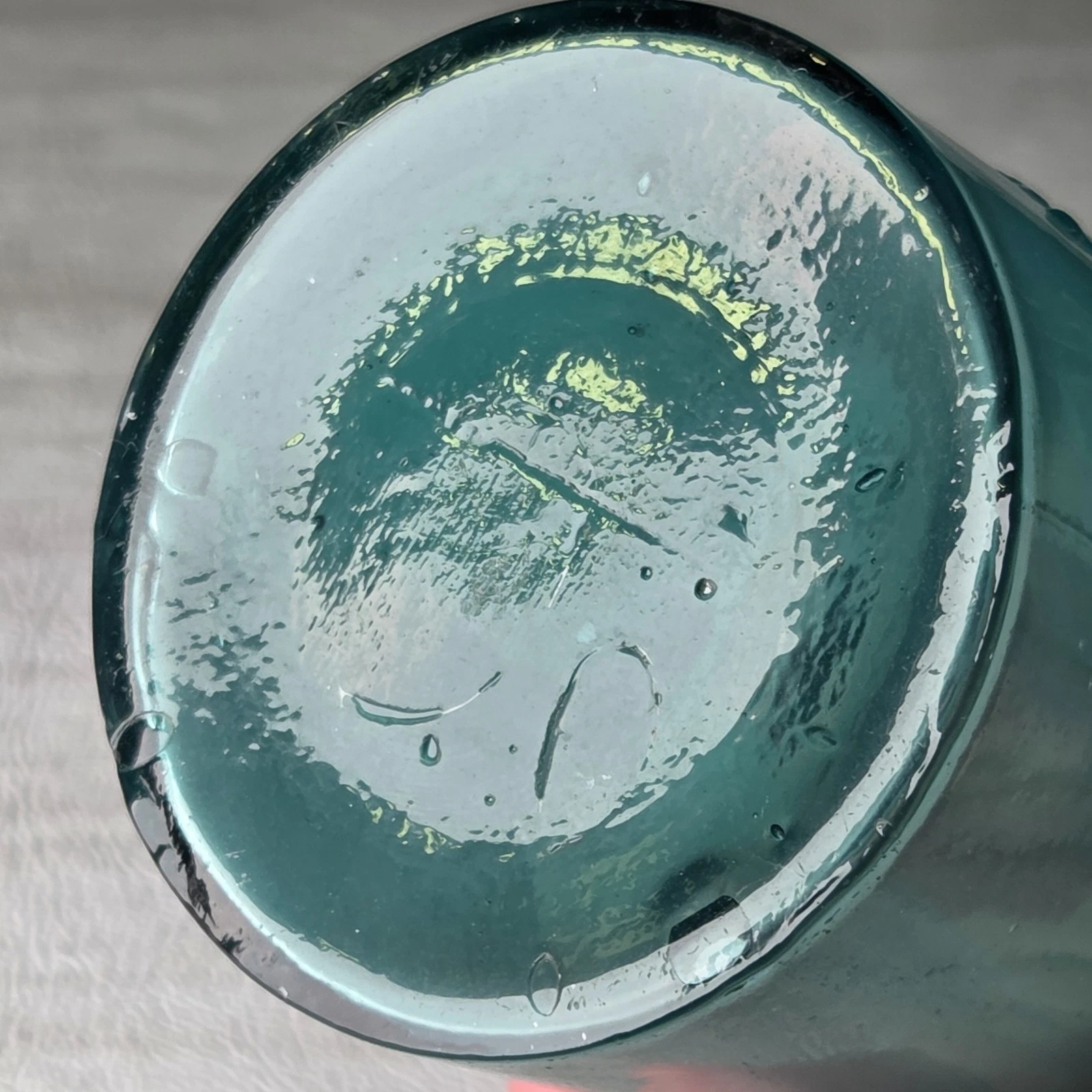
| Markings | See Narrative |
| Origin | United States |
| Date or Era | circa 1887 |
| Measuring | 2 ¼” diameter; 2 ⅞” high |
Charles W. Livermore’s Stylographic Pen Company Ink Bottle
Estimated Date: Circa 1886–1888 (Circa 1887)
Overview & Physical Characteristics
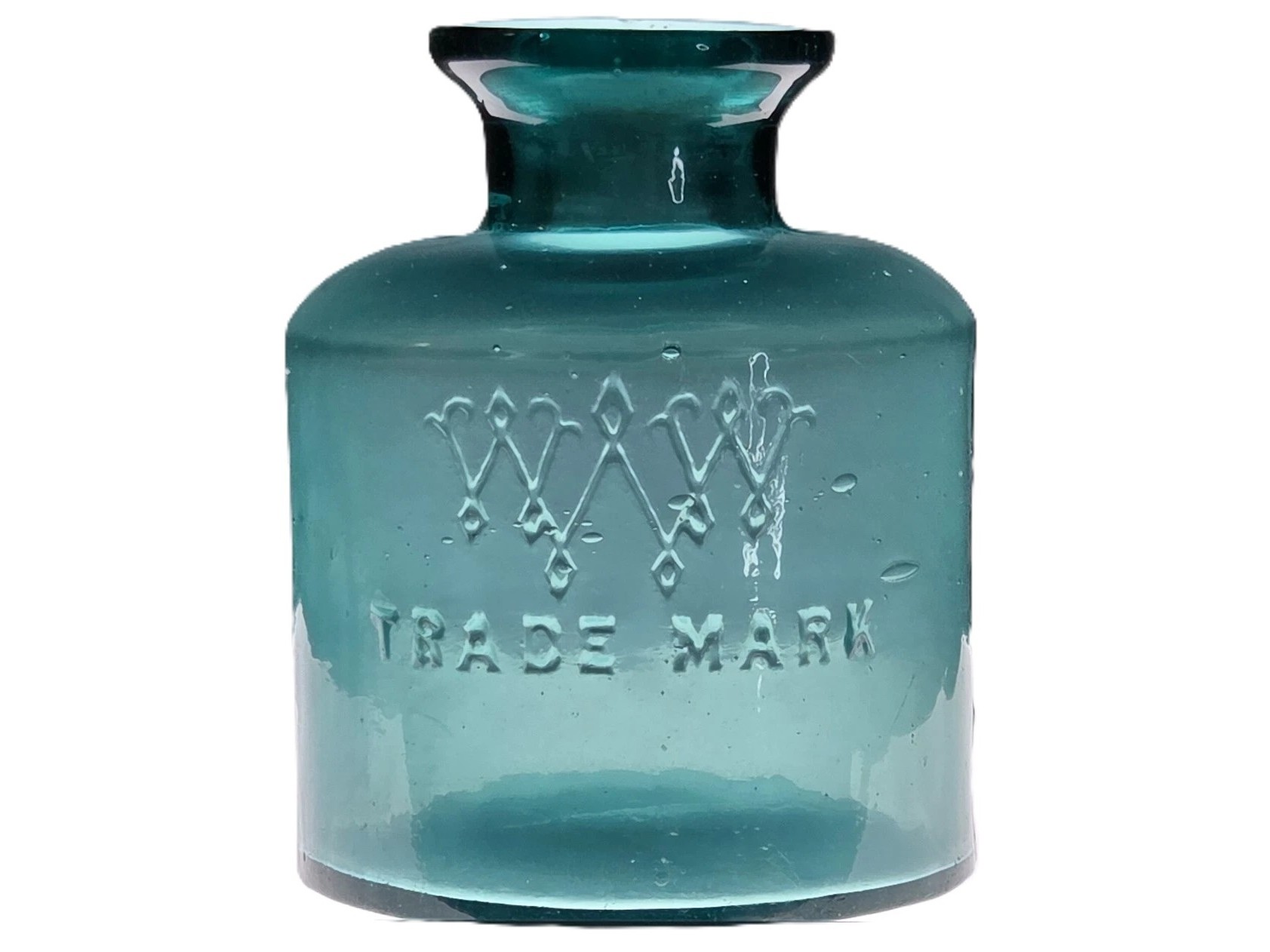
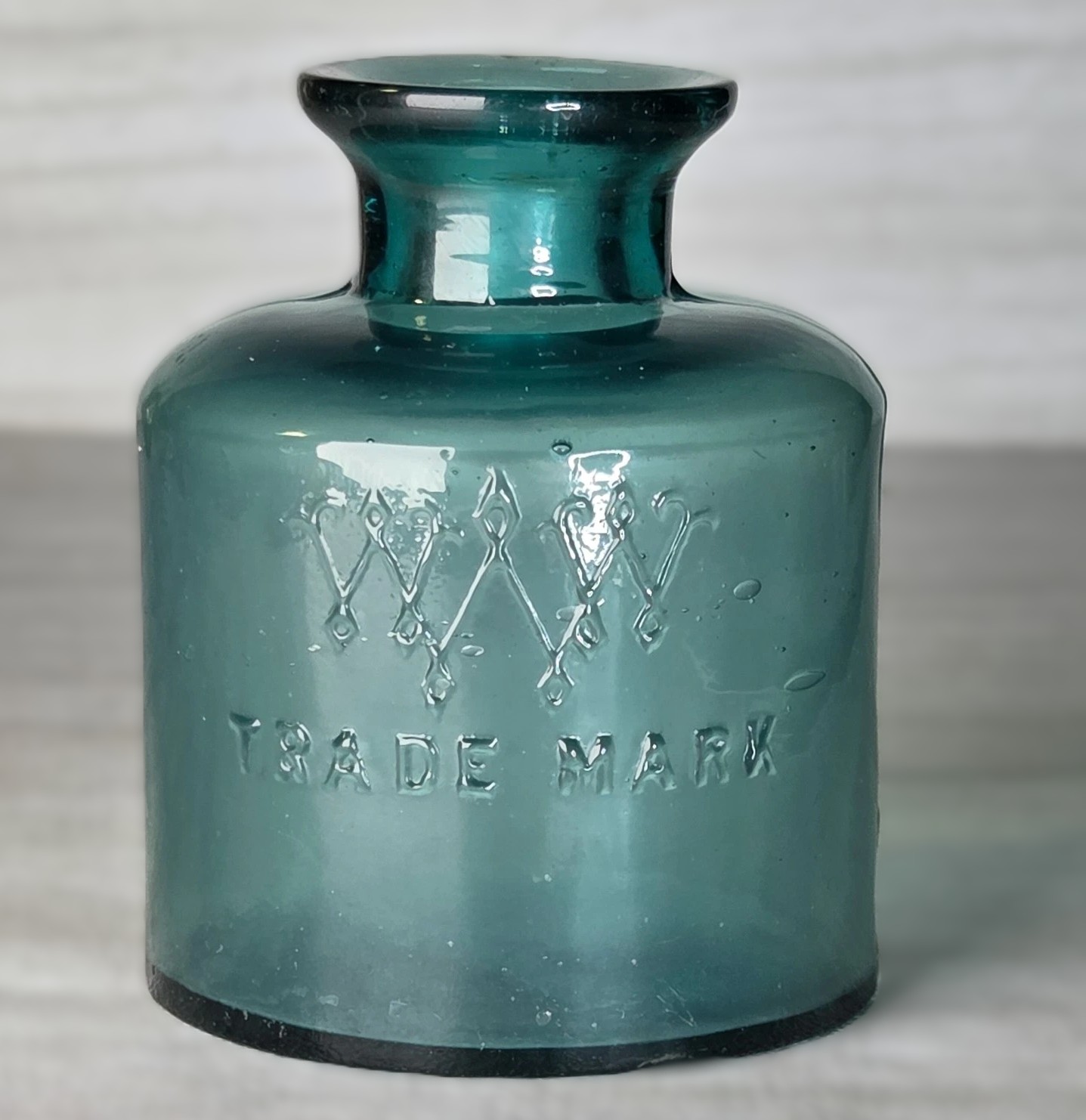
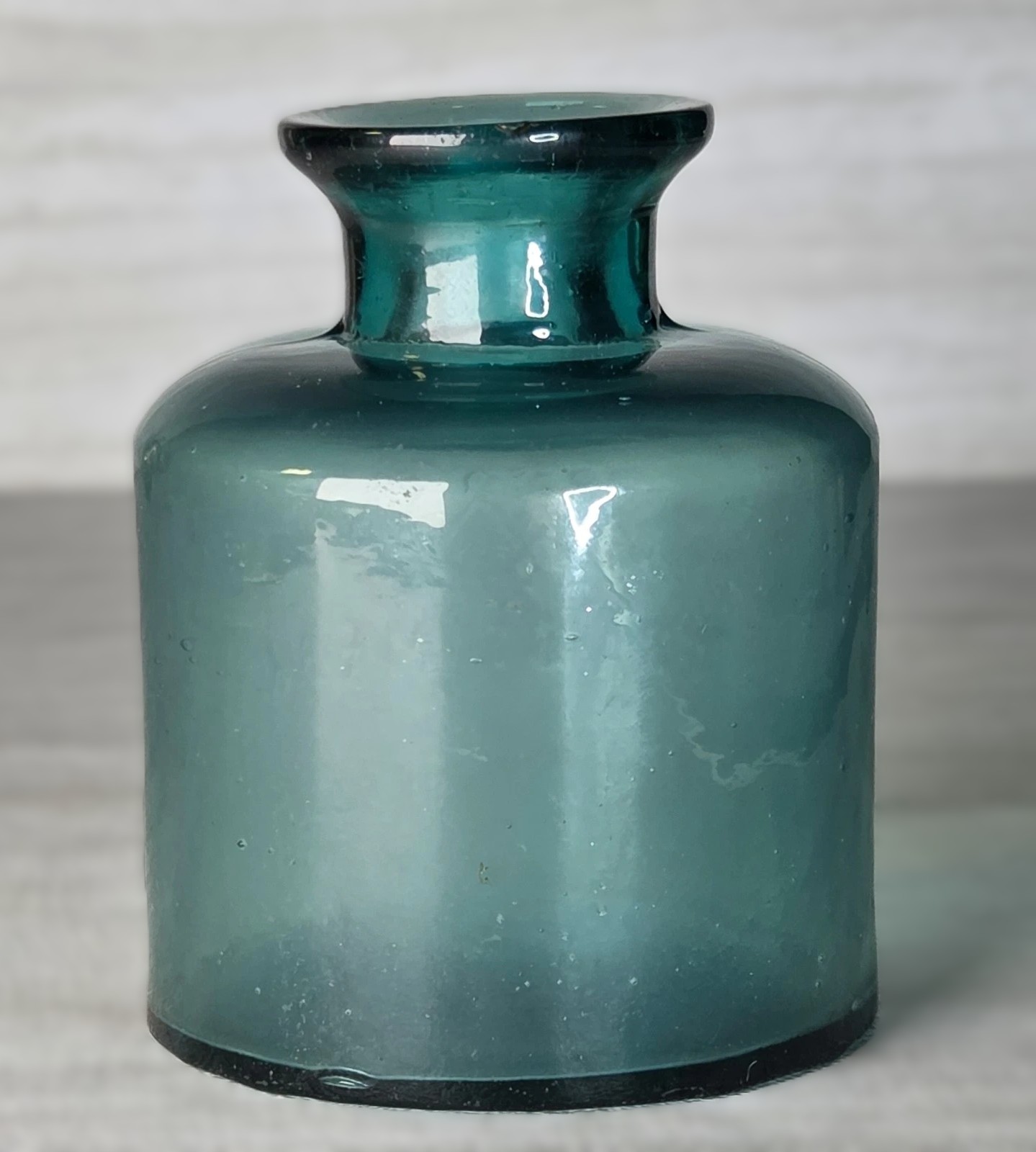
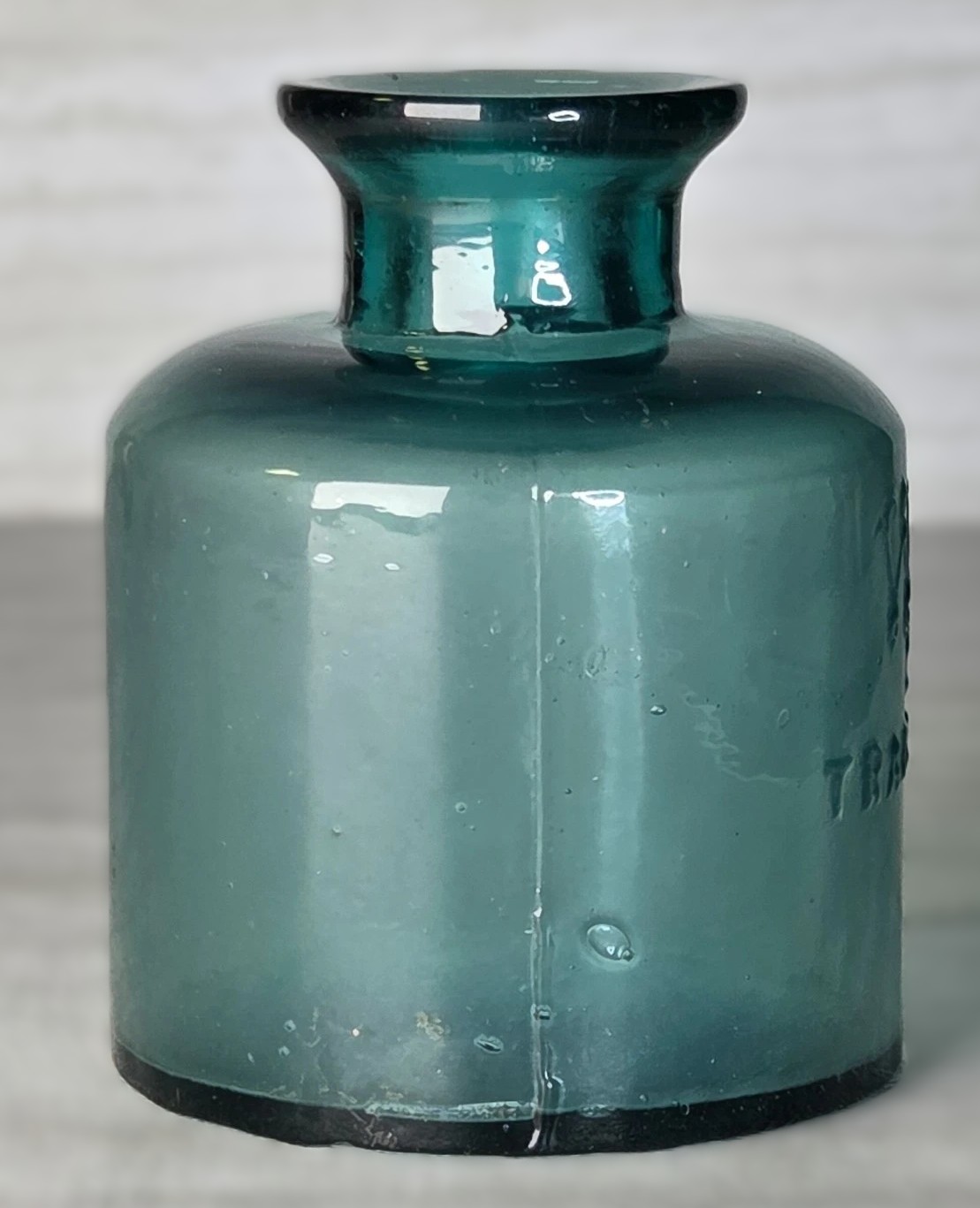
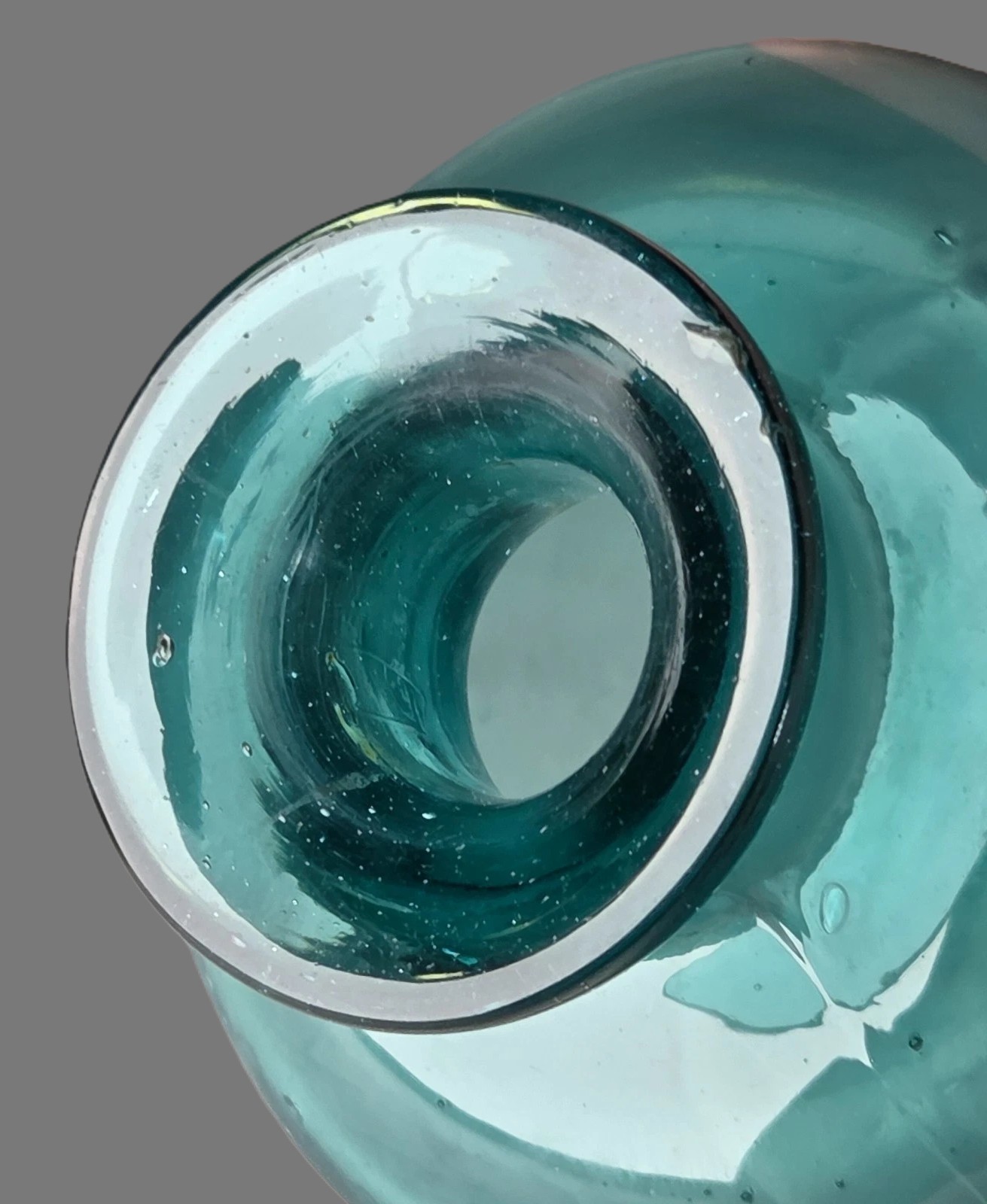
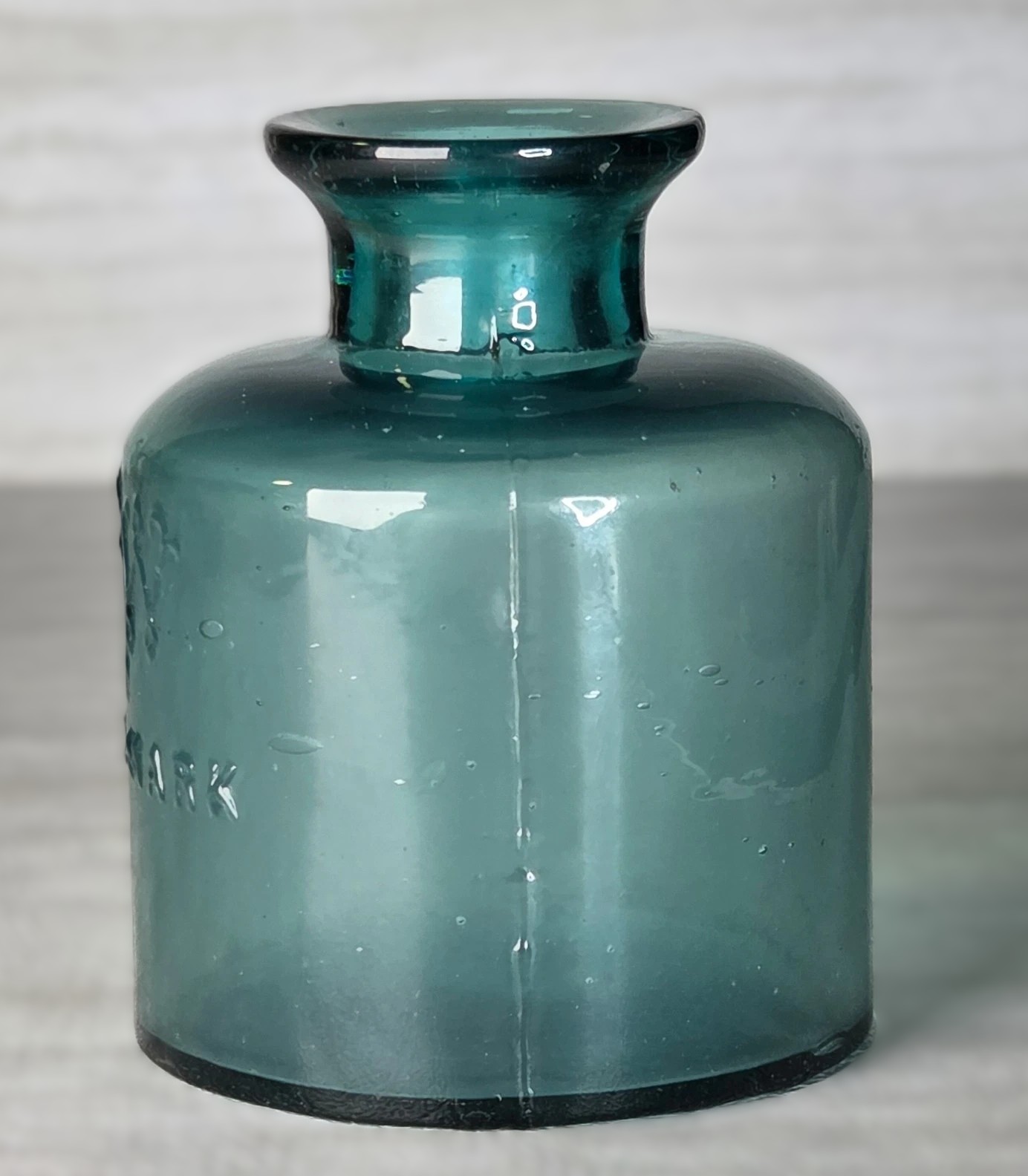
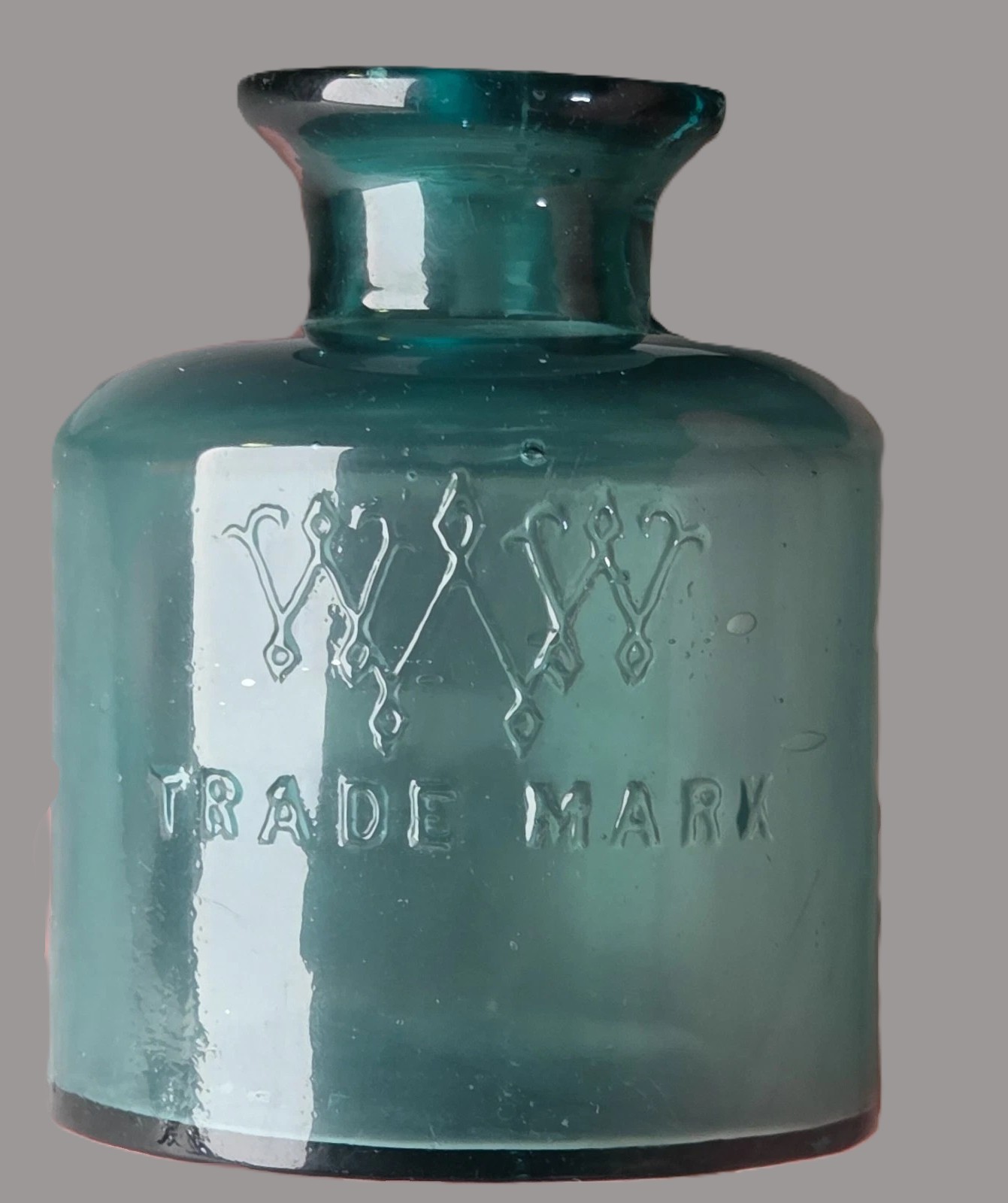
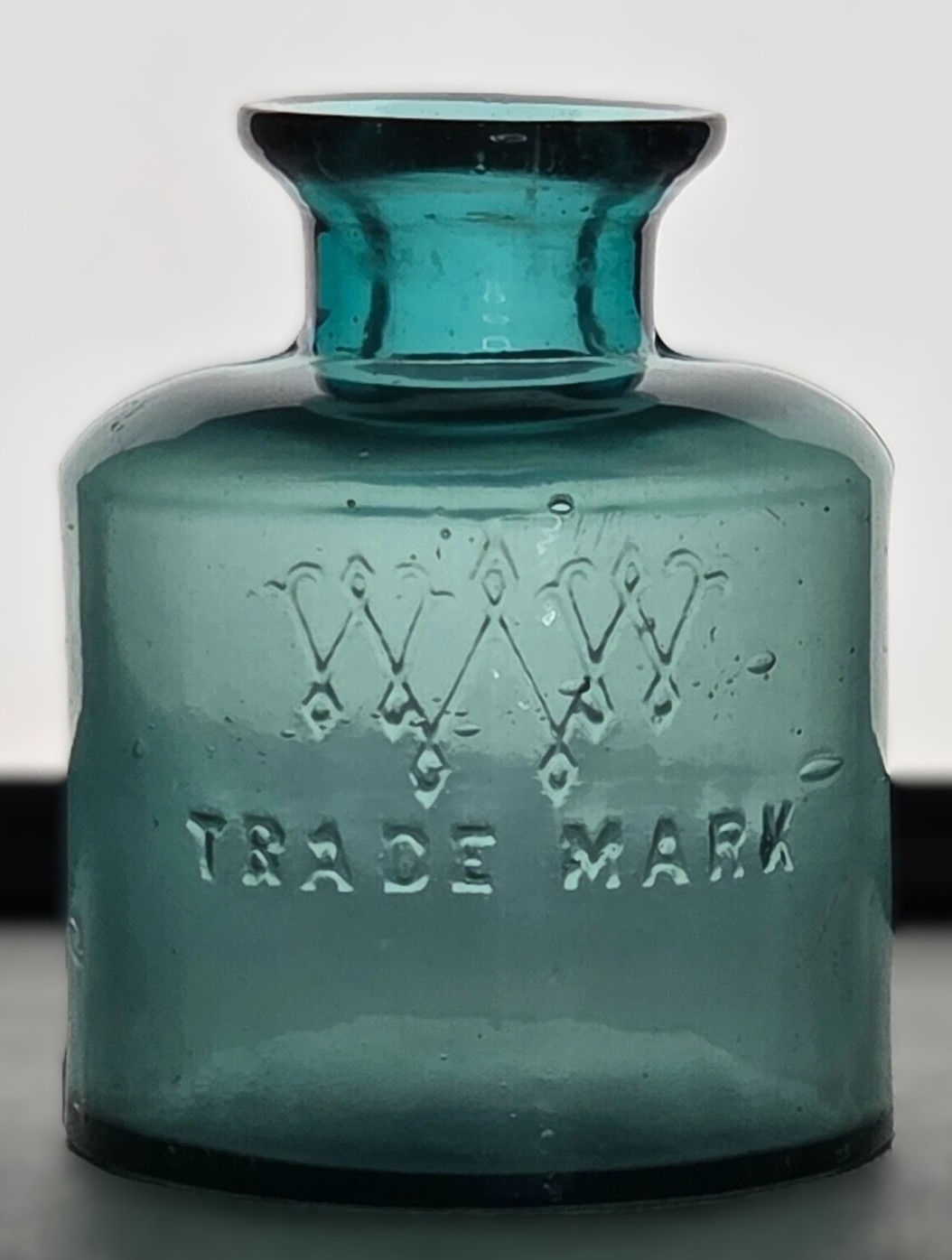
- Color & Glass: Blown in a rich aqua blue glass, featuring numerous tiny seed bubbles, surface waviness, and an irregular texture entirely consistent with late-19th-century American commercial glassmaking.
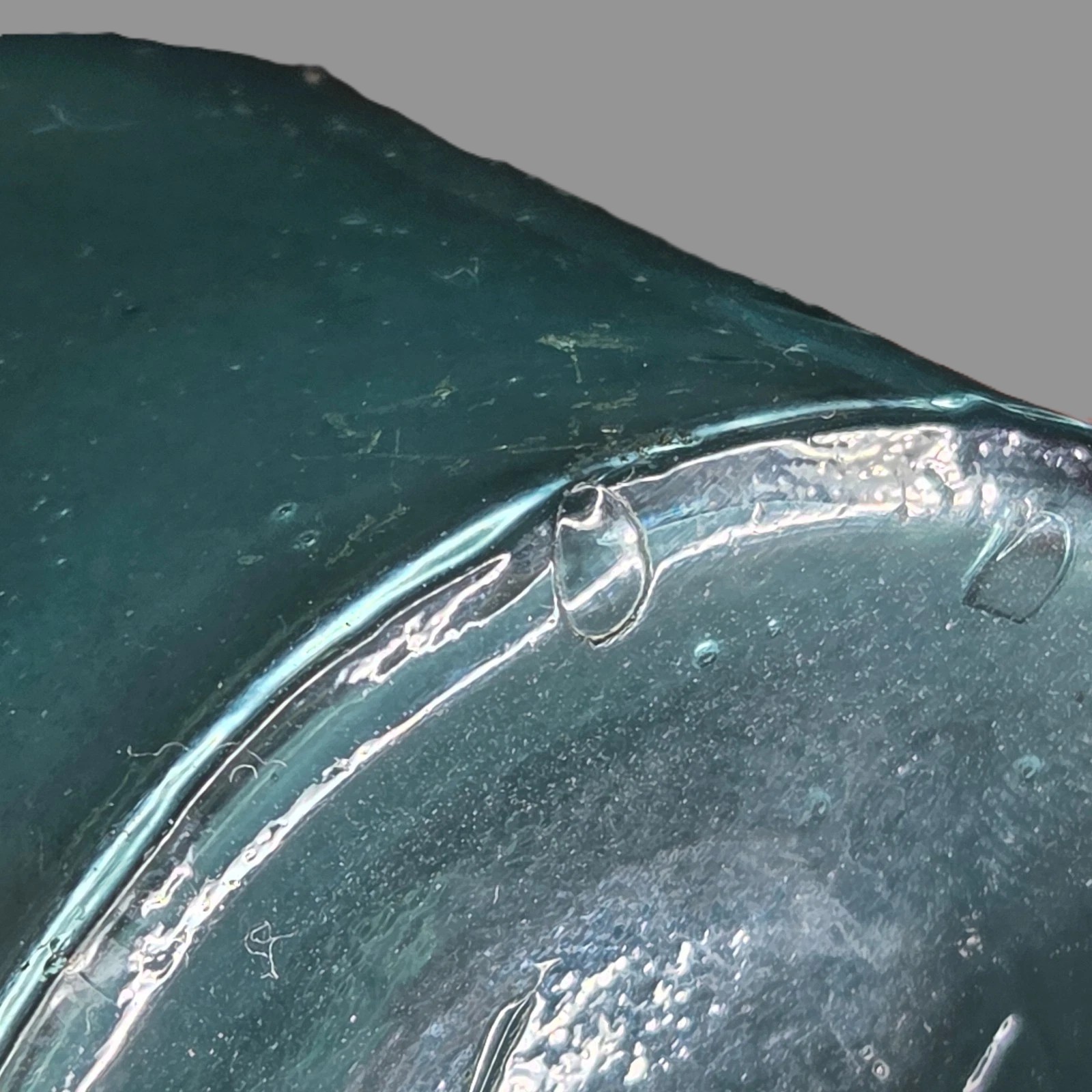
- Construction: Mold-blown with visible side mold seams running up the body, paired with a smooth base and a hand-tooled, thick flared mouth.
- Embossing: The front panel prominently displays an ornate Victorian monogram above the words TRADE MARK. While initially resembling two interlaced Ws, examination of documented surviving examples confirms the monogram correctly reads WWW.
Historical Background: Charles W. Livermore
Charles W. Livermore was much more than a stationer putting his name on commercial ink; he was an inventive manufacturer and a key contributor to the earliest successful development of the American reservoir pen.
- The Stylographic Pen: Livermore’s company manufactured stylographic pens—an early precursor to modern fountain pens that delivered writing fluid through a hollow tubular point regulated by a fine internal wire.
- Accolades & Reach: Livermore received a Medal of Excellence from the American Institute in 1879. By the early 1880s, his enterprise was selling pens extensively both domestically and internationally, supported by agencies or branches in New York, Boston, Chicago, and London.
- Providence Operations: Despite international sales, the firm’s manufacturing center remained in Providence, Rhode Island. City directories for 1886 and 1887 list the Charles W. Livermore Stylographic Pen Company at 44 Arnold Street, operating out of a four-story brick building near the corner of Arnold and Brook Streets (though Livermore himself passed away in Warwick, Rhode Island, in 1889).
Purpose & Significance
- Contents & Design: The squat, broad body of the bottle provided exceptional stability on a writing desk. Its tall central neck and wide, flared mouth were specifically designed to allow users to easily dip or fill their pens while helping to control excess ink.
- Technological Context: Representing a transitional era in writing history, these bottles supplied specialized ink for stylographic pens before traditional nibbed fountain pens came to dominate the market.
- Rarity: Surviving labeled examples establish the definite link between the “WWW” trademark and Livermore’s Providence company. Specialized Rhode Island bottle research notes that these bottles exist in multiple sizes, with the smallest version being particularly elusive and sought-after by collectors.
Sold for $51 in September 2026
Content disclaimer. The information posted is the owner’s best knowledge and may not have been vetted by the SOIC. We welcome comments, corrections, and additions, working to make our website information comprehensive and accurate.
Join the Society of Inkwell Collectors (SOIC) – it’s free!
Founded in 1981 as a non-profit organization,
we are documenting inkwells (and accessories).
We’re here to help and inform!