

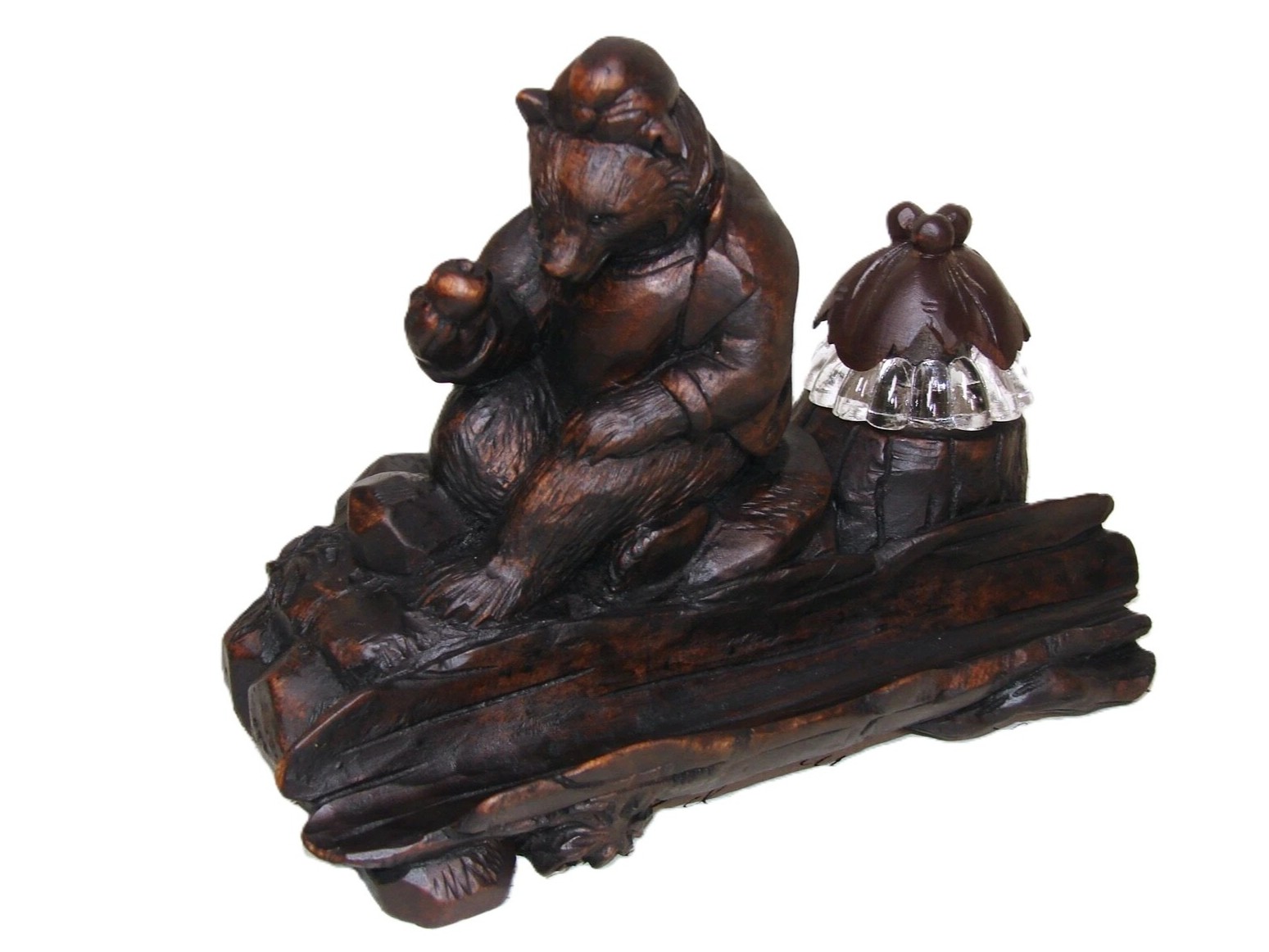
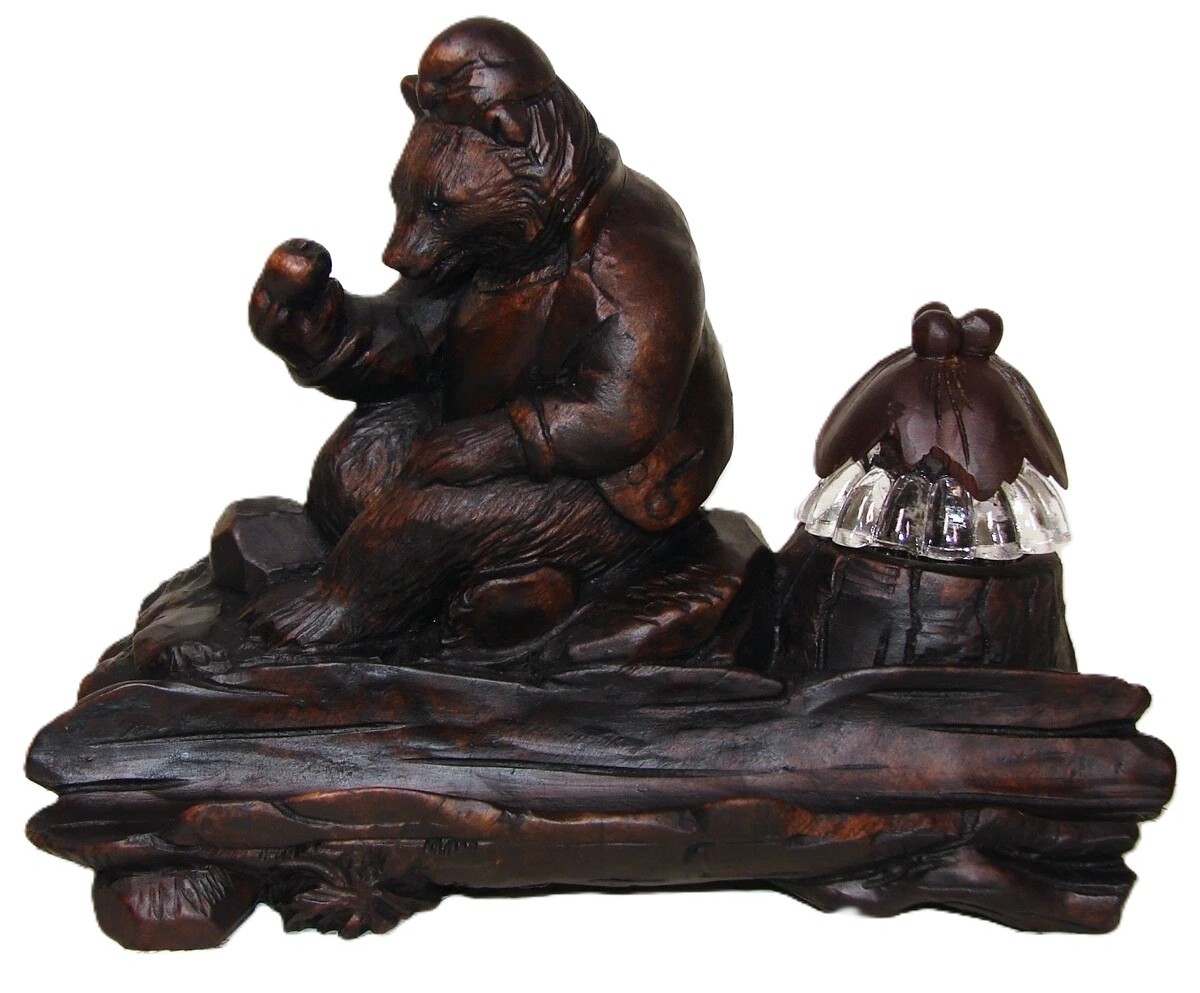
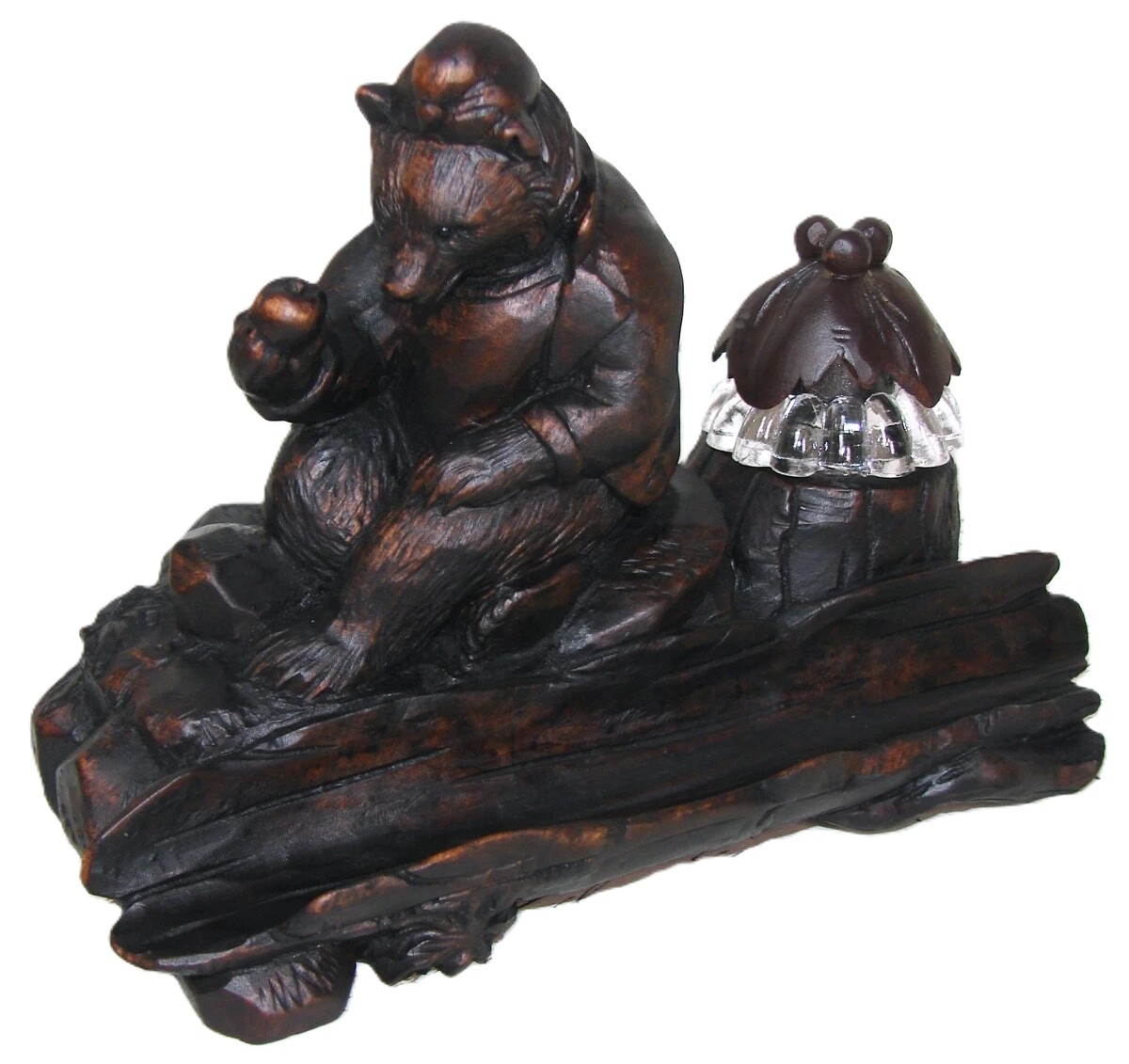
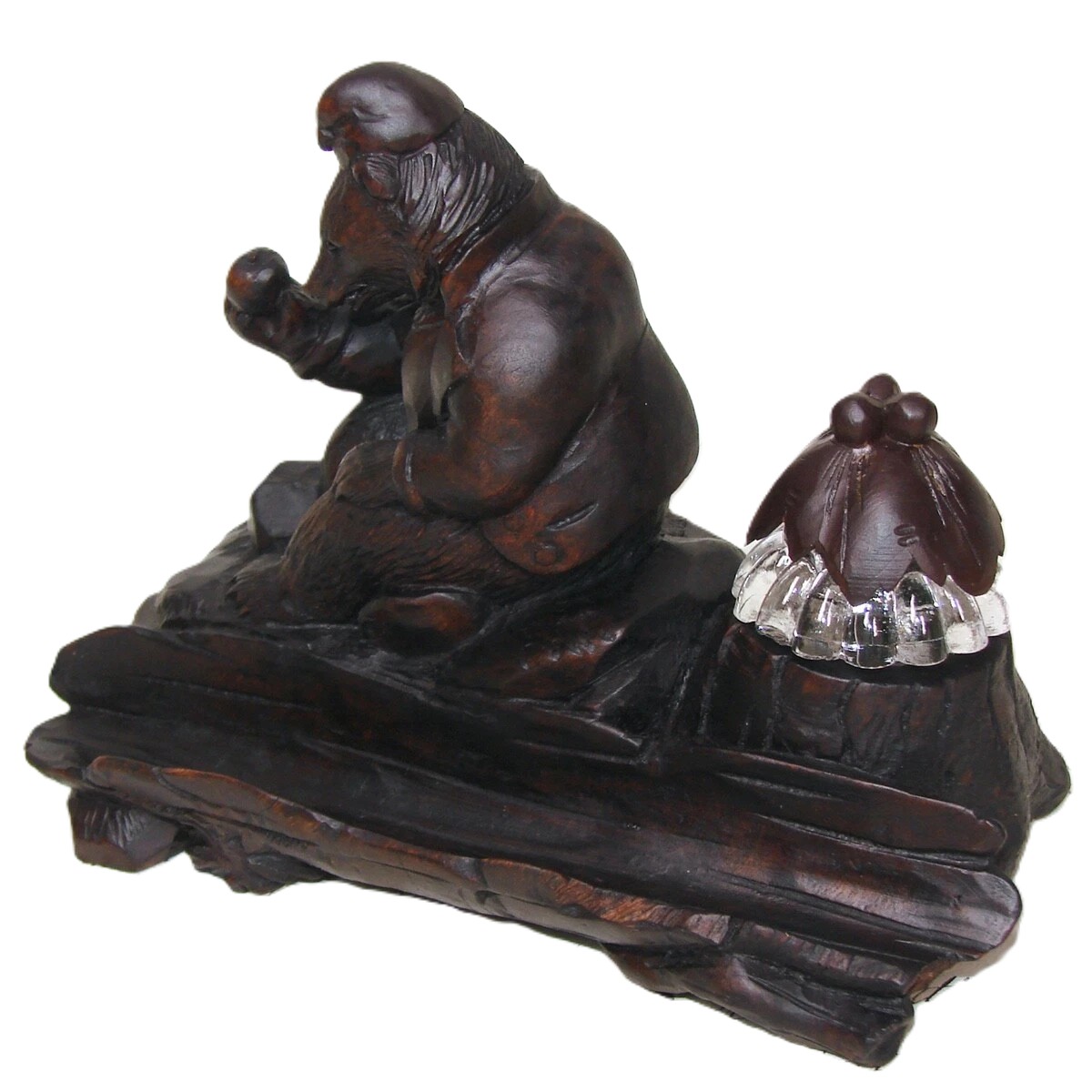
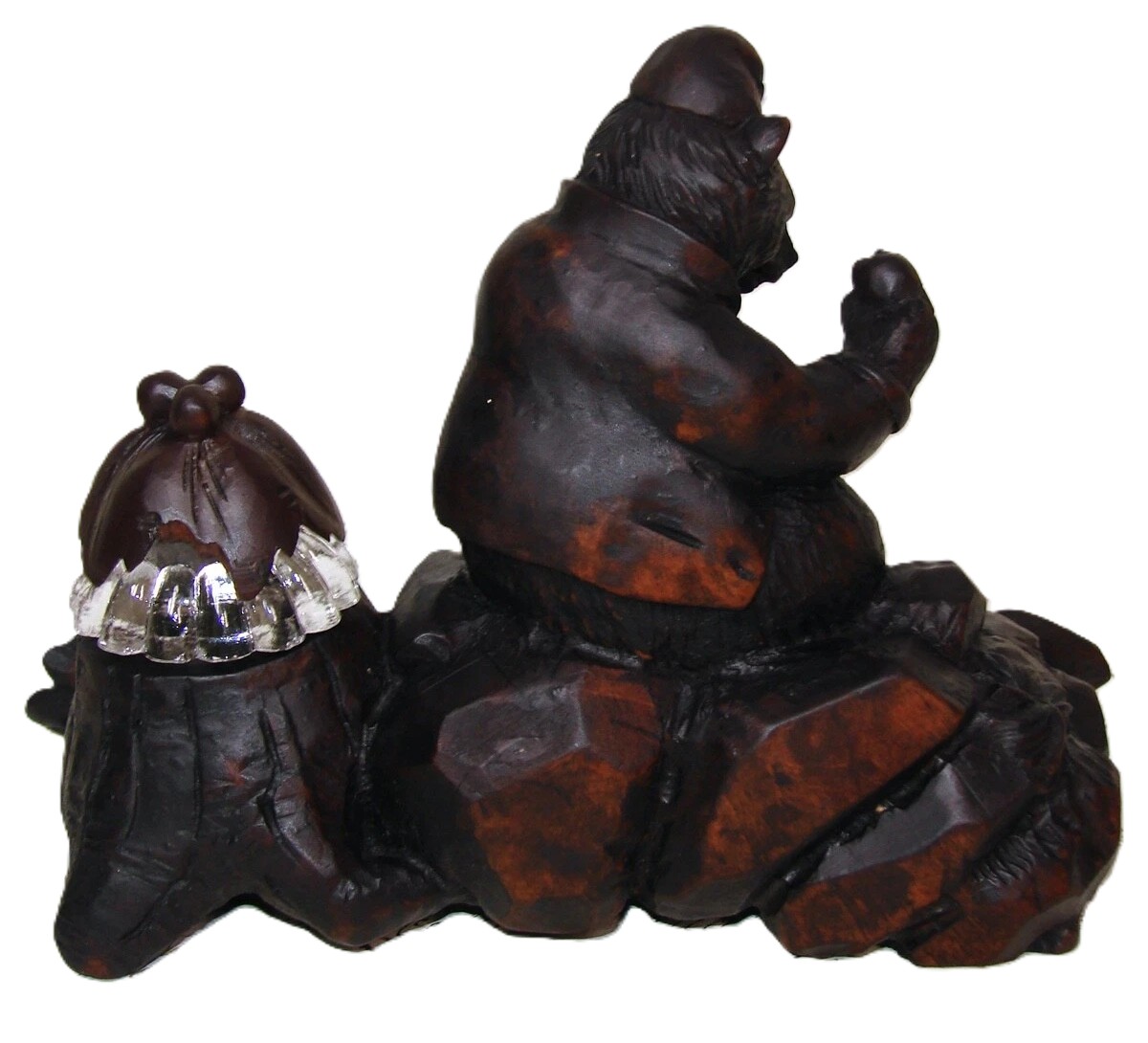
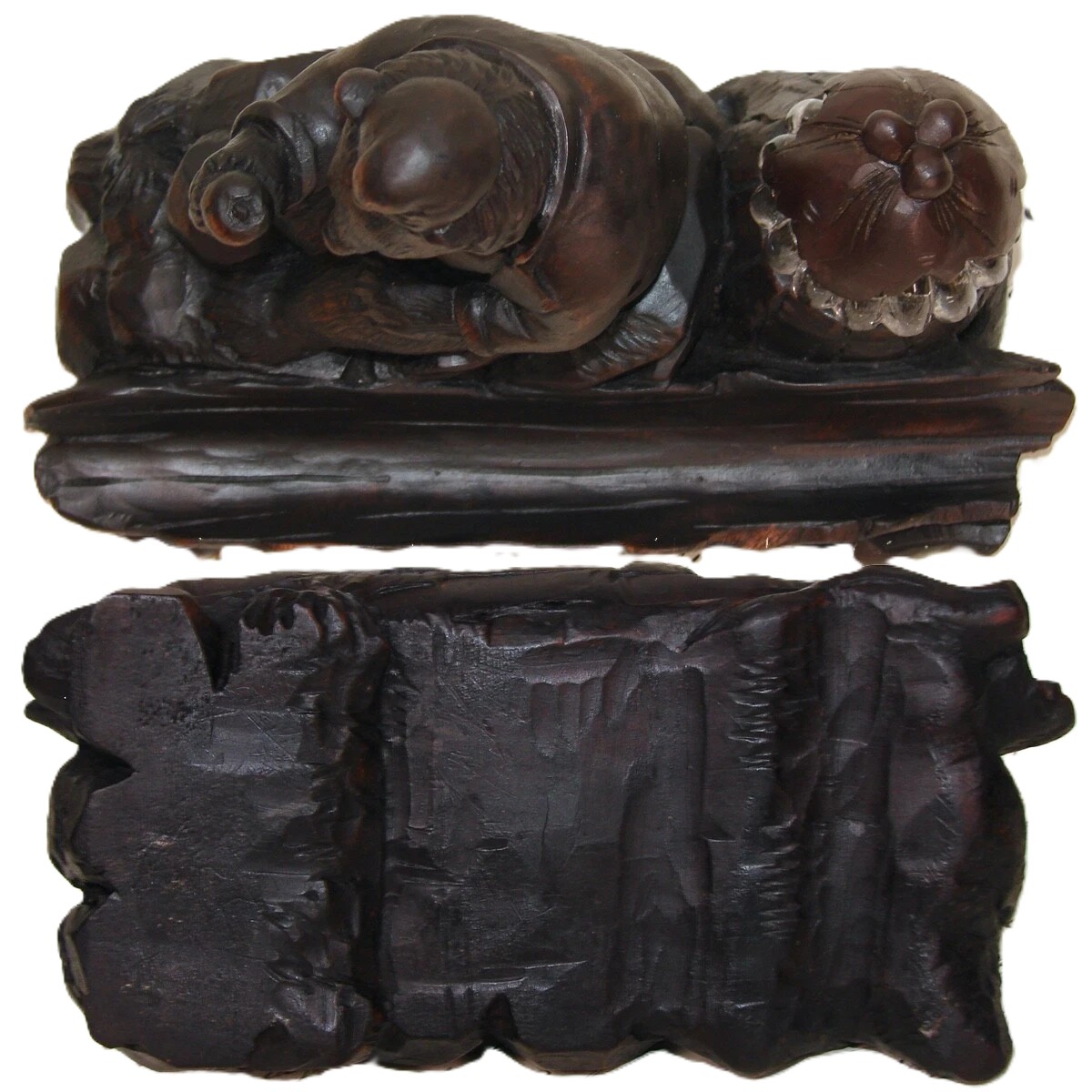
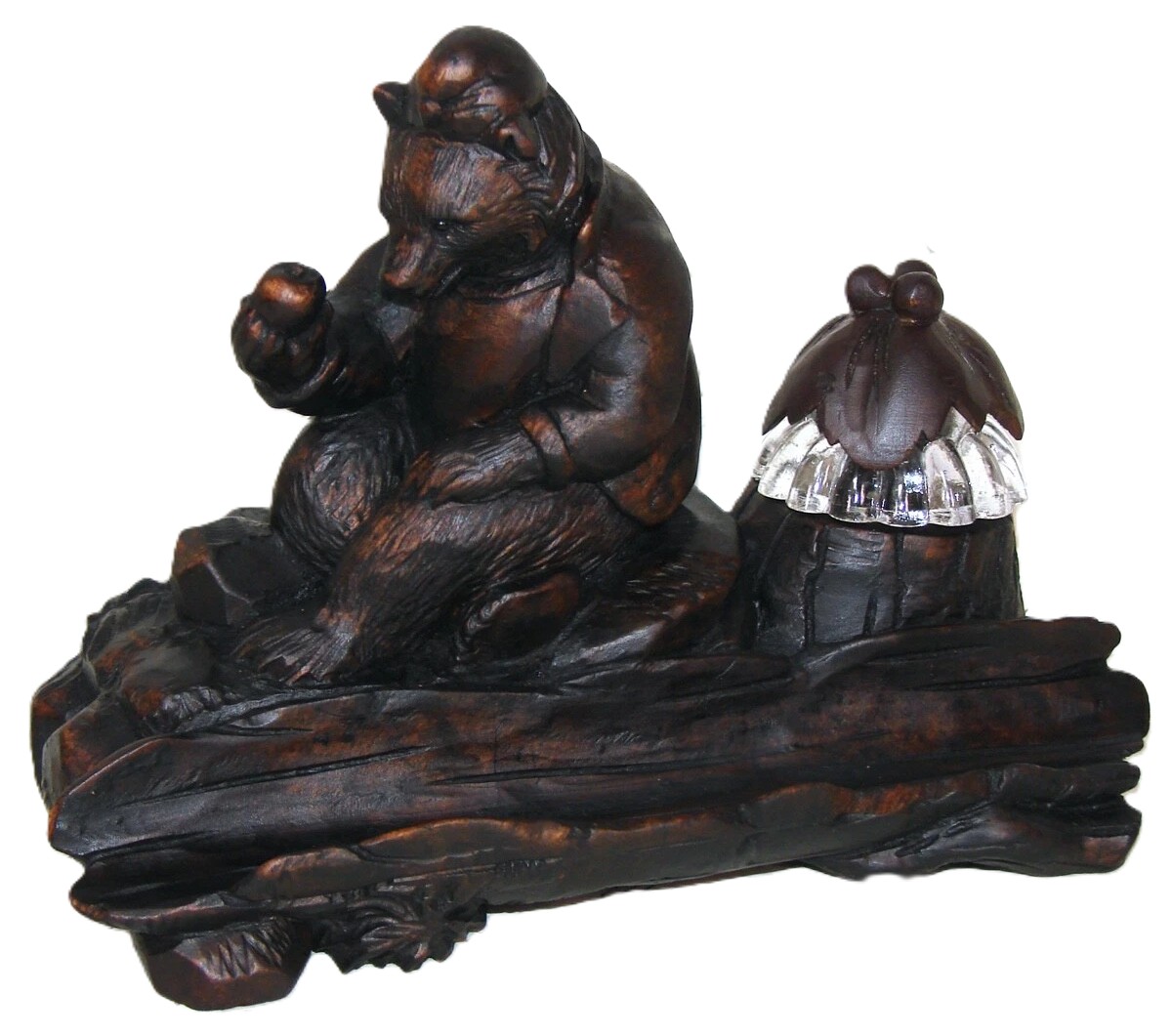
Swiss Black Forest Bear Inkstand
| Categories | Figural - Animals & Living Creatures |
| Type | Bear |
| Material | Wood |
| Markings | Unmarked |
| Manufacturer | Black Forest |
| Origin | Switzerland |
| Date or Era | circa 1880 |
| Measuring | 7” x 3 ¼” x 5” high |
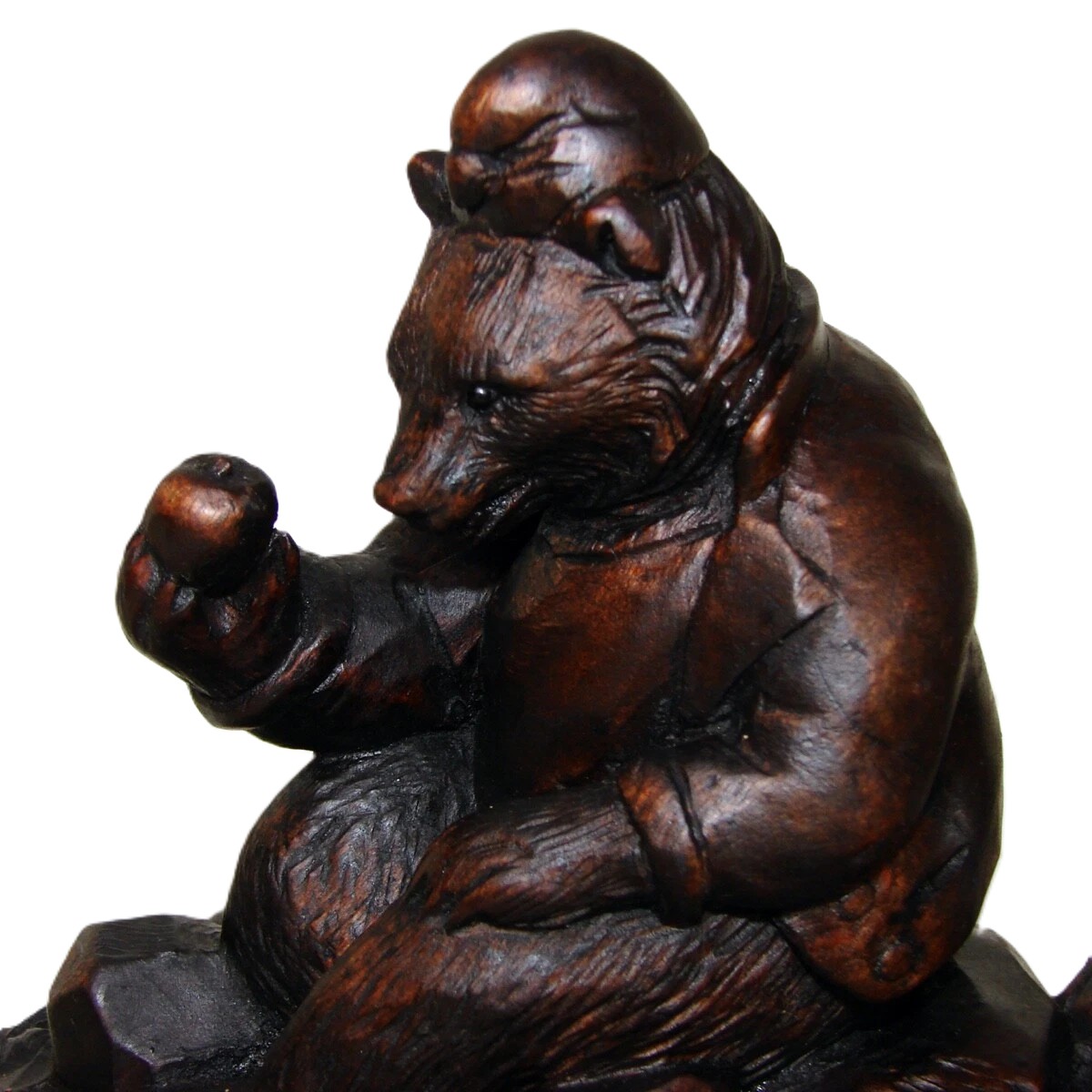
This Swiss Black Forest inkstand is a wonderful example of the whimsical animal carvings produced in the Alpine region—specifically the Brienz carving tradition—during the height of the Black Forest wood-carving boom.
Description
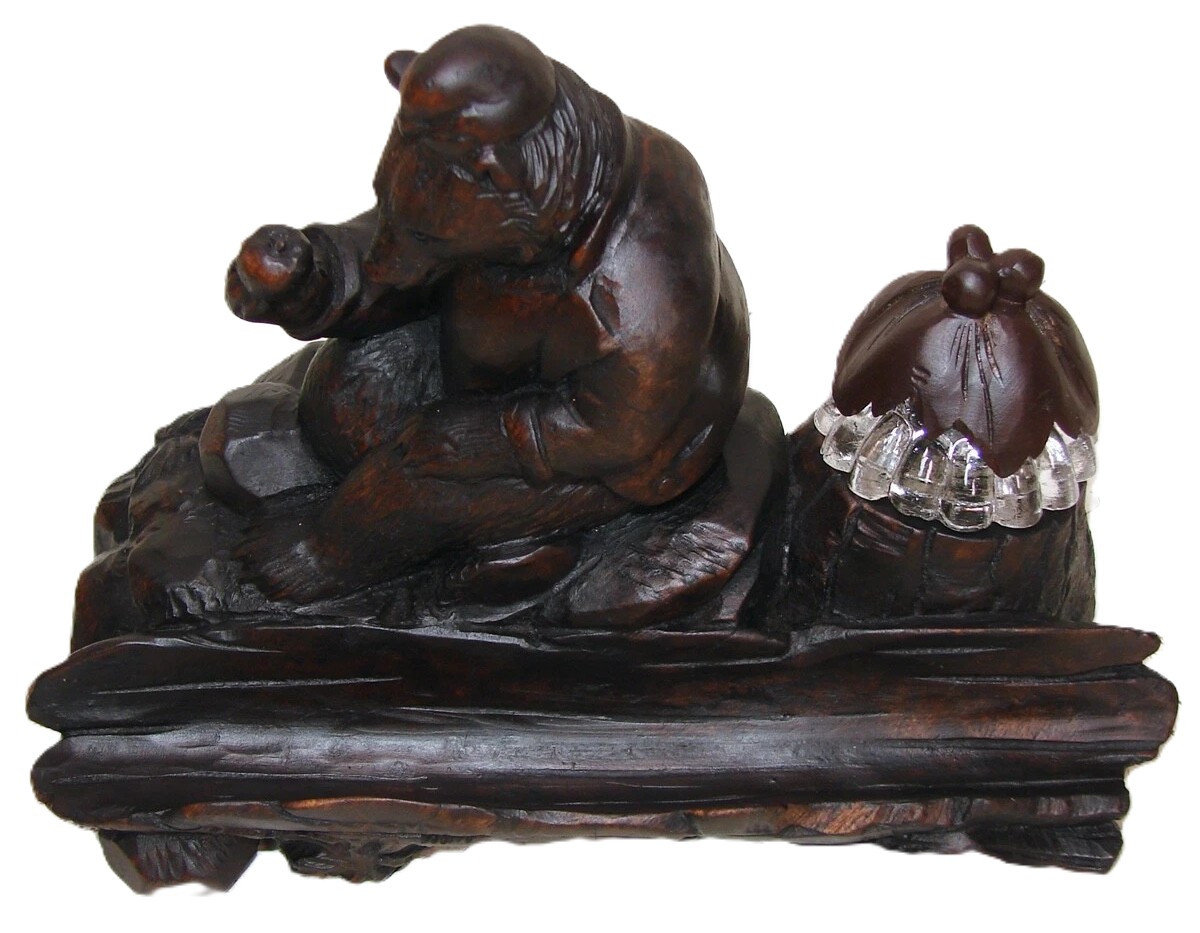
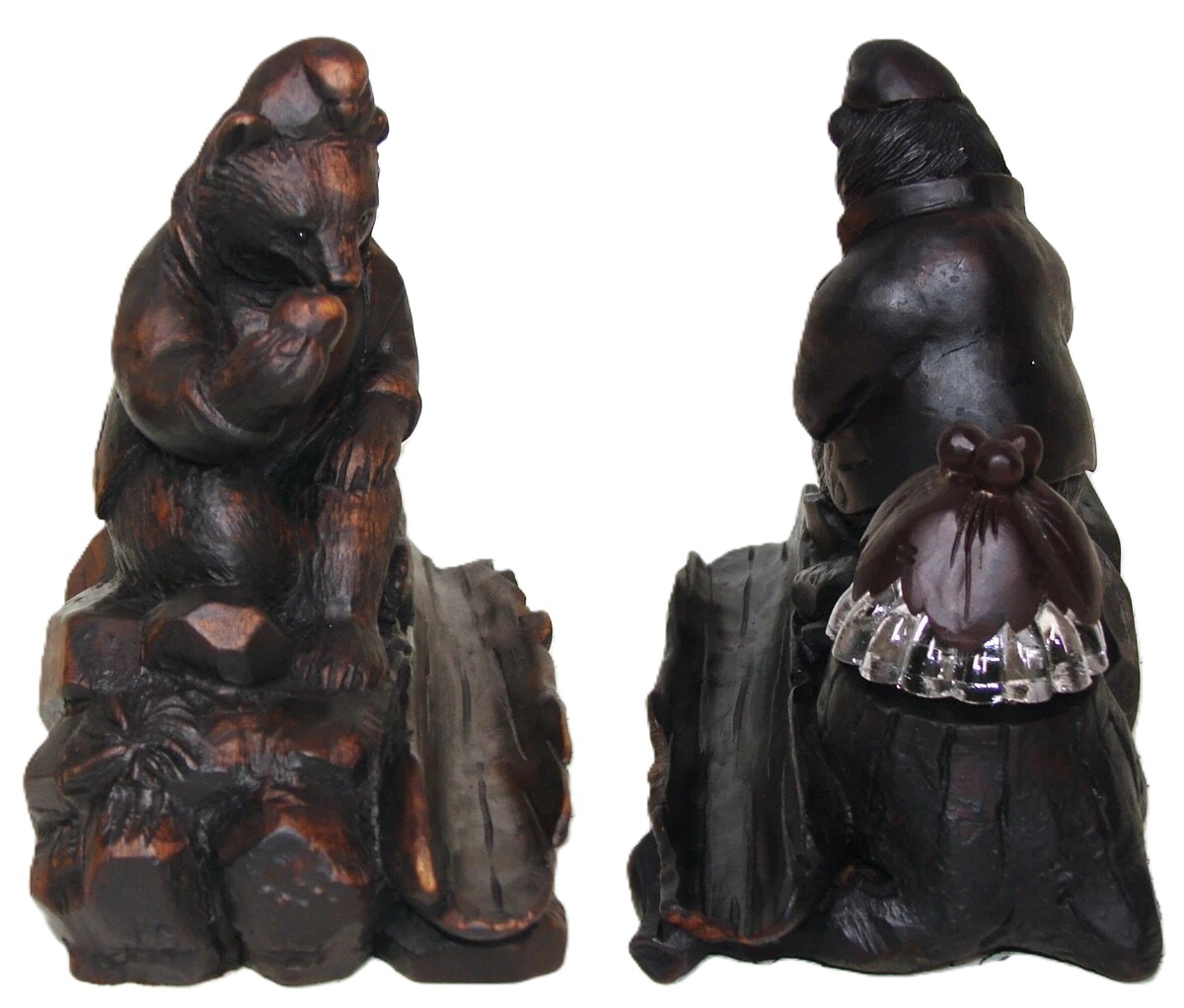
- Sculptural Composition: Skillfully hand-chiseled from a single, solid block of rich walnut or lime wood, the piece integrates a hollowed log base that serves as a pen tray along the front.
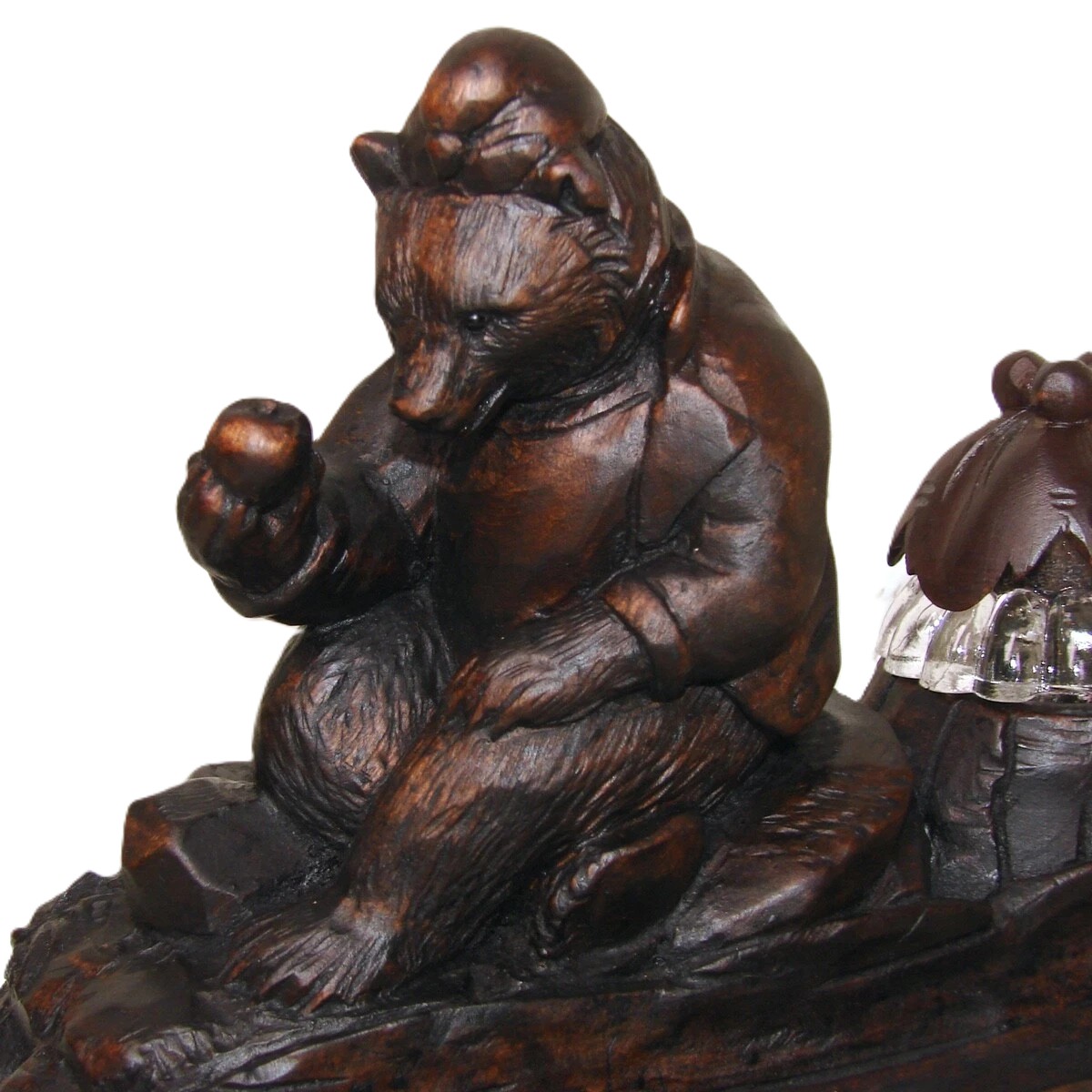
- The Seated Bear: Dressed in a charmingly tailored overcoat and a stocking cap, the anthropomorphic bear is captured in a contemplative pose. It holds a small carved apple in its right paw, gazing down at it with an expression that playfully evokes Isaac Newton pondering the law of gravity. The bear features expressive black glass bead inset eyes that glint with life.
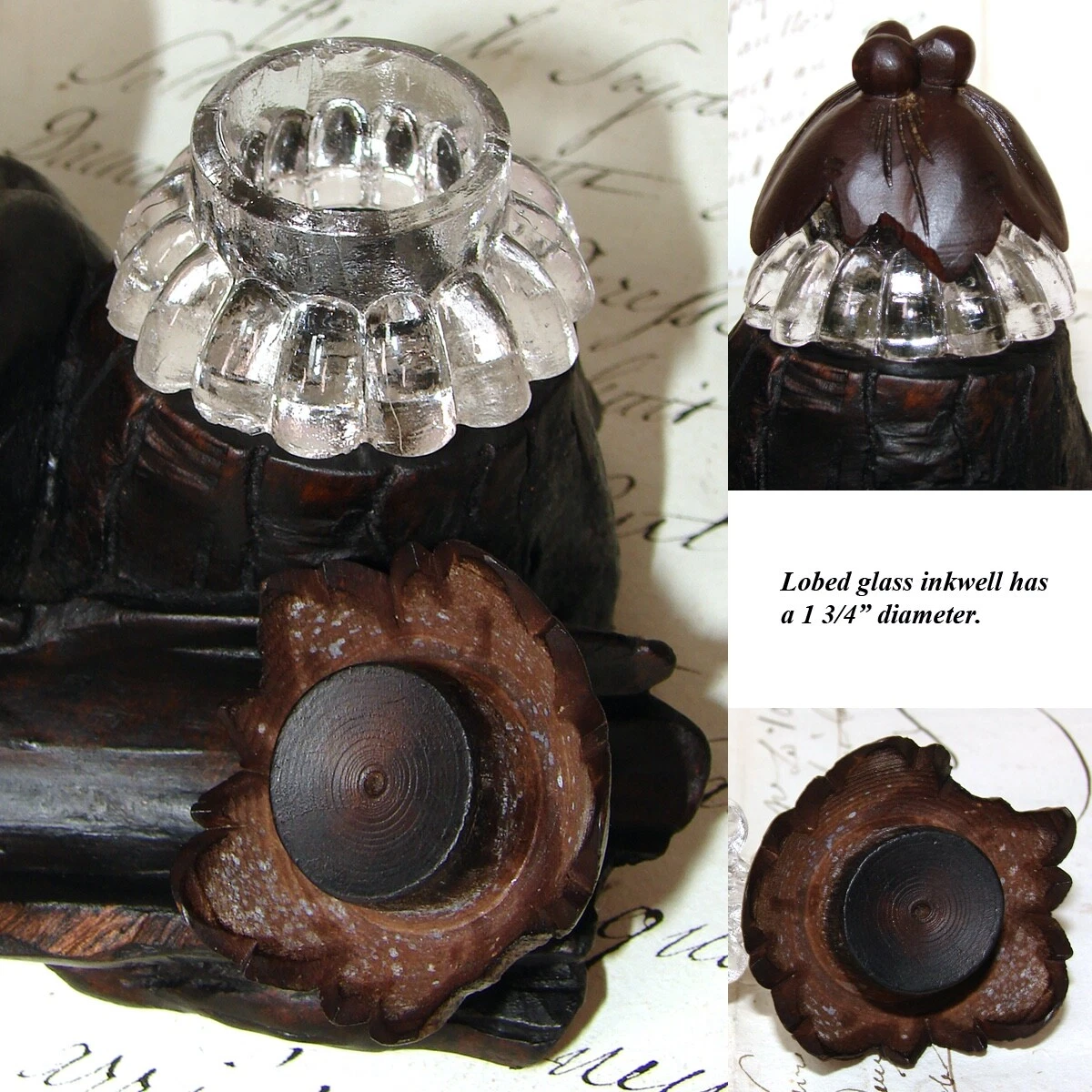
- The Inkwell Assembly: Positioned on the right side atop an integral tree stump is a lobed, scalloped crystal-clear glass inkwell measuring approximately 1¾ inches in diameter. It is crowned by a finely carved wooden lid complete with a matching leafy or berried finial that echoes the rustic forest motif.
Age Estimation
Swiss and German Black Forest carvings of this caliber—particularly those featuring anthropomorphic animal humor, inset glass eyes, and fitted glass inkwells—date predominantly to the late 19th to early 20th century, specifically between c. 1880 and 1910.
Several key details support this dating:
- The Peak of Brienz Carving: The village of Brienz, Switzerland, became the world-renowned center for Black Forest carvings following the international exhibitions of the mid-to-late 19th century (such as the 1851 London Great Exhibition and the 1900 Paris Exposition). Anthropomorphic bears engaged in human activities became popular collectibles during this time.
- Materials and Construction: The use of glass bead eyes, finely turned and lobed cut-glass ink inserts, and a rich, hand-rubbed dark wax finish on walnut are hallmark indicators of late 19th century craftsmanship before mass production shifted styles in the decades following World War I.
Sold for $571 in September 2026
Content disclaimer. The information posted is the owner’s best knowledge and may not have been vetted by the SOIC. We welcome comments, corrections, and additions, working to make our website information comprehensive and accurate.
Join the Society of Inkwell Collectors (SOIC) – it’s free!
Founded in 1981 as a non-profit organization,
we are documenting inkwells (and accessories).
We’re here to help and inform!