

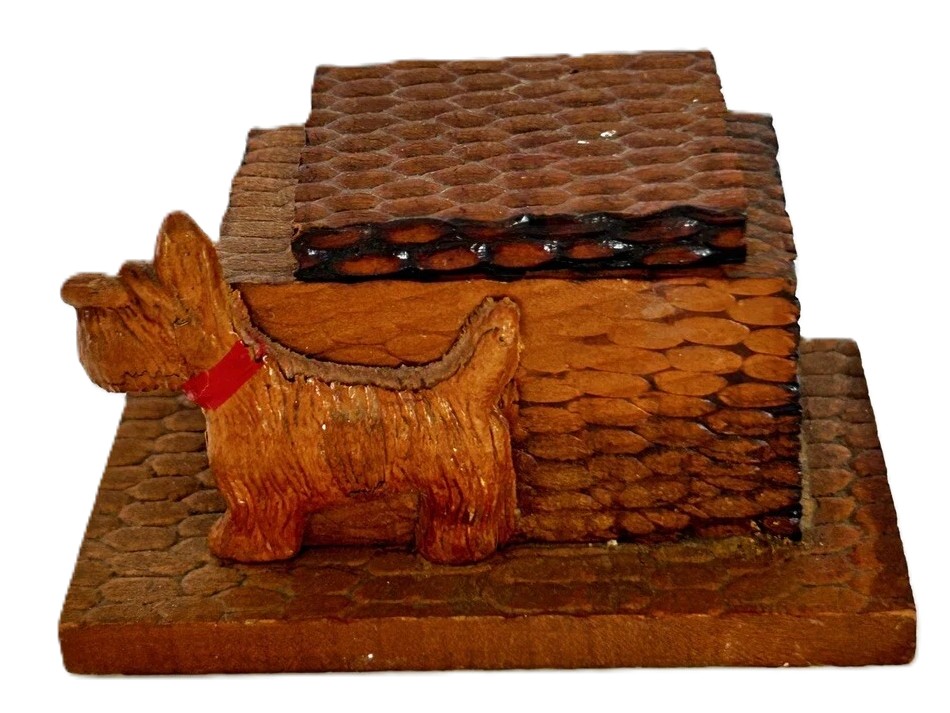
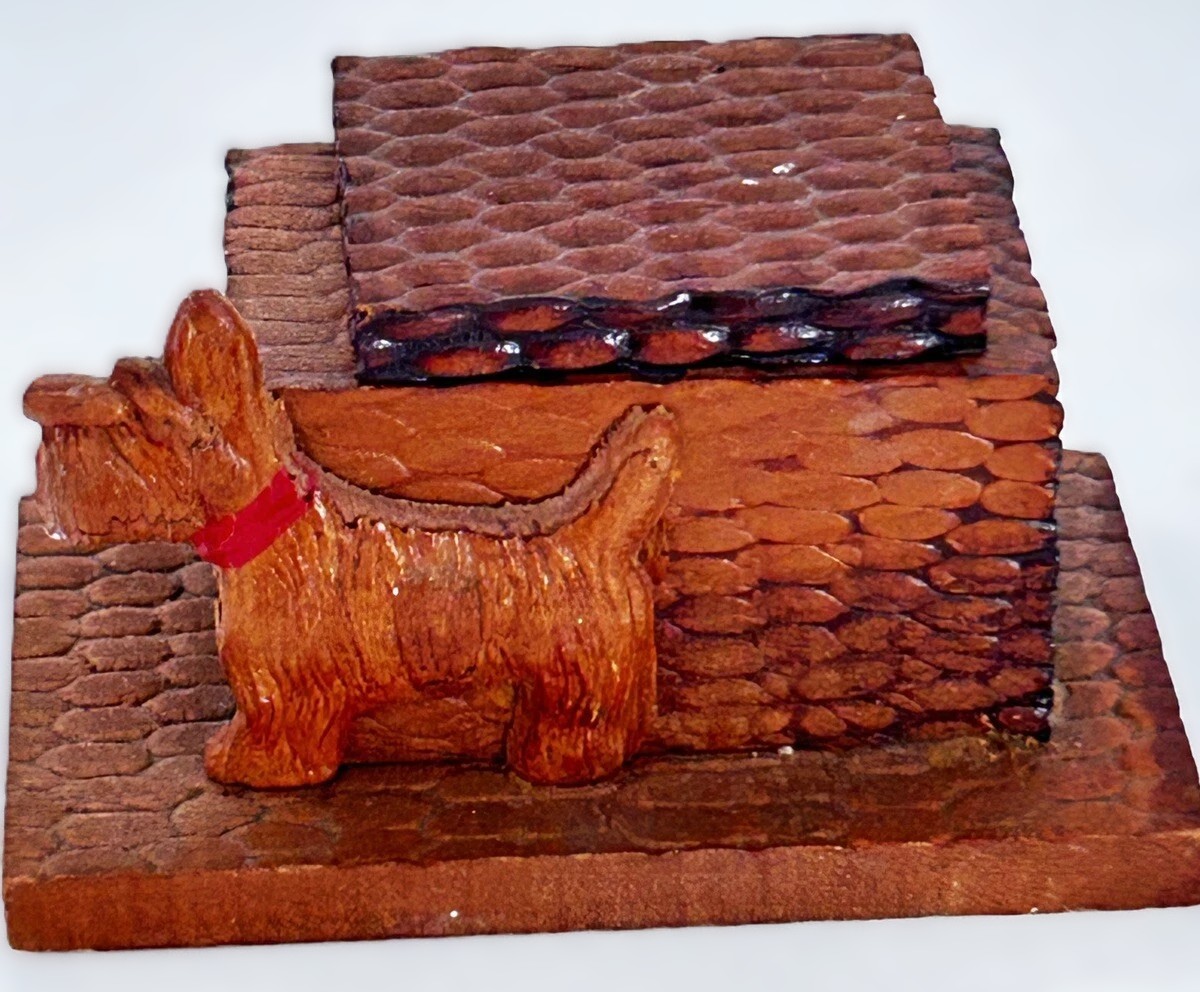
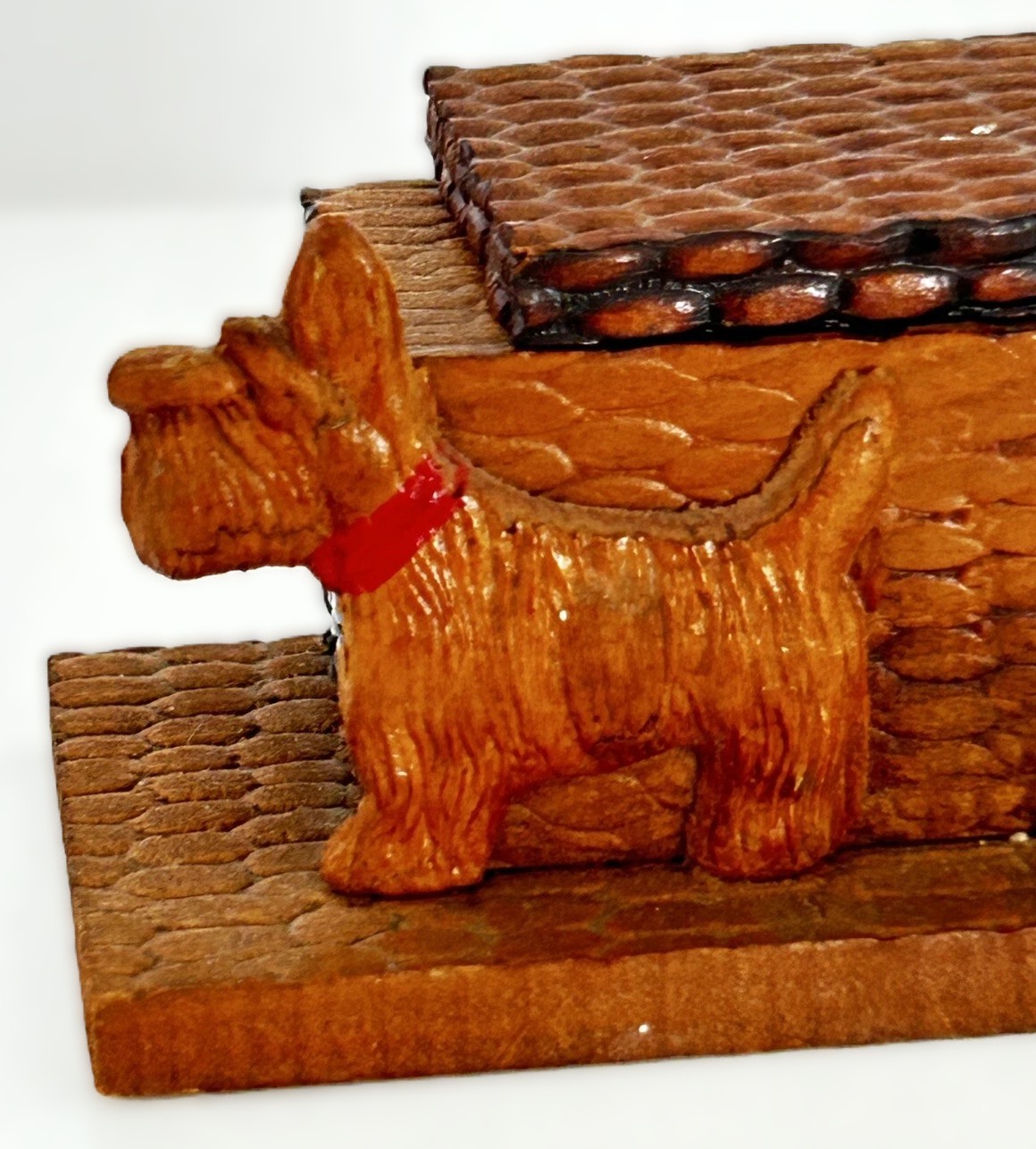
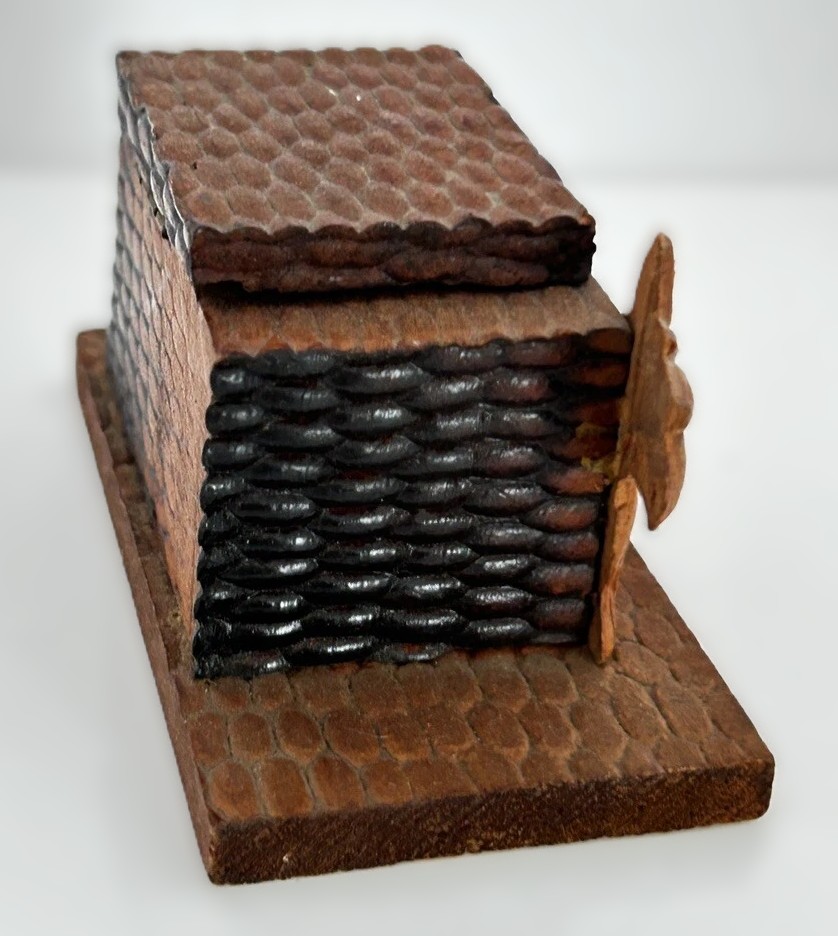
Carved Wood Scottish Terrier Inkwell
| Categories | Figural - Animals & Living Creatures |
| Type | dog |
| Material | Wood |
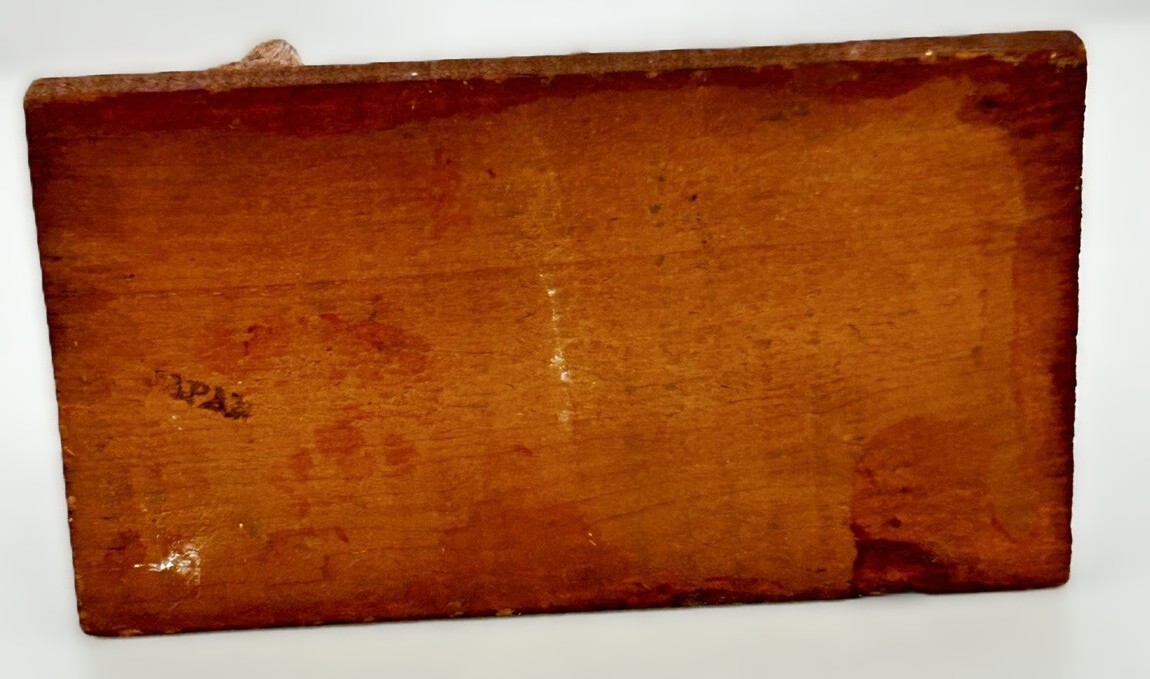
| Markings | "JAPAN" |
| Manufacturer | Undetermined |
| Origin | Japan |
| Date or Era | circa 1930 |
| Measuring | 3 ¾” x 2” x 2” high |
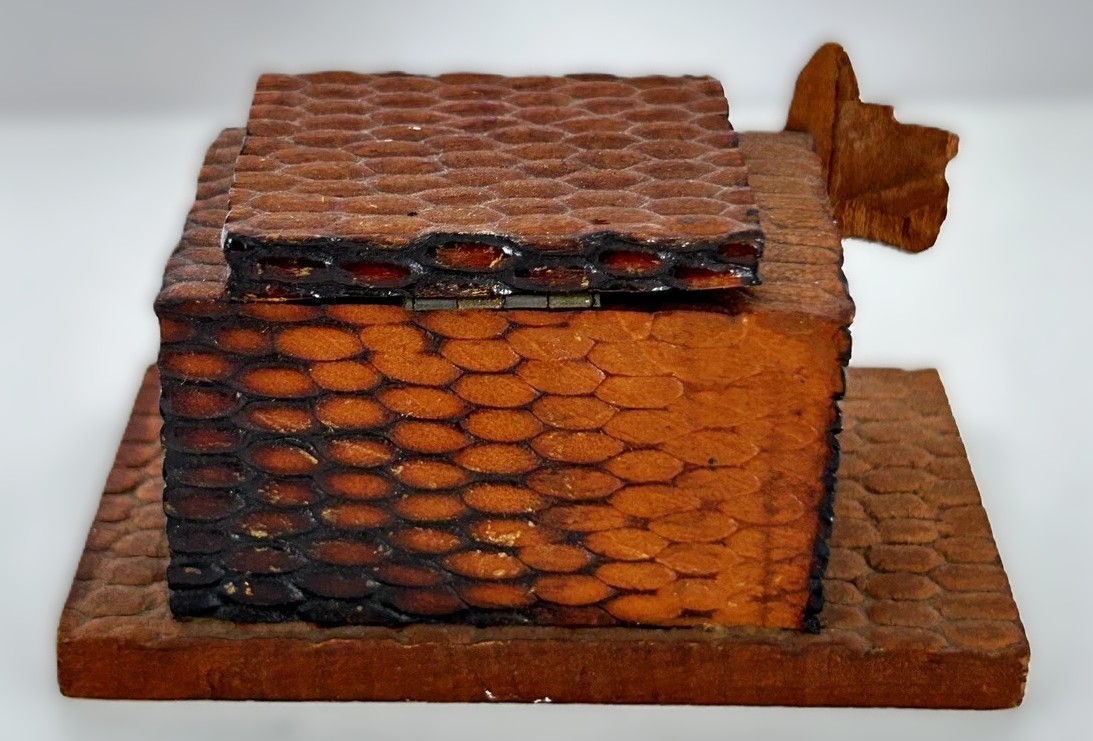
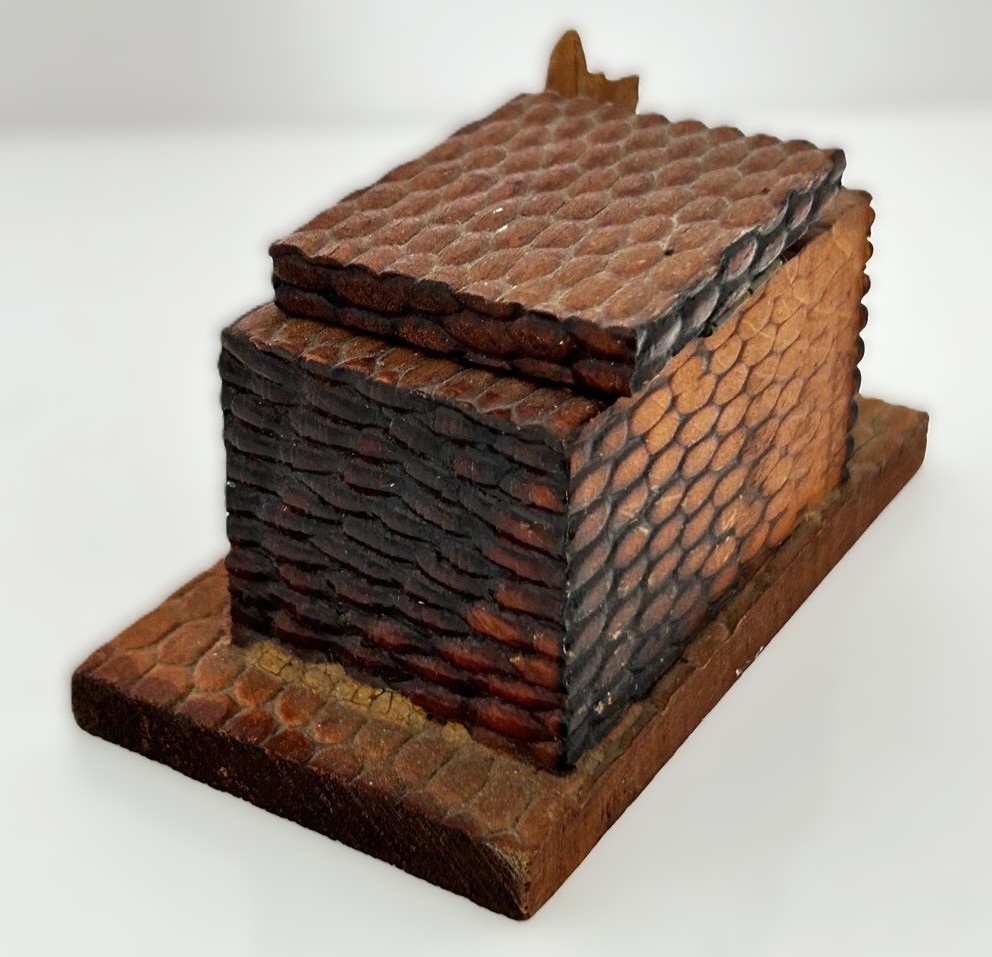
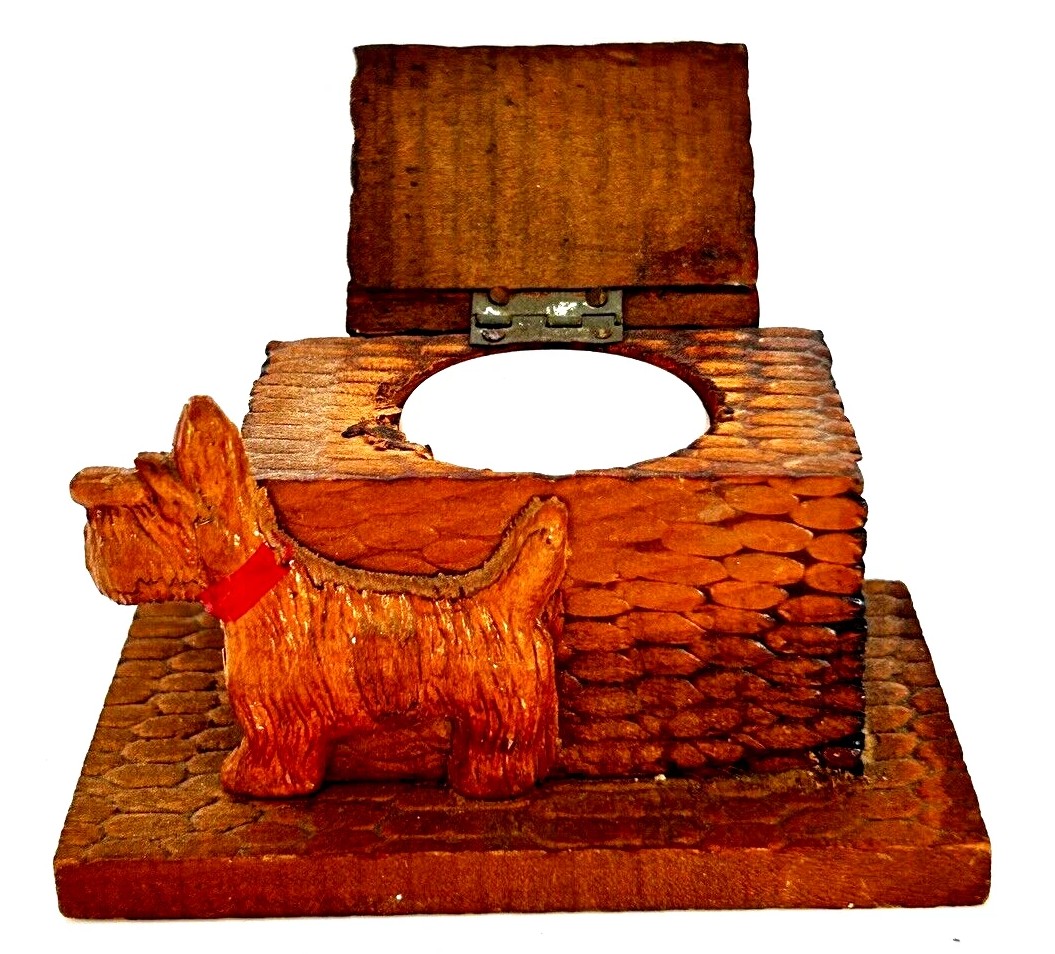
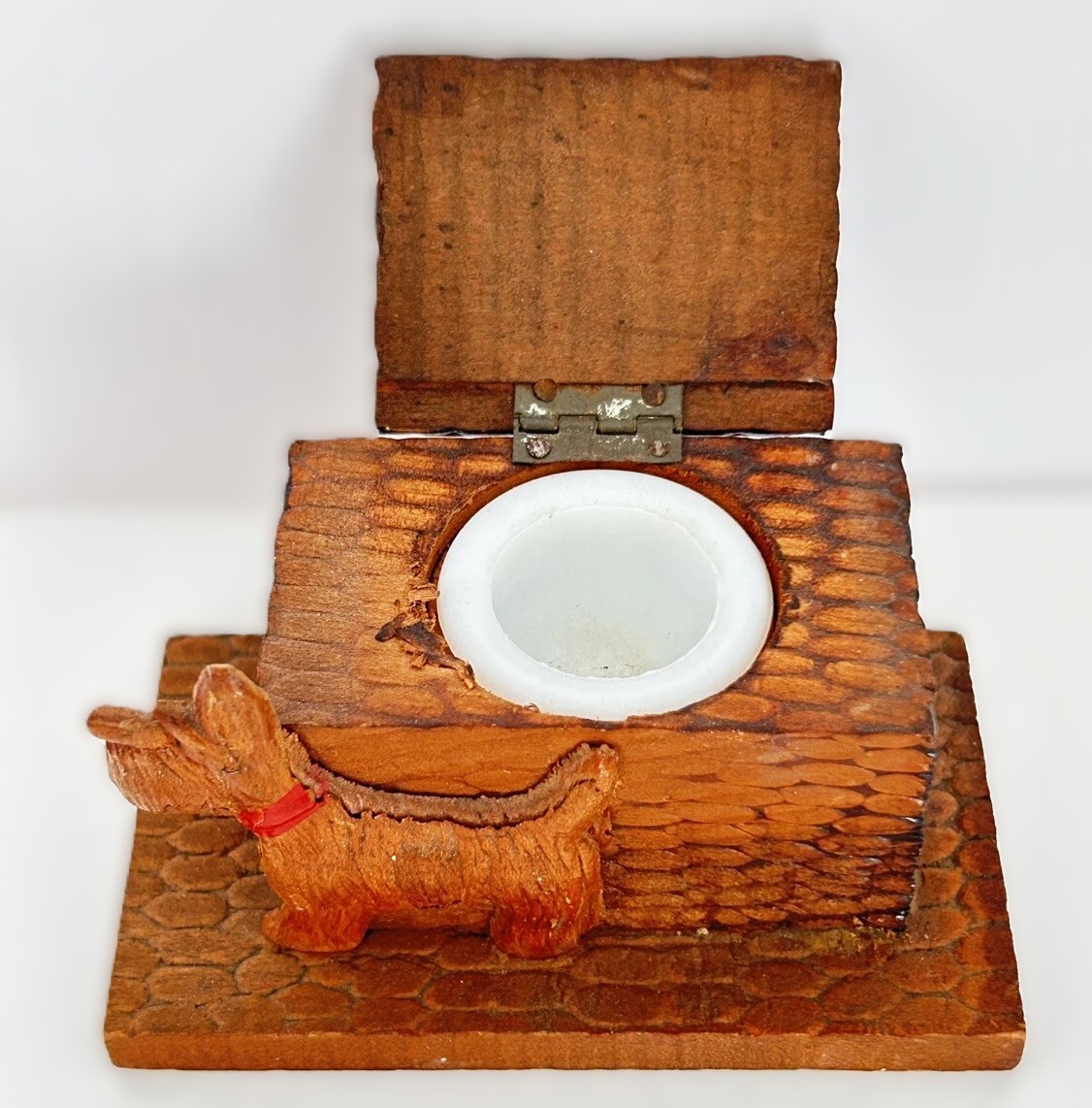
Description: This piece is a rustic novelty wooden inkwell consisting of a rectangular plinth base, a hinged box housing a white milk glass ink insert, and an applied carved dog silhouette mounted across the left front. The surfaces of the base, walls, and lid are decorated with all-over gouge/chip carving that creates a textured, cobblestone effect, highlighted with dark brown and reddish-burnt staining. A small metal hinge secures the lift-lid.
Dog Breed
- Breed: Scottish Terrier (Scottie).
- Identifying features: The profile displays classic Scottie proportions: short, sturdy legs, an upright “carrot” tail, prick (erect) ears, and a long, blocky muzzle with prominent carved chin whiskers and brow furnishings. During the 1930s, Scotties were among the most popular motifs in novelty desk accessories.
Origin & Date of Manufacture
- Origin: Japan (confirmed by the purple ink stamp “JAPAN” on the underside).
- Date: Circa 1925–1938 (Interwar period / Art Deco era).
- Under U.S. customs requirements (the 1921 McKinley Tariff Act revision), goods imported from Japan were required to be marked with the country of origin in English (“JAPAN”).
- If made immediately after WWII during the Allied occupation (1947–1952), it would typically read “Made in Occupied Japan” or “Occupied Japan.”
- The plain “JAPAN” stamp paired with the massive 1930s Scottie trend places this solidly in the 1930s export market.
Wood Type
- Likely Wood: Japanese Linden / Basswood (Shina) or a native softwood such as Japanese cedar (Sugi) or cypress (Hinoki).
- Shina (Tilia japonica) was the standard wood utilized in pre-war Japanese export carving workshops because it is lightweight, fine-grained, soft enough to take quick chisel cuts without splintering, and readily accepts dark aniline dyes and stains.
Method of Production: Hand-Carved vs. Machine-Made
- Hand-carved / Hand-finished: Despite being mass-produced for the commercial export market, this piece is not machine-stamped or molded.
- The outer surface was finished entirely by hand using a small, curved gouge chisel (marunomi) to scallop each individual groove, a folk-art export style often referred to in Japanese cottage industries as chip/gouge carving.
- The dog figure was roughly cut out with a bandsaw or scroll saw from flat wood stock, after which the fur, facial detailing, and eye notches were hand-chiseled and the red collar hand-painted before assembly.
Sold for $51 in August 2026
Content disclaimer. The information posted is the owner’s best knowledge and may not have been vetted by the SOIC. We welcome comments, corrections, and additions, working to make our website information comprehensive and accurate.
Join the Society of Inkwell Collectors (SOIC) – it’s free!
Founded in 1981 as a non-profit organization,
we are documenting inkwells (and accessories).
We’re here to help and inform!