

Inkipedia
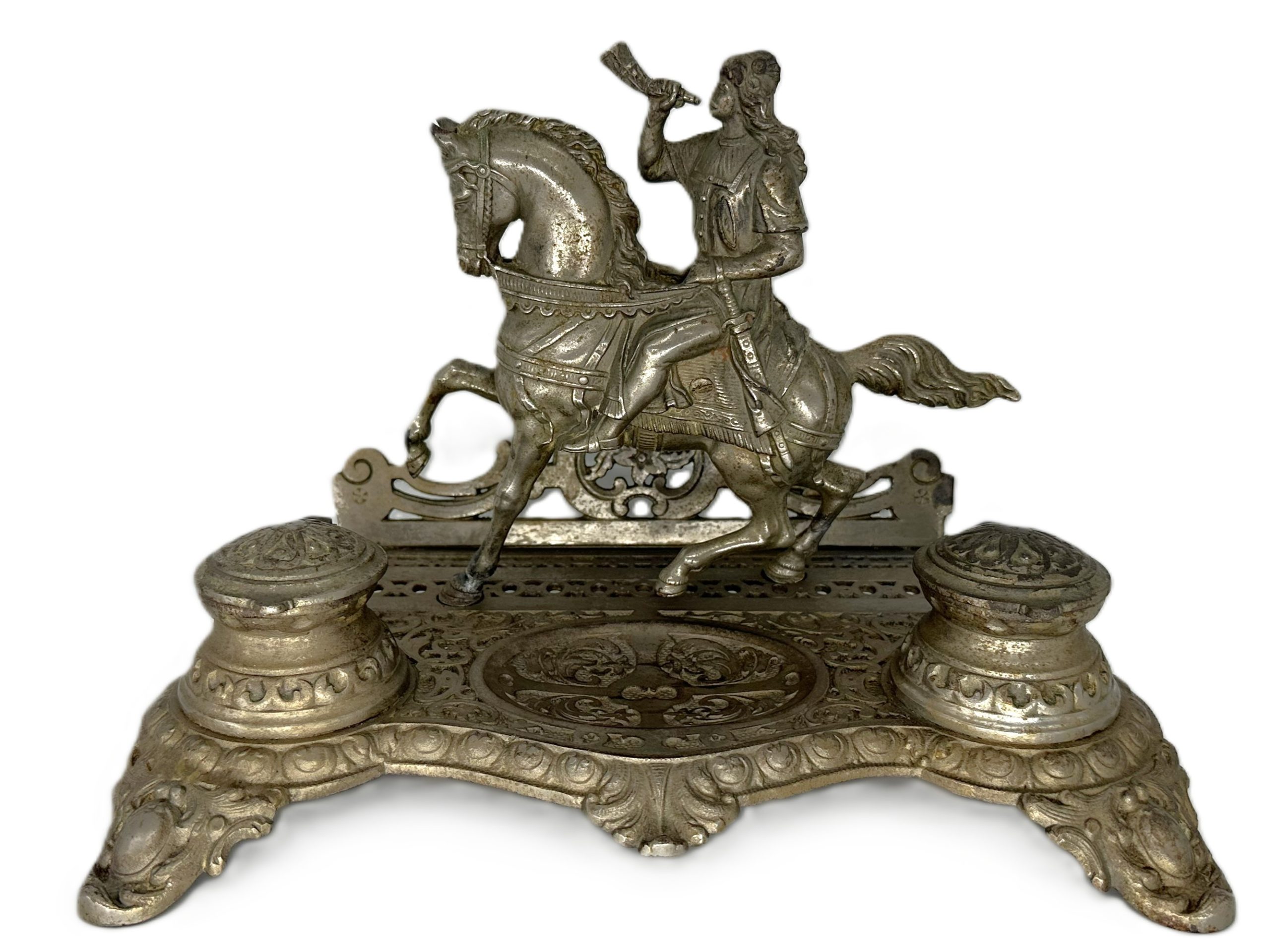
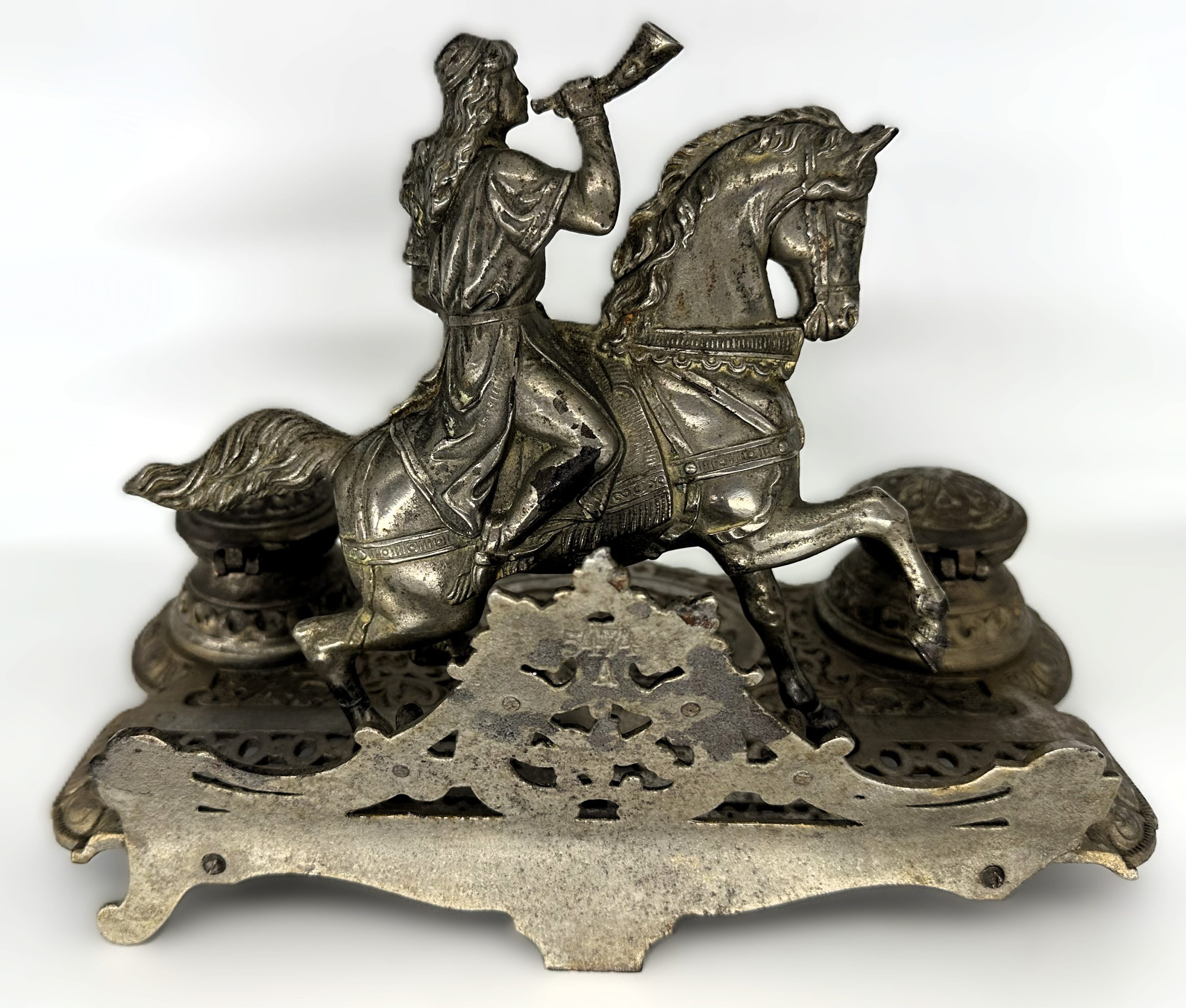
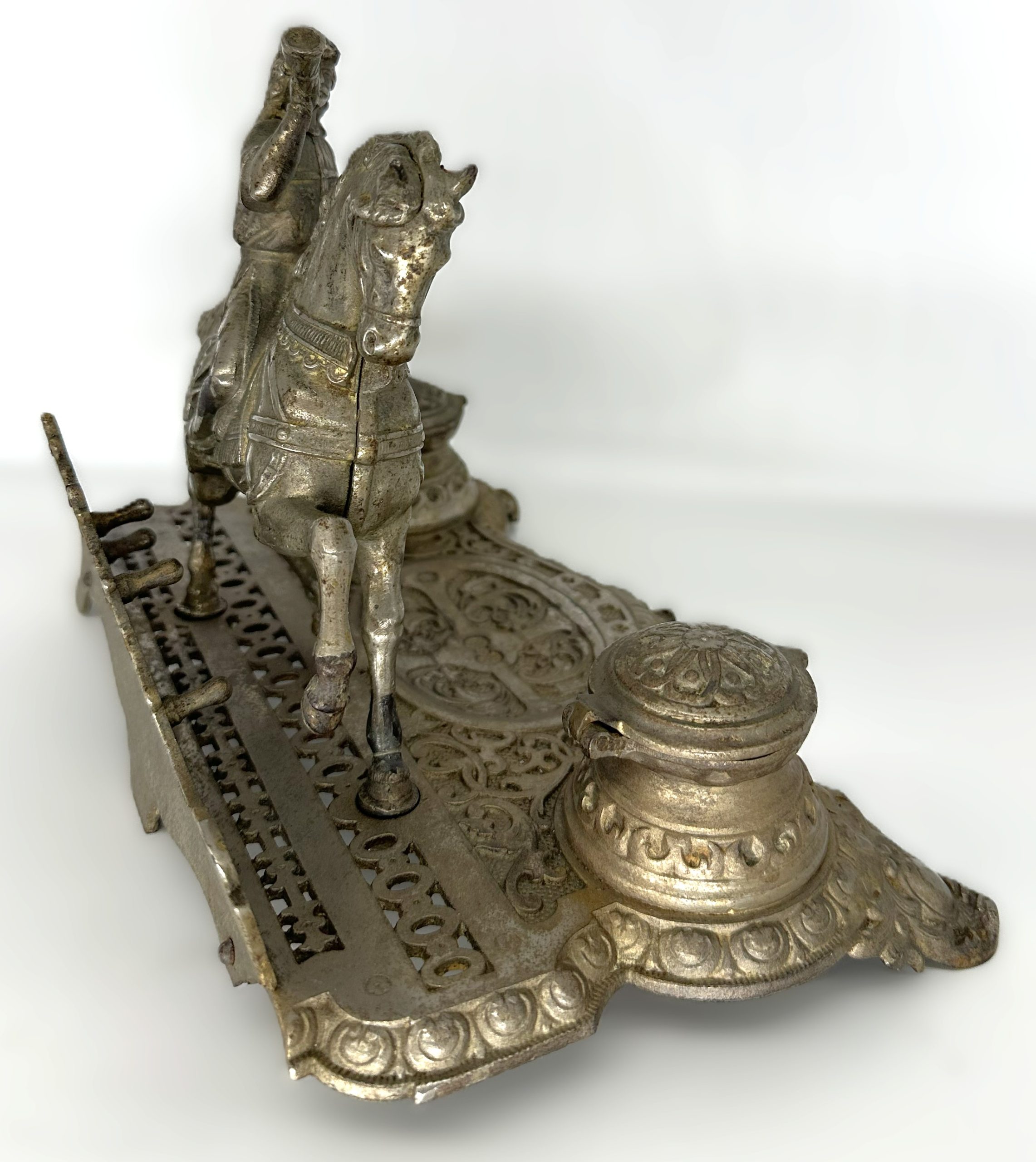
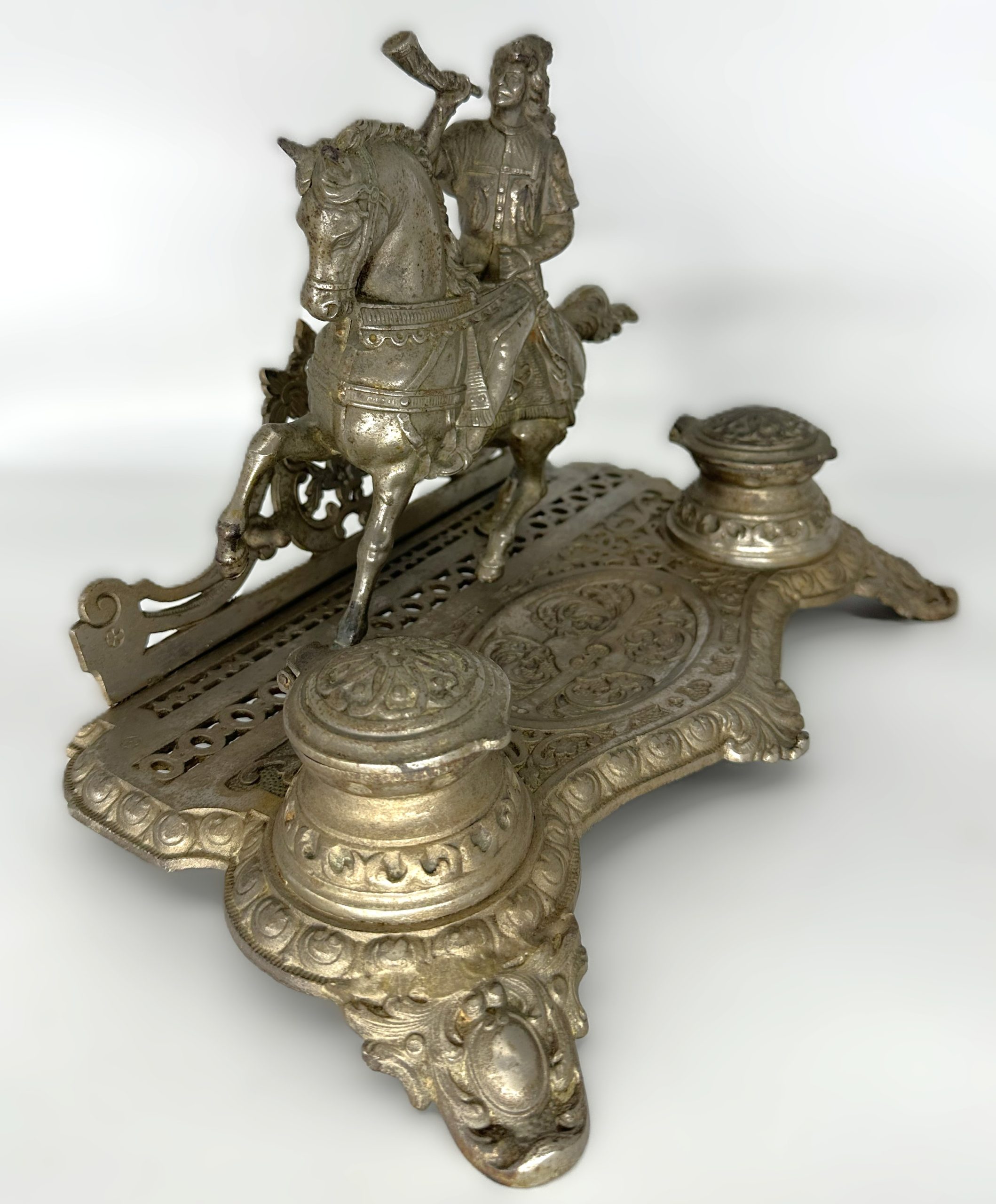
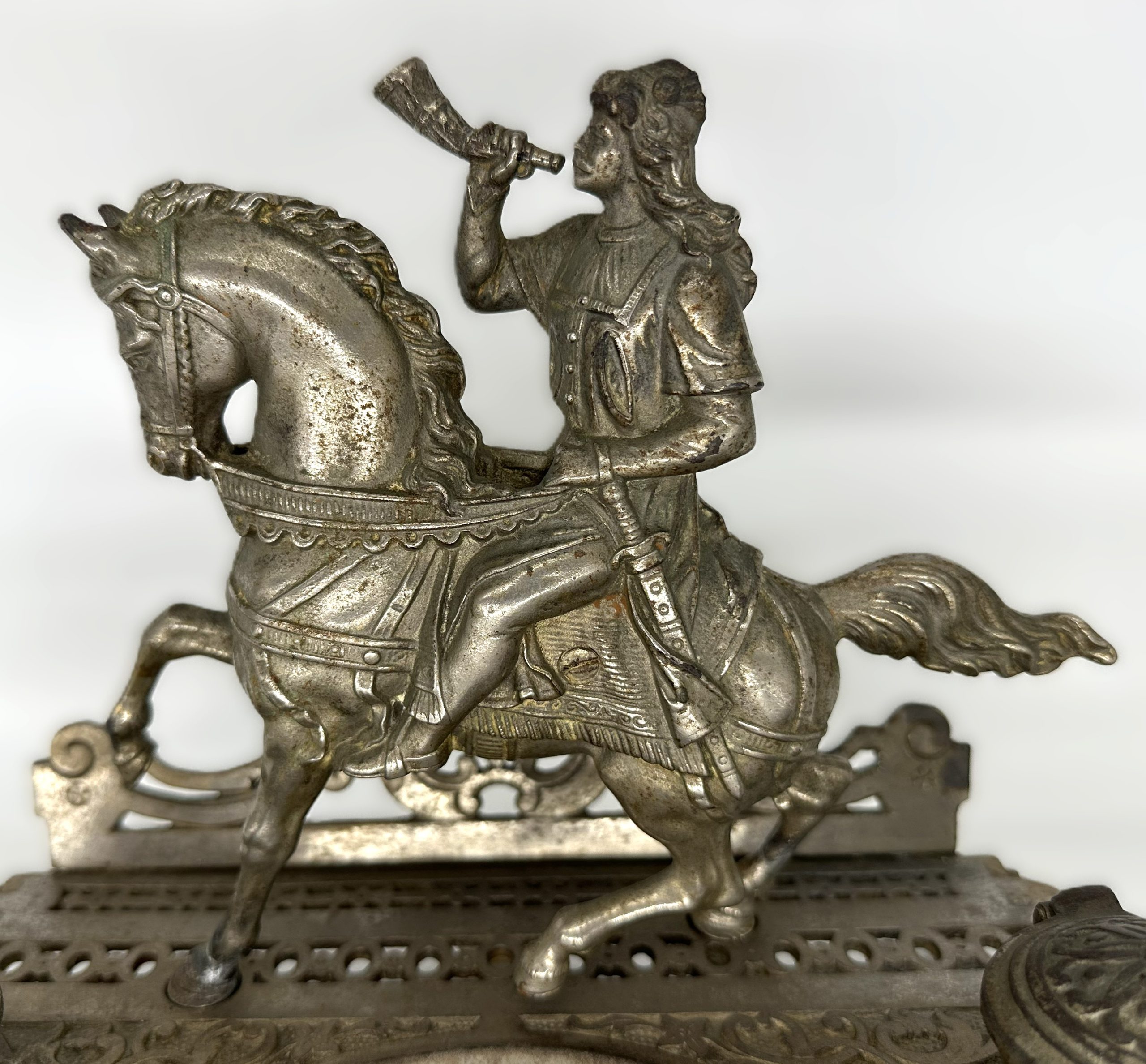
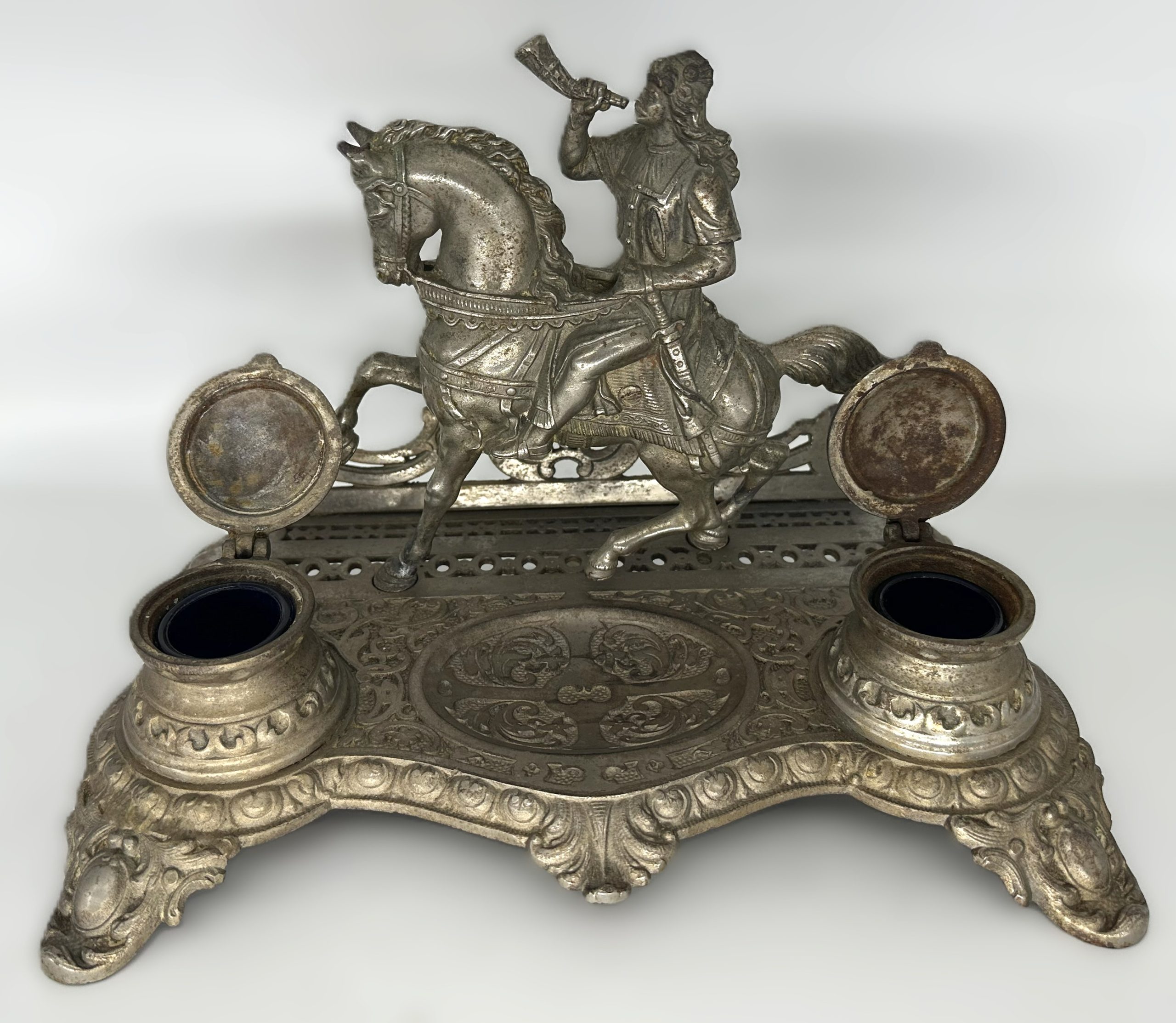
Medieval Herald on His Mount
| Categories | Figural - Animals & Living Creatures, Figural - Persons |
| Type | Horse |
| Material | Cast iron, Nickel Silver |
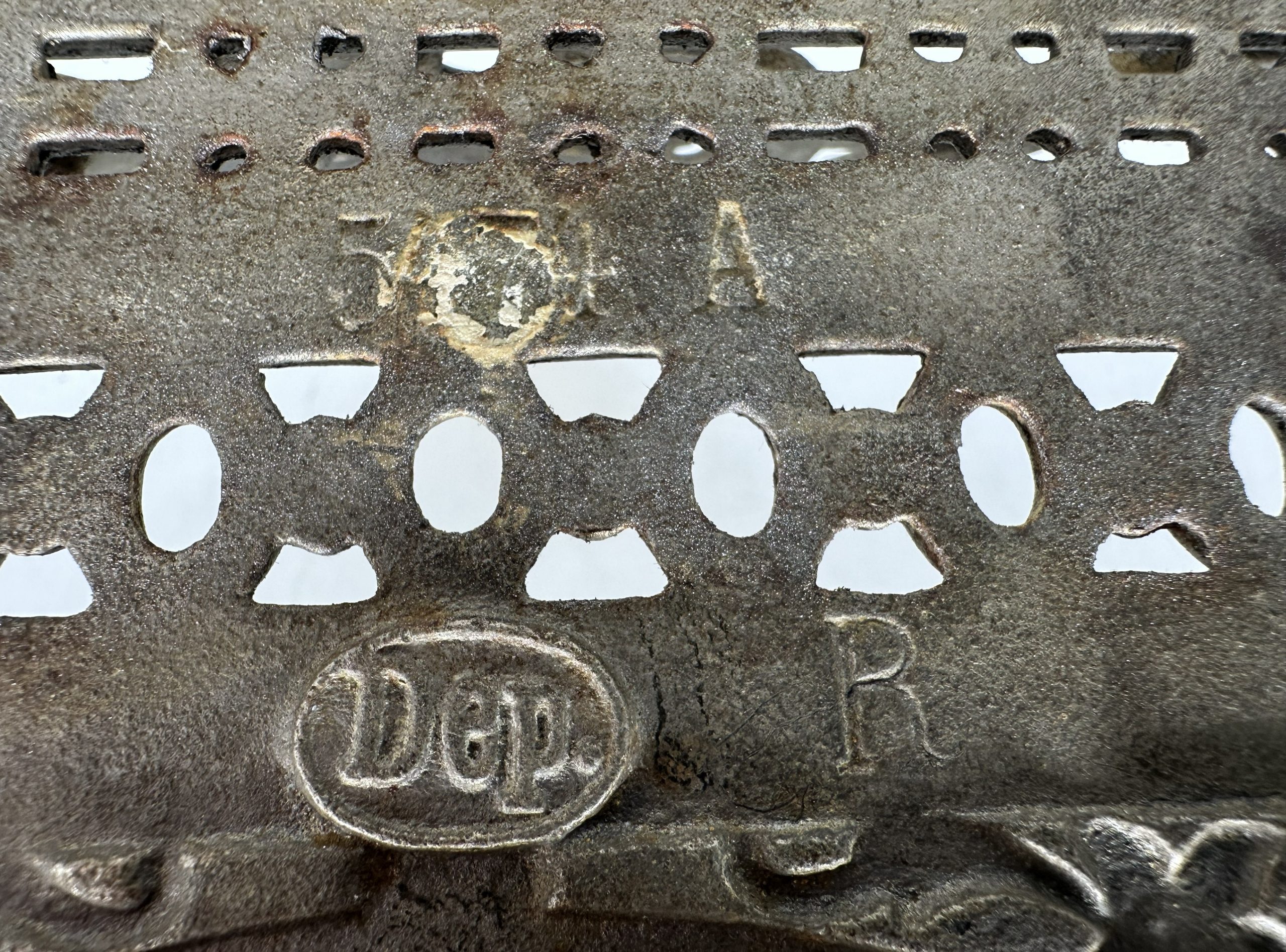
| Markings | See Narrative |
| Manufacturer | Undetermined |
| Origin | France |
| Date or Era | circa 1890 |
| Measuring | 11 ¼” x 6 ¾” x 8 ½” high |
Medieval Herald on His Mount
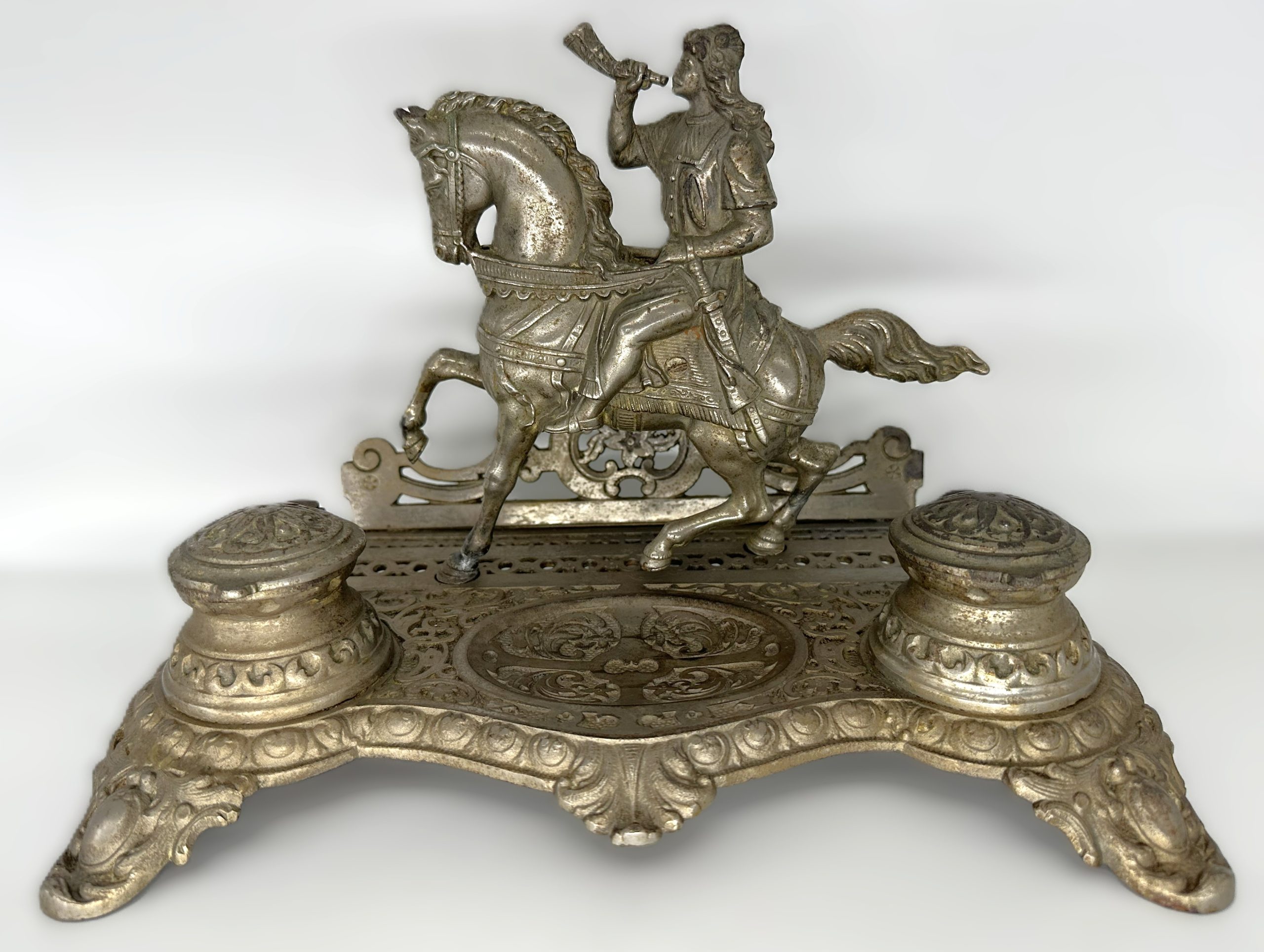
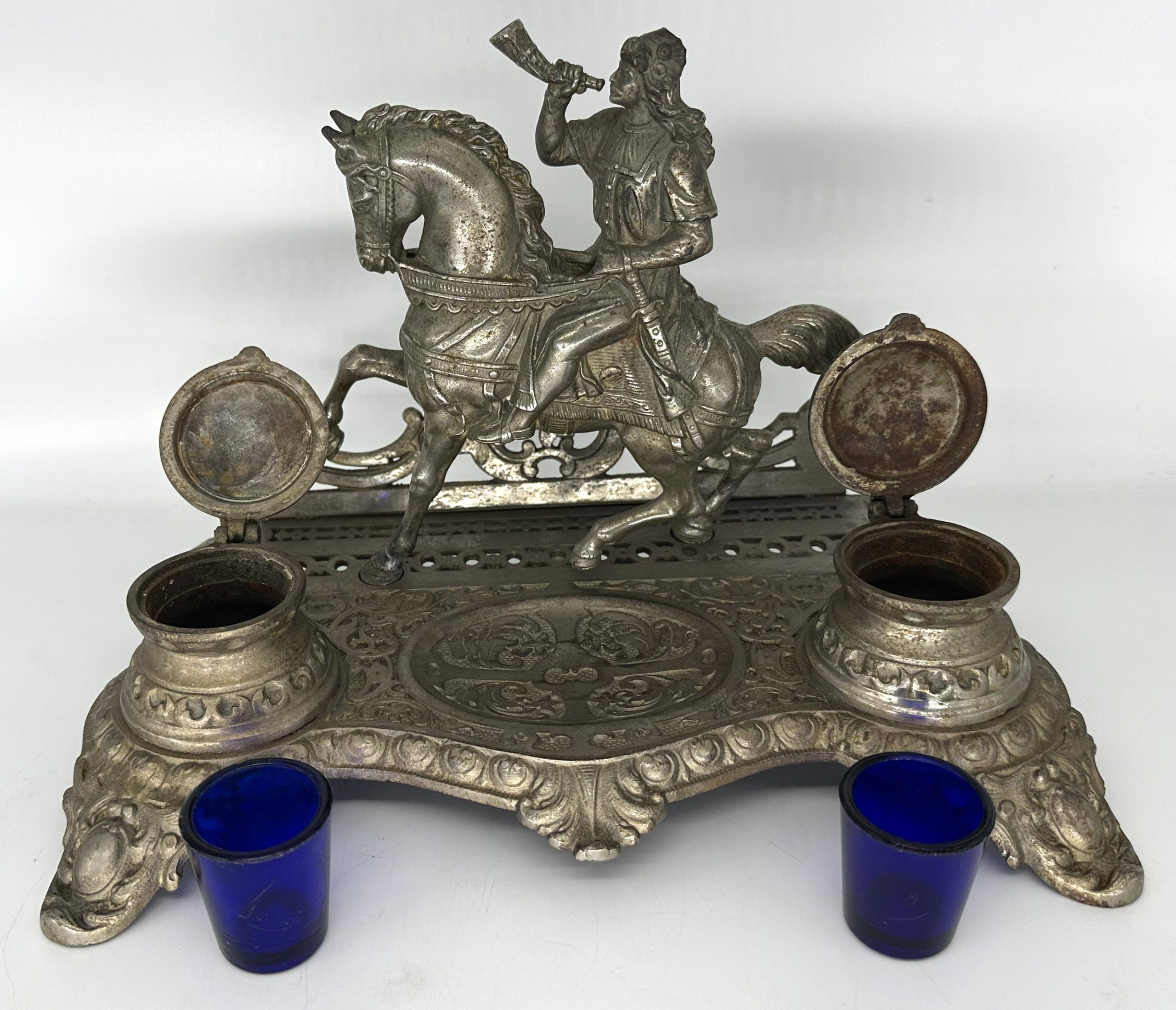
- Subject & Imagery: A finely detailed equestrian sculpture depicting a youthful Medieval Herald sounding an announcement. The figure wears a classical draped, belted tunic and a Renaissance-style cap over long, flowing shoulder-length hair. At his side hangs a sheathed ceremonial sword (scabbard).
- The Sounding Horn (Olifant): Held aloft to his lips is a tapered conical war/signaling horn (olifant), historically used to command silence before delivering a royal proclamation, to summon knights to the tournament lists, and to signal across battlefield grounds.
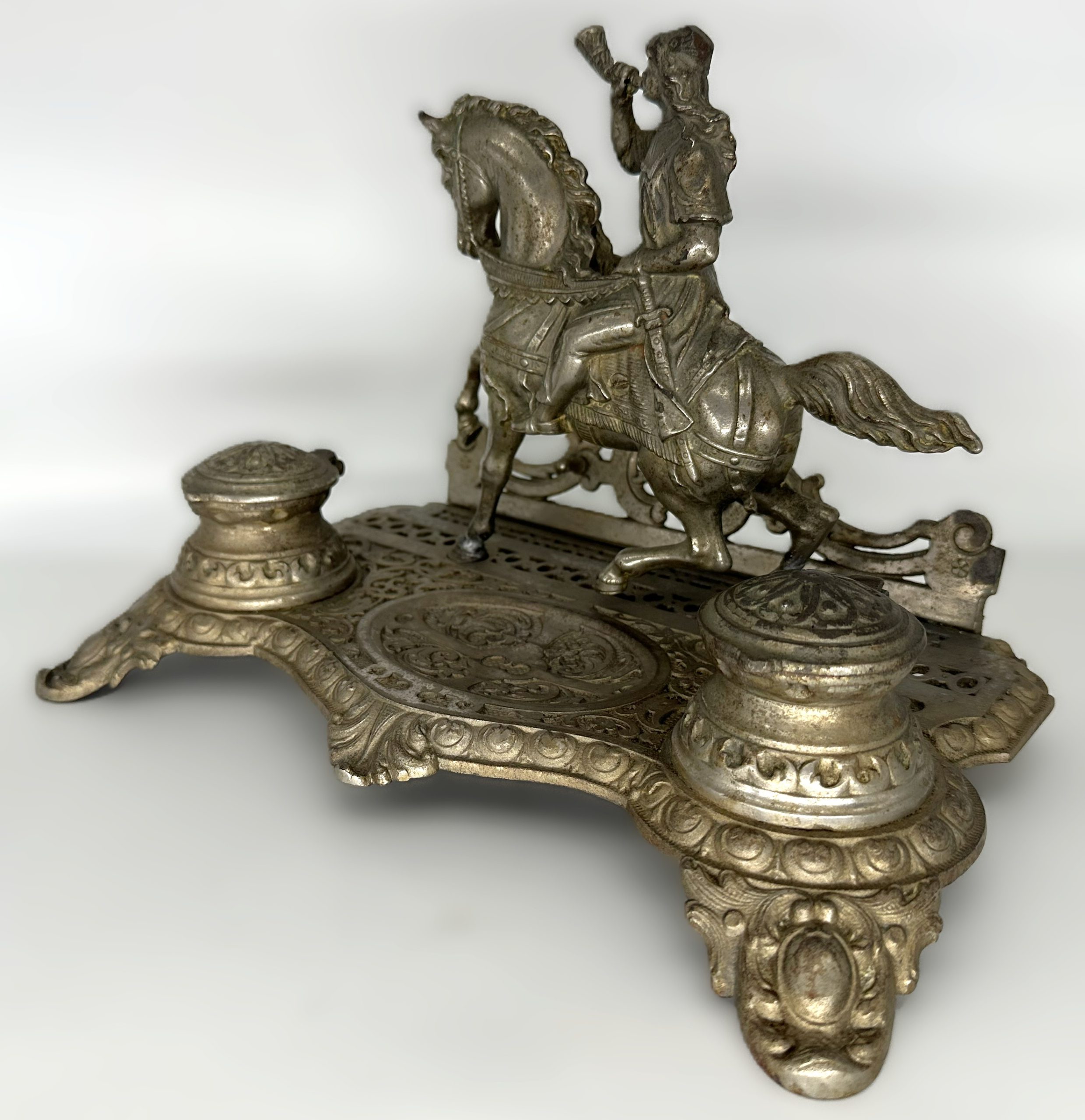
- Equestrian Trappings: The spirited mount is outfitted in ceremonial chivalric tack, featuring an ornate studded breastplate collar, beaded browband and bridle, and a fringed decorative caparison (saddle cloth) beneath the rider.
- Symbolic Role of the Herald: In medieval and Renaissance courts, heralds were the official officers of diplomacy and royal dispatches—carrying immunity to deliver sovereign decrees, orchestrating tournaments, tracking noble armory and lineage, and recording battlefield tallies. On the writing desk, the herald serves as the symbolic guardian of proclamations, letters, and the written word.
- Inkstand Construction & Features:
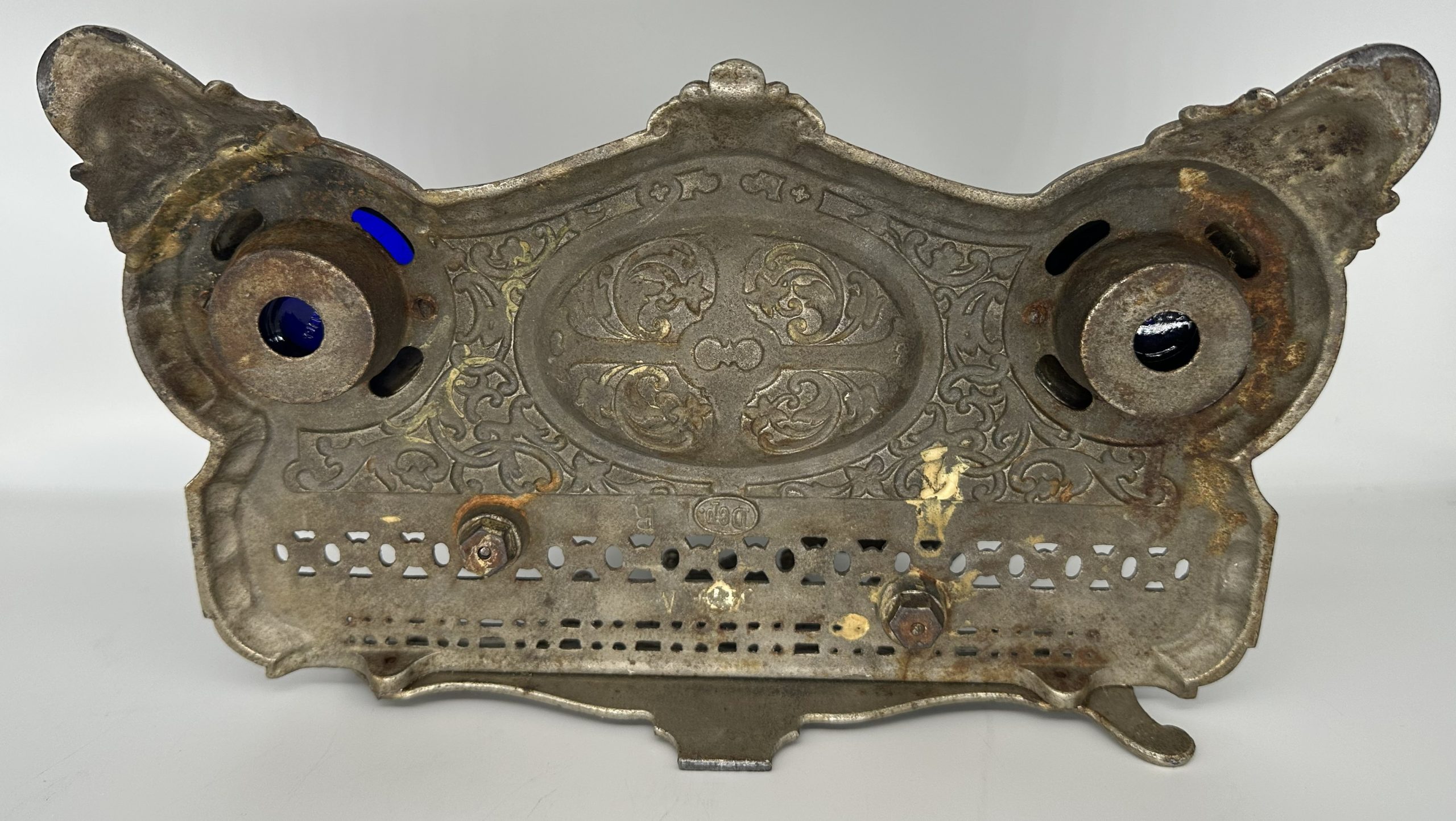
- Base & Metalwork: Heavy cast iron finished in a nickel-plated wash. The standish is cast in an architectural Rococo/Renaissance Revival framework with scroll feet, scalloped borders.
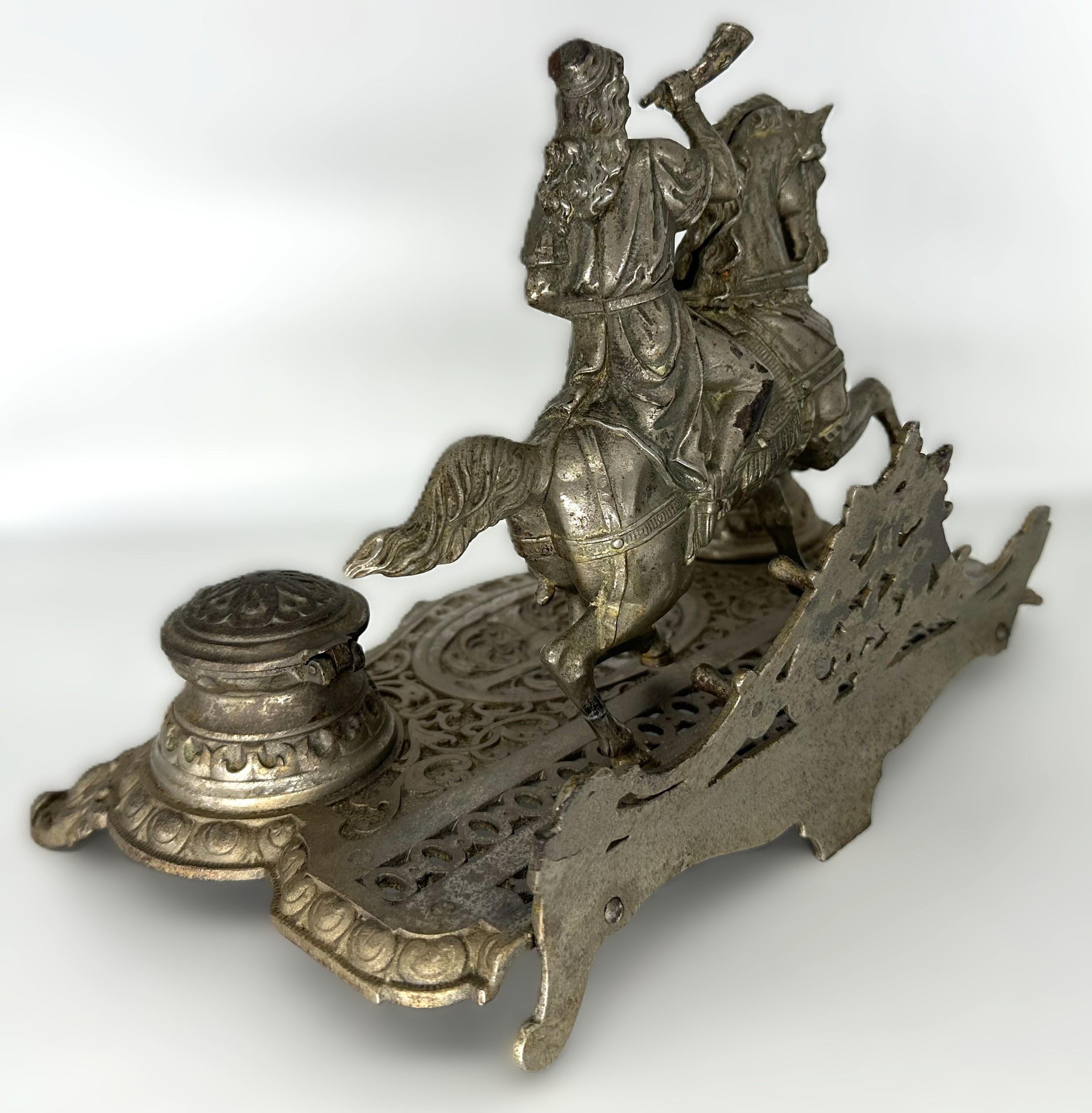
- Pen Rack: Knobs to hold pens are attached behind the mounted horse.
- Inkwells: Twin inkwells with dome-hinged lids, each with a cobalt blue glass insert.
- Marks & Origin: The underside bears the registered design stamp Dep. in an oval (Déposé ), indicating legal protection of the design in France. It is marked with the foundry mold/model number 504 A along with a separate batch mark R.
- Date & Origin: France, Circa 1880–1900.
Estimated value: $150
Content disclaimer. The information posted is the owner’s best knowledge and may not have been vetted by the SOIC. We welcome comments, corrections, and additions, working to make our website information comprehensive and accurate.
Join the Society of Inkwell Collectors (SOIC) – it’s free!
Founded in 1981 as a non-profit organization,
we are documenting inkwells (and accessories).
We’re here to help and inform!