

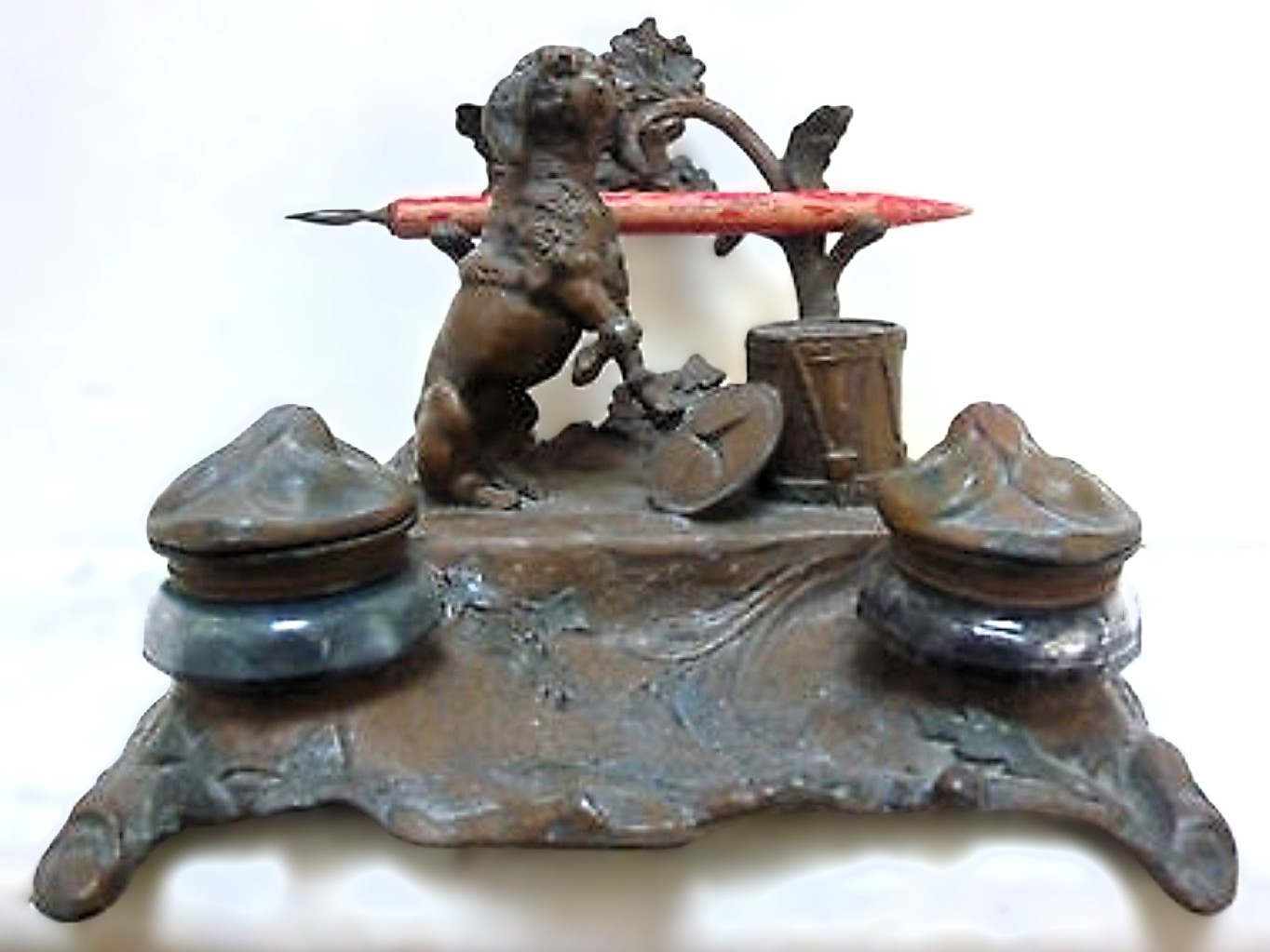
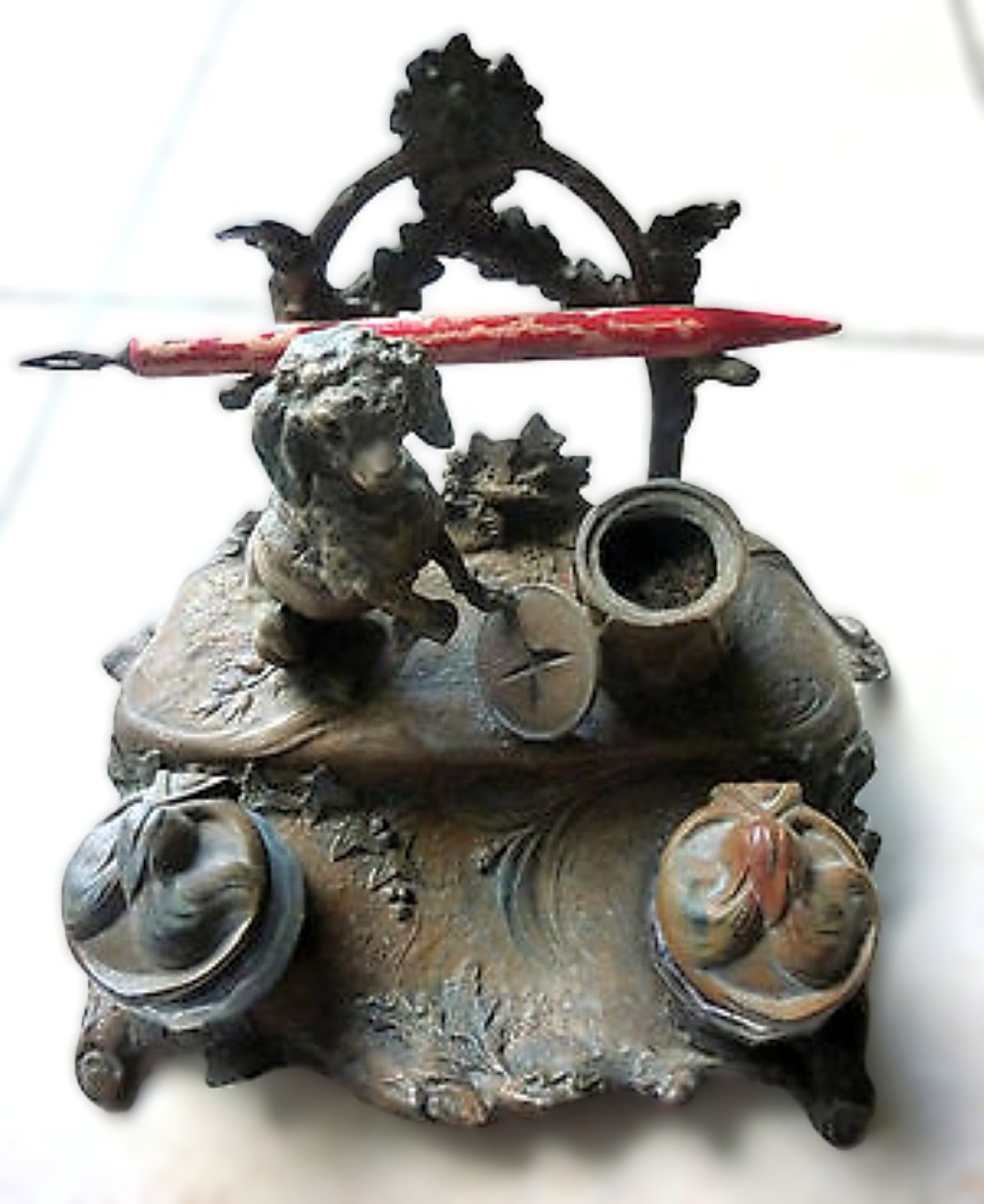


Sitting Poodle Inkstand – Signed “Bossy”
| Categories | Figural - Animals & Living Creatures |
| Type | dog |
| Material | Spelter |
| Markings | "BROSSY" |
| Manufacturer | Brossy |
| Origin | France |
| Date or Era | circa 1900 |
| Measuring | 8” x 6 ½” x 6” high |
Description
- The Metalwork (“En Régule”): This piece is en régule (spelter/white metal) with a patinated bronze finish. This was a highly popular technique in late 19th- and early 20th-century France, allowing for intricate, flowing Art Nouveau details that mimic solid bronze.
- The Subject Matter: The centerpiece features a whimsical, sitting dog. Looking closely at the textured, curly coat sculpted on the head and shoulders, this is almost certainly a poodle – styled in a classic “lion clip” or poodle cut popular in France during this era.
- Design Elements: The poodle is sculpted with one paw resting on the lid of a snare/marching drum. When that lid is lifted, it opens to reveal a pen wipe.
- Inkwells & Lids: Flanking the central scene are two separate glass-bodied inkwells. They retain their original, hinged lids decorated with organic, swirling Art Nouveau motifs.
- The Foliage & Pen Rest: True to the Art Nouveau movement, the base and backdrop are heavily organic. Ivy and oak leaves with small acorns weave across the naturalistic, asymmetrical base. Rising behind the poodle is an integrated tree-branch structure that acts as a dual-notched pen holder.
Estimated Age
This inkstand dates to the height of the Art Nouveau period, circa 1895–1910.
Several diagnostic features anchor it firmly to this timeframe:
- The Style: The asymmetrical, whip-lash curves of the base, the rustic tree branches forming the pen rack, and the integrated botanical motifs are textbook French Art Nouveau.
- The Material: Régule with a chemical bronze patina peaked in commercial popularity between 1890 and World War I for high-quality decorative desk sets.
- The Functionality: The inclusion of a dedicated pen-wipe canister and dual wells dates it to the golden age of dip-pen stationery, right before fountain pens became ubiquitous.
Who is “Brossy”?
The crisp, cast signature “BROSSY” can be seen on the base of the metalwork.
In the realm of antique French metals, Brossy is recorded as a commercial sculptor and designer active in France during the late 19th and early 20th centuries. Rather than a high-art gallery sculptor who worked exclusively in monumental marble or cast gold, Brossy was an ornemaniste—a decorative artist who specialized in creating beautifully sculpted, high-end functional items for the home, particularly desk accessories, clocks, and small figural groupings.
Because these artists often worked directly with French casting foundries (fondeurs) to manufacture pieces for domestic and export markets, detailed biographical data on their personal lives remains scarce today.
Estimated value: $125
Content disclaimer. The information posted is the owner’s best knowledge and may not have been vetted by the SOIC. We welcome comments, corrections, and additions, working to make our website information comprehensive and accurate.
Join the Society of Inkwell Collectors (SOIC) – it’s free!
Founded in 1981 as a non-profit organization,
we are documenting inkwells (and accessories).
We’re here to help and inform!