


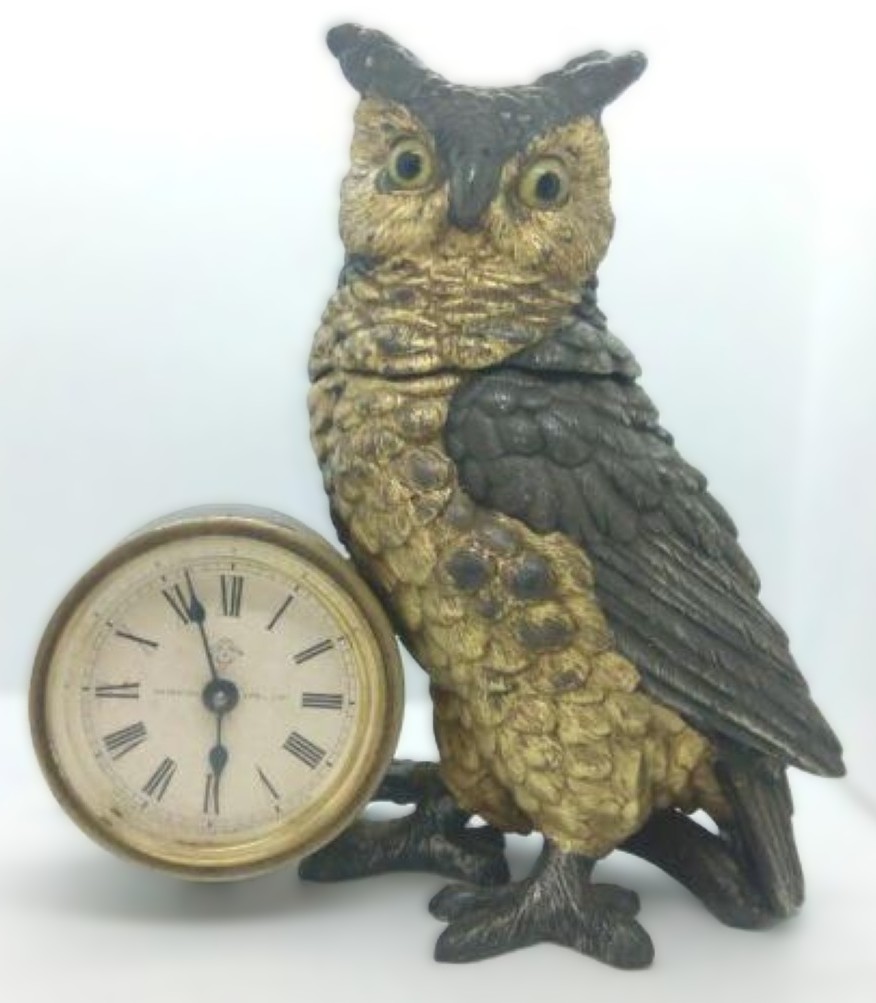


Owl Figural Inkwell Next to a Clock
| Categories | Dual Purpose Inkstands, Figural - Animals & Living Creatures |
| Type | Owl, Patented |
| Material | Spelter, Brass |
| Markings | See Narrative |
| Origin | United States |
| Date or Era | circa 1880 |
| Measuring | 6” high |
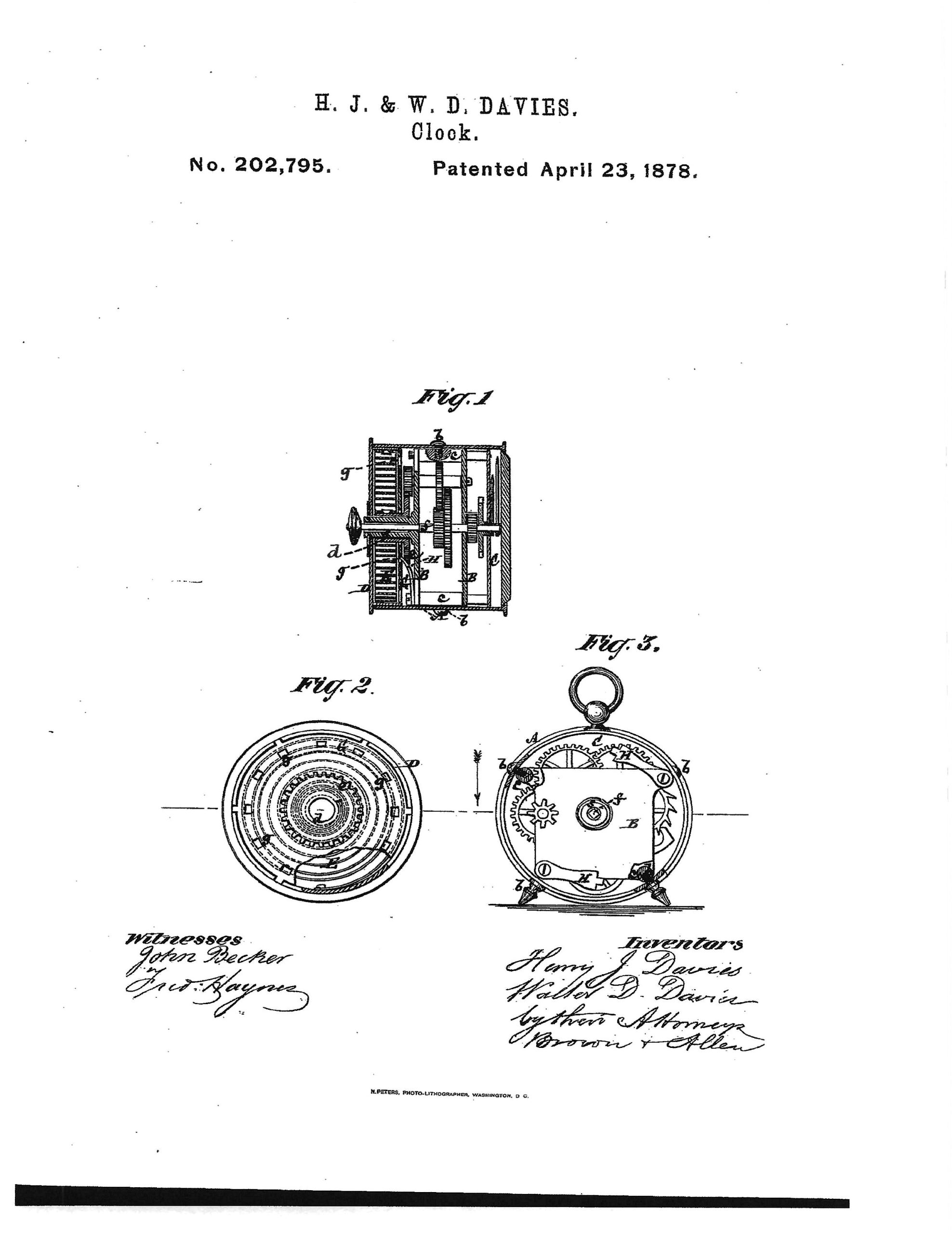
| Patent | No. 202,795 Patented April 23, 1878 |
The Clock & Patent Breakdown
The clock incorporated into this piece is the famous “Bee” movement manufactured by the Ansonia Clock Company.
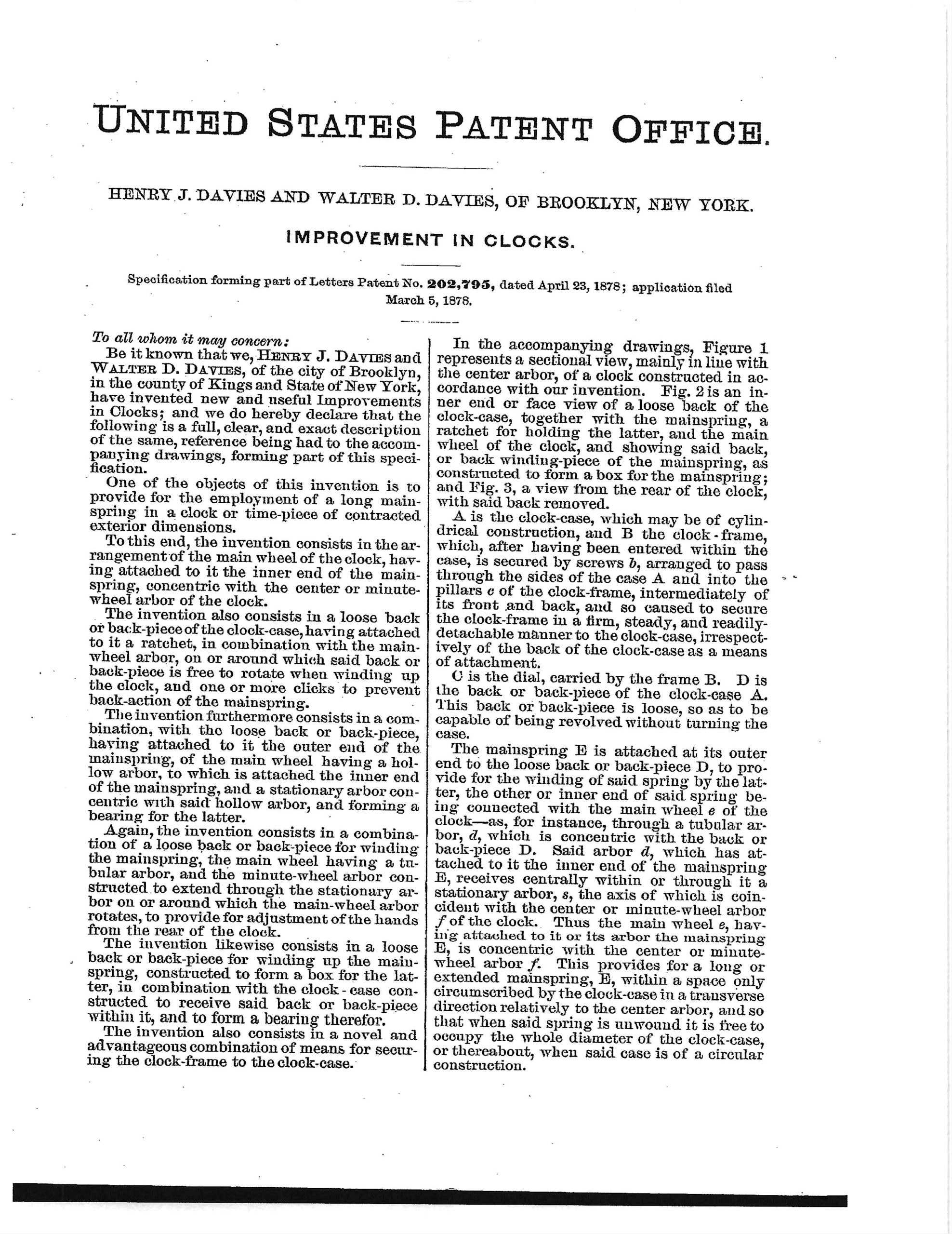
- The Patent Number: US Patent No. 202,795
- Issue Date: April 23, 1878
- Inventors: Henry J. Davies and Walter D. Davies of Brooklyn, New York.
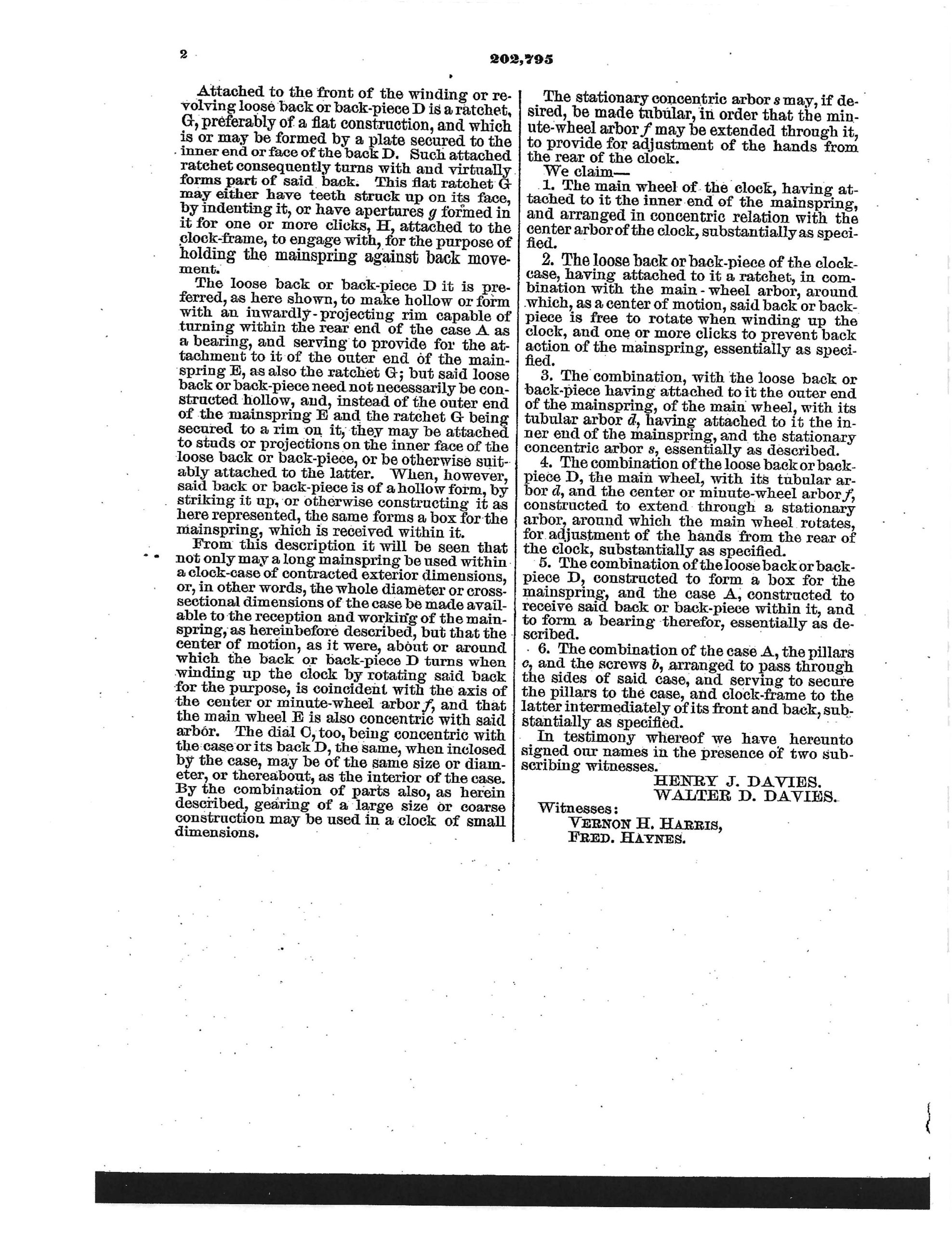
Summary of the Patent
The patent covered a highly innovative design for cheap, portable “one-day” clocks. Instead of requiring a separate winding key that could easily be lost, the Davies brothers designed the movement so that the entire rear outer casing of the drum serves as the winding mechanism.
By simply turning the brass backplate in the direction of the stamped arrow, the mainspring is compressed. The hand-setting mechanism is positioned directly in the center of this rotating back cover. This advancement allowed these miniature clocks to be incredibly compact, durable, and highly adaptive to novelty desk structures.
About the Ansonia Clock Company
The Ansonia Clock Company was one of the giants of 19th-century American clockmaking:
- Origins: It was founded in 1851 in Ansonia, Connecticut, by Ansonia Brass & Copper Co. owner Anson Phelps. He wanted to expand the market for his copper and brass by utilizing it in clock movements.
- The Brooklyn Move: In 1877, the clock company split from the parent brass company and bought a factory in Brooklyn, New York, moving the bulk of its operations there between 1878 and 1880. This clock’s 1878 patent date marks the exact threshold of this transition.
- Novelty King: One of the key figures behind this era was co-founder and president Henry J. Davies (the co-inventor of this clock’s movement). Davies was a visionary designer who popularized the figurine clocks, swing clocks, and whimsical, animal-themed novelty items that defined Ansonia’s late Victorian catalog.
The Owl Figural Inkwell
- Material and Finish: The owl is cast from a non-ferrous white metal alloy (spelter – a zinc-based metal). It features an applied gold-bronze or gilt wash finish to replicate true bronze.
- The Eyes: The striking, prominent eyes are insert-molded glass taxidermy eyes (sulfur-glass), which give the owl its signature lifelike, intense gaze.
- Maker / Origin: While the clock mechanism is firmly an Ansonia product, American clock manufacturers of this era frequently collaborated with independent metal foundries or hardware companies to supply the decorative casings.
The placement of the hinge at the back of the neck allows the head to tilt cleanly forward or back, preserving the seamless figure of the perched owl while giving smooth access to the hidden ceramic insert inside.
Sold for $249 in June 2022
Content disclaimer. The information posted is the owner’s best knowledge and may not have been vetted by the SOIC. We welcome comments, corrections, and additions, working to make our website information comprehensive and accurate.
Join the Society of Inkwell Collectors (SOIC) – it’s free!
Founded in 1981 as a non-profit organization,
we are documenting inkwells (and accessories).
We’re here to help and inform!