

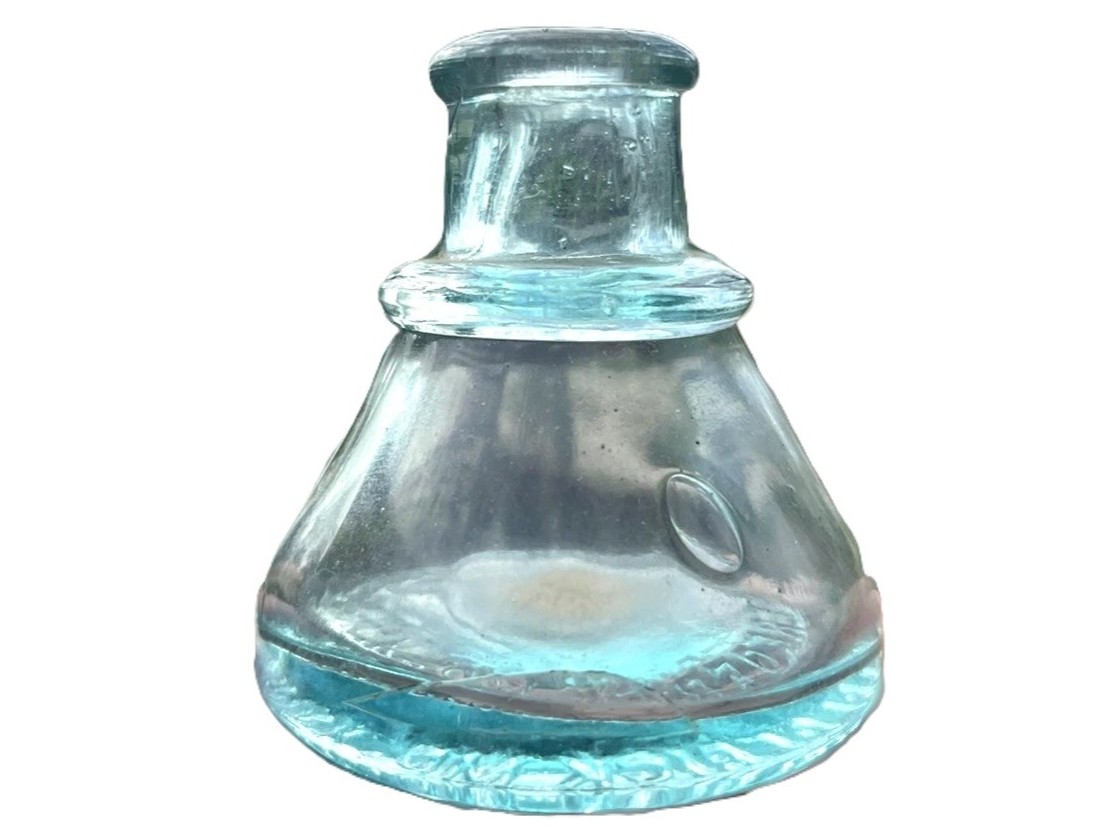
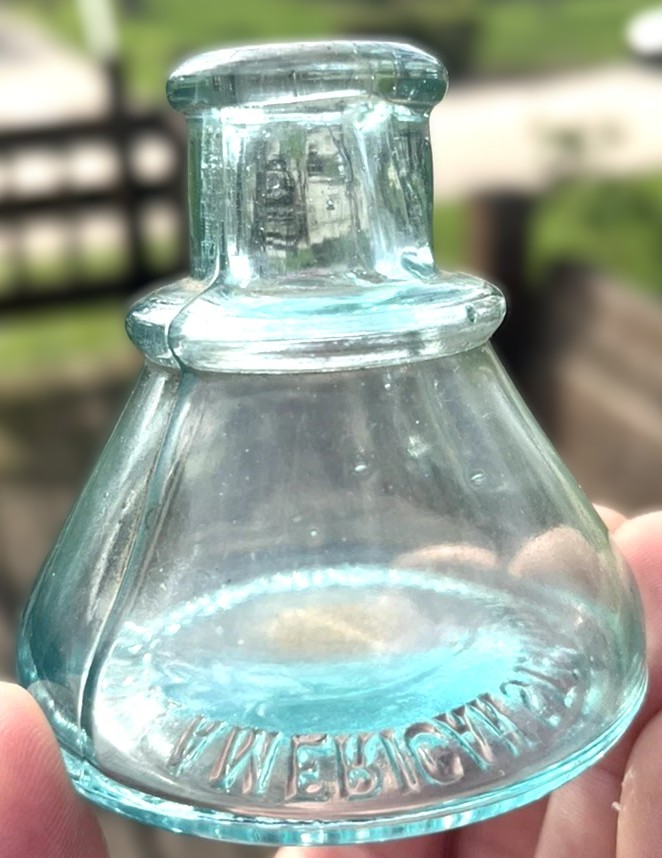
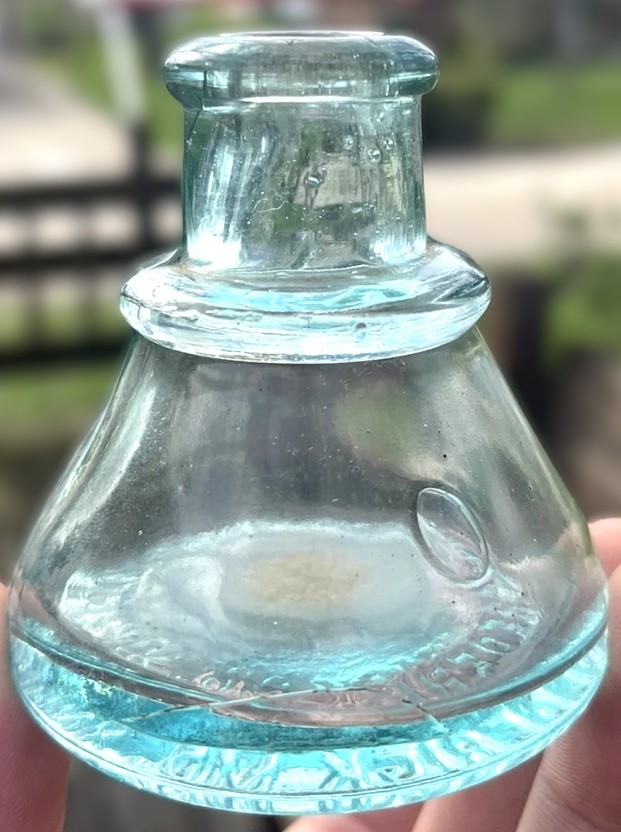

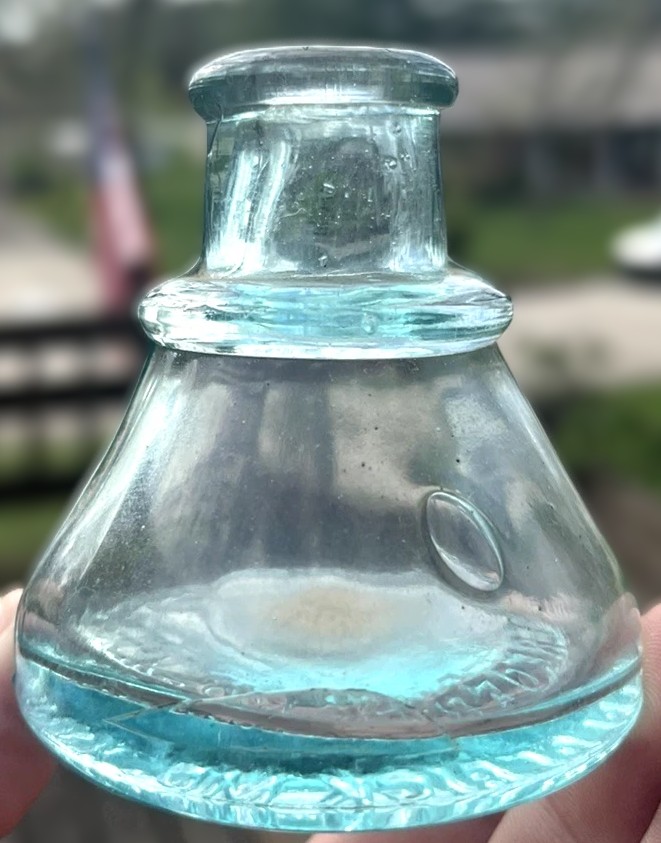
American Standard Ink Bottle
| Categories | Ink Bottle |
| Type | Conical |
| Material | Glass |
| Markings | See Narrative |
| Origin | United States |
| Date or Era | circa 1890 |
| Measuring | 2 ⅝” high |
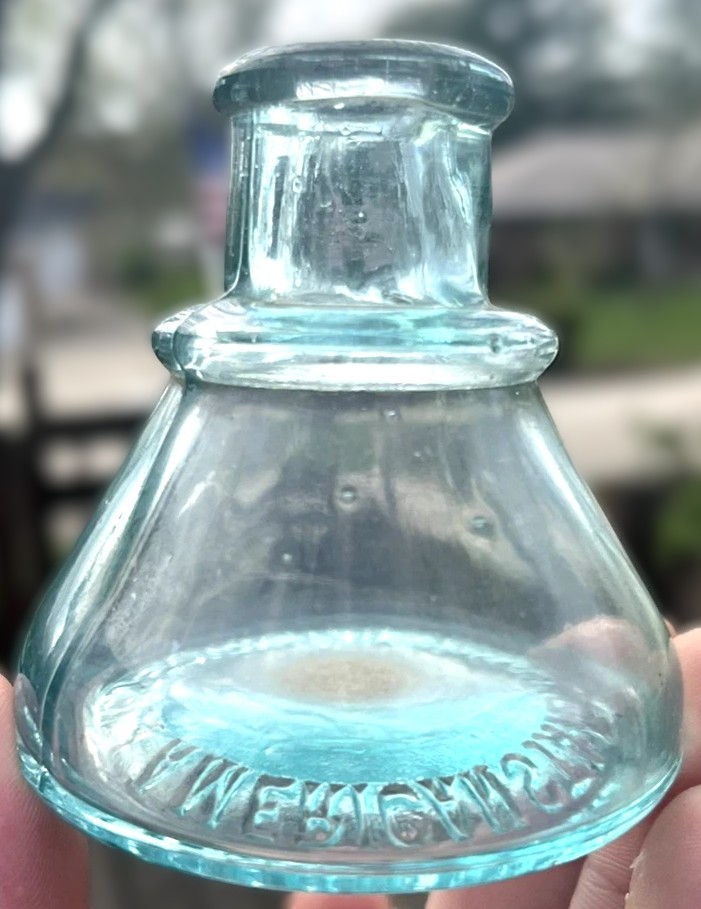
This aqua cone-style ink bottle is a classic example of late 19th-century utilitarian glass. The “cone” shape was a standard design of the era, favored for its low center of gravity, which prevented the bottle from tipping over while a pen was being dipped.
Characteristics
- Color & Glass: The bottle is made of aqua glass, a light blue-green hue common in utility bottles of the period. The glass displays characteristic seed bubbles and minor striations throughout, indicative of the hand-blowing process.
- Form: It features a broad, circular base that tapers upward into a conical body. A distinct, rounded shoulder ring or “collar” sits at the base of the neck, transitioning into a short, cylindrical neck.
- Tooled Lip: The top features a tooled finish, where the glass was hand-shaped with a tool after being removed from the mold. The lip is rounded and slightly flared, designed to accommodate a cork stopper.
- Seams: Vertical mold seams are visible on the sides of the body, which terminate just below the tooled finish on the neck, confirming its manufacture during the transition between early mold-blown and fully machine-made glass.
Embossing & Base
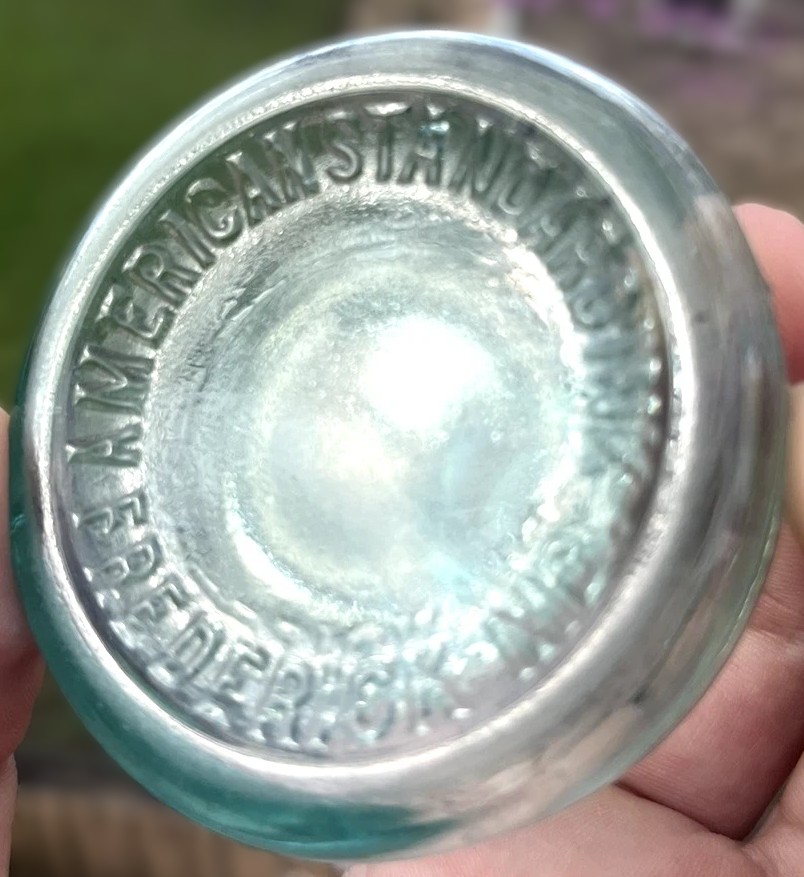
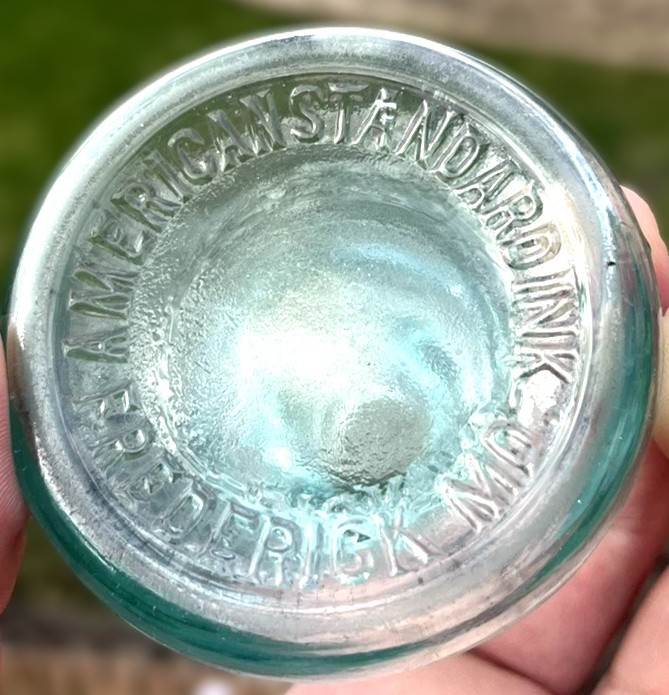
The bottom of the bottle is circular and slightly concave, featuring clear, raised serif-style lettering embossed in a circular pattern:
“AMERICAN STANDARD INK FREDERICK, MD.”
The embossing is well-defined, though it shows some of the softened edges typical of glass blown into a metal mold during that era.
Historical Context
The American Standard Ink Company operated out of Frederick, Maryland, during the late 1800s. These cone inks were mass-produced utility items, often sold for a few cents in general stores. While many ink bottles from this period are “slick” (lacking embossing), a specimen with a specific regional mark like Frederick, MD, is notable for collectors of Maryland glass or specialized ink bottle historians.
The 1890s dating is supported by the combination of the tooled lip technology and the specific aqua glass composition used by regional glassworks before the widespread adoption of the automatic bottle machine in the early 1900s.
Sold for $150 in April 2026
Content disclaimer. The information posted is the owner’s best knowledge and may not have been vetted by the SOIC. We welcome comments, corrections, and additions, working to make our website information comprehensive and accurate.
Join the Society of Inkwell Collectors (SOIC) – it’s free!
Founded in 1981 as a non-profit organization,
we are documenting inkwells (and accessories).
We’re here to help and inform!