

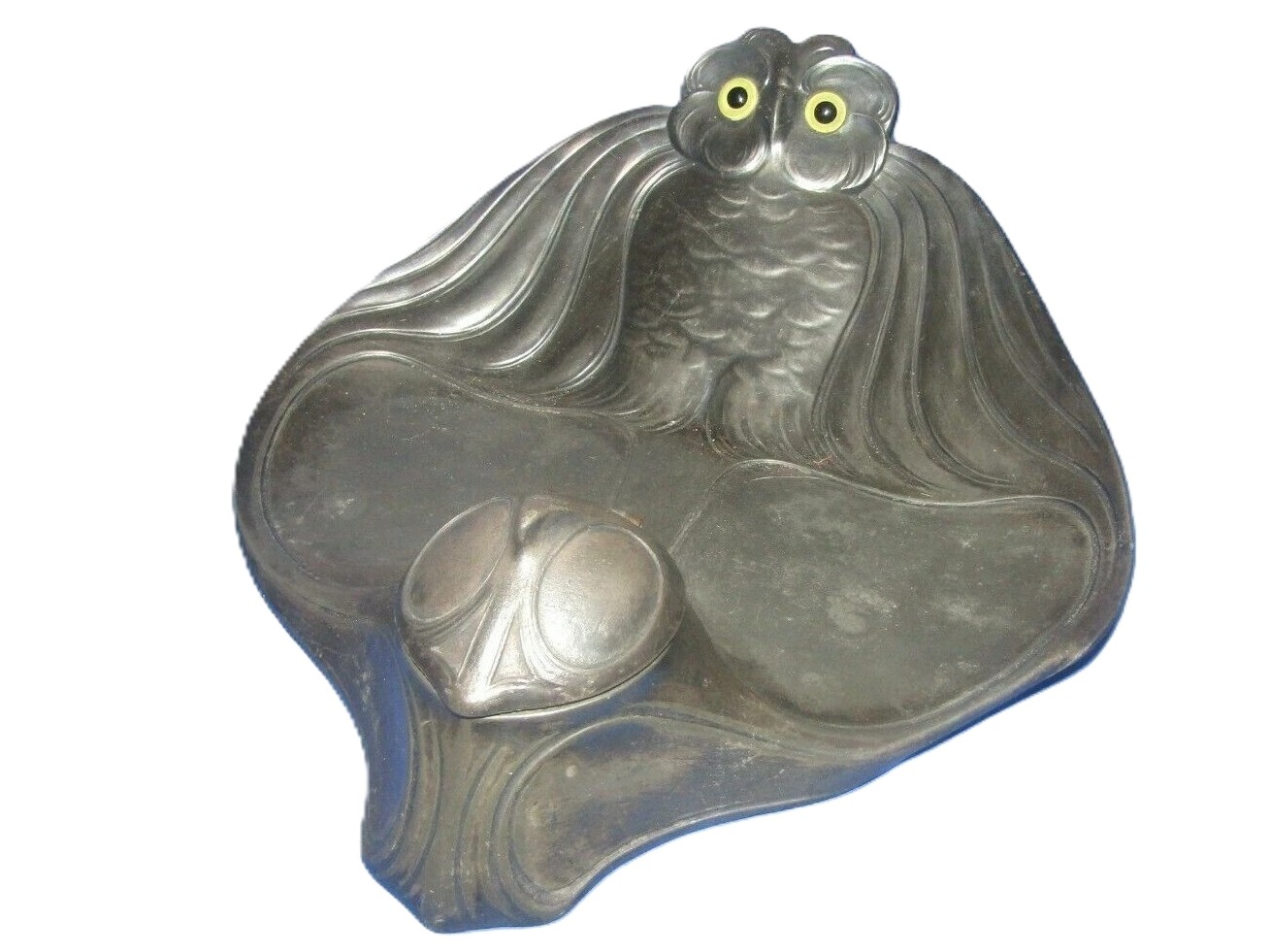



WMF Owl Inkstand
| Categories | Figural - Animals & Living Creatures |
| Type | Owl |
| Material | Silverplate |
| Markings | See narrative |
| Manufacturer | WMF |
| Origin | Germany |
| Date or Era | circa 1905 |
| Measuring | 10 ¼” x 9 ⅞” |
This is a classic Jugendstil (German Art Nouveau) inkstand produced by the renowned manufacturer WMF (Württembergische Metallwarenfabrik) around 1905.
Description
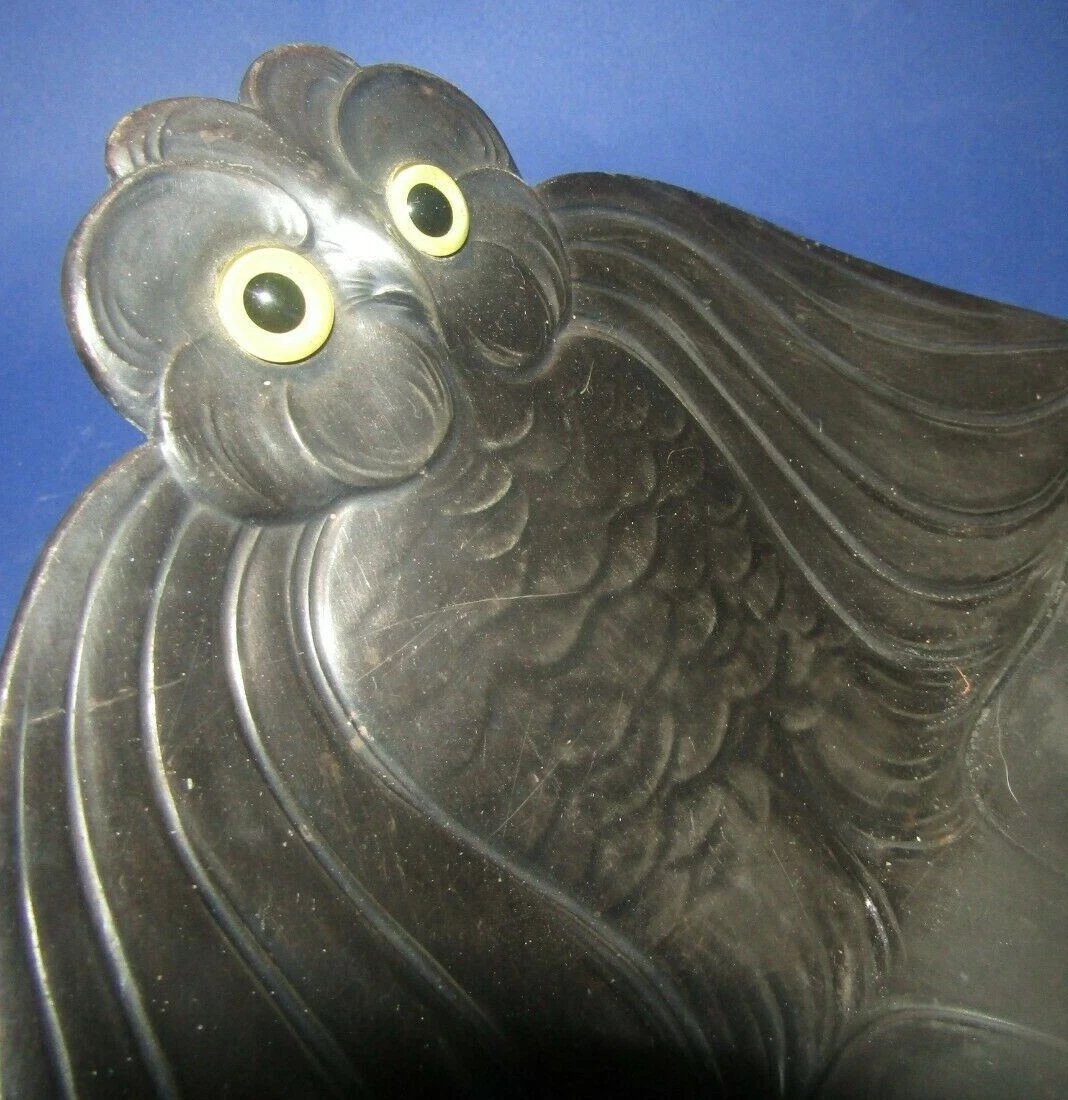
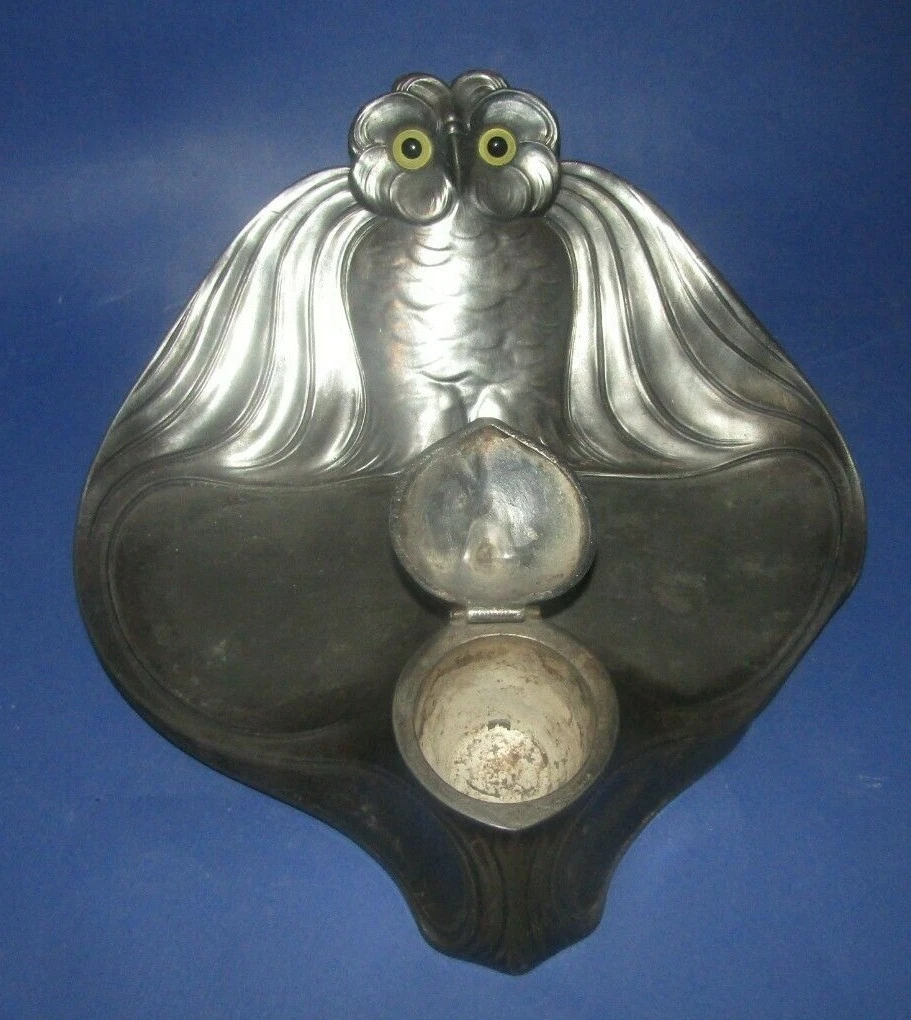
The inkstand features a highly stylized, relief-cast owl at the rear, whose large, sweeping wings flow forward to form the boundaries of a dual pen tray. The owl is detailed with glass eyes and textured feathers. The inkwell itself is located in the foreground and features a hinged, domed lid that opens to reveal the inkwell (missing its insert).
The Marks
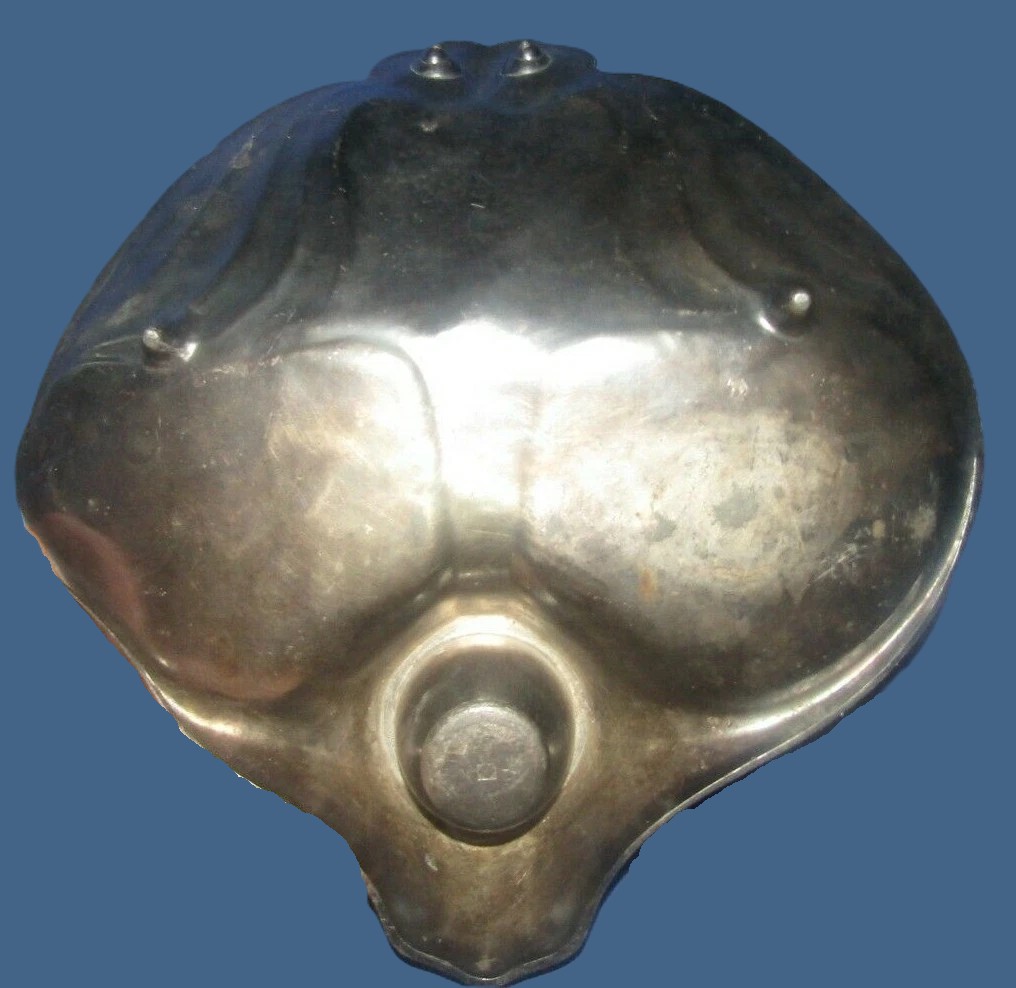
The marks visible on the bottom confirm the piece’s origin and original finish:
- Ostrich in a Diamond: This is the WMF trademark. The image of a running ostrich (a pun on founder Daniel Straub’s name, as Strauss means ostrich in German) inside a diamond, which is then housed in a rectangle, was used specifically between 1903 and 1910.
- G: Located beneath the rectangle, this stands for Geislingen, the town in Germany where WMF was founded and based.
- I/O: This fractional mark indicates the “normal” thickness of silver plating applied to the base metal.
- as: This stands for “Antik-Silber” (Antique Silver finish). It signifies that the silver plating was chemically darkened or oxidized to produce the nearly black, matte appearance.
Material and Style
- Material: The piece is made of silver-plated Britannia metal (a white metal alloy of tin, antimony, and copper) or brass, which was then given its characteristic “as” (antique silver) finish.
- Style: It is a prime example of the Jugendstil movement. This is evidenced by the organic, flowing lines of the wings and the stylized, slightly mysterious depiction of the owl, a common motif in Art Nouveau design.
Manufacturer History: WMF
- Founding: The company was founded in 1853 in Geislingen an der Steige by Daniel Straub and the Schweizer brothers.
- Growth: In 1880, it merged with Ritter & Co. to become Württembergische Metallwarenfabrik (WMF). By the turn of the 20th century, it was the world’s leading producer and exporter of decorative household metalware.
- The Golden Era: Under the artistic direction of sculptor Albert Mayer (1884–1914), WMF became synonymous with high-quality Jugendstil designs. The company was famous for its “Galvano” division, which used electroforming to create complex, artistic pieces that were distributed globally.
- Modern Day: WMF survived the wars by pivoting to industrial and civilian goods. Today, it remains a major name in high-end cookware and professional coffee machines.
Sold for $750 in April 2026
Content disclaimer. The information posted is the owner’s best knowledge and may not have been vetted by the SOIC. We welcome comments, corrections, and additions, working to make our website information comprehensive and accurate.
Join the Society of Inkwell Collectors (SOIC) – it’s free!
Founded in 1981 as a non-profit organization,
we are documenting inkwells (and accessories).
We’re here to help and inform!