

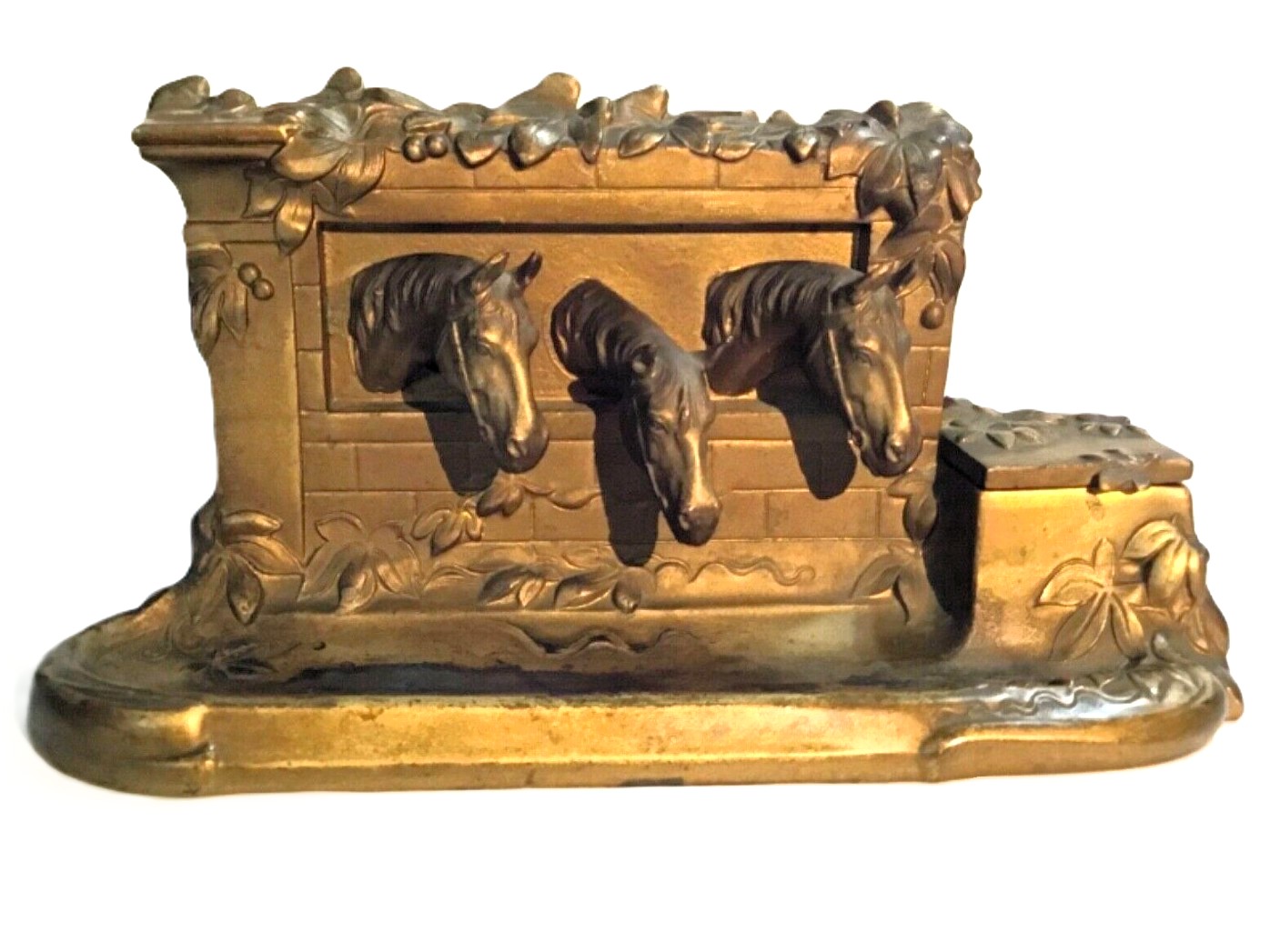
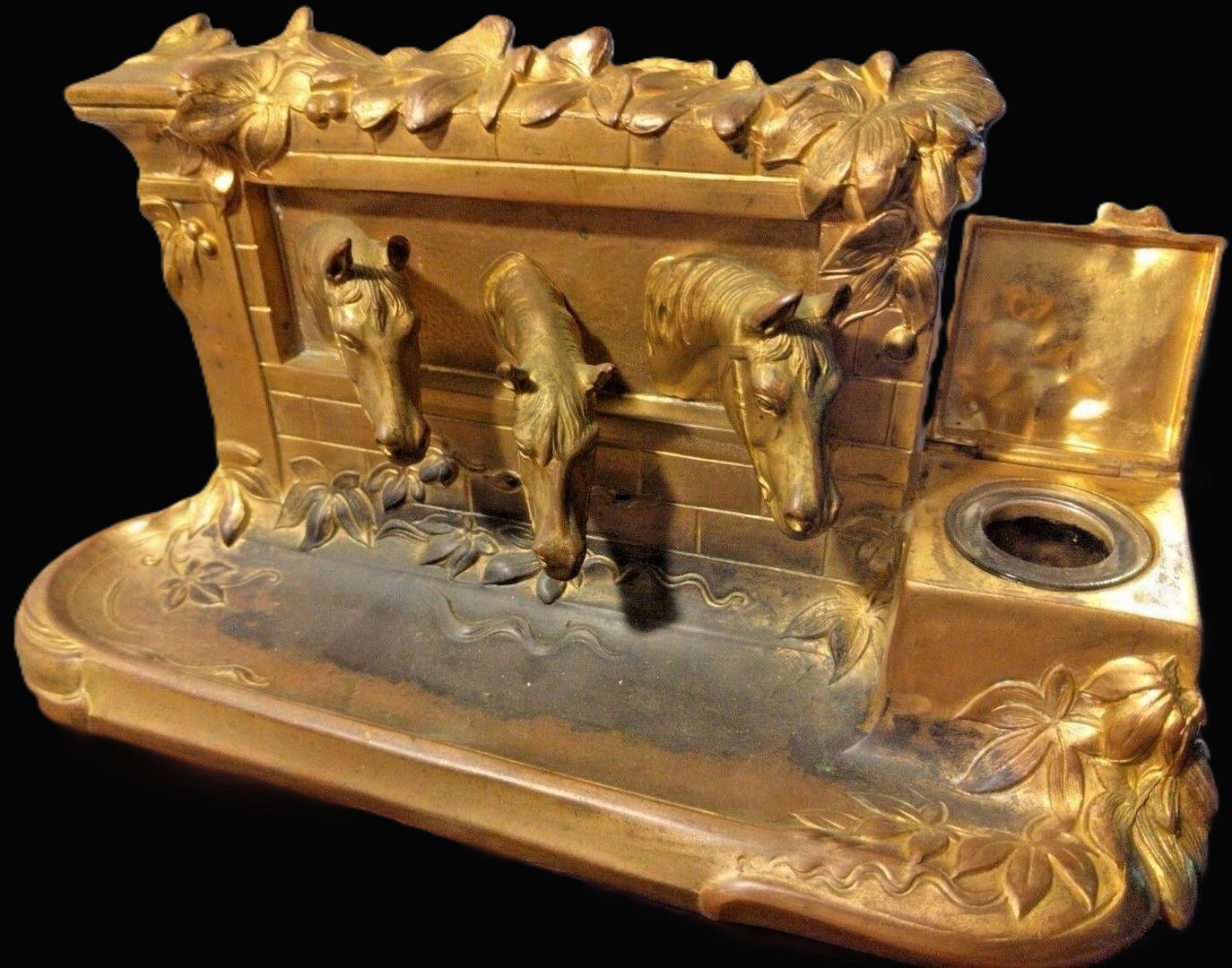

Three Horses in a Stable
| Categories | Figural - Animals & Living Creatures |
| Type | Spe, Equestrian, Horse |
| Material | Spelter |
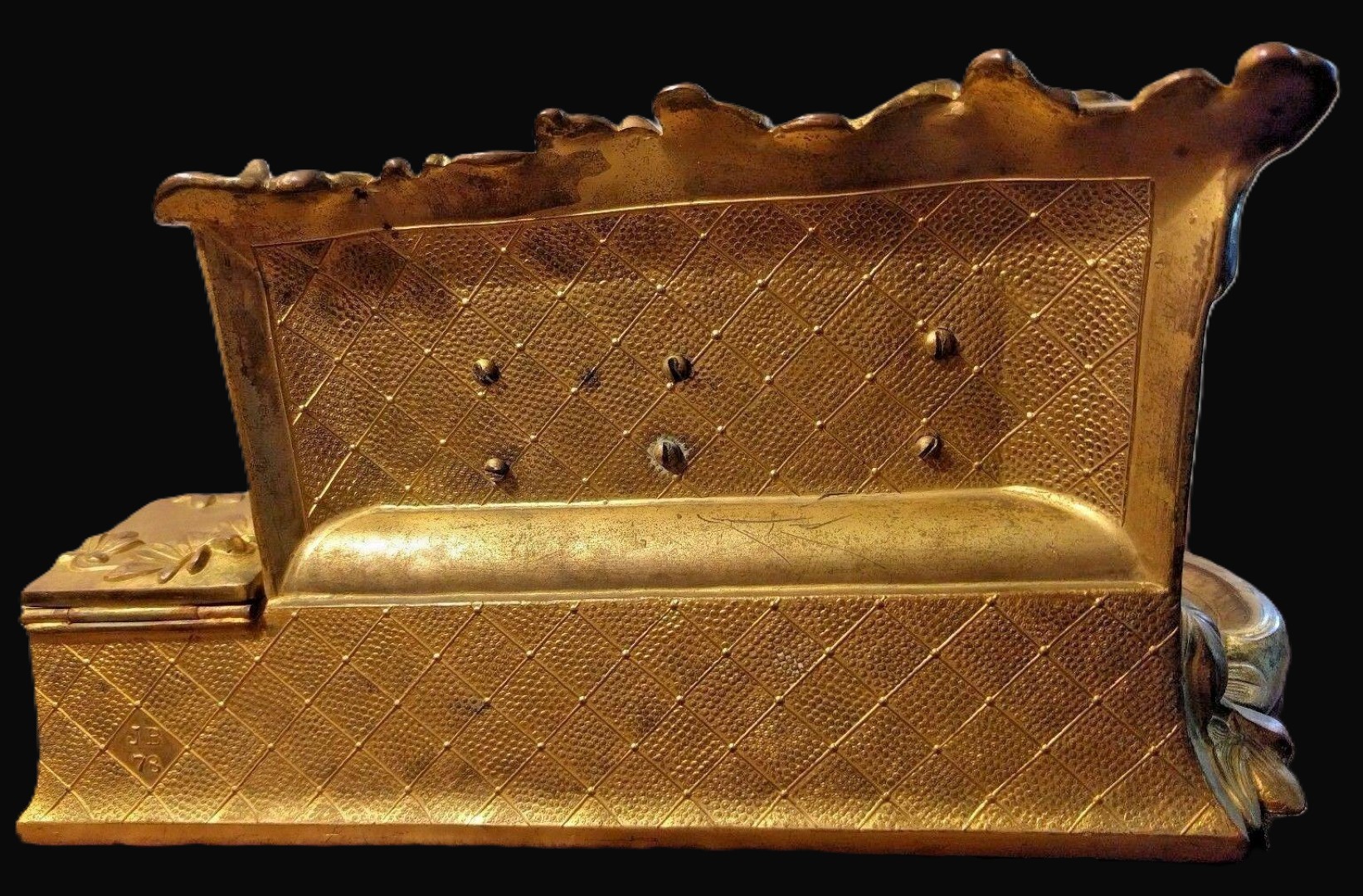
| Markings | "JB 78" |
| Manufacturer | Jennings Brothers |
| Origin | United States |
| Date or Era | circa 1900 |
| Measuring | 10 ¼” x 4 ⅛” x 5 ¼” high |
This inkstand is a classic example of American “Art Metal” from the turn of the 20th century.
Description
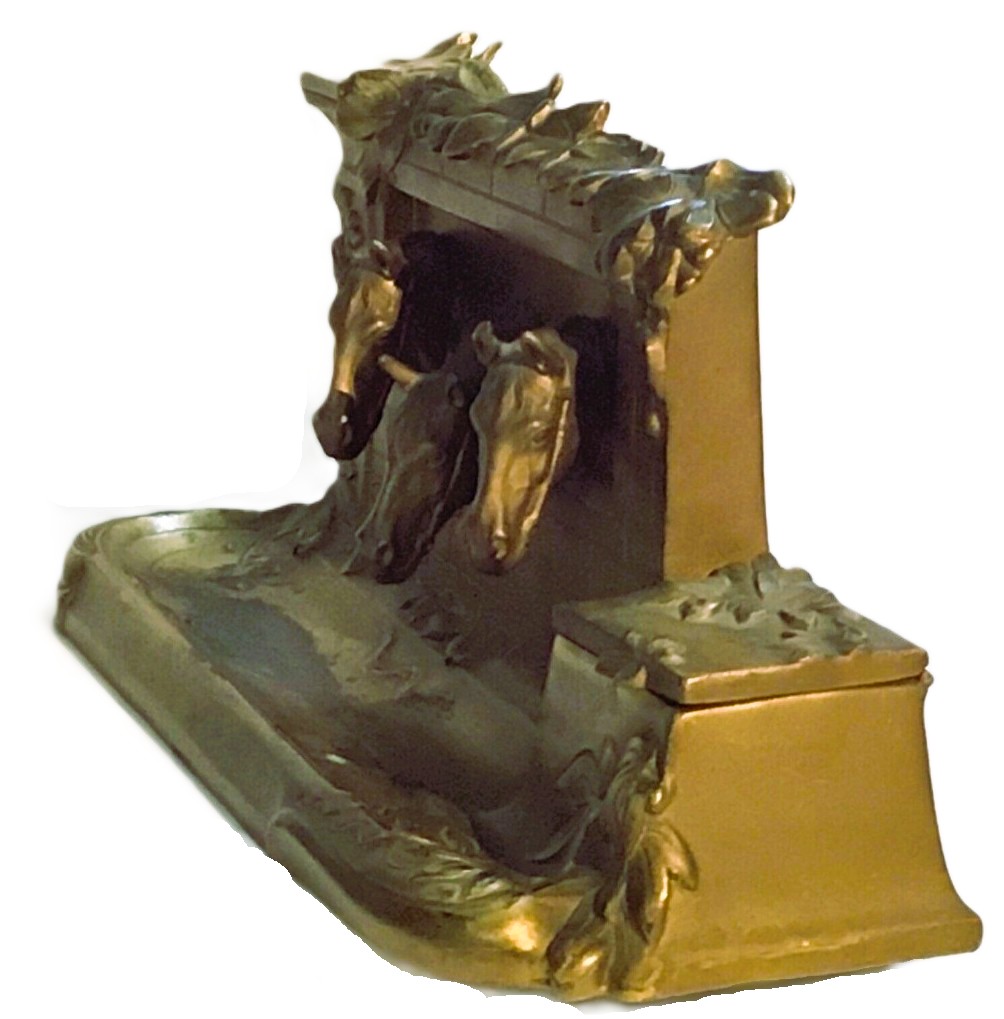
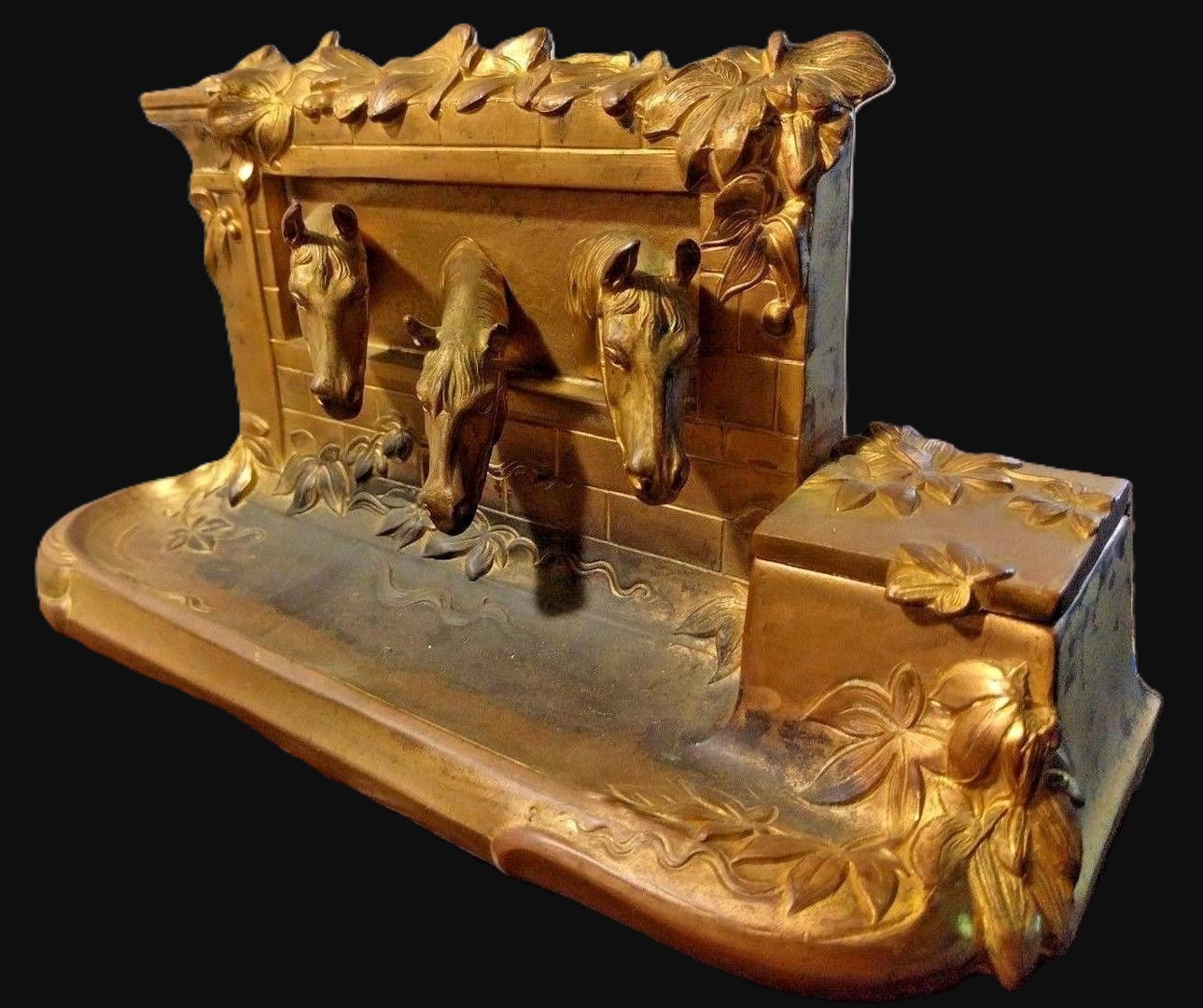
This piece is a figural desk standish designed with a distinct equestrian theme. The focal point is a triptych of horse heads (three horses) realistically modeled as if they are peering through a rectangular stable window.
- Design Motifs: The “stable” facade features a textured brickwork pattern, which is framed by lush, high-relief vines and grape clusters that drape over the top and down the sides.
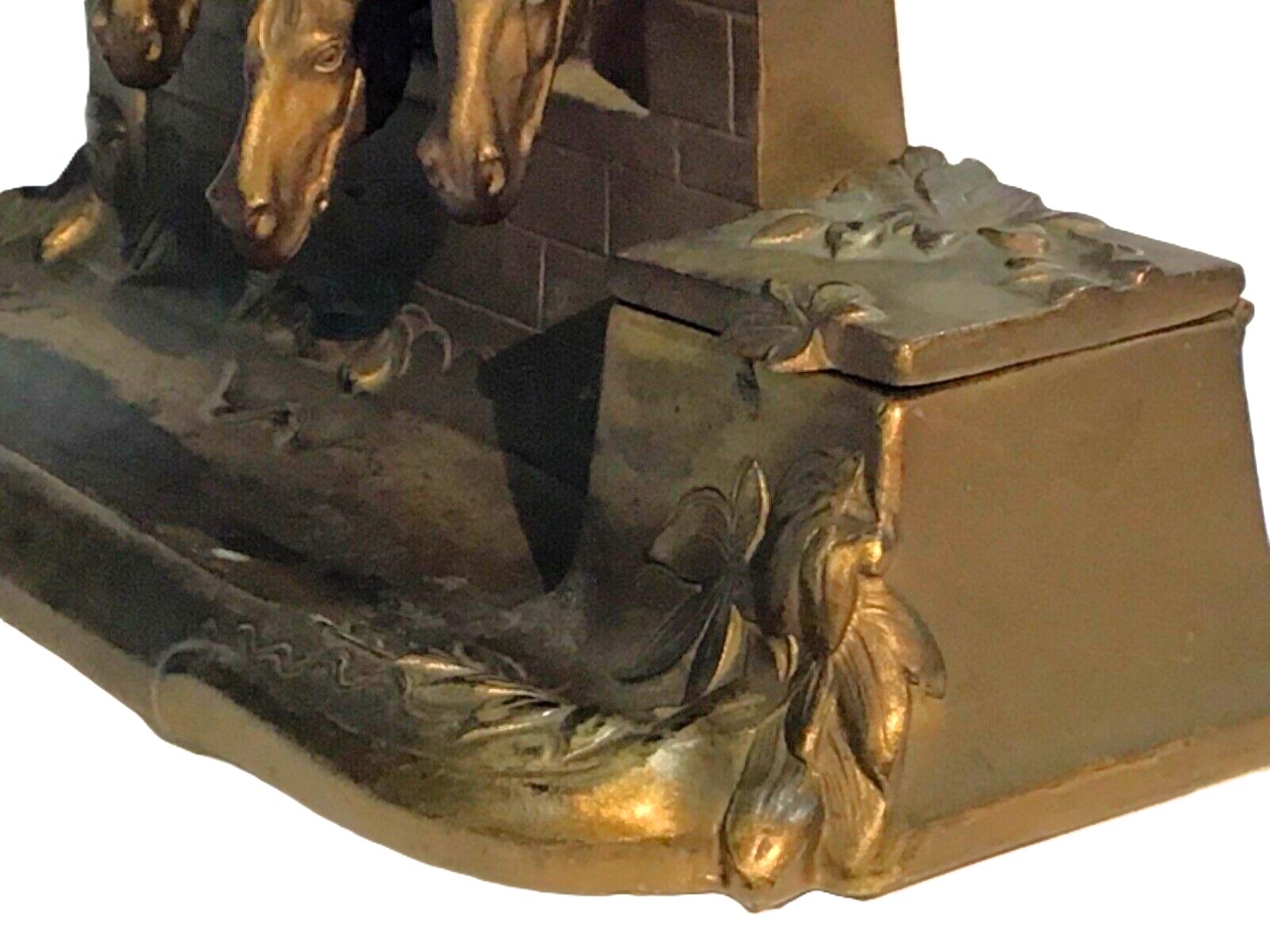
- Functional Elements: On the right-hand side, a rectangular block houses a single inkwell with a hinged lid. The lid is decorated with the same foliate vine motif. The front of the base is cast with a wide, concave recession that serves as a pen tray (or pen rest).
- Material and Finish: This is made of spelter (a zinc-based white metal alloy) that has been finished with a heavy plating or patina known as “Nouveau Bronze” or “Ormolu Gold.” Jennings Brothers was renowned for their ability to cast spelter with such crisp detail that it was often mistaken for solid bronze.
The “JB 78” Mark and Date of Manufacture
The mark “JB 78” located on the back of the piece provides specific clues to its origin:
- The Hallmark: The “JB” stands for the Jennings Brothers Manufacturing Company.
- The Number: “78″ is the catalog or model number.
- Date of Manufacture: Given the company’s history and the Art Nouveau style of the piece, it was likely produced between 1895 and 1915. The relatively low catalog number (78) suggests it may have been one of their earlier designs from the late 1890s or very early 1900s.
About Jennings Brothers
The Jennings Brothers Manufacturing Company was founded in 1891 in Bridgeport, Connecticut, by three brothers: Erwin, Edward, and Henry Jennings.
- Reputation for Quality: Unlike many of their competitors who moved toward mass-produced, hollow-stamped metalware, Jennings Brothers maintained a reputation for high-quality, solid-feeling pieces. They employed a talented pool of sculptors and metal smiths to create original designs for clocks, bookends, jewelry boxes, and desk sets.
- The Finishes: They were famous for their proprietary finishes. Their “Nouveau Bronze” was particularly popular for equestrian and hunting-themed items, as it provided a rich, dark patina that emphasized the musculature and detail of animal figures.
- Legacy: The company remained a leader in art metal until it closed in 1953. After the factory closed, many of their original molds and dies were sold to other companies, though these later reproductions often lack the weight and fine finishing of the original “JB” marked pieces.
Historical Context
The “three horses” motif was a popular theme, often inspired by the famous 1848 painting Pharaoh’s Horses by John Frederick Herring Sr. It was considered a “masculine” design, making it a favorite choice for library or office desk
Estimated Value: $125
Content disclaimer. The information posted is the owner’s best knowledge and may not have been vetted by the SOIC. We welcome comments, corrections, and additions, working to make our website information comprehensive and accurate.
Join the Society of Inkwell Collectors (SOIC) – it’s free!
Founded in 1981 as a non-profit organization,
we are documenting inkwells (and accessories).
We’re here to help and inform!