





French “Teakettle” Inkwell in a Gilt Bronze Holder
| Categories | Ink Bottle, Mechanical - Pump / Siphon |
| Type | Tea Kettle |
| Material | Gilt Bronze, Milk Glass |
| Markings | Unmarked |
| Manufacturer | Undetermined |
| Origin | France |
| Date or Era | circa 1860 |
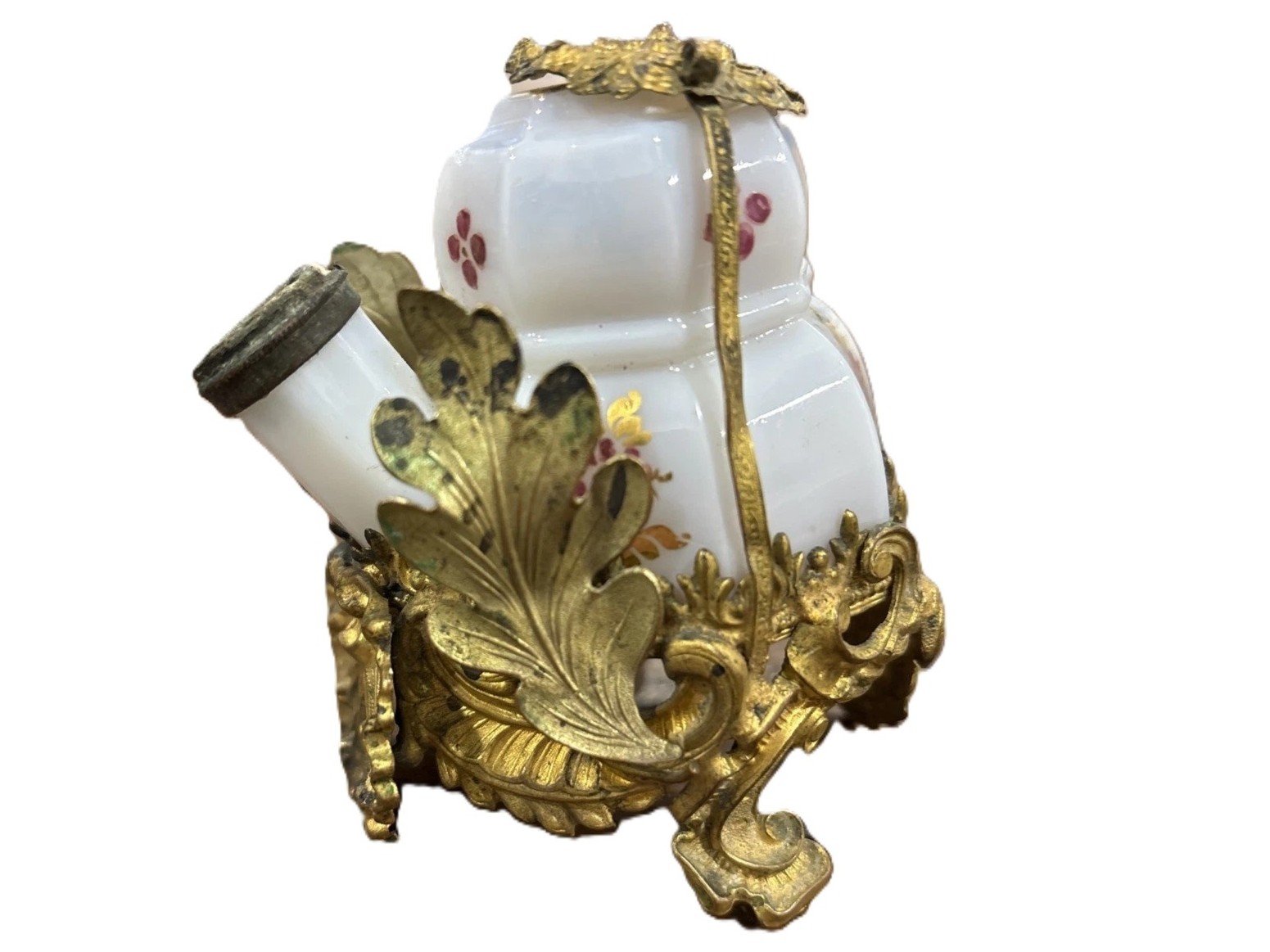
This French “teakettle” inkwell is a nice example of mid-19th-century decorative arts, combining the delicate aesthetics of opaline glass with the structural grandeur of the Rococo Revival style.
Detailed Description
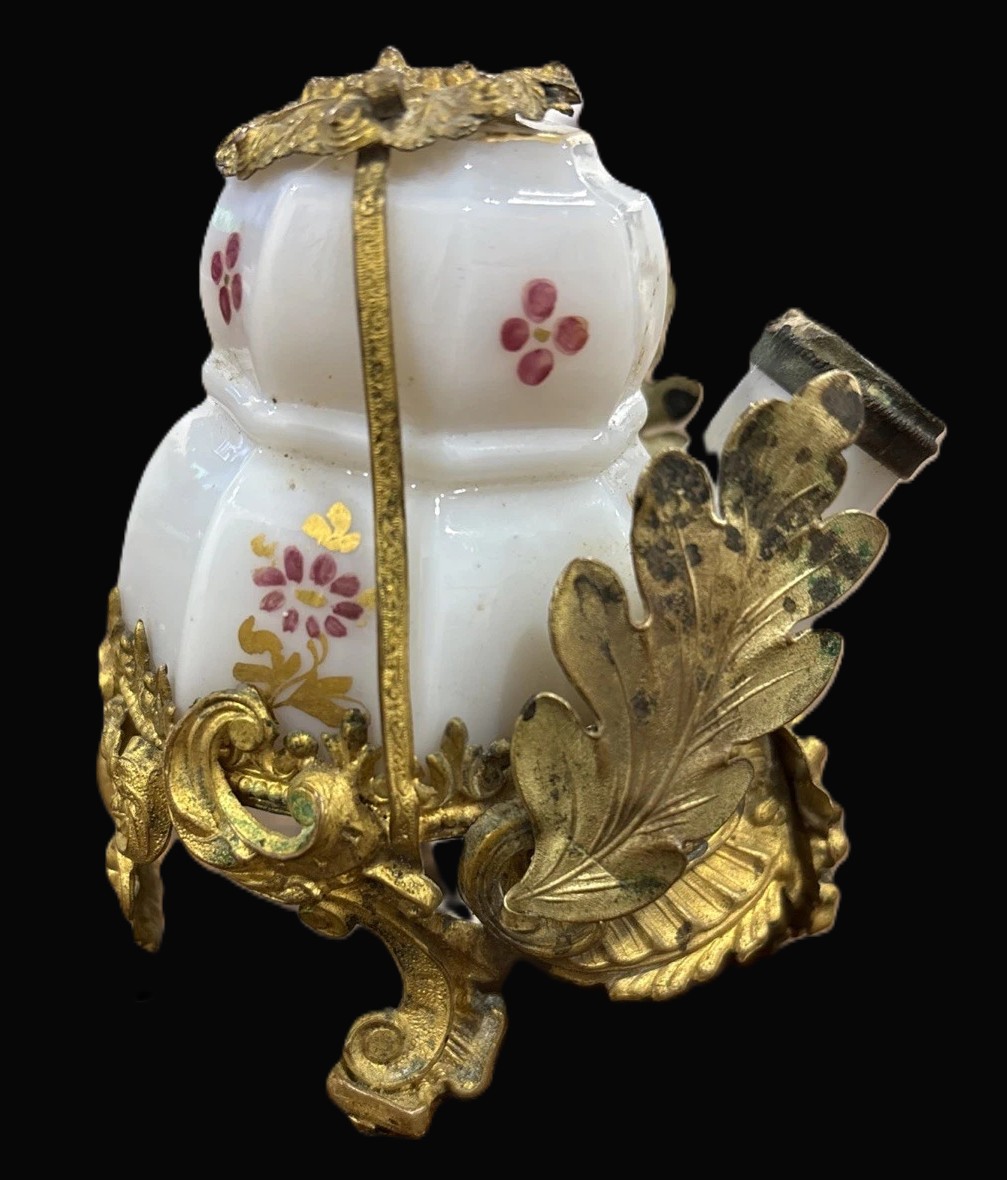
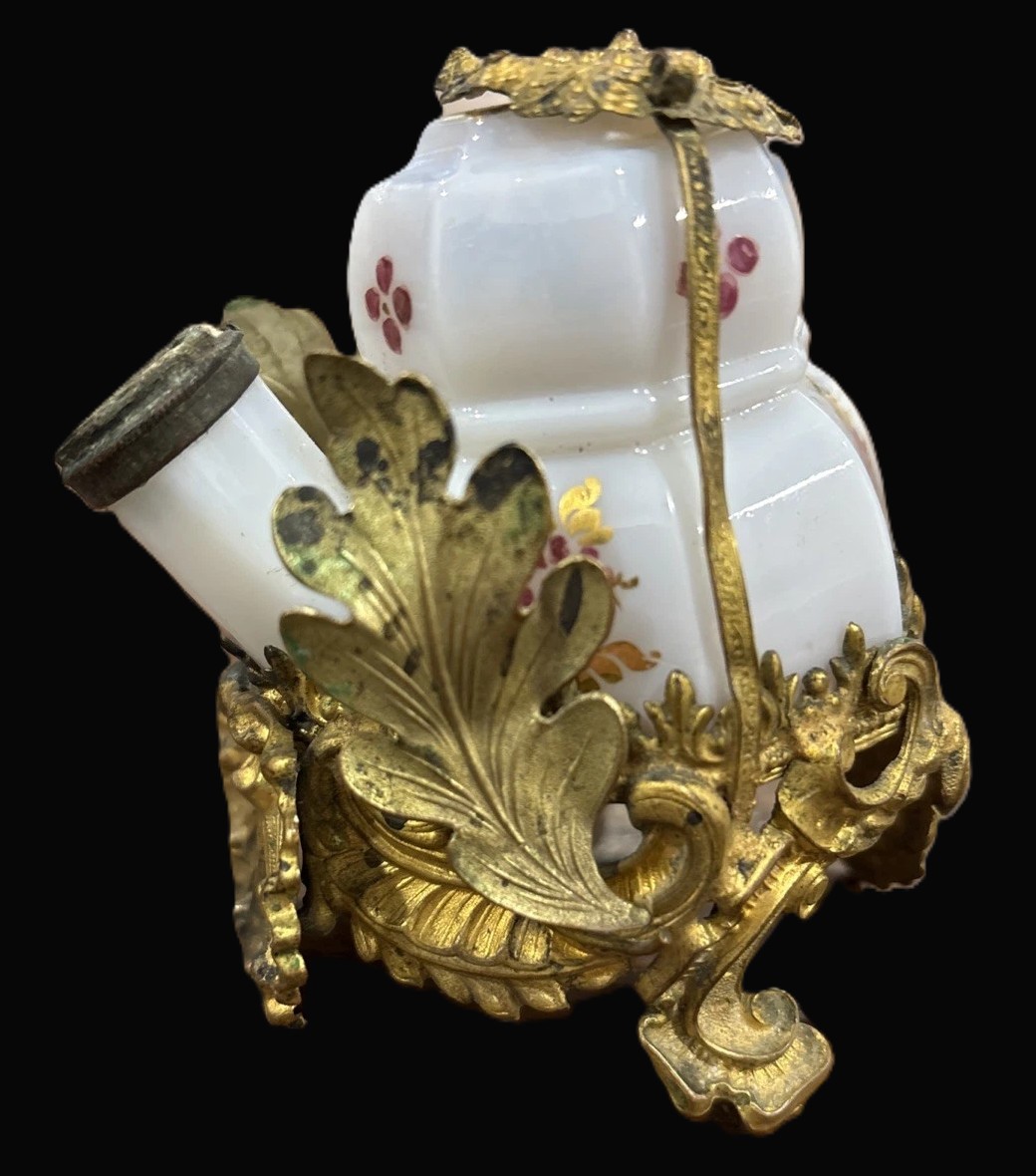
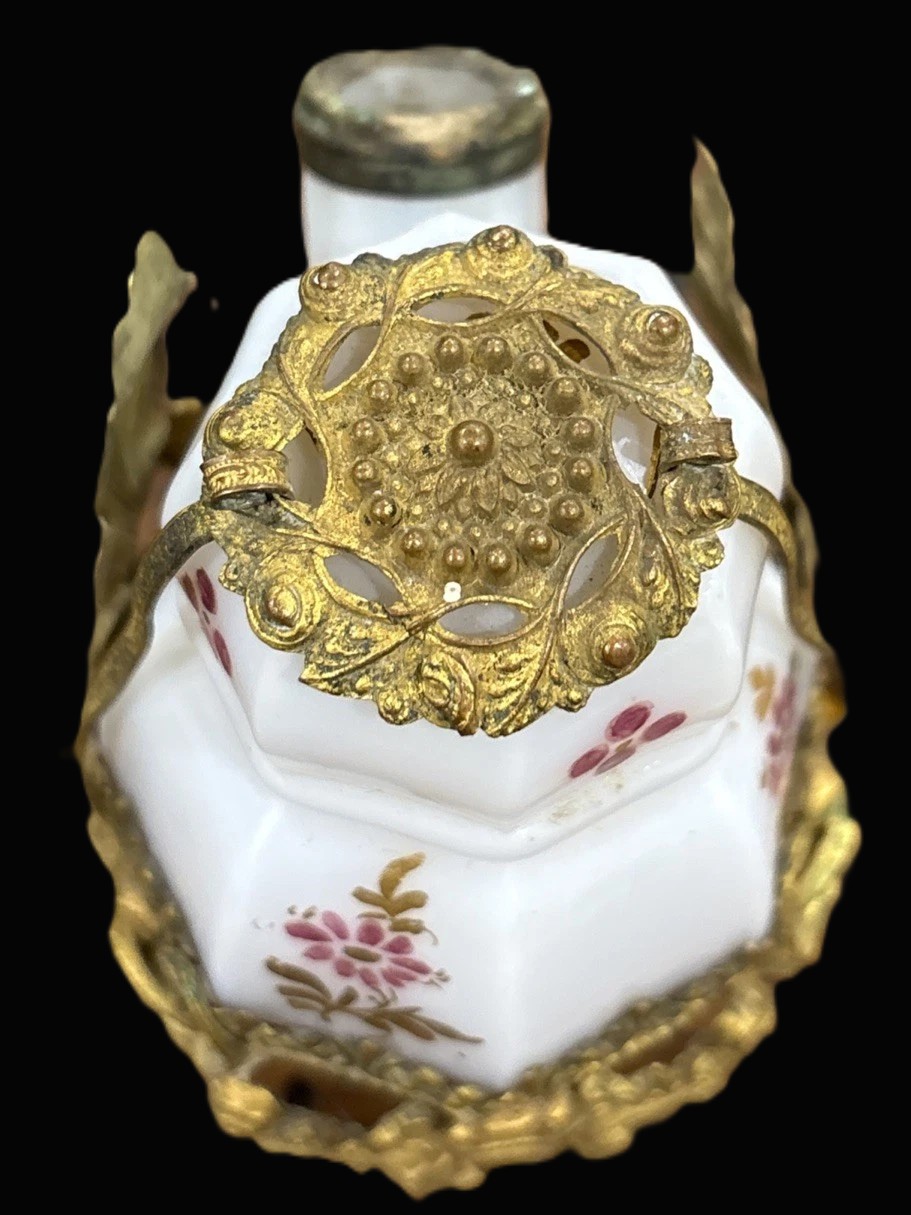
- The Inkwell (Reservoir): The body is made from milk glass (opaline), featuring a “teakettle” or “siphon” form. It is octagonal and faceted, divided into two bulbous sections. The glass is hand-painted with delicate floral sprigs—small pink four-petal flowers and larger pink daisies accented with raised gilt (gold) foliage.
- The Spout: An angled glass spout extends from the lower bulb, finished with a tarnished brass collar.
- The Gilt Bronze Mount: The glass is encased in an ornate gilt bronze (d’ore bronze) holder.
- Style: The mount is designed in the Rococo Revival style, characterized by “rocaille” (shell-like) flourishes and scrolling acanthus leaves.
- Features: The stand sits on four scrolling feet. A large, prominent acanthus leaf serves as a decorative “guard” on one side.
- Hinged Lid: The top of the mount features an open-work medallion lid with a beaded and floral pattern, which secures the glass reservoir within the frame.
The Physics of the Siphon Mechanism
This is a barometric (or siphon-type) inkwell. It relies on atmospheric pressure to keep the ink at a constant, manageable level in the spout without overflowing.
- Air-Tight Seal: For this to work, the main reservoir must be airtight at the top. When the inkwell is filled and the lid is closed (or if the glass itself is sealed), a small amount of air is trapped above the ink.
- Pressure Balance: Atmospheric pressure pushes down on the small surface of the ink exposed in the spout. Inside the reservoir, the air pressure is slightly lower than the outside atmosphere. This “partial vacuum” essentially “holds” the weight of the ink in the main body, preventing it from rushing out of the spout.
- Self-Leveling: As you dip your pen and remove ink from the spout, the level in the spout drops. This allows a tiny bubble of air to “glug” up through the spout and into the main reservoir, which then pushes a corresponding amount of fresh ink down into the spout to restore the balance.
Estimated Age
This teakettle inkwell likely dates to the Napoleon III period (circa 1850–1870).
Several factors point to this era:
- Material: Opaline glass reached its peak of popularity in France during the mid-19th century, particularly from factories like Baccarat or Saint-Louis.
- Style: The heavy, ornate gilt bronze mount is classic Second Empire taste, which favored the revival of 18th-century Rococo styles.
- Manufacture: The base of the glass displays a slightly irregular, molded surface typical of 19th-century production before modern glass-leveling techniques became standard.
Sold for $450 in March 2026
Content disclaimer. The information posted is the owner’s best knowledge and may not have been vetted by the SOIC. We welcome comments, corrections, and additions, working to make our website information comprehensive and accurate.
Join the Society of Inkwell Collectors (SOIC) – it’s free!
Founded in 1981 as a non-profit organization,
we are documenting inkwells (and accessories).
We’re here to help and inform!